
Best new online casino sites in Australia for 2026: where the law actually leaves a reader
28 October 2026 · licence and blocking claims checked against the ACMA’s register of formal warnings and blocking requests, as carried by the trade press and acma.gov.au.

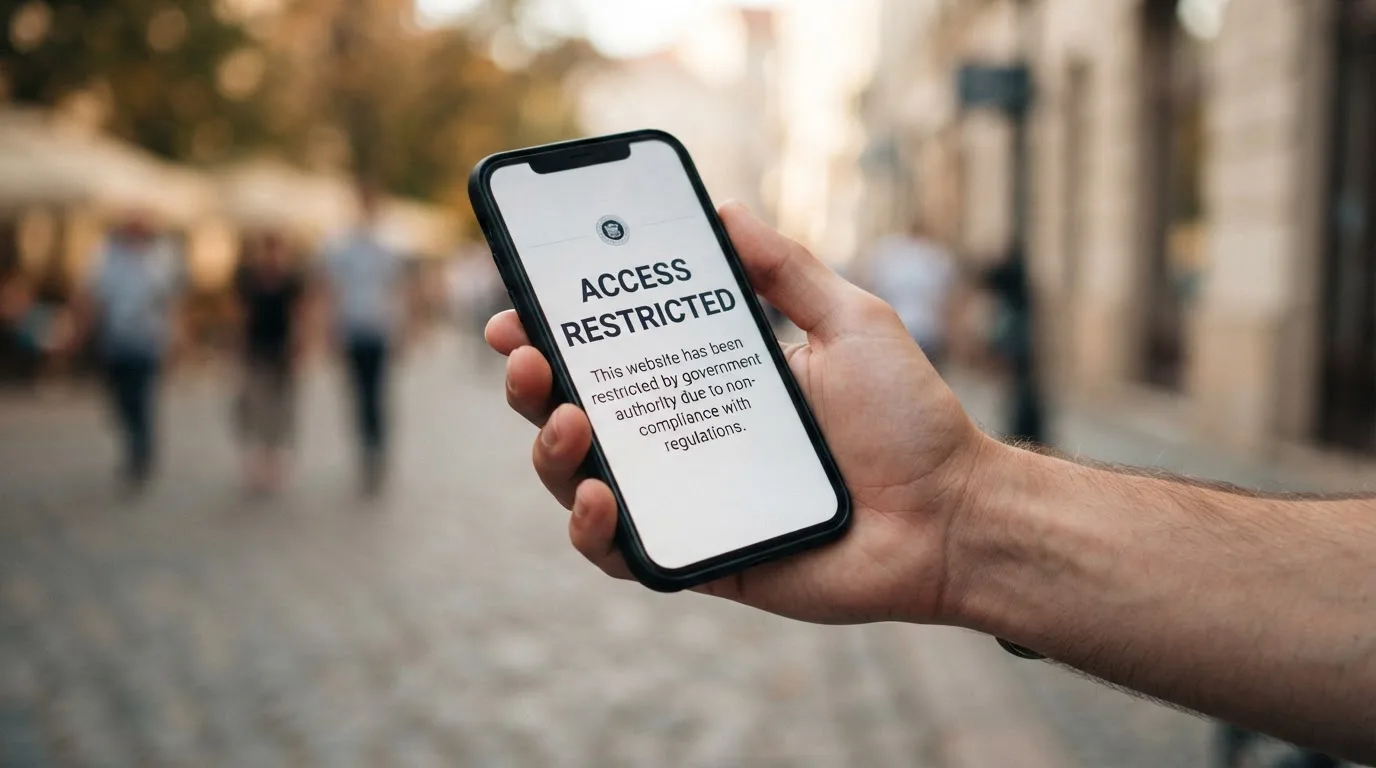
A reader looking up “new online casino sites” usually wants a shortlist, a deposit button and a bonus code. In Australia the shortlist does not exist in the form the search suggests it does, and that is the first thing this page is honest about. Offering an online casino game to anyone physically present in Australia is an offence under the Interactive Gambling Act 2001. No state or territory issues a licence for it. The Australian Communications and Media Authority enforces that by issuing formal warnings to operators and by directing Australian internet service providers to block offending websites — a process that has been running since 2019 and continues through 2026.
So what follows is not a ranking of where to play. It is a closer look at the gap between what a typical online search suggests is available and what the law actually permits, the brands the ACMA has already named in formal warnings, the payment and crypto detail a reader who has decided to play anyway ought to know, and the lawful alternatives — licensed wagering, land-based pokies, the BetStop self-exclusion register — that sit on the right side of the same line. Where the law permits something, this page describes it. Where the law prohibits it, this page says so plainly, by name.
Table of Contents
- The eleven brands the ACMA has acted against in 2026 and before
- What the IGA actually prohibits, and what it does not
- How the ACMA enforces it: warnings, blocking and what is left
- What the page is not: a place to play, and a list of bonus codes
- Responsible gambling: what the Australian frame actually provides
- Crypto and anonymity: what an offshore casino accepts and what an Australian bank does
- Payments, payout speed and what an Australian bank does at the gate
- Bonuses: what a welcome package actually costs the person who claims it
- Mobile and app: what a “new mobile casino” looks like in Australia
- Games, providers and live tables: what an Australian reader can and cannot find
- New casinos: what “new” actually means, and what it changes
- Frequently asked questions about new online casino sites in Australia
The eleven brands the ACMA has acted against in 2026 and before
The table below lists each operator the ACMA has named in a formal warning over the period covered by the ACMA register. These are not picks. Every one of them has been the subject of an official ACMA finding that they were providing prohibited interactive gambling services to people in Australia, and any online casino licence the operator displays is a foreign one — Curaçao, Costa Rica, Anjouan or similar — which the IGA does not recognise. A “brand” column comes first because the comparison is between named entities, and the ACMA action and the operator it named follow because they are the substance of the row. A subject-support column closes the table to mark, where research carries a source, what listing pages record about the brand; brands with no such listing are not commented on at all.

| Brand | ACMA action and date | Operator named by the ACMA | Subject support |
|---|---|---|---|
| RocketPlay | Formal warning, March 2026 (earlier warning to Dama N.V. over the same service in May 2022) | Pulsup Ltd | Listings note it as an offshore casino |
| Level Up Casino | Formal warning, May 2022 | Dama N.V. | — |
| Woo Casino | Formal warning, March 2025 | Dama N.V. | — |
| Spirit Casino | Formal warning, May 2025 | Dama N.V. | — |
| National Casino | Formal warning, July 2025 (earlier warning to TechSolutions in 2022) | Consolutetish S.R.L. | BetStop, AUSTRAC and ACMA listings name it |
| Bizzo Casino | Formal warning, July 2025 (earlier warning to TechSolutions in 2022) | Consolutetish S.R.L. | Listings note it as an offshore casino |
| Ignition Casino | Formal warning, July 2025 | Bamboo Media | — |
| Instant Casino | Formal warning, February 2025 | EOD Code SRL | EcoPayz and PayID listings record it |
| Jackbit | Formal warning, April 2026 | Ryker B.V. | — |
| Casino Intense | Formal warning, April 2025 | Sterplay Holding Ltd | BetStop, AUSTRAC and ACMA listings name it |
| Sky Crown | Formal warning, September 2022 | Hollycorn N.V. | — |
The pattern the table shows is not a competitive ranking. Five of the eleven operators named here sit under three holding companies — Dama N.V. (RocketPlay, Level Up, Woo, Spirit), Consolutetish S.R.L. (National, Bizzo) and TechSolutions (the same two, in a prior warning). The ACMA names the operator of record, which is sometimes the brand’s own parent and sometimes a white-label services company, and the same brand reappearing under a different corporate name is one of the ways the offshore market stays in motion while the regulator’s grip tightens.
The pattern underneath the pattern is older. The ACMA told Australian ISPs to block 12 more sites in the round reported on 26 June 2026 — 7Signs, ChromaBet, Donbet, Duospin, Freshbet, Slots Gem, Jacks Club, Lucky Start, Pointsbetz, Spinrise, Vinyl Casino and Wildsino — adding to a running total that, by that same report, stood at 1,751 blocked gambling and affiliate marketing websites since the first blocking request in November 2019. More than 230 unlicensed services had voluntarily left the Australian market since enforcement was strengthened in 2017. New ones keep arriving.
What the IGA actually prohibits, and what it does not
The Interactive Gambling Act 2001, as amended in 2017 and again in 2023, makes it an offence to provide a “prohibited interactive gambling service” to a person in Australia. The list of prohibited services covers online casino games — slots, table games, live-dealer tables — and online pokies, plus in-play betting on sport. What the Act leaves licensable is wagering on racing and sporting events placed before the event, lotteries and keno. Wagering on those is licensed; online casino games are not, anywhere in Australia.
That single division shapes everything else on this page. It is why no operator in the table above can offer a “Australian licence” in the way a New Zealand reader or a UK reader would recognise one, and why a Curaçao or Anjouan sub-licence the operator displays at the bottom of its homepage is not a substitute for one. The fine distinction matters because it governs what recourse a player has if a withdrawal is refused: a licensed Australian bookmaker sits inside the Australian consumer-protection frame; an offshore casino does not.
The 2023 amendments added two payment-side rules that bear directly on what a reader can use to fund an offshore account from Australia. Credit cards and credit-related products — including linked digital wallets that draw on a credit line — are banned as a payment method for any Australian-licensed online wagering service, a prohibition that took effect on 11 June 2024 and carries operator penalties of up to A$247,500 per breach. Digital currency is banned as a payment method for the same services. A deposit into an offshore casino is not, in itself, an offence — the Act targets the provider, not the player — but the payment channel the offshore site offers a reader is one of the better signals of where it sits in the regulatory picture.
How the ACMA enforces it: warnings, blocking and what is left
The ACMA’s enforcement toolkit is two-sided. The first side is the formal warning: a written notice to the operator that Australian-licensed interactive gambling services cannot accept customers in Australia, naming the operator of record and the brand. The warnings are public, published on the ACMA website, and they accumulate in a register that a reader can search directly. The eleven entries in the table above are the ACMA’s own record of what has been warned; an offshore operator with no entry on that register has not been warned yet, which is not the same as being lawful.
The second side is the blocking request. The ACMA directs Australian ISPs to block illegal gambling and affiliate marketing websites at the network level, and the running count is reported periodically in the trade press. The most recent count cited here, as reported on 26 June 2026, was 1,751 sites blocked since the first such request in November 2019. A reader cannot rely on a brand being on or off that list as a sole test of legality — the list is of sites blocked, not of all sites that should be — but a brand that has been the subject of a formal warning and then is named in a blocking round is one the regulator has concluded is operating illegally in Australia.
A useful arithmetic for a reader: between the ACMA’s first blocking request in November 2019 and the count reported on 26 June 2026, roughly 1,751 websites were blocked — a figure that works out to somewhere in the order of 260 to 270 sites per year on average across those years, with the actual monthly pace varying as the ACMA issues new rounds. The block rate is not a measure of how many sites are illegal; it is a measure of how many the regulator has caught up with so far. New ones continue to appear. The H2 Gambling Capital 2025 estimate put Australian losses to illegal gambling at around A$3.9 billion a year, and the share of gambling going through legal channels fell from 74% in 2021 to 64% in 2025 — a downward drift, not a falling market.
What the page is not: a place to play, and a list of bonus codes
A page about “new casino sites” in another market would carry welcome bonuses, free-spin counts and a deposit-match percentage. This page does not, for two reasons.
The first is that the offer itself is part of what the ACMA has been warning about. The 2026 reform package — the Interactive Gambling Amendment (Gambling Reform) Bill 2026, passed on 19 August 2026 — adds advertising and inducement measures that commence on 1 January 2027. A 2026 page is written before those provisions commence, but the trajectory they sit on is the same one the ACMA’s enforcement record has been on for years: inducements aimed at Australians are treated as evidence that the operator is reaching for Australian customers, which is what the prohibition covers.
The second is that the only sources for the bonus terms on these brands are affiliate marketing pages, and an affiliate page’s incentive is to send a reader to the operator, not to describe the offer honestly. Where research carries no operator-confirmed figure for a welcome bonus, the no-data marker is the honest answer, and that marker is what the comparison cells carry.
A reader who has decided to play at one of the operators in the table above will see a bonus offer on the site itself. The arithmetic that follows in the section on bonuses is offered as a way to read whatever offer is on the page — what it requires in turnover, what it costs in expected loss — rather than as a comparison of named offers.
Responsible gambling: what the Australian frame actually provides
The Australian player-protection frame is built around licensed wagering, not online casino. Its centre of gravity is BetStop, the National Self-Exclusion Register, which has been live since August 2023. A registration with BetStop binds every Australian-licensed online and phone wagering service to refuse the person’s account for the chosen exclusion period, which can run from a minimum of three months up to a permanent exclusion. The catch for a reader of this page is in the wording: BetStop binds Australian-licensed services. An offshore casino is not connected to it, so a self-exclusion through BetStop does not stop an offshore account the player also holds. The two things are independent.
The 24/7 free support line is the National Gambling Helpline on 1800 858 858, with web chat at Gambling Help Online. Both are run for any person affected by gambling harm in Australia, regardless of which product — pokies, casino, sports, racing — the harm is happening through. The Helpline is the right first call when a reader recognises a problem; BetStop is the right mechanism when the reader wants to be excluded from the licensed Australian bookmaker side.
For the offshore side, the consumer-protection frame does not extend. A withdrawal refused, a bonus term changed after acceptance, an account closed mid-session with a balance on it — none of these are channels a reader can route through an Australian complaints body. They sit under the operator’s own dispute process and whatever weak-kneed alternative the licence jurisdiction offers. The “licence” the operator displays at the bottom of its homepage is what the reader is left with.
Crypto and anonymity: what an offshore casino accepts and what an Australian bank does
Searching for “new bitcoin casino” or “new crypto casino” carries the implicit assumption that crypto is a clean way to fund a casino account. The Australian side of the equation complicates that picture in two places.
The first is the IGA itself. Digital currency is banned as a payment method for Australian-licensed online wagering since 11 June 2024. That ban applies to the licensed side, not to an offshore casino the player is reaching directly; the licensed side is the side that opens a regulated account, and the offshore side is the one that takes the deposit the licensed side has been told to refuse. A reader sending Bitcoin or USDT to an offshore casino from an Australian exchange account is not, on that transaction alone, doing anything the IGA names as an offence. The IGA targets the provider.
The second is what the Australian bank does on the way out. AUSTRAC’s threshold-transaction-report rule, which requires reporting of transfers of A$10,000 or more, applies only to physical cash. Ordinary electronic bank transfers are not subject to that per-transaction reporting rule, regardless of the amount. So an Australian player moving a small balance back from a crypto wallet to an Australian bank account is unlikely to trip an AUSTRAC threshold by the transfer alone. The exchange on the Australian side, however, runs its own transaction monitoring and may flag a transfer on volume, frequency or counterparty rather than on the A$10,000 figure.
Crypto on the offshore side does what crypto usually does: it is fast at the wallet end, slow or expensive at the on-ramp and off-ramp, and it gives the player no consumer protection the licensed side would have given them. For an Australian reader, the answer to “is a new crypto casino safer because it accepts Bitcoin” is that the payment method does not change the legal status of the operator, and the legal status is what determines what happens when a withdrawal stalls.
Payments, payout speed and what an Australian bank does at the gate
The payment picture for an offshore casino as seen from an Australian bank account has three layers, and each layer can stall a withdrawal independently.
At the card layer, the major Australian banks run gambling blocks at the merchant-category-code level. Westpac’s gambling block refuses authorisation of transactions registered under the merchant category code “Betting/Casino Gambling” on eligible personal credit and debit cards, and the block sits at the card itself rather than at the merchant. ANZ’s gambling transaction block, activated in the ANZ app, blocks gambling transactions made through a digital wallet such as Apple Pay on an eligible card, not just the physical card; once the block is turned on, removing it again requires a 48-hour waiting period, and the bank warns that not all gambling transactions will be blocked and that some non-gambling transactions may be blocked in error. Commonwealth Bank offers a gambling lock on eligible cards via the CommBank app, with the same caveat that the bank cannot guarantee every gambling-related purchase will be stopped. None of these blocks distinguishes between a licensed Australian bookmaker and an offshore casino — both sit under the same MCC, and the block refuses both. A reader who has turned a gambling block on for harm-prevention reasons has, as a side effect, locked out the licensed wagering side too, which is what the block is for.
The 2023 IGA amendments added a separate prohibition at the payment method level for licensed wagering. Since 11 June 2024, Australian-licensed online wagering services cannot accept payment by credit card or other credit-related products, a restriction that also constrains gambling use of linked digital wallets like Apple Pay where the underlying card is a credit line. The licensed wagering side is now a debit-only environment. The offshore side has no such constraint on its own payment acceptance, and an offshore site accepting a Visa credit card deposit from an Australian card is not the subject of that prohibition — the prohibition binds the licensed side, not the offshore side. Apple does not charge fees to consumers for using Apple Pay in stores, online or in apps, and any surcharge a reader sees comes from the merchant’s own card-processing fees rather than from Apple; transaction limits and PIN requirements for Apple Pay purchases are set by the card issuer or merchant, not by Apple. By the end of 2025 Apple Pay, Google Pay and Samsung Pay transactions collectively accounted for around 45% of all card payments in Australia by number, which means the digital-wallet layer is large enough that the bank-side gambling block now extends to it through the card underneath.
At the bank-transfer layer, the speed picture is different. With Osko by Australian Payments Plus, a bank transfer between participating Australian banks arrives in under a minute, 24/7 including weekends, whether it is addressed to a BSB and account number or to a PayID. Paying to a PayID shows the name of the account holder before the transfer is sent — a feature AP+ highlights as an anti-scam control, with the explicit warning that being asked to transfer money to a PayID on an illegal gambling site almost certainly means a scam site. PayID-based instant transfers are available at over 100 Australian financial institutions, and more than 25 million PayID identifiers had been registered on Australia’s New Payments Platform as of April 2025. The New Payments Platform became accessible to the public on 13 February 2018 and is owned by New Payments Platform Australia Ltd, a non-profit company whose 13 shareholders include the Reserve Bank of Australia and the country’s major banks. Participants must keep the platform’s monthly outages to no more than two minutes. The ACCC authorised merging NPP Australia with BPAY and eftpos into a single company, Australian Payments Plus, in 2021.
That is the speed a licensed Australian bookmaker can hit. For an offshore casino the bank-transfer layer is the slowest leg of the journey: the casino processes the withdrawal, then initiates an international transfer that may take several business days, and the receiving Australian bank may apply its own review. A PayID/Osko deposit back into an Australian account is fast on the bank side; the offshore casino’s own processing time is what the reader is waiting on.
BPAY, the third rail, is a bill-payment service in online banking where the payer enters the Biller Code and the Customer Reference Number printed on the bill. BPAY has operated in Australia since 18 November 1997, is available in the online banking of over 140 banks and financial institutions, is offered by over 95,000 businesses and is run by Australian Payments Plus, the same operator as PayID and Osko. BPAY is owned equally, via parent company Cardlink Services Limited, by Australia’s four major banks. BPAY is a one-way bill payment, not a withdrawal rail, so it sits on the deposit side rather than the payout side and is rarely the method an offshore casino accepts.
The aggregate picture: a deposit from an Australian card into an offshore casino is straightforward at the technical layer, blocked by the bank only if the cardholder has asked the bank to block it, and unconstrained by the IGA because the IGA’s credit-card prohibition binds the licensed side rather than the offshore side. A withdrawal back to an Australian account depends on the offshore operator’s own processing and on the receiving bank, not on any Australian rule that makes the transfer fast. The fastest payout a reader will see is one where the offshore casino pushes the money in a way the Australian bank credits instantly — that requires PayID or Osko on the payout side, which is rare for an offshore operator because the operator sits outside the Australian Payments Plus network.
Bonuses: what a welcome package actually costs the person who claims it
A “new online casino bonus” or “new casino welcome bonus” is, on the marketing side, a deposit-match percentage plus a free-spin allocation. The mechanic that determines what it costs the player is the wagering requirement — the multiple of the bonus the player must turn over before the bonus and any winnings from it become withdrawable. The audit on the operator side is independent of the audit on the offer side: the ACMA can find the operator prohibited, and the operator can still run a bonus that, on its own terms, is harder to clear than the marketing implies.
The arithmetic that exposes the gap is straightforward. Required turnover is the bonus amount multiplied by the wagering factor. Number of spins to clear the bonus is the turnover divided by the stake per spin. Play time in hours is the spins multiplied by the five-second interval between spins and divided by 3,600. The expected loss to the player over the clearing play is the required turnover multiplied by one minus the slot’s RTP. Where the bonus is deposit-gated — meaning the player must deposit to claim it — the deposit sits outside the wagering requirement and is the player’s stake rather than the bonus’s, and the expected loss figure reflects the play on the bonus funds only.
A worked illustration, using ordinary assumptions: a A$500 bonus with a 40x wagering requirement requires A$20,000 of turnover. At a A$1 stake per spin, that is 20,000 spins. At five seconds a spin, that is 100,000 seconds, which is roughly 27.8 hours of continuous play. Assuming a slot RTP of 96%, the expected loss on the clearing play is A$20,000 multiplied by 0.04, which is A$800. The deposit that triggered the bonus is the player’s own money and is at risk separately on the same games at the same house edge.
That is the math at ordinary parameters. Two terms on real bonus pages push the cost higher. A maximum cashout cap — a ceiling on what can be withdrawn from bonus-derived winnings — turns a 40x wager into a finite maximum and the player into someone playing for a fixed prize rather than a balance. A game-weighting rule that counts slots at 100% but table games at 10% makes the clearing target harder to reach for a player who would rather play blackjack than slots. Neither term is on the marketing page; both are in the terms link. A reader who has decided to claim a bonus should read the terms link for the cashout cap, the weighting and the expiry — a bonus that expires before the play time required to clear it is a bonus the player forfeits.
The broader picture for the Australian reader is that the bonus arithmetic is the same as it would be in any other market, but the operator behind the bonus is one the ACMA has warned or has not yet warned, and the consumer-protection frame that sits behind a licensed bookmaker’s bonus does not sit behind the offshore casino’s. A bonus cleared at a licensed Australian bookmaker is a bonus cleared in a market with a complaints body and a self-exclusion register. A bonus cleared at an offshore casino is a bonus cleared in a market with neither.
Mobile and app: what a “new mobile casino” looks like in Australia
A “new mobile casino” in the search sense is a casino with a mobile-first web app or a downloadable app. The IGA prohibition does not distinguish between desktop and mobile — an operator offering online casino games to a person in Australia through a browser tab is offering a prohibited service, and an operator offering the same games through a native app is offering the same prohibited service. The mobile wrapper changes the user experience, not the legal status of what is being offered through it.
A separate question is whether a “new mobile casino app” is the genuine product of the operator it claims to be from, or a copycat. The two checks that matter are: download from the operator’s own site rather than from a search-result page, and verify the developer name in the app store listing against the operator’s own statement of who builds its apps. A reader who lands on a casino page through a search result and clicks through to an app store listing for an app with the same name and a different developer is looking at a copycat app, and an install of it is an install of an unknown product onto the phone rather than of the brand the reader thought they were installing. The same check applies to a desktop download: an executable downloaded from a search-result page is one to treat as unverified regardless of the brand on the page.
The mobile-payment picture carries the bank-side gambling block with it. ANZ’s gambling transaction block extends to transactions made through Apple Pay on an eligible card, so a mobile deposit via Apple Pay is, for a cardholder with the block on, blocked. Commonwealth Bank’s gambling lock operates the same way. The mobile path does not open a route the bank has closed at the desktop path; it inherits the bank’s stance on the underlying card.
Games, providers and live tables: what an Australian reader can and cannot find
A “new casino slots” or “new live casino” page in another market would run through game providers, catalogue depth and live-dealer studios. In Australia the shelf is the same games behind the same prohibition. The provider side of an offshore casino’s catalogue — Pragmatic Play, Evolution, NetEnt, Play’n GO and the rest — operates independently of the ACMA’s enforcement, and the games themselves are the same games a reader in any other market can find at a licensed operator. The block sits at the Australian end of the distribution rather than at the provider end.
For a reader who has decided to play at an offshore casino, the practical questions on this shelf are about catalogue depth and live-table availability. A casino that lists a thousand slot titles and a dozen live-dealer tables is offering more catalogue breadth than one that lists two hundred slots and no live tables; the second is a thinner product for a reader who wants a live-dealer experience. A reader who wants a particular provider’s games should check the operator’s catalogue for that provider by name, because the same brand can carry different catalogue sets depending on which white-label arrangement sits behind it.
For a reader who wants what is lawful, the games-and-providers shelf is also where the licensed Australian alternatives sit. Licensed Australian online bookmakers offer a small set of “virtual” casino-style products under specific state rules, and the line between a wagering product that is lawful and an online casino game that is not is set by the IGA itself rather than by the marketing. A licensed venue’s pokie machines — the machines a reader can sit down at in a pub or club — are not the subject of this page and are regulated under state and territory law, not under the IGA.
New casinos: what “new” actually means, and what it changes
A “new online casino” or “new casino online” page typically lists sites launched in the last twelve to twenty-four months. In the offshore market, “new” is a near-meaningless descriptor because new skins of the same holding company appear regularly and old skins disappear, and the ACMA’s blocking record shows the pace. Of the eleven brands in the table above, several carry formal warnings from 2022 that were followed by further warnings in 2025 or 2026 over the same brand under a different operator of record, which is the standard re-skinning pattern.
The Northern Territory Racing and Wagering Commission — the regulator that does license online bookmakers in Australia — regulates 52 of Australia’s online bookmakers, including Sportsbet, Bet365 and Ladbrokes, which are licensed in the Territory for tax reasons; the commission has no full-time staff and meets once a month in Darwin. That regulatory capacity is small, and it is the regulatory capacity that sits behind the entire legal Australian online wagering market. It is what the offshore market is not subject to.
For a reader, the change a “new” skin makes is mostly cosmetic. The same slot catalogue, the same payment methods, the same bonus terms structure, and a different operator of record on the about page — that is what a new skin is, and the ACMA’s pattern of warnings over the same brand under successive operators is what the regulator sees in it. The deeper question on the shelf is whether the brand a reader is considering has been the subject of a formal warning, and that information is public on the ACMA website regardless of how new the skin is.
Frequently asked questions about new online casino sites in Australia
How can someone tell how new an online casino site actually is?
The clearest test is the registration date of the domain, which a WHOIS lookup returns for any site, and the date the operator’s own about page claims. A new skin of an existing holding company will often show a recent registration date and an older operator footprint underneath — a divergence worth noticing.
Do brand-new casino sites carry more risk than established ones?
A new skin of an established holding company carries the same risk as the holding company, not the same risk as the brand. A genuinely new operator with no footprint carries more verification work for the reader, because there is no track record to lean on. Either way, the legal status in Australia is the same: prohibited under the IGA.
Is it legal for a newly launched online casino to accept Australian players?
No. The Interactive Gambling Act 2001 prohibits offering online casino games to anyone in Australia, and the prohibition applies regardless of when the site launched. No state or territory licenses it.
What should someone check before trusting a casino site that only just launched?
The ACMA’s register of formal warnings, the operator of record on the ACMA’s own notice rather than the operator named on the site’s homepage, and the licence jurisdiction the operator discloses — and whether that licence jurisdiction has any complaints body a reader can route through. None of those checks turn the site into a lawful one in Australia; they tell the reader what they are dealing with.
Do new casino sites typically offer a welcome bonus to attract players?
Yes, but the headline percentage understates the cost. The wagering multiple, the maximum cashout cap, the game-weighting rule and the expiry together determine what the bonus actually costs the player, and reading the terms link is the only way to see those. The expected loss on the clearing play is turnover multiplied by one minus the slot RTP, which on ordinary assumptions is several times the bonus amount itself.
Can a new mobile casino app be verified as genuine before downloading it?
The two checks that matter are: download from the operator’s own site rather than from a search result, and verify the developer name in the app store listing against the operator’s own statement of who builds its apps. A name match with a different developer is a copycat app, and an install of it is an install of an unknown product.