
Best RTG casinos in Australia: who is actually allowed to offer them
What follows is current as of 28 October 2026 and checked against the Australian Communications and Media Authority’s (ACMA) public register of formal warnings and blocked-site notices.
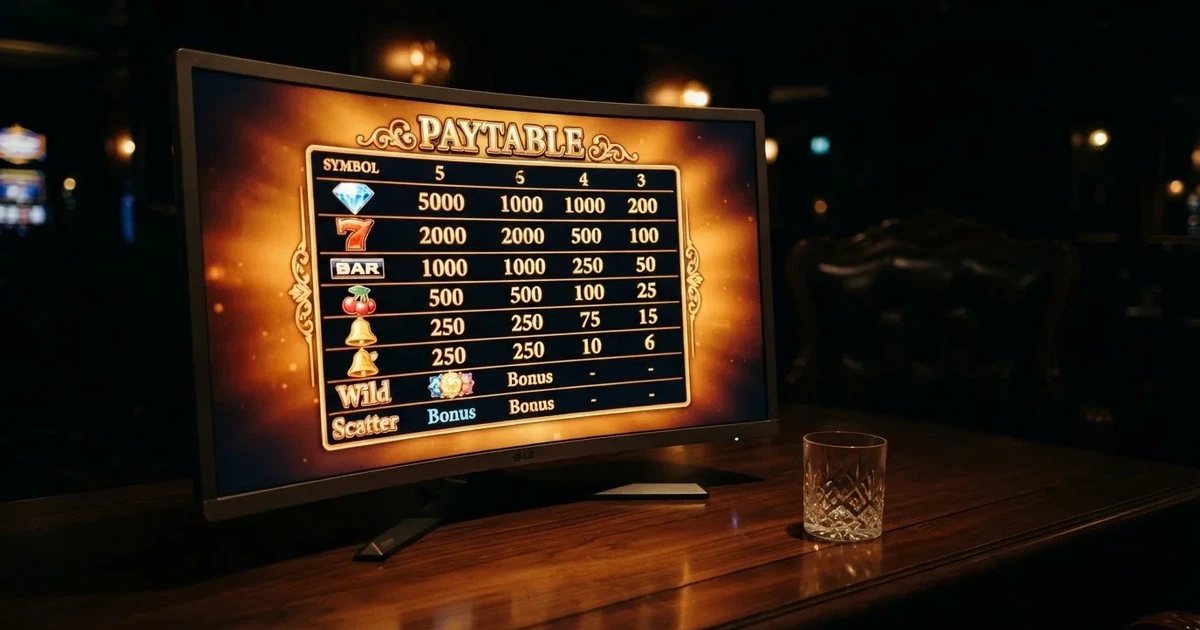
A reader typing “best RTG casinos Australia” into a search engine is, almost by definition, being shown a list of offshore Curaçao-licensed sites that Real Time Gaming (RTG) supplies games to. None of those sites may lawfully take a bet from a person in Australia. The Interactive Gambling Act 2001 (IGA), as strengthened in 2017, makes the supply of online casino games and online pokies to Australians a civil offence, and the ACMA has spent the years since then issuing formal warnings, asking Australian ISPs to block domains, and watching most of those operators simply rebrand and reappear under a new name. That mismatch — between what an Australian sees advertised and what an Australian is actually allowed to play — is the subject of this page, and the only honest way to write about “best RTG casinos Australia” is to write about that gap first.
The rest of the page works through it: which offshore brands the ACMA has acted against and on what dates, what RTG itself actually does as a studio, what onshore Australian gambling looks like for someone who wants RTG-style titles without leaving the legal frame, and what a reader’s practical options are once the offshore route is set aside. There is one calculation, on the ACMA’s blocking rate, because the cumulative effect of seven years of enforcement is itself part of the picture.
Table of Contents
- How the comparison is built — and why it cannot recommend a winner
- The regulator’s picture — what seven years of blocking looks like
- What RTG actually is, and why it shows up in Australian search results anyway
- Onshore Australia — what a player who wants RTG-style titles can actually do
- What the offshore RTG route actually costs an Australian player
- The brands, one by one
- Where RTG titles actually appear in third-party listings
- The reform on the horizon — and what it does not change
- Where this leaves an Australian reader who searched for “best RTG casinos”
- Responsible gambling in Australia — what is and is not connected to an RTG site
- Frequently asked questions
How the comparison is built — and why it cannot recommend a winner
Any honest “best RTG casinos” list, set against the IGA, is a comparison of brands the regulator has publicly acted against. It is not a leaderboard. There is no operator on it that an Australian can lawfully deposit with, and the page does not pick one of them as a place to play.

The comparison is structured around five matters: the brand as it appears in the ACMA’s published register, the regulator’s action and the date the action was taken, the operator entity named in that action, and whether research could substantiate a connection between that brand and RTG or its near-neighbours from a third-party source. A sixth column — the broader regulatory status — sits underneath the whole set as a single repeated note: every brand below is prohibited from offering online casino games to a person physically in Australia, irrespective of any licence the site displays in its footer. That repetition is the point, not padding. It is the line an Australian reader cannot afford to forget while comparing one warning against another.
| Brand | ACMA action and date | Operator named by the ACMA | Subject support |
|---|---|---|---|
| RocketPlay | Formal warning — March 2026 | Pulsup Ltd | — |
| Level Up Casino | Formal warning — May 2022 | Dama N.V. | Listings-only (Wazdan) |
| Woo Casino | Formal warning — March 2025 | Dama N.V. | — |
| Spirit Casino | Formal warning — May 2025 | Dama N.V. | — |
| National Casino | Formal warning — July 2025 | Consolutetish S.R.L. | Listings-only (Betsoft; en.wikipedia.org; Pragmaticplay) |
| Bizzo Casino | Formal warning — July 2025; earlier 2022 | Consolutetish S.R.L.; earlier TechSolutions | — |
| Ignition Casino | Formal warning — July 2025 | Bamboo Media | — |
| Instant Casino | Formal warning — February 2025 | EOD Code SRL | — |
| Jackbit | Formal warning — April 2026 | Ryker B.V. | — |
| Casino Intense | Formal warning — April 2025 | Sterplay Holding Ltd | Listings-only (1spin4win; en.wikipedia.org; gamblingcommission.gov.uk) |
| Sky Crown | Formal warning — September 2022 | Hollycorn N.V. | — |
Two rows in that table carry a Subject support note. The “listings-only” tag is doing real work: it says that the third-party directories used to research this page name those brands as carrying RTG-family or RTG-adjacent content, without claiming that RTG itself confirms the integration. Where that note is absent, no third-party listing research carried found a clean connection to the studio — and the brand is still on the list because the ACMA warned it, not because anyone confirmed what was running on its backend.
The dates read backwards, with 2026 actions on RocketPlay and Jackbit sitting at the top of a register that already runs back to 2022. That pattern — same operator entity warned twice under different brand names, or a parent company rotating shells while the warning ledger grows — is itself the picture.
The regulator’s picture — what seven years of blocking looks like
The ACMA’s first request to Australian internet service providers to block an illegal gambling website went out in November 2019. By June 2026, the cumulative total was 1,751 blocked domains — illegal gambling sites and affiliate marketing pages that pointed Australian traffic at them — and more than 230 unlicensed services had left the Australian market since enforcement was strengthened in 2017. The most recent published round, on 26 June 2026, added twelve more: 7Signs, ChromaBet, Donbet, Duospin, Freshbet, Slots Gem, Jacks Club, Lucky Start, Pointsbetz, Spinrise, Vinyl Casino and Wildsino. None of those twelve names were among the eleven covered above; they sit in the same general population of Curaçao-licensed offshore marketing to Australians, but they had not yet risen to the formal-warning stage the page’s comparison is built on.
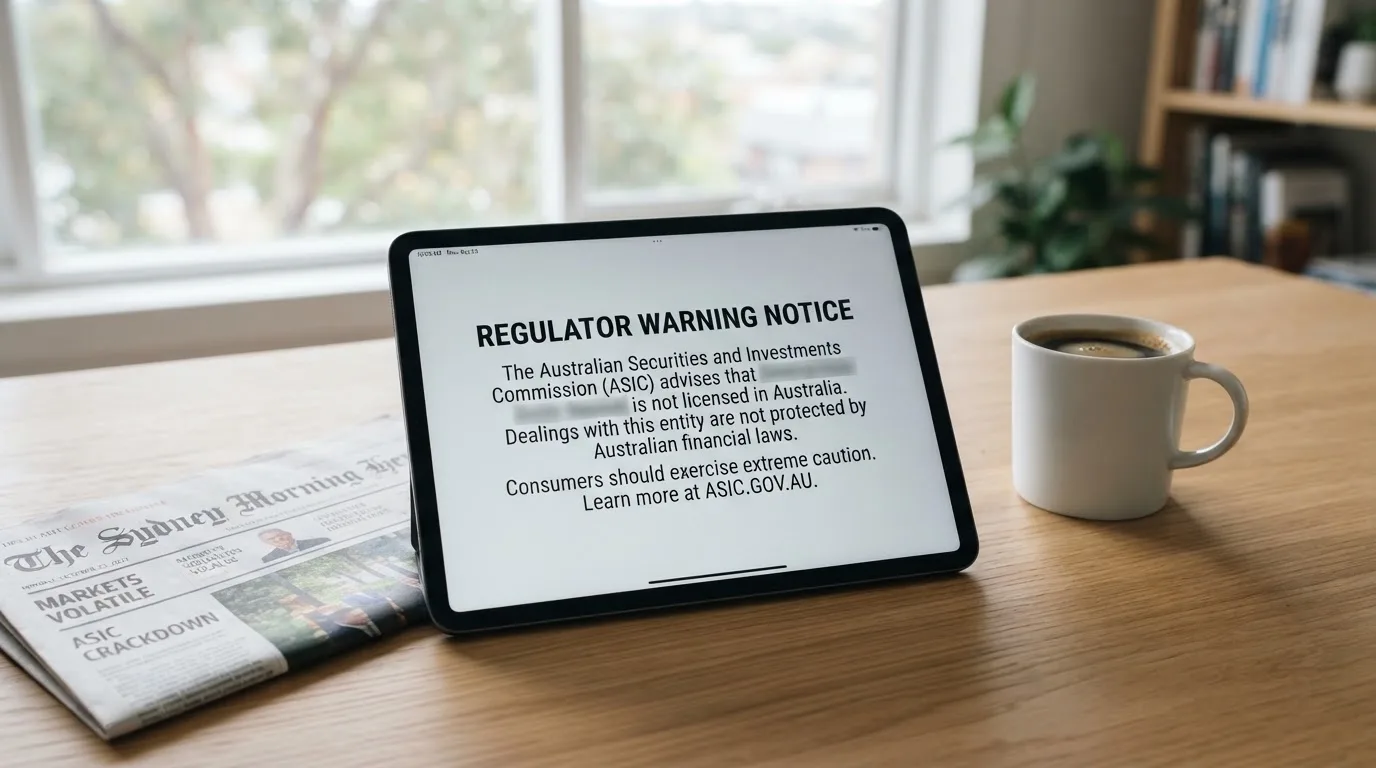
That blocking rate is the one number the page can run a calculation on. The total — 1,751 domains blocked since November 2019 — sits in a register snapshot whose day and month are fixed. The calculation is the running pace at which the ACMA has added to that list, and the page presents it as a band rather than a single figure.
Working from the first blocking request in November 2019 to the 26 June 2026 snapshot, the ACMA averaged roughly 265 blocks per year over the full period, with the recent pace running closer to 220 per year as the long tail of affiliate pages gets cleared. Put in plain prose: assuming the pace holds, an Australian ISP customer can reasonably expect somewhere between 200 and 300 new illegal domains added to the blocking list each year, with the figure skewed toward affiliate and rebrand pages rather than toward entirely new casino brands. The band, not the average, is the honest way to state it: the average smooths over rounds where the ACMA cleared twenty affiliate pages in one action and rounds where it picked off a single high-traffic casino. Both happen, and the variance is the information.
What the rate does not say is whether enforcement is “winning”. H2 Gambling Capital’s 2025 estimate is that Australians lose about A$3.9 billion a year to illegal offshore sites, and that the share of gambling flowing through legal channels fell from 74% in 2021 to 64%. A blocking register that grows by a couple of hundred domains a year is, in that frame, working against a market whose dollar volume is large enough to absorb the loss of any single blocked domain in a week. The arithmetic is not encouraging.
What RTG actually is, and why it shows up in Australian search results anyway
Real Time Gaming was founded in Atlanta, Georgia, in 1998, moved its development operations to Heredia, Costa Rica, between 2007 and 2008, and was acquired in January 2007 by Hastings International, a Curaçao-based company. The studio is the supplier; it builds the slots and the table-game software, then licenses the catalogue to operators who run the casino front-end and hold the player funds. The Curaçao ownership has been constant for nearly two decades, and that is why the brands above carry Curaçao licence plates in their footers rather than anything Australian.
Two design choices in the catalogue matter for the comparison on this page. First, RTG does not allow casino operators to alter payout settings on its slot and video poker games — the return-to-player (RTP) is set in the build, not negotiated by the operator. That is a partial guard against the worst kind of operator-side rigging, and it is the reason a third-party listing can quote an RTP figure for an RTG title with some confidence. Second, RTG caps its own liability through maximum-bet restrictions intended to keep any single progressive jackpot game’s payout at or below $50,000. The cap is not a player-protection feature in any consumer sense — it is a liability cap on the studio’s side — but it explains why the biggest RTG progressive wins you can find online tend to land somewhere below that figure rather than above it.
The studio’s catalogue also carries one notable scar. In 2004, a player won $1.3 million from a $1,000 deposit playing Caribbean 21 on RTG software at the Hampton Casino; RTG capped Caribbean 21’s maximum bet at $5 shortly afterwards and then removed the game from its portfolio entirely. The episode is a useful illustration of the studio’s posture: when a game gets hot, the studio changes the game rather than pay out at scale. A player who picks RTG titles because the studio “controls” the math is picking a model where the studio controls the math in both directions.
Ozwin Casino, one of the more prominent Australian-facing operators running on RTG software, was blocked by the ACMA for violating the IGA. The block is part of the 1,751-website total above; the name is one of the better-known ones because it spent money on Australian-facing affiliate marketing before it landed on the regulator’s list.
Onshore Australia — what a player who wants RTG-style titles can actually do
The IGA prohibits the supply of online casino games and online pokies to a person in Australia. It does not prohibit the supply of electronic gaming machines (EGMs) in a licensed venue, and it does not prohibit wagering on races and sport placed before the event. The split is the practical shape of Australian gambling law, and it is the reason a reader searching for “RTG casinos Australia” finds offshore marketing and little else.
What an Australian can lawfully do, set against RTG-style content, splits into three bands:
- Licensed land-based venues. Every state and territory has its own regulator and its own EGM network, running Aristocrat, IGT and Ainsworth titles in pubs, clubs and casinos. Aristocrat Leisure, founded in 1953 and listed on the ASX since 1996 under the ticker ALL, is the largest gambling-machine manufacturer in Australia and the second-largest slot-machine manufacturer worldwide behind International Game Technology. Aristocrat reported 2025 revenue of A$6.30 billion, normalised net profit after tax and amortisation of A$1.55 billion, and 7,400 employees. The machines in those venues are regulated at state level — not RTG, but they cover the same kind of five-reel, payline-driven slot experience an offshore RTG site is marketing.
- Licensed online wagering. Wagering on racing and sport, placed before the event, is licensable in Australia — in practice licensed by the Northern Territory Racing and Wagering Commission (NTRWC), which regulates 52 of Australia’s online bookmakers, including Sportsbet, Bet365 and Ladbrokes. The NTRWC has no full-time staff and meets once a month in Darwin, a structural detail that came up in April 2026 reporting on a bill to reform the de facto regulator. The point for the reader: licensed online wagering is a real product, RTG-style slots are not, and the brand logos an Australian sees in a “best casinos” article sit on one side of that line or the other.
- Social casinos and free-play titles. Aristocrat’s online arms include Product Madness (social casino games) and Aristocrat Interactive (regulated real-money online gambling). Aristocrat Interactive was formed in April 2024 by combining Aristocrat’s Anaxi unit with the newly acquired NeoGames group, which includes Aspire Global, BtoBet and Pariplay. None of those products is a Real Time Gaming product — Aristocrat’s interactive catalogue is its own — but it is the closest an Australian reader gets to a studio-portfolio online without crossing into the offshore prohibited space.
A reader who wants RTG titles specifically has no legal onshore path to them. A reader who wants five-reel slot content with a regulated framework has a real one.
What the offshore RTG route actually costs an Australian player
Three structural costs sit on every brand in the comparison above, and they do not move between operators:
No Australian consumer protection. The IGA targets the provider, not the player — an Australian is not personally at risk of prosecution for using an offshore site. But the same IGA means there is no Australian complaints body, no Australian dispute resolution, and no recourse if the operator refuses a withdrawal. Offshore Curaçao licence plates carry their own regulator, and the practical distance between an Australian player and Curaçao enforcement is the practical distance between the player and any remedy.
No connection to BetStop. BetStop, the National Self-Exclusion Register, has been live since August 2023 and binds Australian-licensed online and phone wagering services. An offshore RTG casino is not bound by it. A player who has registered with BetStop because they wanted to stop gambling online has, on paper, stopped at the licensed end of the market. The offshore end is unaffected.
Payment friction. Credit cards, credit-related products and digital currency are banned as payment for licensed online wagering since 11 June 2024, with penalties up to $247,500 for operators that breach the rule. Legal deposit routes for licensed wagering are debit card, bank transfer, PayID/Osko and BPAY. An offshore site that asks an Australian for a credit card or a crypto deposit is operating outside the Australian rules, and the payment friction that creates — declines, chargebacks, frozen withdrawals — is a known feature of the offshore route rather than a bug.
Tax status of any winnings. Gambling winnings of a recreational Australian player are not assessable income (section 6-5 ITAA 1997) and losses are not deductible, unless the person carries on a business of gambling. The model answer is to check with the Australian Taxation Office (ATO); the practical answer for someone whose winnings are sitting on an offshore site they cannot lawfully withdraw is that the question does not yet arise.
The brands, one by one
RocketPlay
The ACMA’s March 2026 formal warning names Pulsup Ltd as the operator behind Rocketplay. Dama N.V. was warned over the same brand in May 2022 — the corporate shell on the Australian-facing site has rotated at least once since the first warning. The brand does not appear in the third-party listings research used to compile this page, so the Subject support column for RocketPlay sits empty: the page records what the regulator did, not what an outside directory could confirm was running underneath the brand. A reader who arrived at RocketPlay via an Australian-facing affiliate page in 2026 has, on this page’s evidence, been pointed at an operator the regulator warned twice over four years.
Level Up Casino
Dama N.V. received an ACMA formal warning covering six brands in May 2022, and Level Up was one of them. The Subject support note — “listings-only (Wazdan)” — comes from a third-party studio directory that names Level Up as carrying content from an RTG-adjacent supplier; it is not an RTG confirmation, and the page does not present it as one. Level Up is the second Dama N.V. brand in the comparison, and the cluster of Dama N.V. names — Bambet, Dazard, Level Up, Rocketplay, Wild Tornado and Cobra Casinos in the original 2022 warning, plus Woo Casino and Spirit Casino in the 2025 follow-ups — is the clearest single picture of how one operator entity accumulates warnings across brands over time.
Woo Casino
Woo Casino was the subject of an ACMA formal warning to Dama N.V. in March 2025, two and a half years after the original Dama N.V. six-brand warning in May 2022. The delay is the read: it is not that Dama N.V. stopped marketing to Australians after 2022, it is that the regulator moved on each brand as the evidence accumulated. Woo is a useful marker for the kind of Australian-facing Dama N.V. brand the ACMA has caught up with in the second wave of enforcement.
Spirit Casino
Spirit Casino sits in the same May 2025 Dama N.V. follow-up warning as Woo Casino. No third-party listing research connected Spirit Casino to RTG content specifically, so the Subject support column is empty. The verdict line is short: a brand the regulator warned in 2025, operating under an operator entity the regulator has now warned three times across four years.
National Casino
National Casino’s July 2025 formal warning names Consolutetish S.R.L. as the operator. The Subject support note cites third-party listings on Betsoft, en.wikipedia.org and Pragmaticplay — those sources name National Casino in catalogues adjacent to RTG rather than confirming RTG integration. The page records the listings as the listings report them and stops short of any affirmation that RTG is on the backend. Consolutetish S.R.L. was also warned over Bizzo Casino in the same July 2025 round, which is the second Consolutetish brand in eleven entries.
Bizzo Casino
Bizzo Casino carries two ACMA entries: the July 2025 Consolutetish S.R.L. warning and a 2022 formal warning to TechSolutions (CY) Group Limited and TechSolutions Group N.V. That history is the longest regulator trail on the page — a brand the regulator has now caught up with under a different corporate parent. No third-party Subject support was substantiated, so the comparison column is empty; the regulatory record alone is the substance of the entry.
Ignition Casino
Bamboo Media was the operator entity named in the ACMA’s July 2025 warning over Ignition Casino. Ignition is a longer-running offshore brand than most of the eleven on this page — it has been around long enough that affiliate marketing pages in Australian-facing search results still surface it. The Subject support column is empty; the verdict is that the regulator has now moved on a brand the affiliate layer has spent years promoting.
Instant Casino
EOD Code SRL received an ACMA formal warning over Instant Casino in February 2025. The Subject support column is empty. The single line on the page is the warning date and the operator entity, because that is what the research record carries.
Jackbit
Ryker B.V. was named in the ACMA’s April 2026 warning covering Jackbit and CasinOK. April 2026 sits at the recent end of the regulator’s published actions; the page reads Jackbit as a brand the ACMA is still actively adding to its register rather than one it warned years ago and has left alone. No Subject support noted.
Casino Intense
Sterplay Holding Ltd was the operator entity named in the ACMA’s April 2025 warning over Casino Intense. The Subject support note — “listings-only (1spin4win; en.wikipedia.org; gamblingcommission.gov.uk)” — comes from third-party sources, including the UK Gambling Commission’s public register, which lists Casino Intense among operators it has dealt with. None of those listings confirms RTG integration; the page records them as the listings report them.
Sky Crown
Hollycorn N.V. received a formal warning covering Sky Crown and Blue Leo, published by the ACMA in September 2022. Sky Crown sits at the older end of the eleven-brand register and is the only entry where the ACMA’s own publication is a standalone PDF rather than a register entry. The Subject support column is empty.
Where RTG titles actually appear in third-party listings
Two of the eleven brands — National Casino and Casino Intense — connect to third-party listings that name RTG-family or RTG-adjacent content. The page records those connections as the listings report them, with the source named, because the rule on this register is that a “listings-only” finding is a third-party claim, not an operator claim, and the reader should see which third party is doing the claiming.
Beyond those eleven, the broader third-party landscape research turned up runs the way RTG-adjacent catalogues generally do: 1spin4win, a slot provider founded in 2021 by a group of professionals with 15 years of iGaming experience, reports a portfolio of more than 190 online slots, more than 1,000 partnerships with online casinos and aggregators, and 46% growth in total bet sum in the first half of 2025 against the first half of 2024; Betsoft, founded in 2006, describes a catalogue of more than 200 RNG games and lists two named RTPs from its own site — Good Girl Bad Girl 2 at 96.22% with “Very High” volatility and a 15.59% hit rate, The Slotfather at 95.69% with “Medium” volatility and an 8.17% hit rate. Neither of those studios is RTG, but both sit in the same offshore-Curaçao, multi-operator distribution model that delivers RTG titles to the brands above.
The point of including them is to show what an honest RTG-adjacent picture looks like in third-party listings: a publisher’s own website naming its own catalogue, with the RTP figures the publisher itself publishes. Those are the kinds of figures a reader could check themselves. They are not the figures the comparison table above is built on, because the comparison table above is built on the ACMA register, not on third-party catalogues.
The reform on the horizon — and what it does not change
The Interactive Gambling Amendment (Gambling Reform) Bill 2026 passed Parliament on 19 August 2026. Its advertising and inducement measures commence on 1 January 2027. That is a law with a start date that has not yet arrived at the time of writing, so a reader reading this page in late 2026 sees a regime whose advertising crackdown is enacted but not in force.
The reform does not change the underlying IGA prohibition on the supply of online casino games to Australians. It changes what licensed Australian wagering operators and their marketing partners can do around the edges of that prohibition. The eleven brands in the comparison above are unaffected by the reform in any direct sense — they remain prohibited services — but the affiliate marketing pages that have spent years surfacing them in Australian search results will be operating in a tighter Australian framework from January 2027 onwards.
Where this leaves an Australian reader who searched for “best RTG casinos”
The honest answer is that the search was pointed at a product category that is prohibited in Australia, on a comparison list of brands the regulator has publicly acted against, on terms that put the reader outside any Australian consumer-protection regime if anything goes wrong. The onshore alternative — Aristocrat and Ainsworth EGMs in licensed venues, licensed wagering through NTRWC-licensed bookmakers, Aristocrat Interactive’s regulated real-money online product — exists, and it is the route that sits inside the IGA rather than across it.
For a reader who arrived here to find out which offshore brand to pick: the comparison above is not built to make that pick. It is built to show what the regulator has done and on what dates, so a reader can see, brand by brand, what they would actually be depositing into if they acted on the marketing they were served.
Responsible gambling in Australia — what is and is not connected to an RTG site
The responsible-gambling supports an Australian reader can actually use are all anchored to Australian-licensed services, which is part of why they do not reach an offshore RTG casino.
- National Gambling Helpline — 1800 858 858. Free, 24/7, with web chat at Gambling Help Online. The line is staffed for any Australian affected by their own or someone else’s gambling, regardless of where the gambling took place.
- BetStop — the National Self-Exclusion Register. Live since August 2023. BetStop binds Australian-licensed online and phone wagering services. An offshore RTG site is not bound by BetStop, which is one of the structural costs of the offshore route the page has already covered.
- State and territory self-exclusion schemes. Every state and territory runs its own venue-level self-exclusion register for pubs, clubs and casinos. Those registers cover the licensed EGM estate, not the offshore online estate.
If an Australian reader is using, or considering using, an offshore RTG site despite the IGA prohibition, the supports above are still the right place to start. The helpline in particular takes calls from people whose gambling is happening outside the licensed frame, and the counsellors there are not in a position to recommend any specific offshore brand — they are in a position to help with the gambling itself.
Frequently asked questions
Is RTG legally available to players in Australia?
No. The Interactive Gambling Act 2001 prohibits the supply of online casino games, including RTG titles, to a person in Australia, and the ACMA has issued formal warnings to offshore operators for doing exactly that. The product category is prohibited, not the studio; Real Time Gaming itself is a legitimate software supplier whose games are lawful in the jurisdictions that allow them. The legal problem sits with whoever offers them to an Australian IP address.
What kinds of games does RTG make?
RTG builds online slots, table games and video poker software, all of which the studio ships to operators running under its own licence framework. The slots catalogue is the brand’s centre of gravity — five-reel, payline-driven titles with progressive jackpots that the studio caps at roughly $50,000 per game to limit its own liability. Table games include blackjack variants and Caribbean 21, which the studio removed from the portfolio after a 2004 progressive-style payout at the Hampton Casino.
Are RTG games offered at land-based venues in Australia?
No. RTG is an online software supplier; it does not manufacture electronic gaming machines for Australian venues. The EGMs in Australian pubs, clubs and casinos are made by Aristocrat, International Game Technology and Ainsworth — different studios, different product category, regulated at state and territory level. An Australian player who wants the closest onshore equivalent to an RTG slot experience is playing an Aristocrat or IGT title in a licensed venue, not an RTG title offshore.
How can Australians check whether an RTG title is fair before ever considering play?
The honest answer is that there is no Australian framework in which to do that check, because the IGA prohibits the supply in the first place. Outside Australia, RTG’s published catalogue carries RTPs set by the studio itself, with the studio stating it does not allow operators to alter payout settings — but that assurance is the studio’s, not an Australian regulator’s. A reader who wants third-party certification of an RTG title’s math would need to be playing in a jurisdiction where testing labs have access to the live build, which is not Australia.
Why do offshore sites keep advertising RTG games to Australian visitors?
Because the offshore route is profitable. H2 Gambling Capital’s 2025 estimate is that Australians lose about A$3.9 billion a year to illegal gambling sites. The ACMA can block domains — 1,751 of them since November 2019 — and the operator simply registers a new one. The marketing spend is real and the audience is real, and the cost of being blocked is a week’s worth of rebranding. The economics explain the persistence better than any claim about RTG’s quality.
What should an Australian do if they see an RTG game promoted by an unlicensed site?
The ACMA accepts complaints about illegal online gambling through its website, and a reader who sees an unlicensed Australian-facing RTG site can report it there. The more practical question is what the reader is doing on the site at all, and on that question the responsible-gambling supports in the section above — Gambling Help Online, the National Gambling Helpline on 1800 858 858, BetStop for the licensed wagering channels — are the right place to start regardless of whether a complaint is filed.