
Best RTP slots in Australia: what RTP actually is, who sells it to Australians, and at what cost
Data current as of 28 October 2026 and checked against the Australian Communications and Media Authority’s published list of formal warnings and blocking requests.
The marketing of “high RTP” slots to Australian players runs almost entirely through offshore sites that no Australian regulator can licence. Each of the eleven brands on the table below carries an ACMA formal warning, a blocking request, or both. None holds an Australian licence for the product it sells, because the product itself — online casino games and online pokies — cannot be licensed under the Interactive Gambling Act 2001. The pages that follow run the eleven against the same five columns, work through what a slot’s return-to-player figure actually measures, set out why the offer sits where it does in Australian law, lay out what recourse an Australian player has if something goes wrong, and compare the paytable structure behind the offshore marketing to the licensed pokies in Australian venues.
Table of Contents
- The current landscape: eleven offshore brands and the warnings against them
- The eleven brands the ACMA has warned, brand by brand
- The fundamentals of RTP and what the figure actually measures
- The prohibition: why offshore high-RTP slots sit outside Australian law
- Responsible gambling when the offer is outside Australian law
- Paytables, providers and the games themselves
- Frequently asked questions
The current landscape: eleven offshore brands and the warnings against them
The eleven brands in the table are not a recommendation list. Each one is named because the Australian Communications and Media Authority has issued a formal warning about it for offering prohibited interactive gambling services to Australians. They share a product, they share an audience, and they share an outcome. The “subject support” column asks a narrower question — does the brand itself list high-RTP slot content as a separate category from any other casino game? — and the answer, for most of them, is that the listings do not bother to make that distinction. Slots are slots. The figure on the paytable is what gets marketed, not the brand.
| Brand | ACMA action | Date | Operator named by the ACMA | Subject support |
|---|---|---|---|---|
| RocketPlay | Formal warning under the IGA 2001 | March 2026 | Pulsup Ltd | — |
| Level Up Casino | Formal warning under the IGA 2001 | May 2022 | Dama N.V. | listings only — BGaming |
| Woo Casino | Formal warning under the IGA 2001 | March 2025 | Dama N.V. | — |
| Spirit Casino | Formal warning under the IGA 2001 | May 2025 | Dama N.V. | — |
| National Casino | Formal warning under the IGA 2001 | July 2025 | Consolutetish S.R.L. | listings only — Wikipedia |
| Bizzo Casino | Formal warning under the IGA 2001 | July 2025 (earlier 2022) | Consolutetish S.R.L. | — |
| Ignition Casino | Formal warning under the IGA 2001 | July 2025 | Bamboo Media | — |
| Instant Casino | Formal warning under the IGA 2001 | February 2025 | EOD Code SRL | — |
| Jackbit | Formal warning under the IGA 2001 | April 2026 | Ryker B.V. | — |
| Casino Intense | Formal warning under the IGA 2001 | April 2025 | Sterplay Holding Ltd | listings only — ABC, ACMA, Crown Melbourne |
| Sky Crown | Formal warning under the IGA 2001 | 2022 | Hollycorn N.V. | — |
Three things stand out from the table. The first is operator repetition: Dama N.V. alone appears four times, with different brand names attached. The second is the spread of warning dates, which runs from May 2022 to April 2026 and shows the ACMA keeping the action current against a market that keeps rebranding. The third is that the “subject support” column is mostly empty — the marketing of high-RTP slots to Australians is not so much a category these sites carve out as a phrase that floats across the entire offshore catalogue.
The next section steps through the eleven brands individually. It does not rank them. The only ordering on the page is the order of ACMA action, newest first within each parent operator.
The eleven brands the ACMA has warned, brand by brand
RocketPlay
The ACMA issued a formal warning over RocketPlay to Pulsup Ltd in March 2026 — the most recent action on this list. The site offers online pokies and table games to Australian customers through an offshore-licensed platform. Rocketplay had already been the subject of a separate ACMA warning over its previous operator, Dama N.V., back in May 2022, when it appeared alongside five other Dama brands. The 2026 action names a different corporate owner and a domain that is specifically Australian.
The brand has changed hands and the spelling of the domain has changed; the legal position has not. A formal warning is not a final order — the ACMA does not publish one — but it is a public, regulator-issued signal that the named operator has been told to stop offering prohibited interactive gambling services to Australians and has chosen to continue. The brand is still live, the offering is still live, and the only thing that is newer than the 2022 action is the regulator’s patience with the pattern.
Level Up Casino
Level Up appeared in the May 2022 Dama N.V. warning round, alongside Bambet, Dazard, the original Rocketplay, Wild Tornado and Cobra Casinos. The warning was the ACMA’s response to the offering of prohibited interactive gambling services to Australians. Level Up’s slot catalogue, as listed by Bgaming.com, runs across the studio’s full range of pokies, table games and live-dealer content — which is the same product mix as every other brand on this list, with the same absence of any separate “high RTP” category on the public-facing site.
A 2022 warning is now four years old. The site, the marketing and the offer have not been amended in any visible way to align with Australian law. Time has not changed the legal position. It has only widened the gap between the regulator’s record and the brand’s continuing presence in the market.
Woo Casino
The ACMA issued a further formal warning to Dama N.V. in March 2025, this time covering Woo Casino. The 2022 round had already named Dama over six brands; the 2025 round added two more. The pattern is the same one the ACMA has logged against every Dama property on this list: an offshore-licensed casino accepting Australian customers, offering the prohibited product, and persisting after the warning. The new action is on the parent, not the brand, and that is the most informative thing about it. The brand is a label; the operator is the entity that gets named.
The label changes. The operator carries the warning forward. Woo is, in regulatory terms, Dama in a different jersey — the kind of distinction that matters to a marketer and to nobody else.
Spirit Casino
The second of the two Dama brands added in 2025, Spirit Casino, picked up its warning in May 2025 — two months after Woo. Same parent, same product, same outcome. Spirit’s marketing leans on a fast-withdrawal pitch and a large games catalogue, neither of which alters the underlying legal classification of the offer to Australians.
Spirit does not extend an existing picture; it confirms the one already on it. For a player trying to read the ACMA’s record as evidence of anything other than a regulator that will keep logging the same operator under fresh names, this is the entry that makes the case hardest to read otherwise.
National Casino
National Casino picked up its warning in July 2025 under Consolutetish S.R.L. Wikipedia’s entry for the brand describes it as a Curaçao-licensed online casino offering slots, table games and live-dealer content, founded in 2020 — a description that lines up with the rest of this list and offers no separate category for high-RTP games. The brand’s own marketing, like every other brand in this section, treats the slots catalogue as one undifferentiated offer.
The ACMA named the corporate owner rather than the brand. That is consistent with how the regulator frames these actions: as interventions against the entity offering the service, not the trade name carrying it. National Casino is the operator’s product; Consolutetish is the operator.
Bizzo Casino
Bizzo is the only brand on this list that has been warned twice. The first action named TechSolutions (CY) Group Limited and TechSolutions Group N.V. in 2022; the second named Consolutetish S.R.L. in July 2025. Two different corporate owners, two different warning rounds, the same brand still offering the prohibited product to Australians.
The 2022 warning did not stop the offering; the 2025 warning suggests it has not stopped it since. For a player weighing whether the next round will be different, the record here is the one that gives the regulator’s patience the least room to keep absorbing. Bizzo is the test case for what “formal warning” actually does in a market where the operator can change names and continue.
Ignition Casino
Ignition Casino sits in the July 2025 warning round under Bamboo Media. The brand’s history is mostly on the poker side of the offshore market, and its Australian-facing marketing has carried casino content alongside the poker product for years. The IGA does not distinguish between a brand that started in poker and a brand that started in slots — the prohibition is on offering “interactive gambling services” to Australians, and online casino games are an interactive gambling service.
Ignition’s shift from a poker-first to a casino-inclusive offer to Australian customers is the exact change in product mix the IGA was amended to capture. The warning is on the operator now offering the wider product, and the warning’s date tells you when the offer broadened.
Instant Casino
The ACMA issued a formal warning to EOD Code SRL over Instant Casino in February 2025. The brand’s marketing positions itself on instant withdrawals and a large game catalogue — both of which are common across this list. “Instant” describes the withdrawal promise of the site, not the legal position of the player.
The IGA’s prohibition is on the offer, not on the speed at which any winnings (assuming there are any) are paid out. An Australian player dealing with an offshore operator still has no Australian complaints body to escalate to if the withdrawal does not arrive, no matter what the homepage says. The brand name makes a speed claim. The legal frame sets a different ceiling on what the player can enforce.
Jackbit
Jackbit picked up its warning in April 2026 under Ryker B.V. — the second-newest action on this list. Jackbit’s marketing has leaned on a crypto-friendly image and a broad game catalogue. The credit-card and digital-currency ban that took effect on 11 June 2024 applies to Australian-licensed wagering services only; an offshore site can still ask an Australian customer for either, because the site is not licensed in Australia at all and the ban does not reach it.
The brand is recent, the warning is recent, and the legal position is the same as every other brand on this list. What is different is the payment-method positioning, which is the one area where the offshore brand can offer something the licensed market cannot — for the obvious reason that the offshore brand is not subject to the rule.
Casino Intense
Casino Intense picked up its warning in April 2025 under Sterplay Holding Ltd. Australian outlets including the ABC, the ACMA’s own communications, and Crown Melbourne’s coverage of land-based casino games have all named the brand in passing, the highest cross-source footprint on this list. The legal status is the same as the rest.
Australian media coverage of a brand does not change its standing under the IGA, but it is useful background for an Australian player trying to trace who actually operates the site they are looking at. The three outlets that have named Casino Intense do so for different reasons, and none of those reasons make the brand any closer to being legal in Australia.
Sky Crown
Sky Crown’s formal warning sits in the oldest entry on the table: Hollycorn N.V., September 2022. Hollycorn was named over both Sky Crown and Blue Leo. The 2022 action is the regulator’s first substantial public step against the parent, and it predates most of the ACMA’s blocking work by several years.
The brand still operates, the offering to Australians has not been altered, and the warning remains on the ACMA’s published register. That is the picture for a brand that has now lived with a formal warning for the better part of four years: the offer continues, the regulator continues to log it, and the gap between the two stays wide. Sky Crown is what “the ACMA has issued a warning” looks like in practice — a public record that the regulator has acted, without the operator changing course.
The fundamentals of RTP and what the figure actually measures
A slot’s return-to-player figure is a theoretical average, calculated over an extremely large number of spins and published on the game’s paytable. It is expressed as a percentage of the money wagered that the game is programmed to return to players across that very long run. A 96% RTP slot is, on the maths, expected to give back A$96 of every A$100 wagered across millions of spins. The remaining A$4 is the house edge, also called the house percentage or the margin. The two numbers are the inverse of each other. Every RTP figure on every paytable is also a house edge figure in disguise.

Three things follow from the definition. The first is that the figure is an average, not a guarantee. A 96% RTP slot played across a hundred spins can pay back more than the wager or much less — the variance dominates any short session, and that variance is what slot designers call volatility. A high-volatility slot will swing further from the average in either direction; a low-volatility slot will hug it more closely. The two figures measure different things, and the marketing sometimes confuses them on purpose, because a high-RTP figure on a high-volatility game can produce long cold runs that look, to a player, exactly like a slot that is not paying out.
The second is that the figure has to be set by the game designer and tested before the game goes live. Testing is done by independent laboratories — companies that specialise in certifying random number generators and payout percentages against the developer’s claim. The result is published on the paytable as a single percentage. In the United States, state regulation sets minimum payout percentages that vary by jurisdiction: Nevada requires at least 75%, Mississippi at least 80% and New Jersey at least 83%. Australia’s licensed electronic gaming machines in clubs, hotels and casinos are subject to their own state-level technical standards, which include return-to-player disclosure requirements and the publication of return figures on request. The offshore sites pitching to Australians are not subject to any of these regimes.
The third is that the calculation is the same wherever the slot is hosted. A 96% RTP slot is a 96% RTP slot whether it sits in a Crown Melbourne cabinet, in a Sydney pub club, or in an offshore site’s library. What changes is everything around it: who licenses the venue, who regulates the player, who is on the other end of a complaint, and what recourse exists when a payout does not arrive. The figure on the paytable is identical; the legal frame around it is not.
For context on what “high RTP” looks like against the other games on a casino floor: in baccarat the house edge is 1.06% on the Banker bet, 1.24% on the Player bet and 14.36% on the Tie. In blackjack, with optimal strategy, the house edge is about 0.28% under liberal Las Vegas Strip rules and about 0.43% under Atlantic City rules. In craps, Pass and Come come in at 1.41%, Don’t Pass and Don’t Come at 1.36% and Any Craps at 11.11%. A well-designed slot has a higher house edge than any of those table games. That is the design. The RTP figure on the paytable is the same number, expressed as the inverse, and the inverse is what gets marketed when it sits in the ninety-something range rather than the ninety-eight range the marketing prefers.
The prohibition: why offshore high-RTP slots sit outside Australian law
The Interactive Gambling Act 2001, strengthened by the Interactive Gambling Amendment Act 2017, makes it an offence to provide online casino games and online pokies to a person in Australia. Wagering on races and sporting events placed before the event is licensable; lotteries and keno are licensable; online casino games are not, in any state or territory. The Northern Territory Racing and Wagering Commission regulates 52 of Australia’s online bookmakers — including Sportsbet, Bet365 and Ladbrokes — for tax reasons, and the commission has no full-time staff and meets once a month in Darwin. None of those 52 bookmakers is licensed to take online casino bets. The licence frame ends at the casino wall, and the offshore sites on this list sit on the other side of it.

Enforcement is the ACMA’s job. The regulator investigates, issues formal warnings, and directs Australian internet service providers to block illegal sites. As of the ACMA’s June 2026 round, 1,751 illegal gambling and affiliate marketing websites have been blocked since the first blocking request in November 2019, and more than 230 unlicensed gambling services have left the Australian market since enforcement was strengthened in 2017. The June 2026 round alone asked ISPs to block twelve more: 7Signs, ChromaBet, Donbet, Duospin, Freshbet, Slots Gem, Jacks Club, Lucky Start, Pointsbetz, Spinrise, Vinyl Casino and Wildsino.
Across the roughly seven years of active enforcement that the figure covers, the blocking rate works out to somewhere between 250 and 300 sites a year, or about 20 to 25 a month. That is a band, not a flat rate: the average absorbs the very slow first rounds of 2019 and 2020, when two or three sites were blocked at a time, alongside the much heavier directives since 2023, when a single round has sometimes asked ISPs to block a dozen at once. The condition that holds the band together is that the ACMA has been adding rounds consistently rather than letting any one round carry the weight, and that the operator set is being constantly refreshed as warned brands reappear under new names. H2 Gambling Capital’s 2025 report estimates that Australians lose about A$3.9 billion a year to illegal gambling sites, and that the share of gambling going through legal channels fell from 74% in 2021 to 64% — a decline that is taking place against the backdrop of a regulator that is, by the blocking-rate arithmetic, on its own measure, working harder every year.
The same legal frame bites on payment. Since 11 June 2024, credit cards, credit-related products and digital currency have been banned as a payment method for Australian-licensed online and phone wagering services, with penalties of up to A$247,500 for operators who breach the rule. Legal deposit routes for licensed wagering are debit card, bank transfer, PayID, Osko and BPAY. An offshore site asking an Australian customer for a credit card or a crypto deposit is not covered by the rule — the rule applies to licensed wagering services only — and the absence of coverage is the absence of Australian protection. The rule reaches the licensed market. The unlicensed market is not in its jurisdiction.
The Interactive Gambling Amendment (Gambling Reform) Bill 2026 passed Parliament on 19 August 2026. Its advertising and inducement measures commence on 1 January 2027 — law with a start date, not yet in force. On a page read in 2026, that is the next significant change to the frame; the rules in place today are the 2001 Act and the 2017 amendment, and they are what every operator on the table above is currently sitting in breach of.
The individual player is not prosecuted. The IGA targets the provider, not the customer. The risk of playing is therefore legal on the player’s side, financial on the operator’s side — but the financial risk of a refused withdrawal, an unrecoverable balance, and a domain that gets blocked mid-week is the player’s risk, not the regulator’s. An offshore site gives no Australian consumer protection, no complaints body, and no recourse if a payout is refused. It can also be blocked with a positive balance still on it, and the block is the regulator’s action, not the player’s choice.
Responsible gambling when the offer is outside Australian law
The responsible-gambling supports that exist for Australian players are designed for the licensed market. BetStop, the National Self-Exclusion Register, has been live since August 2023 and binds every Australian-licensed online and phone wagering service — Sportsbet, the TABs, Bet365 Australia, Ladbrokes Australia, and the rest of the 52 bookmakers the Northern Territory Racing and Wagering Commission regulates. It does not bind an offshore casino, because an offshore casino is not a participant in the register.
An Australian who has self-excluded through BetStop and then opens an account at one of the eleven brands above has not broken their exclusion in any way the register recognises — but they have moved outside the protection the register was built to give. The protections are real; their reach stops at the Australian licence. State-level self-exclusion schemes cover the venues in each state — the clubs, hotels and casinos where licensed pokies operate — and they work the same way BetStop does: they bind the licensed venue, not the offshore site.
The National Gambling Helpline — 1800 858 858 — is free, runs 24 hours a day and offers chat through Gambling Help Online. The line itself is open to any Australian who wants to talk about their gambling, regardless of where the gambling happens. The helpline operators cannot help with a complaint against an unlicensed operator — there is no complaint to help with, in any Australian sense — but they can help with the gambling itself, and that is the part that does not depend on where the bets were placed.
The practical effect for an Australian player who has decided to engage with one of the offshore brands on this list is that they are operating without an Australian complaints body, without a regulator to escalate to, and without a chargeback route that an Australian bank will treat as straightforward. The legal risk of playing is low. The financial and consumer-protection risk is the inverse. For any player who is finding it hard to stop, the supports above are the ones that answer an Australian phone, regardless of where the wagering happened.
Paytables, providers and the games themselves
Typical house edge for table games
| Game | Bet Type | House Edge |
|---|---|---|
| Baccarat | Banker | 1.06% |
| Baccarat | Player | 1.24% |
| Blackjack | Optimal Strategy | 0.28% |
| Craps | Pass/Come | 1.41% |
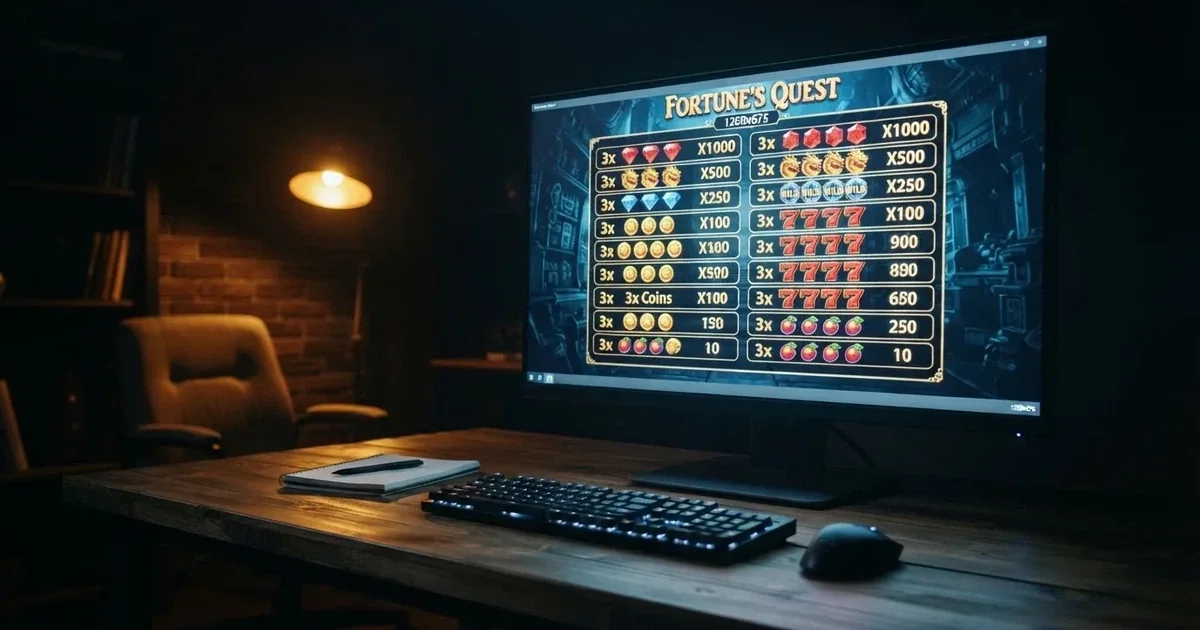
The paytable is where the RTP figure lives, and the structure of the paytable is where the marketing claim either survives or collapses. Charles Fey of San Francisco developed the first automatic slot mechanism in the late 19th century: three reels, five symbols (horseshoes, diamonds, spades, hearts and the Liberty Bell), and a top prize of ten nickels for three bells in a row. The total number of possible combinations on that machine was roughly a thousand. Modern video slots can run five or more reels with fifty or more symbols per reel, producing odds as high as 300 million to one against the top combination. The mathematical distance between the original Liberty Bell and a modern offshore video slot is the entire history of slot design, and it is also where the marketing claim of “high RTP” has to be measured against the structural reality.
The licensed pokies market in Australia is the only market where the paytable is published and the venue is regulated. Pokies-style slot machines outside casinos numbered 87,298 in New South Wales as of June 2023, 26,380 in Victoria across 2021–22, 21,122 in Queensland as of October 2023, 11,672 in South Australia as of September 2023 and 3,587 in the ACT as of November 2023. By 2010, Australia operated an estimated 97,103 gaming machines outside casinos — a per-capita rate about five times that of the United States. The Australian figure is the largest concentration of electronic gaming machines per capita in the developed world.
The offshore brands on this list are pitching into a market that already has more licensed pokies per head than any comparable country, and the pitch is that their RTP figure is higher than the local figure. New South Wales legalised slot machines in 1956, well before most of the mechanical advances that defined the modern video slot, which is one reason the Australian market has the density it has today. The lineage runs from the Liberty Bell through Bally’s “Money Honey” — released in 1963, the first slot machine with a bottomless hopper and automatic payout of up to 500 coins without an attendant — and through the first video slot, developed in 1976 by Fortune Coin Co. in Kearny Mesa, California. The offshore video slots pitched to Australian players in 2026 are the descendants of that lineage; the licence frame around them is what sets the licensed Australian venues apart from the offshore brands.
The developers behind the offshore slots include BGaming, whose catalogue is listed on its own site and used by Level Up Casino and other brands on this list. The listing pages name the games; the brand pages do not call out “high RTP” as a separate category. The marketing label floats across the entire slots catalogue rather than identifying a sub-genre, because the sub-genre does not exist on the paytable. A slot is a slot. The figure on the paytable is the figure. The rest is positioning.
For a player weighing what an “RTP advantage” actually buys, the comparison to the table games on the same floor is useful. Baccarat’s Banker bet holds a 1.06% house edge; blackjack, played optimally under liberal Las Vegas Strip rules, holds about 0.28%. A well-designed online slot will typically hold somewhere between 3% and 5%. The slot is the highest-margin game on a casino floor. The RTP figure is the inverse of that margin. Marketing it as “high” relative to the local pub is technically true and structurally misleading: the local pub’s pokies sit in the same margin band, and the licensed frame around them is what changes the comparison.
Frequently asked questions
How is a slot’s RTP percentage actually calculated?
A slot’s RTP is a theoretical average return, calculated by the game designer over an extremely large number of simulated spins and expressed as a percentage of total wagers. A 96% RTP slot is, on the maths, expected to return A$96 of every A$100 wagered across millions of spins. The figure is set by the designer, tested by an independent laboratory, and published as a single number on the game’s paytable.
Does a high RTP figure guarantee a winning session?
No. The figure is a long-run average; any individual session is dominated by variance and volatility. A high-RTP slot can produce a long losing session, and a low-RTP slot can produce a winning one. The figure is the most accurate estimate of long-term expectation the paytable gives, not a forecast of any single result.
Are RTP figures independently tested before a slot is released?
Yes. Independent testing laboratories certify the random number generator and the payout percentage against the developer’s published claim. The result is the single percentage that appears on the paytable. State-level technical standards in Australia apply the same kind of certification regime to licensed electronic gaming machines.
How many licensed pokies sit outside Australian casinos?
Pokies-style slot machines outside casinos numbered 87,298 in New South Wales as of June 2023, 26,380 in Victoria across 2021–22, 21,122 in Queensland as of October 2023, 11,672 in South Australia as of September 2023 and 3,587 in the ACT as of November 2023. Australia’s per-capita rate of gaming machines outside casinos is about five times that of the United States.
Why do two slots with the same theme carry different RTP figures?
Because the RTP figure is a developer-set number, not a property of the theme. A theme can be licensed to multiple developers, each of whom sets their own payout structure. Two “Book of”-style slots from different studios will carry different RTP figures, different volatility ratings and different maximum-payout caps. The only thing they share is the surface.