
Best New Australian Online Pokies in 2026: Where the Law Actually Stands
The phrase “best new Australian online pokies” promises a shortlist a reader can take to a cashier page. The Interactive Gambling Act 2001 makes that promise impossible to honour from inside Australia, and the Australian Communications and Media Authority has spent years turning that impossibility into blocked pages. The page that follows is not a workaround and not a workaround disguised as one. It lays out where the prohibition bites, how the regulator has enforced it, what a player who wants a pokie in 2026 can actually do, and what an offshore site looks like once the ACMA has named it.

Data current as of 28 October 2026 and checked against the ACMA’s published list of formal warnings and blocking actions.
Table of Contents
- How Money Reaches and Leaves the Off-Shore Casino
- Pokies, Providers and the Catalogue Behind the Word
- The Side-by-Side Read of the Brands the ACMA Has Named
- What a New Australian Online Pokie Actually Is
- The Legal Frame Around the Search
- What a Player Can Actually Do
- What This Page Actually Concludes
- Frequently Asked Questions
How Money Reaches and Leaves the Off-Shore Casino
Any review of “best new Australian online pokies” turns on payment rails, because the payment rail is the first thing an Australian player notices and the last thing an offshore operator wants questioned. PayID, the New Payments Platform address book that Australian banks built onto Osko, has become the rail that offshore sites most often advertise to Australian traffic. The sites promote it because it settles in seconds at the deposit end and looks identical to a domestic transfer. That is also why it offers the player the least protection: a PayID credit to a merchant account at an unknown institution is not a chargeback instrument, and once it lands it is the player’s loss.

For Australian-licensed wagering the rules are sharper. Credit cards, credit-related products and digital currency have been banned as payment for any licensed online wagering since 11 June 2024, with penalties reaching A$247,500 for operators that take them. The legal deposit routes left to a licensed Australian wagering service are debit card, bank transfer, PayID and Osko, and BPAY. A site that asks an Australian customer to fund with a credit card or a crypto wallet is operating outside the Australian rules — and that, by definition, is the universe an offshore casino sits inside.
The licensed side matters because it is the only side BetStop binds. BetStop, the National Self-Exclusion Register, has been live since August 2023 and excludes a registered punter from every Australian-licensed online and phone wagering service. An offshore casino is not connected to it. A PayID deposit into an offshore site is a payment outside the register’s reach: the money moves, the self-exclusion does not.
The mechanics of a deposit at an offshore site
The PayID rail connects a player’s bank account to a BSB and account number, or to a phone number or email address registered against one. At an offshore casino the deposit screen asks for the PayID handle the casino publishes, the deposit amount, and a reference string. The player’s bank confirms via Osko, the funds settle in seconds, and the casino’s balance updates. There is no chargeback path because the transfer is a real-time gross settlement, not a card authorisation. The chargeback line a player has with Visa or Mastercard on a card payment simply does not exist.
A withdrawal is where the rail shifts. Cashouts from offshore sites typically route either back to the same PayID-handle (only sometimes), to a bank transfer where the casino’s bank accepts AUD and runs KYC, or to a crypto on-ramp that converts AUD to USDT and back. Each leg is a chance for the operator to delay, decline, or impose a verification check the deposit did not surface. The Australian player’s only leverage is the threat of leaving, and the operator’s only cost is a competitor.
What “no deposit bonus” actually means in this market
The search phrases “new pokies no deposit bonus”, “new online pokies no deposit bonus” and “new online pokies Australia no deposit bonus” all describe the same offer: free spins or a small cash credit credited without a deposit, usually as part of a sign-up package. In a lawful Australian market such an offer sits on a licensed wagering service, in which case it is also subject to the credit-card ban and the BetStop register. In the offshore market it is the entry drug — a small bonus credited without a deposit so the player can feel the games load, then a deposit-required continuation. The marketing reach of “no deposit” obscures a simple point: no wagering requirement is set by the ACMA for offshore sites, and no dispute body will overturn an offshore operator’s reading of its own terms.
Pokies, Providers and the Catalogue Behind the Word
Pokies is the everyday Australian word for a slot machine. The earliest legal poker machines in Australia were installed in New South Wales registered clubs in 1956, and the electronic gaming machine has been a licensed fixture in Australian pubs and clubs ever since. Each state and territory regulates these machines separately, and minimum return-to-player varies: 85% in NSW, the Northern Territory, Queensland and (generally) Victoria, with Crown Melbourne at 87%, 87% in the Australian Capital Territory and Tasmania, 87.5% in South Australia, and 90% in Western Australia.
The “new” in “new pokies” sits on top of that regulated base. The licensed Australian market has new pokie releases the way any other jurisdiction does: a manufacturer submits a game to the state regulator for approval, the regulator checks the maths and the cabinet, and the game appears on club or pub floors. Western Australia took a different path: poker machines were banned in pubs and clubs when Crown Perth opened in 1985, and Crown Perth’s own machine count has since grown from roughly 200 in 1985 to around 2,500 today, all approved by the state’s Gaming and Wagering Commission.
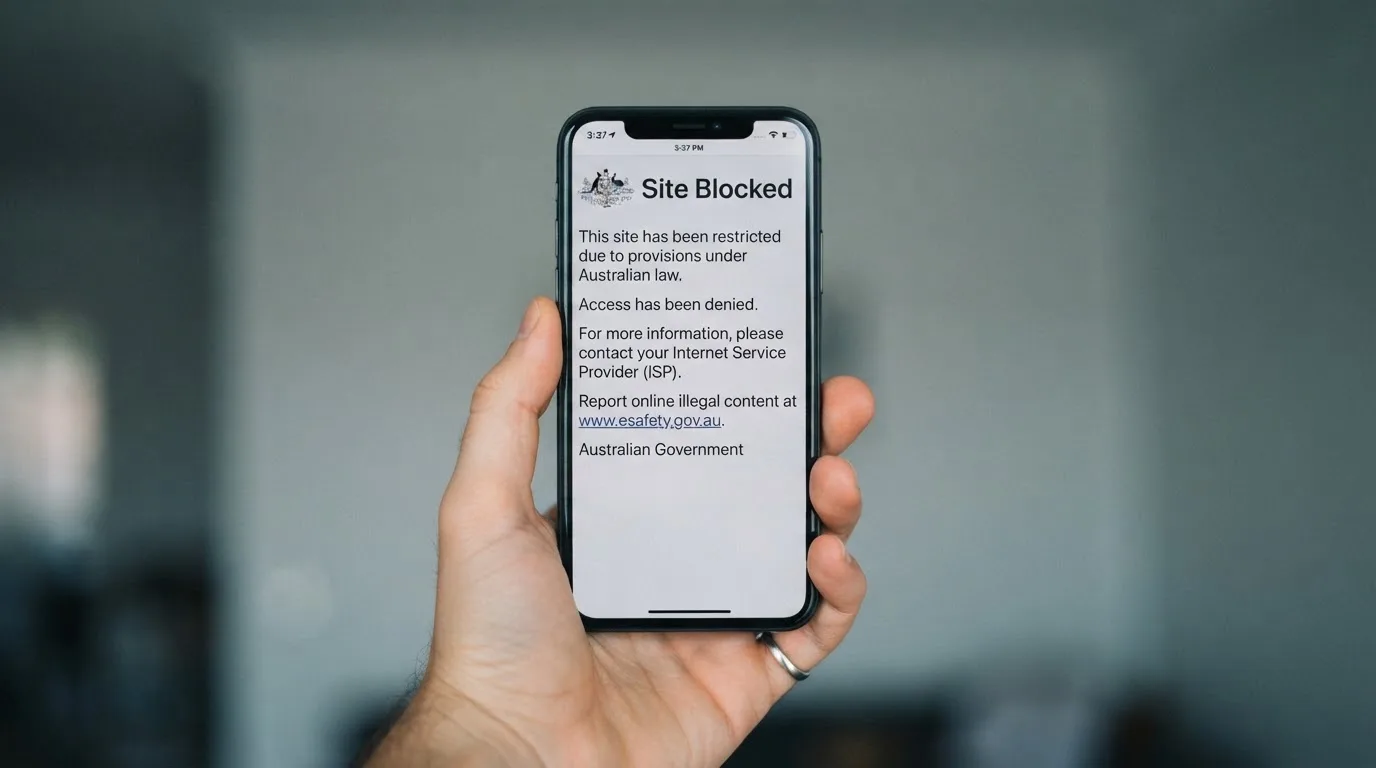
Online pokies — the same maths in a browser window — sit in a different category under Australian law. The Interactive Gambling Act 2001 prohibits offering online casino games, online pokies and in-play betting to anyone in Australia. No state or territory licenses them. The prohibition targets the provider, not the player; an individual Australian can open an offshore account, deposit, and play, but the operator cannot lawfully target the Australian market and the ACMA is empowered to ask Australian ISPs to block the site.
How the regulator has actually moved
The enforcement record tells the story more sharply than the statute does. According to the ACMA as reported in June 2026, a total of 1,751 illegal gambling and affiliate marketing websites had been blocked since the first blocking request in November 2019, and more than 230 unlicensed gambling services had left the Australian market since enforcement was strengthened in 2017. The blocking request of 26 June 2026 alone added twelve more: 7Signs, ChromaBet, Donbet, Duospin, Freshbet, Slots Gem, Jacks Club, Lucky Start, Pointsbetz, Spinrise, Vinyl Casino and Wildsino.
Formal warnings — the step before a blocking request — have piled up against a smaller set of operators. In March 2026 the ACMA warned Pulsup Ltd over Rocketplay. In April 2026 the ACMA warned Ryker B.V. over Jackbit and CasinOK. In April 2025 the ACMA warned Sterplay Holding Ltd over Casino Intense. In July 2025 the ACMA warned Bamboo Media over Ignition Casino and Consolutetish S.R.L. over National Casino and Bizzo Casino; Bizzo had already been the subject of a 2022 formal warning to TechSolutions. In February 2025 the ACMA warned EOD Code SRL over Instant Casino. The ACMA issued further formal warnings over Woo Casino in March 2025 and Spirit Casino in May 2025, both operated by Dama N.V., which had also been warned in May 2022 over six brands: Bambet, Dazard, Level Up, Rocketplay, Wild Tornado and Cobra Casinos. Hollycorn N.V. has been warned over Sky Crown and Blue Leo.
The pattern is clear. A small number of Curaçao- and Anjouan-licensed holding companies run most of the brands an Australian search returns, and the ACMA warns one operator, watches the brand spin up under a new shell, and warns again. None of the warnings is a criminal prosecution — the IGA targets civil enforcement, not prosecution — and none requires the offshore operator to do anything visible to the Australian player beyond the moment the ISP blocks the domain.
What the catalogue looks like from the player side
For a player inside Australia, the lawful catalogue is the club and pub machine. The 2020–21 picture is the most recent comparable number: Australians bet almost A$150 billion through gaming machines in that year and lost A$12.18 billion on them. New South Wales alone had 87,298 gaming machines outside casinos across 2,195 venues in June 2023, with player losses of A$8.18 billion in 2022–23. Queensland had 21,122 gaming machines across 351 venues in October 2023, and Victoria 26,380 outside Crown Casino in 488 venues under a 30,000 statewide cap. Australia holds about 3% of the world’s pub and club poker machines with 0.3% of the global population, and the share of gambling going through legal Australian channels fell from 74% in 2021 to 64%, with H2 Gambling Capital estimating losses to illegal sites at about A$3.9 billion a year.
A new pokie release is a thing with a name, a paytable, a theme and a state regulator’s approval sticker. A new online pokie is, in the Australian market, an offer an offshore site has made to the search engine rather than a thing a regulator has signed off on. The two are different goods.
The Side-by-Side Read of the Brands the ACMA Has Named
The ACMA’s formal warning list is the closest thing to an Australian shortlist of “online pokies” operators: it is the regulator’s own list of brands found to be providing prohibited services to Australians. Eleven of them appear below, in the order the regulator’s publication lists them, with the ACMA action and date, the operator the ACMA named, and the subject support status drawn from listings rather than from the operator. None of these is a recommendation and none should be read as one. The regulator’s list provides the clearest view of the operator’s record in Australia, not a verdict on whether any brand is safe to use.
RocketPlay
The ACMA issued a formal warning to Pulsup Ltd over Rocketplay in March 2026, following an earlier warning to Dama N.V. covering Rocketplay in May 2022. Two warnings from the same regulator, four years apart, on the same brand, signal the operator pattern the ACMA’s enforcement has been designed to surface: a brand changes hands or holding company, the ACMA warns again. Online casino games cannot be licensed anywhere in Australia, whatever licence the site displays; the ACMA warning is the regulator saying it has found Rocketplay providing prohibited services to Australians. No external data exists to corroborate independent subject support for this brand beyond the ACMA record.
Level Up Casino
The ACMA issued a formal warning to Dama N.V. over Level Up in May 2022. Dama N.V. is the same holding company that has now collected four formal warnings over the same set of brands — Bambet, Dazard, Level Up, Rocketplay, Wild Tornado and Cobra Casinos in May 2022, then Woo Casino in March 2025 and Spirit Casino in May 2025. The June 2026 warning to Pulsup Ltd over Rocketplay adds a fifth. Listings describe Level Up as a BGaming-partnered site, which is consistent with the broader catalogue a BGaming search returns but is no defence against the prohibition. The relevant fact is that the ACMA has formally warned the operator and the brand has continued operating under variations of the same holding-company structure.
Woo Casino
The ACMA issued a formal warning to Dama N.V. over Woo Casino in March 2025. Woo is one of the better-known Dama N.V. brands in the broader affiliate-marketing sphere, and the 2025 warning is the ACMA’s third on Dama N.V. since 2022. The brand’s operational details remain largely obscured by its offshore status, with no unique service or support features identifiable outside of its marketing claims.
Spirit Casino
The ACMA issued a formal warning to Dama N.V. over Spirit Casino in May 2025. Spirit is one of the more recent Dama N.V. launches in the offshore-casino market and the warning is the ACMA’s fourth on the holding company. The pattern is the regulator’s enforcement channelling into a small number of operators, which is what the June 2026 blocking record reflects: the same handful of holding companies, multiple brand names, the same prohibition being broken each time.
National Casino
The ACMA issued a formal warning to Consolutetish S.R.L. over National Casino in July 2025. Listings describe National Casino in the same general affiliate-marketing catalogue as the other Consolutetish brands. No subject support data beyond the listing is on record. The relevant fact is that the operator behind the brand has been formally warned by the ACMA, and the brand sits inside the universe of prohibited services.
Bizzo Casino
The ACMA issued a formal warning to Consolutetish S.R.L. over Bizzo Casino in July 2025. Bizzo was already the subject of a 2022 formal warning to TechSolutions (CY) Group Limited and TechSolutions Group N.V., so the brand has now collected two ACMA warnings under two different operators in three years. The pattern is the same one the Rocketplay entry shows: the brand moves between holding companies and the regulator warns again.
Ignition Casino
The ACMA issued a formal warning to Bamboo Media over Ignition Casino in July 2025. Ignition has been one of the longer-running offshore brands in the affiliate-marketing universe, and the 2025 warning is the ACMA’s first public action on the operator. No subject support data is on record beyond the warning.
Instant Casino
The ACMA issued a formal warning to EOD Code SRL over Instant Casino in February 2025. Instant Casino sits in the same general catalogue as the other EOD Code brands. The 2025 warning is the ACMA’s first public action on the operator. No subject support data is on record beyond the warning.
Jackbit
The ACMA issued a formal warning to Ryker B.V. over Jackbit in April 2026, alongside a warning on the same operator over CasinOK. Jackbit is the more visible of the two brands; the April 2026 warning is one of the most recent ACMA formal warnings on record and places the brand firmly inside the universe of prohibited services.
Casino Intense
The ACMA issued a formal warning to Sterplay Holding Ltd over Casino Intense in April 2025. Listings place Casino Intense alongside other Sterplay brands in the broader affiliate-marketing catalogue. No subject support data beyond the listing is on record. The relevant fact is the warning itself and the operator behind it.
Sky Crown
The ACMA issued a formal warning to Hollycorn N.V. over Sky Crown and Blue Leo. Hollycorn N.V. has been one of the longer-running holding companies in the offshore-casino market, and the ACMA’s formal warning — published as a Hollycorn N.V. action against both Sky Crown and Blue Leo casino services — is the regulator’s recorded position on the operator.
What the table adds up to
Eleven brands. Six distinct operators behind them. Two operators warn twice (Dama N.V., Consolutetish S.R.L.) and the rest warn once each. The relevant fact for a player reading this from Australia is not the brand name — that is what the search returns — but the operator behind the brand, which is the entity the ACMA has named and which is most likely to be the next thing the regulator targets. The block rate below puts the pattern into a single number.
| Brand | ACMA action and date | Operator named by the ACMA | Subject support |
|---|---|---|---|
| RocketPlay | Formal warning, March 2026; earlier warning, May 2022 | Pulsup Ltd (2026); Dama N.V. (2022) | — |
| Level Up Casino | Formal warning, May 2022 | Dama N.V. | BGaming listings only |
| Woo Casino | Formal warning, March 2025 | Dama N.V. | — |
| Spirit Casino | Formal warning, May 2025 | Dama N.V. | — |
| National Casino | Formal warning, July 2025 | Consolutetish S.R.L. | Listings only |
| Bizzo Casino | Formal warning, July 2025; earlier warning, 2022 | Consolutetish S.R.L. (2025); TechSolutions (2022) | — |
| Ignition Casino | Formal warning, July 2025 | Bamboo Media | — |
| Instant Casino | Formal warning, February 2025 | EOD Code SRL | — |
| Jackbit | Formal warning, April 2026 | Ryker B.V. | — |
| Casino Intense | Formal warning, April 2025 | Sterplay Holding Ltd | Listings only |
| Sky Crown | Formal warning, September 2022 | Hollycorn N.V. | — |
The block rate behind the picture
The ACMA’s published total sits at 1,751 illegal gambling and affiliate marketing websites blocked since the first blocking request in November 2019, with more than 230 unlicensed gambling services having left the Australian market since enforcement was strengthened in 2017. Dividing the blocked total by the months from November 2019 to the June 2026 reporting date gives a long-run block rate of roughly 22 sites per month on the named-channel count, with the actual monthly pace well above that figure in the more recent enforcement rounds. The single round of 26 June 2026 alone added twelve sites; in steady-state months that is the order of magnitude the ACMA has been clearing for the past two years. The reading for a player is that the regulator is not catching up so much as keeping pace, and that any offshore brand an Australian can reach this month is a candidate for the next blocking request.
What a New Australian Online Pokie Actually Is
Strip the marketing and the answer is short. A new Australian online pokie is a slot machine title — a paytable, a reel layout, a return-to-player percentage, a volatility profile — that a manufacturer has released and that an Australian state regulator has approved for use in clubs, pubs or casinos. The manufacturer submissions, the regulator approval and the venue installation are the chain that defines the Australian “new release”. Online pokies in the browser are a different product, prohibited under the IGA, and the “new” in their marketing is a release schedule the offshore operator controls.
The licensed machine
Australia has a long history with the machine itself. Registered clubs operated the country’s first legal poker machines in 1956, in New South Wales. Tasmania then gave the Federal Group a monopoly licence over all of the state’s poker machines from 1968; legislation passed in November 2021 ended that monopoly, moving oversight of the machines to the Tasmanian Liquor and Gaming Commission. Tasmania also planned nation-leading mandatory pre-commitment cards, but implementation of the reform was delayed until late 2025. Western Australia has held a different line: poker machines were banned in pubs and clubs when Crown Perth opened in 1985, leaving Crown Perth’s roughly 2,500 machines as the state’s only poker-machine offering.
Each jurisdiction’s regulator sets the minimum return-to-player for an approved machine. New South Wales, the Northern Territory, Queensland and (generally) Victoria set the floor at 85%; Crown Melbourne sits at 87%; the Australian Capital Territory and Tasmania at 87%; South Australia at 87.5%; Western Australia at 90%. The return-to-player figure is the long-run payout rate, averaged over the machine’s life, and is the floor the regulator will accept — a venue can offer a higher-RTP setting where the regulator permits, but cannot offer a lower one. That floor is also why the “real money” claim that the offshore sites make carries no Australian meaning: the figure on an offshore pokie is whatever the offshore operator publishes, has no regulator behind it, and is not enforced.
The prohibited online product
The online pokie is mathematically identical to a club machine: reels, a paytable, a random number generator, an RTP and a house edge. The difference is governance. A licensed machine’s RTP is the figure on a regulatory submission, audited by the state regulator. An offshore pokie’s RTP is whatever the operator publishes, with no audit a player can verify. The consumer-protection gap is the whole of the prohibition’s purpose: no Australian regulator stands between the offshore operator and the Australian punter, no dispute body will reverse a refusal to pay, and the IGA’s prohibition is the regulator’s standing position that this gap is unacceptable.
The Northern Territory Racing and Wagering Commission (NTRWC) regulates 52 of Australia’s online bookmakers — Sportsbet, Bet365 and Ladbrokes among them — licensed in the Territory for tax reasons. The commission has no full-time staff and meets once a month in Darwin, which is itself an indictment of how thin the regulator is for the size of the market. The bookmakers themselves are licensed for wagering on races and sport placed before the event, lotteries and keno; online casino games, online pokies and in-play betting sit outside the licence.
The Legal Frame Around the Search
The Interactive Gambling Act 2001, strengthened by the Interactive Gambling Amendment Act 2017, makes it an offence to provide online casino games, online pokies or in-play betting to a person in Australia. No state or territory licenses them. The minimum age for any Australian wagering activity is 18.
The ACMA is the regulator that enforces the prohibition. It investigates, issues formal warnings, and directs Australian internet service providers to block illegal sites. The June 2026 blocking request — twelve sites at once — is a representative example of the channel. The total of 1,751 blocked sites since November 2019 and more than 230 services having left the Australian market since 2017 are the cumulative record. The individual Australian player is not prosecuted — the IGA targets the provider, not the user — but the consumer protections a player expects from a licensed Australian operator simply do not exist offshore. There is no Australian complaints body, no recourse if a withdrawal is refused, and the ACMA can block a site while a balance is still on it.
What is lawful
Three product categories remain licensable for an Australian-licensed online service: wagering on races, wagering on sport placed before the event, and lotteries and keno. PayID and Osko, BPAY, debit card and bank transfer are the legal deposit routes; credit cards, credit-related products and digital currency have been banned since 11 June 2024, with operator penalties up to A$247,500. The Northern Territory Racing and Wagering Commission is the regulator of most online bookmakers, meeting monthly and running on a part-time staff. Lotteries are run state by state.
What is coming
The Interactive Gambling Amendment (Gambling Reform) Bill 2026 passed Parliament on 19 August 2026; its advertising and inducement measures commence 1 January 2027. That is a law on the books, not yet in force on a 2026 page. The reform tightens the inducement side of the IGA — the bonus, sign-up credit, “free spins” and similar marketing — and the effect on an Australian player is that licensed wagering advertising and sign-up inducements will look different in 2027. None of it makes an offshore online casino lawful.
Tax
Gambling winnings of a recreational player are not assessable income under section 6-5 of the ITAA 1997, and losses are not deductible, unless the person carries on a business of gambling. That is the model, and a player who needs a position specific to their situation should check with the ATO.
What a Player Can Actually Do
The lawful path to playing a pokie in Australia is the licensed venue. The numbers behind that path are not small: 87,298 machines outside casinos across 2,195 NSW venues as of June 2023; 21,122 machines across 351 Queensland venues in October 2023; 26,380 machines outside Crown Melbourne across 488 Victorian venues under a 30,000 statewide cap; Crown Perth’s roughly 2,500 machines in Western Australia as the state’s only poker-machine offering. A player choosing the licensed path gets a regulator-verified minimum RTP, a venue staff to complain to, a self-exclusion scheme that binds the venue (NSW’s own Gaming Club exclusion, equivalent schemes in other states), and recourse through the state regulator if a payout is refused. The cost is the house edge the regulator sets: 85% RTP at the floor in NSW, the Northern Territory, Queensland and (generally) Victoria, higher in other states.
For a player who wants to exclude themselves from wagering online, BetStop is the register that binds. It has been live since August 2023 and excludes a registered punter from every Australian-licensed online and phone wagering service. The register does not bind offshore casinos. The National Gambling Helpline is 1800 858 858, free, 24/7, with chat at Gambling Help Online.
The reading for someone who already has an offshore account
If a player has an account with one of the brands named above, the practical situation is this. The ACMA has formally warned the operator; the brand may already be blocked on some Australian ISPs and may be blocked on more in the next enforcement round. Withdrawals from the brand are governed by the offshore operator’s terms, not by an Australian regulator, and the operator’s terms typically include a verification check that the deposit did not surface. A player who wants their balance out should move it before the next blocking request; the balance becomes harder to access once the site is on a block list. The 26 June 2026 blocking request, which added twelve sites in one round, is the pace the ACMA has settled into, and a warning issued in 2025 or 2026 is the most likely candidate for a blocking request in the next twelve months.
The reading for a player comparing the licensed and offshore paths
The licensed path is more expensive on the bonus side and cheaper on the consumer-protection side. There is no sign-up inducement — bonus credits, “free spins”, deposit matches — on a regulated venue, because the venue runs on its own margin and the state regulator does not permit the offshore style of inducement. The offshore path is the inverse: a generous-looking sign-up package on a brand the ACMA has named, with no Australian regulator behind the payout, no dispute body to reverse a refusal, and the brand potentially blocked at the ISP level within months of the warning. The 2026 reform that commences in January 2027 tightens the inducement side of the licensed market further; the offshore market, by definition, is not affected.
What This Page Actually Concludes
The “best new Australian online pokies” search returns offshore brands the ACMA has named, on payment rails the licensed market has banned, with no consumer protection an Australian regulator enforces. The page has not pretended otherwise and has not recommended any of the eleven brands. The block rate, the regulator’s record and the prohibition’s plain text all point the same way. A player who wants a pokie in 2026 has the licensed venues to play in, BetStop for self-exclusion, the National Gambling Helpline for support, and a reform in 2027 that tightens the inducement rules on the licensed side. A player who wants the offshore package has a brand the ACMA has named and a balance the ACMA can block.
Frequently Asked Questions
How much do Australians lose on gaming machines in an average year?
In 2020–21, Australians wagered nearly A$150 billion through gaming machines and lost A$12.18 billion, based on the most recent published comparable data. While the offshore channel is estimated by H2 Gambling Capital at roughly A$3.9 billion annually, licensed land-based venues continue to account for the vast majority of gambling losses.
What defines a new pokie release versus an established title?
A new release is a specific title submitted by a manufacturer and subsequently approved by a state regulator for use in licensed clubs, pubs, or casinos. This regulatory approval process confirms the paytable, reel layout, and mechanics, establishing the machine’s legitimacy. Offshore titles lack these independent verification and regulatory oversight steps.
Is it legal for an online casino to offer new pokie titles to Australians?
No, providing online casino games, pokies, or in-play betting to Australians is strictly prohibited under the Interactive Gambling Act 2001 and its 2017 amendments. While individual players are not prosecuted, offshore operators face civil enforcement actions from the ACMA, which frequently directs ISPs to block illegal casino domains.
Can a new pokies bonus be claimed through a PayID deposit?
While some offshore casinos may accept PayID deposits and advertise bonuses, no Australian regulator permits this style of sign-up inducement for licensed wagering. Furthermore, such deposits are real-time settlements with no chargeback path, and offshore operators operate completely outside the protections and self-exclusion mechanisms of the BetStop national register.
Why are poker machines so prevalent in Australia?
Australia accounts for approximately 3% of global poker machines with only 0.3% of the world population. This high density is rooted in the 1956 introduction of legal poker machines in New South Wales clubs. State-by-state regulatory structures have since maintained this prevalence, setting jurisdictional standards for machine operations, limits, and protection floors.