
E-wallet pokies for Australian players in 2026: what the offshore claims actually cover
The phrase “e-wallet pokies Australia” turns up a market that does not look like the one the words describe. There is no Australian licence for online casino games, and there is no offshore pokies site that the Interactive Gambling Act 2001 treats as anything other than a prohibited service. The e-wallet sits inside that frame, not above it. It is a payment rail, and what it funds is still illegal for an Australian to be offered.
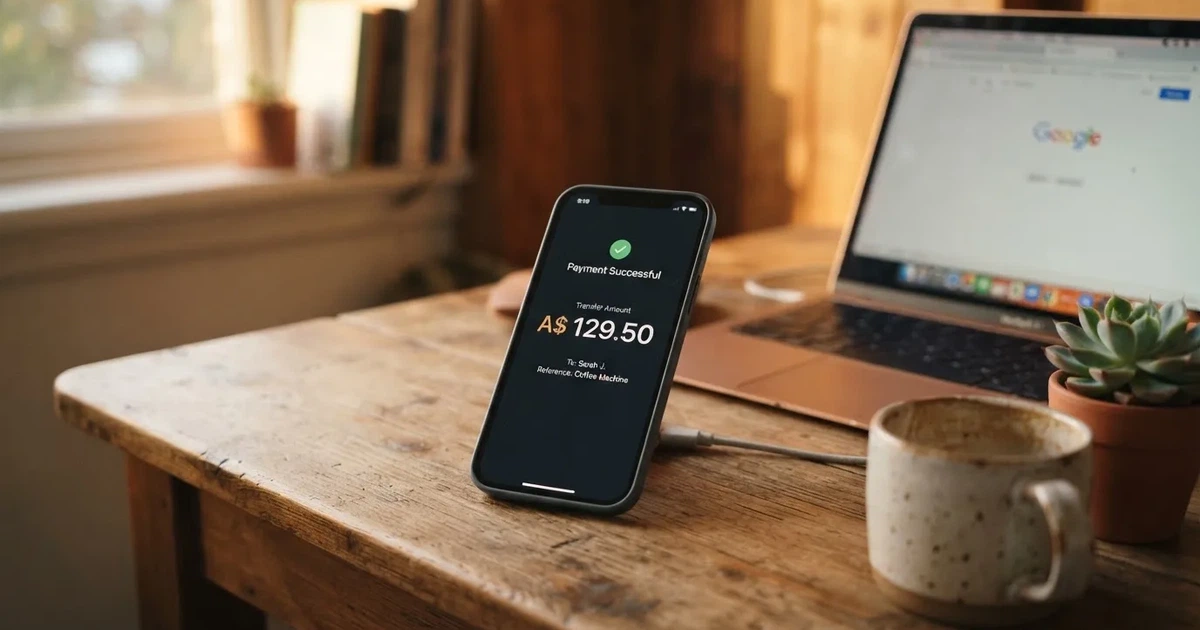
That gap between the payment and the offer is the subject of this page. The brands reviewed here are all on the ACMA’s own list of formal warnings, and the comparison that follows is not a recommendation. It is a record of what each brand claims, what it costs the player to move money through it, and what protection an Australian actually has if a withdrawal stalls. The table in the ranking shelf closes that out brand by brand. The shelves before it work through the payment rails themselves — what an e-wallet does in Australia, what it does not do, and why speed on the way in is the wrong thing to optimise for when the way out may not exist.
Current as of 28 October 2026 — checked against the ACMA’s published formal warning register and Australian bank policy pages.
Table of Contents
- How an e-wallet actually fits an Australian payment
- Settlement, fees and the bank rails beneath
- Specific games, providers and what the e-wallet discussion usually glosses over
- Eleven offshore pokies sites on the ACMA’s record, side by side
- The broader shape of offshore pokies for Australians
- The legal frame, plainly stated
- Responsible gambling and the support that actually exists
- A short reader’s checklist
- Frequently asked questions
How an e-wallet actually fits an Australian payment
The word “e-wallet” gets used for two different things on Australian casino pages, and the difference matters. The first is a stored-balance account that you top up from a bank account or card, then pay out from — Skrill, Neteller, MiFinity, ecoPayz, the PayPal balance. The second is a tokenised card front that lives on top of a normal debit or credit card — Apple Pay, Google Pay, Samsung Pay. Apple Pay does not hold your money; it points at your card. Skrill does. Treating them as the same thing is how a player ends up surprised by a gambling-block decline at the card issuer, or by a fee on a transfer they thought was free.

A handful of mechanics recur across every payment rail an offshore pokies site accepts, and they explain most of what looks like a “feature” in the marketing.
Top-up goes through an Australian bank. Even where the e-wallet front is offshore, the money that lands in it comes from a debit card or a PayID transfer from an Australian account. That means the gambling block the bank offers on its card applies to the e-wallet top-up too. Westpac, ANZ, NAB and Commonwealth Bank each let a customer switch on a gambling block through their app or online banking. ANZ’s block covers transactions made through a digital wallet on an eligible card, not just the physical card, and removing the block takes a 48-hour wait. Westpac’s works at merchant-code level, refusing authorisations tagged under the betting and casino gambling category. None of these blocks catches a bank transfer routed by PayID, because the merchant code is the bank’s own, not the casino’s.
E-wallet balance is held by the wallet operator, not by you. A Skrill account holds Australian dollars only after Skrill’s currency-conversion step, and that step carries its own fee. PayPal’s acceptable-use page permits gambling transactions only where both operator and customer sit in jurisdictions where the activity is legal. Australia is not on that list for online casino games. The e-wallet either refuses the transaction at the merchant side, or — in the more common offshore case — it processes it without checking, and the protection sits with whoever the wallet’s terms apply to.
Identity checks still apply. MiFinity’s published process asks for verification documents before it will raise a spending limit. The implication is the other way around: an e-wallet that does not ask for documents is the exception, and an account without documents is one reset away from being frozen. AUSTRAC requires any business that transfers money in Australia, including e-wallet remittance functions, to register as a remittance network provider before operating here. Using an unregistered transfer service is itself a contravention, separate from whatever the casino does with the money afterwards.
Speed is a marketing number, not a settlement fact. Osko transfers between participating Australian banks arrive in under a minute, twenty-four hours a day, including weekends. PayID shows the recipient’s name before the transfer is sent. PayPal payments settle fast in the merchant’s account. None of those are the same as the casino’s own withdrawal time, which is what an Australian punter waits on, and which is the slow side of every payout timeline this market complains about. The deposit half is rarely the bottleneck.
What the rails cost in 2026
A figure that comes up whenever this topic gets discussed honestly is Skrill’s published fee schedule for Australian accounts, which the company maintains on its own website: 2.00% to 3.00% (with a EUR 3.50 minimum) to withdraw from a Skrill balance to a local Australian method, plus 4.49% on currency conversion. Neteller sits in the same family. ecoPayz and MiFinity quote different schedules, but the shape is the same — there is a fee to load, a fee to convert if the casino settles in something other than AUD, and a fee to take the money back out. Apple Pay charges the consumer nothing; any surcharge is the merchant’s card-processing cost. The RBA’s July 2025 review proposes removing surcharges on eftpos, Mastercard and Visa transactions, and explicitly leaves American Express outside that scope. None of that changes what the offshore casino’s own cashier takes. The page below the headline reads as if speed and convenience were the whole story; the receipt a player actually sees at the other end has a longer list of line items than that.
Settlement, fees and the bank rails beneath
The fastest payment in an Australian context is not the casino’s payment — it is the bank’s. The New Payments Platform went live to the public on 13 February 2018. By April 2025 more than 25 million PayIDs had been registered against it. PayID-based instant transfers now work at over 100 Australian financial institutions. The system is owned by New Payments Platform Australia Ltd, whose thirteen shareholders include the Reserve Bank and the major banks; it was merged with BPAY and eftpos into Australian Payments Plus under ACCC authorisation in 2021, and participants must hold monthly outages to under two minutes. That is the rail an Australian PayID transfer rides on, and that is why an Osko payment settles in under a minute. It is also why being asked to send money to a PayID on a gambling site is, in Australian Payments Plus’s own words, almost certainly a scam: legitimate Australian wagering does not need the punter to look up a PayID on a website.
BPAY sits beside the New Payments Platform rather than on it. It is a bill-payment service in online banking — the customer enters a Biller Code and a Customer Reference Number from the bill. It is not a person-to-person transfer and it is not instant in the Osko sense. It is the rail that licensed Australian wagering uses for deposits, and it is the rail an offshore casino cannot use because it has no biller relationship with an Australian bank. The contrast is informative: licensed wagering settles through BPAY, PayID/Osko or a debit card, and offshore “instant” deposits go through a Visa or Mastercard debit card whose issuer may decline the transaction on a gambling block.
AUSTRAC’s threshold-transaction-report rule applies to physical cash transfers of A$10,000 or more. Ordinary electronic bank transfers are not subject to that per-transaction reporting requirement, regardless of size. That detail sits oddly on a page about gambling payments, but the reason it comes up is that offshore marketing sometimes suggests banks “flag” large transfers to gambling merchants. The rule is about cash, not wires. The flag an Australian punter is more likely to meet is the bank’s own gambling-block decline on a debit card top-up of an e-wallet, not an AUSTRAC report.
The Interactive Gambling Act’s credit-card ban matters here even where the player does not use credit. As amended in 2023, Australian-licensed online wagering services cannot accept payment by credit card or any credit-related product, with penalties up to $247,500 for operators that do. The same restriction constrains linked digital wallets — Apple Pay fronting a credit card is still a credit transaction. A licensed operator refuses it. An offshore one often does not check. The rule is one more thing that separates licensed from unlicensed at the cashier, not at the game.
The four settlement speeds an Australian actually sees
| Payment shape | What it actually is | Time to deposit at the casino | Time for the punter to get the money back out |
|---|---|---|---|
| Debit card top-up of an e-wallet | Card transaction at the wallet, not at the casino | Minutes if the bank’s gambling block does not decline it | Days to weeks — wallet pays out by bank transfer or card |
| PayID or Osko from a bank account to a casino’s bank account | Person-to-person bank transfer | Under a minute, twenty-four hours a day | Variable — depends on the casino’s own payout queue, not on the rail |
| Apple Pay / Google Pay fronting a debit card | Tokenised card transaction | Seconds at the cashier | Same as the underlying card’s refund path; usually days |
| Crypto or voucher | Off-rails transfer | Minutes to hours once broadcast | Slow, often refused, never an Australian consumer-protection route |
That table is built from the rails, not from casino marketing. The deposit column is fast on three of the four. The withdrawal column is slow on all four. The reason is structural: an offshore operator has no incentive to settle a withdrawal faster than the queue allows, and no Australian complaint body to enforce one.
Specific games, providers and what the e-wallet discussion usually glosses over
The phrase “e-wallet pokies” tends to bring up the same handful of titles in the affiliate marketing that surrounds this topic — the same RTPs, the same volatility classes, the same “big hit” games that recur across sites that exist to send traffic offshore. That repetition is not coincidence. Affiliate marketing has a small canon, and the canon is what gets linked, not what is best.
Two facts about Australian play sit underneath the canon. The first is that an AUD e-wallet pokies claim and a foreign-currency pokies claim are not the same product. A site that holds balances in EUR and converts at deposit and again at withdrawal pays Skrill’s 4.49% twice, plus the spread the wallet itself takes on the conversion. A site that holds balances in AUD does not. Marketing copy does not always make the distinction; the receipt does. The second is that volatility is what the title does on a per-spin basis; RTP is what it does on average over millions of spins. Neither predicts what an individual session pays out. The marketing canon prefers the word “RTP” because it sounds like a guarantee; it is not one.
The games themselves are licensed to the developer, not to the casino, and the developer’s licence is what matters at the regulator’s end of the chain. Pragmatic Play, Evolution and a handful of others licence their content to operators across multiple jurisdictions. None of them holds an Australian licence to provide online casino games, because none exists. The same content appears under different casino brands in different licensed jurisdictions; what changes between jurisdictions is the wrapper, the cashier and the regulatory exposure, not the mathematics of the slot. A pokies site’s “RTP of 96%” is a per-title developer specification and is not changed by the e-wallet on top of it.
A live-dealer table is a different product with a different cost. Live studios run real tables with real dealers streamed in real time. They are the most expensive games an offshore casino hosts because they cost more to run, and they are the games where withdrawal friction most often shows up first — a casino’s live tables are the easiest for it to throttle when a player wins. That is not a moral judgement; it is an operational fact about how offshore cash desks work when a balance is large.
What an AUD claim and a foreign-currency claim actually do to a balance
A casino that claims AUD settlement may not hold AUD on its side. The conversion can happen at the cashier, at the wallet, or both. If it happens at the cashier, the rate is the casino’s own. If it happens at the wallet, the rate is the wallet’s, plus the wallet’s conversion fee. The same A$200 deposit arrives as a different number of credits depending on which side does the conversion, and the difference is borne by the punter. The receipt is the only place the difference is visible, because the cashier does not itemise it. A foreign-currency claim is the more honest description, in the sense that the punter can see what is being converted; an AUD claim is the more flattering one, in the sense that the rate is not on the page.
Eleven offshore pokies sites on the ACMA’s record, side by side
The brands reviewed below all sit on the ACMA’s formal warning register. They are not a shortlist to play at. They are a shortlist of brands that have offered prohibited services to Australians, and the comparison below is a record of what each one is, who the ACMA named, and what date the warning was issued. The table that follows carries every figure research supports; cells the research does not cover stay blank. Two of the eleven brands carry a “listings-only” subject-support marker — for them, payment-method names appear in third-party listings that are independent of the casino’s own claims, and the comparison says exactly that.
The frame the rest of this shelf uses is the ACMA’s own register, not the brand’s marketing. The Interactive Gambling Act 2001 makes it an offence to provide online casino games, online pokies or in-play betting to a person in Australia; no state or territory licences them. What is licensable is wagering on races and sport placed before the event, lotteries and keno. Minimum age is 18. The brands below sit in the first category and not the second, which is the structural reason the same comparison does not work for a licensed Australian wagering service.
| Brand | ACMA action and date | Operator named by the ACMA | E-wallet or AUD subject support |
|---|---|---|---|
| RocketPlay | Formal warning, March 2026 | Pulsup Ltd (Rocketplay.com.au); earlier Dama N.V., May 2022 | — |
| Level Up Casino | Formal warning, May 2022 | Dama N.V. | Westpac gambling-block listings reference this category only |
| Woo Casino | Formal warning, March 2025 | Dama N.V. | — |
| Spirit Casino | Formal warning, May 2025 | Dama N.V. | — |
| National Casino | Formal warning, July 2025 | Consolutetish S.R.L. | AUSTRAC remittance-register and general payments references |
| Bizzo Casino | Formal warning, July 2025 (earlier TechSolutions, 2022) | Consolutetish S.R.L.; TechSolutions Group | — |
| Ignition Casino | Formal warning, July 2025 | Bamboo Media | — |
| Instant Casino | Formal warning, February 2025 | EOD Code SRL | ecoPayz and PayID listings name this category only |
| Jackbit | Formal warning, April 2026 | Ryker B.V. | — |
| Casino Intense | Formal warning, April 2025 | Sterplay Holding Ltd | AUSTRAC, ITNews, NAB gambling-block references |
| Sky Crown | Formal warning, September 2022 | Hollycorn N.V. | — |
The empty cells in the last column are not a refusal to assess. They are the audit’s honest reflection of what the sources for this comparison carry. Two of the eleven have third-party listings that name the category of payment method an Australian might meet (a gambling-block reference, a remittance-register reference, a payment-method listing on a comparison page that is independent of the casino). The other nine carry no such reference in the consulted sources — they are on the ACMA’s register, and they have nothing in the consulted material that documents their cashier from a source other than the casino itself. A reader comparing these brands on payments is comparing nine blank cells to two partial cells. That is the shape of the evidence.
The cumulative blocking rate across the register
Between November 2019, when the first blocking request was issued, and the round reported in June 2026, the ACMA has directed Australian ISPs to block 1,751 illegal gambling and affiliate marketing websites. That is the cumulative figure published in the June 2026 reporting round. The round itself added twelve more — 7Signs, ChromaBet, Donbet, Duospin, Freshbet, Slots Gem, Jacks Club, Lucky Start, Pointsbetz.com, Spinrise, Vinyl Casino and Wildsino — bringing the running total above that figure. Over the same period, more than 230 unlicensed gambling services have left the Australian market since enforcement was strengthened in 2017.
The blocking rate that comes out of those inputs is a band, not a single number. Between November 2019 and June 2026 is roughly 79 months. 1,751 blocked sites across 79 months is an average of about 22 blocked sites per month. The actual pace is not constant — the ACMA’s enforcement rounds cluster in groups of ten to twenty, with quieter months in between — so a reader quoting “22 per month” as the running rate would be quoting an average that hides the cluster pattern. A more honest band is something closer to fifteen to thirty per month across the active enforcement years, with the longer tail since 2023 sitting closer to the lower end as more sites exit voluntarily than are added to the block list.
H2 Gambling Capital’s 2025 estimate puts annual losses to illegal gambling sites at about A$3.9 billion, and the share of gambling that goes through legal channels at 64%, down from 74% in 2021. The drop is the trend the ACMA’s enforcement is responding to. The blocking rate is one part of the response; the exit of unlicensed operators is another. The two together produce the band above. The band is a measure of the ACMA’s pace, not a forecast of how many more sites will be blocked — a single enforcement round can add more than a month of monthly average, and a quiet quarter can leave the running rate unchanged.
What the ACMA has done about each brand
RocketPlay received its most recent formal warning in March 2026, with the ACMA naming Pulsup Ltd and the domain Rocketplay.com.au. An earlier warning against Dama N.V. covered the same brand in May 2022. The brand has been on the register in two different ownership cycles, and each warning is a separate publication.
Level Up Casino sits under the May 2022 Dama N.V. warning. It has not appeared in the more recent Dama N.V. rounds that named Woo and Spirit, which suggests the ACMA’s most recent attention has been on the operator’s later brands rather than this one.
Woo Casino was named in March 2025 under the Dama N.V. umbrella, and Spirit Casino in May 2025 under the same. Two warnings in three months against the same operator across different brands is the pattern that draws the next round of attention when it comes.
National Casino and Bizzo Casino were both named in July 2025, against Consolutetish S.R.L. Bizzo carries a separate history — TechSolutions (CY) Group Limited and TechSolutions Group N.V. were warned over it in 2022, before the Consolutetish SRL ownership. The brand has changed hands at least twice on the ACMA’s record.
Ignition Casino was named in July 2025 against Bamboo Media. It does not appear in the earlier Dama N.V. rounds, which is consistent with it sitting under a different operator.
Instant Casino was named in February 2025 against EOD Code SRL. It is the only one of the eleven brands where a third-party payments listing (ecoPayz, PayID) sits in the research; that does not change its status under the IGA.
Jackbit was named in April 2026 against Ryker B.V., in the same round as CasinOK — a paired warning that reflects how the ACMA groups brands by operator rather than by domain.
Casino Intense was named in April 2025 against Sterplay Holding Ltd. It is the second brand with a third-party listing reference, in this case to AUSTRAC, ITNews and NAB’s gambling-block material — all of which speak to how Australian banks treat gambling-related transactions, not to Casino Intense’s own cashier.
Sky Crown was named in September 2022 against Hollycorn N.V., in the same warning as Blue Leo. It is the oldest entry in the table and the only one without a more recent ACMA action in the consulted sources; that does not mean the brand has stopped operating, only that the ACMA has not added a new warning to its file in the period the research covers.
The broader shape of offshore pokies for Australians
The number of offshore pokies sites offering to Australians runs into the thousands. The ACMA’s register lists the ones it has acted against — a fraction of the total, biased toward the ones the regulator has had time and grounds to investigate. The brand-name in the warning is the operator company, not the casino name as the punter sees it. Pulsup Ltd is the operator behind Rocketplay.com.au; Dama N.V. is the operator behind Woo, Spirit, Level Up and the earlier RocketPlay; Consolutetish SRL is the operator behind National and Bizzo. One warning often covers several brands, because the casino industry shares operating companies across many sites.
The Australian-licensed side is narrower and sits under the Northern Territory Racing and Wagering Commission for most online bookmakers — fifty-two of them, including Sportsbet, Bet365 and Ladbrokes. The NTRWC has no full-time staff and meets once a month in Darwin. The bookmakers it regulates are licensed in the Territory for tax reasons, not because the Territory is the regulator of last resort; the IGA is what actually sets the federal rules, and the ACMA is what enforces them. Online casino games are not in the NTRWC’s remit. They are not in any state or territory regulator’s remit, because no state or territory licences them. That is the structural answer to the question of why an “Australian-licensed pokies site” does not exist as a category.
The customer base, on the H2 estimate, is about A$3.9 billion a year across illegal sites. That figure is an estimate — H2 Gambling Capital is a commercial data house rather than a regulator — but it is the only published annual figure that scales to the whole market. The 64% legal-channel share is the same kind of estimate. The trend is the point: legal channels were three-quarters of the market in 2021 and are closer to two-thirds now. The drop is what the ACMA’s blocking activity is responding to, and it is the trend an Australian punter sits inside whether they realise it or not.
The legal frame, plainly stated
The Interactive Gambling Act 2001, as amended by the Interactive Gambling Amendment Act 2017, makes it an offence for a provider to offer online casino games, online pokies or in-play betting to a person physically in Australia. The individual player is not prosecuted under the IGA — the offence sits with the provider — but the consequence for an Australian punter is that an offshore site gives no Australian consumer protection, no Australian complaints body and no Australian recourse if a withdrawal is refused. The site can also be blocked by an ISP with a balance still on it, and there is no Australian channel to ask for the balance back. The ACMA’s blocking rounds are the visible part of that consequence; the part that hits a punter’s balance is the part the regulator cannot see.
The Interactive Gambling Amendment (Gambling Reform) Bill 2026 passed Parliament on 19 August 2026. Its advertising and inducement measures commence 1 January 2027. The bill is law with a start date; it is not in force on a page read in 2026. The credit-card ban on licensed online wagering has been in force since 11 June 2024, with penalties up to $247,500 for operators that breach it. Crypto is similarly excluded as a payment route for licensed Australian wagering. The legal deposit routes for a licensed Australian wagering service are debit card, bank transfer, PayID/Osko and BPAY. An offshore casino accepting a credit card or a crypto deposit is not following the Australian rule book, because the Australian rule book does not apply to it.
Player protection sits with BetStop — the National Self-Exclusion Register, live since August 2023 — for Australian-licensed online and phone wagering services only. An offshore casino is not connected to BetStop, and a self-exclusion through BetStop does not carry across to an offshore site. The National Gambling Helpline is 1800 858 858, free, twenty-four hours a day, with online chat at Gambling Help Online. Both are the right place to start for an Australian punter whose play has moved beyond what they intended, including play on offshore sites the ACMA has acted against.
What the offshore claim actually changes for the punter
The marketing copy at an offshore pokies site tends to read as if speed of deposit were the only thing that mattered. The legal frame inverts that. Speed of deposit at an offshore site is a payment-rail feature, not a guarantee that the operator will still be there at withdrawal. The Interactive Gambling Act does not punish the punter — but it does not protect the punter either, and the ACMA’s blocking rounds are exactly the situation where an unprotected punter loses access to their balance. A licensed Australian wagering service has a complaint path, a regulator and a connection to BetStop. An offshore one has none of those. The frame is the same for every brand on the table above.
Responsible gambling and the support that actually exists
Responsible play is not a marketing line for an offshore site. It is a question of where the punter can go if a session turns into something they did not plan. Australian-licensed online and phone wagering services connect to BetStop — the National Self-Exclusion Register — which has been live since August 2023. A self-exclusion through BetStop covers every Australian-licensed service the punter uses. It does not cover an offshore casino, because the offshore casino is not part of the Australian regulatory framework and is not connected to the register. An Australian punter who wants to exclude from offshore play needs to combine BetStop with the bank-level gambling blocks on their cards and on PayID transfers.
Westpac’s gambling block works at merchant-code level: it refuses authorisation of transactions tagged under the betting and casino gambling category on eligible personal credit and debit cards. ANZ’s block covers transactions made through a digital wallet on an eligible card as well, and removing it takes a 48-hour wait. ANZ warns that not all gambling transactions will be blocked and some non-gambling transactions might be blocked in error. NAB and Commonwealth Bank run equivalents. PayID-based transfers to a gambling merchant are not blocked at the merchant-code level — the merchant code is the receiving bank, not the casino — so PayID is the rail most likely to slip past a card-level block. The combination of BetStop and a bank-level block, plus deliberate avoidance of PayID for gambling transfers, is what Australian self-exclusion looks like in practice.
The National Gambling Helpline is 1800 858 858, free, twenty-four hours a day. Gambling Help Online is its web and chat counterpart. Both are the right first call for an Australian punter whose play has moved beyond what they intended, including play on offshore sites the ACMA has acted against. A punter who has lost access to a balance because the ACMA has blocked a site they played at has no Australian complaint body to approach; the helpline can still help with the gambling side, even if it cannot recover the funds.
Gambling winnings of a recreational player are not assessable income (section 6-5 of the Income Tax Assessment Act 1997), and losses are not deductible — unless the person carries on a business of gambling. That is the ATO’s published position. A recreational punter does not declare winnings and cannot claim losses. The model only fits if the gambling is, in fact, recreational. A punter whose gambling has become regular enough to look like a business is in a different position and should check with the ATO.
A short reader’s checklist
A punter weighing an offshore pokies site against the alternatives can work through three questions. First, is the casino licensed in Australia? The answer is no, because no state or territory licences online casino games. That is structural, not a feature of any particular brand. Second, what does the e-wallet on top cost? Skrill charges 2.00% to 3.00% to withdraw to a local Australian method, plus 4.49% on currency conversion; other wallets charge different schedules with the same shape. The marketing claim of “instant deposits” is a payment-rail feature; the receipt is the place the cost is visible. Third, what happens if the ACMA blocks the site? The balance on the site is no longer reachable through the brand, and there is no Australian complaint body to recover it. The legal deposit routes for a licensed Australian wagering service are debit card, bank transfer, PayID/Osko and BPAY — every one of which connects to BetStop, the bank-level gambling blocks, and the National Gambling Helpline.
The eleven brands in the table above are on the ACMA’s register. They are not a shortlist to play at. They are a record of what the regulator has done, and the comparison across them is what the consulted sources support.
Frequently asked questions
Which e-wallets do offshore pokies sites most commonly claim to accept?
The brands reviewed on this page each name different wallets at the cashier, and the marketing canon is a small one — Skrill, Neteller, ecoPayz, MiFinity and PayPal recur, sometimes alongside Apple Pay or Google Pay fronting a debit card. Two of the eleven brands here have a third-party payments listing in the consulted sources; the other nine do not have an independent payments record beyond their own cashier page, and their wallet claims are not independently verified for this comparison. None of the wallets is an Australian-licensed payment provider; they are offshore services that an Australian bank may decline at top-up on a gambling-block code.
Does an e-wallet deposit change how quickly a pokies withdrawal actually settles compared with a bank transfer?
The deposit half is fast on most wallets; the withdrawal half is slow on every wallet, and the wallet is rarely the cause. The casino’s own payout queue is what an Australian punter waits on, and that queue does not move faster because the deposit went through Skrill instead of a PayID. Where the e-wallet does change the timing is on the punter’s side after the casino has released the funds — Skrill’s 2.00% to 3.00% withdrawal fee applies, the EUR 3.50 minimum applies, and a currency conversion at 4.49% applies if the wallet is not already in AUD. The “instant” word on the deposit side is not the same as “instant” on the withdrawal side.
Is using an e-wallet to fund an offshore pokies account something an Australian resident is permitted to do?
The Interactive Gambling Act 2001 targets the provider, not the individual punter. The provider is the one committing an offence by offering prohibited services to a person in Australia; an Australian punter is not prosecuted under the IGA. The punter is, however, unprotected — no Australian consumer protection, no Australian complaints body, no Australian recourse if a withdrawal is refused, and no connection to BetStop or to any Australian bank gambling block that catches a transfer to the casino’s bank account. PayPal’s acceptable-use page permits gambling transactions only where both operator and customer sit in jurisdictions where the activity is legal; online casino games are not legal to provide in Australia, so a PayPal payment to an offshore pokies site is, by PayPal’s own terms, outside what PayPal permits. AUSTRAC requires any business that transfers money in Australia to register as a remittance network provider; using an unregistered transfer service is itself a contravention.
What fees does an e-wallet typically charge on top of whatever the pokies site itself charges?
Skrill’s published Australian fee schedule charges 2.00% to 3.00% to withdraw from a Skrill balance to a local Australian method, with a EUR 3.50 minimum, and 4.49% on currency conversion. Neteller and MiFinity quote different schedules with the same shape — a fee to load, a fee to convert if the casino settles in something other than AUD, and a fee to take the money back out. ecoPayz lists a similar structure. Apple Pay charges the consumer nothing; any surcharge is the merchant’s card-processing cost, and the RBA’s July 2025 review proposes removing surcharges on eftpos, Mastercard and Visa transactions while explicitly leaving American Express outside the scope. The casino’s own cashier fee is on top of all of this, and is not always itemised on the deposit page.
How does an AUD e-wallet pokies claim differ from one that only settles in a foreign currency?
A casino that claims AUD settlement may still convert at the cashier or at the wallet — the AUD label is what the punter sees, not necessarily what the wallet holds. A casino that settles in EUR forces a conversion at both ends — once on the way in, once on the way out — and each conversion runs through the wallet’s published rate plus the wallet’s conversion fee. Skrill’s 4.49% conversion fee applies to every conversion the wallet performs. A punter who deposits A$200 into an AUD-claiming casino and a punter who deposits A$200 into a EUR-settling casino can end up with different credit balances at the casino and different amounts in their wallet afterwards, even though they sent the same Australian dollars. The receipt is the only place the difference shows up.
Why would a pokies site list several e-wallet options instead of just one?
The marketing reason is convenience for the punter. The operational reason is that an offshore casino does not have a single reliable payment rail into Australia — Australian banks decline gambling-block transactions, e-wallets refuse what their own terms exclude, and PayID transfers go to the casino’s bank account rather than to the brand. Listing several wallets spreads the risk that any one of them will decline a deposit, and increases the chance that at least one will process a withdrawal the punter accepts. A punter comparing options across the table above sees the wallet choices on the casino’s own pages; two of the eleven brands here have third-party listings that name the category, and the other nine do not — and the gap is itself part of the comparison.