
Best Online Pokies Real Money Australia 2026: What Is Lawful, What Is Not, and Where the Money Actually Moves
Anyone typing the phrase “best online pokies real money Australia” into a search box is asking for a shortlist of casinos that will take their deposit and pay them back. The honest answer is shorter than the question, and the law has been saying it plainly for years. There is no Australian licence for an online casino. There is no Australian-licensed site on which to spin an online pokie for money. Every operator a reader is likely to meet through search results is offshore, and the Australian Communications and Media Authority has spent the better part of a decade telling those operators, in writing, to stop.

Current as of 28 October 2026 — verified against the ACMA’s published enforcement record.
That does not leave a reader with nothing. It leaves a reader with a different question: what is the lawful version of the thing they were searching for? It is a land-based pokie at a licensed venue, a wagering account with a licensed Australian bookmaker, or a conversation with BetStop about whether to step away from gambling altogether. The page below walks through all three, plus the offshore operators the ACMA has named in formal warnings, plus the payments and mobile mechanics that get discussed as if the offshore market were a normal one — because the search results will keep raising them whether the law allows them or not.
Table of Contents
- Responsible Gambling: The Tools That Are Actually Available to an Australian Player
- How Australians Actually Move Money to a Gambling Site — and Why the Payment Method Matters
- The Mobile Experience: Real Money Pokies Apps and What Is Actually on a Phone in Australia
- The Games Themselves: What “Real Money Pokies” Actually Means Mechanically
- The ACMA’s Record and the Eleven Brands Named on This Page
- ACMA Enforcement and Blocking Record
- Online Pokies, Real Money, and the Australian Legal Frame
- The Blocked-Site Calculation: How Fast the ACMA Is Adding Sites
- Putting It Together: What a Reader Looking for Real Money Pokies in Australia Should Actually Do
- Frequently Asked Questions
Responsible Gambling: The Tools That Are Actually Available to an Australian Player
The first shelf to close is the one a reader would otherwise meet last. Responsible gambling lives first on this page because every decision below it — which site to use, how to deposit, how long to play for — assumes the reader has not already decided to stop. Most have not. Most will not. Some should, and this section is for them.

BetStop — the National Self-Exclusion Register — went live in August 2023 and is the single Australian-government-backed tool that actually closes the door. Registering with BetStop excludes the person from every Australian-licensed online and phone wagering service for a chosen period, with a minimum exclusion of three months and a maximum that can run indefinitely. The exclusion is enforced by the licensed operator, not by the player, which is the point: it removes the moment of temptation rather than relying on willpower in the moment. The register covers licensed Australian wagering services. It does not bind an offshore casino, which is one of several reasons an offshore casino is a different category of risk from a Sportsbet or a Ladbrokes account.
The National Gambling Helpline — 1800 858 858 — runs free, twenty-four hours a day, every day, and the same service is reachable by chat through Gambling Help Online. The line is staffed by counsellors, not by a marketing arm of an operator, and it does not pitch anything to the caller. A punter who is reading a page like this and wondering whether their own use has drifted past comfortable has a faster route to help than any of the offshore operators listed further down the page.
State-based tools exist alongside BetStop. New South Wales, Victoria, Queensland and the other jurisdictions each run their own self-exclusion arrangements for the land-based venues they regulate, and Tasmania has spent several years designing mandatory pre-commitment cards for its poker machines — a reform that has been delayed more than once and is now expected to begin rolling out late in 2025. The detail of that rollout matters less here than the principle behind it: pre-commitment is the regulator forcing a player to set their own loss limit before they sit down. The same idea works on a phone, through a banking app’s spending cap, and the offshore operators a reader will encounter do not offer it.
The harm-minimisation side of Australian gambling policy — the deposit ceilings, the inducement bans, the pre-commitment cards, the BetStop register — only attaches to operators the Australian regulator can reach. An offshore casino accepts Australian deposits because the routing is global; it does not connect to BetStop, does not honour a state-based exclusion, and does not send data to Gambling Help Online. The reader’s decision to use one of these sites is, among other things, a decision to step outside the safety net. That is the trade-off, in plain language, before any other trade-off is named.
How Australians Actually Move Money to a Gambling Site — and Why the Payment Method Matters
The next shelf is payments, because it is the shelf that looks the most operational and the one where the legal picture is most often fudged in marketing copy. Australians searching for “PayID pokies” or “online pokies PayID” tend to land on affiliate pages for offshore sites that accept PayID as a deposit rail. The acceptance is real. The legality is not in the deposit — it is in the offer.
PayID is the real-time payments layer that sits on top of Australia’s New Payments Platform, settling in seconds through Osko, twenty-four hours a day, between accounts at any Australian bank. The deposit itself takes a few seconds, which is part of why the marketing copy uses it: instant deposits are easier to sell than deferred ones. The same speed works in reverse at a licensed Australian bookmaker: a withdrawal to PayID typically lands in minutes, because the money is moving inside the domestic banking system. That is the legitimate version of the experience, on a wagering account, paid out to an Australian bank account that the player can identify.
The deposit method a reader chooses at an offshore casino is doing two jobs at once. It is paying for the play, and it is identifying the player to a regulated banking chain. The Australian government banned credit cards, credit-related products and digital currency as a means of paying for licensed online wagering from 11 June 2024, with penalties of up to A$247,500 for an operator that takes them. The list of payment methods that is permitted on a licensed wagering account — debit card, bank transfer, PayID/Osko and BPAY — was set deliberately. It excludes anything that runs on revolving debt, and it excludes anything that hides the transaction from the player’s own statement. A site that asks an Australian punter for a credit card or for Bitcoin is operating outside the Australian rules, and a punter who pays by either is doing the same.
BPAY is the older rails — biller codes that take one to two business days to clear — and remains the slowest of the legal options. Bank transfer sits between BPAY and PayID on speed and is the form most readers over thirty will recognise. For a reader who has only ever used a card, PayID looks like a deposit box that has no card in it: a phone number or an email address bound to a bank account, money moving in both directions without a card number being typed. The friction the system removes at the deposit step is real, and it is the same friction that gets removed at the withdrawal step on the Australian-licensed side.
What that means at an offshore site is that a PayID deposit to an account in Curaçao or Cyprus is still possible — PayID is a payments rail, not a regulatory one — but the receiving bank is not in Australia, the receiving business is not licensed by an Australian regulator, and the protections attached to an Australian-licensed wagering withdrawal simply do not apply. There is no Australian complaints body. There is no BetStop-style exclusion that the offshore operator will honour. There is no Australian court to approach if the operator declines to pay out a balance. The reader gets the speed of PayID and loses everything PayID is meant to protect them from.
A practical note on what the speed actually means in dollars. A withdrawal that “lands in minutes” at a licensed bookmaker is not the same as a withdrawal that “lands in minutes” at an offshore casino. The first is an Australian bank settling an Australian transaction under Australian rules; the second is an offshore business authorising a payout that may be reversed, slowed, capped or refused entirely, with no recourse beyond the operator’s own terms and conditions. Speed is a property of the rail; settlement certainty is a property of the operator and the regime. The two are not the same thing, and marketing copy that uses one to imply the other is doing a job the rail cannot do.
The Mobile Experience: Real Money Pokies Apps and What Is Actually on a Phone in Australia
Mobile is the shelf where the gap between what is searched for and what is lawful shows up most starkly. Australians search for “real money pokies app” and “best real money pokies app Australia” because the phone is where the play would happen if the play were legal. There is no licensed Australian real money pokies app. The category the search is asking about does not exist in the form the search is asking for it in.
What does exist on a phone, lawfully, is two related things. The first is the app of an Australian-licensed wagering provider — Sportsbet, Bet365, Ladbrokes, the NT-licensed bookmakers — which offers sports and racing bets, not pokies, because sports and racing bets are what the Interactive Gambling Act 2001 permits to be offered online to a person in Australia. The second is the mobile site of a land-based venue — a Crown Melbourne account, a Star Sydney account, a Club land-based loyalty app — which lets a member manage their venue-based activity (a booking, a meal, a points balance) but does not extend to playing pokies from outside the venue. The phone becomes a control panel for the venue, not a portal to a game.
An offshore casino’s mobile experience is the third thing on the phone, and the one the search is most often looking for. These are browser-delivered games wrapped in a mobile-friendly frame, often available through a Progressive Web App that the phone treats like an installed application without going through an app-store review. The experience is technically competent: a tap on a spin button that responds in under a second, an autoplay loop, a portrait mode that fills the screen, the same reels a player would find at a desktop browser. The mechanics of the spin are not the problem. The legal status of the offer is the problem, and it is the same problem on a phone that it is on a desktop — the operator is not licensed to offer this product to a person in Australia, and the regulator has been telling offshore operators to stop offering it for years.
What a phone does change is the velocity of the decision. A spin button that sits in the thumb’s natural arc is a different design surface from a desktop mouse click, and the loss-of-friction effect on impulse play is real and well-documented in the responsible-gambling literature. It is also the reason BetStop exists — to remove the speed at which a person who has chosen to stop can restart — and the reason an offshore casino does not connect to BetStop. The phone is the venue where the design pressure is highest, and it is also the venue where the Australian safety net is thinnest. That is not a coincidence.
Two practical implications for a reader who has decided to keep reading past this point. First, do not download a third-party “real money pokies app” claiming to be a downloadable native application from the App Store or Google Play — both stores restrict real-money gambling apps to licensed operators in jurisdictions where the licence exists. Australia is not such a jurisdiction for casino games. The application the reader meets will be a mobile site, dressed as an app. Second, the data the phone sends to the offshore operator — the device identifier, the location, the connection metadata — is one of the ways the ACMA builds its enforcement cases, and an operator being added to a blocking list does not happen without that data being somewhere it can be read.
The Games Themselves: What “Real Money Pokies” Actually Means Mechanically
The next shelf is the one the topic most obviously points at, and the one where the page has the least to offer a reader in Australia for the reason given above. The mechanics of a real money pokie are worth covering precisely because the reader is going to meet them regardless, and because the version that exists in a licensed Australian venue is materially different from the version an offshore site serves.
A poker machine — the Australian term, shortened to “pokies” — is a gambling device that takes a wager, spins a set of reels (physical or virtual), and pays out according to a paytable that is registered with the relevant state or territory regulator. The house edge is set by that registration, and the minimum return-to-player — the percentage of money taken in that the machine is required to return to players over the life of the machine — varies by jurisdiction. New South Wales, the Northern Territory, Queensland and (generally) Victoria set the floor at 85%; Crown Melbourne is set at 87%; the Australian Capital Territory and Tasmania at 87%; South Australia at 87.5%; Western Australia at 90%. The numbers are not interchangeable: a 90% floor in Western Australia is a tighter machine than an 85% floor in NSW, and the difference compounds over thousands of spins. Crown Perth’s own machine count grew from roughly 200 in 1985, when Western Australia banned pub-and-club machines, to about 2,500 today, all approved by the state’s Gaming and Wagering Commission.
The scale of the existing legal market is not small. Australians bet almost A$150 billion through gaming machines in 2020–21 and lost A$12.18 billion on them, which is the kind of figure that reads as a typo until the per-capita maths is done: Australia has about 3% of the world’s pub and club poker machines and 0.3% of the global population. New South Wales alone runs 87,298 gaming machines outside casinos across 2,195 venues as of June 2023, with player losses of A$8.18 billion in 2022–23. Queensland has 21,122 machines in 351 venues (October 2023); Victoria has 26,380 machines outside Crown Casino in 488 venues under a 30,000 statewide limit. The legal market is large, well-established, and saturated — which is part of why the offshore offer has a market at all.
Online pokies are the same game in a different container. The reels become a software render; the lever becomes a tap; the cabinet becomes a webpage. The mathematical model is the same — a Random Number Generator producing outcomes against a fixed paytable — and the house edge is whatever the operator sets it to, because the offshore regulator the operator answers to sets its own rules. Australian readers searching for the offshore version should be aware that the RTP figures quoted in the marketing material are not signed off by an Australian regulator, are not enforced by an Australian regulator, and have no recourse through an Australian regulator if they turn out to be wrong.
Two other games the offshore sites tend to offer, and that a reader can compare against their land-based equivalents. Blackjack has a house edge of about 0.28% under liberal Las Vegas Strip rules (dealer stands on soft 17, double on any two, double after split, resplit aces, late surrender) and about 0.43% under Atlantic City rules — both with optimal strategy. The game’s history runs through the English vingt-un and Miguel de Cervantes’ 1601 description of veintiuno; the modern name dates to the Klondike Gold Rush of 1896–99. Baccarat carries a house edge of 1.06% on the Banker bet, 1.24% on the Player bet and 14.36% on the Tie. Punto banco — the variant most played today — was developed in Havana during the 1940s and is dealt from a shoe of six or eight decks. Crown Melbourne offers three baccarat variants as approved table games — Traditional Baccarat, Crown Baccarat and 2 to 1 Baccarat — under the Victorian Gambling and Casino Control Commission. Both games exist in the offshore version, with the same math, on a website that the ACMA has been blocking.
The catalogue a reader finds at an offshore casino is wider than the catalogue at a single Australian venue. That is a feature, and it is the feature most often used in marketing. It is also a feature that an Australian regulator has decided is not worth licensing, because the breadth of the offshore catalogue is part of what makes it harder to monitor and easier to design problematically. The reader can value both observations at once; the choice between them is not for the page to make on the reader’s behalf.
The ACMA’s Record and the Eleven Brands Named on This Page
The shelf a reader searching for “best online pokies real money Australia” most needs is the one that lays out what is actually being offered to them and what the Australian regulator has said about it. The brands listed below are the ones the ACMA itself has named in formal warnings under the Interactive Gambling Act 2001. They are not a ranking and not a recommendation. They are the operators a reader will most plausibly meet through search results, listed in the order the ACMA’s enforcement record puts them, with the operator behind each brand made explicit. The picture they paint is the same picture: an offshore operator accepting Australian deposits despite a federal prohibition, and a regulator that has been issuing formal warnings about it for years.
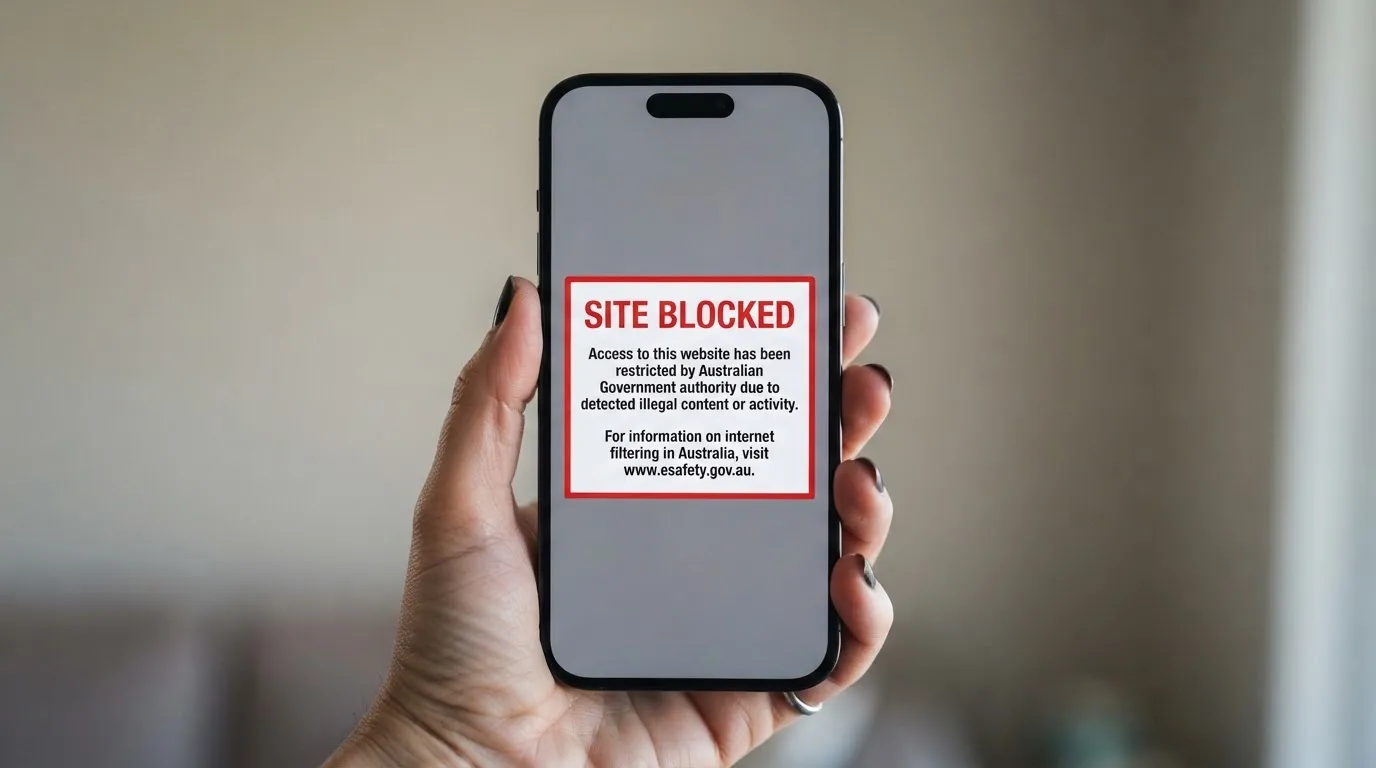
The ACMA’s enforcement has two visible forms. The first is the formal warning — a published letter to a named operator identifying the prohibited service and giving the operator a chance to comply before further action. The second is the blocking request, sent to Australian internet service providers and resulting in the listed domains becoming unreachable from Australian connections. As of the ACMA’s most recent published count, reported in June 2026, the authority has asked Australian ISPs to block 1,751 illegal gambling and affiliate marketing websites since the first blocking request in November 2019, and more than 230 unlicensed gambling services have left the Australian market since enforcement was strengthened in 2017. The June 2026 round alone added 12 domains: 7Signs, ChromaBet, Donbet, Duospin, Freshbet, Slots Gem, Jacks Club, Lucky Start, Pointsbetz, Spinrise, Vinyl Casino and Wildsino. The pace has not slowed.
The enforcement record is also the record behind the brands on this page. RocketPlay sits at the top because the ACMA’s most recent action against a brand on this page is the March 2026 formal warning to Pulsup Ltd over RocketPlay — the same brand that was the subject of an earlier May 2022 warning to Dama N.V. (alongside Bambet, Dazard, Level Up, Wild Tornado and Cobra Casinos). Level Up Casino was named in that same May 2022 warning to Dama N.V., and is one of six brands the operator ran that the ACMA told to stop offering prohibited services to Australians. Woo Casino picked up its own formal warning in March 2025, also addressed to Dama N.V. — the same operator the ACMA has gone back to repeatedly. Spirit Casino was the subject of a separate Dama N.V. warning in May 2025.
The same pattern shows up on the Consolutetish S.R.L. side. The operator was the subject of a July 2025 formal warning over both National Casino and Bizzo Casino — and Bizzo Casino had already been the subject of a 2022 warning, then addressed to TechSolutions (CY) Group Limited and TechSolutions Group N.V., which is the second time the brand has been warned under the IGA. Ignition Casino sits alongside those two in the July 2025 warning, but to a different operator: Bamboo Media. Instant Casino is the February 2025 warning to EOD Code SRL. Jackbit and CasinOK are named together in the April 2026 warning to Ryker B.V. Casino Intense is the April 2025 warning to Sterplay Holding Ltd. Sky Crown carries a warning from Hollycorn N.V., alongside Blue Leo, with the formal warning published in September 2022.
The pattern is what carries the information. A reader scanning the eleven brands and seeing that the ACMA has named eleven of them, that some of them have been named more than once, and that the operators behind them run multiple brands under different names, has the information they need to understand the marketing claim that an offshore casino is “trusted” or “licensed”. The licence being marketed is real, in the sense that it is a licence issued by some regulator somewhere. It is not a licence to offer online casino games to a person in Australia. No such licence exists, and no operator displaying one has one.
ACMA Enforcement and Blocking Record
| Brand | ACMA action and date | Operator named by the ACMA | Subject support |
|---|---|---|---|
| RocketPlay | Formal warning, March 2026 (and May 2022) | Pulsup Ltd; earlier Dama N.V. | — |
| Level Up Casino | Formal warning, May 2022 | Dama N.V. | — |
| Woo Casino | Formal warning, March 2025 | Dama N.V. | — |
| Spirit Casino | Formal warning, May 2025 | Dama N.V. | — |
| National Casino | Formal warning, July 2025 | Consolutetish S.R.L. | — |
| Bizzo Casino | Formal warning, July 2025 (and 2022) | Consolutetish S.R.L.; earlier TechSolutions | — |
| Ignition Casino | Formal warning, July 2025 | Bamboo Media | — |
| Instant Casino | Formal warning, February 2025 | EOD Code SRL | — |
| Jackbit | Formal warning, April 2026 | Ryker B.V. | — |
| Casino Intense | Formal warning, April 2025 | Sterplay Holding Ltd | — |
| Sky Crown | Formal warning, September 2022 | Hollycorn N.V. | — |
What the table cannot show is the wider picture. The 1,751 blocked sites and the 230 services that have left the Australian market are the visible scale of the offshore problem. H2 Gambling Capital’s 2025 estimate is that Australians lose about A$3.9 billion a year to illegal gambling sites, and that the share of gambling going through legal channels fell from 74% in 2021 to 64%. The legal market is being eroded, not by Australians moving to a competitor, but by an offshore market the regulator can slow but not stop.
Online Pokies, Real Money, and the Australian Legal Frame
The shelf the search most directly asks about is legality, and the answer is short enough to fit in a paragraph but deep enough to deserve its own section.
The Interactive Gambling Act 2001 — the IGA, strengthened by the Interactive Gambling Amendment Act 2017 — makes it an offence to provide online casino games, online pokies or in-play betting to a person physically in Australia. No state or territory issues a licence for online casino games, and no Australian jurisdiction licences online pokies. What is licensable online is wagering on races and sport placed before the event, lotteries and keno — in practice licensed by the Northern Territory, through the Northern Territory Racing and Wagering Commission, which regulates 52 of Australia’s online bookmakers including Sportsbet, Bet365 and Ladbrokes. The commission has no full-time staff and meets once a month in Darwin, which is one reason “NT-licensed” appears on more wagering sites than any reader would intuitively expect from a territory of about 250,000 people: the licence is real, the regulation is real, and the regulator is small.
The minimum age for any form of legal Australian gambling is 18. The penalty regime targets the provider, not the player — the IGA’s offences sit on the operator side of the transaction — but that does not mean the player is unaffected. An offshore site gives no Australian consumer protection, no complaints body and no recourse if a withdrawal is refused, and the operator can be blocked by the ACMA with money still on the player’s balance.
The 2026 reform sitting on top of this frame is the Interactive Gambling Amendment (Gambling Reform) Bill 2026, which passed Parliament on 19 August 2026. Its advertising and inducement measures commence 1 January 2027, which means the law is enacted but not yet in force on this page. A reader watching the marketing around online casinos in Australia through 2026 is watching the last months of the regulatory regime as it stood through the 2017 amendments; a reader watching the same marketing in early 2027 will be watching a regime with new inducement rules attached.
A separate note on the winnings side. Gambling winnings of a recreational player are not assessable income in Australia — section 6-5 of the Income Tax Assessment Act 1997 covers the position — and losses are not deductible, unless the person carries on a business of gambling. The tax treatment is a model only, and a reader who is in any doubt about their own position should check with the ATO. The model does not change the legal status of the offer.
The Blocked-Site Calculation: How Fast the ACMA Is Adding Sites
The ACMA’s enforcement record provides a clear calculation, and the calculation belongs with the ACMA enforcement material because that is where the running totals come from. The ACMA reported in June 2026 that 1,751 illegal gambling and affiliate marketing websites had been blocked since the first blocking request in November 2019, and the December 2019 blocking request was one of the earliest rounds reported. From November 2019 to June 2026 is roughly 79 months, which gives an average of about 22 sites blocked per month across the life of the program. That figure is an average over the whole period, including the slower early years before the enforcement regime was fully active.
The more useful range is what the ACMA has actually been doing in recent reporting. The June 2026 round alone added 12 domains in a single blocking request, and earlier rounds have run at similar or higher volumes. A reader looking at the pace of enforcement in the most recent reporting window sees something materially faster than the lifetime average, which is the gap between a programme that started slowly and one that is now operating at full pace. The exact recent-month figure depends on which reporting window is used and how the ACMA groups its blocking requests; for that reason the page states the result as a band, not a single number: somewhere between the lifetime average of roughly 22 sites a month and the most recent single-round volume of 12, depending on which window is taken.
What the calculation does not change is the qualitative picture. The ACMA is adding sites faster than it was in 2019, the offshore market is responding by rotating brands and domains (Dama N.V. alone appears behind five of the brands on this page, which is consistent with a single operator re-entering under different names), and the reader is being offered a moving target. A “trusted” brand in June 2026 can be a blocked domain in August 2026, with the same operator running a new one the same week. The arithmetic describes the pace; the qualitative picture describes what the pace means for a reader’s decision.
Putting It Together: What a Reader Looking for Real Money Pokies in Australia Should Actually Do
The argument so far has been that the legal shortlist does not exist. The search is for something the law does not provide, and the search results the reader meets are mostly an attempt to sell them something the law prohibits. The reader who has read this far has three honest options in front of them.
The first is to use the legal market that does exist. A licensed Australian wagering account with a bookmaker like Sportsbet, Bet365 or Ladbrokes lets a reader bet on sports and racing before the event, deposit through PayID, BPAY, debit card or bank transfer, withdraw to an Australian bank account under Australian rules, and reach the National Gambling Helpline or BetStop if they want to step back. None of those operators offers an online pokie, because none of them is licensed to. The product is narrower than the search is asking for, and it is the legal version of the category.
The second is to play the licensed poker machines in person. New South Wales runs 87,298 of them across 2,195 venues; Queensland runs 21,122 across 351 venues; Victoria runs 26,380 outside Crown Casino under a 30,000 statewide cap. The 2020–21 total turnover across Australian gaming machines was almost A$150 billion against losses of A$12.18 billion — the existing legal market is large and well-developed, and a reader who wants to play a pokie can do so without crossing the legal line. The settings on those machines — the minimum RTP, the bet sizes, the venue’s harm-minimisation obligations — are set by an Australian regulator and enforced inside Australia. The product is different from the offshore version because it is regulated, and the regulation is the difference a reader who has decided to keep playing actually pays for.
The third is to register with BetStop and step away from gambling for a chosen period. This is not a soft recommendation. The decision to stop is not the editor’s call. The call to make the option visible, in plain language, alongside the other two, is the editor’s call, and it has been made above in the responsible-gambling section and again here so that a reader who has been looking for a reason to stop has it spelled out where they are most likely to look.
What this page has not done is recommend an offshore casino. The brands in the table above are described, not endorsed, and they are described because the ACMA has named them, not because they are good options. The reader who reaches the end of this page having understood only one thing has understood the most important thing: there is no Australian-licensed online casino offering real money pokies, and the operators that offer them anyway are operating outside Australian law. The rest of the page is the rest of the answer.
Frequently Asked Questions
What is the difference between a free-play pokie and a real money one?
A free-play pokie runs the same software — same reels, same RNG, same paytable — but does not take a real-money wager or pay a real-money prize. A real money pokie wagers actual cash on each spin and pays actual cash on winning combinations, with the house edge baked into the paytable as the difference between the true odds and the payout odds. Free-play is the version offered by game developers on their own sites; real money is the version offered by licensed venues in Australia and by offshore operators that the ACMA has been warning to stop.
Can real money online pokies be played using PayID in Australia?
PayID itself is a payments rail, not a regulatory approval. Australians can deposit by PayID at offshore casinos that accept it, but the receiving business is offshore and the offer of online casino games to a person in Australia is prohibited under the Interactive Gambling Act 2001. The legal place to use PayID for gambling in Australia is on a licensed wagering account — Sportsbet, Bet365, Ladbrokes and similar — where the deposit is to a wagering service and not to an online casino.
Is it legal for an online casino to offer real money pokies to Australians?
No. The Interactive Gambling Act 2001, as strengthened by the 2017 amendments, makes it an offence to provide online casino games — including online pokies — to a person in Australia. No Australian state or territory issues a licence for it. The ACMA enforces the prohibition through formal warnings, blocking requests to ISPs, and investigations. The individual player is not prosecuted, but the player gets no Australian consumer protection, no complaints body, and no recourse if a withdrawal is refused.
Is there a dedicated real money pokies app for Australian players?
No. There is no Australian-licensed real money pokies app, because no Australian licence for online casino games exists. The App Store and Google Play restrict real-money gambling apps to licensed operators in jurisdictions where the licence is valid, and online pokies are not a licensed product in any Australian jurisdiction. What an Australian reader will find is the mobile web version of an offshore casino, typically delivered as a Progressive Web App, and the app of an Australian-licensed wagering provider that offers sports and racing only.
How much did Australians wager on gaming machines in 2020-21?
Australians bet almost A$150 billion through gaming machines in 2020–21 and lost A$12.18 billion on them. The machines — poker machines, shortened to “pokies” — operate in every Australian state and territory, with each jurisdiction separately regulating their design and operation. New South Wales alone had 87,298 machines outside casinos across 2,195 venues as of June 2023, with player losses of A$8.18 billion in 2022–23; the legal market is large, well-established, and the reason the offshore offer competes on convenience rather than on the size of the catalogue.