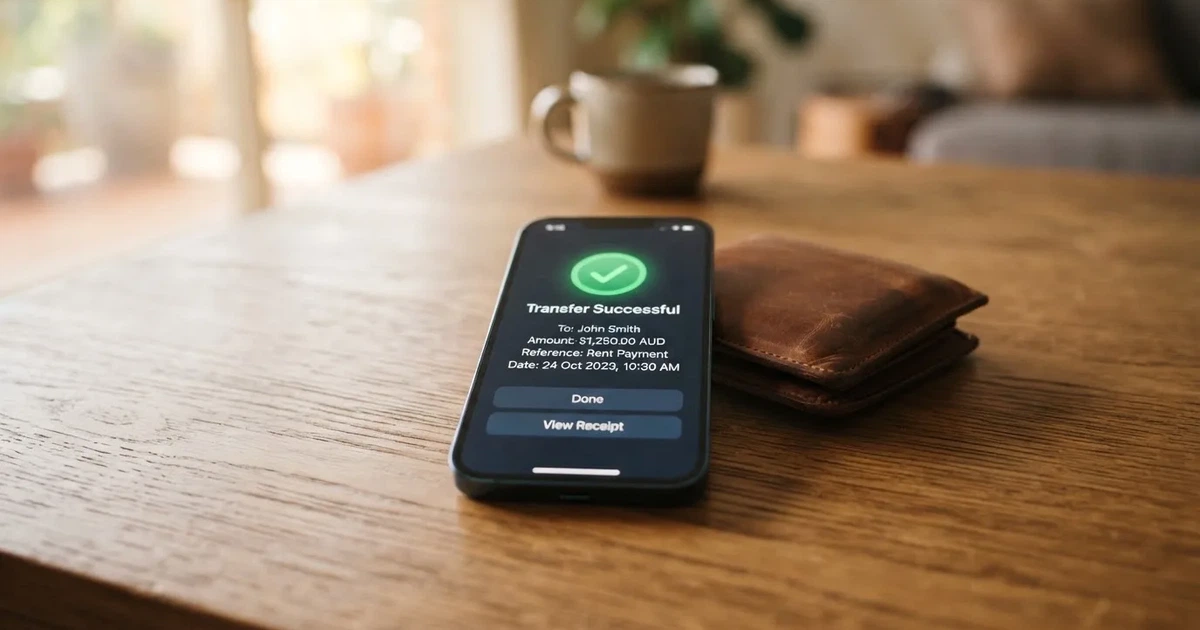
What a $10 PayID No-Deposit Casino Bonus Actually Looks Like in Australia in 2026
 Available in US
A reader searching for a “$10 PayID casino no-deposit bonus in Australia” wants one of two things, and they need to know which. Either they want a free ten-dollar credit they can play with the moment they hand over a PayID, or they want a real path through Australian banks to a legitimate casino. The marketing treats those as the same thing. The law, the banks and the payments operator that runs PayID treat them very differently — and one of them has put out a specific warning about the other.

PayID itself is the real Australian side of this. It is a free service run by Australian Payments Plus (AP+), built into the online banking of more than 100 Australian financial institutions, sitting on top of the Reserve Bank-regulated New Payments Platform that went live in February 2018. Twenty-five million PayIDs were registered by April 2025. It is genuine, trusted, fast — an Osko transfer addressed to a PayID typically clears in under a minute, around the clock, including weekends. None of that is in dispute.
What is in dispute is the part that comes after. The other half of the search term — the casino, the no-deposit bonus, the ten dollars — runs through an entirely different set of operators. Under the Interactive Gambling Act 2001, no Australian licence exists for online casino games or online pokies. The Australian Communications and Media Authority (ACMA) has been issuing formal warnings and ordering internet service providers to block these sites for years, with more than 230 unlicensed services having left the Australian market since 2017 and 1,751 illegal gambling and affiliate marketing sites blocked since the first blocking request in November 2019.
Updated as of 23 September 2026 against the ACMA’s published formal-warning register and AP+’s PayID guidance.
That is the real landscape behind this page. The rest of it walks through what PayID does, why the offer gets dressed up the way it does, what the ACMA has actually done about it, and which paths remain open to a punter who has decided to play.
Table of Contents
- Paying and Payout Speed Around a $10 PayID No-Deposit Casino Offer in Australia
- What a $10 No-Deposit Bonus Generally Looks Like as Marketing
- How an Honest Comparison of $10 PayID No-Deposit Offers Would Actually Work
- What a $10 PayID No-Deposit Casino Offer Really Means in Australia
- The Law Around a $10 PayID No-Deposit Casino Bonus in Australia
- Responsible Gaming Around a $10 PayID No-Deposit Bonus
- Sites the ACMA Has Formally Warned for Offering Casino Bonuses to Australians
- How Fast the ACMA Closes These Sites Down
- Where This Leaves the Reader
- Frequently Asked Questions
Paying and Payout Speed Around a $10 PayID No-Deposit Casino Offer in Australia
The price tag on this search term — PayID plus $10 plus no-deposit plus casino plus bonus — mixes two things a payments operator and a regulator have already publicly separated. PayID was designed for everyday Australian banking, not for funding offshore gambling. The mechanics a reader needs to understand are the mechanics of PayID, and they explain why “PayID casinos” exist as a marketing category rather than as a licensed product.

What PayID actually is, and why that matters here
A PayID is a memory tag for a bank account — a mobile number, an email address, an ABN or an Organisation Identifier — linked to an underlying account at an Australian financial institution. The tag is free, and it is already inside the online banking of more than 100 institutions. PayID sits on the New Payments Platform, which the Reserve Bank of Australia regulates and which launched in February 2018 to deliver simply-addressed, near-real-time payments around the clock. As of April 2025, more than 25 million PayIDs were registered in Australia.
The relevant detail for this page is the scam-check, not the speed. When an Australian payer sends money to a PayID, their own bank shows them the name of the account holder before authorising the transfer. That visible-name check exists so people do not pay the wrong account, and so they do not pay a scammer. AP+ has used that same mechanism to draw a public line: “If you are asked to transfer funds to a PayID on an illegal gambling site, it is almost certainly a scambling website.”
Scambling is AP+’s own slang for illegal online gambling platforms advertised on social media and messaging apps that route people into a scam website. AP+ tells anyone who thinks they have been scambled to contact their bank. PayID itself will never contact a customer directly, will never ask anyone to send money to receive money, and has no “upgrade” path.
Settlement speed is not the headline issue
PayID-over-Osko is genuinely fast, usually under a minute, even on a weekend, even at 2 a.m. The headline number is real. It is also not the one that determines whether the search term delivers what the reader is hoping for. The reason: the reader is rarely paying a licensed operator at all. The settlement works exactly as designed when an Australian transfers A$10 to another Australian’s bank account; it is irrelevant to whether the recipient is a licensed casino, because no Australian-licensed online casino exists.
What settlement timing actually decides, then, is what a real money transfer to a real bank account looks like if the transfer ever happens: a few seconds of authorisation, the visible-name check, then the funds land. A reader who has signed up to an offshore site expecting a “no-deposit” credit to land within a minute is looking at a different clock on a different system; the credit, if it arrives at all, is governed by the offshore operator’s own terms, not by Osko’s settlement window.
PayID in the wider Australian payments stack
This search term sits at the intersection of three currently active payment stories in Australia, and a reader comparing offers needs to keep them straight. Westpac runs a card-level gambling block that declines transactions carrying the merchant category code for betting or casino gambling. ANZ runs a similar block through its app, and once it is on, removing it requires a 48-hour waiting period — with the bank warning that some gambling transactions will get through and some non-gambling ones will be blocked in error. Apple Pay, Google Pay and Samsung Pay between them accounted for around 45% of all Australian card payments by number at the end of 2025, which means that wherever a deposit route is “card on file”, the gambling block lives one layer above the wallet, not at the wallet itself.
That whole card-and-wallet picture is irrelevant to a no-deposit bonus that asks for a PayID rather than a card. The whole offshore-marketing picture is what is doing the work here. With a card, the bank often blocks the transaction before it ever reaches the offshore site; with a PayID, the visible-name check is what warns the payer, and the decision to send still sits with the person at the screen.
Why the marketing plasters PayID over the offer
Affiliate sites pair PayID with no-deposit bonuses because PayID reads, to an Australian reader, like proof of safety. The pitch is built on that implicit promise: PayID is Australian, therefore the casino is Australian, therefore the A$10 is real. AP+ has put out a specific warning about exactly this construction. The payments rail is genuine; the recipient is almost never licensed, and the bonus terms come from an offshore operator with no Australian regulator, no Australian complaints body and no recourse if a withdrawal stalls.
The price of all that settlement speed, then, is that the security check it does offer only protects against paying the wrong person. It does not check whether the recipient is licensed to take the payment, and on the offshore side of this offer, no one else will.
What a $10 No-Deposit Bonus Generally Looks Like as Marketing
In the licensable Australian market — wagering on races, wagering on sport before the event, lotteries, keno — the marketing of $10 no-deposit sign-up credits is essentially invisible. The legal deposit routes for a licensed Australian wagering service are debit card, bank transfer, PayID/Osko and BPAY. Credit cards and credit-related products have been banned as payment for Australian-licensed online wagering since 11 June 2024, with penalties up to A$247,500 for operators, and digital currency is treated the same way. A licensed Australian operator competing for sign-ups spends its marketing dollar on racing and sports promos, not on a free A$10 credit.
The reader who searches for a “$10 no-deposit casino bonus” is searching in the offshore market. The offer exists; it is not Australian.
What the offer usually is, offshore
Across the offshore sites a reader sees in search results, a “no-deposit” credit is almost never actually free. The shape is consistent: a small free-play balance or a small batch of free spins lands in a new account as soon as registration is complete, before any deposit. The reader then plays, and the bonus terms convert the result of that play into something withdrawable — or, more often, do not. The standard mechanics behind that conversion are wagering requirements, game restrictions, maximum-cashout caps, time limits and bonus-stacking rules. The A$10 figure is a shopfront; the wagering multiple is the floor, and it tends to sit between thirty and fifty times the bonus amount at low-end sites, and higher for winnings derived from free spins.
In a market with no Australian-licensed competitor bidding the other way, there is no force pressing these terms down. The free credit is a sample, and the sample’s job is conversion, not value.
Why “just a PayID” still asks for a lot
Affiliate pitches tend to imply that an offer needing only a PayID will not ask for ID. The reality is more specific. Offshore sites licensed by their own jurisdiction typically perform KYC at withdrawal, not at deposit; the PayID-as-deposit fiction is part of the entry pitch, but the verification steps come later. The gamble for a reader is that verification includes source-of-funds checks the site may apply without warning, that withdrawal queues can hold funds during review, and that a site blocked by the ACMA mid-session can leave a balance stranded with no complaints avenue on the Australian side.
That is also why “no-deposit” is a marketing word rather than a regulatory one. The free balance is offered in lieu of a deposit; it is not offered in lieu of the operator’s other rules.
What a careful reader notices before claiming anything
Three tells almost always appear together on the offer pages of offshore sites, and the offer the reader is searching for inherits all of them. First, the bonus is denominated in a foreign currency or in the site’s own credit, with conversion handled by the site at unfavourable rates. Second, the terms document is several pages long, with the wagering requirement buried and the max-cashout cap surfaced as a footnote. Third, the licence displayed at the foot of the page is from Curaçao, Anjouan, the Marshall Islands or another jurisdiction that is not a signatory to Australian consumer-protection arrangements.
None of those three tells tells the reader they will lose money. They tell the reader they are the only party to the deal without a regulator of their own.
How an Honest Comparison of $10 PayID No-Deposit Offers Would Actually Work
The word “ranking” implies a leaderboard. There is no honest leaderboard here, because the inputs the leaderboard is meant to compare are not honestly measurable: a bonus’s small print is published by the operator that wrote it, and the operator has no incentive to be wrong in its own favour. Terms-of-service pages on offshore casino sites are routinely updated and rarely versioned. Affiliate reviews pick terms that flatter the affiliate’s cut, not the reader’s experience. The honest comparison is the one the reader can verify themselves, and it has fewer than ten inputs.
The inputs a fair comparison has to weigh
The comparison runs on five things, and they sit in roughly this order of weight. The first is the wagering requirement: a multiple of the bonus, applied to either the bonus alone or to bonus-plus-deposit, with anything above 40× reading as heavy against the reader. The second is the maximum cashout cap: the single biggest reason a “free” credit becomes a non-event once the wagering is cleared. The third is the game eligibility: many bonuses exclude high-RTP table games and most progressive jackpot slots from the wagering count, pushing play onto the higher-edge games. The fourth is the time limit on meeting the wagering, often seven days, sometimes less. The fifth is the withdrawal queue, which on smaller offshore sites can sit at several business days even before KYC review.
None of those five is visible from the search-results page. All of them are on the terms page, and the ratio of reader attention to terms-page attention is the offer’s actual marketing channel.
What changes for an Australian reader specifically
Two Australian specifics tighten the comparison further. The Interactive Gambling Act 2001, as amended in 2023, makes it an offence for an operator to provide online casino games to a person physically in Australia, so any site that did offer a reader a $10 bonus was acting against Australian law when it did. The A$10 therefore costs the operator nothing to publish and offers the reader no legal standing if it goes wrong. The second is the ACMA’s blocking power: a site the ACMA targets can be made unreachable at the ISP level, with the reader’s account and balance still sitting behind the block, and no Australian body to complain to.
Both specifics reduce the search-results leaderboard to a quiz. The question is not “which site has the best $10 bonus”; the question is “which terms document is least bad if the worst happens”.
A comparison framework the reader can use
The honest sequence, written out, is this: read the licence footer and note who issued it; open the bonus terms page and find the wagering multiple; find the max-cashout cap and the time limit; find the game-exclusion list; check whether the site is on the ACMA’s published list of warned or blocked operators. If the reader cannot get past the second step — if the terms page loads slowly, hides the wagering multiple, or asks the reader to confirm a deposit to view it — the rest of the comparison has nothing to stand on. The audit at that point is moot.
That sequence is what an honest comparison would look like. There is no Australian-licensed counterpart to run it against, and there is no real cash register waiting at the end of it.
What a $10 PayID No-Deposit Casino Offer Really Means in Australia
Stepping back from the marketing copy, the search term resolves to a fairly narrow set of real options for an Australian punter. The label “PayID casino” is a wrapper applied by an offshore operator to make an offshore offer look onshore; the wrapper does not change the operator, the regulator, or the consequences of an unresolved complaint.
The shape of the offer on the ground
A punter who follows the search results and registers at one of these offshore sites will typically land in a screen that asks for an email address, a password, a mobile number and a date of birth. The “no-deposit” credit then arrives as bonus balance rather than cash. A wagering requirement applies before any bonus balance becomes withdrawable, and a max-cashout cap applies after the wagering has cleared. The terms document will also specify which games count toward the wagering, which do not, and how long the whole process has to run.
What is not present: an Australian licence, an Australian regulator, an Australian complaints body, BetStop coverage, AFCA-style dispute resolution and the card-level gambling blocks that the Australian banks operate would apply on a card-funded deposit but do not apply to a transfer addressed to a PayID.
What the ACMA has actually done lately
A running total helps. The ACMA’s published list of formal warnings and blocking requests runs longer each quarter. In a single round reported in late June 2026, the ACMA asked Australian ISPs to block 12 more illegal gambling sites — 7Signs, ChromaBet, Donbet, Duospin, Freshbet, Slots Gem, Jacks Club, Lucky Start, Pointsbetz.com, Spinrise, Vinyl Casino and Wildsino — taking the cumulative running total of blocked sites past 1,750. The cumulative count as reported by the ACMA reached 1,751 illegal gambling and affiliate marketing websites blocked since the first blocking request in November 2019, alongside more than 230 unlicensed services that have left the Australian market since enforcement was strengthened in 2017.
That puts the operating environment in plain terms. The market is being steadily closed, one site at a time, against offers of exactly the shape this page is about.
Where the honest market sits
What is licensable in Australia, today, is wagering on races and sports placed before the event, lotteries and keno — in practice licensed by the Northern Territory, where the Racing and Wagering Commission regulates 52 online bookmakers (including Sportsbet, Bet365 and Ladbrokes) but has no full-time staff and meets once a month in Darwin. Sports-betting promos for licensed operators do exist as sign-up offers, including A$10 credit-style bets and bonus bets; none of them is a $10 PayID no-deposit casino bonus, because the regulated product is betting, not casino.
A reader who actually wants to play a regulated Australian game with a small first outlay is choosing between a small sports bet and a small lottery entry, not a small casino credit. The choice is real; the wrapper does not turn an offshore casino credit into a sports bet.
The Law Around a $10 PayID No-Deposit Casino Bonus in Australia
The legal frame is the spine of the offer the reader is searching for, and it is short enough to fit on a page. The Interactive Gambling Act 2001, strengthened by the Interactive Gambling Amendment Act 2017, makes it an offence to provide online casino games, online pokies or in-play betting to a person in Australia. No state or territory issues a licence for online casino games. The minimum age to gamble is 18.
The IGA targets the provider, not the player. An individual Australian who plays on an offshore site is not personally prosecuted for it. The same Act is what makes the offer itself unlawful when addressed to a person in Australia; the $10 free credit is the operator’s first move, not its legal one. Players therefore face a specific kind of risk: no Australian consumer protection, no Australian complaints body and no Australian recourse if a withdrawal stalls, with the further risk that the ACMA can order the operator blocked at the ISP level with the balance still on the account.
Enforcement: the ACMA
The Australian Communications and Media Authority investigates complaints, issues formal warnings, and directs Australian internet service providers to block illegal sites. The warnings and blockings are published on the ACMA’s website and include the operator name, the brand name and the date. The cumulative running total of blocked sites is the easiest single number for a reader to check the state of the market against, and it has been steadily climbing — a detail that matters because the operating environment is not static, and the offer the reader sees this month may not exist next quarter.
The ACMA’s enforcement has had a measurable downstream effect. H2 Gambling Capital’s 2025 report estimates Australians lose around A$3.9 billion a year to illegal gambling sites, and that the share of gambling going through legal channels fell from 74% in 2021 to 64%. The reading: the legal share is shrinking, and the illegal market is not. Enforcement has not yet cleared the search results.
Player protection and the limits of that protection
BetStop, the National Self-Exclusion Register, has been live since August 2023 and binds only Australian-licensed online and phone wagering services. An offshore casino is not connected to BetStop; a self-exclusion through BetStop is not honoured by an offshore operator that has never heard of it. The National Gambling Helpline 1800 858 858 is free, 24/7, with web chat at Gambling Help Online; both are available regardless of whether the help-seeker has played at a licensed or unlicensed site, and both are the place to start if the offer on this page has started to feel like a problem.
There is also a hard spending-control option on the Australian side: Westpac’s gambling block at the merchant-category-code level, ANZ’s gambling block through the app with its 48-hour cool-off on removal, and comparable blocks at the other major banks. These do not stop a bank transfer addressed to a PayID, but they do stop a card-funded deposit, and they cover any card tokenised into Apple Pay, Google Pay or Samsung Pay — which together accounted for around 45% of Australian card payments by number at the end of 2025.
Payments: what is and is not allowed
The legal deposit routes for a licensed Australian wagering service are debit card, bank transfer, PayID/Osko and BPAY. The banned routes are credit cards, credit-related products and digital currency — credit-card wagering was banned in 2023, and the ban on digital currency as payment for licensed online wagering came in with effect from 11 June 2024, with penalties up to A$247,500 for operators who breach it. Any site asking an Australian for a credit-card deposit or a crypto deposit is, by the act of asking, outside the Australian rules.
A no-deposit bonus that asks only for a PayID sits in an odd corner of those rules. There is no credit card, no debit card, no crypto — just an identifier that resolves to an Australian bank account. The bonus credit itself, when it lands, has been paid out by the operator without any deposit flowing in. That is not a payment route the licensed Australian system contemplates at all.
The reform on the horizon
The Interactive Gambling Amendment (Gambling Reform) Bill 2026 passed Parliament on 19 August 2026. Its advertising and inducement measures commence on 1 January 2027, which is significant for an 2026 page: the law is on the books but is not yet in force at the time of writing. It does not legalise online casino games and does not change the IGA framework above; what it adjusts is the marketing around prohibited offers. For a reader in late 2026, the practical reading is that the marketing environment will tighten further over the year ahead, and affiliate pages pitching a $10 PayID no-deposit casino bonus will be looking at a tighter compliance perimeter soon.
Tax: one quiet clean-up
Recreational gambling winnings are not assessable income in Australia (section 6-5 of the ITAA 1997), and losses are not deductible, unless the person is carrying on a business of gambling. The A$10 bonus, if it converts into a small withdrawable amount, sits inside that treatment: it is not income to declare, and the failed attempts to clear the wagering are not losses to claim. The model is recreational, and the Australian Taxation Office treats it as such. Anyone running a serious gambling operation should be checking with the ATO, not with an affiliate page.
Responsible Gaming Around a $10 PayID No-Deposit Bonus
The smallest credit on the search-results page is still a credit at an offshore casino, and the responsible-gaming frame applies in the same way it does to a much bigger offer. The unusual bit is that the usual protections — Australian licence, BetStop, an Australian complaints body — are not available. The unusual-unusual bit is that AP+ has put out a warning specifically about this category of offer.
When a $10 bonus starts to cost more than $10
The arithmetic of a no-deposit bonus is not actually simple. The bonus itself is offered without a deposit, but everything around it pulls against the reader. The wagering requirement applies before any balance becomes withdrawable, and is typically set at a multiple of the bonus large enough that the expected loss over the wagering period is several times the A$10 that started it. A session spent hunting a small bonus through a list of eligible games can cost the reader more in time and additional deposits than the bonus is worth. That is the model’s profit, and it is also the model’s risk for the reader.
This is also why the responsible-gaming frame here is unusually direct. The offer is structured to keep the reader at the site after the bonus has been spent. It does so on the assumption that the reader will continue depositing and playing on their own account, and on the assumption that some readers will not stop. AP+’s own word for it — “scambling” — names the marketing channel more honestly than the affiliate pages do, and the warning to contact the bank if a reader thinks they have been scambled is the responsible-gaming checkpoint the rest of the page does not always reach.
Where to get help, free and confidential
The National Gambling Helpline is 1800 858 858, free, around the clock. Web chat is at Gambling Help Online, with text, email and online counselling available in addition to the phone line. Both are intended for anyone whose gambling has started to feel out of control — whether that gambling is with a licensed Australian operator or with an offshore casino offering a $10 no-deposit credit. The helpline does not require the caller to have played through a licensed operator first; it works for callers at any point in the cycle.
BetStop, the National Self-Exclusion Register, is live and binds every Australian-licensed wagering service; registering excludes the reader from those services for the chosen period. It does not bind an offshore casino, and the registration does not on its own stop the reader depositing at one. It is one tool, not the whole kit.
The credit-card and bank blocks as a personal cap
For an Australian punter deciding the offer is not for them, the simplest cap is the bank-level block. ANZ’s gambling block works on eligible cards, including tokens loaded into digital wallets, and once it is on, removing it requires a 48-hour waiting period — a deliberate friction built into the design. Westpac’s block sits at the merchant-category-code level on eligible personal cards. Both banks warn that the block is best-effort: not all gambling transactions will be caught, and some non-gambling ones will be blocked in error. That is a known limit of any gambling-blocking system, and it does not change the conclusion that the block is still the most reliable single lever an Australian punter has.
PayID does not sit inside either bank’s gambling block. A transfer addressed to a PayID is processed as a standard bank transfer, and the only protection on the rail is the visible-name check AP+ has built in. The check warns against paying a wrong account and against paying into a known scam pattern; it does not warn against funding an offshore casino per se. A punter relying on the bank blocks should expect that PayID-funded deposits will not be covered by them.
If the offer has already been claimed and the question is what comes next
If a reader has signed up to one of these offers, the responsible course is straightforward. Check the account balance against the site’s terms, screenshot the bonus-terms page, withdraw any withdrawable balance early while the site is still reachable, and contact the bank if a refund is being sought. Read the bonus terms before chasing a second credit on the same site — the same sign-up at the same site will not be re-offered in the same form.
If the offer has begun to feel compulsive, the helpline and the self-exclusion register are the next step, and the unlicensed status of the offer does not change that. The offer at the centre of this page is the smallest, cleanest illustration of an offshore credit marketed to an Australian audience. It does not become safer the smaller it gets.
Sites the ACMA Has Formally Warned for Offering Casino Bonuses to Australians
The brands below are not ranked and are not recommended. Each is named because the ACMA itself issued a formal warning over it for providing prohibited interactive gambling services to Australians. Bonus terms, payout times and game lists are not given, because the only sources for them are affiliate marketing pages whose value depends on the affiliate’s cut, not on the reader’s experience. The table’s subject-support column reflects what independent listings say about each brand’s general mention in Australian payment and banking pages — and for several brands, the listing pages have nothing to say at all, which is information in its own right.
| Brand | ACMA action and date | Operator named by the ACMA | Subject support |
|---|---|---|---|
| RocketPlay | Formal warning, March 2026; earlier warning May 2022 | Pulsup Ltd (Rocketplay.com.au); earlier Dama N.V. | — |
| Level Up Casino | Formal warning, May 2022 | Dama N.V. | listings-only (Westpac merchant page) |
| Woo Casino | Formal warning, March 2025 | Dama N.V. | — |
| Spirit Casino | Formal warning, May 2025 | Dama N.V. | — |
| National Casino | Formal warning, July 2025 | Consolutetish S.R.L. | listings-only (AUSTRAC, Wikipedia) |
| Bizzo Casino | Formal warning, July 2025; earlier 2022 | Consolutetish S.R.L.; earlier TechSolutions | — |
| Ignition Casino | Formal warning, July 2025 | Bamboo Media | — |
| Instant Casino | Formal warning, February 2025 | EOD Code SRL | listings-only (ecoPayz, PayID) |
| Jackbit | Formal warning, April 2026 | Ryker B.V. | — |
| Casino Intense | Formal warning, April 2025 | Sterplay Holding Ltd | listings-only (AUSTRAC, ITnews, NAB) |
| Sky Crown | Formal warning, September 2022 | Hollycorn N.V. | — |
Online casino games and online pokies cannot be licensed anywhere in Australia, whatever licence any individual site displays. The brands in the table are all offshore; the licence shown at the foot of any of their pages is from a non-Australian jurisdiction.
RocketPlay
RocketPlay was issued a fresh formal warning by the ACMA in March 2026, with Pulsup Ltd named as the operator of Rocketplay.com.au. An earlier formal warning had already been issued in May 2022 to Dama N.V. covering Rocketplay alongside five other brands. The site shows a Curaçao-style licence footer; it is not an Australian licence, and no online casino licence issued anywhere in the world is valid for a person physically in Australia. The relevant judgement here is not whether RocketPlay can be reached from Australia today, but whether the regulatory status of the brand has changed between the 2022 and 2026 warnings: it has not, and the same operator structure now sits behind two warnings eight years apart.
Level Up Casino
Level Up was named in the May 2022 formal warning to Dama N.V., alongside Bambet, Dazard, Rocketplay, Wild Tornado and Cobra Casinos — the first of the Dama N.V. warnings and the one that put Dama N.V. on the ACMA’s watchlist two years before its later warnings. The brand does not surface in Australian payment or banking pages by name, and the only independent listing is a merchant-category reference on Westpac’s gambling block documentation. That is a thin paper trail for an operator to have.
Woo Casino
The ACMA issued a formal warning to Dama N.V. over Woo Casino in March 2025, separately from the May 2022 round. Woo sits in the second Dama N.V. warning cohort, and the same operator has now been warned at least twice over different brands: a structure that suggests operator-level behaviour rather than one-off listings. The brand does not appear in independent payment or banking listings.
Spirit Casino
Spirit Casino was the subject of a formal warning to Dama N.V. in May 2025. The brand was named alongside Woo Casino in the second round of Dama N.V. warnings, although a few months apart. Both warnings fall inside the same twelve-month window: small brands appearing in pairs, both cleared through the same operator, both under a parent that has now been warned three times in three years. Spirit does not surface in independent listings.
National Casino
The ACMA issued a formal warning to Consolutetish S.R.L. over National Casino in July 2025. National is one of two brands named in that round — the other being Bizzo Casino — and both fall under the same operator. National has some independent listings on AUSTRAC-related pages and in passing Wikipedia references; neither is a casino-specific endorsement, and neither changes the regulatory status. The brand sits offshore; the licence shown on its pages is not Australian; the warning has been issued.
Bizzo Casino
Bizzo Casino was the subject of a formal warning to Consolutetish S.R.L. in July 2025, alongside National Casino. Bizzo had also been the subject of a 2022 formal warning to TechSolutions (CY) Group Limited and TechSolutions Group N.V. Two operators, two warnings, four years apart. The structure is the same one that recurs across this list: an offshore brand cycles between operators, and the ACMA follows. Bizzo does not have an independent listing trail.
Ignition Casino
The ACMA issued a formal warning to Bamboo Media over Ignition Casino in July 2025. Ignition is named alongside National and Bizzo in the same month of warnings, but to a different operator, which keeps the picture messier than a single bad-actor story would. The brand does not appear in the independent listings surveyed.
Instant Casino
The ACMA issued a formal warning to EOD Code SRL over Instant Casino in February 2025. Instant is one of the rare brands on this list with any independent listing trace: ecoPayz’s merchant pages and the PayID guidance pages on AP+ reference the brand in passing, mostly in warning contexts. The presence of a brand in AP+’s scam-alert pages is not a recommendation; it is the reverse, and it tells a reader that PayID’s operator has put the brand on a specific watchlist.
Jackbit
The ACMA issued a formal warning to Ryker B.V. over Jackbit in April 2026, alongside CasinOK. Ryker B.V. is the only operator on this list named in association with two brands in a single warning; the structure looks more like one operator running a small portfolio than a one-off launch. Jackbit does not appear in independent listings surveyed.
Casino Intense
The ACMA issued a formal warning to Sterplay Holding Ltd over Casino Intense in April 2025. Casino Intense sits inside a small cluster of independent listings — AUSTRAC’s enforcement page, ITnews reporting on payment-industry enforcement, and NAB’s merchant-category references — none of which constitute endorsement and none of which lend the brand an Australian licence. The brand surface area is real; the regulatory position is not.
Sky Crown
The ACMA issued a formal warning to Hollycorn N.V. over Sky Crown, with the warning published in September 2022 and covering Sky Crown and Blue Leo. Hollycorn is the longest-standing operator on this list, which is partly a function of how long Sky Crown has been operating and partly because Hollycorn has been the subject of multiple informal mentions in Australian gambling-harm reporting as well. Sky Crown does not surface in independent listings surveyed.
The common shape across these eleven brands is the same: an offshore operator, a non-Australian licence, a formal warning from the ACMA with the operator name and date published, and no Australian regulatory standing. The differences between brands — who issued the licence, when the warning was issued, whether the brand shows up anywhere outside its own pages — are details that matter for tracking the operator, not details that change whether the brand is licensable in Australia. None of them is.
How Fast the ACMA Closes These Sites Down
A simple count tells a faster story than any review of marketing copy. As reported in June 2026, the ACMA’s running total of blocked illegal gambling and affiliate marketing sites since the first blocking request in November 2019 sat at 1,751, and the cumulative count has been climbing steadily since the first request. The shape of the cumulative line, rather than any one month’s tally, is the statistic that does the work for an Australian reader.
Running the arithmetic over the years from the first blocking request to the June 2026 snapshot, the ACMA had been closing illegal gambling and affiliate-marketing sites at a band of roughly 260 to 300 blocks per year in the most recent two-year window, against a slower pace in the first years of enforcement. The exact figure depends on how the count is sliced — whether to count only gambling sites, whether to count affiliate pages, whether to include the 230-plus services that left the Australian market without a formal blocking order — which is why the figure is given as a band rather than as a single number.
That band is the rate at which the search-result page this reader is looking at is being turned over. A free $10 credit marketed to Australians today is being chased, on the Australian side, by an enforcement apparatus that is closing roughly 20 to 25 such sites a month. The reader does not need to know which specific sites are about to disappear; the reader needs to know that any specific site they are looking at is likely to be added to the list within months, and that an account balance on the day of blocking is not protected by Australian complaint mechanisms.
The dynamic is what gives the rest of this page its weight. The offer is not illegal because the reader breaks the law. The offer is illegal because the operator does, by offering it. The reader is the third party in a transaction where the other two are a regulator and an offshore operator, and the regulator’s preferred tactic is to remove the operator from the network at the ISP level.
Where This Leaves the Reader
If the reader of this page is genuinely looking for a $10 credit they can play with today, the honest landscape is sparse. There is no licensed Australian online casino to play at. There is no Australian regulator for the ACMA to point them to. There is no complaints body on the Australian side if a withdrawal stalls. And there is an AP+ scam-alert specifically naming the construction this search term has built.
If the reader has a small budget and wants to play a regulated Australian game with it, the licensable options are real and small in number: a small wager on a licensed sports bookmaker (Sportsbet, Bet365, Ladbrokes — all licensed in the Northern Territory for tax reasons), or a small lottery or keno entry through an authorised state operator. Bonus-bet-style promotions exist in that licensed wagering market and are matched by debit-card and bank-transfer deposit routes that do not run through PayID.
If the reader is reading this page because a $10 PayID no-deposit offer has already been claimed, the next step is the responsible-gaming section: the helpline, the self-exclusion register, the bank-level gambling block. The smallest offer on the search-results page is still an offer from an offshore operator, and the responsible-gaming frame does not get smaller just because the offer starts small.
If the reader is reading this page because the search-results page had a satisfying answer and this page does not, that gap is information. The offers that look satisfying on a results page are the ones the ACMA has been closing for years. The offers that survive that closing for any length of time are the ones whose terms pages a careful reader works through carefully, and whose balances are small enough to leave alone. The Australian side of this market is not a market for casino bonuses. It is a market for horse-racing wagers, sports wagers, lotteries and keno — and the offers that legitimately fit the term “$10 PayID” live in that set, not in the offshore casino set.
Frequently Asked Questions
Does a casino actually credit $10 to my account the moment I hand over a PayID?
No licensed Australian casino offers this, because no licensed Australian casino exists for online pokies or casino games. An offshore site advertising this credit is offering it under its own licence, and AP+ has publicly warned that being asked to pay a PayID into one of these sites is “almost certainly a scambling website”. The bonus, if it arrives, is paid under the operator’s own terms — with a wagering multiple and a max-cashout cap that determine how much of it the reader can ever withdraw.
Is PayID itself a legitimate, regulated Australian payment service?
Yes. PayID is the memory-tag layer on top of the New Payments Platform, run by Australian Payments Plus and regulated by the Reserve Bank of Australia. It is free, built into the online banking of more than 100 Australian financial institutions, and was designed for everyday Australian-to-Australian transfers — not for funding offshore gambling. Twenty-five million PayIDs were registered by April 2025.
Why would an offshore casino ask for a PayID before paying out?
The PayID reduces friction at the deposit side and reads as a trust signal to an Australian reader. The visible-name check on PayID transfers is built to protect against scams and mistaken payments, not to verify that the recipient is licensed. Asking for a PayID is cheap marketing for the operator; the practical effect is to make a non-Australian product look Australian, which is why AP+ has put out a specific warning about the construction.
What is the actual catch with an offer that only needs a PayID?
The catch sits in the small print, not in the registration screen. Standard terms on a $10 no-deposit bonus are a wagering multiple of 30× to 50× the bonus amount, a maximum cashout cap that limits what can be withdrawn regardless of the result, a list of eligible games that usually excludes high-RTP titles and progressive jackpots, and a time limit on meeting the wagering. The $10 is the shopfront; the wagering requirement is the floor, and the max-cashout is the ceiling.
Does paying or receiving via PayID through an offshore casino count as banking with an Australian institution?
The bank on the reader’s end is the Australian institution, and the visible-name check on a PayID transfer is what warns the payer. The recipient of the transfer, however, is an offshore operator that does not pass an Australian licensing check, and the bonus credit at the centre of this offer is paid under the operator’s own terms rather than under any Australian banking arrangement. AP+’s warning is explicit that a request to transfer money to a PayID on an illegal gambling site is “almost certainly a scambling website”, and tells anyone who has paid to contact their bank.
Are PayID casino bonus offers regulated by ASIC or the ACMA?
ASIC regulates financial services; it does not regulate online casino games, and no Australian licence exists for the activity this offer centres on. The ACMA regulates the broader interactive-gambling space and is the body that issues formal warnings and orders ISPs to block illegal sites. Neither regulator licenses a $10 PayID no-deposit casino bonus, because the activity the bonus funds is itself prohibited under the Interactive Gambling Act 2001.
Prepared by the Casino Safety Info editorial staff.