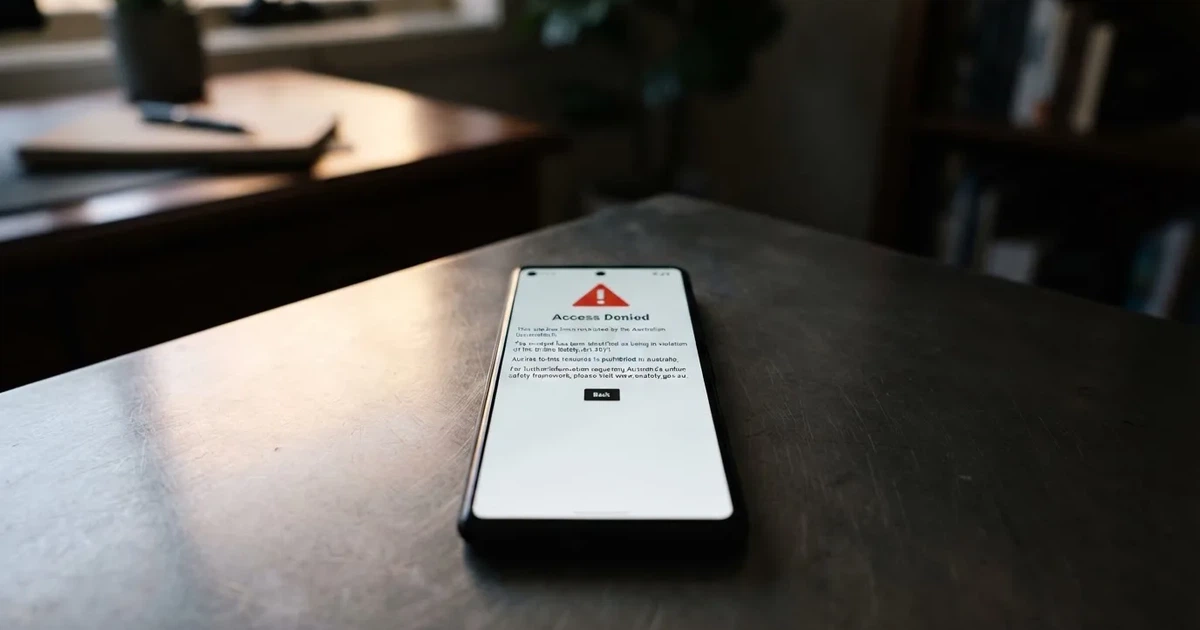
What “best Aussie online casino 2026” actually points to — and why that question has no clean answer
 Available in US
Every brand on the shortlist a reader might build for this topic is offshore, unlicensed in Australia, and on the receiving end of an Australian Communications and Media Authority warning. The article is upfront about that from the first line, because the alternative is a shortlist that reads like a recommendation while the regulator says otherwise. What follows is a working map of the landscape a searcher is sitting inside, the mechanisms the ACMA uses to thin it, the payment and bonus patterns those sites run on, and the licensed, in-person options that an Australian can actually use without crossing the regulator.

Verified against the ACMA register and the Interactive Gambling Act 2001 as published, current as of 23 September 2026.
Table of Contents
- The legal frame: prohibition under the Interactive Gambling Act 2001
- Player protection that works in Australia, and what an offshore site does not give
- Money: what a deposit to an offshore site actually goes through
- Bonuses and free spins: how the offer reads when no licence underwrites it
- Mobile and apps: what a mobile-friendly offshore site actually is
- New casinos: what “new” means when the market is closed
- The comparison that the page is willing to do, and what it costs
- The landscape the search sits inside
- Frequently asked questions
The legal frame: prohibition under the Interactive Gambling Act 2001
Online casino play sits in a narrower hole than almost any other gambling product an Australian can search for. Under the Interactive Gambling Act 2001, as tightened by the Interactive Gambling Amendment Act 2017, it is an offence to supply online casino games, online pokies or in-play betting to a person physically in Australia. No state or territory issues a licence for any of those products. What does get licensed is wagering on races and sport placed before the event, lotteries and keno — in practice, the bulk of Australia’s online bookmakers run their licence out of the Northern Territory, where the Northern Territory Racing and Wagering Commission supervises 52 active wagering operators, including Sportsbet, Bet365 and Ladbrokes, and does so without full-time staff, meeting once a month in Darwin. The NTRWC exists for tax reasons, not as a casino regulator, and it does not license what the IGA prohibits.

The minimum age for any licensed Australian gambling product is 18. A casino site that lets an Australian deposit and play is, by definition, operating outside that frame. The licence it advertises — Curacao, Anjouan, Kahnawake — is a licence in some other jurisdiction, and it does not bring the site inside Australian law. It brings the player outside Australian consumer protection.
What enforcement actually looks like
The individual player is not the target. The IGA is aimed at the provider: an offshore site, the company behind it, the people directing it. Three mechanisms do the bulk of the work. The ACMA investigates complaints and referrals, issues formal warnings naming the operator and brand, and asks Australian internet service providers to block the offending domain. By June 2026, 1,751 illegal gambling and affiliate-marketing websites had been blocked since the first blocking request in November 2019, and more than 230 unlicensed gambling services had left the Australian market since the regime was strengthened in 2017. The June 2026 round alone added twelve domains: 7Signs, ChromaBet, Donbet, Duospin, Freshbet, Slots Gem, Jacks Club, Lucky Start, Pointsbetz, Spinrise, Vinyl Casino and Wildsino. None of those is a recommendation. Each is a name the regulator has asked ISPs to cut off, and the reasoning is published.

A formal warning is not the end of the line. It is a written notice that says the ACMA has formed a view that the service is prohibited, and that further action — civil penalty proceedings, referral to the Federal Court, blocking — will follow if the operator keeps serving Australians. The warning names a corporate entity, not just a domain: Dama N.V. for several Curacao brands, Bamboo Media for Ignition, Consolutetish S.R.L. for National and Bizzo, EOD Code SRL for Instant Casino, Ryker B.V. for Jackbit and CasinOK, Sterplay Holding Ltd for Casino Intense, Hollycorn N.V. for Sky Crown and Blue Leo, Pulsup Ltd for Rocketplay. Naming the company matters because a brand gets rebranded and a domain gets parked; the corporate entity behind both is what the ACMA chases.
How fast blocking is moving
The blocking cadence is a rate, not a list.
| Period | Total sites blocked |
|---|---|
| Nov 2019 – June 2026 | 1,751 |
From the first blocking request in November 2019 to the round reported on 26 June 2026, the ACMA and its ISP partners have moved 1,751 sites through the blocking pipeline over roughly six and a half years — an average of around 270 websites a year, or roughly five a week. That is the speed at which the visible part of the offshore market gets pruned, before any account the player might have opened on one of those sites is even closed. The figure flatters the regulator slightly, because it includes affiliate marketing pages and mirror domains that pop up faster than they are blocked, but the order of magnitude is the point: the warning list is a moving target, and the names on it in 2026 are a snapshot of a stream, not a closed file.
What this means for a reader searching for this
“Best” implies a comparison that ends in a winner. The honest comparison ends in a tax: every name on a shortlist is offshore, every offshore site sits outside Australian consumer law, and the regulator publishes the names of the ones it has acted against. The advice is not to find the cleanest operator on the list. The advice is that the list itself is the wrong shape. Anyone inside Australia who wants a casino night has two real options: a licensed club, casino or hotel in their state, or — if what they wanted was online — the question of why, because no online option the search returns is what its marketing says it is.
Player protection that works in Australia, and what an offshore site does not give
A licensed Australian wagering service runs inside a protection net that an offshore casino does not touch. The two pieces of that net that matter most are BetStop and the gambling blocks the banks now offer.
BetStop, the National Self-Exclusion Register, went live in August 2023 and binds every Australian-licensed online and phone wagering service. A person who registers with BetStop is excluded from opening new accounts, depositing into existing ones, and receiving marketing from every participating operator at once. The point is single enrolment, system-wide enforcement. An offshore casino is not connected to BetStop. Self-excluding with BetStop does not exclude a player from an offshore site, and the offshore site has no equivalent register to enrol in. That asymmetry is what makes the offshore path the worse one for someone whose gambling has started to feel compulsive.
The bank side has moved further than the regulator side. ANZ, Commonwealth Bank and Westpac now let customers block gambling transactions at card level, and ANZ’s block reaches into linked digital wallets — Apple Pay and Google Pay transactions made through the eligible card are also blocked, not just the physical plastic. Turning the ANZ block on is instant; turning it off again requires a 48-hour cooling-off period, designed so a person in a hot moment cannot undo the decision. Each bank warns, in language that has hardened over the past two years, that the block catches most gambling transactions but cannot guarantee all of them, and that some non-gambling transactions may be refused in error. The block works by merchant category code — Westpac’s filter rejects anything tagged “Betting/Casino Gambling” — and an offshore site that processes through a different MCC, or that routes through a payment intermediary, can slip past. The block raises the friction; it does not draw a wall.
If play is starting to feel out of control, free confidential help is available around the clock through Gambling Help Online and the National Gambling Helpline on 1800 858 858. Those services are not offshore; they are Australian, funded, and they do not ask a caller to register anywhere.
Money: what a deposit to an offshore site actually goes through
For online casino play, this page keeps the money side purely informational, because there is no licensed Australian product to bank into for that product. What follows is what the rails themselves do — and what an Australian-licensed wagering operator is forbidden to accept.
PayID and Osko, and the names on the account
PayID is the address-book layer on Australia’s New Payments Platform, which went live on 13 February 2018 and is owned by New Payments Platform Australia Ltd, a non-profit whose thirteen shareholders include the Reserve Bank of Australia and the major banks. More than 25 million PayIDs were registered on the platform by April 2025, and over 100 Australian financial institutions offer the service. Through Osko, a transfer between participating banks arrives in under a minute, twenty-four hours a day, including weekends, whether the payer uses a BSB and account number or a PayID. The platform is held to a strict uptime standard: monthly outages cannot exceed two minutes.
The relevant feature for this subject is not the speed. It is that the payer sees the name on the receiving account before the transfer is sent. Australian Payments Plus, the operator, warns that being asked to transfer money to a PayID on an illegal gambling site almost certainly means a scam site. That warning is structural — the legal Australian wagering market does not run on instant-pay PayID deposits to offshore brands, so a PayID that pops up at the cashier of one of those brands is using the rail in a way it was not designed for.
BPAY
BPAY has been a fixture of Australian online banking since 18 November 1997 and is available in the online banking of over 140 banks and financial institutions, with more than 95,000 businesses offering it as a payment option. A BPAY payment is a bill payment: the payer enters a Biller Code and a Customer Reference Number, and the funds are pulled from the payer’s account and pushed to the biller through the banking system. The service is run by Australian Payments Plus and is owned, via parent company Cardlink Services Limited, equally by ANZ, Commonwealth Bank, National Australia Bank and Westpac. In 2021 the ACCC authorised the merger of BPAY Group, eftpos and NPP Australia under that single holding entity.
BPAY is a pull rail, not a push rail. A casino site cannot ask a player for a PayID deposit in the same way — the bill-payment flow goes from the player’s bank to the biller, with the biller named in advance. An offshore casino that turns up at the BPAY screen in a customer’s online banking is, by definition, running an arrangement with an Australian biller that the regulator can see.
Card networks, digital wallets and the credit ban
The credit-card ban on licensed Australian online wagering took effect on 11 June 2024, under amendments to the Interactive Gambling Act that also cover credit-related products and digital currency. An Australian-licensed bookmaker cannot accept Visa, Mastercard or Amex in credit mode for a wagering deposit. Penalties for licensed operators who breach the ban run up to A$247,500. An offshore site asking for a credit card is asking for a payment the Australian side has made illegal — which is one of the cleaner tells of an offshore operator and one of the cleaner risks for the player, because a transaction that should not have gone through can be disputed but rarely is.
The digital-wallet layer adds another wrinkle. By the end of 2025, Apple Pay, Google Pay and Samsung Pay transactions together accounted for around 45 per cent of all card payments in Australia by number. Apple Pay itself does not charge consumers a fee; any surcharge comes from the merchant’s own card-processing fees, not from Apple, and Apple sets no transaction limits — those are set by the card issuer or merchant. The credit ban still applies through the wallet: where the underlying card is in credit mode, the wallet transaction is a credit transaction for the purposes of the law. ANZ’s gambling block, switched on inside the ANZ app, blocks Apple Pay and Google Pay gambling transactions made through the eligible card, not just the physical card. The block catches the wallet at the card level, by merchant category code.
Amex sits outside the Reserve Bank’s July 2025 surcharge-review proposal, which targets only eftpos, Mastercard and Visa. That leaves Amex surcharging on the merchant’s terms and not under the proposed ban — a small technicality, but the kind of detail that explains why an offshore cashier might prefer Amex as a route.
AUSTRAC, reporting thresholds and what they do not do
AUSTRAC’s threshold-transaction-report rule applies only to physical cash. The A$10,000 figure and the reporting obligation that sits with it do not reach ordinary electronic bank transfers, regardless of the amount. An offshore site that tells a player “transfers over A$10,000 will be reported” is using a rule that does not apply to the rail it is on. It is a marketing line, not a legal one.
Bonuses and free spins: how the offer reads when no licence underwrites it
For online casino play, this page describes what such offers generally involve as background reading only, never as something to act on. A bonus on a prohibited product is a discount on something the supplier is not allowed to sell you.
The shape is familiar. A welcome package — usually a matched percentage on the first deposit, sometimes stretched over the first two or three. Free spins bundled in, attached to a named slot. A “no deposit” tier that lets a player open an account and try games without funding it. The vocabulary is the same across the offshore market because the offer builders copy each other.
The mechanics are where the difference shows. Three terms do most of the work, and they are the three a reader should read before claiming anything, anywhere.
The wagering requirement is the multiplier on the bonus (or on bonus plus deposit) that must be turned over in bets before any of the bonus balance becomes withdrawable. A 40-times requirement on a A$500 bonus means A$20,000 in bets before the bonus money is yours to take out. The figure is the most-read number on the offer and the least compared one. A bonus that looks generous at the headline can be modest once the multiplier is applied to it, and a small bonus with a low multiplier often clears faster than a large one with a high one.
The max-cashout cap is the ceiling on what a player can withdraw from winnings earned on bonus funds. A free-spins offer that pays out A$200 in bonus cash and caps withdrawals at A$50 is a different offer from one with no cap, even if both headline at the same number of spins. The cap is the part the marketing rarely prints and the small print always does.
The game weighting is what fraction of each bet counts towards the wagering requirement. Slots usually count at 100 per cent; table games and live casino often count at 10 or 20 per cent, or are excluded entirely. A player who likes blackjack clearing a slots-targeted bonus is doing far more betting than the headline suggests, because ninety cents of every dollar on the table game does not count.
The combination of the three is the real offer. Two bonuses with the same headline value can be priced hundreds of dollars apart once the requirement, the cap and the weighting are read together. On an offshore site, the wagering, the cap and the weighting are the only terms a player can enforce against the operator. Australian consumer law does not reach the site; an Australian regulator does not arbitrate the dispute; the only recourse is the site’s own complaints process and, behind it, the licence in whatever jurisdiction issued it.
The “no deposit” tier deserves its own warning. A no-deposit bonus is a marketing cost the operator accepts in exchange for a registered account, an email address and a path to convert the player into a depositing one. The wagering requirements attached to no-deposit bonuses are typically heavier than on matched deposits, the cashout caps tighter, and the eligible games narrower. The offer is real money, but the price of turning it into withdrawable money is usually far higher than the headline number suggests.
Mobile and apps: what a mobile-friendly offshore site actually is
For online casino play, this page describes what a mobile-friendly version would generally involve, purely as background, without naming any app to install. The reason is structural: an app that offers casino games to an Australian is, by the IGA’s definition, a prohibited interactive gambling service, and the app stores enforce that with their own rules.
The practical experience most Australian players have of an offshore casino on a phone is the mobile browser, not the app. The site detects the device, serves a responsive layout, and offers a deposit flow that runs through the same rails as the desktop site: card, e-wallet, sometimes crypto. The performance gap between the mobile browser and a native app is narrower than it once was, and the marketing advantage of an app — a faster path back to the casino, push notifications, biometric login — is offset by the install friction, the storage cost, and the question of whether the app will remain on the store for the full life of the account.
The bank-side gambling blocks catch the mobile deposit regardless of the surface. A transaction blocked on a card declines in the same way whether it originates in an app, a browser, or a digital wallet, because the decision is made at the merchant category code, not at the device. A player who has turned on an ANZ or Westpac block and finds the casino’s deposit page loading normally has reached a normal-looking screen; the rejection happens at authorisation, not at the cashier.
A genuinely Australian-licensed mobile wagering product — a sports or racing app from an NTRWC-licensed bookmaker — operates inside the credit-ban, the BetStop register, and the bank’s MCC filter all at once. The friction that produces is the friction that the offshore site, sitting outside all three, offers to remove. The friction is the point. Removing it is what makes the offshore path the worse one.
New casinos: what “new” means when the market is closed
For online casino play, “new” online casinos are simply newer offshore sites operating outside Australian law. A fresh brand with a clean website, a Curacao or Anjouan licence, a welcome package and a TikTok influencer behind it is not a new legal option. It is the same legal option in new packaging, and the ACMA’s enforcement cadence is built to catch up with it.
The mechanics of “newness” in this market are worth naming. A new brand can launch on a fresh domain, with a fresh corporate entity, in weeks. The licence it displays is bought, not earned; the licence-issuing jurisdictions charge fees and process applications without the player-protection scrutiny an Australian regulator would apply. The brand may run for twelve months before the ACMA’s enforcement queue reaches it, and during those twelve months it relies on the fact that the blocking pipeline is rate-limited, not instantaneous. A player who joins in month one is a player who joined before the regulator caught up. That window is the marketing pitch, even if no marketer puts it that way.
A new casino is also a casino without a track record on this side of the enforcement queue. The terms — wagering, caps, weighting — are the only terms a player has, and on a brand that has never been tested, the only way to find out what the terms cost in practice is to claim them. That is not a position an informed reader wants to be in.
The licensed Australian alternative is a familiar one and not new at all: a state-licensed casino, club or hotel with electronic gaming machines, in person. The product is not new because the product is regulated, and the regulation is what makes it usable for the people who choose it.
The comparison that the page is willing to do, and what it costs
There is no shortlist of operators to visit. What follows is the comparison the law allows: each of the brands a reader might find on a search for this topic, paired with what the ACMA has said about it, in the operator’s own language as far as the regulator publishes it.
The columns of the table are not “best for high rollers” or “best for new players”. They are: brand, ACMA action and date, operator named by the ACMA, and subject support — the latter because some brands are mentioned in non-casino contexts (a payment-rail listing, a self-exclusion register entry) and the page does not assert what it has no source for.
| Brand | ACMA action and date | Operator named by the ACMA | Subject support |
|---|---|---|---|
| RocketPlay | Formal warning, March 2026; earlier warning to Dama N.V. over the brand, May 2022 | Pulsup Ltd (Rocketplay); Dama N.V. | Listings reference only |
| Level Up Casino | Formal warning, May 2022 | Dama N.V. | Listings reference only |
| Woo Casino | Formal warning, March 2025 | Dama N.V. | — |
| Spirit Casino | Formal warning, May 2025 | Dama N.V. | — |
| National Casino | Formal warning, July 2025 | Consolutetish S.R.L. | Listings reference only |
| Bizzo Casino | Formal warning, July 2025; earlier warning over the brand, 2022 | Consolutetish S.R.L.; TechSolutions Group | Listings reference only |
| Ignition Casino | Formal warning, July 2025 | Bamboo Media | — |
| Instant Casino | Formal warning, February 2025 | EOD Code SRL | Listings reference only |
| Jackbit | Formal warning, April 2026 | Ryker B.V. | — |
| Casino Intense | Formal warning, April 2025 | Sterplay Holding Ltd | Listings reference only |
| Sky Crown | Formal warning (publication date as published by the ACMA) | Hollycorn N.V. | — |
Every row tells the same story: a brand an Australian reader might be considering, paired with the regulator’s own record on it. The “subject support” column is honest about its thinness — most rows carry no row of supporting data because the only available sources for these brands are affiliate marketing pages, which the page does not paraphrase. Where a row says “listings reference only”, that is a statement about what the public sources cover, not a claim about the operator’s services.
The landscape the search sits inside
The page opened with the legal frame and closes on the landscape it leaves behind. Australia is a country where sports and racing wagering runs through licensed bookmakers, where lotteries and keno run through licensed operators, and where everything else — the pokies a reader might be searching for under this topic — runs offshore, on the regulator’s warning list, and outside Australian consumer protection.
The honest comparison the searcher can make is between what they wanted and what they can actually do. If what they wanted was a few spins on a slot machine, a land-based club or casino in their state offers that product under the laws that apply to it. If what they wanted was the convenience of online play, the question to ask is not which offshore brand is safest but whether the cost of an offshore brand — no Australian recourse on a refused withdrawal, a balance that can be stranded by an ACMA block, no BetStop coverage — is one they would pay for a product they could otherwise have in person. The arithmetic comes out the same way for most readers.
What the law is moving towards
The Interactive Gambling Amendment (Gambling Reform) Bill 2026 passed Parliament on 19 August 2026. Its advertising and inducement measures commence on 1 January 2027 — law with a start date, not yet in force on a 2026 page. The bill tightens what licensed operators can do in marketing, in messaging and in promotional offers; it does not, on the terms published so far, change the IGA’s prohibition on online casino games. That prohibition stays in place, and the ACMA’s enforcement pipeline is the mechanism that keeps thinning the offshore market it touches.
What an Australian reader actually has
Three things, none of which is an offshore casino and all of which the page is willing to recommend. A licensed wagering account with an NTRWC-licensed bookmaker, for sports and racing. A land-based casino, club or hotel in the reader’s state, for pokies and table games. And the bank-side and BetStop tools to put a frame around both, if the frame is what’s needed.
That is the landscape. This search asks for a winner among the names that should not be on the list, and the answer is to take the question at face value and refuse the framing.
Frequently asked questions
Is there a licensed online casino based in Australia that Australians can legally join?
No. Under the Interactive Gambling Act 2001, online casino games and online pokies are prohibited interactive gambling services, and no state or territory issues a licence for them. The Northern Territory Racing and Wagering Commission licenses online bookmakers for wagering on races and sport, but not casino games. Any online casino accepting Australian players is operating outside Australian law, whatever offshore licence it displays.
What does “best” mean when every option being compared is an offshore, unlicensed site?
It means the comparison is about which operator the reader has the least reason to worry about — and that is not a comparison a regulator would recognise as meaningful. Every offshore casino accepts Australian deposits without Australian consumer protection, runs outside BetStop, and can be blocked by the ACMA with a balance still in it. The honest framing is that the best option is the one the reader does not use at all, because the licensed product is in person.
How does the ACMA decide which offshore casino sites to warn about or block?
The ACMA investigates referrals and complaints, issues formal warnings naming the operator and brand, and asks Australian internet service providers to block offending domains. From the first blocking request in November 2019 to June 2026, 1,751 illegal gambling and affiliate-marketing websites were blocked, and more than 230 unlicensed services left the Australian market. The June 2026 round alone added twelve more domains, and the queue keeps moving.
Can an offshore casino site legally register an Australian-style web address and call itself Aussie?
No. The Interactive Gambling Act 2001 prohibits the supply of online casino games to a person in Australia, and an “.com.au” or “.au” domain does not change the legal status of the service running on it. The ACMA has issued formal warnings over names with “.com.au” addresses, including Rocketplay in March 2026. A name with a country-sounding suffix is a marketing choice, not a regulatory one.
What legal, licensed alternative exists for someone wanting a casino night in Australia?
A land-based casino, club or hotel in the reader’s state or territory, operating under that jurisdiction’s gaming laws, with electronic gaming machines and table games. The product is the same in spirit — pokies, blackjack, roulette — and runs under regulation an Australian reader can take a complaint to. Australians wanting a casino night have a real, licensed, in-person option; the gap is that the option is not online.
Does any state or territory issue online casino licences to operators serving Australians?
No. The Interactive Gambling Act 2001 prohibits the supply of online casino games and online pokies to Australians at a federal level, and no state or territory licensing regime overrides that. What is licensed federally and at state level is wagering on sport and racing placed before the event, lotteries, and keno. The Northern Territory Racing and Wagering Commission is the most active wagering-licence issuer, with 52 licensed online bookmakers, but it does not license online casino products.
Created by the ”Casino Safety Info” editorial team.