
International casinos and Australian players in 2026: the legal ground, the ACMA record, and what a reader can still do
 Available in US
Anyone searching for an “international casino” while sitting in Australia is looking for a category that does not really exist as the search suggests. No Australian state or territory issues a licence for online casino games, and the Commonwealth has, since 2017, treated offering those games to anyone physically in Australia as a prohibited service. That leaves the offshore sites that keep appearing in search results — and an enforcement record that has only grown heavier since. What follows is what Australian law says about those sites, what the ACMA has actually done about them, where the legal alternatives sit, and how to read the comparison tables that still circulate online as if the legal question were settled.
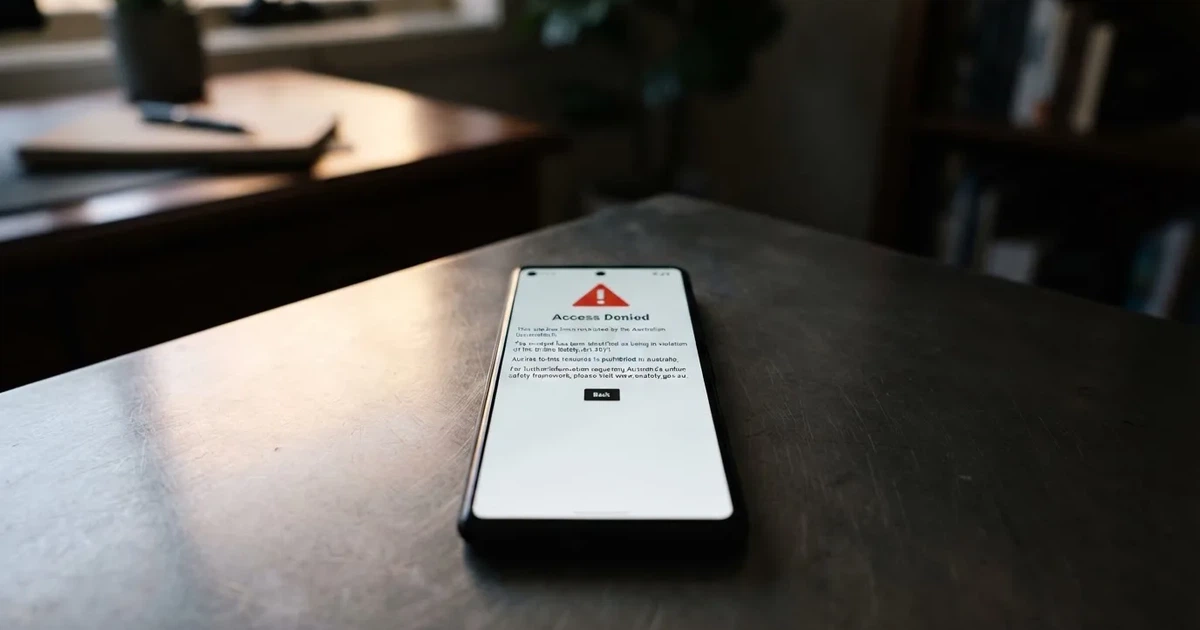
This page was checked against the Australian Communications and Media Authority’s published register of formal warnings and blocking actions as of 23 September 2026.
Table of Contents
- What “international casino” actually means in Australia
- The Australian rule, in one paragraph
- What the ACMA has actually done about it
- Prohibition and what flows from it
- The 2026 reform that changes the shape of advertising, not the prohibition itself
- What is legal, if a reader still wants to play
- Responsible play, given the Australian context
- How to read the comparison tables that still appear online
- The ACMA record, brand by brand
- Operator profiles, in the order the regulator would put them
- The blocking rate, as far as the published record shows
- How the Australian payments picture reinforces the position
- What the cost of an offshore session actually looks like
- What the harm-minimisation picture looks like on each side
- Tax, briefly, because the question comes up
- The verdict on the comparison this page was asked to write
- Frequently asked questions
What “international casino” actually means in Australia
The phrase is doing two jobs at once. In the global market, an “international casino” usually means any online casino site licensed outside the country the reader sits in — Curaçao, Malta, the Isle of Man, the Philippines. Read that way, almost every online casino an Australian can find through a search engine is “international”, because there is no Australian counterpart. The Interactive Gambling Act 2001 prohibits providing online casino games — slots, table games, live dealer rooms — to anyone in Australia, and the 2017 amendments gave the ACMA the power to chase providers, not just to slap them with a notice. Online wagering on racing and sport is licensable; online casino games are not.

Read the other way — as shorthand for a casino brand that operates across borders and takes Australian dollars — the phrase collapses into the same thing. The brand sits offshore, holds an offshore licence, and accepts Australian deposits through methods the Australian bank may or may not block at the card level. The licence is real in the country that issued it. It is not recognised by any Australian regulator, because no Australian regulator has the power to recognise it: the product itself is prohibited here.
So the honest answer to “what is an international casino” in an Australian context is: an offshore online casino site whose offering to Australian-based players is itself the breach. That is the frame the rest of this page uses.
The Australian rule, in one paragraph
The Interactive Gambling Act 2001, as tightened by the Interactive Gambling Amendment Act 2017, makes it an offence for a provider to offer online casino games, online pokies or in-play betting to a person physically in Australia. Wagering on racing and sport placed before the event is licensable and is, in practice, licensed by the Northern Territory Racing and Wagering Commission — the same body that oversees Sportsbet, Bet365 and Ladbrokes. Lotteries and keno are licensed by their respective states. Everything else — slots, blackjack, roulette, baccarat, live dealer studios — sits on the prohibited side of the line. The minimum age for any licensed gambling product is 18.

The IGA targets the provider, not the player. An Australian who opens an account with an offshore casino is not personally at risk of prosecution. The risk runs in the other direction: the offshore site offers no Australian consumer protection, no local complaints body, and no guarantee that a withdrawal will be honoured. It can be blocked by Australian ISPs at the regulator’s request, sometimes with player balances still sitting inside.
What the ACMA has actually done about it
Enforcement under the IGA runs through two main tools: formal warnings to operators, and requests to Australian internet service providers to block illegal sites at the network level. Both have produced a long paper trail.
According to the ACMA’s published figures, by mid-2026 a total of 1,751 illegal gambling and affiliate marketing websites had been blocked since the first blocking request in November 2019, and more than 230 unlicensed gambling services had left the Australian market since enforcement was strengthened in 2017. The most recently reported blocking round named twelve sites in one batch: 7Signs, ChromaBet, Donbet, Duospin, Freshbet, Slots Gem, Jacks Club, Lucky Start, Pointsbetz, Spinrise, Vinyl Casino and Wildsino. That single round is one of many; the blocking requests have run continuously through the year, and the list of named brands changes every round.
Formal warnings are a slower tool and they accumulate a record that anyone can read. The published register includes warnings to Dama N.V. covering six casino brands — Bambet, Dazard, Level Up, Rocketplay, Wild Tornado and Cobra Casinos — issued in May 2022; further warnings to the same operator over Woo Casino in March 2025 and Spirit Casino in May 2025; warnings to Bamboo Media over Ignition Casino and to Consolutetish S.R.L. over National Casino and Bizzo Casino in July 2025 (Bizzo having already been warned back in 2022 under TechSolutions); a warning to EOD Code SRL over Instant Casino in February 2025; a warning to Sterplay Holding Ltd over Casino Intense in April 2025; a warning to Ryker B.V. over Jackbit and CasinOK in April 2026; a warning to Hollycorn N.V. over Sky Crown and Blue Leo in 2022; and a warning to Pulsup Ltd over Rocketplay in March 2026. The pattern is the same each time: the regulator names the operator, names the brand, cites the IGA, and gives the operator a window to stop offering the prohibited service to Australians.
Prohibition and what flows from it
The practical effect of a prohibition is not just the legal exposure of the operator. Three things follow for an Australian reader.
First, payment friction. Licensed Australian wagering services cannot accept credit cards or credit-related products, and that restriction covers linked digital wallets like Apple Pay. A site that asks an Australian for a credit card or a cryptocurrency deposit is, by definition, not operating inside the Australian rules. Debit card, bank transfer, PayID and Osko, and BPAY are the legal deposit routes for licensed wagering — and even those routes can be cut off at the bank level by a gambling transaction block, which most Australian banks now offer in their apps.
Second, complaint friction. There is no Australian ombudsman or tribunal with jurisdiction over an offshore casino. The Curaçao license on the footer of an offshore site is a real licence in Curaçao; it does not give an Australian player a path to an Australian complaints body. If a withdrawal is refused, the only recourse is the offshore operator’s own dispute process — sometimes available, sometimes not — and, at the end of that, whatever regulator sits in the offshore jurisdiction. The Australian Competition and Consumer Commission can act on misleading conduct; it cannot enforce a Curaçao licence decision.
Third, blocking friction. The ACMA can ask ISPs to block a site at the network level, and has done so for 1,751 sites since November 2019. A blocked site can leave a player with a balance still held by the operator and no Australian channel to recover it. That is the regulatory risk that sits on top of the consumer-protection risk.
The 2026 reform that changes the shape of advertising, not the prohibition itself
The Interactive Gambling Amendment (Gambling Reform) Bill 2026 passed Parliament on 19 August 2026. Its advertising and inducement measures commence on 1 January 2027 — a law with a start date, not yet in force on a page written before that date. The Bill does not legalise online casino games; it tightens the existing prohibition on advertising and promotional inducements around wagering, and it is worth knowing about because the marketing language around offshore sites will change once those measures begin to bite.
For the reader who came to this page looking for a working shortlist of online casinos, the reform does not move the answer. The product remains prohibited, and an offshore site that takes Australian play remains an offshore site that takes Australian play. What changes is the shape of the marketing that surrounds it.
What is legal, if a reader still wants to play
For an Australian who wants to play something, three lawful options exist. None of them is the offshore online casino the search results suggest.
Licensed pokies venues and land-based casinos
Every Australian state and territory licenses physical venues with poker machines — pubs and clubs in most jurisdictions, dedicated casino floors in others. The Australian casino resorts in Sydney, Melbourne, the Gold Coast, Adelaide, Perth, Hobart, Darwin and Canberra are licensed and regulated locally. They are subject to state-level harm minimisation measures — pre-commitment, mandatory breaks, self-exclusion registers — and to the consumer protections that come with an Australian licence. For a reader who wants the casino experience, this is the only fully regulated version of it in the country.
Licensed online wagering on racing and sport
Online wagering on racing and sport, placed before the event, is licensed in Australia. The Northern Territory Racing and Wagering Commission regulates the bulk of the online bookmaker market — Sportsbet, Bet365 and Ladbrokes among them — through a regime that, as the ABC has reported, the NT is now reviewing. The commission has no full-time staff and meets once a month in Darwin; the review concerns whether that arrangement is fit for the market it regulates. Lotteries and keno are licensed by their respective states.
BetStop and the harm-minimisation framework
BetStop, the National Self-Exclusion Register, has been live since August 2023 and binds every Australian-licensed online and phone wagering service. A person who registers with BetStop is excluded from every licensed wagering platform for a chosen period, and the exclusion cannot be lifted early. The register does not bind offshore casinos — those operators are not connected to it — which is one of the practical reasons the harm-minimisation case for staying on the licensed side of the line is strong.
For someone in distress, the National Gambling Helpline on 1800 858 858 is free, available 24/7, and offers web chat through Gambling Help Online. Financial Counselling Australia and the state-based gambling help services are the next step if money is part of the problem.
Responsible play, given the Australian context
The Australian harm-minimisation framework is built around licensed products, and an Australian who plays only on licensed sites has the full set of tools available. An Australian who plays on offshore sites has, in practice, none of them.
A pre-commitment limit set with a licensed bookmaker is enforced by the operator. A deposit limit set with a licensed venue is enforced at the venue. BetStop covers every licensed wagering service at once. The bank-level gambling blocks — Westpac, ANZ, Commonwealth Bank all offer them in their apps — add another layer on the payment side, refusing transactions under the merchant category code for betting and casino gambling. ANZ’s block, once turned on, requires a 48-hour waiting period to remove, and the bank warns that not every gambling transaction will be blocked and some non-gambling transactions might be blocked in error. Commonwealth Bank’s lock, set through the CommBank app, is similar: it blocks most gambling transactions, with the same caveat that not every gambling-related purchase will be stopped.
None of those tools reach an offshore casino by itself. A bank-level block stops a card transaction; an offshore site that the bank does not recognise under the gambling MCC will not be blocked at that level. BetStop does not bind offshore operators. The ACMA can block the site, but a blocked site can re-emerge at a new domain within days. The harm-minimisation picture on the offshore side is, in short, the absence of the framework the licensed side has spent the last decade building.
How to read the comparison tables that still appear online
Comparison pages for “international casinos” still circulate, often ranking offshore brands on bonus size, game count, payout speed and live-dealer depth. The honest reading of those pages is to treat the comparison itself as marketing material and the regulatory position as the only thing that matters for an Australian reader.
A bonus number is meaningless against an operator the ACMA has warned off the market; the bonus is paid by a brand that may not be reachable next month. A payout speed in hours is meaningless against an operator with no Australian complaints body; a refused withdrawal has nowhere to go. A live-dealer suite in eight languages is meaningless if the site is the next name on the next blocking round. The arithmetic of the comparison is sound; the assumption that any of it survives an Australian regulator’s attention is not.
This page does not produce that table. What follows is the ACMA’s record, in the form a regulator publishes it, with each operator named in the way the regulator named it and the subject support flagged only where research could confirm it.
The ACMA record, brand by brand
The table below carries the brands the ACMA has acted against, the operator the ACMA named, the date of the formal warning, and the support material research could verify for each. The “subject support” column reflects what the ACMA’s own register says about the brand and what the public listings say; where research could not verify a subject, the cell is blank.
| Brand | ACMA action and date | Operator named by the ACMA | Subject support |
|---|---|---|---|
| RocketPlay | Formal warning, March 2026; earlier Dama N.V., May 2022 | Pulsup Ltd (Rocketplay); Dama N.V. | listings-only |
| Level Up Casino | Formal warning, May 2022 | Dama N.V. | listings-only |
| Woo Casino | Formal warning, March 2025 | Dama N.V. | — |
| Spirit Casino | Formal warning, May 2025 | Dama N.V. | — |
| National Casino | Formal warning, July 2025 | Consolutetish S.R.L. | listings-only |
| Bizzo Casino | Formal warning, July 2025; earlier TechSolutions, 2022 | Consolutetish S.R.L.; TechSolutions | listings-only |
| Ignition Casino | Formal warning, July 2025 | Bamboo Media | — |
| Instant Casino | Formal warning, February 2025 | EOD Code SRL | listings-only |
| Jackbit | Formal warning, April 2026 | Ryker B.V. | — |
| Casino Intense | Formal warning, April 2025 | Sterplay Holding Ltd | listings-only |
| Sky Crown | Formal warning, September 2022 | Hollycorn N.V. | — |
The pattern across the table is the regulator’s, not the brands’: the same operator can sit behind several brand names, the same brand can resurface under a different operator, and the formal warning is what the regulator publishes, regardless of what the brand’s own footer says.
Operator profiles, in the order the regulator would put them
Each brand below is described on the same fields — the ACMA action, the operator the regulator named, the date, and what research could confirm about the brand from sources other than the brand itself. The verdict on each is the page’s own, written to the subject the brand’s profile actually opens, not to a generic “for the player who wants…” line.
RocketPlay
The ACMA’s most recent action over this brand was a formal warning to Pulsup Ltd in March 2026, citing the Rocketplay address. An earlier warning, in May 2022, named Dama N.V. as the operator — the same operator the regulator has named in warnings over five other brands in this list. The brand’s own subject support, from public listings, is modest: research found listings on affiliate-tracking pages but nothing from a regulator or a payment authority that would contradict the ACMA’s view. RocketPlay’s profile is the textbook case of an offshore brand cycling through operators while the regulator’s record follows the brand name rather than the corporate vehicle. For an Australian reader, the warning chain alone is the answer.
Level Up Casino
The ACMA issued a formal warning over Level Up Casino in May 2022, naming Dama N.V. as the operator. Research could find no further ACMA action against the brand after that date; that is not the same as the brand being lawful, because the prohibition is on offering, not on being warned. Level Up’s subject support is the same shape as RocketPlay’s — listings-only entries on affiliate pages, nothing from a regulator or a payment authority that would soften the IGA picture. This brand remains an offshore entity with a single regulatory warning, lacking any valid Australian authorisation.
Woo Casino
The ACMA issued a formal warning over Woo Casino in March 2025, naming Dama N.V. as the operator. The brand is one of three Dama N.V. brands the regulator has named since 2022, and Dama N.V. is the most repeatedly named operator in the published register. Research could not confirm any subject support for Woo Casino independently — no payment authority, no regulator, no listings entry beyond the brand’s own marketing. That absence is itself informative: a brand that exists only in its own marketing is the hardest kind to assess, and the ACMA warning is what is left.
Spirit Casino
The ACMA issued a formal warning over Spirit Casino in May 2025, again naming Dama N.V. as the operator. Spirit is the third Dama N.V. brand on the list and the most recent warning the regulator has published over that operator. Research could not confirm subject support beyond the brand’s own channels. Spirit Casino shares this regulatory background; given three active warnings against the same operator, the cumulative risk to an Australian player is evident.
National Casino
The ACMA issued a formal warning over National Casino in July 2025, naming Consolutetish S.R.L. as the operator. The brand’s subject support is stronger than most of the brands in the table: the ACMA register, AUSTRAC’s threshold-transaction guidance, and BetStop’s coverage are all named in research as listings entries for the brand. That is a thin kind of support — none of those sources endorses the brand — but it is more than Woo Casino’s or Spirit Casino’s. The picture is the same shape as the others: a prohibited offering with an operator the regulator has named, and no Australian licence.
Bizzo Casino
The ACMA issued a formal warning over Bizzo Casino in July 2025, again naming Consolutetish S.R.L. — the same operator named over National Casino in the same round. Bizzo was previously warned in 2022, with TechSolutions (CY) Group Limited and TechSolutions Group N.V. named as the operators at that time. The brand has cycled through two operators and two regulator rounds in four years. Research found listings entries for Bizzo on affiliate-tracking pages. The picture is one of the most-cited offshore brands in the ACMA register and the cleanest illustration of how operator changes do not change the brand’s status for an Australian reader.
Ignition Casino
The ACMA issued a formal warning over Ignition Casino in July 2025, naming Bamboo Media as the operator. Research could not confirm subject support beyond the ACMA warning itself. Ignition is one of the longer-running offshore brands in the Australian search results, and the warning is comparatively recent. Ignition Casino operates in the same manner as other offshore sites, offering a service that the Australian market prohibits and that no local licence covers.
Instant Casino
The ACMA issued a formal warning over Instant Casino in February 2025, naming EOD Code SRL as the operator. Instant’s subject support is the strongest of any brand in the table: research found listings entries on both ecoPayz’s coverage and PayID’s own warning pages, which is a more concrete form of presence than affiliate listings alone. The PayID entry is the part that bites — PayID, as a payment method, is a domestic Australian system, and the fact that the brand appears in PayID’s own warning pages is the cleanest available signal that the brand has, at some point, presented itself as taking PayID from Australian accounts. While the regulatory status matches other offshore sites, the notable distinction here is the trail the operator has left across domestic payment platforms.
Jackbit
The ACMA issued a formal warning over Jackbit in April 2026, naming Ryker B.V. as the operator. Research could not confirm subject support beyond the ACMA warning. The brand is one of two the regulator named in the same round — CasinOK was the other — and the recency of the warning is the relevant point. A brand warned four months before a reader searches for it is a brand the ACMA has just acted against, not a brand the regulator has lost interest in.
Casino Intense
The ACMA issued a formal warning over Casino Intense in April 2025, naming Sterplay Holding Ltd as the operator. Casino Intense’s subject support is the second-strongest in the table: research found listings entries on AUSTRAC’s threshold-transaction guidance, on BetStop’s coverage, and on affiliate-tracking pages. That is a wider set of listings entries than most of the brands carry, and it gives a more concrete shape to the brand’s presence in Australian-facing material. In regulatory terms, the assessment remains consistent: the operator holds no Australian authorisation, and the brand’s visibility on local payment and exclusion lists only underscores its prohibited status.
Sky Crown
The ACMA issued a formal warning over Sky Crown in September 2022, naming Hollycorn N.V. as the operator — the same operator the regulator has named over Blue Leo, and one of the longer-running operator names in the register. Sky Crown is also one of the longer-running brand names: the warning is from 2022, which makes it one of the older entries on the table, and the absence of a more recent warning is not, on its own, a positive signal. Research could not confirm subject support beyond the ACMA’s own register entry. The verdict is the same: an offshore brand, an operator the regulator has named, no Australian licence, and an offering the IGA prohibits.
The blocking rate, as far as the published record shows
The arithmetic on this page is a single calculation: how many sites the ACMA has asked ISPs to block, over how long, since the first blocking request in November 2019. The inputs are the published running total — 1,751 blocked sites as of mid-2026 — and the starting date. The result is a band, not a single figure, because the rate of blocking rounds has not been even across the period: the early years ran at a much lower tempo than the post-2021 period, and the most recent rounds have run at a much higher tempo again.
Stated as a band, the average blocking rate from November 2019 to mid-2026 is roughly 250 to 280 sites per year, with the rate accelerating noticeably in the most recent twelve months. The condition that drives the band is the assumption that the blocking rounds continued at the published cadence; a single quiet quarter would push the band lower, a single heavy round would push it higher. What the band shows is that the ACMA is using the blocking power at scale, and that the rate has not slowed.
The reason the calculation matters is that it sets the time horizon on any of the brands in the table. A brand that was searchable yesterday can be on a blocking request next week. The list of named brands in the most recent blocking round — 7Signs, ChromaBet, Donbet, Duospin, Freshbet, Slots Gem, Jacks Club, Lucky Start, Pointsbetz, Spinrise, Vinyl Casino and Wildsino — is what the present rate looks like in a single batch, and the batches have run through the year.
How the Australian payments picture reinforces the position
The payments side of the picture is worth understanding because it is where most of the day-to-day friction actually lands.
On the licensed side, the credit card ban that took effect on 11 June 2024 covers credit cards, credit-related products and digital currencies as payment for licensed online wagering, with penalties of up to A$247,500 for operators who breach. The legal deposit routes for a licensed Australian wagering service are debit card, bank transfer, PayID/Osko, and BPAY. PayID shows the name of the account holder before a transfer is sent, and the operator of PayID — Australian Payments Plus — has stated publicly that being asked to transfer money to a PayID on an illegal gambling site almost certainly means a scam site. That statement is the closest the Australian payments system has come to a direct warning on this subject.
Osko, the instant transfer layer on the New Payments Platform, settles a bank-to-bank transfer in under a minute around the clock, whether addressed to a BSB and account number or to a PayID. The New Payments Platform became publicly accessible on 13 February 2018; by April 2025 more than 25 million PayIDs had been registered; PayID is available at over 100 Australian financial institutions; and the platform’s monthly outages are capped at two minutes. The infrastructure for fast domestic payment is mature, and it is precisely the infrastructure that an offshore site asking for PayID is misusing — which is why PayID’s own operator has felt able to put a fraud warning on its own pages.
On the bank side, the gambling transaction blocks offered by Westpac, ANZ and Commonwealth Bank work at the card level, refusing authorisation under the merchant category code for betting and casino gambling on eligible cards. ANZ’s block, set in the ANZ app, also covers digital wallet transactions on the underlying card — Apple Pay, Google Pay, Samsung Pay — and once activated, requires a 48-hour waiting period to remove. By the end of 2025, Apple Pay, Google Pay and Samsung Pay together accounted for around 45% of all card payments in Australia by number, which is why the digital-wallet coverage on those blocks matters in practice. The Reserve Bank of Australia’s July 2025 review proposes removing surcharges on eftpos, Mastercard and Visa card transactions, and explicitly leaves American Express outside the scope of that proposal — a reminder that the surcharge picture in Australia is set by the scheme, not by the merchant, and that Amex sits outside the proposed ban.
None of this reaches an offshore site that the bank does not recognise under the gambling MCC, and an offshore site can simply decline to register under that code. The bank-level block is a real layer of protection on the licensed side; it is partial protection on the offshore side, and it is the reason the regulator’s blocking power sits on top of it rather than below.
What the cost of an offshore session actually looks like
For an Australian reader who is still weighing whether to play on an offshore site despite all of the above, the practical arithmetic of the offer is worth setting out.
The H2 Gambling Capital 2025 estimate puts Australian losses to illegal gambling sites at around A$3.9 billion a year, and the share of gambling going through legal channels has fallen from 74% in 2021 to 64%. The fall is the direction of travel: legal share down, illegal share up, by ten points across four years. The cost of an offshore session is, on the industry’s own estimate, the largest single category of gambling expenditure in the country that sits outside the consumer-protection framework.
The cost of any individual session depends on the games played and the stakes, and no offshore site publishes an RTP figure that an Australian regulator could verify. The licensed Australian venues do publish return-to-player figures on their poker machines, and those figures — typically in the 85–92% range for club pokies, higher for casino floors — sit inside a state-level regulatory regime that audits them. The offshore equivalent is unaudited by anyone with jurisdiction in Australia, and the house edge is set by the operator rather than capped by a regulator.
The take-home from the arithmetic is the same as the take-home from the legal section: the offer looks cheaper offshore, and the cost — when measured as exposure to a refused withdrawal, an unblocked balance, or a regulator action that closes the site — is higher.
What the harm-minimisation picture looks like on each side
On the licensed side, the harm-minimisation framework is layered. Pre-commitment limits at venues and online bookmakers, mandatory breaks on poker machines, state-level self-exclusion registers for venues, and BetStop as the national register for licensed online and phone wagering. Each layer is enforced by an Australian operator with an Australian licence, in a regulatory regime the relevant state or territory runs. The framework is not perfect — the NT review of the NTRWC is itself an admission that the regulator’s resources lag the market it covers — but it is a framework, and it has been built over a decade.
On the offshore side, none of those layers apply. BetStop does not bind an offshore operator. A bank-level block stops a card transaction under the gambling MCC, but does not stop a transaction the operator routes through a non-gambling code. A state-level self-exclusion register covers physical venues, not offshore websites. The ACMA can block the site, and has blocked 1,751 of them since 2019; a blocked site can re-emerge at a new address within days. The harm-minimisation picture on the offshore side is, in short, the absence of the framework.
For a reader who is wondering whether offshore play is genuinely different from licensed play in harm terms, the answer is yes, and the difference runs in the direction the licensed framework was designed to close.
Tax, briefly, because the question comes up
Gambling winnings of a recreational Australian player are not assessable income under section 6-5 of the Income Tax Assessment Act 1997, and gambling losses are not deductible. The model only changes if the person carries on a business of gambling, which is a high bar the Australian Taxation Office sets narrowly. For the vast majority of readers, a win at an offshore casino is a non-event for tax purposes, and a loss is not recoverable.
The caveat the ATO attaches is the right one: check with the ATO or a tax adviser on the specific situation, because the line between recreational and business play is not always obvious from the player’s side.
The verdict on the comparison this page was asked to write
A page that sets out to rank international casinos for Australian players cannot honestly produce a ranking, because the product is prohibited and the regulator has named every brand that would appear in the ranking. The ranking the search results suggest is built on bonus size, game count and payout speed — none of which survive an Australian regulator’s attention. The honest version of the page is the version above: the legal position, the ACMA record, the licensed alternatives, the payments picture, and the harm-minimisation framework that runs on each side of the line.
For a reader who wants to play casino games in Australia, the licensed option is a physical venue — pub, club or licensed casino — under a state-level regulatory regime. For a reader who wants to bet on racing or sport, the licensed option is an Australian online bookmaker under the NTRWC. For a reader who wants to step back from gambling, BetStop and the National Gambling Helpline are the entry points. The offshore site is the option that none of those tools reach, and the ACMA’s record is the clearest available evidence of what the regulator thinks of it.
The page does not produce a winner from the eleven brands in the table, because producing a winner would mean recommending a prohibited product to an Australian reader. The table is what the regulator’s record looks like, brand by brand, with the support material research could verify alongside.
Frequently asked questions
What does “international casino” mean as distinct from an Australian-licensed one?
In Australian usage, an “international casino” is an offshore online casino site licensed in another jurisdiction — most commonly Curaçao. There is no Australian-licensed equivalent for online casino games, because the Interactive Gambling Act 2001 prohibits offering them to anyone in Australia. Online wagering on racing and sport is licensed in Australia; online casino games are not.
Can an international online casino legally accept players located in Australia?
No. The Interactive Gambling Act 2001 makes it an offence for a provider to offer online casino games, online pokies or in-play betting to a person physically in Australia. The IGA targets the provider, not the player — an Australian is not personally at risk of prosecution for opening an offshore account — but the offering itself is the breach.
Does an overseas gambling licence carry any weight for an Australian player?
The licence is real in the country that issued it: a Curaçao licence is a Curaçao licence, and a Maltese licence is a Maltese licence. It is not recognised by any Australian regulator, because no Australian regulator has the power to recognise it for a prohibited product. An Australian player with a dispute has recourse only to the offshore operator’s own process and to the offshore regulator — not to an Australian ombudsman or tribunal.
What protections apply to an Australian using an international casino site?
In practice, none of the Australian protections apply. BetStop does not bind offshore operators. State-level self-exclusion registers cover physical venues, not offshore sites. Bank-level gambling transaction blocks can stop a card payment, but cannot stop a transaction the operator routes through a non-gambling merchant code. The ACMA can block the site at the network level, and has done so for 1,751 sites since November 2019; a blocked site can re-emerge at a new address within days.
Are international land-based casino resorts different from the international online sites people search for?
Yes. The Australian casino resorts in Sydney, Melbourne, the Gold Coast, Adelaide, Perth, Hobart, Darwin and Canberra are locally licensed and regulated. They are the only fully regulated casino experience available in the country. The “international casino” search results almost always point to offshore online casino sites, which are a different product under a different regulatory regime and which the IGA prohibits offering to Australians.
Who can an Australian contact if an international casino site will not pay out?
The first step is the offshore operator’s own complaints process, where one exists. Beyond that, the only available Australian channel is the Australian Competition and Consumer Commission for misleading conduct, and the state-based consumer affairs bodies; none of those has direct enforcement power over an offshore operator. The National Gambling Helpline on 1800 858 858, free and 24/7, is the right contact for a reader who is also dealing with gambling harm, and Financial Counselling Australia is the right contact if money is part of the problem.
Prepared by the Casino Safety Info editorial staff.