
Australian online slots in 2026: the shelves that exist, the shelves that don’t, and what each one costs
Every brand reviewed on this page sits on the wrong side of a national prohibition. The Interactive Gambling Act 2001 makes it an offence to provide online casino games or online pokies to a person physically in Australia; no state or territory licenses them. That single fact sets the frame for everything that follows: a comparison of where to play, written for a reader who is choosing between paths rather than picking from a lawful catalogue, because no lawful catalogue of online slots exists for Australian residents.
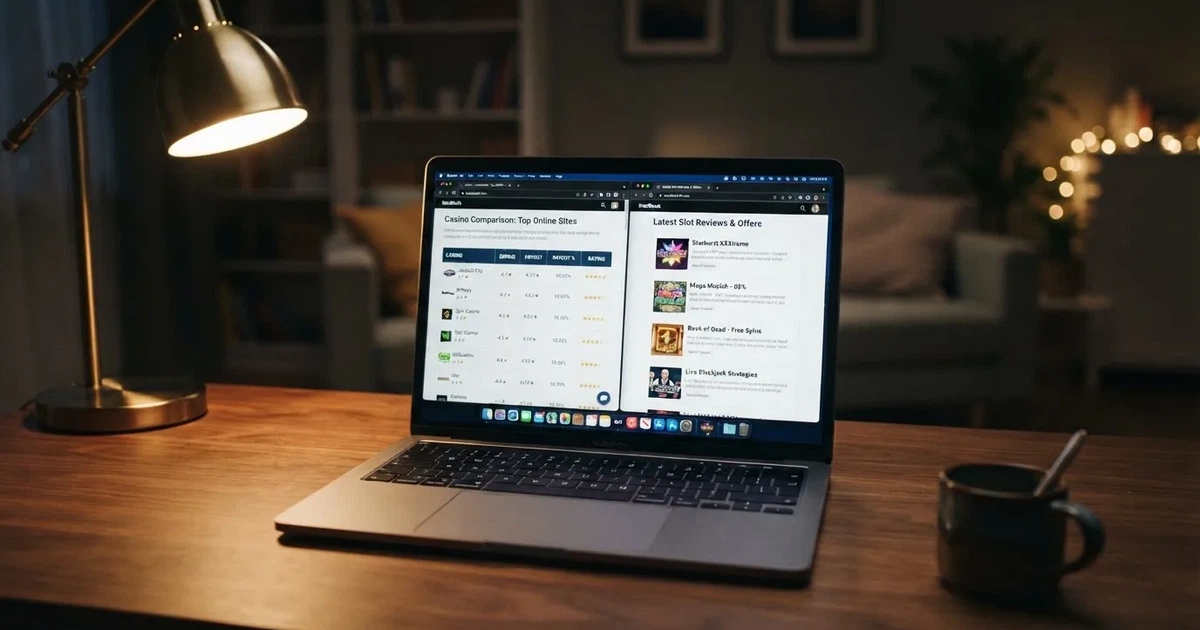
Current as of 28 October 2026 — operator data cross-checked against the ACMA’s formal-warning register and the blocking-round record.
Table of Contents
- Comparison of ACMA enforcement
- Online slots, pokies and the live-dealer shelf
- Eleven brands the ACMA itself named
- The shelf that is not a shelf — what the Australian market actually offers
- The block-rate calculation, stated as a band
- Self-exclusion, wellbeing, and the limits the offshore site does not connect to
- FAQ
Comparison of ACMA enforcement
| Brand | ACMA action and date | Operator named by the ACMA | Subject support |
|---|---|---|---|
| RocketPlay | March 2026; May 2022 | Pulsup Ltd; Dama N.V. | no-data |
| Level Up Casino | May 2022 | Dama N.V. | listings-only |
| Woo Casino | March 2025 | Dama N.V. | no-data |
| Spirit Casino | May 2025 | Dama N.V. | no-data |
| National Casino | July 2025 | Consolutetish S.R.L. | listings-only |
| Bizzo Casino | July 2025; 2022 | Consolutetish S.R.L.; TechSolutions | no-data |
| Ignition Casino | July 2025 | Bamboo Media | no-data |
| Instant Casino | February 2025 | EOD Code SRL | no-data |
| Jackbit | April 2026 | Ryker B.V. | no-data |
| Casino Intense | April 2025 | Sterplay Holding Ltd | listings-only |
| Sky Crown | September 2022 | Hollycorn N.V. | no-data |
A crypto gambling casino runs the same slot titles as a card-funded site — reels, paylines, bonus rounds, random number generators — with a blockchain wallet swapped in for a bank card. The deposit rails differ. The product does not. Bitcoin, Litecoin and a handful of altcoins move value without a card processor and without a name on the merchant side; the casino’s own licence, where one is displayed, sits offshore, and the player’s recourse if a withdrawal is refused sits wherever the operator’s terms put it.
What that means in practice is that a crypto deposit solves only the payment-method problem. It does not turn an offshore site into a domestic one, does not put the player inside Australian consumer-protection law, and does not connect the account to BetStop, the National Self-Exclusion Register. The credit-card and digital-currency ban that took effect on 11 June 2024 applies to Australian-licensed online wagering only — the offshore casino accepting a Bitcoin deposit from a Melbourne address is unaffected by that ban because it was never inside it. The reader who reaches for crypto to dodge the card ban is moving sideways, not forward.
Anonymity here is also narrower than the marketing word suggests. The blockchain transaction is pseudonymous; the casino’s account (email, password, KYC documents at withdrawal) usually is not. Most operators in this segment run some form of identity check when a withdrawal crosses a threshold, and a reader who believed the marketing line that “no verification” is the rule will meet the verification request at the moment they try to move winnings out.
Where crypto changes what the reader can do
Three things actually change, and they are not the things the marketing copy emphasises:
- The deposit can be small. Card-funded offshore sites set minimums around A$20 to A$30; crypto lets a player send the network fee plus a couple of dollars. Useful for the reader who wants to test the lobby without committing a full deposit.
- The withdrawal can be fast where the operator approves it without a queue. Hours, not days. Conditional on the operator, not on the coin.
- The transaction is reversible only through the operator, not through the card scheme. A chargeback is not available. If the operator declines a payout, the player has whatever complaint route the operator’s licence jurisdiction offers — Curaçao, Anjouan, Costa Rica — none of which has a track record of enforcing against the licence-holder for the benefit of an Australian complainant.
What crypto does not change: the game’s house edge, the game’s volatility, the bonus’s wagering multiple, or the fact that the operator is offshore, unlicensed in Australia, and reachable through an ACMA blocking order rather than through a regulator who answers the phone.
Online slots, pokies and the live-dealer shelf
A search for “online gambling australia slots” or “online gambling australia pokies” returns the same product under two names. “Slots” is the international term for the spinning-reel game. “Pokies” is what Australian clubs, pubs and casinos call the same machine, short for “poker machines,” a name the devices outgrew decades ago. Online, the distinction is purely linguistic. The mechanics are identical: a random number generator picks a combination on each spin; the visible reels are a display layer.
The interesting differences are not about online versus the pub. They are about scale and density.
Australia’s physical pokie fleet is unusually large for its population. Outside casinos, the country operates on the order of 95,000 to 100,000 gaming machines, roughly five per capita the rate of the United States. The state-by-state split matters because the density shapes where the spend sits. New South Wales alone counted 87,298 pokies-style machines outside casinos in June 2023, ahead of Victoria’s 26,380, Queensland’s 21,122, South Australia’s 11,672 and the ACT’s 3,587. NSW carries most of the fleet by a margin larger than every other state combined. Online, by contrast, the same slot titles are distributed by the dozen from every offshore operator with no geographic density at all — the lobby is the same in Sydney as in Perth.
Specific titles and how their numbers actually read
The figures below are not from a casino’s own marketing page. They are from the public math, the way regulators and statisticians have stated them. Two numbers matter most: return to player (RTP) and volatility. RTP is the long-run percentage of wagered money a title returns to players. Volatility is how lumpily that return arrives — low volatility pays small wins often, high volatility pays rarely and large.
A modern video slot can run five or more reels with 50 or more symbols per reel. The odds against the top combination can run to 300 million to one. A classic three-reel machine with roughly ten symbols per reel offers about 1,000 possible combinations. The headline odds are not the house edge — the house edge sits in the structure of the paytable, not in any single spin’s chance of hitting. A title with a headline 300-million-to-one jackpot still pays out, on average, something close to its stated RTP over millions of spins.
Baccarat’s house edge is the cleanest comparison point available. On the Banker bet it runs 1.06%, on the Player bet 1.24%, on the Tie bet 14.36%. Punto banco, the variant most casinos offer, banks the game at all times and plays both hands by fixed drawing rules. Crown Melbourne runs three approved variants — Traditional Baccarat, Crown Baccarat and 2 to 1 Baccarat — under the Victorian Gambling and Casino Control Commission, which replaced the VCGLR on 1 July 2022. The reader who has walked a Crown floor will find the same game on the live-dealer shelves of the offshore sites, with a different dealer, streamed from a studio outside Australia, and with no Australian regulator watching the shoe.
Blackjack’s edge is tighter still. Under liberal Las Vegas Strip rules — dealer stands on soft 17, double on any two cards, double after split, resplit aces, late surrender — optimal play brings the house edge to about 0.28%. Atlantic City rules lift it to around 0.43%. The rules the table actually runs matter more than the name on the felt; the same word “blackjack” can cover games with edges an order of magnitude apart. The VGCCC keeps a public log of approved rule changes at Crown Melbourne, including a “Free Bet” option introduced on 25 March 2024 alongside a new “Pot of Gold” side bet, and a renaming of the “Perfect Pairs” side bet to “Crown Pairs” on 23 December 2024.
Craps rounds out the comparison set. Pass/Come carries a 1.41% house edge, Don’t Pass/Don’t Come 1.36%, Any Craps 11.11%. Craps is rarely seen in Australian online lobbies; the comparison matters because it shows how the same arithmetic of edge applies across games, even ones the local market does not push.
What all of these numbers share is that they are stable across operators and across formats. The RTP of a slot is the same whether the title sits at an offshore crypto site or a card-funded site. The edge on the Banker bet is the same in Havana and on a streamed live table. Where the offshore site differs is not in the math but in the absence of supervision.
The mechanics the marketing page never prints
A slot machine’s outcome is decided the moment the player presses spin. The reels spin as a display — the symbols land where the random number generator has already told them to land. There is no skill, no pattern to read, no hot or cold streak that a careful observer can detect. Every spin is independent of the one before it. A machine that paid out ten minutes ago is no more or less likely to pay out now than it was before the last win.
That is what “random number generator” means in this context, and it is what the term “trusted” or “secure” on a casino’s homepage actually points at. It does not point at a regulator’s audit. It does not point at a complaints body. It points at a piece of software inside the game. The independent check, where one exists, is a testing-house certificate (eCOGRA, GLI, iTech Labs) — useful, partial, and paid for by the operator.
Eleven brands the ACMA itself named
The list below is built backwards. Instead of “best” by some marketing metric, it is built from the ACMA’s formal-warning register: every brand here is one the regulator itself named, in writing, as offering prohibited services to Australian residents. No bonus terms appear, because the only sources for those terms are affiliate marketing pages and the article describes what an offer is worth rather than how it is claimed. Every brand sits outside Australian licensing regardless of what licence banner it displays.
RocketPlay
The ACMA issued a formal warning to Pulsup Ltd over RocketPlay in March 2026. The same brand surfaces in an earlier 2022 warning, when Dama N.V. was the named operator and Rocketplay was one of six casino brands called out together. The site accepts Australian deposits through offshore rails and presents its licence as Curaçao-issued. A reader reaching this page from a search for the brand should know that an Australian-licensed alternative does not exist for the product on offer, and that the ACMA’s record on this name is now two entries long.
Verdict: a brand whose path to an Australian player has been formally objected to twice by the regulator; the underlying product cannot be licensed in Australia, and the reader looking for RocketPlay specifically should know there is no clean Australian channel for it.
Level Up Casino
Dama N.V., May 2022, as one of the six casino brands on a single formal warning. The warning is older than most on this list, but it is still on the ACMA’s register, and the operator under the warning banner is the same corporate entity connected to several other names further down this page. Subject support on this brand, where any third-party listing exists, points to BGaming as a slot provider in the lobby — a useful detail only in the sense that it tells the reader which studio’s titles to expect, not that any studio’s oversight extends into Australia.
Verdict: a 2022 warning still sitting on the register and a corporate parent that connects Level Up to other named brands; the product itself remains prohibited regardless of which Dama N.V. site carries it.
Woo Casino
The ACMA warned Dama N.V. over Woo Casino in March 2025 — a separate event from the 2022 warning, by a different subsidiary or at least a different brand-facing identity. That tells the reader something about how the Dama N.V. group operates: warning over one brand does not stop the group from launching or running another under a separate name.
Verdict: a second formal warning to the same corporate group on a different brand; the pattern is the relevant fact, not the brand name.
Spirit Casino
Dama N.V., May 2025, two months after the Woo Casino warning. The pattern continues: the ACMA writes to the parent, the parent rotates to a new brand, the ACMA writes again. The reader who has watched this space will recognise the shape; the reader new to it should know that the “new casino” launched by an offshore group with prior warnings is a known structure, not a one-off.
Verdict: the freshest Dama N.V. entry at the time of the most recent warning; the same corporate group, the same product, the same prohibition.
National Casino
Consolutetish S.R.L., July 2025. The named operator is no longer Dama N.V. — Consolutetish S.R.L. is a separate corporate entity that has surfaced on the ACMA’s register this year. The warning came alongside the Bizzo Casino entry below, in the same enforcement round.
Verdict: a brand-name the reader is likely to meet because it has been heavily marketed to Australian traffic through affiliate channels; the ACMA’s own view is that this marketing is to a prohibited product.
Bizzo Casino
Consolutetish S.R.L., July 2025, in the same round as National Casino. Bizzo had already been the subject of a 2022 formal warning, addressed to TechSolutions (CY) Group Limited and TechSolutions Group N.V. — the same brand, two different operators over four years. Two warnings on one brand is unusual; it tells the reader that enforcement on a single name has run into the same problem twice.
Verdict: two warnings on one brand across four years, the second to a different operator than the first; the brand keeps surfacing, the warnings keep landing.
Ignition Casino
Bamboo Media, July 2025. Ignition sits in the same July 2025 enforcement round as National Casino and Bizzo. The reader who knows Ignition from the US-facing market will find the Australian-facing marketing of the same brand sitting on the wrong side of the same prohibition.
Verdict: a brand with an existing offshore profile that has been formally warned for the Australian-facing version of the same product.
Instant Casino
EOD Code SRL, February 2025. One of the earlier 2025 entries and a useful counterpoint to the Dama N.V. cluster: a different operator, a different warning date, the same outcome.
Verdict: a 2025 warning to a corporate entity not otherwise named on this list; the enforcement is wide, not concentrated in a single group.
Jackbit
Ryker B.V., April 2026. The April 2026 warning also named CasinOK under the same Ryker B.V. banner, so the reader seeing Jackbit should know that the corporate envelope has been flagged, not the brand in isolation. Jackbit is one of the more crypto-forward brands in this segment, and the warning landed in the same week as the operator’s most recent Australian-facing marketing push.
Verdict: a crypto-focused brand on the most recent warning register; the timing of the warning is the relevant fact.
Casino Intense
Sterplay Holding Ltd, April 2025. Sterplay is a smaller operator than most on this list by brand recognition, and the warning is correspondingly less covered by industry press. The reader who has arrived at Casino Intense through an affiliate link should know it is named on the ACMA’s register, not just rumoured to be offshore.
Verdict: a less-prominent brand that has nevertheless received the same formal action as the better-known ones; absence of press coverage is not absence of regulatory action.
Sky Crown
Hollycorn N.V., the formal warning covering Sky Crown and Blue Leo together. The Hollycorn N.V. warning is older than most entries on this list — the ACMA’s published document dates to September 2022 — but it is still on the register, and Hollycorn continues to operate brands that surface in Australian-facing affiliate marketing. Blue Leo is the second name on the same warning; a reader who has been routed there through a bonus comparison page is looking at a brand the ACMA has named once and the parent group continues to use.
Verdict: the oldest warning on this list still in active operation; the brand surfaces because the parent group continues to market it, not because the warning changed its standing.
The shelf that is not a shelf — what the Australian market actually offers
The comparison above covers offshore brands. It does not cover the legal Australian market because the legal Australian market for online slots does not exist. What does exist is a regulated wagering market, run mainly through Northern Territory licences, for racing and sports betting placed before the event. The Northern Territory Racing and Wagering Commission (NTRWC) regulates 52 of Australia’s online bookmakers — including Sportsbet, Bet365 and Ladbrokes — which are licensed in the Territory for tax reasons rather than because the Territory hosts the operators’ head offices. The commission has no full-time staff and meets once a month in Darwin, which is itself a finding about how the licensed wagering market is actually governed.
A reader who has searched for an online casino in Australia and been told by an affiliate page that a brand is “licensed and regulated” should know what that licence covers. A Curaçao licence covers the operator’s compliance with Curaçao’s rules. An Anjouan licence covers the operator’s compliance with Anjouan’s. None of them covers the player sitting in Brisbane. The Australian-licensed bookmaker is licensed for wagering, not for casino games, and the operator offering both is offering the casino side without the licence that would make the wagering side lawful.
The legality frame in one pass
The Interactive Gambling Act 2001, strengthened by the Interactive Gambling Amendment Act 2017, is the statute that does the work. It makes it an offence to provide online casino games, online pokies or in-play betting to a person physically in Australia. The individual player is not prosecuted; the IGA targets the provider. The consequence for the player is not legal exposure but practical one: an offshore site gives no Australian consumer protection, no complaints body, no recourse if a withdrawal is refused, and the ACMA can direct Australian ISPs to block the site with a balance still on the account.
The Interactive Gambling Amendment (Gambling Reform) Bill 2026 passed Parliament on 19 August 2026. Its advertising and inducement measures commence on 1 January 2027, which means a page written in 2026 is describing law that is on the books and not yet in force on the reader’s screen. The current legal position is the 2001 Act as amended by 2017; the 2026 reform sits on top of it, waiting for its start date.
What the ACMA has actually done, by the numbers
The blocking record tells the reader what “enforcement” looks like in practice. According to the ACMA as reported in June 2026, a total of 1,751 illegal gambling and affiliate marketing websites had been blocked since the first blocking request in November 2019. That is the cumulative total across roughly six and a half years of enforcement — 1,751 sites blocked, with the first block landing in late 2019 and the register continuing to grow. More than 230 unlicensed gambling services had left the Australian market since enforcement was strengthened in 2017.
In the round reported on 26 June 2026, the ACMA asked Australian internet service providers to block 12 more illegal gambling websites in one batch: 7Signs, ChromaBet, Donbet, Duospin, Freshbet, Slots Gem, Jacks Club, Lucky Start, Pointsbetz, Spinrise, Vinyl Casino and Wildsino. Twelve sites at a time, with new batches arriving on a roughly monthly cadence.
The arithmetic of the blocking rate
The blocking rate over the life of the regime — 1,751 sites blocked since the first blocking request in November 2019 — works out to a steady cadence rather than a step change. Divide the cumulative total by the years elapsed and the average lands somewhere in the range of 250 to 300 blocking actions per year, with monthly rounds now landing at a dozen sites each. That is the shape of the enforcement regime: not a single decisive action but a continuous flow of partial blockings, each batch lifting the running total by a predictable increment.
The reader should hold two things in mind at once. The first is that the cumulative total is large enough to show that enforcement is real. The second is that the monthly cadence is regular enough to show that the supply side is replenishing at a similar pace — operators launch, the ACMA blocks, new operators launch under different names, the ACMA blocks again. The arithmetic is not a measure of how many sites exist; it is a measure of how fast the regulator can keep up with the ones it can see.
What the enforcement record looks like at the operator level
Eleven brands sit on this page, and the ACMA has issued formal warnings to each one. The warnings cluster around the same handful of corporate groups, and the cluster tells its own story:
- Dama N.V. has been warned four times across this list: in May 2022 (Level Up, Rocketplay, Wild Tornado, Cobra Casinos, Bambet, Dazard), in March 2025 (Woo Casino), in May 2025 (Spirit Casino) and in the same 2022 round for Rocketplay. Four warnings, three years apart, the same parent.
- Consolutetish S.R.L. has been warned once, in July 2025, over both National Casino and Bizzo Casino.
- TechSolutions (CY) Group Limited and TechSolutions Group N.V. were warned in 2022 over Bizzo Casino before Consolutetish took over the brand.
- Ryker B.V. was warned in April 2026 over both Jackbit and CasinOK.
- Hollycorn N.V. was warned in September 2022 over Sky Crown and Blue Leo.
- Bamboo Media, EOD Code SRL, Sterplay Holding Ltd and Pulsup Ltd each have a single warning on this list.
The pattern is not hard to read. A formal warning to a parent group does not stop the parent group from running further brands. The ACMA’s tool is the warning and the blocking request; the operator’s tool is the new brand, the new domain, the new corporate entity. The reader who arrives at one of these brands through an affiliate link is arriving at the latest name on a list that has been growing since 2017.
The block-rate calculation, stated as a band
The running total reported in June 2026 was 1,751 blocked sites since the first blocking request in November 2019. Stated as an annual blocking rate, that works out to a band in the order of 250 to 300 sites per year on average across the six-and-a-half-year window, with the most recent monthly rounds landing at roughly a dozen sites per round. The exact figure for any given year depends on which year the reader picks; the band captures the shape of the regime, not the count of any single year.
The condition the band rests on is that the cumulative total is the right denominator. The ACMA’s total is a count of blocking requests, not a count of unique operators — the same operator can sit behind several domains and count several times. That pushes the rate upward; a stricter count of unique operators would be lower. Both readings are defensible. The headline number is a blocking rate, not an operator count.
Self-exclusion, wellbeing, and the limits the offshore site does not connect to
Australian-licensed wagering services connect to BetStop, the National Self-Exclusion Register, which has been live since August 2023. A reader who has registered with BetStop cannot open a new account with a licensed Australian bookmaker and cannot log into an existing one for the duration of the exclusion. That is what the register does, and it is a genuine protection for the reader who uses it.

It does not extend to offshore casinos. An offshore casino is not connected to BetStop. A self-exclusion registered with BetStop is binding on Australian-licensed operators and on no one else. The reader who has registered with BetStop and then opened an account at an offshore site has not undone their exclusion — they have moved outside the regime that enforces it.
The same gap applies to deposit caps. The 11 June 2024 ban on credit cards and digital currency as payment for licensed online wagering does not extend to offshore sites. The offshore site that accepts a credit-card deposit from an Australian address is not breaking Australian law by doing so because it is not subject to Australian law; it is breaking the prohibition on providing online casino games to Australians, which is a separate and more serious matter.
What the player can do that does not depend on the operator
The player-facing limits the reader can actually set are the ones the player sets for themselves. A weekly budget written on a notepad, a deposit cap the player enforces by moving the money out of the account they would deposit from, a session time limit set by an external alarm. These are the limits that work regardless of which offshore site the player is on.
For readers who want professional support, the National Gambling Helpline is 1800 858 858, free, 24/7, with chat available through Gambling Help Online. The helpline is not connected to BetStop — it is independent of the self-exclusion register — and it is reachable from anywhere in Australia.
What “trusted” and “safe” actually mean on a casino homepage
The reader who has searched for “trusted online gambling casino” or “safe online casino gambling” will have met a marketing landscape in which every brand claims trustworthiness and safety. The claims are about the operator, made by the operator, and the testing certificates that sometimes appear in the footer are testing-house audits paid for by the operator. Independent oversight, in the Australian regulatory sense, does not exist for the offshore online casino segment. The reader who treats the marketing word as a guarantee has mistaken an advertising claim for a regulatory finding.
A more useful frame for “trusted” is to ask which limits, exclusions and complaint routes actually apply to the brand in question. If the answer is “the brand’s own terms page, with recourse to the brand’s own licence jurisdiction,” that is the answer — and it is a different answer than the marketing word implies.
FAQ
Is real-money online casino gambling legal for someone based in Australia?
No. The Interactive Gambling Act 2001 prohibits providing online casino games, online pokies or in-play betting to a person physically in Australia. No state or territory licenses online casino products. The individual player is not prosecuted; the law targets the provider. Every offshore site on this page sits on the wrong side of that prohibition regardless of any licence banner it displays.
How does a slot machine’s random number generator decide the result of a spin?
The random number generator picks a combination at the moment the player presses spin, before the reels visibly stop. Each spin is independent of the previous one — there is no hot or cold streak, no pattern to read, and no skill that improves the outcome. The visible reels are a display layer over a decision the software has already made.
Do crypto gambling casinos use the same slot software as card-funded sites?
Yes. The slot titles, the random number generators, the RTP figures and the volatility bands are the same across crypto-funded and card-funded offshore casinos. What changes is the deposit rail — a blockchain wallet replaces a bank card. The product’s underlying mechanics and the operator’s regulatory status do not change with the payment method.
What is the difference between an online slot and a pub or club pokies machine?
The mechanical difference is essentially none. Both are spinning-reel games driven by a random number generator, with RTP and volatility set by the paytable. “Pokies” is the Australian term; “slots” is the international term; online, the distinction is purely linguistic. Australian clubs and pubs operate around 95,000 to 100,000 of these machines outside casinos, with NSW carrying the largest share at 87,298 as of June 2023.
Does a site calling itself trusted or safe mean it has been independently checked?
No. The “trusted” or “safe” claim is made by the operator itself, and the testing-house certificate that sometimes appears in the footer is paid for by the operator. Independent Australian regulatory oversight does not exist for the offshore online casino segment. The reader should treat the marketing word as an advertising claim, not a regulatory finding, and look at which complaint routes actually apply to the brand in question.
What tools can help someone track and limit time spent playing online slots?
BetStop, the National Self-Exclusion Register (live since August 2023), binds Australian-licensed wagering services and does not extend to offshore casinos. For an offshore site the only limits that work are the ones the player enforces themselves — a weekly budget, a deposit cap set externally, a session time alarm. The National Gambling Helpline on 1800 858 858 is free, 24/7, with chat at Gambling Help Online.