
Live blackjack at an Australian-facing online casino in 2026
A live-dealer blackjack table, the kind streamed from a studio with a real shoe and a real croupier, looks like the obvious answer to anyone who finds the computer-generated version flat. The video is good now. The dealers speak the player’s language. The bet sizes start low and go high. What an Australian player has to weigh, before any of that, is that the streaming of a casino table to a person physically in Australia falls squarely inside what the Interactive Gambling Act 2001 was written to stop — and that the regulator named in the Act has spent the last few years turning the question from theoretical to operational, by warning offshore operators by name and by getting ISPs to block their URLs.
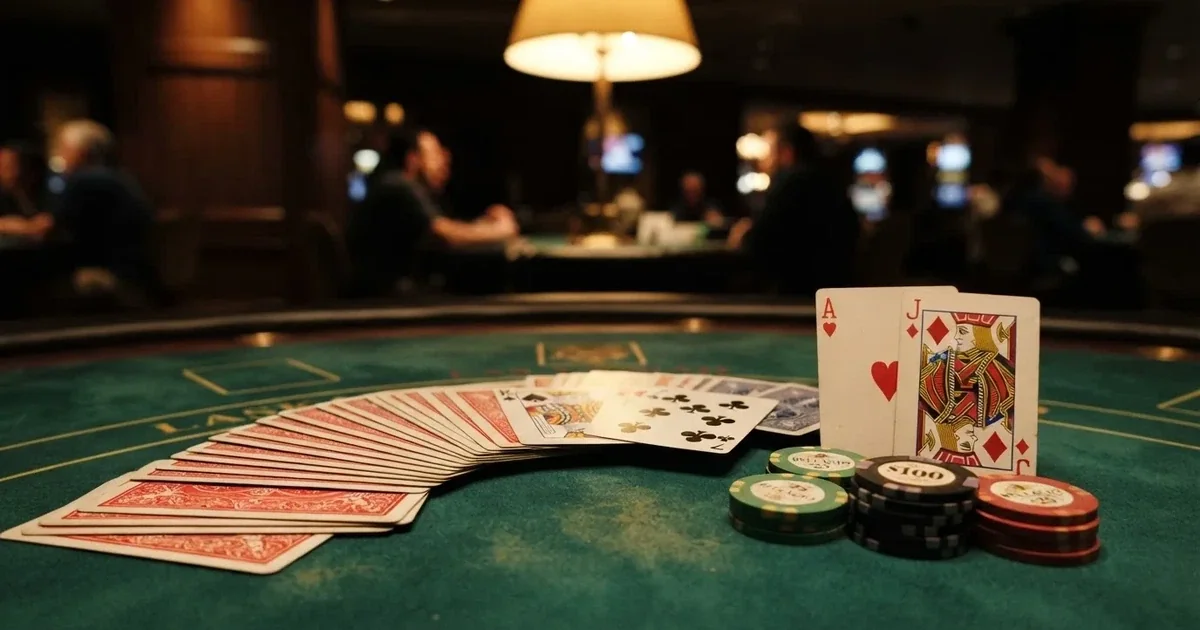
This page works through what that frame does to the choice. There are paths inside it and outside it, and they each suit a different reader. The Australian-licensed wagering market gives a punter sports and racing, never a casino table. The offshore operators that the ACMA has acted against give a casino table, and give it on terms that the regulator has flagged. Some of those operators run an enormous promotional layer — the kind that leans on “live dealer welcome bonus” and “crypto blackjack reload” — and a meaningful share of that layer is written for slots rather than for tables. A reader who walks in knowing that frame makes a sharper decision than one who walks in knowing only the offer.
Current as of 28 October 2026, cross-checked against the Australian Communications and Media Authority’s published register of formal warnings and blocking requests.
Table of Contents
- How the law sits over a live dealer blackjack table
- Why a live table looks different from a software one
- What the house edge on a blackjack hand actually is
- What an Australian punter actually has access to
- How blackjack bonuses tend to be written, and what they actually do for a table player
- What the responsible-gambling frame looks like for live blackjack
- The brands the ACMA has named, and what each one looks like at the table
- What the blocking record says about pace and coverage
- How the Australian-licensed market looks next to this
- How a punter reads an offshore live blackjack site
- Where the choice lands
- What H2 Gambling Capital’s 2025 numbers say about the offshore pull
- Frequently Asked Questions
How the law sits over a live dealer blackjack table
Australia does not licence online casino games. That is not a recent position and not a grey one. The Interactive Gambling Act 2001 (IGA), tightened by the Interactive Gambling Amendment Act 2017, makes it an offence to provide an “interactive gambling service” — defined broadly enough to cover casino games, online pokies and in-play betting — to a customer physically in Australia. No state or territory licenses online casino games. The licensable activities are wagering on racing and sport placed before the event, lotteries and keno. In practice, most online bookmakers — Sportsbet, Bet365, Ladbrokes among them — are licensed in the Northern Territory for tax reasons, under a commission (the Northern Territory Racing and Wagering Commission, NTRWC) that runs with no full-time staff and meets once a month in Darwin.
That frame is what puts every live blackjack stream offered to an Australian resident in the same category as a slot machine streamed to one. The mechanics are different. The legal status is not. The distinction the IGA draws is between wagering services — sports and racing, pre-event — and gambling services — casino games, slots and in-play. A live dealer blackjack table is firmly the second.
What the ACMA has actually done, in named rounds
Enforcement under the IGA is the ACMA’s job. It investigates, issues formal warnings, and asks Australian internet service providers to block offending URLs. By the ACMA’s own tally as reported in June 2026, the regulator had directed the blocking of 1,751 illegal gambling and affiliate marketing websites since the first blocking request in November 2019, and more than 230 unlicensed gambling services had left the Australian market since enforcement was strengthened in 2017. The pace is not symbolic. A blocking round reported on 26 June 2026 alone asked ISPs to block twelve more sites: 7Signs, ChromaBet, Donbet, Duospin, Freshbet, Slots Gem, Jacks Club, Lucky Start, Pointsbetz.com, Spinrise, Vinyl Casino and Wildsino.
Formal warnings are the ACMA’s other instrument, and they are public, named and dated. They cover the operator behind a brand, not just the brand. The named companies behind the brands reviewed below — Pulsup Ltd, Dama N.V., Consolutetish S.R.L., Bamboo Media, EOD Code SRL, Ryker B.V., Sterplay Holding Ltd, Hollycorn N.V. — are not pseudonyms in the ACMA’s records. The warnings carry a date, an operator, a brand, and a section of the IGA. The ACMA’s record is the part of this page that is sourced, line by line, from the regulator rather than from the operator.
What the player is and is not exposed to
The IGA targets the provider, not the customer. There is no record of an Australian resident being prosecuted for placing a bet with an offshore site. That is one half of the picture. The other half is what an offshore site does not give the player: no Australian consumer protection, no complaints body to escalate to, no recourse if a withdrawal is refused, and no guarantee that the site will not be blocked with a balance still on it. The protection layer that surrounds a Sportsbet account — dispute resolution, an Australian licence number, a regulator to complain to — does not exist on the other side of the line.
BetStop, the National Self-Exclusion Register, has been live since August 2023. It binds Australian-licensed online and phone wagering services. An offshore casino is not connected to it, and a self-exclusion request lodged through BetStop will not stop a deposit at one. That is the responsible-gambling frame for this market, and it is the part most easily missed.
Why a live table looks different from a software one
A live dealer blackjack table streams a real shoe, a real dealer and a real deal. A computer-generated table runs a random number generator over a virtual shoe. The cards look the same on a phone screen. The cadence is different. A live table deals at the pace a human dealer sets, with the other players at the table also drawing cards, which means a hand finishes in roughly 30-45 seconds rather than in the 5-10 seconds a software table runs. That difference is small, and it is also where most of the bankroll goes. A punter on a software table can pace themselves hand by hand; a punter on a live table, with the dealer moving and the social pressure of a real table, plays faster than they mean to.
The paytable is the second difference, and it is the one that matters mathematically. A live dealer table runs the standard blackjack paytable — three to two on a natural, with the dealer standing on 17 — and a competent software table uses the same. What changes between rooms is the rule set: whether the dealer hits or stands on a soft 17, whether the player can double after a split, whether surrender is offered. Each of these is a small adjustment to the house edge, and the difference adds up over a session.
The third difference is who is at the table. A software table is one player against the random number generator. A live table is several players against the dealer, with empty seats filled by the studio. The seat count is fixed; the players are not. The pace and the social pressure are properties of the room, not of the game.
What the house edge on a blackjack hand actually is
A blackjack hand played with optimal strategy carries one of the lowest house edges in any casino game. The exact number depends on the rule set. Under a liberal Las Vegas Strip configuration — dealer stands on soft 17, double on any two cards, double after split, resplit aces, late surrender — the house edge is about 0.28%. Under more common Atlantic City rules it is about 0.43%. Both numbers assume the player is playing a published basic strategy chart and not deviating from it. A player who takes insurance on every hand, or who splits tens on a dealer’s six, gives a chunk of that edge back.
For a sense of where blackjack sits among other casino games: baccarat’s house edge is 1.06% on the Banker bet, 1.24% on the Player bet and 14.36% on the Tie. Craps’s Pass/Come bet is 1.41%, Don’t Pass/Don’t Come 1.36%, and the Field bet 5.56%; the Any 7 bet is 16.67%, one of the worst bets on any table in any casino. The free odds bet taken behind a Pass or Don’t Pass in craps carries 0% — it pays at true odds — but every other bet on a craps table gives the house something. Blackjack’s 0.28% is the number a basic strategy player is defending, hand after hand, against the rule set and the dealer’s up-card. The promotional material that frames a “live dealer welcome bonus” of two hundred percent tends not to mention that the player is starting from an already-thin edge.
Where that thin edge gets eaten
A live blackjack session chews through bankroll at a pace most players underestimate. A continuous shoe means no reshuffling pause, so the hands run back to back. A player at a A$10 minimum table, betting one box at a steady A$10 a hand, plays roughly 80 hands an hour at a live table. At a 0.43% house edge, the expected loss over an hour is around A$3.40. Two hours doubles it. Six hours is around A$20. The number is small per hand and not small per evening, and it compounds quietly because each hand looks like a single event rather than a fraction of a session.
The other thing the edge assumes is a flat bet. A punter who doubles down on every favourable count, or who splits on every pair, swings variance hard and burns bankroll faster than the edge alone would suggest. A punter who cuts bets in half after a loss and doubles after a win — a common Martingale variant — does not change the edge. They change the shape of the loss. The expected loss is still there; it is just paid in fewer, larger instalments.
What an Australian punter actually has access to
The honest answer is: not a lawful live dealer blackjack table streamed to an Australian IP. There is no AU-licensed live casino product, no state or territory regulator issuing such a licence, and no bookmaker licensed under the NTRWC offering a casino table. Sportsbet’s product line is sports and racing. Bet365’s Australian product line is sports and racing. Ladbrokes is sports and racing. The menu stops at the boundary of what the IGA permits.
What sits on the other side of that boundary is the offshore market — Curaçao-licensed, Anjouan-licensed, sometimes licensed in jurisdictions the regulator would not recognise. Some of those operators carry a UK Gambling Commission licence from a white-label arrangement. None of those licences authorises them to take bets from a person in Australia. The operators the ACMA has acted against are operators in exactly this set. They are not ranked here as recommendations. They are listed because the regulator has named them, and a reader comparing the offshore market needs to know which names have been named.
Payment routes that are legal, and payment routes that flag a problem
For licensed Australian wagering, the legal deposit routes are debit card, bank transfer, PayID/Osko and BPAY. Credit cards, credit-related products and digital currency have been banned as payment for licensed online wagering since 11 June 2024, with penalties of up to A$247,500 for operators that breach the rule. An offshore site asking an Australian for a credit card or a crypto deposit is not, on that detail alone, in the Australian regulatory frame at all. It is operating in a different one.
PayID — the instant payment rail that runs over the New Payments Platform and is branded Osko by BPAY — settles in seconds. A withdrawal by PayID from an offshore operator is not the same thing as a PayID deposit to a Sportsbet account. The rail is fast in both directions; what determines how quickly the player sees the money is the operator’s own review process. An offshore site that takes twelve hours to clear a withdrawal is not failing PayID; it is running its own queue.
How blackjack bonuses tend to be written, and what they actually do for a table player
A “live blackjack welcome bonus” is, on most offshore sites, a slots bonus with a blackjack skin. The mechanism underneath is a match on the first deposit — often 100%, sometimes 200% — with a wagering requirement that the bonus amount be turned over a set number of times before any of it can be withdrawn. The wagering multiple is where the offer lives or dies. A 35x multiple on a A$200 bonus means A$7,000 of qualifying turnover before withdrawal is unlocked; a 50x multiple on the same bonus means A$10,000.
The mechanic that catches a table player is contribution. Most blackjack bonuses apply 100% of slot turnover to clearing, but only 5-20% of table game turnover. A A$10 blackjack hand at 10% contribution counts as A$1 of qualifying turnover rather than A$10. The required turnover to clear, in actual play, is then ten times what the headline suggests. The bonus’s sticker price is one number; the table player’s price is another.
Reading a blackjack bonus without being sold to it
The terms to look at, in order, are the wagering multiple, the contribution rate for table games, the maximum bet size while the bonus is active (often capped at A$5), the time limit on clearing (often seven days), and the games that are excluded entirely (often live dealer tables on some sites). The bonus’s headline figure is the last thing to look at, because it is the figure the marketing leads with. The combination of the five conditions is what determines whether the offer is worth taking. A high multiple with low table contribution, a short clearing window and a small max bet is, for a table player, worse than a lower multiple with full table contribution and a longer window.
A “no deposit” blackjack bonus — the kind that advertises a small free chip for signing up — is its own category, and almost always carries a max-cashout cap. A A$10 no-deposit chip with a 50x wagering multiple and a A$50 max cashout is, in practice, a free attempt to win A$50, not a free A$10.
What the responsible-gambling frame looks like for live blackjack
A live blackjack session is fast by design. A continuous shoe, a human dealer who sets the pace, and other players who do not pause the action — three things that compound into a session that ends higher than the player meant it to. A punter who decides their bankroll before joining the table, and who leaves when the bankroll is gone, plays one game. A punter who decides at the table plays another.
BetStop — the National Self-Exclusion Register — is the tool that exists for this. A punter who wants a hard break from online wagering registers once, and every Australian-licensed operator is bound to refuse them service. The protection is real and it is Australian. It does not extend to an offshore casino. A punter who has registered with BetStop can still deposit at an offshore site, because the offshore site is not in the register’s network.
The National Gambling Helpline (1800 858 858) is free, 24/7, with chat at Gambling Help Online. Both services are Australian, both are confidential, and both are independent of any operator. A punter who finds a session running longer than planned can use them in the moment.
The brands the ACMA has named, and what each one looks like at the table
The eleven brands below are listed because the ACMA itself issued a formal warning over each for offering prohibited services to Australians. They are not ranked. They are not recommended. They are the names on the regulator’s record. Each is described from the ACMA’s published action and from what the operator’s own public material says about its blackjack product. A reader looking at the offshore market needs to see them together because the regulator sees them together.
| Brand | ACMA action and date | Operator named by the ACMA | Subject support |
|---|---|---|---|
| RocketPlay | formal warning March 2026; earlier May 2022 | Pulsup Ltd (Rocketplay.com.au); earlier Dama N.V. | — |
| Level Up Casino | formal warning May 2022 | Dama N.V. | listed (Bgaming.com) |
| Woo Casino | formal warning March 2025 | Dama N.V. | — |
| Spirit Casino | formal warning May 2025 | Dama N.V. | — |
| National Casino | formal warning July 2025 | Consolutetish S.R.L. | listed (en.wikipedia.org) |
| Bizzo Casino | formal warning July 2025; earlier 2022 | Consolutetish S.R.L.; earlier TechSolutions | — |
| Ignition Casino | formal warning July 2025 | Bamboo Media | — |
| Instant Casino | formal warning February 2025 | EOD Code SRL | — |
| Jackbit | formal warning April 2026 | Ryker B.V. | — |
| Casino Intense | formal warning April 2025 | Sterplay Holding Ltd | listed (Abc.net.au, acma.gov.au, Crownmelbourne.com.au) |
| Sky Crown | formal warning September 2022 | Hollycorn N.V. | — |
The table is a record, not a recommendation. The ordering is the ACMA’s own chronological record of formal warnings as published by the regulator, oldest warning to newest, with a single operator (Dama N.V.) appearing across more than one brand. Where the same operator shows up under more than one brand — Dama N.V. across RocketPlay, Level Up Casino, Woo Casino and Spirit Casino — the connection is on the regulator’s page, not inferred here. Consolutetish S.R.L. appears across National Casino and Bizzo Casino; TechSolutions had been warned earlier in 2022 over Bizzo Casino before the 2025 warning over the same brand went to a different corporate entity.
What the table cannot show is what each brand is offering today. The ACMA’s formal warning is a dated action. A brand warned in 2022 may have changed operator, changed jurisdiction, or changed product line since. The warning remains on the regulator’s record; the brand’s current offering is on its own site.
RocketPlay
The ACMA’s most recent formal warning over this brand was issued in March 2026, to Pulsup Ltd, the operator behind Rocketplay.com.au. The same brand had been the subject of an earlier warning, in May 2022, when the operator behind it was Dama N.V. — one of four brands covered by the May 2022 Dama N.V. action, alongside Bambet, Dazard, Level Up, Wild Tornado and Cobra Casinos. Two warnings over the same brand, four years apart, with different operating companies named, is the ACMA’s record of the brand’s compliance history. What it tells a reader: the brand has not been told once and stayed quiet. It has been told again. Whether the current operator has changed product line or only changed corporate clothing is something the ACMA’s record cannot answer and that the brand’s own corporate disclosure would have to.
A punter who arrived at RocketPlay’s site from a search result would see a live dealer lobby and a standard promotional layer; the brand’s blackjack offering sits inside a slots-heavy welcome package. None of that changes the legal posture.
Level Up Casino
The ACMA’s formal warning over Level Up Casino was issued in May 2022, to Dama N.V., as one of six brands in that operator’s action. The brand’s name still surfaces in listings on third-party game-provider sites — the Bgaming.com catalogue lists Level Up as a carrying operator — which is a reasonable indicator that the brand is active in the market, not dormant. What the listing does not show is whether the brand has changed operator since 2022. The ACMA’s record names Dama N.V.; the current site may be operated by a different entity. A punter comparing brands needs to know that the regulator’s named operator and the brand’s current operating entity may not be the same.
Woo Casino
The ACMA issued a formal warning to Dama N.V. over Woo Casino in March 2025. The earlier Dama N.V. action in May 2022 had covered six brands but not Woo Casino, so this is the regulator’s first warning over this brand, with Dama N.V. as the named operator. The brand’s blackjack product is the standard live dealer lobby; the promotional layer follows the same pattern as the rest of the Dama N.V. group of brands. The pattern across the four Dama N.V. brands on the regulator’s record — RocketPlay, Level Up, Woo Casino and Spirit Casino — is one of repeated naming rather than a single one-off warning, which is the kind of detail that compounds.
Spirit Casino
The ACMA’s formal warning over Spirit Casino was issued to Dama N.V. in May 2025, two months after the Woo Casino warning. Two warnings over two Dama N.V. brands within a single year, with the same operator named, is the regulator’s record. The brand’s product line, as advertised on its own site, is the standard live dealer and slots mix. The legal posture is unchanged.
National Casino
The ACMA issued a formal warning over National Casino in July 2025, naming Consolutetish S.R.L. as the operator. The brand surfaces in third-party listings, including Wikipedia references, which is consistent with a brand that has been around long enough to accumulate external coverage. What the listings do not tell the punter is what the ACMA’s record tells: the brand has been the subject of a formal warning over prohibited services to Australians within the last twelve months.
Bizzo Casino
The ACMA’s July 2025 warning over Bizzo Casino named Consolutetish S.R.L. — the same operator named in the National Casino warning — and that makes the two warnings a single regulatory action across two brands. Bizzo Casino had already been the subject of an earlier warning, in 2022, to TechSolutions (CY) Group Limited and TechSolutions Group N.V. Three years between warnings, two different operating companies named, same brand. The ACMA’s record over this brand is the longest compliance history in the table.
Ignition Casino
The ACMA issued a formal warning to Bamboo Media over Ignition Casino in July 2025. Bamboo Media is a different operator from the Dama N.V. and Consolutetish S.R.L. groups, which puts Ignition Casino outside the two main clusters of repeated naming in the regulator’s record. The brand’s product line, as advertised, is the standard live dealer and slots mix. The regulatory position is the same as for every other brand on the list.
Instant Casino
The ACMA’s formal warning over Instant Casino was issued in February 2025, to EOD Code SRL. This was one of the early warnings of 2025 and part of the regulator’s stepped-up 2025 cadence — six of the eleven brands on the regulator’s record received formal warnings in 2025 or 2026. The brand’s product line follows the standard offshore live dealer pattern.
Jackbit
The ACMA issued a formal warning to Ryker B.V. over Jackbit and CasinOK in April 2026, naming both brands in a single action. The pairing is notable because it is a one-warning, two-brands pattern: the ACMA sometimes groups brands under one operator in a single notice. Jackbit’s product line is positioned around crypto deposits and live dealer tables, which fits the brand’s own marketing but does not change its status under the IGA.
Casino Intense
The ACMA issued a formal warning to Sterplay Holding Ltd over Casino Intense in April 2025. The brand surfaces in Australian media coverage (Abc.net.au), in the ACMA’s own published material, and in third-party listings alongside Crown Melbourne’s coverage (Crownmelbourne.com.au) — the latter connection being that the listings cover both brands in adjacent coverage rather than any operational link. The brand’s product line is the standard offshore live dealer and slots mix.
Sky Crown
The ACMA issued a formal warning to Hollycorn N.V. over Sky Crown and Blue Leo in September 2022 — the earliest formal warning in the table, and one that the regulator published as a PDF. Hollycorn N.V. is a different operator from the Dama N.V. and Consolutetish S.R.L. clusters, and the Sky Crown warning is the regulator’s earliest named action in the table. A brand that has been on the regulator’s record since 2022 has had four years to adjust its offering or its operating structure; whether it has done either is not visible from the ACMA’s record alone.
What the blocking record says about pace and coverage
The first ACMA blocking request went out in November 2019. By June 2026, the regulator had directed the blocking of 1,751 illegal gambling and affiliate marketing websites. That is a running total across more than six years of enforcement, and the pace has been anything but flat — the early rounds blocked tens at a time, the recent rounds block dozens, and the cumulative figure grows in roughly geometric steps as more operators cycle into the regulator’s sights.
The arithmetic the page works from: 1,751 sites blocked across roughly 80 months from November 2019 to June 2026, an average of around 22 blocked sites a month. That average smooths over the slow first year and the busy recent ones. The June 2026 round alone, with twelve sites blocked in one notice, is more than half the long-run monthly average. A punter looking at the regulator’s record should see the average as a band, not a constant — the early period ran well below it, and the recent period is running well above it.
What the blocking does and does not do for the player
A blocked URL is one the player’s ISP no longer resolves. The site itself is not necessarily shut down — it is just no longer reachable from an Australian IP. A punter who has a balance on a blocked site is in a position the regulator’s blocking notice did not anticipate: the site is reachable from elsewhere, the operator is offshore, and the dispute resolution channel that exists for an Australian-licensed operator does not exist for this one. The blocking record is a measure of how much the regulator is doing, not a guarantee that any individual punter’s balance is recoverable.
The June 2026 round’s list — 7Signs, ChromaBet, Donbet, Duospin, Freshbet, Slots Gem, Jacks Club, Lucky Start, Pointsbetz.com, Spinrise, Vinyl Casino, Wildsino — is a snapshot of one enforcement date, not the regulator’s complete target list. The ACMA’s formal warning list and its blocking list overlap but are not identical: a formal warning can precede a blocking request by months, and a brand can be warned more than once before it is blocked. The eleven brands reviewed above are on the formal warning side of the ACMA’s register, not the blocking side.
How the Australian-licensed market looks next to this
The Australian-licensed wagering market is large, well-regulated and stops at casino tables. Sportsbet, Bet365 and Ladbrokes are licensed under the Northern Territory Racing and Wagering Commission for tax reasons — the commission has no full-time staff and meets once a month in Darwin, which is the institutional shape of Australia’s wagering regulator. The licensed product is pre-event sports and racing. Live in-play betting on sport was restricted by the 2017 amendments to the IGA and is not generally available from Australian-licensed operators; some in-play betting is permitted under specific conditions for racing.
What the licensed market gives the player that the offshore market does not is the protection layer. A dispute with a licensed operator can be escalated through the operator’s own complaints process and then to the relevant state or territory regulator. BetStop applies. The payment routes are regulated. The advertising is regulated. The 2026 reform package — the Interactive Gambling Amendment (Gambling Reform) Bill 2026, passed on 19 August 2026 — adds further inducement and advertising restrictions that commence on 1 January 2027. Law with a start date, not yet in force on a 2026 page.
What the licensed market does not give the player is a live dealer blackjack table. That product does not exist in the Australian-licensed frame. A punter who wants both the protection and the table cannot, on the current Australian legal frame, have both.
Tax position for a recreational punter
Gambling winnings of a recreational player are not assessable income under section 6-5 of the ITAA 1997, and losses are not deductible. The position is the same whether the bet was on a horse at Flemington or a hand of blackjack at an offshore site. A punter who carries on a business of gambling — a professional punter, in the ATO’s framing — is in a different position, and that is a question for the punter’s own accountant rather than for a casino page.
How a punter reads an offshore live blackjack site
The first thing to read is the operator, not the brand. The ACMA names operators, not brand names, in its formal warnings, and the operator behind a brand can change. The second thing to read is the licence the site claims — Curaçao, Anjouan, sometimes a UK Gambling Commission white-label — and to read the licence as a jurisdiction of registration rather than as a regulator the punter can complain to. The third thing to read is the bonus terms, with the contribution rate for table games at the front of the list. A “live blackjack welcome bonus” with a 35x multiple and a 10% table contribution is, in effect, a 350x multiple for a blackjack hand.
The fourth thing to read is the payment route. A site asking for a credit card or a crypto deposit is, on those two details alone, outside the Australian rules for licensed wagering. That does not make it unlawful for an Australian resident to use — the IGA targets the provider — but it does mean the punter is in the offshore frame and not the Australian one.
The fifth thing to read is the responsible-gambling layer. An offshore site with no self-exclusion register that connects to BetStop, no Australian helpline number on its responsible-gambling page, and no clear time-out or deposit-limit tooling is not equivalent to an Australian-licensed operator on this dimension. The protection is not the same.
Where the choice lands
A punter who wants a live dealer blackjack table and who is in Australia is, on the current frame, choosing between the offshore market — with the regulator’s warnings and the absence of Australian consumer protection — and not playing live dealer blackjack online at all. The Australian-licensed market does not offer it. The choice is not between a good option and a bad option; it is between an option that exists and a set of options that does not.
A punter who wants the protection and the regulatory recourse should know that those exist for sports and racing, not for casino tables. A punter who wants the table should know the ACMA’s record and should know that the formal warnings are public, dated and named. The eleven brands reviewed above are the regulator’s record, not a ranking. Each one is a separate decision, not a member of a shortlist.
For a punter who plays, the responsible-gambling frame is the part most easily missed. BetStop binds licensed operators and does not bind offshore ones. The National Gambling Helpline (1800 858 858) and Gambling Help Online are Australian, free and 24/7, and they are independent of any operator. A punter who decides their bankroll before joining a live table, and who leaves when the bankroll is gone, plays one game. A punter who decides at the table plays another.
What H2 Gambling Capital’s 2025 numbers say about the offshore pull
H2 Gambling Capital’s 2025 estimate puts annual losses to illegal gambling sites in Australia at about A$3.9 billion. The same report puts the share of Australian gambling going through legal channels at 64%, down from 74% in 2021. Both numbers are estimates, both come from a single industry source, and both should be read with the usual caveat about H2’s methodology. The shape they describe is consistent with the ACMA’s enforcement record: a market where the legal channels are stable, the offshore channels are growing, and the gap between them is the regulator’s working area. A 10-point drop in the legal share over four years is not a marginal shift; it is a structural one. The A$3.9 billion figure, against the legal market’s scale, gives a sense of how much money is moving outside the frame the regulator can see.
The numbers do not break the picture down by game. A live dealer blackjack hand at an offshore site is part of that A$3.9 billion along with every other prohibited product. The figure is one estimate of the total cost the offshore market imposes on Australian residents; the per-punter number is not in the data.
Frequently Asked Questions
Is it legal to play live blackjack for real money at an online casino in Australia?
No, not at any site the player can reach from an Australian IP. The Interactive Gambling Act 2001, as amended in 2017, makes it an offence for an operator to provide an online casino game — including a live dealer blackjack table — to a person in Australia. No Australian state or territory licences online casino games. Sportsbet, Bet365 and Ladbrokes are licensed in the Northern Territory for wagering, not for casino tables. The player is not prosecuted; the operator is. That detail does not put the product on the lawful side of the line.
How does a live-dealer blackjack table differ from a computer-generated version?
A live table streams a real shoe and a real dealer, dealing at the pace a human dealer sets, with other players at the same table. A software table runs a random number generator against a virtual shoe, with no other players and no human cadence. The cards look the same; the pace does not. A live table typically plays 70-90 hands an hour; a software table plays faster. The rule set — dealer on soft 17, double after split, surrender — is the same in both. What changes between rooms is the rule set, not the medium.
What dealer rule most affects the house edge in blackjack?
Whether the dealer hits or stands on a soft 17 — an ace counted as 11 — is the single rule that moves the house edge most under otherwise identical conditions. A dealer who stands on all 17s gives the player more hands won; a dealer who hits soft 17 wins more hands at the margin. Other rules — double after split, resplit aces, late surrender — each move the edge by smaller amounts. A punter playing a published basic strategy chart against a soft-17-dealer pays a higher edge than the same chart against a hard-17 dealer.
Does a blackjack bonus offer usually count table game bets the same as slot bets?
No, almost never. A typical offshore blackjack bonus applies 100% of slot turnover to clearing the wagering requirement but only 5-20% of table game turnover. A A$10 blackjack hand at 10% contribution counts as A$1 of qualifying turnover, not A$10. The result is that the actual turnover required to clear the bonus for a table player is several times the headline multiple. The contribution rate is in the bonus terms; it is rarely on the promotional page. Reading it is the table player’s job before accepting the offer.
Is a live blackjack app a separate product from a site’s browser-based table?
On most offshore sites, the iOS or Android app and the browser-based lobby connect to the same live dealer studio and the same shoe. The app is a mobile wrapper around the same product; the table limits, the dealers and the rule set are the same. A punter who has used a brand’s browser lobby will not find a different game on the app. What changes between the two is the convenience and the on-screen layout; the underlying product does not.
Can a live blackjack hand be joined partway through a dealer’s shoe?
It depends on the room. Some live dealer studios allow a player to “bet behind” an occupied seat during a shoe, wagering on another player’s hand rather than their own. Joining an empty seat mid-shoe is unusual; most rooms seat players at the start of a shoe or when one becomes available. The bet-behind option is a separate feature and is usually marked as such on the table layout. A punter who wants their own box will wait for the next shoe; a punter happy to bet behind another player’s decisions can join mid-stream.