
Uptown Pokies in Australia: what the offshore site really is, what the ACMA has done about it, and where players can actually turn
Data current as of 28 October 2026 and cross-checked against the ACMA’s formal-warning register and the Interactive Gambling Act 2001.
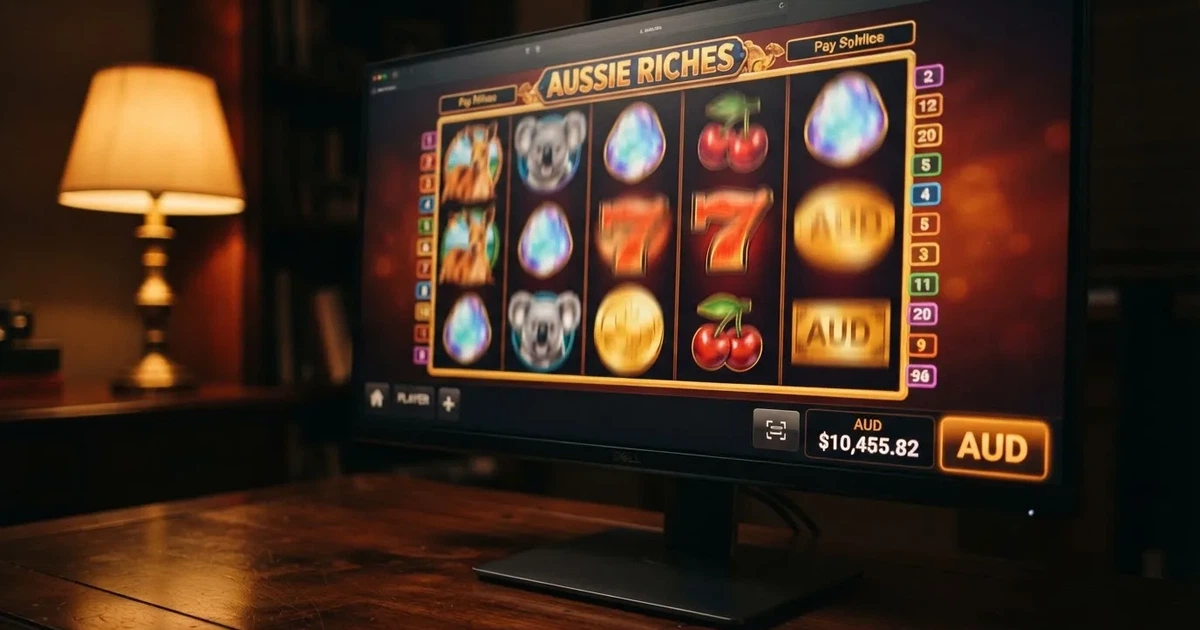
Australia does not license any online casino. No state or territory issues a permit for an online pokies site, and the Interactive Gambling Act 2001 makes supplying one to a person physically in Australia a criminal offence. The brand calling itself Uptown Pokies — operating offshore, accepting Bitcoin, advertising a “A$8,888 welcome pack” — sits squarely in that gap. This page walks through what the brand actually is in Australia, what the regulator has done about it, what an Australian punter can and cannot legally play, and where to go if gambling has stopped being fun.
Table of Contents
- The legal picture, and why an offshore “Uptown Pokies” site is not the same thing as an Australian-licensed wagering service
- What the ACMA has actually done about offshore sites, and the cumulative shape of enforcement
- Why blocking has not stopped new brands from appearing, and what that tells a punter
- How to read the site calling itself Uptown Pokies, and what an offshore brand actually looks like in practice
- The payment methods the offshore marketing mentions, and the Australian payment rails behind them
- What the bonus marketing actually claims, and what is worth saying about it
- What a site calling itself Uptown Pokies looks like on a phone
- The game lobby, and why the provider name is the most useful signal
- Responsible play: where an Australian punter can actually get help
- The eleven brands on the ACMA’s register, and what each warning actually says
- What the rate of blocking actually tells an Australian punter in 2026
- The single test for whether a brand is licensed in Australia
- What the next twelve months look like, and what changes on 1 January 2027
- Frequently asked questions
The legal picture, and why an offshore “Uptown Pokies” site is not the same thing as an Australian-licensed wagering service
Australia’s online wagering market is one of the most tightly drawn in the world, and the line most outsiders trip over is the one between wagering and gaming. Online wagering on races and sport — pre-event only, no in-play betting — is licensed, mostly by the Northern Territory Racing and Wagering Commission, and that commission looks after roughly 52 online bookmakers, including Sportsbet, Bet365 and Ladbrokes. It runs from Darwin, meets once a month, and has no full-time staff, because the regime is built around big sports brands rather than casino floors.

Online casino games and online pokies are the other category. They cannot be licensed anywhere in Australia, and the Interactive Gambling Act 2001, as tightened by the Interactive Gambling Amendment Act 2017, makes it an offence to supply them to a person in Australia. The IGA targets the provider, not the individual punter — a person who opens an offshore account is not personally breaking the law — but the practical consequences for the player fall out from the same statutory choice: there is no Australian licence behind the site, no Australian complaints body, no Australian guarantee that a withdrawal will be paid, and no entry into BetStop, the National Self-Exclusion Register, which only binds Australian-licensed services.
The line matters because the marketing around the offshore site styled as Uptown Pokies tends to blur it. The site carries a Curaçao licence badge; Curaçao is a real jurisdiction, but it is not Australia, and an Australian punter dealing with an offshore operator has no path to the Curaçao regulator that costs less than the original dispute. The site advertises a welcome offer in Australian dollars; the offer is priced in AUD because that is the easiest currency to convert a click into, not because the company behind it has any obligation under Australian consumer law. The site accepts Bitcoin and a handful of prepaid vouchers; credit cards and credit-related products have been banned for licensed Australian online wagering since 11 June 2024, which means the offshore route around the ban is built into the offshore site itself.
A simple test separates the two categories. If the product is a race or a sports event priced before it starts, the operator is likely to be licensed in Australia. If the product is a spinning reel, a hand of blackjack or a live-dealer roulette wheel, it cannot be — and the brand, whatever else it claims, is operating offshore for the Australian market.
What the ACMA has actually done about offshore sites, and the cumulative shape of enforcement
The Australian Communications and Media Authority is the regulator that carries the IGA in practice. Its toolkit runs from formal warnings, through civil penalty proceedings, to formal blocking requests to Australian internet service providers. By June 2026, the ACMA had asked ISPs to block 1,751 illegal gambling and affiliate marketing websites since the first blocking request in November 2019, and more than 230 unlicensed services had left the Australian market since enforcement was strengthened in 2017. That is roughly six years of enforcement, 230 exits, and a blocking list the regulator publishes in tranches.
The most recent round reported on 26 June 2026 added twelve names to the block list: 7Signs, ChromaBet, Donbet, Duospin, Freshbet, Slots Gem, Jacks Club, Lucky Start, Pointsbetz.com, Spinrise, Vinyl Casino and Wildsino. The pace is steady rather than sudden, which is the part the marketing tends to skip.
Alongside blocking, the ACMA issues formal warnings. A formal warning is not a prosecution: it is a written record that the regulator has found the named operator in breach of the IGA and has told them so. The operator is named publicly, the date is recorded, and the warning sits on the ACMA’s register. The shape of that register is the closest thing a punter has to a public list of offshore brands with an Australian footprint.
The named operators on that register, in the order the ACMA published the warnings, include:
- Dama N.V., in May 2022, over six brands: Bambet, Dazard, Level Up, Rocketplay, Wild Tornado and Cobra Casinos.
- Proxous Advanced Solutions Limited, in August 2022, for supplying Realtime Gaming-branded software to illegal casinos serving Australians, with Uptown Pokies named among the contravening services.
- Hollycorn N.V., in September 2022, over Sky Crown and Blue Leo.
- EOD Code SRL, in February 2025, over Instant Casino.
- Dama N.V., again, in March 2025 over Woo Casino and in May 2025 over Spirit Casino.
- Sterplay Holding Ltd, in April 2025, over Casino Intense.
- Bamboo Media, in July 2025, over Ignition Casino, and Consolutetish S.R.L. the same month over National Casino and Bizzo Casino; Bizzo Casino had already been the subject of an earlier 2022 warning to TechSolutions.
- Pulsup Ltd, in March 2026, over Rocketplay.com.au.
- Ryker B.V., in April 2026, over Jackbit and CasinOK.
The site styled as Uptown Pokies has been on the ACMA’s radar through its software supplier since 2022, which is a useful anchor for a punter weighing a brand whose marketing never mentions the regulator.
Why blocking has not stopped new brands from appearing, and what that tells a punter
The ACMA’s blocking is request-based and incremental: it asks, the ISPs comply, the list grows. The shape of the list, however, is uneven, and that unevenness is itself information. A punter looking at a brand-new site in 2026 should expect two things: that the site is unlikely to be on the ACMA’s list yet, simply because the list grew by twelve names in a single June 2026 round after seven years of enforcement; and that the absence of a name from the list says nothing about whether the site is licensed in Australia, because no offshore casino offering pokies to Australians is licensed here. The list tells a punter which offshore brands the regulator has caught up with, not which ones are legitimate.
A second telling feature is the recurrence of operator names. Dama N.V. appears twice, in 2022 and again in 2025, across at least eight brands. Consolutetish S.R.L. took over the same brands TechSolutions had been warned over. The pattern is the same shape any franchised business takes: a parent company, a handful of brand shells, and the regulator catching up to each in turn.
The third telling feature is what the warnings do not do. A formal warning does not bar a brand from continuing to take Australian players; it does not freeze balances; it does not trigger a refund; it does not put the brand on a public Australian consumer-protection list, because there is no such list of legal Australian online casinos to add it to. The warning is the regulator saying, in writing, that the brand has been told, and that the next step is civil penalty proceedings or a blocking request.
How to read the site calling itself Uptown Pokies, and what an offshore brand actually looks like in practice
The brand surfaces as Uptown Pokies, with sister brands marketed alongside it under the same Realtime Gaming software licence. It runs an offshore Curaçao licence, markets to Australian players in Australian dollars, and offers a tiered welcome package that begins at “A$8,888” and works down by deposit number, plus free-spin and no-deposit chip offers that change month to month. That marketing format — a headline welcome figure, a VIP club for returning players, a “birthday bonus” that resurfaces every year — is a category, not a quirk; it appears across most of the brands on the ACMA’s register.
Two practical checks make the gap between the marketing and the legal position easier to see. The first is the payment screen. An Australian-licensed online wagering service cannot take a credit card or any credit-related product since 11 June 2024, and it cannot take a digital currency. A site that takes Bitcoin, or that asks for a Visa or Mastercard credit card, is by construction not Australian-licensed. The second is the complaints path. A licensed Australian wagering operator sits inside an Australian dispute-resolution scheme and BetStop. An offshore casino does not, and the operator’s terms of service usually say so in the section on jurisdiction.
A punter who has already opened an account with the offshore site and wants to close it should expect to ask for a final withdrawal before the account is closed, because the offshore site does not have to honour a BetStop-style self-exclusion request and a closed account can complicate a later balance inquiry. Anyone in that position who feels the gambling has stopped being a choice can use the National Gambling Helpline on 1800 858 858, free and 24/7, or chat at Gambling Help Online, independently of any account they may still hold.
The payment methods the offshore marketing mentions, and the Australian payment rails behind them
The marketing around the site styled as Uptown Pokies names a handful of payment methods that are genuinely Australian, alongside the offshore-standard crypto and prepaid routes. Reading them honestly is worth a paragraph each.
Osko and PayID
Osko is the instant-transfer service that runs on Australia’s New Payments Platform. A transfer between participating Australian banks arrives in under a minute, twenty-four hours a day, seven days a week, including weekends, and it works to either a BSB and account number or a PayID. PayID is the address book layer on top of Osko: more than 25 million PayID identifiers had been registered on the platform by April 2025, and over 100 Australian financial institutions offer PayID-based instant transfers.
Two features of PayID matter to anyone tempted by an offshore casino. The first is that the name on the account is shown to the payer before the transfer is sent — the operator of the scheme warns that being asked to transfer money to a PayID on an illegal gambling site almost certainly means a scam. The second is that Osko’s one-minute arrival is for transfers between participating Australian banks. An offshore casino that claims to take an “Osko deposit” is almost certainly receiving a regular bank transfer, not an Osko transfer in the technical sense, and the speed is on the bank’s rails rather than on the operator’s.
BPAY
BPAY is the Australian bill-payment service that has operated since 1997, available through the online banking of over 140 banks and financial institutions, and used by over 95,000 businesses. It is run by Australian Payments Plus, the same operator that runs PayID and Osko, and is owned equally by ANZ, Commonwealth Bank, National Australia Bank and Westpac.
BPAY has a specific shape: the payer enters the Biller Code and a Customer Reference Number (CRN) printed on the bill. An offshore casino that claims a “BPAY deposit” without a bill, a Biller Code and a CRN is using the name as a generic label for an Australian bank transfer, not as BPAY in the technical sense. Genuine BPAY, like Osko, sits on the licensed side of the line — it is one of the deposit routes that licensed Australian online wagering services can use.
Apple Pay and the card networks
Apple Pay, Google Pay and Samsung Pay collectively accounted for around 45 per cent of all card payments in Australia by number at the end of 2025. Apple does not charge consumers a fee for using Apple Pay in stores, online or in apps, and any surcharge on an Apple Pay transaction comes from the merchant’s own card-processing fees rather than from Apple. Transaction limits and PIN requirements for Apple Pay purchases are set by the card issuer or merchant, not by Apple.
A licensed Australian online wagering service cannot accept a credit card or any credit-related product — and Apple Pay is a front for the underlying card. ANZ’s gambling transaction block, activated in the ANZ app, blocks gambling transactions made through Apple Pay on an eligible card, not just the physical card. Westpac’s gambling block works at card level and refuses authorisation on transactions registered under the merchant category code “Betting/Casino Gambling” on eligible personal credit and debit cards. An Australian-licensed wagering service will simply not accept a credit-funded Apple Pay transaction; an offshore casino that takes one is operating outside the Australian rules.
American Express
American Express runs as a three-party scheme: it issues cards and processes transactions itself, rather than operating the four-party model Visa and Mastercard use. The Reserve Bank of Australia’s July 2025 review of card payment costs proposed removing surcharges only on eftpos, Mastercard and Visa transactions, and explicitly left American Express outside the scope of the proposed surcharge ban — which means Amex merchants can still surcharge, and an Amex deposit to an offshore casino can still pick up a fee the punter did not budget for.
AUSTRAC’s A$10,000 threshold
AUSTRAC’s threshold-transaction-report rule, which requires reporting of transfers of A$10,000 or more, applies only to physical cash. Ordinary electronic bank transfers are not subject to that per-transaction reporting requirement, regardless of the amount sent. The threshold does not change the legal position of an offshore casino deposit, but it does change the paperwork: an Australian bank can ask for the source of funds on any transfer it considers unusual, and a string of large transfers to an offshore casino will trigger that conversation without any AUSTRAC threshold being crossed.
What the bonus marketing actually claims, and what is worth saying about it
The bonus marketing around the site styled as Uptown Pokies names a familiar set of headline offers: a welcome package tiered across the first several deposits, with a headline figure in the eight-thousand-dollar range and a percentage match on each tier; a no-deposit chip or free-spin offer for new sign-ups; reload bonuses for returning players; a VIP club with level-up rewards; and a “birthday bonus” that is advertised as an annual perk. None of those offer types is unusual for the offshore-casino category; the same shapes appear in the marketing of almost every brand on the ACMA’s register.
The point worth stating plainly is that the marketing is the offer. The numbers — the headline figure, the match percentage, the maximum cashout on the no-deposit chip — are set by the operator and can be changed at any time, including between a player reading the offer and the player depositing. The published terms are the binding contract, not the headline. Affiliate pages that quote a current bonus figure cannot be relied on as anything other than what those listings report, and listings-only material has to be read with that qualifier attached.
For an Australian punter the practical question is not whether the offer is good in some absolute sense, because no offer from an unlicensed operator is good in the sense of being enforceable under Australian consumer law. The practical question is what recourse the punter has if a withdrawal is refused, a maximum-cashout clause is invoked, or a bonus term is read in a way the punter did not expect. The answer in every case is the operator’s own complaints procedure, sitting under a Curaçao or Kahnawake or Malta regulator, with no Australian escalation route and no guarantee of resolution.
Reading the bonus terms without being misled
A useful rule of thumb is that the longer the bonus terms, the more carefully the small print needs reading. Offshore operators in this category routinely carry a wagering requirement on the bonus amount, a maximum cashout on no-deposit and free-spin winnings, a list of excluded games that contribute less than 100 per cent to the wagering requirement, and a “max bet while a bonus is active” clause that voids the bonus if exceeded. None of those terms is unique to Uptown Pokies, and none of them is illegal in the offshore jurisdiction the operator is licensed in.
What makes them material for an Australian punter is that the dispute resolution is in the operator’s jurisdiction. A punter who has been paid in full, with the bonus cleared, has no grievance. A punter who has not has, in practice, only the operator’s word.
What a site calling itself Uptown Pokies looks like on a phone
The site styled as Uptown Pokies is a browser-based product first and an app second, and the marketing reflects that. Pages describe a mobile site that mirrors the desktop lobby, with the same login, the same cashier, and the same game library scaled to the phone screen. The “Uptown Pokies app” that shows up in some marketing is, in most cases, a Progressive Web App or a wrapper around the mobile site rather than a separately distributed application from a major app store.
The mobile experience is the same product as the desktop experience in every way that matters to the legal analysis. The same offshore licence, the same payment methods, the same bonus terms, the same offshore dispute resolution. A punter who plays on the app is playing the same unlicensed product as a punter who plays in a browser tab.
Two practical points are worth carrying forward for a punter who has already installed the app or added the mobile site to their home screen. The first is that a phone does not change the payment options: the same credit-card ban applies in mobile as in desktop, and the same Apple Pay and Google Pay blocks set by the card issuer follow the underlying card. The second is that a phone does not change the self-exclusion gap: BetStop’s National Self-Exclusion Register binds Australian-licensed services only, and an offshore casino has no obligation to honour a self-exclusion request sent from a mobile session.
The game lobby, and why the provider name is the most useful signal
The game lobby marketed under the Uptown Pokies name leans heavily on Realtime Gaming, the supplier at the centre of the ACMA’s August 2022 warning to Proxous Advanced Solutions Limited for supplying RTG-branded software to illegal casinos serving Australians, with Uptown Pokies named among the contravening services. The games include RTG’s slots catalogue — the usual titles in the “Achilles”, “Cash Bandits”, “Bubble Bubble” and “Asgard” lineage — alongside a smaller live-dealer section and a handful of table games.
The provider name is worth carrying forward because it is the one signal that survives the marketing layer. RTG has been a consistent supplier to the offshore casino segment for two decades, and the ACMA’s 2022 warning sits on the regulator’s register as a matter of public record. A punter looking at a brand with RTG in the lobby is looking at a brand whose software supply chain has been the subject of a formal regulator finding in Australia, regardless of what the brand itself says in its footer.
The live-dealer section is worth a separate note because it tends to be the most expensive part of the product for the punter. Live roulette and live blackjack run at higher stakes and at a faster effective speed than the standard slot catalogue, and the house edge on the live-dealer product is what it is on every other live-dealer product in the offshore segment. A punter who treats the live-dealer section as the “real” casino experience is treating it as the part of the product the operator is most keen to push.
Responsible play: where an Australian punter can actually get help
The responsible-play story in Australia is built around services that exist whether or not any particular offshore site cooperates. The National Gambling Helpline on 1800 858 858 is free, 24/7, with chat available at Gambling Help Online. BetStop, the National Self-Exclusion Register, has been live since August 2023 and binds every Australian-licensed online and phone wagering service. Counselling is available face-to-face in every state and territory, and the financial counselling line is a separate service for people whose gambling has affected their household budget.
For a punter who has been playing with an offshore site, the practical first step is to ask the offshore site itself to close the account and to request a final withdrawal of any balance. The offshore site does not have to honour a BetStop-style request, but the request and the response go on the record and form part of any later dispute. The second step is to register with BetStop, which prevents the punter from opening new accounts with Australian-licensed online and phone wagering services; BetStop does not bar an offshore site, but it does close the licensed side of the market. The third step, where the gambling has stopped being a choice, is to call the National Gambling Helpline or to use the chat at Gambling Help Online.
The responsible-play services are free, confidential, and run by people whose job is to help rather than to take a deposit.
The eleven brands on the ACMA’s register, and what each warning actually says
The brands below are not a ranking and not a recommendation. They appear here because the ACMA itself issued a formal warning over each one for offering prohibited online casino services to Australians. The order is the order in which the warnings appear in research, which is the order in which they appear in the regulator’s record.
| Brand | ACMA action and date | Operator named by the ACMA | Subject support |
|---|---|---|---|
| RocketPlay | Formal warning, March 2026 | Pulsup Ltd (Rocketplay.com.au); earlier Dama N.V., May 2022 | Listings-only |
| Level Up Casino | Formal warning, May 2022 | Dama N.V. | Listings-only |
| Woo Casino | Formal warning, March 2025 | Dama N.V. | — |
| Spirit Casino | Formal warning, May 2025 | Dama N.V. | — |
| National Casino | Formal warning, July 2025 | Consolutetish S.R.L. | Listings-only |
| Bizzo Casino | Formal warning, July 2025; earlier TechSolutions, 2022 | Consolutetish S.R.L. | Listings-only |
| Ignition Casino | Formal warning, July 2025 | Bamboo Media | — |
| Instant Casino | Formal warning, February 2025 | EOD Code SRL | Listings-only |
| Jackbit | Formal warning, April 2026 | Ryker B.V. | — |
| Casino Intense | Formal warning, April 2025 | Sterplay Holding Ltd | Listings-only |
| Sky Crown | Formal warning, September 2022 | Hollycorn N.V. | — |
The “subject support” column lists which payment methods, advisories or responsible-play services appear in research for each brand; brands with no such listing are kept on their regulator record and not described through an unsupported characteristic.
RocketPlay
RocketPlay has been the subject of two formal warnings: one to Dama N.V. in May 2022, and a second, more recent one to Pulsup Ltd over Rocketplay.com.au in March 2026. The March 2026 warning is the most recent ACMA action on the register. The brand operates offshore, runs a Curaçao licence, and offers a tiered welcome package in the same offshore-casino format as the rest of the ACMA’s register. Research carries the brand only as a listings-only subject for the surrounding payment methods; no responsible-play or BetStop linkage is on the public record.
The verdict on RocketPlay is that it sits at the freshest end of the ACMA’s record, and the second warning inside four years is the regulator’s clearest signal that the brand has not adjusted its Australian-facing offering.
Level Up Casino
Level Up Casino was named in the May 2022 warning to Dama N.V. alongside Bambet, Dazard, Rocketplay, Wild Tornado and Cobra Casinos, and the brand has not been the subject of a separately dated warning since. The brand runs the same offshore shape as the rest of the Dama N.V. group. Research carries the brand only as a listings-only subject for payment methods.
The verdict on Level Up is that it sits on a 2022 warning rather than a 2025 or 2026 one, which is the only thing the public record makes obvious, and the absence of a newer action is not the same thing as a clearance.
Woo Casino
Woo Casino was the subject of a March 2025 warning to Dama N.V., the second Dama N.V. warning on the register and the first one to surface after the August 2022 RTG-software warning. The brand runs a Curaçao licence, a tiered welcome package, and a slot-led lobby. Research data provides no independent payment or responsible-gaming listing for this operator.
The verdict on Woo Casino is that it sits on a 2025 warning from a parent company that has now been warned twice inside three years, and the operator’s response to the first warning is the question the second one asks.
Spirit Casino
Spirit Casino was named in a May 2025 warning to Dama N.V., the third Dama N.V. warning on the register and the closest in time to Woo Casino. The brand is part of the same operator cluster as Woo Casino and the May 2022 brands. No public listing for payment-method or responsible-gaming support appears in research data for this brand.
The verdict on Spirit Casino is the same shape as Woo Casino’s, with the same gap on the public record.
National Casino
National Casino was the subject of a July 2025 warning to Consolutetish S.R.L., alongside Bizzo Casino. The brand runs an offshore licence and a tiered welcome package. Public research data lists the brand in relation to the ACMA register, AUSTRAC and BetStop.
The verdict on National Casino is that the July 2025 warning is the only dated regulator action on the public record, and the listings linkage to BetStop is the closest thing the brand has to an Australian consumer-protection signal — and BetStop does not bar an offshore site.
Bizzo Casino
Bizzo Casino was named in the July 2025 warning to Consolutetish S.R.L., and in an earlier 2022 warning to TechSolutions (CY) Group Limited and TechSolutions Group N.V. The brand has been on the ACMA’s record for at least four years, through two different parent operators. Research carries the brand as a listings-only subject against Gambling Insider.
The verdict on Bizzo Casino is that it is the brand with the longest history of regulator attention in this section, and that history is a cleaner signal than the marketing.
Ignition Casino
Ignition Casino was the subject of a July 2025 warning to Bamboo Media. The brand runs an offshore licence and a poker-and-casino product rather than the slots-only shape of the rest of the ACMA’s register. Research carries no payment-method or responsible-play listing for the brand.
The verdict on Ignition Casino is that the poker-and-casino product places it slightly differently in the offshore segment, and the July 2025 warning is the only dated regulator action on the public record.
Instant Casino
Instant Casino was the subject of a February 2025 warning to EOD Code SRL. The brand runs an offshore licence and an instant-play casino product without a traditional download. Research carries the brand as a listings-only subject against ecoPayz and PayID.
The verdict on Instant Casino is that the February 2025 warning is the earliest 2025 action on the register, and the listings linkage to PayID is the most specific signal in research — and PayID, as the operator’s own register warns, is not a deposit route to an illegal gambling site.
Jackbit
Jackbit was the subject of an April 2026 warning to Ryker B.V., alongside CasinOK. The brand runs an offshore licence and a crypto-led product rather than the AUD-led welcome package of the rest of the register. Research carries no payment-method or responsible-play listing for the brand.
The verdict on Jackbit is that it sits at the most recent end of the ACMA’s record, that its product shape is different from the rest of the register, and that the regulator’s first formal warning over the brand represents its entire history on the public record.
Casino Intense
Casino Intense was the subject of an April 2025 warning to Sterplay Holding Ltd. The brand runs an offshore licence and a slots-led product. Research carries the brand as a listings-only subject against the ACMA register, AUSTRAC and BetStop.
The verdict on Casino Intense is the same shape as National Casino’s, with the same gap on the public record, and the same listings linkage to BetStop as the closest Australian consumer-protection signal.
Sky Crown
Sky Crown was the subject of a September 2022 warning to Hollycorn N.V., alongside Blue Leo. The brand runs an offshore licence and a tiered welcome package. Research carries no payment-method or responsible-play listing for the brand.
The verdict on Sky Crown is that it sits at the oldest end of the brand-by-brand register, with no separately dated regulator action since, and the absence of a newer action is not the same thing as a clearance.
What the rate of blocking actually tells an Australian punter in 2026
The ACMA’s first blocking request went out in November 2019. By June 2026 the running total of blocked sites and affiliate pages was 1,751. Spread over the roughly 80 months between those two dates, that works out at a band of roughly 18 to 22 blocked sites a month on average, with the cumulative total sitting between 1,700 and 1,800 by mid-2026 under any reasonable continuation of the pace. The band, rather than the single figure, is the right way to state the rate because the ACMA publishes in tranches — twelve sites in the June 2026 round, different counts in other rounds — and the average smooths over the lumps.
The shape of the band is the information a punter can carry forward. An offshore brand that has been on the Australian market for less than a year is unlikely to be on the block list yet, because the list grows at roughly twenty names a month and the regulator is always catching up. An offshore brand that has been on the market for several years and is not on the list has either escaped the regulator’s notice or escaped the regulator’s interest; neither is the same thing as Australian licensing, and neither is a clearance. The only Australian-licensed online wagering services are the race and sport bookmakers named on the Northern Territory Racing and Wagering Commission’s register, and no online casino product sits on that register anywhere in Australia.
The single test for whether a brand is licensed in Australia
The test is the same one this page opened with. If the product is a race or a sports event priced before it starts, the operator is likely to be licensed in Australia. If the product is a spinning reel, a hand of blackjack or a live-dealer roulette wheel, the operator cannot be licensed in Australia, and any claim of an “Australian licence” on the brand’s footer is a claim about a different regulator in a different jurisdiction. A punter who wants to play in Australia has to play one of the licensed wagering products, or has to play offshore without the protections that come with an Australian licence.
What the next twelve months look like, and what changes on 1 January 2027
The Interactive Gambling Amendment (Gambling Reform) Bill 2026 passed Parliament on 19 August 2026. Its advertising and inducement measures commence on 1 January 2027 — law with a start date, not yet in force on a 2026 page. The Bill tightens the rules around inducements to gamble, which is the marketing language that has carried the offshore casino segment for years. The Bill does not legalise online casino; it leaves the IGA’s prohibition in place and adds a layer of advertising restrictions on top of it. The shape of the market in 2026 is the shape of the market until 1 January 2027, with the next round of changes landing on that date.
Frequently asked questions
Is the site styled as Uptown Pokies actually licensed to accept Australian players?
No. The Interactive Gambling Act 2001 makes it an offence to supply online casino games or online pokies to a person in Australia, and no state or territory issues a licence for that product. The site styled as Uptown Pokies operates an offshore Curaçao licence, and that licence does not authorise the site to take Australian players under Australian law. An Australian player is not personally prosecuted under the IGA, but the site gives no Australian consumer protection and can be blocked by the ACMA with any balance still on the account.
What sign-up bonus does a site styled as Uptown Pokies typically advertise?
The marketing around the brand names a tiered welcome package in Australian dollars, with a headline figure in the eight-thousand-dollar range, a percentage match across the first several deposits, plus no-deposit chip and free-spin offers for new sign-ups and a “birthday bonus” for returning players. Those terms are set by the offshore operator and can change without notice; the published terms, not the headline, are the binding contract. Affiliate pages that quote a current bonus figure are reporting the listing rather than the operator’s terms.
Does a site like this behave differently through its app compared with its regular website?
No. The app is, in most cases, a Progressive Web App or a wrapper around the mobile site rather than a separately distributed application from a major app store, and the product underneath is the same. The same offshore licence, the same payment methods, the same bonus terms and the same dispute resolution apply whether the punter plays in a browser tab or on the phone. The credit-card ban on Australian-licensed online wagering applies in mobile as in desktop, and Apple Pay and Google Pay blocks follow the underlying card.
What do reviews say about how a site styled this way handles a birthday or loyalty bonus claim?
Affiliate pages report that the brand runs a tiered loyalty programme with reload bonuses and an annual “birthday bonus” for returning players, but those terms are operator-set and can be changed at any time. The marketing is the offer, and the binding contract is the published terms. A punter who has been refused a loyalty claim has, in practice, only the operator’s own complaints procedure; the operator is not bound by BetStop or any Australian dispute-resolution scheme.
How can someone check whether a site calling itself Uptown Pokies is legitimate before depositing anything?
The simplest test is whether the product is licensed to be offered in Australia at all. No online casino or online pokies product can be licensed in Australia, so any site offering one is by construction not Australian-licensed, regardless of what the footer says. A punter who wants to verify a particular brand can search the ACMA’s formal-warning register for the brand’s name and for the operator’s name; a brand named on that register has been the subject of a regulator finding, and a brand not named on it has simply not yet been caught up with.
What withdrawal method, such as Neosurf, does a site like this typically mention, and does it matter?
The marketing around the brand names a mix of payment methods: cards, prepaid vouchers such as Neosurf, Bitcoin and other cryptocurrencies, and bank transfer. The payment screen is itself a signal. An Australian-licensed online wagering service cannot take a credit card, credit-related product or digital currency since 11 June 2024; a site that takes Bitcoin or a credit card is by construction not Australian-licensed. The withdrawal method a punter chooses is also the method the punter will rely on if a withdrawal is disputed, and an offshore casino does not give the punter an Australian escalation route.