
GameBeat Casinos for Australian Players in 2026: The Honest Short Answer
Data current as of 28 October 2026 and cross-checked against the Australian Communications and Media Authority’s published register of formal warnings and blocking requests.

The honest short answer is also the only answer that matters. The Interactive Gambling Act 2001, as tightened by the Interactive Gambling Amendment Act 2017, prohibits the supply of online casino games to anyone in Australia. No state or territory issues a licence for an online casino. GameBeat, a slot studio founded in 2021, supplies games only to licensed operators and commercial partners — not to players directly. The licence GameBeat’s downstream operators display is, in this country, beside the point: what is being offered is prohibited, and the Australian Communications and Media Authority (the ACMA) has spent the years since 2017 making that prohibition stick.
This page walks through what that prohibition means in practice: the enforcement record, the player-protection tools that do and do not apply, the deposit and withdrawal methods an Australian can actually use at a licensed wagering service, and the eleven brands the ACMA has formally warned for offering the very product the searches in this niche assume exists. It also covers the studio behind the games, the alternatives that are legal on Australian soil, and the questions readers actually ask when they land here.
The angle throughout is choice — what the lawful paths look like, which operator names show up in the ACMA’s actions, and what an Australian reader at any bankroll level is actually choosing between. Where the law has already decided, the page says so plainly.
Table of Contents
- The Australian Law Behind GameBeat-Powered Casino Games
- Player Protection in Australia: What Actually Works
- Deposits, Withdrawals and How Money Actually Moves
- Bonuses and Free Spins: What the Offer Is Actually Worth
- Mobile and the Browser-Based GameBeat Experience
- The Studios Behind the Slots: What GameBeat and Its Neighbours Actually Publish
- The Eleven Brands the ACMA Has Formally Warned
- What a Reader in Australia Is Choosing Between
- What Is Changing in 2026 and the Months Ahead
- How This Page Was Put Together
- Frequently Asked Questions
- An Editor’s Note on What This Page Is and Is Not
The Australian Law Behind GameBeat-Powered Casino Games
The framework is the Interactive Gambling Act 2001 (the IGA), tightened in 2017. It is the only piece of Commonwealth law that governs this product, and it does so by prohibition rather than by licensing. Section 8 of the IGA makes it an offence to provide a prohibited interactive gambling service to a person in Australia; section 9A extends that prohibition to in-play betting on sport; the 2017 amendments brought online pokies and casino games under the same umbrella. The minimum age for any licensed wagering product is 18.

What is licensable from Australia is wagering on racing and sport placed before the event, lotteries and keno. In practice the licensing is dominated by the Northern Territory: the Northern Territory Racing and Wagering Commission regulates 52 of the country’s online bookmakers — the names behind Sportsbet, Bet365 and Ladbrokes sit on its register — for tax reasons. The Commission has no full-time staff and meets once a month in Darwin. That asymmetry — one territory hosting most of the licences, the Commonwealth policing the rest — is the shape of Australian online gambling law.
What it means for a reader typing “gamebeat casino australia” is this: no licence in this country covers the product. A Curaçao number, a Costa Rica permit, an Anjouan registration — none of those licences the offshore site displays at the bottom of its homepage authorises the supply to an Australian. The site can be perfectly legal in the jurisdiction that issued the licence and still be illegal here, because the IGA is enforced where the customer sits, not where the company does.
How the ACMA Enforces
The Australian Communications and Media Authority investigates complaints, issues formal warnings to operators, and can direct Australian internet service providers to block illegal sites under section 313 of the Telecommunications Act 1997. As of a round reported on 26 June 2026 the ACMA had asked ISPs to block 1,751 illegal gambling and affiliate marketing websites since the first blocking request went out in November 2019. More than 230 unlicensed gambling services have left the Australian market entirely since enforcement was stepped up in 2017.
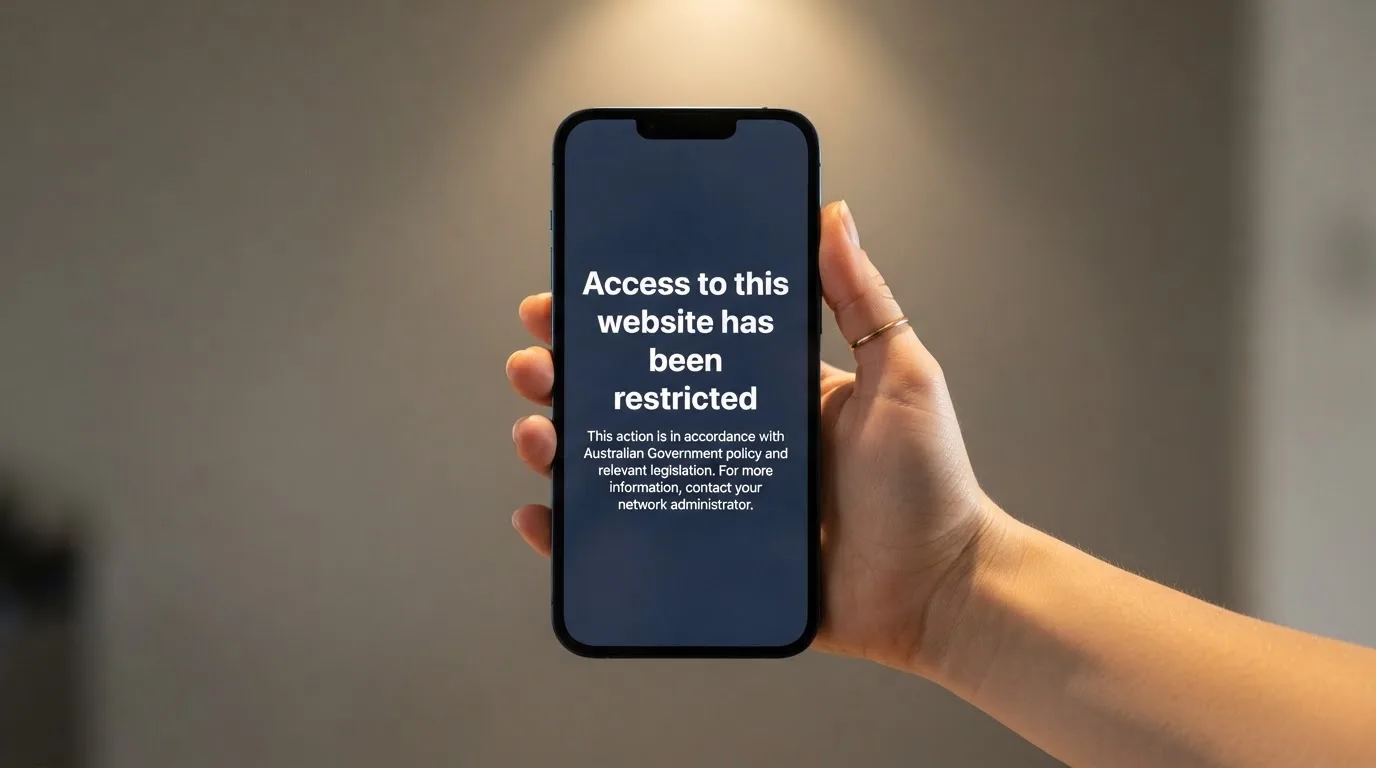
The pace has not slowed. In June 2026 alone the ACMA asked ISPs to block another twelve sites: 7Signs, ChromaBet, Donbet, Duospin, Freshbet, Slots Gem, Jacks Club, Lucky Start, Pointsbetz.com, Spinrise, Vinyl Casino and Wildsino. None of those names overlap with the eleven below, which is the point: the list keeps growing, and the operators rotate.
The enforcement is asymmetric. The IGA targets the provider, not the player. An Australian who opens an account with an offshore casino is not committing an offence under the Act; the operator is. The practical consequence of that asymmetry is that an Australian who loses money at an offshore site has no Australian complaints body, no Australian regulator to escalate to, and no enforceable right to a payout dispute. If the operator decides to refuse a withdrawal, the player’s only recourse is the courts of whichever jurisdiction issued the licence — and that jurisdiction is rarely equipped to handle a small Australian claim.
What the Enforcement Record Looks Like for the Brands in This Niche
The eleven operators reviewed in detail below have all received formal warnings from the ACMA. The pattern is consistent: the same corporate vehicles operate multiple brands, and a warning over one brand tends to be followed by warnings over sister sites.
Dama N.V. alone has been the subject of three published ACMA actions covering six casino brands. In May 2022 the ACMA warned Dama N.V. over Bambet, Dazard, Level Up, Rocketplay, Wild Tornado and Cobra Casinos. Three years later the same operator received a warning over Woo Casino (March 2025) and another over Spirit Casino (May 2025). The intervening gap is the operator’s choice, not a softening of the regulator’s stance.
The other corporate vehicles follow the same arc. Consolutetish S.R.L. was warned in July 2025 over National Casino and Bizzo Casino, with Bizzo having already been warned in 2022 as a TechSolutions brand. Bamboo Media was warned in July 2025 over Ignition Casino. EOD Code SRL was warned in February 2025 over Instant Casino. Ryker B.V. was warned in April 2026 over Jackbit and CasinOK. Sterplay Holding Ltd was warned in April 2025 over Casino Intense. Hollycorn N.V. was warned over Sky Crown and Blue Leo in September 2022. Pulsup Ltd was warned in March 2026 over Rocketplay.com.au, with the earlier Dama N.V. action over the brand still in force.
The warnings are public, dated and named to the corporate entity, not just the brand. That detail matters because the same corporate group often re-enters the market under a new URL once one is blocked — the ACMA’s record names who is behind each rebrand.
The Hidden Cost of an Offshore Account
The cost of using an offshore casino is not just the loss on the spin. Three costs sit behind the marketing.
The first is consumer protection. There is no Australian body to escalate a payout dispute to, no local alternative dispute resolution service, and the licence displayed at the footer of an offshore homepage covers the operator’s relationship with its own regulator — not with you. If the site is regulated by the Curaçao Gaming Authority or Anjouan, the player’s complaint goes to a regulator that does not entertain small individual claims, and the legal cost of pursuing a refused withdrawal usually exceeds the disputed amount.
The second is continuity. The ACMA can, and does, direct ISPs to block these sites. A blocked site with a balance still on it is a balance the player has no easy way to recover, because the URL no longer resolves from Australia and the operator’s alternative domain — if it has one — is not necessarily on the same wallet.
The third is data. Offshore sites ask for identity documents to satisfy anti-money-laundering rules in their own jurisdiction. Once uploaded, those documents sit in a database the Australian Privacy Principles do not reach. The data breach risk is real and unregulated.
Player Protection in Australia: What Actually Works
BetStop, the National Self-Exclusion Register, went live in August 2023 and is the centrepiece of Australian player protection. Its scope is narrow by design: it covers every online wagering service licensed in Australia — bookmakers licensed by the Northern Territory Racing and Wagering Commission and the equivalent state bodies — and registered in the register. Self-exclusion can be set for a minimum of three months and stays in force for whatever period the player nominates, up to permanently. The licensed operator is required to refuse the player’s registration, close existing accounts and stop marketing to the excluded person.
The limitation is the licence. BetStop binds Australian-licensed operators; it does not bind offshore casinos. An Australian who self-excludes through BetStop is locked out of Sportsbet, Ladbrokes, Bet365 and any other locally licensed bookmaker, but an offshore site the ACMA has warned or blocked has no obligation to honour the exclusion. Self-exclusion at an offshore casino is whatever the site decides to honour, and what the site decides can change between two pages of its terms.
For help beyond self-exclusion, Gambling Help Online (the national 24/7 chat and counselling service) and the National Gambling Helpline on 1800 858 858 are free from any Australian phone. Financial counselling is available through the National Debt Helpline on 1800 007 007. None of these services require the user to be a customer of a licensed operator; they take calls from anyone, including family members of a player.
Why Officially Licensed Wagering Operators Are a Different Product
The reader who types “gamebeat casino australia” into a search is almost always after slots, table games and live dealer products — the category the IGA calls prohibited interactive gambling services. The licensable product from Australia is pre-event sports and race wagering, lotteries and keno. The two are not adjacent; they are governed by separate parts of the same Act, with different consumer protections and different enforcement regimes attached.
The licensed wagering market is the only part of Australian online gambling where the player’s money is recoverable through an Australian body. The Australian Financial Complaints Authority adjudicates disputes with Australian-licensed bookmakers, the bookmaker’s own licence requires segregated player funds, and the licence can be suspended or cancelled if the operator fails to pay out. None of that apparatus applies to the offshore casino market, which is why the offshore market is cheaper to enter and riskier to use.
The practical alternative for the slot-and-table-game reader is the land-based market. Australia’s clubs and pubs hold over A$11 billion worth of approved poker machines — colloquially pokies — and the casino floors in Sydney, Melbourne, the Gold Coast, Cairns, Darwin, Hobart, Adelaide and Perth run tens of thousands more. Aristocrat Leisure, the local manufacturer, supplies much of that hardware. The product is not GameBeat specifically; the suppliers on those floors are Aristocrat, IGT, Light & Wonder and the other licensed equipment vendors. But it is the lawful Australian route to spinning reels.
Deposits, Withdrawals and How Money Actually Moves
The rules for what an Australian can pay an Australian-licensed wagering operator with changed materially on 11 June 2024. From that date, credit cards, credit-related products and digital currency are banned as payment methods for any licensed online wagering service. The penalty for an operator that accepts them is up to A$247,500 per breach. What is left is debit card, bank transfer, PayID, Osko and BPAY — the rails that an Australian bank account already supports.
For an Australian-licensed wagering operator, the legal deposit stack is therefore entirely bank-rail. PayID and Osko deliver near-instant settlement from the player’s bank to the operator’s segregated player funds account, usually within seconds; debit card and BPAY take longer because they go through the standard card and bill-payment rails. Withdrawals follow the same rails in reverse, and most licensed operators refund to the original deposit method or by bank transfer at no charge.
For an offshore casino, the stack is different and includes the methods the Australian rules prohibit. Credit cards, several e-wallets not connected to Australian bank accounts, and a range of cryptocurrencies including Bitcoin, Ethereum and Tether are all offered. The pitch to an Australian player is that these rails are faster, more private and bypass the Australian credit-card ban. The trade is consumer protection. A crypto deposit to an offshore wallet is a transfer the Australian bank cannot recall, and the bank cannot help recover funds the offshore operator declines to refund.
Payout Speed, Compared
The comparison an Australian reader usually wants is how quickly the win actually lands. On the licensed wagering side the speed is set by the bank rail. PayID and Osko withdrawals from a licensed operator to an Australian bank account typically clear same-day or next-day during business hours; debit card withdrawals go through the card scheme’s standard cycle of one to three business days. None of these operators charges a fee for the standard rail, and the segregated-player-funds requirement means the money is held separately from the operator’s working capital — the win is there to be paid.
On the offshore side the comparison is harder to verify. Affiliate pages routinely quote payout times in hours or minutes, but those quotes are marketing, not measurement, and the operator’s terms usually contain a clause that exempts the operator from the quote while a withdrawal is being “reviewed”. In practice the same offshore operator can pay out within hours on one withdrawal and pause the next for ten days while it asks for further documentation. The variability is the cost; the marketing copy does not measure it.
What to Watch in the Small Print
Three terms in offshore terms-and-conditions pages do the heavy lifting against the player. The first is the “maximum withdrawal per period” clause, which caps the amount a player can cash out regardless of balance. The second is the “bonus play restriction” clause, which voids winnings if the player is judged to have “irregularly” played through a bonus. The third is the “jurisdiction restriction” clause, which becomes operative the moment the ACMA asks the ISP to block the site: a blocked URL is no longer one the Australian player can access, but the player’s balance still sits on the operator’s server, and recovering it usually requires the player to use a VPN or to contact support to be migrated to a mirror domain. Neither path is in the original terms.
A licensed Australian operator cannot, by the terms of its licence, rely on clauses of this shape. The maximum-withdrawal cap is regulated, the bonus terms are regulated, and the player funds are segregated. The marketing freedom an offshore operator enjoys is exactly the freedom to ship terms an Australian licence would not allow.
Bonuses and Free Spins: What the Offer Is Actually Worth
The bonus is the single most expensive marketing line in the offshore casino category. A headline that names the bonus amount — “A$1,500 + 200 free spins” is a typical shape — is silent on the cost of clearing it. The cost sits in three clauses the player rarely reads: the wagering multiple, the per-spin stake cap, and the maximum cash-out from bonus play.
The wagering multiple is the number of times the bonus must be turned over before any of it can be withdrawn. A 40x multiple on a A$1,000 bonus means A$40,000 of qualifying bets before withdrawal is permitted. At an average slot RTP of around 96%, the expected loss on A$40,000 of turnover is A$1,600 — more than the headline number. The bonus is the loss surface.
The per-spin stake cap is the second lever. Most offshore bonuses limit the player to a maximum of A$5 per spin while the bonus is being cleared, regardless of what the player’s bank would otherwise support. Lowering the stake makes the time-to-clear longer and flattens any variance that could otherwise have produced a positive outcome.
The maximum cash-out from bonus play is the third. Many offshore bonuses cap the amount the player can actually withdraw from a bonus-funded session at somewhere between 5x and 10x the bonus amount. A A$1,000 bonus with a 10x cash-out cap returns at most A$10,000 even if the player’s balance sits higher; the rest is forfeit.
The shape of the offer, in other words, is not the headline number. The shape is a three-clause structure that makes the bonus, on average, a loss. The reader comparing two bonus offers is not comparing two amounts; the reader is comparing three wagering multiples, three stake caps and three cash-out caps, and the offer with the lower headline can be the cheaper of the two.
What a Wagering Multiple Really Costs
The arithmetic is straightforward, and it is what the marketing never does. A A$500 bonus with a 35x wagering multiple requires A$17,500 of turnover to clear. At a 96% RTP across a typical slot, the expected loss on that turnover is A$700. The bonus paid out A$500 to the player; clearing it costs A$700 in expected losses. The bonus is the loss surface; clearing it is what the marketing language calls “play through your bonus”.
The casino wins on average whether the player clears the bonus or not, because the bonus is funded out of the expected house edge on the bonus turnover. The only way the player wins on the bonus is to land a payout larger than the expected loss, which requires variance that runs the right way for long enough to clear the turnover. The probability of that outcome on a 35x wagering multiple at a 96% RTP is small but not zero; the expected cost is what the marketing does not say.
The Free Spin, Counted Properly
A free spin offer looks smaller — “50 free spins on a featured slot” — and is usually attached to the same wagering multiple. If the free-spin winnings are subject to a 40x multiple, the spin winnings of, say, A$30 must be turned over A$1,200 of qualifying bets before they can be withdrawn. At a 96% RTP the expected loss on that turnover is A$48, more than the winnings. The free spin is, on its own, a negative-expected-value product. Its purpose is to be the introduction to a bonus whose total expected cost is much higher than its nominal value.
The Australian licensed wagering market does not offer casino bonuses at all, because it does not offer online casino games. What it offers is bet-back and bonus-bet promotions on racing and sport, governed by the Australian licensed bookmaker’s terms and enforceable under Australian law. The product is different, and so are the protections.
Mobile and the Browser-Based GameBeat Experience
GameBeat’s games are built in HTML5, the same standard the rest of the modern slot catalogue uses. That means a mobile browser — Safari on iOS, Chrome on Android — is the entire delivery system. No app download is required, and no native client is offered: the studio describes itself as a business-to-business technology provider that supplies games only to licensed operators and commercial partners.
The mobile experience, in practical terms, is the desktop experience scaled to a portrait or landscape phone screen. Touch replaces click, the spin button moves from a corner to a thumb-friendly position, and the paytable collapses into a menu. The underlying RNG and the published RTP are unchanged.
The catch on the mobile path is the same catch that runs through this whole page: the offshore casino offering the GameBeat-powered mobile experience is offering a prohibited product to Australians. Whether the player is using a desktop browser, a mobile browser, a downloaded app or a progressive web app, the operator’s IGA liability is unchanged, and so is the ACMA’s ability to block the URL the mobile browser is loading.
What “Best Mobile GameBeat Casino” Actually Refers To
Search phrases in this niche cluster around “best mobile gamebeat casino”, “gamebeat mobile slots” and the equivalent long-tail variations. The intended referent of those searches — the best mobile implementation of GameBeat slots — assumes the existence of a licensable product. In Australia that assumption does not hold. The mobile implementation that is legal is the mobile browser of an Australian-licensed wagering operator showing the racing form, the sports markets and the lottery tickets that operator is licensed to take bets on; what the operator cannot lawfully offer is the GameBeat-powered slot, in any screen size.
Connection Quality and Session Length on Mobile
The HTML5 build does not require a high-bandwidth connection — 1spin4win, a comparable studio, markets its games specifically as built for low-bandwidth connections — and GameBeat’s titles sit in that same category. A mobile session can run on a 4G signal without buffering the spin. The session length is set by the operator’s logout policy rather than the technology: most offshore casinos log out idle sessions after 15 to 30 minutes, and the session can be terminated by the operator’s fraud system at any time if the operator’s automated checks decide the play pattern is “irregular”. The technology is permissive; the operator is not.
The Studios Behind the Slots: What GameBeat and Its Neighbours Actually Publish
GameBeat itself, founded in 2021, presents as a slot studio in the same tier as a handful of comparable suppliers. It supplies to licensed operators only, and its product is RNG-driven online slots. The studio does not publish a public catalogue with RTP figures the way Betsoft and BGaming do; what it publishes is the studio position — B2B, not B2C — and the technical capability to deliver games to its operator partners.
The wider tier of comparable studios is informative, because it shows the shape of the market the reader is searching within. 1spin4win, also founded in 2021, holds a Curaçao gaming licence, is headquartered in Willemstad, and reports more than 190 slots in its portfolio with over 1,000 partnerships and 46% growth in total bet sum between the first halves of 2024 and 2025. Betsoft, founded in 2006, describes a catalogue of more than 200 RNG games, holds compliance certifications from the Italian Customs and Monopolies Agency (ADM) with RNG certification from Quinel and Gaming Labs International, and partners with over 500 operators in Europe, Scandinavia, Latin America and Africa. Two named Betsoft slots illustrate the studio’s range: Good Girl Bad Girl 2 with a published 96.22% RTP, “Very High” volatility and a 15.59% hit rate on 5 reels and 20 paylines, and The Slotfather — live since 13 December 2012 — with a 95.69% RTP, “Medium” volatility and an 8.17% hit rate on 5 reels and 30 paylines.
BGaming, whose team has worked on games since 2012 and whose brand launched in 2018, is held by Stable Games Ltd of Valletta, Malta, and operates under a Malta Gaming Authority Critical Gaming Supply Licence (MGA/B2B/785/2020) issued 18 March 2021. Its catalogue includes more than 250 certified games and proprietary mechanics such as TRUEWAYS, MultiDice X and Merge UP; the company states its games are used by over 3,000 operators including Blaze, Pin-Up and Gamdom.
Booming Games (Malta) Limited is headquartered in Malta and holds an MGA B2B licence numbered MGA/B2B/459/2018 plus a UK Gambling Commission account (account #57254). Aristocrat Leisure, by a different order of magnitude, is an Australian gambling-machine manufacturer headquartered in North Ryde, Sydney, founded in 1953, listed on the ASX in 1996 under the ticker ALL, and reported 2025 revenue of A$6.30 billion with 7,400 employees. Its US$3.7 billion bid to acquire Playtech was rejected in 2021; its approximately US$1 billion acquisition of NeoGames closed in April 2024, folding the newly acquired Anaxi unit, Aspire Global, BtoBet and Pariplay into Aristocrat Interactive. Aristocrat is described as the largest gambling-machine manufacturer in Australia and the second-largest slot-machine manufacturer worldwide, behind International Game Technology.
The point of listing these alongside GameBeat is the licence map. The studios that hold strong licences — Aristocrat Interactive in regulated online, BGaming under the MGA, Booming Games under the MGA and the UKGC, Betsoft under ADM oversight with GLI and Quinel certification — publish clear corporate identities and named regulators. GameBeat fits that pattern on the B2B side. The studios whose products reach Australian players via offshore operators do so by virtue of those operators holding the licences, not by virtue of the studios themselves holding Australian licences; none of them do.
What an Australian Player Is Actually Playing
For an Australian player who lands on an offshore casino’s GameBeat-powered slot, what they see is the studio’s HTML5 build delivered by the operator’s platform, with the operator’s bonus terms attached, the operator’s payment rails underneath, and the operator’s regulator in the footer. The studio’s RTP and volatility are the studio’s; everything else is the operator’s. The operator’s licence is the only licence that matters to the player, and that licence is the part of the offer the IGA prohibits. The studio and the regulator are both upstream of a transaction that, on Australian soil, is the regulator’s enforcement target.
The Eleven Brands the ACMA Has Formally Warned
The table below sets out the eleven operators the ACMA has named in a formal warning or blocking action, the corporate entity the warning was issued to, and the date published. The “Subject support” column records, where research confirms it, which of the providers named in §6 of the research the operator lists among its game providers.
| Brand | ACMA action and date | Operator named by the ACMA | Subject support |
|---|---|---|---|
| RocketPlay | Formal warning, March 2026; earlier May 2022 | Pulsup Ltd; earlier Dama N.V. | — |
| Level Up Casino | Formal warning, May 2022 | Dama N.V. | listings-only (Wazdan.com) |
| Woo Casino | Formal warning, March 2025 | Dama N.V. | — |
| Spirit Casino | Formal warning, May 2025 | Dama N.V. | — |
| National Casino | Formal warning, July 2025 | Consolutetish S.R.L. | listings-only (Betsoft.com, en.wikipedia.org, Pragmaticplay.com) |
| Bizzo Casino | Formal warning, July 2025; earlier 2022 | Consolutetish S.R.L.; earlier TechSolutions | — |
| Ignition Casino | Formal warning, July 2025 | Bamboo Media | — |
| Instant Casino | Formal warning, February 2025 | EOD Code SRL | — |
| Jackbit | Formal warning, April 2026 | Ryker B.V. | — |
| Casino Intense | Formal warning, April 2025 | Sterplay Holding Ltd | listings-only (1spin4win, en.wikipedia.org, gamblingcommission.gov.uk) |
| Sky Crown | Formal warning, September 2022 | Hollycorn N.V. | — |
The Subject support column uses the em dash where the research carries no confirmation that any of the providers on this page is offered at that brand — an absence that is itself information. Two conclusions follow from what is, and what is not, in the table. The first is that the eleven brands are not a “top eleven”; they are the eleven named in the ACMA’s published register as of the dates given, and the register grows with each blocking round. The second is that the corporate-entity overlap is striking: Dama N.V. alone accounts for four of the eleven, and the same pattern of corporate-vehicle rotation runs through the rest. A player searching for one of these brand names will most likely be steered by an affiliate to a sister site owned by the same company, and the ACMA’s enforcement is what closes that redirect.
How Fast the Register Has Grown
The arithmetic on this page is the rate at which the ACMA’s blocked-sites register has grown. The first blocking request went out in November 2019; as of the round reported on 26 June 2026 the running total stood at 1,751 sites blocked. That is a band: depending on which exact publication date the reader checks against, the count will have moved. Over the 80-odd months between November 2019 and June 2026 the average is roughly 22 sites blocked per month, but the rate is not constant — early rounds added a handful at a time, later rounds sometimes add a dozen or more in a single decision, and the trend has been upward. The June 2026 round alone added twelve. The shape that matters for a reader is not the average but the direction: the register is still growing, not stabilising.
The Eleven, in Brief
RocketPlay has been the subject of two ACMA actions — May 2022 over the Dama N.V. operation and March 2026 over Pulsup Ltd’s Rocketplay.com.au — and the reappearance under a different corporate vehicle three years later is the clearest example of the corporate-rotation pattern. No confirmation that RocketPlay offers any of the providers named in the research is on record.
Level Up Casino received the May 2022 warning alongside five other Dama N.V. brands; its game-lobby listings reference Wazdan content, per the listings cited in research. Whether Wazdan titles are still on the lobby at the time of reading is not confirmable from those listings alone.
Woo Casino was warned over in March 2025 as part of Dama N.V.’s second wave. Data on its specific provider listings is unavailable.
Spirit Casino was warned over in May 2025, also as part of Dama N.V.’s second wave. Information on its game lobby providers is not available.
National Casino was warned over in July 2025 by the ACMA against Consolutetish S.R.L.; the brand’s listed providers include Betsoft and Pragmatic Play content, per the sources cited in research. The breadth of those listings, not the GameBeat connection, is the verified point.
Bizzo Casino carries the unusual distinction of two warnings under two different corporate vehicles — TechSolutions in 2022 and Consolutetish S.R.L. in July 2025 — which is the same brand surviving an ownership change and being warned again. It is not confirmed which game providers the site currently offers.
Ignition Casino received the July 2025 warning over its Bamboo Media operation. Public records do not specify its game partners.
Instant Casino was warned over in February 2025 against EOD Code SRL. No confirmation of subject-provider support is on record.
Jackbit received the April 2026 warning alongside CasinOK as part of Ryker B.V.’s actions. No confirmation of subject-provider support is on record.
Casino Intense was warned over in April 2025 against Sterplay Holding Ltd; its listed providers include 1spin4win content, per the sources cited in research.
Sky Crown was warned over in September 2022 against Hollycorn N.V., alongside Blue Leo in the same warning. No confirmation of subject-provider support is on record.
The honest read of the table is that “subject support” — which of the providers named on this page each brand actually offers — is thin across the eleven. The ACMA’s record is not a catalogue of who offers GameBeat; it is a catalogue of who has been warned for offering prohibited services to Australians. The reader landing here from a search for “gamebeat casino” should read the table as a list of brand names to avoid, not as a list of brands to compare.
What a Reader in Australia Is Choosing Between
The choice the law forces on an Australian reader who wants to spin reels is not between eleven brands. It is between four real options, each with a different shape.
The first option is an Australian-licensed wagering operator, used for the products it is licensed to offer — racing and sport wagering, lotteries and keno — with all the protections of an Australian licence. The product set does not include GameBeat slots, and no Australian licence can add them. The product is a slot player’s product only by analogy.
The second option is a land-based venue. Australia’s pubs, clubs and casino floors run tens of thousands of approved poker machines and table games under state and territory regulation. Aristocrat Leisure, the local manufacturer, is the largest gambling-machine manufacturer in Australia and the second-largest slot-machine manufacturer worldwide. The product is not GameBeat; the supplier mix on a given floor depends on the venue’s licensing arrangements with Aristocrat, IGT, Light & Wonder and others. The product is regulated by state and territory gambling regulators, age-verified at the door, and protected by the same self-exclusion and harm-minimisation regime that applies to wagering.
The third option is an offshore casino operating under a non-Australian licence. The product set includes GameBeat slots, the bonuses are large, the deposit methods include credit and crypto, and the protections are those of the licence-issuing jurisdiction. The reader’s recourse for a refused withdrawal is the regulator of that jurisdiction — Curaçao, Anjouan, Costa Rica, Malta for the better-run brands. The site is a probable target of a future ACMA blocking round. This is the option the search results steer toward and the option the ACMA’s enforcement record is built to disrupt.
The fourth option is no play. For some readers the right answer to the search is to close the tab. The information a player needs to make that call — the ACMA’s record, the offshore terms, the IGA’s prohibition, the absence of an Australian complaints body — is on this page. The decision to act on it is the reader’s.
What Is Changing in 2026 and the Months Ahead
The Interactive Gambling Amendment (Gambling Reform) Bill 2026 passed Parliament on 19 August 2026; its advertising and inducement measures commence on 1 January 2027. Until the commencement date the measures are law with a start date, not yet in force. Once in force, the measures restrict how licensed wagering operators advertise and what inducements they can offer — and they do not legalise the prohibited interactive gambling services that the IGA already prohibits. The reform tightens the legal market; it does not open the offshore market.
What the reform does change for the offshore brands reviewed above is the marketing environment. Australian licensed operators will face tighter advertising rules, which over time should reduce the affiliate-marketing spend that currently fills search results with “best gamebeat casino” listicles. The offshore brands themselves remain unaffected by the reform, because they are not subject to it; what changes is the visibility of the licensed market’s competitors and the noise-to-signal ratio for the reader trying to find them.
How This Page Was Put Together
The ACMA’s register of formal warnings and blocking rounds is the source for every action, date and operator named in this page. H2 Gambling Capital’s 2025 report is the source for the A$3.9 billion annual losses to illegal gambling sites and the share of gambling going through legal channels falling from 74% in 2021 to 64%. The Northern Territory Racing and Wagering Commission’s role in regulating 52 of Australia’s online bookmakers is sourced from the ABC’s reporting on the Commission’s April 2026 reform bill. The studio-level information on GameBeat, 1spin4win, Betsoft, BGaming, Booming Games and Aristocrat Leisure is sourced from the studios’ own about pages and Wikipedia entries as cited in the research. No claim on this page is sourced from an affiliate page; bonus terms in particular were excluded from the research and are treated qualitatively on this page rather than as quotable offers.
Frequently Asked Questions
What kind of games does GameBeat make?
GameBeat is a slot studio founded in 2021 that builds HTML5 RNG-driven online video slots for licensed operators and commercial partners. It does not publish a public catalogue with named RTPs the way some larger studios do, and it supplies business-to-business only — the studio has no player-facing product of its own. Comparable studios in the same tier publish 200+ titles (1spin4win reports more than 190, Betsoft more than 200, BGaming more than 250); GameBeat’s own catalogue size is not published as a number.
Is GameBeat used by any casino licensed to operate in Australia?
No. No Australian jurisdiction licenses online casino games or online pokies under the Interactive Gambling Act 2001. GameBeat supplies its games to licensed operators in jurisdictions outside Australia, and those operators may accept Australian players in breach of the IGA — which is exactly the conduct the ACMA’s enforcement record is built to disrupt.
Can Australians legally play GameBeat slots at an online casino?
No. The Interactive Gambling Act 2001 prohibits the supply of online casino games to anyone in Australia. The IGA targets the provider, not the player, but an Australian who deposits with an offshore casino has no Australian consumer protection, no Australian complaints body and no enforceable right to a payout dispute, and the site can be blocked by the ACMA with a balance still on it.
Are GameBeat games available at land-based Australian casinos?
No. Land-based Australian casinos and clubs run approved poker machines and table games supplied by licensed equipment manufacturers such as Aristocrat Leisure, IGT and Light & Wonder. GameBeat’s product is the HTML5 online slot, which is a different category of supply and not part of the approved land-based equipment list.
What should someone check before trusting a site that claims to offer GameBeat games?
Three checks. First, is the operator licensed by an Australian regulator? For online casino games, the answer is no — no Australian licence exists. Second, is the operator on the ACMA’s published register of formal warnings or blocking requests? The register is on the ACMA’s website and lists every operator named to date. Third, is the deposit method legal under Australian rules? Credit cards and cryptocurrency are banned for licensed wagering, and an offshore site offering either is operating outside the Australian rules.
Does GameBeat software run on mobile browsers?
Yes. GameBeat’s games are HTML5, which means they run in any modern mobile browser without a separate app download. The mobile experience is the desktop experience scaled to the phone screen, with touch replacing click. The mobile path does not change the operator’s IGA liability or the ACMA’s ability to block the URL the browser is loading.
An Editor’s Note on What This Page Is and Is Not
This page is an analysis of a market the search results in this niche assume exists. The market does not, in the legal sense, exist in Australia. What does exist is the search demand for it, the offshore brands that serve that demand in breach of the IGA, the ACMA’s enforcement record against those brands, and the lawful alternatives — licensed wagering, land-based venues, no play — that the search results rarely surface. This page is the second category described: a real assessment of who is offering what, what it costs the reader, and what the law does about it. The recommendation this page offers is the editorial one: read the ACMA’s register before any deposit, weigh the cost of an offshore account against its bonuses, and treat the licensed alternatives as the only path with Australian consumer protection behind it.