
PayID real-money withdrawal at Australian online casinos: paths that exist, paths that don’t, and who each one suits
The phrase that brings most readers here — “instant PayID withdrawal, real money, Australia” — sits on top of a quiet contradiction. PayID does settle in seconds through the New Payments Platform, and the cash really can land in an Australian bank account inside a minute. The catch sits upstream of the rail: no Australian-licensed operator offers online casino games or pokies for real money, which means a real-money PayID withdrawal from an online casino to an Australian bank account can only originate from a venue the Interactive Gambling Act 2001 already prohibits.
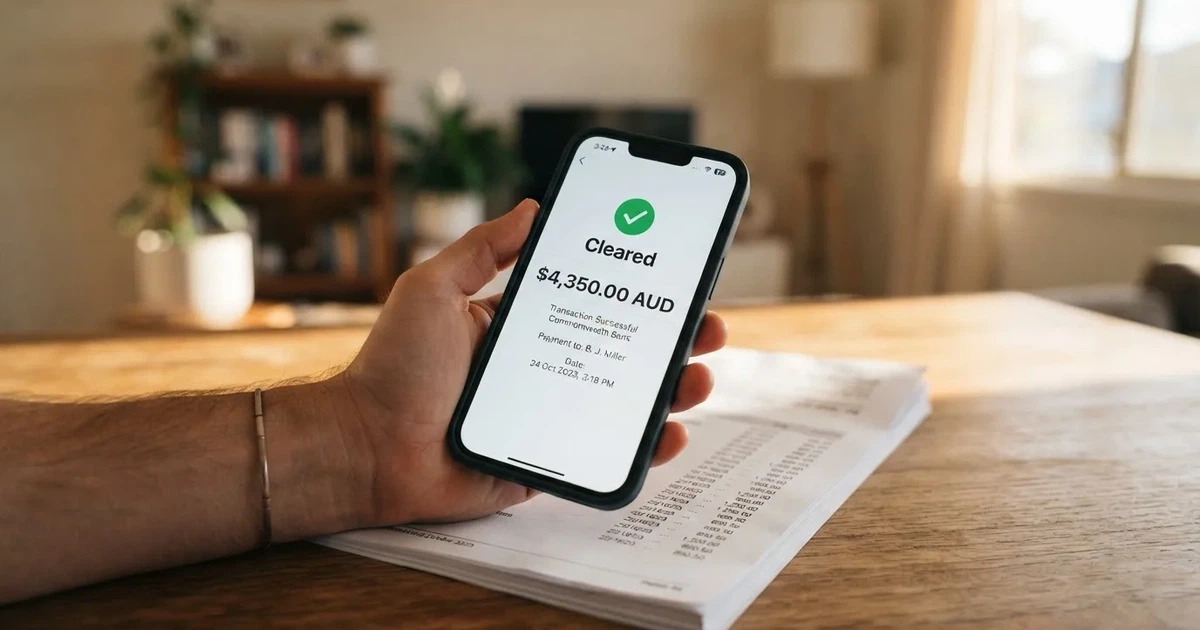
For the reader looking for a sports or racing bet with a fast cash-out, PayID does what it says. For the reader looking for an online casino real-money withdrawal through PayID, no such operator is licensable in Australia, and the cash-out will originate from a venue the regulator has either warned or blocked. The paths that work, the paths that don’t, and the reader each one suits, are not the same question, and they need to be answered separately.
Current as of 28 October 2026 · verified against the ACMA’s published formal warnings and PayID’s published consumer guidance.
Table of Contents
- Eleven brands the ACMA has named in formal warnings
- Comparison of ACMA enforcement
- What “real money” actually means at a PayID cash-out
- The legal framework around an Australian casino PayID cash-out
- Responsible gaming around a real-money PayID withdrawal
- How PayID actually moves money to an Australian bank account
- Frequently asked questions
Eleven brands the ACMA has named in formal warnings
This is not a ranking. None of these operators can lawfully offer real-money casino games to a person in Australia, and the ACMA’s own formal-warning register is what brings them onto the page rather than any endorsement. The order follows the ACMA’s published chronology from the original 2022 cohort through to the most recent 2026 actions, with multiple warnings for the same brand grouped under the brand name.
| Brand | ACMA action and date | Operator named by the ACMA | Subject support |
|---|---|---|---|
| RocketPlay | Two formal warnings under the IGA, May 2022 and March 2026 | Dama N.V.; Pulsup Ltd | — |
| Level Up Casino | Formal warning under the IGA, May 2022 | Dama N.V. | Listed under MCC 7995 in Westpac’s gambling-block register |
| Woo Casino | Formal warning under the IGA, March 2025 | Dama N.V. | — |
| Spirit Casino | Formal warning under the IGA, May 2025 | Dama N.V. | — |
| National Casino | Formal warning under the IGA, July 2025 | Consolutetish S.R.L. | Referenced in AUSTRAC filings and Wikipedia entries on the operator |
| Bizzo Casino | Two formal warnings under the IGA, 2022 and July 2025 | TechSolutions (CY) Group Ltd / TechSolutions Group N.V.; Consolutetish S.R.L. | — |
| Ignition Casino | Formal warning under the IGA, July 2025 | Bamboo Media | — |
| Instant Casino | Formal warning under the IGA, February 2025 | EOD Code SRL | Referenced by ecoPayz; listed on PayID’s scam-alert registry |
| Jackbit | Formal warning under the IGA, April 2026 | Ryker B.V. (joint with CasinOK) | — |
| Casino Intense | Formal warning under the IGA, April 2025 | Sterplay Holding Ltd | Referenced in AUSTRAC filings, iTnews coverage and NAB’s gambling-block register |
| Sky Crown | Formal warning under the IGA, September 2022 | Hollycorn N.V. (joint with Blue Leo) | — |
The em-dash cells mark brands for which the published research found no third-party listing touching PayID support or related payment-blocking context. The named cells describe what the registries themselves publish, not what the operator claims.
Comparison of ACMA enforcement
| Brand | ACMA action and date | Operator named by the ACMA | Subject support |
|---|---|---|---|
| RocketPlay | May 2022 and March 2026 | Dama N.V.; Pulsup Ltd | No data |
| Level Up Casino | May 2022 | Dama N.V. | Listed under MCC 7995 in Westpac register |
| Woo Casino | March 2025 | Dama N.V. | No data |
| Spirit Casino | May 2025 | Dama N.V. | No data |
| National Casino | July 2025 | Consolutetish S.R.L. | AUSTRAC filings and Wikipedia |
| Bizzo Casino | 2022 and July 2025 | TechSolutions; Consolutetish S.R.L. | No data |
| Ignition Casino | July 2025 | Bamboo Media | No data |
| Instant Casino | February 2025 | EOD Code SRL | ecoPayz; PayID scam registry |
| Jackbit | April 2026 | Ryker B.V. | No data |
| Casino Intense | April 2025 | Sterplay Holding Ltd | AUSTRAC filings, iTnews, NAB register |
| Sky Crown | September 2022 | Hollycorn N.V. | No data |
RocketPlay: a brand the ACMA has named twice under different operators
RocketPlay is one of the few brands on the ACMA’s published list to draw two separate formal warnings under different corporate parents. The first ran to Dama N.V. in May 2022 as part of a six-brand cohort that also named Bambet, Dazard, Level Up, Wild Tornado and Cobra Casinos. The second ran to Pulsup Ltd in March 2026, naming RocketPlay specifically. By the date of the second action, the original Dama N.V. brand had been off the ACMA’s published warning list for almost four years.
The pattern — same product, two operator shells — is what the ACMA’s record picks up, and it is what gives this brand its distinctive position on the list. A reader looking at the current site sees one operator; the regulator has, in its own published documents, named two.
The prohibition runs through both. A licence displayed on the current site, whatever authority issued it, does not authorise the service for an Australian resident, because no Australian jurisdiction issues licences for online casino games. The PayID cash-out it offers has no lawful Australian path either way.
Verdict: the ACMA’s record on RocketPlay runs in two directions, and the prohibition runs through both. The same product, two operators, two warnings — none of which makes a PayID cash-out lawful for an Australian resident.
Level Up Casino: one of the original Dama N.V. cohort, and listed on Westpac’s merchant register
Level Up Casino was named in the May 2022 Dama N.V. warning as part of the original six-brand cohort. The brand has not been the subject of a separate ACMA action under a different operator since.
What Level Up Casino has that the rest of the original cohort do not, is an entry in Westpac’s published gambling-block register under the merchant category code that covers “Betting/Casino Gambling” transactions. That listing is what Westpac’s card-issuing system reads at authorisation: a transaction bearing that MCC is declined, regardless of the deposit method the customer is using. A PayID transfer sitting on top of a Westpac card is, in practice, declined before it leaves the account.
The card-side refusal and the regulator-side prohibition are different mechanisms aimed at the same outcome. A reader who only sees one is missing half the picture.
Verdict: a brand Westpac’s own merchant block refuses to authorise is not a viable path to a real-money PayID withdrawal — the refusal happens at the card side, before any bank transfer could be initiated.
Woo Casino: the March 2025 Dama N.V. addition
Woo Casino drew a fresh formal warning to Dama N.V. in March 2025, three years after the original six-brand cohort. By the time the Woo action was published, Dama N.V. had already been warned over Level Up Casino, RocketPlay and four other brands. The Woo warning sat alongside a parallel action over Spirit Casino two months later, in May 2025.
The cadence tells a reader something specific. The ACMA does not name the same operator twice in quick succession without a reason, and the March 2025 / May 2025 pair is the pattern of an operator the regulator considers still active in the prohibited space despite the earlier warning. The fresh warning is not a second chance at compliance; it is the regulator’s own record of non-compliance.
Verdict: the March 2025 warning is recent enough that the brand has had no time to demonstrate compliance, and the prohibition leaves it no path to do so. Any PayID cash-out from this brand to an Australian bank would be hitting an unlicensed venue whose transactions the major Australian banks have already been told to refuse.
Spirit Casino: the May 2025 follow-up warning to the same operator
Spirit Casino was the second Dama N.V. brand named in 2025, drawing a formal warning in May 2025 — two months after the Woo Casino action. Same operator, same year, two different brand names.
What the May 2025 warning adds is not new substance; it is a second data point in the same enforcement picture. The ACMA’s published record treats the Woo and Spirit actions as part of the same pattern, and a reader looking at one without the other is looking at half a chronology.
Verdict: Spirit Casino is a sister brand to Woo Casino under the same operator, and the ACMA’s enforcement record treats them as part of the same pattern. The PayID cash-out picture is identical, and the prohibition runs through both names in the same way.
National Casino: a Consolutetish brand with AUSTRAC and Wikipedia coverage
National Casino was named in the same July 2025 formal warning to Consolutetish S.R.L. as Bizzo Casino. The brand is referenced in AUSTRAC’s published filings and in Wikipedia entries on the operator. That places the brand in the regulatory and reference-record frame rather than in any licensed category.
The two reference sources are different in character. AUSTRAC’s mention reflects the financial-transaction reporting obligations that touch the operator under anti-money-laundering and counter-terrorism-financing rules. Wikipedia’s mention is the encyclopaedia’s record of the operator’s published corporate history. Neither is an Australian licence.
Verdict: National Casino sits in the AUSTRAC and Wikipedia reference record, not in any Australian-licensed register. The path to a lawful real-money PayID withdrawal does not exist through it, and the reference-record presence is a record of the operator, not an endorsement.
Bizzo Casino: a brand warned twice under different corporate parents
Bizzo Casino is one of two brands on this list with two separate ACMA actions under different operators. The first ran to TechSolutions (CY) Group Limited and TechSolutions Group N.V. in 2022. The second ran to Consolutetish S.R.L. in July 2025, in the same enforcement round as National Casino. Two operators, one product name, both formally told to stop offering prohibited services to Australians.
The change of corporate parent between the two actions is what gives Bizzo its distinctive position. A reader who saw the site in 2022 and a reader who sees it now are, in the ACMA’s own published record, looking at two different legal entities running the same brand. The brand has outlasted its original operator in the warning register.
Verdict: the brand has changed corporate hands at least once while remaining in the ACMA’s published record. A reader who only sees the licence footer on the current site is seeing one operator; the ACMA has named two, and neither makes the PayID cash-out lawful.
Ignition Casino: a Bamboo Media brand warned in July 2025
Ignition Casino drew a formal warning to Bamboo Media in July 2025, in the same enforcement round that named National Casino and Bizzo Casino under Consolutetish S.R.L. Bamboo Media is a different operator group from the Dama and Consolutetish brands earlier in the list, which is the only thing that gives the brand a slightly different posture.
The brand has not been the subject of a follow-up ACMA action under a different operator, and it has no listings-only references in the third-party sources the published research covered. Bamboo Media’s record in the ACMA’s register is otherwise thin.
Verdict: a brand the ACMA warned in mid-2025, currently without a follow-up action. The PayID path is the same as the rest of this list — there is not one that holds up under Australian law, and the prohibition is what makes the warning necessary, not the consequence of it.
Instant Casino: a brand named on PayID’s own scam-alert registry
Instant Casino drew a formal warning to EOD Code SRL in February 2025. The brand also appears on PayID’s own published scam-alert registry and in ecoPayz’s published merchant listings — meaning the consumer-protection infrastructure around PayID and the e-wallet network have already flagged it as a venue where transfers should be treated with caution.
This is a different posture from the rest of the list. PayID’s own scam-alert page, operated by Australian Payments Plus, is what the underlying payments rail reads as its own consumer-facing warning. A PayID transfer to a brand flagged on the same rail’s scam-alert registry does not need an ACMA action to be questionable; the rail itself has already raised the flag.
Verdict: when PayID itself publishes the brand as a venue to be wary of, the “instant PayID withdrawal” promise has nowhere clean to land. The transaction may technically settle, but it settles into a venue the consumer-protection rail has already marked.
Jackbit: the April 2026 Ryker B.V. action alongside CasinOK
Jackbit drew a formal warning to Ryker B.V. in April 2026, alongside a parallel action over CasinOK under the same operator. The warning is one of the most recent on the ACMA’s published list, and Ryker B.V. had no prior published warnings at the time.
The April 2026 action is the most recent in the chronology on this list. A reader who has only just encountered the brand is encountering it in the same enforcement round that named CasinOK, and the ACMA’s record treats the two as a joint action by the same operator.
Verdict: a fresh warning on a brand with no earlier ACMA history. The PayID path closes as soon as the warning is published, and the prohibition is what makes the warning necessary in the first place.
Casino Intense: a brand referenced across AUSTRAC, iTnews and NAB
Casino Intense drew a formal warning to Sterplay Holding Ltd in April 2025. The brand’s reach, beyond the ACMA’s warning, extends into three different reference records: AUSTRAC’s published filings, iTnews’s industry coverage and NAB’s gambling-block register. That places the brand in the financial-crimes reporting record, the trade press and the bank-side blocklist at the same time.
The three sources are different in kind. AUSTRAC’s interest is in the financial-transaction reporting obligations attached to the operator; iTnews’s coverage is the trade press doing what the trade press does; NAB’s register is what the bank’s card-issuing system reads at authorisation. Together, they describe a brand that has reached the consumer-protection rails from three directions without being on any Australian licence register.
Verdict: a brand whose presence spans the regulator, the trade press and the bank blocklist has reached the consumer-protection infrastructure from three directions at once. The PayID cash-out it advertises is not a transaction any of those three would treat as routine.
Sky Crown: a Hollycorn N.V. brand sharing a single warning with Blue Leo
Sky Crown was named in a formal warning to Hollycorn N.V., in the same action that named Blue Leo Casino under the same operator. The ACMA’s published record dates the warning to September 2022. No follow-up action under a different operator has been published since.
The brand’s situation, in the ACMA’s own document, is that of a joint action. Hollycorn N.V. is not named again anywhere else in the ACMA’s published warnings, but the joint naming matters for the same reason a sister-brand warning always does: an operator warned over one product is, on the regulator’s own terms, treating the broader portfolio as in scope.
Verdict: a brand sharing a single warning with a sister site is, in the ACMA’s own publication, a joint action — and the prohibition leaves no path through either name to a lawful Australian cash-out.
What “real money” actually means at a PayID cash-out
The phrase “real money” does a lot of work in the marketing around online casinos, and most of it is in the distinction it draws. A real-money PayID withdrawal is, technically, a transfer of cleared winnings in actual Australian dollars to an Australian bank account via PayID — settled through the New Payments Platform, available 24/7, often inside a minute. What sits underneath the phrase is a chain of conditions that decide whether the transfer actually happens, how much of it happens, and whether the underlying balance is real money in the first place.
The first condition is what the balance is. Most welcome packages pay out as bonus credit, which sits in a separate balance from any cash the player has deposited. Until the bonus credit is converted — by meeting a wagering requirement that determines how much of it turns into withdrawable cash — it is not real money. A PayID transfer of “the bonus” is, in most cases, a transfer of a converted portion of the bonus after the wagering requirement has been cleared; the unconverted portion either stays as bonus credit or is forfeit, depending on the operator’s terms. The marketing line that promises an “instant PayID withdrawal of real money” is, more often than not, a promise about the cleared real-money portion only.
The second condition is identity verification. Before a first cash-out, the operator runs the player through know-your-customer checks: a government-issued photo ID, proof of address, sometimes a payment-method ownership check. PayID itself does not require identity verification to operate — once the bank has verified the account holder, the identifier works — but the casino does, before it releases a withdrawal to the PayID on the other side. A PayID transfer to an Australian bank account settles quickly on the rail; the operator’s own verification queue determines when the transfer is initiated. “Instant” describes the rail; the queue is the variable.
The third condition is the wagering requirement on the bonus. A no-deposit bonus is the case where the gap between “real money” and “bonus credit” is widest. The bonus arrives as credit; the wagering requirement is what unlocks the cash; until it is met, the balance is not withdrawable. The chase — depositing more to clear the requirement, then depositing again to recover the deposit, and so on — is the pattern responsible-gaming guidance is written about. The real-money PayID withdrawal is the end of that chain, not the start of it.
These three conditions are not unique to PayID. They apply to every withdrawal method at every operator that runs a bonus-credit model. What PayID adds is the speed of the underlying rail: a transfer that would have taken a day or more via standard bank transfer now settles in under a minute, 24/7, including weekends. That is the genuine technical difference. It is also the difference the marketing leans on hardest, because it is the only part of the offer the operator does not have to caveat.
The Australian position is what makes the rail’s speed partly irrelevant. No Australian-licensed operator offers online casino games for real money. The marketing around “instant PayID withdrawal, real money, Australia” is, almost entirely, marketing around offshore operators whose services the Interactive Gambling Act 2001 prohibits from being offered to Australian residents. A PayID transfer can still settle from such an operator to an Australian bank — the rail does not check the purpose of the transfer — but the operator is one the ACMA has either named in a formal warning, blocked at the internet-service-provider level, or both. The “real money” arrives, but it arrives from a venue the consumer-protection infrastructure has already marked.
The legal framework around an Australian casino PayID cash-out
The legal question predates the rail. The Interactive Gambling Act 2001, as strengthened by the Interactive Gambling Amendment Act 2017, makes it an offence to provide certain interactive gambling services to a person physically in Australia. Online casino games and online pokies are among the services covered; in-play betting on a sporting event after it has started is also covered. What remains licensable is wagering on sports and racing placed before the event, lotteries and keno — in practice licensed in the Northern Territory through the NT Racing and Wagering Commission. Minimum age is 18.
Players are not prosecuted under the Act. The IGA targets the provider, not the customer. That detail does two things at once: it leaves Australian residents who play at offshore sites without the criminal exposure that would otherwise attach, and it leaves them without the consumer protection that an Australian licence would have provided. There is no Australian complaints body with jurisdiction over an offshore operator; no local recourse if a withdrawal is refused; no guarantee that a balance sitting on an offshore site can be withdrawn before the site is blocked. The ACMA’s blocking of an illegal site can, and does, happen with player balances still on the site.
What the prohibition actually covers under the Interactive Gambling Act 2001
The prohibition runs through the IGA’s definition of a “prohibited interactive gambling service.” A service that offers online casino games — table games, slots, pokies in their online form — to a customer physically in Australia is offering a prohibited service, regardless of where the operator is incorporated, regardless of which overseas licence the operator displays, and regardless of whether the customer initiated the contact. The operator’s defence that the customer came to it unsolicited does not, under the IGA, put the service outside the prohibition.

The “physically in Australia” test is what brings the offshore question inside Australian law. An operator incorporated in Curaçao, Malta or any other offshore jurisdiction is offering a prohibited service the moment it accepts a real-money wager from someone physically in Australia. The location of the server, the location of the licence, the location of the customer-support desk — none of these alter the test. The IGA looks at the customer’s location at the moment of the wager.
What the IGA does not prohibit, and what is therefore available through lawful Australian channels, is wagering on sports and racing placed before the event, lotteries, and keno. Those services are licensable and are, in practice, licensed through the Northern Territory Racing and Wagering Commission. Sportsbet, Bet365 and Ladbrokes are among the 52 online bookmakers the NTRWC regulates for tax reasons. The commission itself has no full-time staff and meets once a month in Darwin, which is the structural detail behind the enforcement question that has been live in Australian policy debate for several years.
A real-money PayID withdrawal from an Australian-licensed bookmaker settles through PayID in the same way it would from any other source. The rail does not know what the money is for; the operator’s Australian licence is what makes the transaction licit. The difference between that transfer and one from an offshore casino is not in the bank statement — both arrive as PayID credits — but in the legal status of the operator on the other side.
The fundamentals of ACMA enforcement since 2017
The Australian Communications and Media Authority is the body charged with enforcing the IGA’s prohibition. It investigates, issues formal warnings, and directs Australian internet service providers to block illegal sites at the network level. The enforcement regime was strengthened in 2017, and the cumulative effect is now visible in the published totals.

The most recent published round, reported on 26 June 2026, asked ISPs to block 12 more illegal gambling websites: 7Signs, ChromaBet, Donbet, Duospin, Freshbet, Slots Gem, Jacks Club, Lucky Start, Pointsbetz, Spinrise, Vinyl Casino and Wildsino. That round brought the cumulative total of blocked sites to 1,751 since the first blocking request in November 2019. More than 230 unlicensed gambling services have left the Australian market entirely since 2017, either through voluntary exit or as a consequence of the formal-warning process.
Across the 79 months from November 2019 to the 26 June 2026 publication of the cumulative total, that 1,751 works out to a rate of between 21 and 23 sites blocked a month on average, or somewhere in the range of 255 and 270 a year. The published average is the cumulative mean across all rounds; the year-on-year picture moves with the size of each individual round. The June 2026 round alone added 12.
The financial side of the prohibition is what H2 Gambling Capital’s 2025 report estimates at A$3.9 billion a year in losses to illegal gambling sites by Australians. The same report records the share of gambling going through legal channels falling from 74 per cent in 2021 to 64 per cent by the time of the 2025 estimate. The fall is the trend the IGA’s enforcement regime is supposed to reverse; the published enforcement record is the response so far.
The formal-warning process is what produces the list above. The ACMA does not need a court order to issue a formal warning; it does so on the basis of its own investigation. Once a warning is published, the operator is on the regulator’s public record. Repeat warnings under different operator names are the regulator’s record of the operator continuing in the prohibited space under a new shell. The blocking process is the network-level action that follows once the formal-warning route has been exhausted.
The Interactive Gambling Amendment (Gambling Reform) Bill 2026, which passed Parliament on 19 August 2026, adds advertising and inducement measures that commence on 1 January 2027. Law with a start date, not yet in force on this page. The credit-card ban for Australian-licensed wagering, by contrast, has been in force since 11 June 2024, with penalties of up to A$247,500 for operators that breach it. The ban shapes the broader payment-method landscape into which PayID fits; PayID itself sits outside it because the rail is treated as a debit, not a credit.
Responsible gaming around a real-money PayID withdrawal
The phrase that brings readers to this page — “instant PayID withdrawal, real money, Australia” — is, more often than not, the end of a chain that started somewhere else. The chain starts with a deposit, usually triggered by a marketing offer; it runs through a wagering requirement on bonus credit; it runs through a partial conversion of that credit to a real-money balance; and it ends, on a successful cash-out, with a PayID transfer back to the player’s bank account. The responsible-gaming guidance around that chain is not about the cash-out; it is about the decisions that produced it.
The most common trigger is a no-deposit bonus. The bonus arrives without a deposit, which puts the player in front of casino games without a budget anchor. The wagering requirement on the bonus is what converts any winnings into a withdrawable real-money balance; until it is met, the balance is bonus credit. The conversion is not guaranteed, and the requirement is set by the operator. A punter who deposits additional funds to chase the conversion is the case responsible-gaming guidance is written about — the deposit is a decision made under the influence of an outstanding balance that is not yet real money, and the second deposit is rarely the last.
The Australian consumer-protection rail is built around Australian-licensed wagering services, not around offshore casinos. BetStop, the National Self-Exclusion Register, has been live since August 2023 and binds every Australian-licensed online and phone wagering service. It does not bind an offshore casino, because an offshore casino is not connected to BetStop. The exclusion that BetStop registers against the player’s name takes effect at the licensed operator; at an offshore venue, the same exclusion is not in force.
The National Gambling Helpline — 1800 858 858 — is free, available 24/7, and has a chat service through Gambling Help Online. The helpline is the single piece of consumer-protection infrastructure that operates regardless of which venue the player is using. A PayID withdrawal that is being chased, a no-deposit bonus that is being converted under pressure, a balance that has grown beyond the player’s intended spend — any of these is the kind of situation the helpline is set up to take a call about.
The offshore venue problem is, in practice, the responsible-gaming problem. An Australian-licensed bookmaker is connected to BetStop, runs affordability checks, displays the helpline number and operates under the credit-card ban. An offshore casino does none of these things — not because it chooses not to, but because it is not subject to the rules that require them. The consumer-protection gap is what the responsible-gaming picture looks like at the offshore venue, and it is the gap the IGA’s enforcement regime is partly designed to close.
The recreational-player tax treatment is straightforward: gambling winnings are not assessable income under section 6-5 of the Income Tax Assessment Act 1997, and losses are not deductible. The exception is a person who carries on a business of gambling, which the ATO treats as a different case. The tax treatment is not a reason to play; it is the reason a casual player does not have to declare a withdrawal on a tax return.
How PayID actually moves money to an Australian bank account
PayID is the easy-to-remember identifier linked to a bank account — a mobile number, an email address, an ABN or an Organisation Identifier — that lets a payer send money to the account without quoting a BSB and account number. It is operated by Australian Payments Plus, the domestic payments provider, and is offered by over 100 Australian financial institutions. The identifier sits on top of the New Payments Platform, which the Reserve Bank of Australia regulates and oversees, and which has run near-real-time payments 24/7 since its launch in February 2018.
The practical experience of paying to a PayID is what makes it different from a standard bank transfer. Before the transfer is sent, the payer is shown the name of the account holder linked to the PayID — the check that AP+ has built into the rail as the scam-prevention layer. The confirmation screen names the recipient; the payer decides whether to proceed. That naming step is what protects against mistaken payments and scam payments, and it is what makes the PayID experience recognisably different from typing a BSB and account number into a transfer form.
Settlement, conversion and the actual bank deposit
PayID-based transfers, where they run through Osko, settle in under a minute, 24/7 including weekends, regardless of whether the transfer is addressed to a BSB and account number or to a PayID. Osko is the branding AP+ uses for the NPP-based instant-transfer service. By April 2025 there were more than 25 million registered PayIDs in Australia, and the rail handled the bulk of the country’s instant-transfer volume. The technical ceiling on the rail is what makes “instant” a real claim.
The settlement speed is the genuine technical contribution PayID makes to a casino cash-out. A standard bank transfer, before Osko, would have taken a business day or more; the same transfer through PayID and Osko lands in under a minute. The marketing around “instant PayID withdrawal” is, on this point, not misleading. The rail delivers what the rail says.
What the rail does not do is check the purpose of the transfer. A PayID transfer to a recipient operating outside the Australian payments regulation — an offshore casino, for example — settles in the same time and with the same confirmation step as a transfer to a licit Australian business. The confirmation screen names the recipient; it does not name the recipient’s regulatory status. A payer looking at the confirmation screen sees a name; the regulatory question is one the payer has to answer separately.
The credit-card ban covered in the section on the legal framework is what shapes the broader payment-method landscape. Credit cards and credit-related products cannot be used to fund an Australian-licensed wagering account. PayID sits outside that ban because PayID is a debit rail — the linked bank account is debited, not the credit card — and the wagering transaction routes through the bank’s own gambling controls. Apple Pay, Google Pay and Samsung Pay, which together accounted for around 45 per cent of all card payments in Australia by number at the end of 2025, are constrained through the linked card: where the underlying card is a credit card, the wagering transaction declines; where it is a debit card, the wagering transaction routes through the bank’s own gambling controls.
The bank-side gambling blocks are the consumer-protection layer that runs in parallel to the ACMA’s enforcement. Westpac’s block works at the card level: it refuses authorisation of transactions registered under the “Betting/Casino Gambling” merchant category code on eligible personal credit and debit cards. ANZ’s block, activated in the ANZ app, blocks gambling transactions made through a digital wallet on an eligible card — Apple Pay included — not just on the physical card; once activated, removing it requires a 48-hour waiting period, and the bank’s own warning is that not all gambling transactions will be blocked and some non-gambling transactions might be blocked in error. NAB’s register, mentioned earlier in connection with Casino Intense, sits alongside Westpac and ANZ as the third of the major-bank blocklists.
AP+’s own warning about “scambling” sits at the rail level. AP+ defines scambling as slang for illegal online gambling platforms advertised on social media and messaging apps that trick people into gambling on a scam website; the operator’s own guidance is that anyone asked to transfer funds to a PayID on an illegal gambling site is “almost certainly” looking at one. The PayID confirmation screen — the one that shows the recipient’s name before the transfer is sent — is the consumer’s own check; AP+’s scambling warning is what the rail itself says about the kind of transfer the confirmation screen is most likely to be used for in this corner of the market.
The combination is what a reader looking for an “instant PayID withdrawal, real money, Australia” is sitting on top of. The rail is fast; the operator is, in nearly every case the marketing targets, prohibited; the bank-side blocklist is layered on top of the prohibition; and the rail’s own operator publishes a scam warning that covers the same ground. The PayID transfer can still settle — the rail does not block it on a purpose basis — but the consumer-protection infrastructure has flagged it from every direction.
Frequently asked questions
Can an Australian resident actually receive a PayID cash-out from an online casino?
PayID does not check a transfer’s purpose, so a transfer from an offshore operator can settle into an Australian bank account in under a minute. The operator offering it is one the IGA prohibits from offering real-money casino games to a person in Australia, and the ACMA has usually warned or blocked it. The cash arrives from an unlicensed venue.
Why does a bonus balance need to be converted before a real-money PayID withdrawal?
Bonus credit is not the same balance as real money. Until the operator’s wagering requirement is met, the credit cannot be withdrawn as cash; a PayID cash-out transfers a real-money balance, which is what the bonus becomes only after the requirement has been cleared. Partial conversions are governed by the operator’s terms.
What identity checks does a casino run before the first PayID withdrawal?
Most operators run know-your-customer checks before a first cash-out: government-issued photo ID, proof of address, and sometimes a payment-method ownership check. PayID itself does not require ID at the rail level. The operator’s queue is what determines when the transfer is initiated, and that queue waits for the ID check to clear.
Is there a minimum amount before a PayID withdrawal can be requested?
Most operators set a minimum withdrawal amount, typically modest and often below A$20, though some set it higher. The minimum applies to the operator’s withdrawal queue. PayID as a rail has no minimum, because PayID transfers any positive amount from one Australian bank account to another.
Why can a real-money PayID withdrawal take longer than the marketing suggests?
The rail delivers in under a minute; the operator’s queue is the variable. Identity checks on a first withdrawal, internal review on a large one, and the wagering-requirement queue on a bonus-funded balance all add time before the PayID transfer is initiated. “Instant” describes the rail; the queue decides when the rail is actually used.