
English-speaking live roulette dealers in Australia, 2026
A live roulette table streamed to an Australian address is, by the standards the Australian Communications and Media Authority enforces, an illegal service — no matter what language the dealer speaks, no matter which single-zero wheel is running beneath the camera, no matter which coin the deposit is paid in. Everything else on this page sits under that single fact. The rest of the page works out which paths still exist, what each one costs the person who takes it, and where the maths of a spinning wheel leaves no room for a system.
Current as of 28 October 2026, checked against the ACMA’s formal-warning register and the most recent published blocking round.
Table of Contents
- Responsible gaming around a live roulette table
- Crypto and anonymity on a live roulette table
- Payments and payout speed at a live roulette table
- Live roulette tables: wheels, dealers, and what actually changes between them
- Landscape of operators identified by the ACMA
- The fundamentals of the wheel
- Legality and regulation in Australia
- Operating language and Australian specifics
- Frequently asked questions
Responsible gaming around a live roulette table
Watching a ball settle into one of thirty-seven or thirty-eight pockets is hypnotic in a way that a slot machine’s random number generator is not. The wheel has a memory in the eye — the last four numbers, the colour that just came up, the dozen that has not hit in a while. None of that memory is in the wheel itself. A live dealer is a person, not a mechanism: the ball is released by hand, the speed varies slightly spin to spin, and the friction of the rotor is whatever the casino’s equipment engineer last serviced it to. None of those variables form a pattern a player can read.
What does form, with enough spins behind it, is a state called the gambler’s fallacy by people who study decision-making: the sense that a black streak is “due” to break, or that the dozen that has missed for twenty spins is now statistically closer. On an independent spin each outcome still has the same probability it had on the first. The fallacy is not a bug in the player; it is the predictable response of a human attention system to a stream of nearly-random events. The house has known this for two centuries, and the layout of every roulette table in the world is built around it.
For an Australian resident the practical consequence is sharper than for most players. A fixed loss limit matters more here than on a venue you could walk out of, because the only safety nets that exist for a legal Australian wagering customer — BetStop, the National Self-Exclusion Register, the 24-hour helpline on 1800 858 858 — do not reach an offshore live roulette stream. Setting a budget before the first deposit, and treating it as a spend rather than a stake, is the rule that holds when nothing else will.
Crypto and anonymity on a live roulette table
A bitcoin-funded live roulette spin does not use a different wheel. The camera is trained on the same physical rotor, the dealer is the same person, the felt layout under the chips is identical to the one a card-funded player sees. What changes is the rail between the player’s wallet and the casino’s cashier: a blockchain transaction instead of a card scheme.
That rail matters to a reader for two reasons, and only two. First, it changes how the casino accounts for the deposit on its side: a card deposit can be charged back under the card scheme’s rules; a confirmed bitcoin deposit cannot. Second, since 11 June 2024 credit-related products and digital currency have been banned as a payment route for any licensed Australian wagering operator. A site that accepts bitcoin from an Australian customer is, by that act alone, not a licensed Australian wagering operator.
The “anonymity” half of the pitch is the part that does not survive a closer look. Bitcoin transactions are pseudonymous, not anonymous: every deposit and withdrawal is recorded on a public ledger that anyone, including chain-analysis firms, can read. The operator’s own customer-onboarding process may still demand full identity documents before a withdrawal is paid, regardless of how the money came in. What a player actually has, with crypto, is a payment rail that the receiving casino cannot easily reverse and that an Australian bank cannot easily block — neither of which is a privacy gain in any meaningful sense.
For a reader whose concern is the credit-card ban being bypassed, crypto is a route that achieves exactly that. For a reader whose concern is the opposite — keeping their name off a database — the pitch is misleading at best.
Payments and payout speed at a live roulette table
A live roulette payout, paid through PayID or any other method, still waits on the casino’s internal review queue before the money actually moves. “PayID” is the brand name behind the Osko real-time payment rail operated by Australian banks: a transfer that arrives in the recipient’s account within seconds, once the sending bank has accepted it. The bottleneck on a casino withdrawal is almost never the PayID leg. It is the hours — sometimes days — the casino holds the request while it runs identity and anti-money-laundering checks.
A licensed Australian wagering operator processes PayID withdrawals promptly because it has no incentive to do otherwise: it competes on speed with other licensed brands, and its regulator expects it. An offshore live roulette brand has every incentive to slow a withdrawal, because the float earns interest, and a player who walks away with the money in their wallet is a player who cannot lose it back. Anyone who has tried to withdraw from an offshore casino and been asked for a fresh utility bill, a fresh photo of the card used, a notarised copy of the passport — sometimes more than once for the same withdrawal — has met that incentive at work.
A deposit method on a live roulette table tells a reader very little about the payout side. The casino that accepts PayID deposits is, by definition, not a licensed Australian wagering operator; whether it pays out via PayID at all is a question only the cashier answers, and only after the bonus conditions are cleared. There is no shortcut to a fast payout that goes through an unregulated operator.
A licence the site displays in its footer is not, by itself, evidence of payment competence. A Curaçao-issued certificate means the operator registered with a registry that charges for the certificate. It does not bind the operator to a payout timeframe, an arbitration body, or a complaints process an Australian resident can actually use. The footer is a paid graphic; the cashier is the contract.
Live roulette tables: wheels, dealers, and what actually changes between them
A live roulette stream varies along three independent axes, and confusing them is the most common mistake a player new to the format makes.
The first axis is the wheel. A single-zero (European) wheel has 37 pockets and a house edge of 2.70%. A double-zero (American) wheel has 38 pockets and a house edge of 5.26%. A triple-zero wheel, increasingly common in some US-facing studios, has 39 pockets and a house edge of 7.69%. The wheel is what the house charges you, and it is the only number on the layout that the dealer cannot affect. Some European tables also run en prison or la partage rules — an even-money bet that loses to a single zero is either imprisoned for one more spin or returned at half value, dropping the effective house edge on those bets. Outside of those rules, the wheel in view is the wheel being played on.
The second axis is the dealer language. A studio with English-speaking dealers is not technically a different game from one with Russian-speaking dealers running the same wheel underneath; both run the same RNG-free outcome. What it changes is the ambient experience: how the result is announced, whether side conversation is in a language the player can follow, whether the dealer will chat through a losing spin in a way the player finds engaging. It is also the variable a marketing department can rotate cheaply, and the variable an Australian-facing site uses to suggest a friendly, local feel for a service that is, legally, none of those things.
The third axis is the studio. Pragmatic Play Live, Evolution, Ezugi, Vivo Gaming and BetGames run the bulk of the live-dealer roulette tables streamed to offshore casinos. Each operates its own set of cameras, betting interfaces and side bets. None of them is licensed to serve Australian residents — the licence they hold is from a jurisdiction that does not cover the IGA’s prohibition. What they offer, technically, is identical mechanics; what changes is the polish and the catalogue of side bets.
The three axes do not move together. A Pragmatic Play Live single-zero European wheel with an English-speaking dealer is the same game as the same studio’s same wheel with a Spanish-speaking dealer. The wheel is the bet; the language is the wallpaper.
| Wheel Type | Pockets | House Edge |
|---|---|---|
| Single-zero (European) | 37 | 2.70% |
| Double-zero (American) | 38 | 5.26% |
| Triple-zero | 39 | 7.69% |
The cost a marketing page hides
A live roulette “no deposit bonus” looks, at first glance, like a way to play the wheel without risk. Read the small print: the bonus amount is almost always subject to a wagering requirement before any winnings become withdrawable, and the wagering requirement is the part marketing never explains. A 40x requirement on a $10 bonus means $400 of stake has to pass through the table before the $10 plus any winnings are unlocked. On a single-zero wheel at 2.70% house edge, $400 of stake has a mathematical expected cost to the player of about $10.80 — slightly more than the bonus itself.
A deposit bonus is a sharper version of the same mechanism: the casino matches a percentage of the deposit, then asks the player to wager that match many times over before any of it can leave the site. The expected cost of clearing the bonus, against the expected value of the bonus itself, is the arithmetic that decides whether the offer is worth taking. Most are not, and the ones that come close carry a maximum-cashout clause that caps how much of the bonus value the player can ever withdraw.
The mathematics of a roulette wheel do not bend for marketing copy. A 2.70% edge on a single-zero wheel is what it is on spin one and what it is on spin ten thousand, and the bonus clearing wager is what tilts the maths decisively against the player.
Landscape of operators identified by the ACMA
The eleven brands below share one specific feature: the ACMA itself issued a formal warning over each of them for offering prohibited online casino services to Australians. That is not a recommendation and not a ranking. It is the reason each one is on this page. None of them is licensed to provide live roulette — or any other online casino game — to a person in Australia, and any balance held at one of them is at risk if the site is added to the next blocking round.
The column marked Operator named by the ACMA is the entity the ACMA put on the formal warning, which may be a parent company, a white-label partner or a specific trading name. Subject support records whether the research’s sources — the ACMA’s own register, the operator’s listed providers, or an external listings page — name live roulette with English-speaking dealers as a feature of this brand.
| Brand | ACMA action and date | Operator named by the ACMA | Subject support |
|---|---|---|---|
| RocketPlay | Formal warning, March 2026 | Pulsup Ltd (Rocketplay website); earlier Dama N.V., May 2022 | — |
| Level Up Casino | Formal warning, May 2022 | Dama N.V. | listings-only |
| Woo Casino | Formal warning, March 2025 | Dama N.V. | — |
| Spirit Casino | Formal warning, May 2025 | Dama N.V. | — |
| National Casino | Formal warning, July 2025 | Consolutetish S.R.L. | listings-only |
| Bizzo Casino | Formal warning, July 2025 | Consolutetish S.R.L.; earlier TechSolutions, 2022 | — |
| Ignition Casino | Formal warning, July 2025 | Bamboo Media | — |
| Instant Casino | Formal warning, February 2025 | EOD Code SRL | — |
| Jackbit | Formal warning, April 2026 | Ryker B.V. | — |
| Casino Intense | Formal warning, April 2025 | Sterplay Holding Ltd | listings-only |
| Sky Crown | Formal warning, September 2022 | Hollycorn N.V. | — |
A blank cell in the rightmost column is not a denial — it is the absence of any listing the research turned up that names this brand as offering live roulette with English-speaking dealers. Three of the eleven brands have at least one listings reference that mentions live roulette in their catalogue; the other eight carry no such confirmation either way. Neither reading is a defence of the brand: the ACMA’s formal warning stands regardless of which games the site actually runs.
RocketPlay
RocketPlay is on the ACMA’s register twice: once under Dama N.V. in May 2022, then again under Pulsup Ltd in March 2026. The repeat appearance is itself a record — the operator behind the site has changed corporate shells, but the service has continued to be marketed at Australian residents. A player reading the live roulette lobby there is playing through a chain of companies the ACMA has identified as offering prohibited services.
Level Up Casino
Dama N.V. took the formal warning in May 2022 over six brands, of which Level Up was one. Dama operates a network of casino sites sharing the same platform providers, and listings pages name BGaming as one of the studios feeding that network. A live roulette stream hosted on a BGaming-integrated platform will use whatever live studio the operator has wired up — typically Evolution, Pragmatic Play Live or Ezugi — and the English-speaking dealer option follows the studio, not the casino brand.
Woo Casino
Dama N.V. received a second ACMA warning in March 2025, this time specifically over Woo Casino. A repeat warning from the same regulator, two and a half years after the first, is not the kind of record that softens the warning. The brand is one of the more heavily-marketed names in the offshore live roulette space, which is the reason the ACMA named it directly.
Spirit Casino
Spirit Casino was added to the Dama N.V. warning list in May 2025, months after Woo. The pattern across the Dama roster — repeated warnings, repeated brand launches, the same parent company — is the structural reason offshore live roulette sites are hard to retire even when the regulator acts.
National Casino
National Casino sits under Consolutetish S.R.L., which took a formal warning in July 2025 alongside Bizzo. The site’s Wikipedia-style listings note National Casino as one of the more recognisable names in the Consolutetish catalogue. Live roulette streams under that label run through the same provider arrangements as elsewhere in the network.
Bizzo Casino
Bizzo was already on the ACMA’s list in 2022, when the warning went to TechSolutions (CY) Group Limited and TechSolutions Group N.V. The 2025 warning to Consolutetish S.R.L. names Bizzo again, alongside National Casino. Two distinct corporate entities, ten years apart in structure, and the brand has remained continuously available to Australian residents across both. A player checking “has the ACMA already warned this brand” finds the answer is yes, and has been twice.
Ignition Casino
Bamboo Media took the July 2025 formal warning for Ignition Casino. Ignition has historically marketed itself to the Australian and US poker-and-casino audience. A live dealer roulette table there is one product among many; the ACMA’s warning covers the whole offering.
Instant Casino
Instant Casino took the February 2025 warning under EOD Code SRL. The “Instant” name on the landing page is the marketing word that the maths of the wheel quietly contradicts: an instant deposit, an instant withdrawal claim, and a 2.70% edge that runs at the same pace the wheel has always run. Nothing about the game is instant, and the payout side is the part the bonus terms slow down.
Jackbit
Ryker B.V. received the April 2026 warning naming both Jackbit and CasinOK. Jackbit is one of the more visible bitcoin-friendly live roulette brands on the offshore market; the April 2026 warning coincides with the broader ACMA enforcement tightening around crypto-funded services.
Casino Intense
Sterplay Holding Ltd took the April 2025 formal warning for Casino Intense. The “Intense” branding sits in the same general category of marketing vocabulary as the live dealer concept itself — a word that promises an experience the wheel cannot deliver. The house edge is what it is, and the dealer language does not change it.
Sky Crown
Hollycorn N.V. is the operator on Sky Crown’s formal warning, with Blue Leo listed alongside. The September 2022 date makes this one of the older formal warnings on the page; Hollycorn has continued to operate the brand network throughout the ACMA’s enforcement period.
The fundamentals of the wheel
Roulette’s wheel is the oldest continuously-run table game in most casinos, and the most copied. Its modern form emerged in late-eighteenth-century Paris, and the prior art — the Italian game Biribi, the primitive wheel Blaise Pascal is sometimes credited with — fed into the version that has been running in one form or another ever since. What the player sees today, whether in a Melbourne casino or on a stream from a studio in Riga, is the direct descendant of that 1796 game.
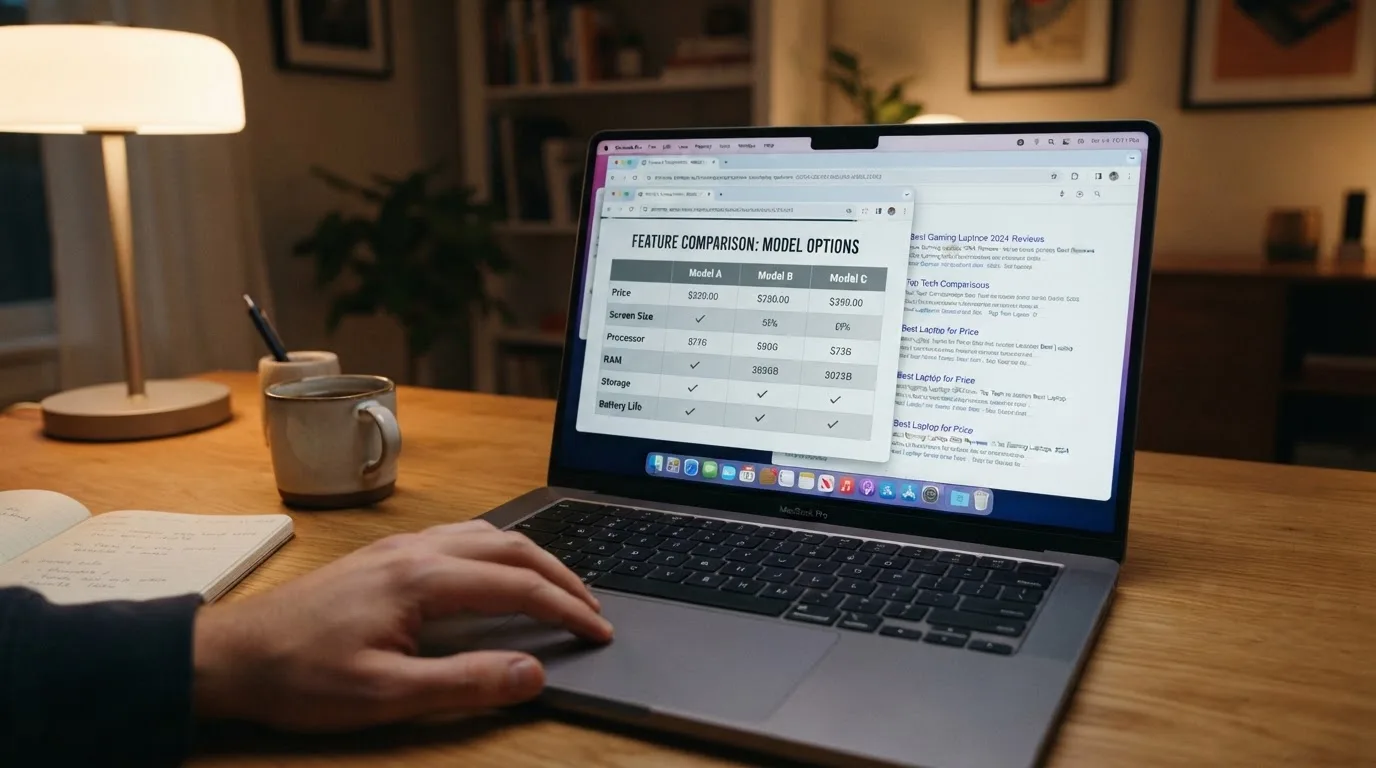
The numbers run 1 through 36 plus a zero (and, in the American version, a double zero). The pockets alternate red and black; the zero pockets are green. A bet may be placed on a single number, on a group, on a colour, on whether the result will be high or low, on whether it will be odd or even. Each bet type pays at a different rate. The single-number bet pays 35 to 1 — meaning a $1 stake returns $35 plus the original $1 — and the colour bet pays 1 to 1. The payouts are calibrated so that, with a 37-pocket or 38-pocket wheel, the house keeps a fixed percentage on every spin, regardless of how the bet is structured.
That fixed percentage is the house edge, and it is the only number on the table that does not move. On a single-zero wheel it is 2.70%; on a double-zero wheel, 5.26%; on a triple-zero wheel, 7.69%. Every betting system ever published — Martingale, Fibonacci, D’Alembert, Labouchère — fails against that number, because every system varies the size of the stake, not the edge on each spin. A flat stake of $1 on red across 100 spins on a single-zero wheel has the same expected loss as 100 separate spins at $1 each: $2.70. A progressive system that doubles after a loss changes the distribution of outcomes — fewer small losses, occasional catastrophic ones — but not the expected loss. The wheel does not see the system.
What the dealer does on a live table is animate the game: announce the result, mark the winning number on the layout, pay out the chips. None of those actions changes the outcome, which has already been determined by where the ball comes to rest. The dealer is the messenger, not the author.
Legality and regulation in Australia
Australia’s online gambling law is built on a single prohibition, sharpened by a single amendment. The Interactive Gambling Act 2001 (the IGA) makes it an offence to provide an interactive gambling service to a person physically present in Australia. The Interactive Gambling Amendment Act 2017 closed the loophole that had let some offshore operators argue their service was not “interactive” in the relevant sense. The combination covers online casino games, online pokies and in-play betting — a live-dealer roulette table is an interactive gambling service exactly as much as a computer-generated one. The dealer’s language does not enter the analysis.
What is licensable in Australia is wagering on races and sporting events placed before the event, lotteries and keno. In practice those services are licensed at the territory level, with the Northern Territory Racing and Wethering Commission (NTRWC) covering most of the major online bookmakers — Sportsbet, Bet365, Ladbrokes — for tax reasons. The NTRWC has no full-time staff and meets once a month in Darwin; the practical regulation is light, but it is the only regulatory framework that gives an Australian customer a complaints body and a binding licence.
The regulator that acts against the offshore casino market is the Australian Communications and Media Authority (ACMA). The ACMA investigates complaints, issues formal warnings to operators, and can direct Australian internet service providers to block websites offering prohibited services. The individual player is not the target of enforcement — the IGA is aimed at the provider — but a player who has funds at an offshore site when it is blocked has no Australian body to appeal to.
In the round reported on 26 June 2026 the ACMA asked Australian ISPs to block 12 more sites, taking the running total to 1,751 illegal gambling and affiliate-marketing websites blocked since the first blocking request in November 2019. More than 230 unlicensed services have left the Australian market entirely since 2017. The aggregate loss to illegal sites has been estimated at A$3.9 billion a year, with the share of gambling going through legal channels falling from 74% in 2021 to 64%.
The blocking rate — the arithmetic this page is built around — is the speed at which the ACMA has been retiring sites from the Australian market. The first blocking request went out in November 2019. By 26 June 2026, the cumulative count stood at 1,751 sites blocked and more than 230 services withdrawn from the market. That is roughly 260 blocked sites per year averaged across the period, or just over one site per business day, with the rate of formal-warning rounds running separately and adding more names to the next blocking request. The condition that bounds the band: blocks and withdrawals are not evenly distributed across years, with enforcement surges in 2024 and 2026 pulling the average up and quieter periods earlier in the period pulling it down. A reader looking at the absolute number — 1,751 blocked sites — sees the cumulative weight of a decade of enforcement; a reader looking at the rate — about one a working day over the long run — sees the pace at which the ACMA is closing the gap.
The 2026 reform on the horizon is the Interactive Gambling Amendment (Gambling Reform) Bill 2026, which passed Parliament on 19 August 2026. Its advertising and inducement measures commence on 1 January 2027 — law with a start date, not yet in force on a page dated to 2026.
Player protection on the legal side runs through BetStop, the National Self-Exclusion Register, which has been live since August 2023. BetStop binds Australian-licensed online and phone wagering services: a self-excluded customer is refused service across the entire licensed network. It does not bind an offshore live roulette brand, which is not connected to it. The National Gambling Helpline on 1800 858 858 is free, 24 hours a day, with chat through Gambling Help Online.
On the payment side, since 11 June 2024 credit cards, credit-related products and digital currency have been banned as a payment route for licensed online wagering. Penalties for an operator accepting them run up to A$247,500. The deposit routes that remain legal for licensed wagering are debit card, bank transfer, PayID/Osko and BPAY. A site asking an Australian customer for a credit card or a crypto deposit is, by that act, not a licensed Australian wagering operator.
Gambling winnings of a recreational player are not assessable income under section 6-5 of the Income Tax Assessment Act 1997, and losses are not deductible — unless the person is carrying on a business of gambling. The ATO’s position is the binding one; the rule of thumb here is “check with the ATO.”
Operating language and Australian specifics
The vocabulary around Australian online gambling has its own terms, and using them precisely matters more than it looks. A “punter” is a betting customer; “pokies” is the Australian name for slot machines. A “prohibited interactive gambling service” is the legal phrase for what an offshore live roulette stream is. “Wagering service provider” is the licensing category that the NTRWC issues; it is not a casino licence, because there is no such thing. The NTRWC, BetStop, the National Self-Exclusion Register and 1800 858 858 are the four institutions a reader with a problem needs to know by name.
On payments, PayID is the brand name behind the Osko real-time rail operated by Australian banks. BPAY is the bill-payment system used by most Australian banks for direct-debit transactions. A reader familiar with these instruments knows what an Australian customer is meant to see on the cashier — and what it looks like when none of those methods appear because the operator is not set up to accept them.
Australian spelling runs licence as a noun, license as a verb, and -ise rather than -ize in words like recognise and organise. Currency is written A$ before the number, dates in the Australian day-month-year order. None of this is a stylistic preference; it is the convention the regulator, the courts and the licensed operators themselves use.
Frequently asked questions
Is it legal to play live roulette for real money at an online casino in Australia?
No. The Interactive Gambling Act 2001, as tightened by the 2017 amendment, makes it an offence to provide online casino games — including a live-dealer roulette table — to a person in Australia. The player is not prosecuted, but the site can be blocked, the balance is at risk, and there is no Australian complaints body to appeal to if a withdrawal is refused.
What is the practical difference between a single-zero and a double-zero roulette wheel?
A single-zero (European) wheel has 37 pockets and a house edge of 2.70%. A double-zero (American) wheel has 38 pockets and a house edge of 5.26%. Every betting system ever published leaves that gap untouched, because no system changes the edge on each spin — it only changes the distribution of outcomes.
Why might a live roulette table specifically advertise English-speaking dealers?
The dealer language changes the ambient experience of the table, not the mathematics of the wheel. Studios rotate dealers across languages cheaply, and an offshore site marketing to an Australian audience will reach for English as the obvious sales line. The wheel beneath the dealer runs at the same house edge regardless of which language is being spoken.
Does a bitcoin-funded live roulette table use a different wheel to a card-funded one?
No. The wheel is the same physical rotor in both cases. What changes is the payment rail between the player’s wallet and the casino’s cashier. Since 11 June 2024 digital currency has been banned as a payment route for licensed Australian wagering, so a site accepting bitcoin from an Australian customer is, by that act alone, not a licensed Australian operator.
Can betting patterns based on previous spins improve the odds on a live roulette table?
No. Each spin is independent of the previous one. The gambler’s fallacy — the sense that a streak is “due” to break — is the predictable human response to a stream of nearly-random events, not a feature of the wheel itself. No pattern of previous spins changes the probability on the next one.