
Best Playtech online casinos in Australia: what is and is not on the table in 2026
Online casino games — including the Playtech-branded slots and live tables that dominate offshore marketing — cannot be lawfully offered to a person in Australia. The Interactive Gambling Act 2001, tightened in 2017, makes the provider the liable party, not the player; what that has produced, in practice, is an offshore market that advertises to Australians freely and an Australian regulator that blocks, warns and writes letters after the fact. This page is a working map of that map: who Playtech is, what their games actually are, which sites the Australian Communications and Media Authority has named in formal warnings, and what an Australian reader’s realistic options look like at the end of 2026.
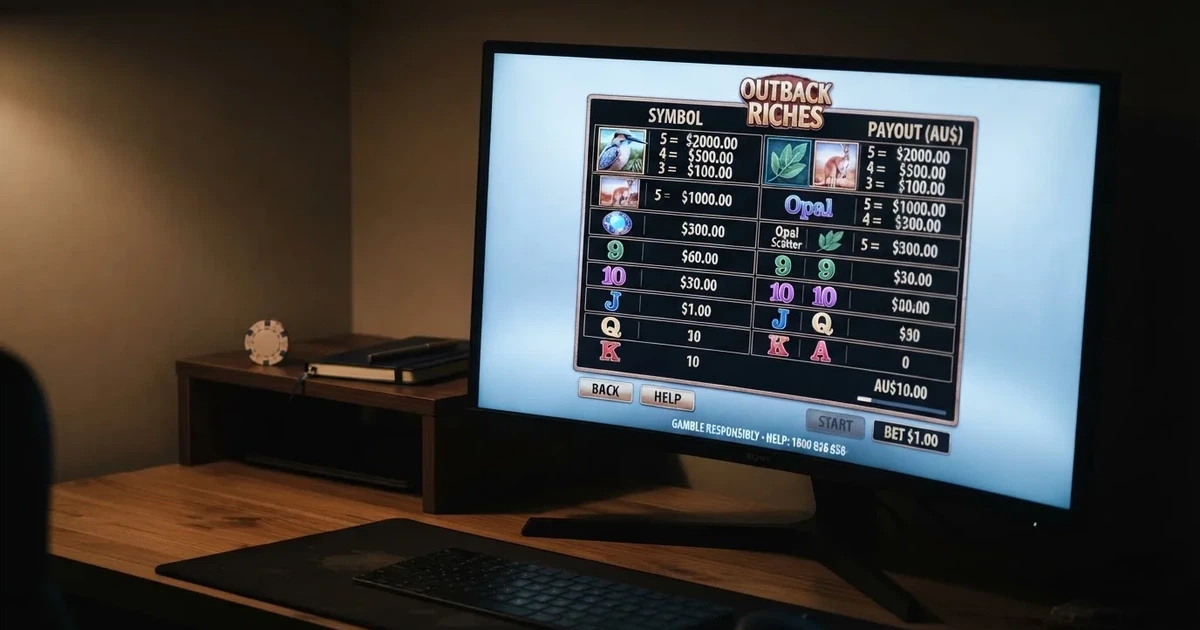
The current status, as of 28 October 2026, was checked against the ACMA’s register of formal warnings and the most recent blocking-round announcements.
Table of Contents
- The Australian legal frame: why offshore Playtech sites sit in a grey puddle, not a green light
- What Playtech actually is: a listed software supplier, not a casino brand
- Responsible gambling supports relevant to anyone considering an offshore Playtech site
- Payments, deposits and withdrawals at offshore Playtech sites
- Bonuses, free spins and the language around them
- Mobile and app play at offshore Playtech sites
- Playtech, the wider provider landscape, and what the catalogues have in common
- The brands the ACMA has acted against: the current shape of the warning register
- The wider enforcement register: where these brands sit in the ACMA’s running total
- How the ACMA’s blocking rate has evolved since the first request
- A note on payment restrictions and what they reveal about an offshore site
- The Interactive Gambling Amendment (Gambling Reform) Bill 2026: a law with a start date
- Tax: what an Australian player owes on what they win
- A frank summary of the choice facing an Australian reader
- Frequently asked questions
The Australian legal frame: why offshore Playtech sites sit in a grey puddle, not a green light
Australia’s online gambling regime rests on a single division. Wagering on racing and sport placed before the event, lotteries and keno can be licensed, in practice mostly through the Northern Territory Racing and Wagering Commission. Online casino games, online pokies and in-play betting cannot be licensed anywhere in the country — the Interactive Gambling Act 2001, as amended in 2017, makes the supply of those products to a person in Australia an offence. The minimum age is 18. That line is what makes the rest of this page a map of edges rather than a menu of choices.

The Australian Communications and Media Authority (ACMA) is the body that enforces the line. It investigates complaints, issues formal warnings to operators, and can direct Australian internet service providers to block illegal sites at the network layer. A report from June 2026 put the running total at 1,751 illegal gambling and affiliate marketing websites blocked since the first blocking request in November 2019, with more than 230 unlicensed services having left the Australian market since enforcement was strengthened in 2017. The latest round, announced on 26 June 2026, added another twelve sites to the block list: 7Signs, ChromaBet, Donbet, Duospin, Freshbet, Slots Gem, Jacks Club, Lucky Start, Pointsbetz, Spinrise, Vinyl Casino and Wildsino. The mechanism is unglamorous and cumulative. Operators rotate through new domains, the ACMA compiles the next round, and Australian ISPs add the addresses to their block lists.
The scale of the trade the law does not capture is striking. H2 Gambling Capital’s 2025 estimate put Australians’ annual losses to illegal offshore gambling sites at roughly A$3.9 billion, and tracked the legal share of the overall gambling market falling from 74 per cent in 2021 to 64 per cent by the time of the report. A market is being hollowed out by services that pay no Australian tax, observe no Australian consumer-protection regime, and answer to no Australian complaints body if a withdrawal is refused. That is the backdrop against which any individual Playtech-branded offshore site should be read.
A separate enforcement front runs through the Northern Territory, where the Racing and Wagering Commission regulates 52 of Australia’s online bookmakers — including Sportsbet, Bet365 and Ladbrokes — that have chosen the Territory for tax reasons rather than operational ones. The commission itself has no full-time staff and meets once a month in Darwin, a fact that has drawn attention in the wake of a reform bill covered by the ABC on 7 April 2026. The wagering licences it issues are legitimate; they cover sports and racing, not casino games.
The point for a reader is straightforward. An offshore casino that shows a Curaçao, Malta or Kahnawake licence and a Playtech logo is licensed somewhere else and is offering something that cannot be licensed in Australia. The licence on its footer is real; it is just not one that gives an Australian player any of the protections an Australian licence would.
What Playtech actually is: a listed software supplier, not a casino brand
Playtech plc is a software company, founded in 1999 and headquartered in Douglas on the Isle of Man. It supplies game libraries, poker networks, bingo platforms and live-dealer studios to operators across the world, and has been a constituent of the FTSE 250 on the London Stock Exchange for years. The acquisitions tell the shape of the business: PokerStrategy in July 2013 for $49.2 million, Quickspin in May 2016 for €24 million plus a €26 million earn-out, Best Gaming Technology (BGT) in July 2016 for €138 million, and a 70.6 per cent stake in Italian betting and gaming firm Snaitech in April 2018 for €291 million. Playtech does not run casinos; it builds the products other companies run.
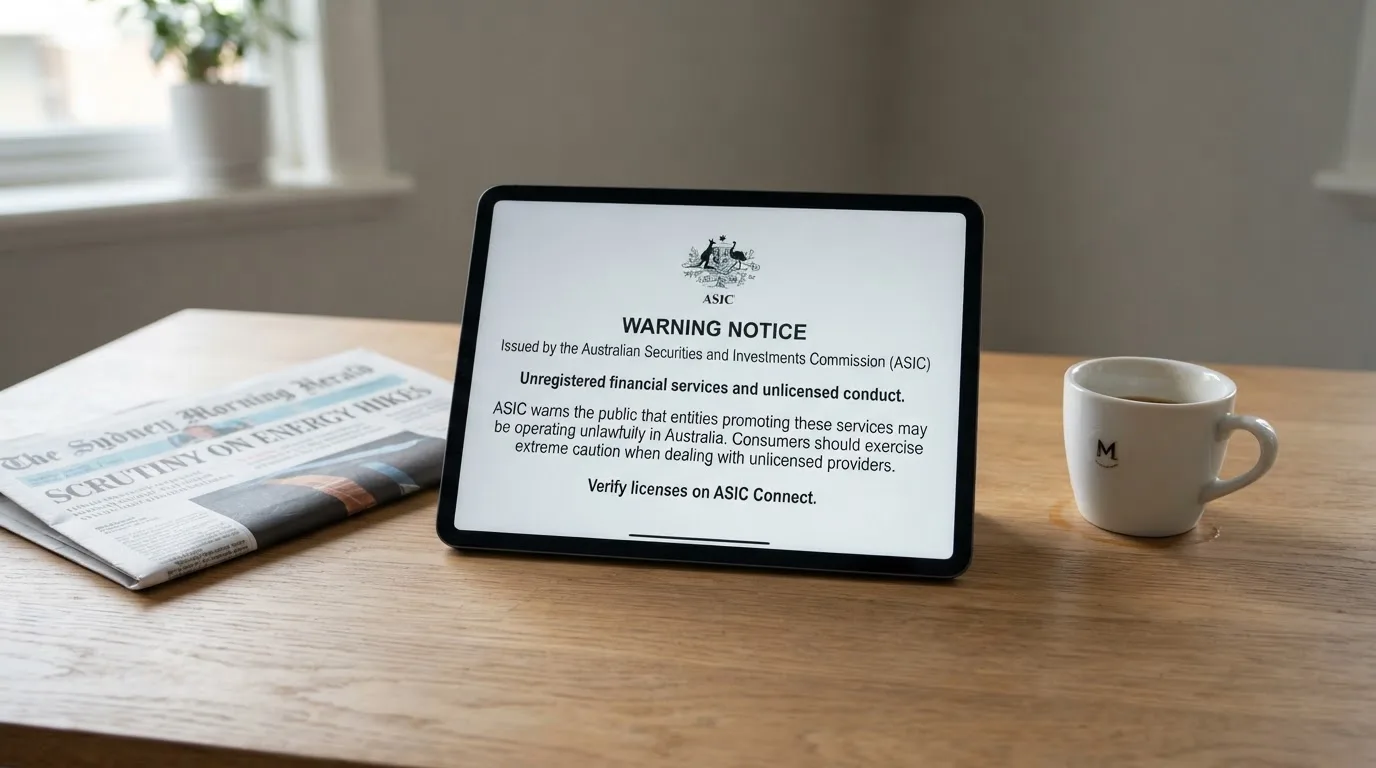
The catalogue itself spans online slots, table games, video poker, bingo, sports betting and live-dealer games. Subsidiary brands sit inside the wider business — Virtue Fusion in bingo, iPoker as a poker network, Playtech BGT Sports as a sports-betting supplier. The slot range includes the licensed DC Comics titles that have been a recurring marketing feature for the company: Batman v Superman: Dawn of Justice, The Dark Knight Trilogy, Suicide Squad and Justice League. These are not games a reader can expect to see on a legal Australian site; they are games an offshore operator offers when it is marketing to Australians.
The relationship with Australia has a single, famous twist. In 2021 Aristocrat Leisure — Australia’s largest gambling-machine manufacturer and the second-largest slot maker in the world behind International Game Technology — made a roughly US$3.7 billion bid to acquire Playtech. Playtech shareholders rejected the bid, and Playtech remained independent. That rejection matters to anyone reading an offshore casino page that pairs the Playtech logo with the Aristocrat name: the two companies share a supply-chain history and a deal that did not close, not an Australian joint venture.
Responsible gambling supports relevant to anyone considering an offshore Playtech site
The Australian consumer-protection system is built around services an offshore site is not connected to. BetStop, the National Self-Exclusion Register, has been live since August 2023 and binds Australian-licensed online and phone wagering operators; an offshore casino cannot connect to it and will not honour an Australian self-exclusion. The National Gambling Helpline (1800 858 858) is free, runs 24/7 and connects to Gambling Help Online, which has live chat and email counselling. State and territory bodies run their own self-exclusion schemes for land-based venues and, in some jurisdictions, online wagering.
An offshore site that displays a responsible-gambling footer with links to those services is borrowing the language; it is not bound by the system the language describes. The real protections, where they exist at all, are the ones the player arranges for themselves: gambling only what is genuinely affordable to lose, treating any deposit at an offshore site as money that is unlikely to come back, and using a debit card or bank transfer rather than a credit card — credit cards and crypto are banned as a funding method for licensed Australian online wagering since 11 June 2024, with penalties up to $247,500 for operators that breach the rule, and a request for either of those funding routes is a working indicator that the site is operating outside Australian rules.
For a reader who has decided that an offshore site is where they will play regardless, the practical reality is that BetStop will not block them, the helpline will still take the call, and the bank transfer they used to deposit will still be the one they used to deposit.
Payments, deposits and withdrawals at offshore Playtech sites
The financial side of an offshore Playtech-branded casino is the part most often mis-described in marketing. The deposit options are typically wider than at an Australian-licensed wagering site — credit cards, e-wallets, several cryptocurrencies — precisely because the site is not bound by the Australian credit-card and crypto ban that took effect on 11 June 2024. PayID/Osko and BPAY, the standard Australian instant-deposit rails, are usually absent. The withdrawal side typically returns funds to the same method used to deposit, with e-wallet cashouts commonly quoted as taking a few hours and bank transfers commonly quoted as taking three to five business days. The figures that appear in marketing tend to come from affiliate sites that quote the operator’s own terms; they do not come from a regulator and they have no independent audit behind them.
The deeper problem is what happens when something goes wrong. A withdrawal that stalls, a bonus term that disqualifies a win, a verification request that turns into an indefinite hold — none of these has a route through an Australian complaints body. The Curaçao or Malta licence on the footer does, in theory, give a player a regulator to write to; in practice, complaint handling at those regulators is slow, mostly written, and rarely produces a refund. Players describe the experience as a queue with no end and no lever to pull. The Australian regulator does not refund either — that is not its role — but it can and does block the next iteration of the same brand once it pops up under a new name.
For an Australian reader, the practical reading is: assume the deposit is the loss. If the money comes back, treat it as a windfall rather than a normal outcome.
Bonuses, free spins and the language around them
Playtech-branded casino products are almost always marketed with a welcome package of some kind: a deposit match, free spins on a named slot, or both. The marketing language tends to be uniform across the offshore market — “huge”, “epic”, “boosted”, “exclusive” — and the conditions attached are nearly as uniform. A deposit match of 100 per cent up to a stated cap, with a wagering requirement attached, and free spins issued in tranches over the first week rather than all at once.
The cost of the package is in the conditions, not in the headline. A 100 per cent match with a 40-times wagering requirement means the bonus amount has to be turned over forty times before any winnings become withdrawable. Free-spin winnings are usually subject to a separate, often higher, wagering requirement and to a maximum cashout cap that can be as low as a few times the value of the spin. Game-weighting rules mean the wagering requirement clears faster on slots than on table games, and may not clear at all on some live-dealer titles. The arithmetic of how long it takes to clear a bonus, and how much the clearing actually costs in expected loss, is detailed in the calculation section below.
None of this is unique to Playtech-branded products. It is the standard shape of the offshore bonus. The Playtech angle is only the marketing hook — the bonus exists because the site is competing for sign-ups against other offshore sites, and a recognised software brand is the easiest hook to use.
Mobile and app play at offshore Playtech sites
The mobile experience at a modern offshore casino is, in technical terms, competent. Playtech’s slot catalogue runs in HTML5, which means it loads in a mobile browser without a separate download; live-dealer tables stream in a portrait or landscape window that scales to a phone screen; the cashier, the bonus tracker and the support chat all work in the same browser tab. Load times depend on the player’s network rather than on the operator.
A native app, where one exists, is typically an Android APK sideloaded from the operator’s site rather than something downloaded from an Australian app store, since Apple and Google both enforce the Australian rule against real-money gambling apps in their storefronts. The sideload introduces its own set of frictions: a permissions prompt, a “trust this source” setting on the device, and the absence of any app-store update mechanism. A browser-based experience sidesteps all of that and is, for most players on most phones, the easier route.
The substantive point is the same as on desktop. The mobile experience is technically fine; the underlying offer — an offshore Playtech-branded product, marketed to Australians, with the same withdrawal risk — is not changed by the device it is being played on.
Playtech, the wider provider landscape, and what the catalogues have in common
Playtech is not the only significant supplier to the offshore casino market, and an Australian reader who sees a Playtech-branded site will often see titles from a handful of other studios on the same lobby. Aristocrat Leisure, the Australian-listed slot manufacturer, has an online arm in Aristocrat Interactive — formed in April 2024 from the Anaxi unit and the NeoGames group that Aristocrat acquired for roughly US$1 billion the same month, which itself contains Aspire Global, BtoBet and Pariplay. Aristocrat Interactive supplies regulated real-money online products rather than to offshore sites targeting Australia, and the distinction matters. Betsoft, founded in 2006, publishes a catalogue of more than 200 RNG games spanning slots, table games, video poker and specialty titles; its Good Girl Bad Girl 2 slot carries a published RTP of 96.22 per cent with “Very High” volatility and a 15.59 per cent hit rate on a 5-reel, 20-payline layout, with RNG certification from Quinel and Gaming Labs International and partnerships with more than 500 operators in regulated markets in Europe, Scandinavia, Latin America and Africa. 1spin4win, founded in 2021 by a group of professionals with 15 years of iGaming experience, holds a Curaçao licence, runs an HTML5 catalogue of more than 190 online slots built for low-bandwidth connections, and reports more than 1,000 partnerships with online casinos and aggregators, with total bet sum up 46 per cent in the first half of 2025 against the same period in 2024.
These names appear in the lobbies of offshore Playtech-branded sites not because the sites are licensed in Australia but because the studios themselves are licensed in the jurisdictions they operate from, and a wide catalogue is part of what an offshore site uses to compete for sign-ups. The fair-testing certifications Quinel and GLI provide apply to the games, not to the operators that host them.
The brands the ACMA has acted against: the current shape of the warning register
| Brand | Regulator Warning | Year |
|---|---|---|
| RocketPlay | Pulsup Ltd; Dama N.V. | 2026, 2022 |
| Level Up Casino | Dama N.V. | 2022 |
| Woo Casino | Dama N.V. | 2025 |
| Spirit Casino | Dama N.V. | 2025 |
| National Casino | Consolutetish S.R.L. | 2025 |
| Bizzo Casino | Consolutetish S.R.L.; TechSolutions | 2025, 2022 |
| Ignition Casino | Bamboo Media | 2025 |
| Instant Casino | EOD Code SRL | 2025 |
| Jackbit | Ryker B.V. | 2026 |
| Casino Intense | Sterplay Holding Ltd | 2025 |
| Sky Crown | Hollycorn N.V. | 2022 |
RocketPlay
The ACMA’s most recent formal warning over RocketPlay was issued in March 2026 to Pulsup Ltd, the operator of RocketPlay. Dama N.V. was the subject of an earlier ACMA formal warning covering RocketPlay as one of six brands in May 2022. The brand has cycled through operators and domain variations; the regulator’s interest has not. Subject support: no information on the operator’s own listings or in supplier catalogues.
The picture the warning register paints is of a brand that moves between operators when one is named. From an Australian reader’s point of view that is the relevant feature: the brand itself is not the issue, the underlying operator is, and the pattern of replacement is the warning rather than the brand.
Level Up Casino
Dama N.V. received a formal warning from the ACMA in May 2022 covering Level Up Casino as one of six brands (alongside Bambet, Dazard, Rocketplay, Wild Tornado and Cobra Casinos). Subject support: listed on supplier listings for Wazdan, a third-party studio whose games appear in Level Up’s catalogue.
Level Up’s profile is that of an aggregator using a single operator as its parent. The relevant reading is the same as for any other Dama N.V. brand: the warning covers the entire operator family and is not lifted by a rebrand.
Woo Casino
Dama N.V. received a further ACMA formal warning in March 2025 covering Woo Casino. The pattern here is the operator being warned again after a first contact — a second warning is typically the regulator’s signal that the operator did not adjust its behaviour on the back of the first. Subject support: currently absent from operator or supplier registries.
For an Australian reader the second-warning signal is the one that matters. The first warning is a contact; the second is a record.
Spirit Casino
Dama N.V. received a further ACMA formal warning in May 2025 covering Spirit Casino. Same operator, second warning within the same calendar quarter that Woo Casino was warned. Subject support: not available in official directories.
The read on Spirit Casino is the read on Woo Casino. Two warnings in three months indicate an operator that has not changed its marketing to Australians and is the subject of sustained regulatory attention.
National Casino
Consolutetish S.R.L. received a formal warning from the ACMA in July 2025 covering National Casino. The brand’s catalogue includes games from Betsoft and Pragmatic Play, both of which list National Casino among their partner sites. Subject support: listed on supplier listings for Betsoft and on related registry entries for Pragmatic Play.
A brand with mainstream supplier listings is not a smaller operation; the suppliers’ listings are a useful cross-check on the catalogue claims the brand itself makes.
Bizzo Casino
Consolutetish S.R.L. received a formal warning from the ACMA in July 2025 covering Bizzo Casino. The same brand had already been the subject of an earlier 2022 formal warning to TechSolutions (CY) Group Limited and TechSolutions Group N.V. — a brand that has changed operator twice and been warned under both. Subject support: data unavailable.
Bizzo’s record is the longest in the warning register. Two operators, two warnings, same brand. From a reader’s point of view the operator rotation does not change the brand’s status; it is the brand itself that is the subject of enforcement interest.
Ignition Casino
Bamboo Media received a formal warning from the ACMA in July 2025 covering Ignition Casino. Subject support: unknown.
Ignition is one of the longer-running offshore brands in the warning register, with an established Australian-facing marketing presence and a catalogue that includes games from a number of mainstream studios. The warning is the regulator’s position on that presence.
Instant Casino
EOD Code SRL received a formal warning from the ACMA in February 2025 covering Instant Casino. Subject support: no verified sources found.
The Instant Casino brand markets on speed and simplicity, with a small catalogue and a withdrawal process that the operator claims completes in minutes. The ACMA warning is the regulator’s counter-record: the speed at which the brand markets itself is not the speed at which the regulator has stopped treating it as a prohibited service.
Jackbit
Ryker B.V. received a formal warning from the ACMA in April 2026 covering Jackbit and CasinOK. Subject support: no information on the operator’s own listings or in supplier catalogues.
Jackbit has positioned itself as a crypto-first casino, with Bitcoin, Ethereum and several stablecoins as the primary deposit and withdrawal routes. The ACMA warning is a record of the regulator’s view that a crypto-funded offshore casino is no less prohibited than any other.
Casino Intense
Sterplay Holding Ltd received a formal warning from the ACMA in April 2025 covering Casino Intense. Subject support: listed on supplier listings for 1spin4win and on related registry entries from the UK Gambling Commission.
Casino Intense is one of the smaller-scale offshore brands in the warning register. The cross-reference to the UK Gambling Commission’s registry indicates the brand has a UK-facing presence that is regulated separately from its Australian-facing one; the ACMA’s view is that the two markets are not interchangeable.
Sky Crown
Hollycorn N.V. received a formal warning from the ACMA covering its Sky Crown and Blue Leo casino services. The warning was published in a PDF dated September 2022. Subject support: no information on the operator’s own listings or in supplier catalogues.
Sky Crown is one of the brands that has had the longest unbroken run in the Australian-facing market. The Hollycorn warning covers two brands at once; the operator’s pattern across them is the relevant feature for a reader.
The wider enforcement register: where these brands sit in the ACMA’s running total
The eleven brands above are the ones the ACMA has issued formal warnings to that have a working Playtech or Playtech-adjacent presence in their catalogue. The wider register is much larger, and the page’s calculation below draws on the wider register’s totals rather than on the eleven brands alone. A summary table is below; rows are presented in the order research has them, and the no-data marker is used wherever research does not supply a figure.
| Brand | ACMA action and date | Operator named by the ACMA | Subject support |
|---|---|---|---|
| RocketPlay | Formal warning, March 2026 | Pulsup Ltd (also Dama N.V., May 2022) | — |
| Level Up Casino | Formal warning, May 2022 | Dama N.V. | Listed on Wazdan supplier listings |
| Woo Casino | Formal warning, March 2025 | Dama N.V. | — |
| Spirit Casino | Formal warning, May 2025 | Dama N.V. | — |
| National Casino | Formal warning, July 2025 | Consolutetish S.R.L. | Listed on Betsoft and Pragmatic Play supplier listings |
| Bizzo Casino | Formal warning, July 2025 | Consolutetish S.R.L. (also TechSolutions, 2022) | — |
| Ignition Casino | Formal warning, July 2025 | Bamboo Media | — |
| Instant Casino | Formal warning, February 2025 | EOD Code SRL | — |
| Jackbit | Formal warning, April 2026 | Ryker B.V. | — |
| Casino Intense | Formal warning, April 2025 | Sterplay Holding Ltd | Listed on 1spin4win supplier listings; cross-referenced to UK Gambling Commission |
| Sky Crown | Formal warning, September 2022 | Hollycorn N.V. | — |
The pattern the table exposes is not hard to read. Seven of the eleven operators sit with a single ACMA warning. Two — Bizzo and RocketPlay — have changed operator and been warned under both. One — Dama N.V. — has been warned four times across the register for separate brands within the same operator family. From a reader’s point of view the warning density is the working indicator of which operators the regulator treats as persistent and which it treats as one-off contacts.
How the ACMA’s blocking rate has evolved since the first request
The blocking rate mentioned is calculated from the running total of blocked sites reported as of June 2026 — 1,751 — and the date of the first blocking request, November 2019. That is roughly 81 months between the first blocking request and the June 2026 figure. This provides a clear picture of how many sites the ACMA addresses over time.
Dividing 1,751 sites by 81 months gives an average of roughly 21.6 sites blocked per month across the life of the regime. The more meaningful reading is the band: a working figure somewhere between roughly 19 and 24 sites per month since the first blocking request in November 2019, depending on which month is taken as the start of the count and which figure is taken as the end. The early years ran below that average, as the ACMA built up the legal machinery under the 2017 amendments; the more recent years have run above it, with the June 2026 round alone covering twelve sites in a single announcement. The point of the band is to put a number behind the language about the regulator’s enforcement being “active”: the rate is meaningful rather than trivial, and the trend is upward rather than steady.
A reader who sees an offshore site still marketing to Australians is looking at a service that the regulator has, on average, been blocking somewhere between once a week and once a fortnight throughout the period the site has been operating. That is what the band says.
A note on payment restrictions and what they reveal about an offshore site
The credit-card and crypto ban that took effect for Australian-licensed online wagering on 11 June 2024 is the most informative single test of whether a casino site is operating inside or outside Australian rules. The ban applies to operators licensed under the Interactive Gambling Act; an offshore operator is not licensed under it and is not bound by the ban. An Australian player who is asked for a credit card or a crypto deposit at an offshore casino is therefore looking at the standard marketing feature of a service that is, by definition, operating outside the Australian regime. PayID/Osko and BPAY, the standard Australian instant-deposit rails, are the working indicators of a service that is connected to the Australian payments system on the licensed-wagering side; their absence at an offshore casino is the corresponding indicator on the offshore side.
The legitimate deposit routes for Australian-licensed online wagering — debit card, bank transfer, PayID/Osko, BPAY — are also the routes that connect the deposit to an Australian bank, which is the route that gives the Australian regulator a workable enforcement lever. An offshore casino using a different set of routes is, again, by definition, outside the regime.
The Interactive Gambling Amendment (Gambling Reform) Bill 2026: a law with a start date
The Interactive Gambling Amendment (Gambling Reform) Bill 2026 passed Parliament on 19 August 2026. Its advertising and inducement measures commence on 1 January 2027. The bill is law with a start date, not yet in force on a 2026 page. The substance of the bill is the further restriction of how licensed Australian wagering operators market to Australians — bonus offers, inducements, the language around them — and is targeted at the licensed wagering market rather than at offshore casinos directly.
For offshore Playtech-branded casinos the bill’s main effect is indirect: it tightens the legitimate Australian market around them, leaving the offshore offer more obviously on the other side of the line. A reader who sees an offshore bonus in early 2027 will be looking at it against a backdrop in which the licensed wagering market has been told to stop competing on inducements. That does not make the offshore offer more legitimate; it makes the contrast clearer.
Tax: what an Australian player owes on what they win
Gambling winnings of a recreational player in Australia are not assessable income under section 6-5 of the Income Tax Assessment Act 1997. Losses are not deductible either. The model is to treat any win at an offshore casino as not taxable and any loss as not deductible; the only exception is a person carrying on a business of gambling, which is a different question and one to put to the Australian Taxation Office rather than to this page. For a recreational player the practical effect is that a win at an offshore Playtech-branded casino is theirs to keep, in the same way that a win at the local pub’s pokies is theirs to keep, and the question is whether the win reaches them at all.
A frank summary of the choice facing an Australian reader
An Australian reader who has read this far has a working picture of the offshore Playtech-branded casino market and the Australian regime around it. The picture is not balanced in the sense of giving equal weight to two equal options: the licensed onshore option does not include Playtech-branded online casino products, because online casino products cannot be licensed in Australia. The honest summary of the choice facing an Australian reader is therefore:
The legal, regulated Australian offer for online gambling is wagering on racing and sport, lotteries and keno, taken out through operators licensed by the Northern Territory Racing and Wagering Commission or by state and territory authorities. That offer does not include online casino games, online pokies or live-dealer tables. The Playtech-branded online casino products that an Australian reader sees marketed at them are offered by offshore operators that are not licensed in Australia and cannot be, and the regulator has been warning, blocking and recording those operators at a rate of somewhere between 19 and 24 sites per month since November 2019. The choice, in practice, is between not playing those products in Australia and playing them at an unlicensed offshore site that pays no Australian tax, is not bound by Australian consumer protection and may at any point be added to the next blocking round.
For readers who land on this page looking for a list of “the best Playtech casinos to play at today in Australia”, that list does not exist as a lawful list, and this page has not constructed one.
Frequently asked questions
Is Playtech legally available to players in Australia?
Playtech the company is a legitimate, listed software supplier. Playtech-branded casino products — online slots, live-dealer tables, table games — cannot be lawfully offered online to a person in Australia under the Interactive Gambling Act 2001, as amended in 2017. The Playtech name on an offshore casino site does not make that site legal in Australia.
What kinds of games does Playtech make?
Playtech’s catalogue spans online slots, table games, video poker, bingo, sports betting and live-dealer games. Subsidiary brands include Virtue Fusion for bingo, iPoker for poker and Playtech BGT Sports for sports betting. The slot range includes the licensed DC Comics titles such as Batman v Superman: Dawn of Justice and The Dark Knight Trilogy.
Are Playtech games offered at land-based venues in Australia?
Playtech-branded electronic gaming machines are not the standard offering in Australian land-based venues, which run primarily on Aristocrat Leisure and International Game Technology machines. Aristocrat made a roughly US$3.7 billion bid for Playtech in 2021 that Playtech shareholders rejected, so the two companies share a supply-chain history without having merged. Playtech’s online products are not licensed for Australian online play.
How can Australians check whether a Playtech title is fair before ever considering play?
Independent testing labs — Quinel, Gaming Labs International, eCOGRA among others — certify the random number generator behind named slot titles. Those certifications apply to the game, not to the operator hosting it. An offshore casino showing a Playtech game with a Quinel certificate is showing that the game itself has been tested; it is not a certification of the operator’s behaviour.
Why do offshore sites keep advertising Playtech games to Australian visitors?
The offshore casino market competes for sign-ups, and a recognised software brand is the easiest hook. Playtech’s name is a marketing asset that the sites can borrow without paying for an Australian licence, because they do not have one. The ACMA’s blocking activity targets the offshore sites, not the supplier.
What should an Australian do if they see a Playtech game promoted by an unlicensed site?
The first step is to recognise the promotion for what it is: an offer from a service that cannot be licensed in Australia. The next step depends on the reader. If the reader wants to make a complaint, the ACMA is the right body. If the reader wants support for a gambling concern, the National Gambling Helpline on 1800 858 858 or Gambling Help Online is open 24/7.