
Quick withdrawal casinos in Australia 2026: the offshore pitch, the law, and what a real payout window looks like
Data current as of 28 October 2026, checked against the ACMA’s list of formal warnings and Australian Payments Plus service descriptions.
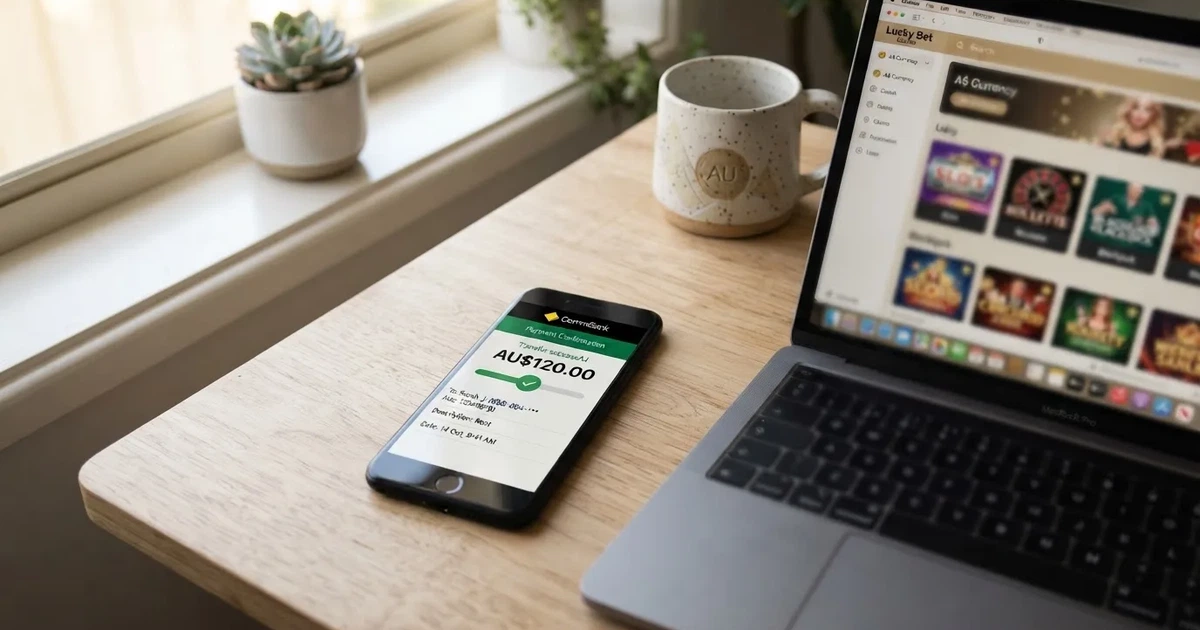
A “quick withdrawal casino” is not a category the Australian licensing system recognises. Every site marketing fast payouts to Australian players is offshore, sitting outside the Interactive Gambling Act 2001, and every brand on this page has attracted a formal warning from the Australian Communications and Media Authority for offering prohibited services. The eleven brands named below are not reviewed for play. They are catalogued because the regulator named them. Understanding the difference between a marketing claim of “instant payouts” and the actual mechanics of moving money in Australia is the first thing this page does, and the rest of it — the legality, the protections, and the real speed of the underlying rails — follows from that gap.
Table of Contents
- The ranking at a glance
- What “quick withdrawal” actually means at an offshore casino
- The legal status of fast-payout casino sites in Australia
- What the ACMA has actually done, and to whom
- Responsible gambling: the protections offshore sites do not extend
- How the underlying payment rails actually work
- The blocking rate since November 2019
- The eleven brands, in the order the ACMA has acted on them
- What an Australian player is actually choosing between
- Frequently asked questions
The ranking at a glance
The eleven brands below share one property: the ACMA has issued a formal warning over each of them for supplying a prohibited interactive gambling service to Australians. The table orders them by that regulator action. It is not a quality ranking, and it carries no judgment that any one of them pays faster, slower, or more reliably than another — the only evidence on this page is that each of them has been the subject of an ACMA action, and that the legal status of what they sell is the same for all of them.

| Brand | ACMA action and date | Operator named by the ACMA |
|---|---|---|
| Casino Intense | Formal warning, April 2025 | Sterplay Holding Ltd |
| Instant Casino | Formal warning, February 2025 | EOD Code SRL |
| Sky Crown | Formal warning, September 2022 | Hollycorn N.V. |
| Level Up Casino | Formal warning, May 2022 | Dama N.V. |
| Woo Casino | Formal warning, March 2025 | Dama N.V. |
| Spirit Casino | Formal warning, May 2025 | Dama N.V. |
| National Casino | Formal warning, July 2025 | Consolutetish S.R.L. |
| Bizzo Casino | Formal warning, July 2025 (earlier 2022) | Consolutetish S.R.L. (earlier TechSolutions) |
| Ignition Casino | Formal warning, July 2025 | Bamboo Media |
| Jackbit | Formal warning, April 2026 | Ryker B.V. |
| RocketPlay | Formal warning, March 2026 (earlier 2022) | Pulsup Ltd (earlier Dama N.V.) |
The pattern in the operator column tells its own story. Dama N.V. surfaces four times across the table under three different brand names — and it is the same Curaçao-registered holding company each time. Consolutetish S.R.L. appears twice, and RocketPlay has cycled through two operators under the same brand. Reorganising the corporate wrapper does not change the product the ACMA has called prohibited.
See also Live.
What “quick withdrawal” actually means at an offshore casino
The phrase is doing two different jobs in casino marketing. One is the time between the player hitting “withdraw” and the casino pressing the button to release the funds — a queue inside the operator, which marketing routinely calls “instant”. The other is the time the funds take to actually arrive in the player’s account once released, which is governed by the payment rail the player chose. Offshore brands compress the two into one number and put it in a banner. Most players only ever feel the second one.
The internal queue is genuinely variable. The same brand can take ten minutes to release a small e-wallet payout one Friday afternoon and hold the next withdrawal for seventy-two hours while it asks for source-of-funds documents the player has already supplied. Australian-licensed bookmakers face the same processing question but answer it under a regulator that can compel them to behave consistently. An offshore operator answers it under its own house rules, and “quick” is whatever the cashier decides on the day.
The arrival time, once released, is a property of the rail, not of the casino. A withdrawal to a Visa debit card is constrained by the card scheme’s settlement window, which is why offshore casinos that promise “instant Visa withdrawals” are usually promising the internal step only and leaving the actual settlement to Visa. A withdrawal to a bank account runs through whatever instant-payment system the receiving bank supports. An Australian bank account reached through Osko settles in under a minute, 24/7, including weekends — but only because Osko is the rail, and only if the offshore casino’s bank will actually send an Osko payment to an Australian account, which is not the default for a Curaçao-registered operator.
So the honest reading of a “quick withdrawal” claim is three numbers stacked: the casino’s internal release window, the rail’s settlement window, and the gap between the player’s bank and the operator’s bank. The first is the marketing claim. The second is a property of the payment system. The third is rarely visible to either side.
The legal status of fast-payout casino sites in Australia
Australia’s online gambling law does not treat online casino games as a product that can be licensed. The Interactive Gambling Act 2001, as tightened by the Interactive Gambling Amendment Act 2017, makes it an offence to supply online casino games, online pokies or in-play betting to a person physically in Australia. No state or territory licenses the activity. What is licensable is wagering on races and sport placed before the event, lotteries, and keno — in practice licensed by the Northern Territory Racing and Wagering Commission, which oversees fifty-two online bookmakers including Sportsbet, Bet365 and Ladbrokes.
The asymmetry matters. A punter who bets with a Northern Territory-licensed bookmaker on a Saturday horse race is using a regulated product with a complaints body, an Australian disputes process, and a binding connection to BetStop, the National Self-Exclusion Register. A punter who plays pokies at an offshore casino from the same Sydney apartment is using an unregulated product with none of those things. Both transactions can happen on the same phone, in the same evening, and the legal line between them is whether the offer is a pre-event wager or a casino game.
The ACMA enforces the line. Its main tools are formal warnings to operators and requests to Australian internet service providers to block offending sites. By the end of the period covered by the June 2026 blocking round, the ACMA had asked for 1,751 illegal gambling and affiliate marketing websites to be blocked since the first blocking request in November 2019, and reported that more than 230 unlicensed services had left the Australian market since enforcement was strengthened in 2017. The round reported on 26 June 2026 alone added twelve more sites to the block list: 7Signs, ChromaBet, Donbet, Duospin, Freshbet, Slots Gem, Jacks Club, Lucky Start, Pointsbetz, Spinrise, Vinyl Casino and Wildsino.
The legal cost of being blocked falls on the operator, not the player. The IGA targets the provider. An Australian who deposits with an offshore casino is not personally at risk of prosecution — but is also not protected when the casino refuses to pay out, closes the account, or vanishes overnight. A blocked site that still holds a player balance is a real scenario, not a hypothetical, and a balance sitting on an offshore platform when the ACMA adds the domain to the block list is difficult to recover through any Australian channel.
A further layer is the consumer-protection gap. An offshore casino displaying a Curaçao or Anjouan licence is regulated by the body that issued the licence, not by any Australian regulator. A dispute over a withheld withdrawal must be taken up with that overseas body, in the language and under the procedural rules of that body, by an Australian player with no Australian legal-aid route and no statutory right of appeal. The phrase “licensed and regulated” on the homepage means what it says, but the licensing body is rarely in a country the player can put a letter in front of.
What the ACMA has actually done, and to whom
The eleven brands on this page share one legal status: each has been the subject of a formal warning from the ACMA under the Interactive Gambling Act 2001. The action is published and dated. The warnings are not blocking requests — they precede a block in most cases, and several of the operators below have brands that have since been added to a block list separately. A formal warning is the regulator’s first formal step, and the ACMA’s published register of warnings is the public record of which operators it has put on notice.
The Dama N.V. cluster is the densest. Dama N.V. is the operator named on formal warnings covering Level Up Casino (May 2022), Woo Casino (March 2025) and Spirit Casino (May 2025), with the May 2022 warning also covering Bambet, Dazard, Wild Tornado and Cobra Casinos as part of a six-brand package. Four of the eleven brands on this page sit inside that one corporate family, and the same pattern recurs at Consolutetish S.R.L., which carries the warnings on National Casino and Bizzo Casino (both July 2025). Bizzo Casino carries a second layer — it had already been the subject of a 2022 formal warning to TechSolutions Group Limited and TechSolutions Group N.V., the previous operator of record.
The newer end of the warning list shows the regulator’s reach extending into operator types it has not historically targeted. RocketPlay’s March 2026 warning names Pulsup Ltd as the operator, with Dama N.V. as the earlier operator of record on a separate warning — the same brand moving through a different corporate wrapper. Jackbit and CasinOK share an April 2026 warning under Ryker B.V., and Casino Intense was warned in April 2025 under Sterplay Holding Ltd. Instant Casino’s February 2025 warning under EOD Code SRL is the earliest warning on this page in the 2025 cohort.
What a reader takes from the table is that “different brand” is often “same operator with a new name”. Reorganising the holding company does not move the product outside Australian law, and the ACMA has shown it will issue fresh warnings under the new name as the rebranding happens.
Responsible gambling: the protections offshore sites do not extend
The Australian player-protection framework is built around three things offshore casinos do not connect to. The first is BetStop, the National Self-Exclusion Register, live since August 2023. A person who signs up for BetStop is excluded from every Australian-licensed online and phone wagering service, and the exclusion is binding on the operator. An offshore casino is not connected to BetStop. A self-excluded Australian who opens an account at one of the eleven brands below is not protected by the register, because the register does not reach the operator.
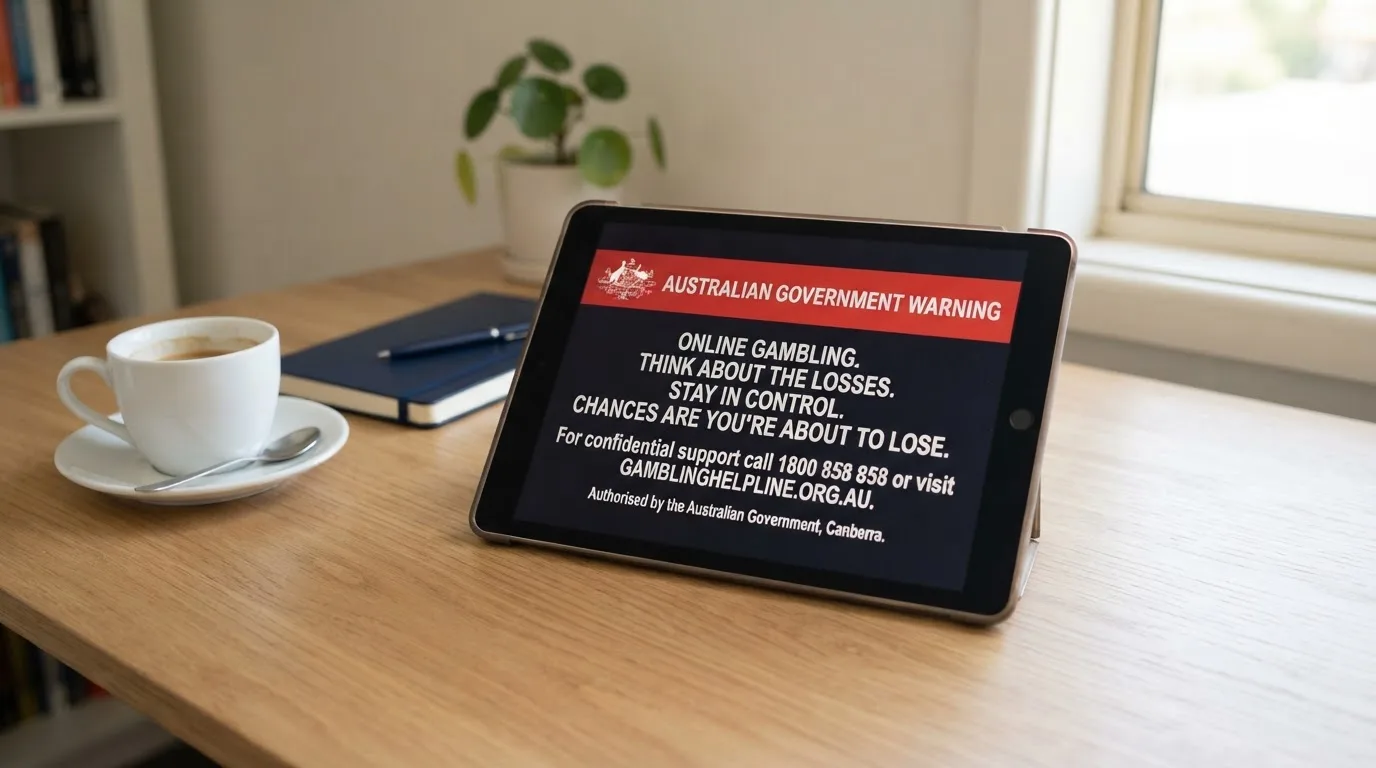
The second is the National Gambling Helpline at 1800 858 858, free and 24/7, with chat at Gambling Help Online. The helpline is the right first call for someone whose gambling has stopped being recreational, whether the platform is licensed or not. It does not depend on the operator being Australian.
The third is the bank-side gambling block. Commonwealth Bank lets customers apply a gambling lock to eligible cards through the CommBank app, and ANZ offers an equivalent gambling transaction block activated through the ANZ app. Once turned on, the ANZ block also covers gambling transactions made through a digital wallet such as Apple Pay on an eligible card, and removing the block requires a 48-hour waiting period. Westpac’s gambling block works at card level — it refuses authorisation on transactions registered under the merchant category code “Betting/Casino Gambling” on eligible personal credit and debit cards. Commonwealth Bank’s page is candid that it “cannot guarantee all gambling-related purchases will be stopped”, and ANZ warns that not all gambling transactions will be blocked and that some non-gambling transactions might be blocked in error.
Those caveats matter most at offshore casinos, where the merchant category code may not be filed cleanly and where the operator’s payment routing can route a withdrawal through a different MCC than the deposit. The bank-side block is designed for Australian-licensed wagering and is reliable against it. Against an offshore operator with a payment middleman, it is one layer of friction rather than a wall.
The minimum age for any gambling activity in Australia is 18. Offshore casinos do not verify this against Australian records, and the verification that does happen is against the documents the player supplies — which is the same documents, in practice, that the player would use to prove they are an adult anywhere else.
Quick withdrawal casinos in Australia 2026 — More on this topic at casino safety.
How the underlying payment rails actually work
The fastest a withdrawal can move, once an offshore casino has released it, is set by the rail. The slowest realistic time is also set by the rail. Most of what an Australian player experiences as “fast” or “slow” lives in this layer, not in the casino’s queue.
Osko and PayID: the Australian instant-transfer pair
Osko is the instant-transfer service that runs over Australia’s New Payments Platform, accessible to the public since 13 February 2018 and operated by Australian Payments Plus alongside PayID and BPAY. With Osko, a bank transfer between participating Australian banks arrives in under a minute, 24/7 including weekends, whether addressed to a BSB and account number or to a PayID. PayID is the addressing layer on top of the same rails: a phone number, email address or ABN registered against an account, with the name of the account holder shown before the transfer is sent. AP+ warns that being asked to transfer money to a PayID on an illegal gambling site almost certainly means a scam site. PayID-based instant transfers are available at over 100 Australian financial institutions, and more than 25 million PayID identifiers had been registered on the platform as of April 2025.
The NPP has its own operational constraints. Participants are required to keep the platform’s monthly outages to no more than two minutes. The platform is owned by New Payments Platform Australia Ltd, a non-profit whose thirteen shareholders include the Reserve Bank of Australia and the major banks. In 2021 the ACCC authorised the merger of NPP Australia with BPAY and eftpos into a single company, Australian Payments Plus, which is the operator of all three services today.
What Osko and PayID deliver, for a domestic withdrawal, is a genuinely fast rail. The ceiling on that speed, at an offshore casino, is whether the operator’s bank will originate an Osko payment to an Australian account at all. The default for a Curaçao-registered operator’s bank is not to.
BPAY: the bill-payment route
BPAY is a bill-payment service embedded in Australian online banking. The payer enters a Biller Code and a Customer Reference Number printed on the bill, and the funds arrive at the biller on the next business day in most cases, faster for some billers. It has operated in Australia since its launch on 18 November 1997, is available in the online banking of over 140 banks and financial institutions and is offered by over 95,000 businesses. BPAY is owned equally, via Cardlink Services Limited, by the four major banks — ANZ, Commonwealth Bank, National Australia Bank and Westpac — and is now run by Australian Payments Plus alongside PayID and Osko after the 2021 merger.
BPAY is built around inbound payments to Australian businesses, not around outbound payments from offshore operators. It does not feature as a payout rail from an offshore casino because it is not one. It features here because it sits in the same Australian Payments Plus stable as Osko and PayID, and a reader weighing which domestic rails to trust can place them all in the same family.
Cards and wallets: where the merchant category code does the work
The card networks settle in their own windows. American Express was established in 1850 as a freight-forwarding company and later became a card issuer, launching its first charge card on 1 October 1958; unlike Visa or Mastercard’s four-party network, Amex traditionally issues cards and processes transactions itself as a three-party scheme. The Reserve Bank of Australia’s July 2025 review proposes removing surcharges only on eftpos, Mastercard and Visa card transactions, explicitly leaving American Express outside the scope of the proposed surcharge ban.
The wallet layer on top of cards adds little in the way of settlement speed and adds a layer where the merchant category code can be lost. Apple does not charge fees to consumers for using Apple Pay in stores, online or in apps; any surcharge comes from the merchant’s own card-processing fees, not from Apple. Apple also states that transaction limits and PIN requirements for Apple Pay purchases are set by the card issuer or merchant, not by Apple itself. By the end of 2025, Apple Pay, Google Pay and Samsung Pay transactions collectively accounted for around 45% of all card payments in Australia by number, so the routing decision is consequential at volume.
Under the Interactive Gambling Act 2001 as amended in 2023, Australian-licensed online wagering services cannot accept payment by credit card or other credit-related products, a restriction that also constrains gambling use of linked digital wallets like Apple Pay. That restriction does not reach an offshore casino, because the offshore casino is not bound by the IGA. The bank-side gambling block at Commonwealth Bank, ANZ and Westpac does reach the wallet layer where it is set up correctly, and that is where an Australian player looking to enforce a personal block on their own funds ends up.
AUSTRAC’s reporting threshold and what it does not cover
AUSTRAC’s threshold-transaction-report rule, which requires reporting of transfers of A$10,000 or more, applies only to physical cash. Ordinary electronic bank transfers are not subject to that per-transaction reporting requirement, regardless of the amount sent. An Australian player moving A$15,000 from their bank account to an offshore casino is not, on that fact alone, triggering an AUSTRAC report. The transfer may still be visible to the bank, and the bank may still have its own obligations under anti-money-laundering law, but the threshold-transaction rule is not the lever.
The blocking rate since November 2019
A simple ratio gives a sense of the regulator’s pace. The ACMA’s June 2026 blocking round reports a total of 1,751 illegal gambling and affiliate marketing websites blocked since the first blocking request in November 2019. Run from November 2019 to the end of June 2026, that is about eighty months. 1,751 sites across eighty months comes out at a rough band of roughly 20 to 24 sites added to the block list each month across the period — a band rather than a single figure because the per-month rate is uneven, with quiet stretches and round-driven jumps. The round reported on 26 June 2026 alone added twelve sites in one batch.
The arithmetic belongs to the page rather than to a regulator: the ACMA does not publish a monthly average. What the band conveys is that the block list is not a one-off exercise. It is a rolling programme, with a typical month bringing a small number of new additions and occasional rounds bringing a dozen at once. An offshore casino added to the block list today has usually been operating in the Australian market for some time before that point. The block does not arrive the day a brand opens.
The eleven brands, in the order the ACMA has acted on them
What follows is not a review and not a recommendation. Each entry names the brand, the date of the ACMA’s published action, and the operator the ACMA named in that action. Nothing here is the brand’s own claim about itself, and the page does not endorse any of them as a place to play.
Casino Intense
The ACMA issued a formal warning over Casino Intense in April 2025, naming Sterplay Holding Ltd as the operator. Casino Intense is the earliest warning on this page within the 2025 cohort, and one of two brands on this page named under a single-brand holding company rather than a multi-brand operator. The legal position is the same as every other brand on this page — offering online casino games to Australians is a prohibited interactive gambling service under the IGA, whatever the licence displayed on the homepage. The warning’s existence is the page’s only fact about the brand.
Instant Casino
The ACMA issued a formal warning over Instant Casino in February 2025, naming EOD Code SRL as the operator. February 2025 sits at the front of the 2025 cohort on this page. The brand is also the subject of one of the more recognisable warning images — a regulator-style notice page rather than a casino homepage. For a reader who has seen the warning image circulate, the brand is the one most associated with the ACMA’s early-2025 enforcement step.
Sky Crown
The ACMA’s formal warning over Sky Crown, alongside Blue Leo, names Hollycorn N.V. as the operator. Hollycorn N.V. is one of the more visible Curaçao-registered operators across the offshore market, and the warning is the September 2022 publication referenced in the regulator’s archive. As with every brand on this page, the relevant fact is the ACMA’s published action, not any licence the operator displays.
Level Up Casino
The ACMA issued a formal warning covering Level Up Casino in May 2022, as part of a six-brand package under Dama N.V. that also named Bambet, Dazard, Wild Tornado and Cobra Casinos. Level Up is one of four brands on this page that sit under Dama N.V. — the densest single-operator cluster on the table. A reader who treats “different brand” as “different operator” is being misled by the marketing.
Woo Casino
The ACMA issued a formal warning over Woo Casino in March 2025, naming Dama N.V. as the operator. March 2025 is also the point at which the Dama N.V. cluster begins to recur in the 2025 cohort — Woo in March 2025, Spirit in May 2025, with the older 2022 warning still active across four of its other brands.
Spirit Casino
The ACMA issued a formal warning over Spirit Casino in May 2025, naming Dama N.V. as the operator. Spirit is the second of the 2025 Dama N.V. warnings on this page, and the third Dama N.V. brand overall after Level Up and Woo.
National Casino
The ACMA issued a formal warning over National Casino in July 2025, naming Consolutetish S.R.L. as the operator. National is one of two Consolutetish S.R.L. brands on this page alongside Bizzo.
Bizzo Casino
The ACMA issued a formal warning over Bizzo Casino in July 2025, naming Consolutetish S.R.L. as the operator. Bizzo carries a second layer on this page: it had already been the subject of a 2022 formal warning to TechSolutions Group Limited and TechSolutions Group N.V., the previous operator of record. Two warnings, two operators, one brand — the cleanest case on this page of an offshore operator cycling through corporate wrappers without leaving the regulator’s scope.
Ignition Casino
The ACMA issued a formal warning over Ignition Casino in July 2025, naming Bamboo Media as the operator. Ignition is the only Bamboo Media brand on this page and one of two single-brand operator warnings in the July 2025 batch.
Jackbit
The ACMA issued a formal warning over Jackbit in April 2026, alongside CasinOK, naming Ryker B.V. as the operator. Jackbit is one of two brands sharing a single warning in 2026, the other being CasinOK.
RocketPlay
The ACMA issued a formal warning over RocketPlay in March 2026, naming Pulsup Ltd as the operator. RocketPlay carries a second layer too: an earlier May 2022 warning to Dama N.V. also named the brand, so RocketPlay has cycled through two operators under the same name and attracted a fresh warning under each. For a reader weighing whether the current operator changes the legal position, the answer is no.
What an Australian player is actually choosing between
The honest map of the choices in front of an Australian player who wants to gamble online looks like this. There is the licensed option — Northern Territory-licensed bookmakers for pre-event wagering on sport and races, state and territory lotteries for lotteries and keno, with credit-card deposits banned since 11 June 2024 (penalties up to A$247,500 for operators) and legal deposit routes restricted to debit card, bank transfer, PayID, Osko and BPAY. There is the offshore option — every brand on this page, plus the wider offshore market, sitting outside the IGA, outside BetStop, and outside the Australian complaints framework. There is the help-line option — the National Gambling Helpline at 1800 858 858, free and 24/7, with chat at Gambling Help Online, and BetStop for self-exclusion from every Australian-licensed operator.
The choice is not “fast casino” versus “slow casino”. The licensed option delivers a withdrawal window that is genuinely fast when settled through Osko to a participating bank, and slower through other rails. The offshore option delivers a marketing claim of speed that the underlying rail can support or can refuse to support, depending on the operator’s bank and the player’s bank and the payment method chosen. The two options are not the same product, and the speed comparison is not the relevant one.
What is relevant is which one offers an Australian player a complaints body when a withdrawal is withheld. The licensed option does. The offshore option does not, because no Australian regulator has jurisdiction over the operator and no Australian court can compel the operator to release the funds through the operator’s own licence terms. A reader acting on the speed of the marketing claim is acting on the marketing claim, not on the regulator’s position.
For a reader who has decided to play, the responsible-gambling framework is the same regardless of platform. Set a bank-side gambling block. Connect to BetStop if the gambling has stopped being recreational. Call the helpline if it has not stopped being recreational but feels like it might. None of those steps depend on which offshore casino holds the balance, and all of them outlast any single brand’s presence on the regulator’s list.
Frequently asked questions
What counts as a “quick withdrawal” at a real-money casino, in hours or days?
A “quick withdrawal” claim usually covers only the operator’s internal release step — the time between the player hitting “withdraw” and the cashier pressing the button. That step can take minutes or several days at the same brand. The arrival time, once released, is set by the payment rail. Osko to an Australian bank account settles in under a minute. A card settlement depends on the card scheme’s window.
How does a quick withdrawal casino differ from an ordinary online casino in how it processes payouts?
Operationally, almost all of them run the same processing queue — an automated approval for small withdrawals to a verified method, a manual review for larger ones or for new payment methods, a source-of-funds check on thresholds. The marketing difference is the time the queue claims to take, not the mechanics underneath.
Do quick withdrawal casinos in Australia specifically use faster local payment rails, or the same global ones?
The rails are the global ones — Visa, Mastercard, bank transfer, e-wallets. The Australian-specific rail is Osko, which can settle to a participating Australian bank in under a minute, but only if the offshore operator’s bank will originate an Osko payment. Most will not.
How long does a quick win at a casino typically take to actually reach a player’s withdrawal?
It depends on the rail the withdrawal is sent through, not on the win itself. Osko to an Australian bank can be minutes. A card refund depends on the card scheme. An e-wallet depends on the e-wallet’s settlement window. The “quick win” framing is marketing — the speed sits in the rail.
Are quick withdrawal slots processed any differently to quick withdrawal table game wins?
No. The processing queue is the same for both, and the underlying rail is the same. The distinction between slots and table games is a product distinction, not a payout-distinction.
Is a “quick withdrawal” claim from an offshore casino something Australians can actually rely on?
The claim is made by an operator that the ACMA has warned for offering a prohibited interactive gambling service, sitting outside the IGA, outside BetStop, and outside Australian consumer protection. A reader relying on the claim is relying on an operator with no Australian regulator behind it, which is a different kind of reliance from relying on an Australian-licensed bookmaker.