
Lightning Link online pokies for Australian players: the mechanics, the market, and the law that governs it
Lightning Link is one of the most recognised pokie formats in Australian pubs and clubs, a cabinet series built around a hold-and-spin bonus round that can stretch a short session into a long one. Australians searching for the same experience online run straight into the Interactive Gambling Act 2001: no operator anywhere in the world holds an Australian licence to provide online casino games or online pokies, and the ACMA has spent 2026 actively removing the offshore brands that try. This page is written for that reader — someone who wants to know what the game is, why every “Lightning Link online casino” they find in a search is operating outside Australian law, and which land-based and licensed paths actually exist.
Last updated: 28 October 2026 · data cross-checked against ACMA formal-warning notices and the current register of blocked websites.
Table of Contents
- Why Lightning Link keeps showing up in Australian searches
- How the hold-and-spin bonus round works
- The Lightning Link cabinet themes, side by side
- Lightning Link as a land-based pokie in Australia
- Why no Australian resident can play Lightning Link online for real money
- What the ACMA has done about offshore sites offering to Australians
- Bonus offers and promo codes named after Lightning Link
- Lightning Link on a phone: apps, mobile sites and the law
- What Lightning Link looks like among online pokies in Australia
- Other casino formats Australian players will see named online
- The eleven ACMA-named brands and what their warnings cover
- What the offshore “Lightning Link casino” listing actually delivers
- The licensed path for Australian Lightning Link players
- What the player should look at before sitting down
- Responsible play, in the Australian context
- The 2026 reform: what is in force, what is not
- Tax and winnings: the Australian position
- The comparison underneath the headline
- What this page is not for
- The bottom line
- Frequently asked questions
Why Lightning Link keeps showing up in Australian searches
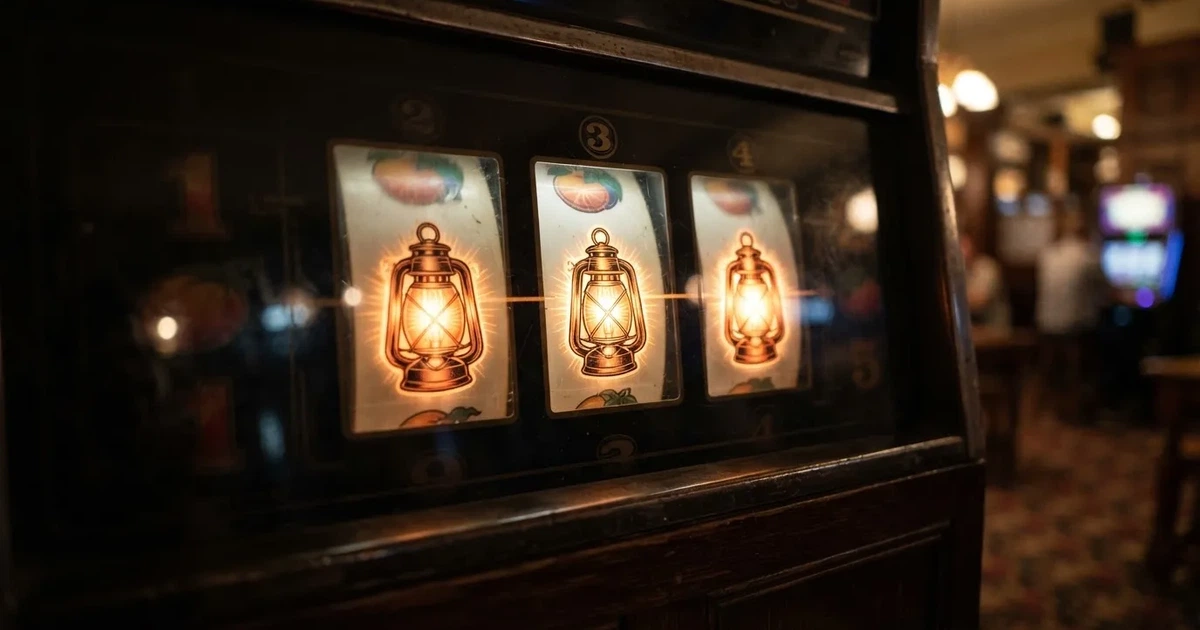
Lightning Link is a series of linked pokie cabinets developed by Aristocrat, the Sydney-based maker whose products sit in roughly every club and pub in the country. Four cabinet themes carry the Lightning Link name — Happy Lantern, Sahara Gold, Magic Gong and Heart Throb — and each one uses the same core mechanic: a hold-and-spin feature in which the reels reset to blanks and the player collects special symbols across successive respins until either the screen fills or the spins run out. The result, by design, is a bonus round that pulls players through several minutes of attention rather than a single decisive spin.
That attention-holding shape is exactly why the format has migrated into search terms like “Lightning Link online pokies” and “Lightning Link casino app”. The Australian market has spent decades around the cabinet version, and the same hold-and-spin feature is now packaged by offshore sites as an “online casino” offering — even though Australia does not license that activity. The fundamental tension this page addresses is simple: the game exists, it is well-known, and the legal channel for playing it is land-based, not online.
How the hold-and-spin bonus round works
Lightning Link’s signature feature is what game designers call a “hold-and-spin” mechanic, and it is built to extend a session in a way that flat spins do not. Six or more coin or orb symbols landing anywhere on the reels trigger the bonus. The triggering symbols lock in place. The remaining positions spin again, and any new bonus symbol that lands also locks, while blanks stay blank. The player gets three fresh respins at the start, and every new bonus symbol resets the count back to three.
The bonus ends in one of two ways: every position on the screen fills with bonus symbols, which pays the game’s top “Grand” jackpot, or the respin counter runs out with empty positions still on the board. In between, each locked symbol carries a credit value or one of the smaller jackpot tiers — “Mini”, “Minor” or “Major” — and the total across the screen is paid out together.
There is no skill input during the bonus round. The player does not choose which positions to hold and which to give up. The format is identical across all four Lightning Link cabinet themes; what changes between them is the artwork wrapped around the bonus, the bet denominations available on the cabinet, and the size of the four jackpots. A reader trying the format in two different pubs will recognise the feature on the second machine within seconds.
The mechanic is also why Lightning Link has been the subject of responsible-gaming concern in Australian research. A bonus round that takes three minutes of held attention per trigger is a bonus round that does not let a player walk away at a normal stopping point. A session clock matters more here than the in-game reminder to “play responsibly”.
The Lightning Link cabinet themes, side by side
The four Lightning Link themes that Australian players will see in clubs and pubs each wrap the same engine in different art. The differences are visual and presentational, not mechanical, but they affect how the bonus round reads on screen.
Happy Lantern is the original release and the most commonly cited in player discussion. The bonus symbols are red paper lanterns with credit values inside, and the artwork around them is a stylised Asian festival palette. Heart Throb is the romance-themed variant, with heart-shaped bonus icons and a softer colour set. Sahara Gold is the desert-adventure theme, with golden orbs and a sand-toned reel frame. Magic Gong is the fantasy variant, with gong-struck bonus symbols and a darker palette.
Across all four, the four jackpot tiers are Mini, Minor, Major and Grand. The Grand jackpot — awarded when the bonus screen fills — is the headline figure on the machine’s top box, and it is a fixed credit prize rather than a progressive that links to other venues. The Mini, Minor and Major jackpots reset to a fixed value after each bonus round rather than ticking upward across machines, so players in different venues are not contributing to a shared pool.
The player who walks up to a Lightning Link cabinet for the first time is essentially choosing an artwork. The bonus behaves the same way under all four.
Lightning Link as a land-based pokie in Australia
Poker machines have been a feature of Australian registered clubs since 1956, when the first legal machines were installed in New South Wales. Lightning Link sits inside that long lineage. As of mid-2023, New South Wales alone had 87,298 gaming machines outside casinos across 2,195 venues; Queensland had 21,122 across 351 venues in October 2023; Victoria had 26,380 outside Crown Casino in 488 venues in 2021–22, against a statewide cap of 30,000. Each state regulates its machines separately, and each one sets a different minimum return-to-player: 85 per cent in NSW, the Northern Territory and Queensland, 87 per cent in the ACT and Tasmania, 87.5 per cent in South Australia, and 90 per cent in Western Australia, where poker machines are restricted to Crown Perth.
Australia carries an outsized share of the world’s pub and club poker machines. In 2020–21, Australians bet almost A$150 billion through gaming machines and lost A$12.18 billion on them, from a country with about 0.3 per cent of the global population. New South Wales alone recorded A$8.18 billion in player losses across 2022–23. The machine count is roughly 3 per cent of the world’s installed base. Lightning Link sits inside that estate; it is one of the more popular formats rather than an unusual one.
The legal channel for an Australian resident who wants to play Lightning Link is therefore straightforward: it is the licensed venue, on the cabinet, in person. Crown Melbourne operates a casino floor that includes a wide range of electronic games under the Victorian Gambling and Casino Control Commission. Crown Perth has expanded from about 200 machines at opening in 1985 to roughly 2,500 today, all approved by the state’s Gaming and Wagering Commission. Clubs and hotels in NSW, Queensland, Victoria, the ACT, South Australia, the Northern Territory and Tasmania offer Lightning Link in their gaming rooms. Tasmania moved oversight of its machines from the Federal Group monopoly to the Tasmanian Liquor and Gaming Commission in late 2021.
Tasmania also planned to roll out nation-leading mandatory pre-commitment cards across its poker machine estate, with implementation delayed until late 2025. The reform requires players to set a spending limit before they sit down at a machine, in the same way thatBetStop binds online wagering accounts to a self-exclusion list.
Why no Australian resident can play Lightning Link online for real money
Australia’s prohibition on online casino games and online pokies is set out in the Interactive Gambling Act 2001, tightened by the Interactive Gambling Amendment Act 2017. It is an offence under the Act to provide an “interactive gambling service” — defined to include online casino games, online pokies and in-play betting — to a person who is physically in Australia. No state or territory issues a licence for that activity, so the “international gambling licence” shown in the footer of an offshore site has no standing in Australia.
What is licensable in Australia is wagering on races and sporting events placed before the event, lotteries and keno. In practice, those services are licensed by the Northern Territory, where the Northern Territory Racing and Wagering Commission (NTRWC) regulates 52 of Australia’s online bookmakers — including Sportsbet, Bet365 and Ladbrokes — for tax reasons. The commission has no full-time staff and meets once a month in Darwin, a fact that came up in an ABC report from April 2026 examining calls to reform the de facto gambling regulator.
The practical consequence for an Australian reader is this: an offshore site offering Lightning Link online pokies for real money is not “licensed elsewhere and serving Australians”. It is unlicensed in Australia, and the only licence it carries is the offshore one. The site does not connect to BetStop, does not connect to the National Gambling Helpline, does not enforce the Australian credit-card ban that took effect on 11 June 2024, and gives no Australian consumer protection if a withdrawal is refused. The Australian resident is not the person prosecuted under the IGA, but they are the person left holding the loss.
This is the heart of the page’s argument. Lightning Link the cabinet game is fully licensed, fully regulated, and sits inside an estate of about 200,000 machines across the country. Lightning Link the online game offered to an Australian resident is the same product name wrapped in an unlawful activity. The mechanics on the screen are identical, the law around the screen is not.
What the ACMA has done about offshore sites offering to Australians
The ACMA — Australian Communications and Media Authority — is the body that investigates breaches of the IGA, issues formal warnings, and asks Australian internet service providers to block illegal sites. The enforcement record over the last several years is long, and the relevant entries for the brands named on this page are below.
According to the ACMA, as of June 2026, a total of 1,751 illegal gambling and affiliate marketing websites had been blocked since the first blocking request in November 2019, and more than 230 unlicensed gambling services had left the Australian market since enforcement was strengthened in 2017. In a single round reported on 26 June 2026, the ACMA asked ISPs to block a further 12 sites: 7Signs, ChromaBet, Donbet, Duospin, Freshbet, Slots Gem, Jacks Club, Lucky Start, Pointsbetz, Spinrise, Vinyl Casino and Wildsino.
H2 Gambling Capital’s 2025 report estimates that Australians lose about A$3.9 billion a year to illegal gambling sites, and that the share of gambling going through legal channels fell from 74 per cent in 2021 to 64 per cent. The same report puts the per-resident illegal gambling loss ahead of the legal spend in several peer countries.
The blocking regime is the one most visible to a reader. Each round the ACMA publishes a list of brand names and a count of newly blocked domains, and ISPs implement the block at the DNS level. The reader who tries to visit a freshly blocked site in their browser sees an error page. The reader who has a balance sitting with that operator at the moment of blocking is left trying to withdraw from an offshore entity that is no longer reachable from an Australian IP.
The ACMA blocking rate, in one band
The arithmetic that matters here is the pace at which the ACMA has been working through the long tail of offshore sites. The first blocking request went out in November 2019, and the running total by June 2026 stood at 1,751 websites and affiliate marketing pages blocked. That is the figure behind the ACMA’s own framing of the enforcement record.
Across the roughly 80 months between November 2019 and the June 2026 snapshot, the cumulative total of 1,751 blocked sites works out to an average pace in the low-twenties per month, with the rounds bunching up in the years after the 2017 amendments took full effect. The June 2026 round alone added 12 sites, a single-batch figure that is roughly half the average monthly pace and shows what one enforcement burst looks like. The pace is not a smooth slope: it comes in batches tied to ACMA investigation cycles, and a single batch can shift the headline count as much as a quiet quarter. Anyone tracking the ACMA’s progress should expect uneven reporting rather than a steady one-a-week pattern.
That unevenness is why the right framing is a band rather than a single monthly figure. The arithmetic also depends on which sites the ACMA counts — the regulator’s own total includes affiliate marketing pages that are not gambling sites themselves but refer traffic to them, so the comparison to a “casino count” elsewhere on the web is not direct. The headline number the ACMA publishes is what it is, and the pace it implies sits somewhere in the low-twenties per month on average.
Bonus offers and promo codes named after Lightning Link
Searches for “Lightning Link casino bonus”, “Lightning Link slot bonus hold and spin”, “Lightning Link casino promo code” and “Lightning Link casino bonus spins” all return the same answer in the Australian context. The bonus terms that appear on an offshore site offering Lightning Link online pokies are bound to the same unlawful activity as the game itself: the operator is unlicensed in Australia, the bonus is paid by that unlicensed operator, and the wagering requirements the bonus carries cannot be enforced through any Australian complaints body.
The hold-and-spin bonus inside the game is something different. It is the in-game feature triggered by six or more bonus symbols, paid in credit values and one of the four jackpot tiers, and it is part of every Lightning Link cabinet in Australia. Players who search for a “Lightning Link casino bonus” are usually looking for two things at once: the in-game feature on a cabinet, and the marketing bonus attached to an offshore site. The cabinet feature is the legitimate one. The offshore marketing bonus is the one that no Australian resident should be claiming, because the underlying site is unlawful under the IGA.
The same logic applies to promo codes. The “Lightning Link casino promo code” search returns links to affiliate pages that list codes for offshore casinos offering the game. Those codes are part of an offer that cannot lawfully be sold to an Australian resident. The promo code is not a separate problem from the underlying site; it is the same problem with a marketing layer on top.
A reader who reaches an offshore “Lightning Link casino” through a promo code link has not improved their odds by using the code. They have instead walked through the affiliate channel that the ACMA has been blocking, and they are sitting at an offshore operator that does not connect to Australian consumer protection.
Lightning Link on a phone: apps, mobile sites and the law
The “Lightning Link casino app” search returns a mix of three things: social-casino apps that offer a free-play version of the format, mobile browser sites run by offshore operators, and apps published by unrelated parties that use the Lightning Link name. None of those is a licensed Australian real-money product.
Social-casino apps are free to play and do not pay out real money. They use the Lightning Link name and the hold-and-spin mechanic under whatever arrangement Aristocrat has agreed to, and they sit in the App Store or Google Play. They do not breach the IGA because there is no real-money gambling. The downside is that there is also no real payout — players who hit a virtual Grand jackpot do not have a withdrawal to make.
Mobile browser sites run by offshore operators offering real-money play are the same kind of unlawful activity as the desktop site, in a smaller window. The ACMA’s blocking applies to the domain, and an Australian resident trying to reach the site on a phone will hit the same block.
Unrelated apps that use the Lightning Link name without a licence are a third category. The names that come up in app stores are not always the work of the operator the affiliate page links to, and the player who installs one and pays in has no way to verify which entity holds their money. Aristocrat’s own commercial position is that licensed online pokies are not provided to Australian residents; the brand name attached to an app does not change the legal standing of the offer.
The practical takeaway for a reader who wants to play on a phone is the same as for desktop. The lawful path is a visit to a licensed venue, where the cabinet is the same regardless of screen size. The unlawful path is the offshore app or mobile site, regardless of how it is packaged.
What Lightning Link looks like among online pokies in Australia
Online pokies, in the sense of internet-delivered slot-style games, are prohibited for people in Australia. The Interactive Gambling Act 2001 covers them as a subset of “interactive gambling services”. Land-based machines are licensed and regulated state by state, and Lightning Link sits inside that regime.
The way to read this is structural rather than technical. A slot machine on a casino floor in Sydney and a slot game on an offshore site in Curaçao can run the same RNG, the same paytable and the same bonus feature. The legal framework around them is what differs, and it differs because the Australian regime does not extend an online licence to any operator. The Australian player has access to land-based Lightning Link; the Australian player does not have lawful access to online Lightning Link for real money.
That distinction shows up clearly when comparing different “Lightning Link casino” listings on the web. Some of them list Lightning Link as a free-play game on a social-casino platform. Some of them list it as a real-money game on an offshore site. The two are not the same product even when they carry the same name and the same feature set.
Other casino formats Australian players will see named online
A reader searching around the Lightning Link term will also encounter baccarat and blackjack, two table games that operate under the same prohibition when offered online to an Australian resident. Both are lawful on the floor of a licensed Australian casino. Both are unlawful when offered by an offshore site to someone in Australia.
Baccarat is the simpler of the two formats. The casino banks both hands, players bet on the Banker, Player or Tie outcome, and the house edge is 1.06 per cent on Banker, 1.24 per cent on Player, and 14.36 per cent on Tie. Punto banco, the variant most often played today, was developed in Havana during the 1940s and is dealt from a shoe of six or eight decks, with cards two through nine at face value, ten and the face cards at zero, and aces at one. Chemin de fer, French for “railway”, is a two-player variant from the late 19th century that plays faster than the original. Crown Melbourne offers three baccarat variants — Traditional Baccarat, Crown Baccarat and 2 to 1 Baccarat — as approved table games under the Victorian Gambling and Casino Control Commission, which replaced the VCGLR as Victoria’s casino regulator on 1 July 2022.
Blackjack carries a lower house edge than baccarat under optimal play. The figure often quoted is around 0.28 per cent under liberal Las Vegas Strip rules (dealer stands on soft 17, double on any two, double after split, resplit aces, late surrender) and around 0.43 per cent under Atlantic City rules. The game has an older lineage than baccarat in some accounts: a related game called veintiuno appears in Miguel de Cervantes’ Rinconete y Cortadillo, written around 1601-1602, and formal rules were published in Britain in 1800. Card historian Thierry Depaulis places the rename to “blackjack” around 1899, with the Klondike Gold Rush prospectors credited for the name. In play, the dealer must keep drawing cards until reaching a total of seventeen or higher, with the “soft 17” rule varying by venue.
The reason these two games sit on the same page as Lightning Link is that the offshore sites offering “Lightning Link casino” almost always offer baccarat and blackjack alongside. The legal status is identical across all three. The reader evaluating one of those sites is evaluating an unlawful offer, regardless of which game on the site they were looking for.
The eleven ACMA-named brands and what their warnings cover
The table below lists the brands that the ACMA itself has acted against for offering prohibited interactive gambling services to Australians. The list is not a recommendation to play at any of these brands. It is the regulator’s own record of who has been warned. Online casino games cannot be licensed anywhere in Australia, whatever offshore licence the site displays in its footer.
| Brand | ACMA action and date | Operator named by the ACMA | Subject support |
|---|---|---|---|
| RocketPlay | Formal warning, March 2026; earlier Dama N.V. warning, May 2022 | Pulsup Ltd (RocketPlay), March 2026; Dama N.V., May 2022 | — |
| Level Up Casino | Formal warning, May 2022 | Dama N.V. | Listed by Bgaming as a host site for its titles |
| Woo Casino | Formal warning, March 2025 | Dama N.V. | — |
| Spirit Casino | Formal warning, May 2025 | Dama N.V. | — |
| National Casino | Formal warning, July 2025 | Consolutetish S.R.L. | Listed on Wikipedia as an offshore casino brand |
| Bizzo Casino | Formal warning, July 2025; earlier TechSolutions warning, 2022 | Consolutetish S.R.L., July 2025; TechSolutions (CY) Group Limited and TechSolutions Group N.V., 2022 | — |
| Ignition Casino | Formal warning, July 2025 | Bamboo Media | — |
| Instant Casino | Formal warning, February 2025 | EOD Code SRL | — |
| Jackbit | Formal warning, April 2026 | Ryker B.V. (Jackbit and CasinOK) | — |
| Casino Intense | Formal warning, April 2025 | Sterplay Holding Ltd | Listed on ABC and ACMA records and on Crown Melbourne’s comparison page |
| Sky Crown | Formal warning, September 2022 | Hollycorn N.V. | — |
The pattern that emerges is that offshore casino operators do not stop at one warning. Dama N.V. received a formal warning in May 2022 covering six brands — Bambet, Dazard, Level Up, Rocketplay, Wild Tornado and Cobra Casinos — and was warned again in March 2025 over Woo Casino and in May 2025 over Spirit Casino. Hollycorn N.V.’s 2022 warning covered Sky Crown and Blue Leo. Bizzo Casino had already been warned in 2022 before the July 2025 warning arrived.
For the Australian resident, the warning record is the strongest piece of public evidence on offer. The ACMA does not act on a hunch. A formal warning is a regulator’s public statement that the named operator offered prohibited services to people in Australia, and the operator has had the opportunity to respond. The list above is what that record looks like for the brands the ACMA has named on the public register.
What the offshore “Lightning Link casino” listing actually delivers
A reader who clicks through an affiliate link for a “Lightning Link casino” and lands on an offshore site is, in practice, choosing between several features of the unlawful offer.
The game selection on those sites usually includes Aristocrat’s Lightning Link alongside a longer list of other pokies and table games from various providers. The site carries an offshore licence, often Curaçao or Anjouan, which has no standing in Australia. The site accepts deposits in ways that may or may not respect the Australian credit-card ban that took effect for licensed operators on 11 June 2024: a site asking for a credit card or a crypto deposit is operating outside the Australian rules even if the underlying transaction is technically settled offshore.
The withdrawal path is where the player finds out what offshore really means. There is no Australian complaints body to escalate to. There is no Australian regulator to appeal a refused withdrawal to. The site is reachable only because the ACMA has not yet blocked its domain, and that reachability can end without notice. A blocked site with a balance on it is the worst-case version of this scenario.
This is the structural reading of the ACMA warning list. The warnings were issued because the regulator concluded that the named brands offered prohibited services. The Australian reader’s safer path is to treat those warnings as a signal rather than as a marketing negative, and to look at the licensed land-based market that Australia does have.
The licensed path for Australian Lightning Link players
A reader who wants Lightning Link without crossing into unlawful territory has three practical options.
The first is the licensed club or pub. NSW clubs alone operate 87,298 machines across 2,195 venues, and the Lightning Link cabinet is a standard fixture on club floors around the country. The same goes for Queensland’s 21,122 machines across 351 venues, Victoria’s 26,380 outside Crown Casino, and the smaller estates in South Australia, Tasmania, the ACT and the Northern Territory. The hold-and-spin feature is the same on every cabinet.
The second is a licensed casino. Crown Melbourne operates under the Victorian Gambling and Casino Control Commission. Crown Perth operates under Western Australia’s Gaming and Wasting Commission. The Sydney casino market reopened in 2022 under NSW Casino Control Act oversight. The casino floor is the only place in Australia where table games like baccarat and blackjack sit alongside electronic games like Lightning Link, and it is a single physical site rather than a chain of machines across clubs.
The third is responsible-gaming infrastructure that does not exist offshore. BetStop, the National Self-Exclusion Register, has been live since August 2023 and binds every Australian-licensed online and phone wagering service to the same exclusion list. An offshore casino is not connected to it, which is exactly why BetStop does not protect a player who has moved their play offshore. Tasmania’s mandatory pre-commitment cards, delayed into late 2025, sit in the same family of state-level infrastructure. The national helpline is 1800 858 858, free, 24/7, with chat at Gambling Help Online.
What the player should look at before sitting down
A Lightning Link session in a licensed Australian venue is a real-money gambling session on a machine with a known minimum RTP. The figure varies by jurisdiction — 85 per cent in NSW, the Northern Territory and Queensland, 87 per cent in the ACT and Tasmania, 87.5 per cent in South Australia, 90 per cent in Western Australia — and that figure is the long-run return the machine is required to deliver. It is not a guarantee on a single session.
The hold-and-spin bonus round is what most Lightning Link sessions are remembered for. The feature is the same on every cabinet theme. The Mini, Minor and Major jackpots reset after each bonus round. The Grand jackpot is a fixed value advertised on the machine’s top box. The game gives no skill input during the bonus, and the respin structure extends the round to several minutes regardless of how many symbols land.
A fixed time limit matters more on Lightning Link than on a flat-spin game. The bonus round is designed to hold attention. A player who sets a clock — or, in Tasmania’s case, a mandatory pre-commitment card — is doing the thing the game’s design does not encourage. That is the responsible-gaming reading the ACMA and state regulators have written into the rules over the last decade, and it is the same reading that motivated Tasmania’s pre-commitment reform.
Responsible play, in the Australian context
The Australian responsible-gaming framework sits at the intersection of federal and state rules, and the IGA is only one of several layers. The most visible single piece is BetStop, the National Self-Exclusion Register, which has been live since August 2023. BetStop binds every Australian-licensed online and phone wagering service — not offshore casinos — to a single register of self-excluded players. The minimum exclusion period is three months, and a player on the register cannot open a new account with a participating operator.
The national helpline is 1800 858 858, free, 24/7, with chat at Gambling Help Online. Both the helpline and the chat service are funded to provide counselling, financial counselling referral, and self-exclusion registration support. State-level services exist alongside the national one, and the national register accepts self-exclusion registrations through any of them.
State-level infrastructure includes Tasmania’s planned mandatory pre-commitment cards for poker machines, delayed into late 2025. NSW operates its own self-exclusion register through ClubsNSW. Victoria operates the YourPlay pre-commitment system alongside Crown Melbourne’s gaming floor. Western Australia’s Gaming and Wagering Commission runs the exclusion register for the state.
The honest framing is that no responsible-gaming infrastructure protects a player who has moved their play offshore. The offshore casino does not connect to BetStop. It does not honour an Australian self-exclusion. It does not give the player access to an Australian complaints body if a withdrawal is refused. The infrastructure only works on the licensed side, and the licensed side is where Australian regulators can enforce it.
The 2026 reform: what is in force, what is not
The Interactive Gambling Amendment (Gambling Reform) Bill 2026 passed Parliament on 19 August 2026. Its advertising and inducement measures commence 1 January 2027. That means the bill is law with a start date, not yet in force on a 2026 page.
The bill does not change the underlying prohibition. Online casino games and online pokies remain prohibited to Australians under the IGA, and that part of the framework is unchanged. The 2026 bill addresses the marketing layer around it: the affiliate pages, the inducement offers, the way unlicensed operators reach Australian residents through search and social channels. The commencement date of 1 January 2027 is what gives the regulator the new tools.
For a reader comparing what is lawful in 2026 versus 2027, the practical effect is small at the player end. The offshore casino offering Lightning Link to Australians is unlawful today, and the new inducement rules do not change that. What changes is the regulatory toolkit for the affiliate channel and the marketing layer around the unlawful offer. The Australian resident considering where to play should not treat 1 January 2027 as the date a new online casino opens; it is the date new rules apply to the marketing of unlawful ones.
Tax and winnings: the Australian position
Gambling winnings of a recreational player are not assessable income in Australia, and losses are not deductible. The position is set out at section 6-5 of the ITAA 1997, which covers ordinary income, and the ATO’s published view is that recreational gambling is not income-producing. The exception is the professional gambler who carries on a business of gambling, where the income and loss treatment follows the business rules.
The practical takeaway for the reader is that an A$500 win on a Lightning Link cabinet at a NSW club is not reported on a tax return, and the corresponding loss is not claimed as a deduction. The position is consistent across all Australian states and territories.
The comparison underneath the headline
A reader weighing the lawful and unlawful paths to Lightning Link is making a structural decision rather than a feature comparison. The lawful path is a cabinet on the floor of a licensed venue, with a known RTP, a connected self-exclusion register and a complaints body the regulator stands behind. The unlawful path is an offshore site with no Australian standing, no connection to BetStop, and a withdrawal path that depends on whether the ACMA has blocked the domain yet.
The arithmetic favours the lawful path on every dimension except convenience. The lawful cabinet is geographically local. The offshore site is reachable on a phone from anywhere. But convenience is the wrong axis on which to evaluate an offer whose underlying activity is unlawful under the IGA, and the Australian regime does not provide a workaround for that.
The choice the reader faces is whether to play Lightning Link on a cabinet they can reach, or to seek out an offshore version that carries the same name and a different legal standing. The right reading of the Australian framework is that the legal standing is the deciding factor, not the bonus terms or the feature list, and that an offer from an ACMA-warned brand is not a bargain the reader can lawfully accept.
What this page is not for
This page is not a recommendation of where to play Lightning Link online. The Australian regime does not allow that activity, and any “Lightning Link online casino” offer the reader encounters is unlawful under the IGA. The page is a description of the game, the law, the regulator’s record, and the licensed land-based alternative.
It is also not a guide to circumventing the ACMA’s blocks. The DNS-level blocks are in place because the regulator determined the sites were unlawful. A reader who reaches a blocked site through a workaround is not improving their standing; they are using a workaround to access an unlawful offer.
It is also not a comparison of Lightning Link variants on the merits. The four cabinet themes differ in artwork and the size of the four jackpots, and they share the same mechanic. The choice between them is a choice of art.
The bottom line
Lightning Link is a real and licensed pokie format in Australian clubs, pubs and casinos, with a hold-and-spin bonus round that runs the same way on every cabinet theme. Online, the same name is offered by offshore operators that the ACMA has repeatedly warned and blocked. The lawful path is the cabinet on the floor of a licensed venue. The unlawful path is the offshore site that promises the same feature set without the Australian standing.
The reader who wants Lightning Link in Australia in 2026 has one path to follow. The reader who prefers to play online should know that the path is closed, and that closing it has been the explicit policy of the IGA since 2001 and the explicit enforcement practice of the ACMA since 2017.
Frequently asked questions
Is it legal to play Lightning Link online pokies for real money in Australia?
No. The Interactive Gambling Act 2001, as tightened by the 2017 amendments, makes it an offence to provide online casino games or online pokies to a person in Australia. No state or territory issues a licence for that activity. An offshore site offering Lightning Link for real money is unlicensed in Australia regardless of what its footer says, and the ACMA has been blocking such sites since 2019.
What triggers the hold-and-spin bonus round on a Lightning Link machine?
Six or more bonus symbols — coin or orb icons depending on the cabinet theme — landing anywhere on the reels. The triggering symbols lock in place, the remaining positions respin, and each new bonus symbol resets the respin count to three. The bonus ends when the screen fills (Grand jackpot) or the respins run out. The player has no skill input during the round.
Is Lightning Link available at regulated land-based venues in Australia?
Yes. Lightning Link cabinets are a standard fixture in NSW clubs and pubs, Queensland clubs, Victorian hotels, the ACT, South Australia, the Northern Territory and Tasmania, and on the floors of Crown Melbourne and Crown Perth. The minimum return-to-player on those machines is set by state, ranging from 85 per cent in NSW, the NT and Queensland to 90 per cent in Western Australia.
Do Lightning Link promo codes work the same way across different cabinet themes?
Promo codes attached to offshore “Lightning Link casino” sites do not change the legal standing of the offer. The underlying site is unlicensed in Australia under the IGA, and a code layered on top of an unlawful offer is not a workaround. The in-game bonus round triggered by bonus symbols on a cabinet is the same across all four themes, with Mini, Minor, Major and Grand jackpot tiers.
Does a Lightning Link app on a phone offer a different game to the desktop version?
A real-money Lightning Link app on a phone is the same unlawful offer as the desktop version under the IGA, and the ACMA’s blocking applies to the domain regardless of device. A free-play social casino app using the Lightning Link name and the hold-and-spin mechanic is a different category: there is no real money involved, and Aristocrat’s name has been licensed for that purpose. The two are not interchangeable, and only the second one is lawful on a phone.
What separates the different Lightning Link reel sets from each other?
The four cabinet themes — Happy Lantern, Sahara Gold, Magic Gong and Heart Throb — wrap the same engine in different artwork. The bonus mechanic is identical. What changes is the visual presentation and the size of the Mini, Minor, Major and Grand jackpots, which are fixed per cabinet rather than progressive across venues.