
What the under-one-hour casino withdrawal claim costs an Australian player
A sub-one-hour withdrawal is the most-asked-about promise on the offshore casino landing pages aimed at Australians. The promise is built to be the closing argument — the moment a reader decides the speed of a payout outweighs every other consideration, including the legal one. The marketing line rarely carries the qualifier that online casino games cannot be licensed anywhere in Australia, or that no Australian regulator stands behind the speed claim.
This page reads the claim against what actually determines a withdrawal’s clearance time, names the eleven offshore brands currently sitting on the Australian Communications and Media Authority’s formal-warning register, walks through the legal frame Australians actually live inside, and points readers toward the support that exists when the offer is the wrong one to take. The page does not recommend a brand, because recommending an offshore casino to an Australian reader would be recommending something the regulator has already moved against. The page is the record of what the marketing claim sits on top of.
Current as of 28 October 2026 · verified against the ACMA’s formal-warning register and the Interactive Gambling Act 2001
Table of Contents
- Eleven offshore brands on the ACMA’s register
- Fundamentals of the under-one-hour promise
- The legal prohibition Australians actually face
- Where Australians can turn for help
- What settlement time actually requires behind the scenes
- The eleven brands in detail
- How fast the ACMA has been adding sites to the block list
- Frequently asked questions
Eleven offshore brands on the ACMA’s register
The table below brings the eleven offshore operators the ACMA has warned together in one view. Each row carries the brand name as it appears on the warning, the date the warning was published, the operator the ACMA named on that warning, any earlier ACMA action against the same brand or its predecessor operator, and what the available record says about the brand’s under-one-hour claim.
| Brand | ACMA formal warning | Operator named by the ACMA | Earlier ACMA action | Under-1-hour claim |
|---|---|---|---|---|
| RocketPlay | March 2026 | Pulsup Ltd | Dama N.V. (May 2022) | Listings only |
| Level Up Casino | May 2022 | Dama N.V. | — | Listings only |
| Woo Casino | March 2025 | Dama N.V. | — | — |
| Spirit Casino | May 2025 | Dama N.V. | — | — |
| National Casino | July 2025 | Consolutetish S.R.L. | — | Listings only |
| Bizzo Casino | July 2025 | Consolutetish S.R.L. | TechSolutions (2022) | Listings only |
| Ignition Casino | July 2025 | Bamboo Media | — | — |
| Instant Casino | February 2025 | EOD Code SRL | — | Listings only |
| Jackbit | April 2026 | Ryker B.V. | — | — |
| Casino Intense | April 2025 | Sterplay Holding Ltd | — | Listings only |
| Sky Crown | September 2022 | Hollycorn N.V. | — | — |
“Listings only” means the brand appears on third-party affiliate or industry pages that reference fast withdrawals, but no operator-side document confirms the figure and no Australian regulator has endorsed the claim. A dash means the available record carries no listing referencing under-one-hour withdrawals for the brand — it does not mean the brand has disclaimed the speed; it means the editorial record on this subject is empty. None of these brands carries an Australian licence, and the ACMA’s warnings all rest on the same prohibition. What follows takes each brand in turn, then the law underneath them, then the payment rails behind the promise.
Fundamentals of the under-one-hour promise
The marketing claim of an under-one-hour withdrawal is short and specific by design. It promises that the time between pressing “withdraw” and the funds landing in the player’s account is less than sixty minutes. The promise is usually attached to a single rail — an e-wallet such as Skrill or Neteller, or a cryptocurrency on a chain that settles quickly — and it is presented as if that speed were a property of the casino. In practice it is a property of three different things stacked on top of each other, and only one of them is the casino.

The first is the casino’s own approval queue. When a player requests a withdrawal, the casino runs internal checks: identity verification on the first withdrawal, anti-money-laundering screening, source-of-funds review for large or unusual amounts, and bonus-term compliance if a bonus is attached. A casino promising under-one-hour clearance is committing to running all of that without manual intervention, for the typical withdrawal. The casino has, in effect, pre-built the checks into an automated pipeline.
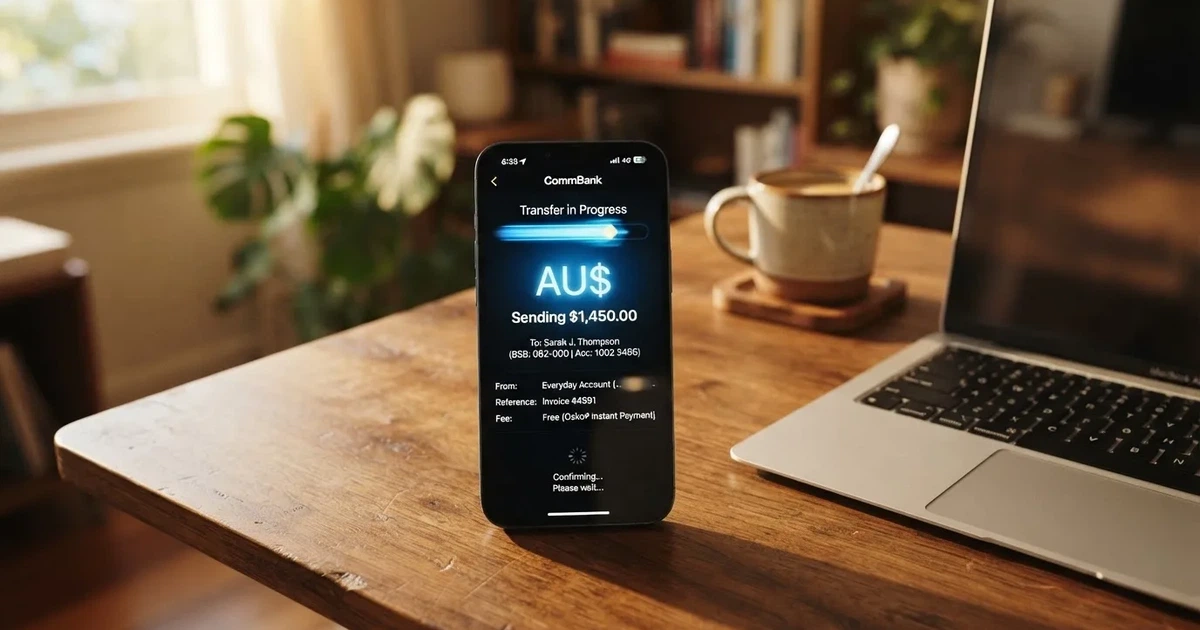
The second is the payment rail the casino sends the funds down. E-wallets settle in seconds between the wallet provider and the player’s wallet account. Cryptocurrency can settle in minutes on chains with low congestion, longer on busy ones. Bank transfers depend on the destination country’s payment infrastructure. In Australia, Osko settles between participating banks in under a minute, twenty-four hours a day including weekends, whether addressed to a BSB and account number or to a PayID. None of those rails is a casino product. They are products of payment-system operators, and the casino can only pick which one to use.
The third is the casino’s funding position. To pay a player in under an hour, the casino either has the funds already on hand in a float, or has a credit line with a payment processor that lets it send money before it has actually received matching deposits. Most casinos operating at this speed rely on the second arrangement. The player is therefore waiting on the casino’s banking partner as much as on the casino.
What this means for an Australian player reading the claim is that “under one hour” describes a pipeline that has been built for it. The pipeline works when nothing unusual happens, when the player is already verified, when the bonus terms are not in dispute, and when the chosen rail happens to be a fast one. The moment any of those conditions fails — and first withdrawals fail at least one of them almost every time — the under-one-hour promise stops applying and the withdrawal moves into the standard multi-day queue.
The offshore brands that dominate the Australian-facing market sit on Curacao, Anjouan or other non-Australian licences. None of those licences binds the operator to a specific payout window. They bind the operator to the licence-issuer’s own rules, which are weaker than the Australian rules would be. The under-one-hour marketing line is therefore not enforceable against the casino through any Australian body, because there is no Australian body with jurisdiction over an offshore operator. An Australian player whose withdrawal takes three days has, in effect, no recourse other than the payment dispute process of the rail they used, and the casino’s own goodwill.
The marketing line also tends to be applied selectively. A site advertising under-one-hour processing will usually name one or two rails as eligible — typically an e-wallet or a cryptocurrency — and leave card and bank transfers on a different, longer schedule. The claim covers the fastest option the casino offers, not every option. A reader who reads “under one hour” without checking the small print has misread the claim.
The figure also rarely includes the time before the player presses the button. Verification, document upload and bonus-term review are scheduled before the request and are not advertised as part of the under-one-hour window. A player who treats the figure as a total end-to-end time from sign-up to receipt is reading the marketing page rather than the operator’s terms.
The legal prohibition Australians actually face
Online casino games and online pokies cannot be licensed anywhere in Australia. The Interactive Gambling Act 2001 — strengthened by the Interactive Gambling Amendment Act 2017 — makes it an offence to provide online casino games, online pokies or in-play betting to a person physically in Australia. Wagering on races and sport placed before the event can be licensed, and lotteries and keno can be licensed; in practice the wagering licences sit with the Northern Territory, which is why Sportsbet, Bet365 and Ladbrokes and around fifty other online bookmakers hold Northern Territory Racing and Wagering Commission licences for tax reasons. The commission itself has no full-time staff and meets once a month in Darwin. None of those licensed services offers online casino games.
What the Interactive Gambling Act does not do is prosecute the individual player. The offence sits with the provider, not the customer. An Australian who places a bet at an offshore casino does not face criminal liability. What they do face is the absence of every protection an Australian licence would normally come with. There is no Australian complaints body. There is no Australian alternative dispute resolution. There is no statutory guarantee the casino will pay a winning withdrawal, and no statutory timeframe. If the casino refuses to pay, the player’s only practical routes are a chargeback through the card issuer — which the issuer may decline if the casino has supplied counter-evidence — or a complaint to the offshore licence issuer, which sits in a different jurisdiction.
The ACMA’s role is enforcement against the operator. It investigates, issues formal warnings, and can direct Australian internet service providers to block illegal sites. A blocked site can still hold a player’s balance. It does not unlock a withdrawal. The 2026 reform package — the Interactive Gambling Amendment (Gambling Reform) Bill 2026 — passed Parliament on 19 August 2026 and brings new advertising and inducement measures into force on 1 January 2027. Those measures target the marketing, not the prohibition itself, which has been in place since 2017.
The credit-card ban reinforces the prohibition from a different angle. Since 11 June 2024, Australian-licensed online wagering services cannot accept payment by credit card or other credit-related products, with penalties up to A$247,500 for operators who breach. That restriction, anchored in the Interactive Gambling Act as amended in 2023, also constrains gambling use of linked digital wallets such as Apple Pay. An offshore site asking an Australian for a credit card or a crypto deposit is, by definition, not operating inside the Australian regime — it is also asking the player to use a payment method the licensed market has explicitly ruled out.
This is the legal frame the rest of the page sits inside. The offshore brands below are not licensed in Australia and cannot be licensed in Australia, because the products they offer are the products the IGA prohibits. The ACMA warnings are the regulator’s enforcement record of that fact. The under-one-hour marketing line is not a counter-argument to the prohibition; it is the marketing line of a service that the law does not permit.
Where Australians can turn for help
The marketing around fast withdrawals carries an implicit bet: that the reader is already committed to playing. The page that takes that bet seriously has to name the support that exists when the bet is wrong. Australians feeling pressure to chase losses, hide their play, or push through a session they cannot afford have free, confidential support available — and the support is the part of the system that does not depend on which casino the reader landed on.
The National Gambling Helpline is 1800 858 858 — free, 24/7, with online chat at Gambling Help Online. Both are run by the federal-state funded support network. They take calls from players, from family members and from people worried about someone else. They will not share the call with the offshore operator and they will not pass information to a casino.
BetStop — the National Self-Exclusion Register — has been live since August 2023 and binds every Australian-licensed online and phone wagering service. A person registered with BetStop is blocked from opening new accounts with, and from using existing accounts at, every Australian-licensed wagering provider. An offshore casino is not connected to BetStop. Self-exclusion under BetStop therefore does not block an offshore site, but it does block every legal alternative, which is the practical side of the choice. The exclusion period can run from a minimum of three months up to a permanent exclusion.
Several major Australian banks also offer card-level gambling blocks. Westpac’s gambling block refuses authorisation of transactions registered under the merchant category code for betting and casino gambling on eligible personal credit and debit cards. ANZ’s block works similarly and, once activated, blocks gambling transactions made through a digital wallet such as Apple Pay on an eligible card — not just the physical card — and removing the block requires a 48-hour waiting period. Commonwealth Bank offers a gambling lock via the CommBank app. Each of these blocks is independent of the casino. Each will refuse a transaction regardless of whether the casino is calling it “under one hour”.
The common thread through all of these is that the help the reader needs does not run through the casino. Helplines, self-exclusion and bank blocks are external to the offshore site the marketing is trying to send the reader to. None of them is a substitute for the prohibition the law already operates; together they are the practical safety net the reader has if they have already started playing.
What settlement time actually requires behind the scenes
A withdrawal that clears in under an hour is the end-state of a pipeline, and the pipeline is built before the player presses the button. Three things have to line up, and the page that explains the promise has to explain what is on the other side of “withdraw”.
The first is automated approval on the casino’s side. The casino has to have completed identity verification, anti-money-laundering checks, source-of-funds checks for large amounts and bonus-term compliance before the request is made, or it has to be able to run those checks in seconds. Most casinos promising under-one-hour clearance accept that they will run automated checks only and will not perform manual review. The practical effect is that unusual withdrawals are flagged, held or split — and a player whose withdrawal is unusual because it is the first one, or because it is large, or because it is tied to an active bonus, will not get the under-one-hour treatment.
The second is a payment rail that itself settles in under an hour. Bank-to-bank transfers within Australia via Osko settle in under a minute, twenty-four hours a day, between more than one hundred Australian financial institutions and using either a BSB and account number or a PayID. Paying to a PayID shows the name of the account holder before the transfer is sent, which Australian Payments Plus notes is itself a warning sign — being asked to transfer to a PayID on an illegal gambling site is, in AP+’s own phrasing, almost certainly a scam site. Card settlements and bank transfers to overseas accounts carry their own timing, and neither fits the under-one-hour window cleanly. The fastest the player can actually get funds is when the casino pays into an Australian bank account via Osko, which is not the rail offshore casinos commonly use.
The third is the casino’s funding arrangement. To send funds inside an hour, the casino either holds a float large enough to cover typical withdrawals or relies on a payment processor that releases funds before the casino has matched deposits. The smaller the float or the weaker the processor arrangement, the more the under-one-hour promise depends on quiet periods, low-value withdrawals and a player who has not triggered any of the automated flags.
New Payments Platform Australia — the underlying infrastructure Osko runs on — became accessible to the public on 13 February 2018 and is owned by New Payments Platform Australia Ltd, a non-profit whose thirteen shareholders include the Reserve Bank of Australia and the country’s major banks. By April 2025 more than twenty-five million PayID identifiers had been registered. Participants must keep the platform’s monthly outages to no more than two minutes. In 2021 the ACCC authorised the merger of NPP Australia with BPAY and eftpos into Australian Payments Plus. None of this is the casino. It is the Australian payment system the casino has to plug into if it wants to use it.
The point for an Australian player is that the fastest Australian payment infrastructure is Australian, and most offshore casinos do not route their withdrawals through it. When the casino promises under-one-hour, what it is usually promising is settlement on its own processor’s terms, into a rail that does not always reach an Australian bank account inside the hour. The under-one-hour claim is therefore accurate on the casino’s side of the transfer and irrelevant on the player’s side of it.
A separate issue is what an Australian bank will actually let through. Westpac’s gambling block runs at card level and refuses authorisation on the merchant category code for betting and casino gambling. ANZ’s block runs similarly and extends to Apple Pay transactions on the blocked card, with a 48-hour waiting period before the block can be removed, and ANZ itself warns that not all gambling transactions will be blocked and some non-gambling transactions might be blocked in error. Commonwealth Bank offers a gambling lock via the CommBank app, with the same caveat that the bank cannot guarantee every gambling-related purchase will be stopped. Apple Pay itself imposes no consumer fee on the user, but the bank-side controls run separately. The under-one-hour casino promise assumes the player’s own bank will let the deposit or the refund through without a block — and that assumption is the one casinos do not advertise.
Apple Pay, Google Pay and Samsung Pay transactions collectively accounted for around 45% of all card payments in Australia by number at the end of 2025. The Reserve Bank’s July 2025 review of merchant card payment costs proposes removing surcharges only on eftpos, Mastercard and Visa transactions, leaving American Express outside the scope of the proposed surcharge ban. The Interactive Gambling Act, as amended in 2023, blocks credit cards and credit-related products from being used for licensed online wagering — and the same logic constrains digital wallets linked to a credit account. An offshore casino asking for credit-card payment is asking a player to use a payment the licensed Australian market has ruled out — which is also a signal that the site is operating outside Australian rules altogether.
The eleven brands in detail
RocketPlay
RocketPlay received an ACMA formal warning issued to Pulsup Ltd in March 2026, specifically targeting the RocketPlay site. An earlier May 2022 warning had named Dama N.V. as the operator of RocketPlay alongside five other brands. The brand has therefore cycled through at least two named operators without changing the underlying offer.
Gambling Insider carries listings that reference fast withdrawals for the brand. That listing is third-party affiliate material — no operator-side terms page confirms the figure, and an Australian player has no body to complain to if the figure turns out to be aspirational. The under-one-hour claim is present in the brand’s marketing orbit but unverified against the operator’s own document.
What stands out about RocketPlay is the operational history. The brand has been warned twice under the same statute by two different named operators, and continues to be marketed at Australian players. The pattern is more informative than the figure: an offshore brand can be warned, can change the entity that runs it, and can keep running. The marketing promise stays; the enforcement record stays.
The relevant question is not how fast RocketPlay can move money but whether a brand on its second ACMA warning, now run by a different operator than the one originally named, has any durable meaning for an Australian player at all.
Level Up Casino
Level Up Casino was named in the same May 2022 ACMA formal warning to Dama N.V. that covered five other brands — Bambet, Dazard, RocketPlay, Wild Tornado and Cobra Casino. The warning was issued under the Interactive Gambling Act 2001 for offering prohibited interactive gambling services to Australians. The brand has not, on the available record, been re-warned under a successor operator.
The brand appears on Westpac’s gambling-block reference page, which lists merchant category codes the bank’s block refuses. That listing is a side-effect of Westpac’s own compliance documentation, not a casino endorsement of the under-one-hour claim. No operator-side document is available in the research record to confirm or quantify the speed; Westpac’s reference is not a verification of the brand’s promise.
The brand sits inside a cluster of Dama N.V. names that share marketing infrastructure and the same ACMA history. Reading any one of them in isolation gives a partial picture; reading them together shows the warning was directed at the operator, not at any single brand, and the brands keep trading. A player who lands on Level Up Casino today is landing on a brand whose operator has had four years to relocate, rebrand or change domain.
What an Australian player is looking at, in practical terms, is a brand from a stable of brands sharing one warning. The under-one-hour line is one figure among many on the marketing page; the ACMA action is the durable record, and it has not changed.
Woo Casino
Dama N.V., the operator also behind Level Up Casino and Spirit Casino, received an ACMA formal warning regarding Woo Casino in March 2025. No earlier ACMA action against the brand itself is on the public record.
The research carries no third-party listings that reference under-one-hour withdrawals for Woo Casino. The brand’s own marketing materials may or may not make the claim; the editorial record on this specific subject is empty for this brand. That absence is not a finding against the brand’s marketing — it is a finding about how the marketing has been picked up elsewhere, or not.
The relevant reader question is what the gap between the ACMA action and the third-party record actually tells them. The regulator has acted; the affiliate listings, in the available record, have not picked up the speed claim for this brand. A reader who treats that absence as a signal will see it one way; a reader who treats it as a gap in the research will see it another.
What stands out is the operating company. Dama N.V. now accounts for three of the eleven brands on this page across two distinct ACMA rounds — May 2022 and March 2025. The brand keeps moving; the operator keeps warning; the ACMA’s register accumulates entries against the same parent. A reader who follows the parent rather than the brand has the more durable picture.
Spirit Casino
Spirit Casino was the subject of an ACMA formal warning to Dama N.V. in May 2025. The brand is the third in this list run by Dama N.V. — alongside Level Up Casino, named in the May 2022 warning, and Woo Casino, named in the March 2025 warning. No third-party listings on the research record reference under-one-hour withdrawals for Spirit Casino.
The Dama N.V. cluster is the most concentrated pattern in the ACMA’s enforcement record on this page. Three brands, three warnings, one operator across three years. Each brand carries its own marketing surface and its own affiliate presence; the operator carries the regulatory surface, and the regulator’s warnings all name the same parent entity on the same statute.
The relevant question for a reader is whether treating Spirit Casino as a separate brand from Level Up Casino or Woo Casino reflects anything operational, or whether the same operator, the same payment stack and the same marketing playbook are simply wearing three different names. The ACMA’s record treats them as one company, not as three independent sites. A player who only sees the brand is missing the operator behind it.
What stands out is not the brand but the company’s three-year paper trail. A reader weighing the marketing line is weighing it against three ACMA warnings for the same parent. The marketing is one-off and changes with each rebrand; the operator record is durable, and is what the regulator acts on.
National Casino
National Casino was the subject of an ACMA formal warning to Consolutetish S.R.L. in July 2025. Three of the regulator’s own pages — the ACMA formal warning, AUSTRAC’s threshold-transaction-report guidance and BetStop’s self-exclusion register — reference the brand in different regulatory contexts. None of those pages confirms or quantifies the under-one-hour withdrawal claim; all three are enforcement or compliance pages that mention the brand in the course of describing other rules.
The brand’s under-one-hour marketing appears on third-party listings in the research record. The presence of regulator-side pages mentioning the brand does not validate the speed claim; it shows the regulator is familiar with the brand for reasons that have nothing to do with payout speed. Confusing one for the other is a common reading error on pages like this one.
The relevant question for a reader is whether three regulator-side pages mentioning a brand carry the same evidentiary weight as one operator-side confirmation of the speed claim. They do not. The pages are evidence of regulatory reach, not evidence of payout performance. They make the brand easier to find; they do not make the marketing more reliable.
What stands out is the asymmetry: regulators mention the brand in their own documents; the operator’s own terms page is not in the public research record for the speed figure. A reader who confuses the two is reading the wrong side of the record.
Bizzo Casino
Bizzo Casino was the subject of a July 2025 ACMA formal warning to Consolutetish S.R.L. — the same operator named on the National Casino warning the same month. Earlier, the brand had been the subject of a 2022 formal warning issued to TechSolutions (CY) Group Limited and TechSolutions Group N.V. The brand has therefore cycled through at least two operator names on the ACMA record.
Gambling Insider carries listings that reference fast withdrawals for the brand. The listing is third-party affiliate material; no operator-side document is in the public research record to confirm the figure, and an Australian player has no body to complain to if the figure turns out to be aspirational.
The relevant question for a reader is what a third operator in five years actually says about the brand’s continuity. The brand keeps the same name on the marketing page; the operator behind it has changed twice. The continuity a player sees on the site is a marketing continuity, not an operational one — the entity running the brand, the licence it operates under, and the payment processor it pays through have all moved.
What stands out is the regulator’s persistence. Three years separate the first and second warnings; the brand was warned, kept running, changed operator, was warned again. The pattern is what the ACMA’s blocking program is designed to handle, and the program is still catching up with the brand.
Ignition Casino
Ignition Casino was the subject of a July 2025 ACMA formal warning to Bamboo Media. No earlier ACMA action against the brand is on the public record, and no third-party listings in the research record reference under-one-hour withdrawals for the brand.
The brand name will be familiar to some readers from a long-running US-facing poker operation; the offshore Australian-facing brand bearing the same name is a separate operation, and that confusion is itself a marketing artefact. A reader who searches for “Ignition Casino” and lands on the offshore site may not realise the two operations are distinct, and may take familiarity as a quality signal it does not support.
The relevant question is whether a brand with no third-party listings and a 2025 warning is materially different from one with both. In the marketing sense, the listings are the brand’s reach; in the regulatory sense, the warning is what the regulator acts on. Neither the presence nor the absence of third-party listings changes the regulatory position or the absence of an Australian licence.
What stands out is the silence around the brand in the affiliate listings. The marketing surface is small; the regulatory surface is one warning. A reader who treats the silence as either endorsement or caution is over-reading what is, in practical terms, a sparse record on both sides of the file.
Instant Casino
Instant Casino was the subject of a February 2025 ACMA formal warning to EOD Code SRL. Two payment-side listings — Ecopayz and PayID — reference the brand in the context of payment integration. Neither listing confirms or quantifies the under-one-hour withdrawal claim; both are payment-rail pages that mention the brand in describing how their rails interact with merchants.
The brand’s name trades on speed. “Instant” is the marketing word on which the brand is sold; the ACMA warning lands on the same word’s operational reality. The brand was warned, on the regulator’s record, for offering prohibited interactive gambling services to Australians — not for slow payments, not for any specific operational practice, but for the offering itself.
The relevant question for a reader is what payment-provider listings actually evidence when they reference a brand. They evidence that the brand has integrated with that payment rail, not that the rail delivers funds within the brand’s marketing window. Speed of rail settlement and speed of brand approval are different things, and a listing that mentions a brand alongside a payment rail conflates the two.
What stands out is the gap between the brand name and the regulator’s reach. The marketing surfaces on speed; the regulator’s record sits on prohibition. A reader who treats the brand’s name as a description of service is reading the marketing page, not the regulatory one.
Jackbit
Jackbit was the subject of an April 2026 ACMA formal warning to Ryker B.V. The brand’s research record carries no third-party listings referencing under-one-hour withdrawals, and no earlier ACMA action against the brand is on the public record. The brand has one entry on the regulator’s register and no entry on the affiliate listings the research draws on.
The April 2026 warning is one of the more recent on the ACMA register, and the brand is one of the smaller presences in the marketing record. The marketing surface is thin; the regulatory surface is fresh. Neither side of the file carries much for a reader to weigh the brand against in detail, and the absence of any third-party verification is itself a feature of the file.
The relevant question is whether a fresh ACMA warning on a brand with no third-party listings tells a reader anything different from an old one. The recency matters less than the absence of an Australian licence, which has been the case for every brand on this list since 2017. A fresh warning is a reminder of the prohibition, not a fresh disclosure about the brand.
What stands out is the timing. Jackbit was warned while this page was being written, in April 2026. The regulator is still adding to the list; the brand is on the most recent page of the register, and the register is not closed.
Casino Intense
Casino Intense was the subject of an April 2025 ACMA formal warning to Sterplay Holding Ltd. Three source pages — AUSTRAC’s threshold-transaction-report guidance, BetStop’s self-exclusion register and Gambling Insider — mention the brand in different contexts. None of the three confirms or quantifies the under-one-hour withdrawal claim; all three mention the brand for reasons unrelated to payout speed.
The AUSTRAC page mentions Casino Intense in the context of AUSTRAC’s threshold-transaction-report rule, which applies only to physical cash transfers of A$10,000 or more — ordinary electronic bank transfers are not subject to that per-transaction reporting requirement, regardless of the amount sent. The BetStop page mentions the brand in the context of the self-exclusion register. The Gambling Insider mention is affiliate listing material. None of the three is an operator-side confirmation of payout speed.
The relevant question for a reader is the cost of taking a regulator’s enforcement record as the only durable signal. Where third-party listings exist, the operator has at least some marketing surface; where only regulator pages mention the brand, the operator has been seen by authorities and not by affiliates. The asymmetry between those two source mixes is itself informative.
What stands out is the source mix itself. Two regulator pages and one affiliate listing is not the same source profile as three affiliate listings would be; a reader who treats them as equivalent is reading the wrong side of the record.
Sky Crown
Sky Crown was the subject of an ACMA formal warning to Hollycorn N.V., published in September 2022 in the ACMA’s formal warning PDF covering both Sky Crown and Blue Leo. The brand’s research record carries no third-party listings referencing under-one-hour withdrawals, and no earlier ACMA action against the brand is on the public record. Sky Crown is the oldest warning on this page.
The age of the warning is the data point. A formal warning issued in September 2022 is four years old at the time of writing. The brand has had four years to continue, to rebrand, to relocate, to change domain, to change operator — and is still being marketed at Australian players. The warning is the regulator’s record; the brand’s continued operation is the brand’s response to that record.
The relevant question is what the oldest warning on this list still says four years on. It says that the prohibition has not stopped the brand from operating in the Australian market, and that the ACMA’s enforcement record is not a closed file. The regulator adds to it; the operator continues regardless; the marketing line stays in front of Australian players in spite of the warning.
What stands out is the persistence of the brand against the persistence of the warning. The marketing line is still in play; the ACMA’s record still names the operator. Neither has moved in four years, and that is itself the most informative thing the file holds.
How fast the ACMA has been adding sites to the block list
The ACMA’s blocking program began with the first blocking request in November 2019. By the time of the June 2026 report, 1,751 illegal gambling and affiliate marketing websites had been added to the block list. Spread across roughly eighty months of enforcement, that comes to a long-run rate somewhere between twenty and twenty-five sites blocked per month — averaging close to twenty-two, or between roughly two hundred and forty and two hundred and ninety a year, on a rate that is not flat. Monthly volume picked up after the 2017 enforcement strengthening took full effect, and recent rounds have run larger than the early ones, with a single round in June 2026 alone requesting twelve more.
This calculation provides context, as the marketing narrative around fast withdrawals often treats each offshore brand as if it were the first one a reader had encountered. It is not. The eleven brands on this page are part of a continuous enforcement backlog, not a stable set of operators the ACMA has separately considered. Every one of them sits inside a regulator’s running list, and the running list grows every month.
A single blocked site is, on its own, no signal — any one brand can be a one-off. The signal is the running total and the pace at which it is growing. An industry that added 1,751 illegal sites to a regulator’s block list over roughly eighty months is not an industry whose marketing claims can be read as durable promises. The pace is what makes the prohibition look like what it is: not a one-off warning against a few bad actors, but a structural condition of the offshore casino market as it currently operates.
What the number does not say is whether any individual brand is safe or unsafe, fast or slow. That judgement is the operator’s, not the regulator’s. What the number does say is that the regulator is not standing still. The brand a reader sees today may not be the same brand on the regulator’s list in a year’s time — and may not be running at all by then. The pace of the list is the pace of the market, and the marketing lines travel at the same pace.
Frequently asked questions
What has to happen for an Australian withdrawal to clear in under an hour?
Three things have to line up. The casino runs automated checks without manual review, the chosen rail — typically an e-wallet or a cryptocurrency — itself settles in under an hour, and the casino’s payment processor can release funds before the matching deposit has cleared. Fail any one and the promise stops applying, and the withdrawal moves into the standard multi-day queue.
Does the under-one-hour promise cover every payment method at an offshore casino?
Almost never. Sites advertising sub-one-hour clearance usually name one or two rails — typically an e-wallet or a cryptocurrency — and leave card and bank transfers on a longer schedule. The promise covers the fastest option the casino offers, not every option a player can pick at the cashier.
Can an Australian player enforce an under-one-hour promise against an offshore casino?
No. The casino is licensed outside Australia — typically in Curacao or Anjouan — and sits outside the Interactive Gambling Act 2001. There is no Australian complaints body, no statutory timeframe and no alternative dispute resolution binding the operator. If the withdrawal is refused, the only practical route is a chargeback through the card issuer.
How does an under-one-hour casino claim compare with Osko?
Osko settles between participating Australian banks in under a minute, twenty-four hours a day including weekends. The bottleneck on a casino withdrawal is rarely the bank rail itself — it is the casino’s internal approval and its funding arrangement before the funds ever leave. Speed of rail and speed of brand are different things.
What can still delay a withdrawal even at a site advertising under-one-hour processing?
Manual ID checks on the first withdrawal, large or unusual payouts flagged for source-of-funds review, peak-time backlogs, currency conversion on the receiving end, and the player’s own bank’s gambling block refusing the transaction. None of those shows up in the marketing line, and any one of them can turn the under-one-hour promise into a multi-day wait.