
Big Red Pokies Online in Australia: Why the Online Version Does Not Exist for Australian Players
Most readers who type it in already suspect the answer. Big Red, the Aristocrat-styled outback pokies theme, cannot be legally offered to a person sitting in Australia over the internet — and the same prohibition applies to every online casino game, every online pokie and every in-play betting product that the offshore marketing pages promise. The landscape a player meets is therefore not a list of online venues where Big Red can be played for real money. It is a federal prohibition enforced by the Australian Communications and Media Authority, a queue of formal warnings to operators who ignored it, and a land-based floor where the theme still exists in licensed pubs and clubs — and in Crown Perth. This page walks through what is actually on offer, what is prohibited, and which offshore operators the ACMA has named in writing.
Data current as of 28 October 2026, verified against the Australian Communications and Media Authority’s formal warning register and the Interactive Gambling Act 2001 as amended.
Table of Contents
- How this comparison is put together — and why it is shaped the way it is
- The ACMA enforcement record against offshore sites offering the Big Red theme
- What the Interactive Gambling Act actually prohibits
- The blocking-rate arithmetic — what the ACMA’s running total implies
- Responsible gambling — what is actually available to a player in this market
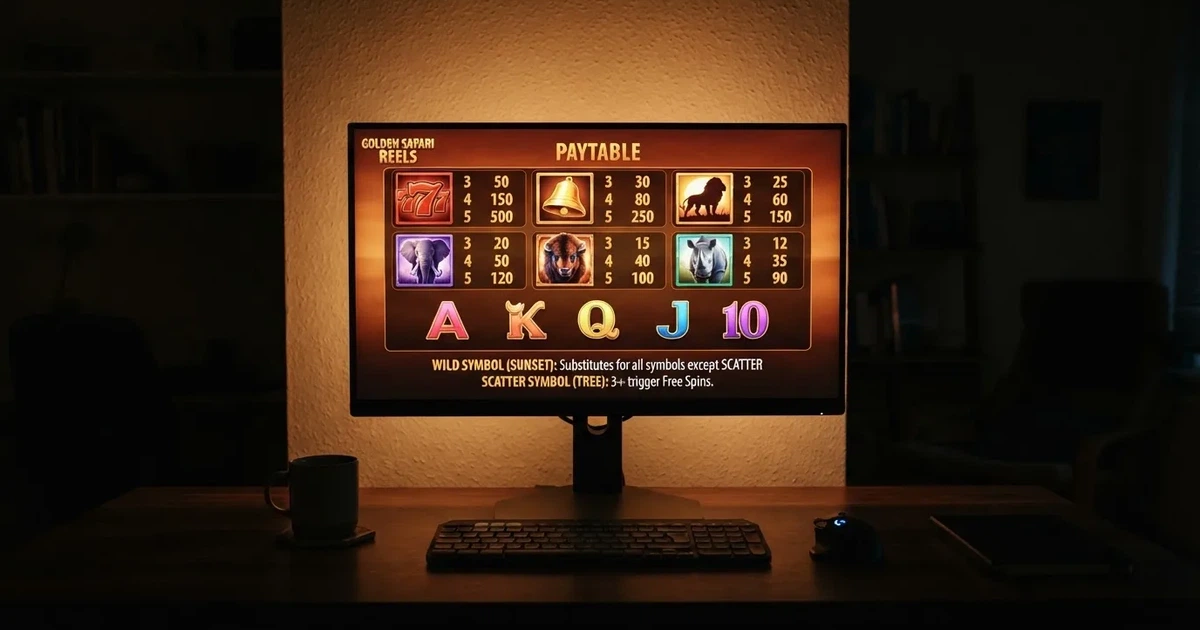
- The Big Red theme itself — what the actual pokies look like
- The H2 Gambling Capital estimate — what the illegal market is worth
- The tax position for a recreational player
- The two sides of the choice, honestly drawn
- FAQ
How this comparison is put together — and why it is shaped the way it is
A shortlist comparing “places to play Big Red pokies online” cannot be honest in the way other casino guides are honest. The product itself is prohibited. So the only comparison worth doing here is the one the ACMA has already done — the operators it has formally warned, the dates those warnings were issued, and the gap between what those offshore sites advertise and what Australian law allows. Eleven brands appear in this guide because eleven brands have been put on the formal warning register. The ordering mirrors the order in which the ACMA acted on them, and the column set focuses on what a reader can verify rather than on bonuses or welcome offers (which the law also restricts). One column captures the operator named on the warning notice itself, because the brand a punter sees at the top of the page is often a different corporate entity from the one the regulator writes to. That is the column that does the work of any ordinary licence check on a comparison of legal operators — the warning letter is the closest thing this market has to a public regulator action.

A note on the framework: in a normal pillar page the criteria would be licence, payout time, game count, RTP. Here those columns do nothing useful. A licence from Curaçao does not authorise service to Australia under the IGA. A payout time to a blocked domain is meaningless. RTP figures attached to a prohibited product do not change its legal status. The criteria that actually matter are the ones tied to the prohibition: has the regulator acted, and on what date, and over what brand, and under what operating company. The table that follows is built around those.
The ACMA enforcement record against offshore sites offering the Big Red theme
The Australian Communications and Media Authority has been steadily adding to a public list of operators it has warned, fined or referred for blocking. By the June 2026 reporting round the running total of blocked websites and affiliate marketing pages sat at 1,751 since the first blocking request was issued in November 2019, and more than 230 unlicensed services had left the Australian market since enforcement was strengthened in 2017. A single round reported on 26 June 2026 added another twelve domains: 7Signs, ChromaBet, Donbet, Duospin, Freshbet, Slots Gem, Jacks Club, Lucky Start, Pointsbetz, Spinrise, Vinyl Casino and Wildsino.
Below: the eleven brands relevant to anyone searching Big Red-style pokies that have appeared on the ACMA’s formal warning register. Ordering follows the operator-named-then-warning-date sequence in §6 of the research file, not any commercial ranking.
| Brand | ACMA action and date | Operator named by the ACMA | Subject support |
|---|---|---|---|
| RocketPlay | Formal warning, March 2026 (Pulsup Ltd); earlier warning May 2022 (Dama N.V.) | Pulsup Ltd; Dama N.V. | — |
| Level Up Casino | Formal warning, May 2022 | Dama N.V. | Listed by BGaming as a hosting partner |
| Woo Casino | Formal warning, March 2025 | Dama N.V. | — |
| Spirit Casino | Formal warning, May 2025 | Dama N.V. | — |
| National Casino | Formal warning, July 2025 | Consolutetish S.R.L. | Listed on Wikipedia as a casino operator |
| Bizzo Casino | Formal warning, July 2025; earlier warning 2022 (TechSolutions) | Consolutetish S.R.L.; TechSolutions Group N.V. | — |
| Ignition Casino | Formal warning, July 2025 | Bamboo Media | — |
| Instant Casino | Formal warning, February 2025 | EOD Code SRL | — |
| Jackbit | Formal warning, April 2026 | Ryker B.V. | — |
| Casino Intense | Formal warning, April 2025 | Sterplay Holding Ltd | Listed by ABC, ACMA and Crown Melbourne coverage |
| Sky Crown | Formal warning, September 2022 | Hollycorn N.V. | — |
The “subject support” column tracks where any of the eleven is listed as a host of a Big Red-themed title in the catalogues the research could reach. Most cells are blank because most provider listings name the studio, not the casino, and most Big Red-style content is licensed at the studio level rather than surfaced on a casino brand page. Where a brand is named in third-party listings — BGaming for Level Up, Wikipedia for National Casino, ABC/ACMA/Crown Melbourne coverage for Casino Intense — the cell carries that. Where the listings are silent, the cell is an em dash rather than a fabricated association.
Three operators recur across multiple warnings: Dama N.V. (RocketPlay, Level Up, Woo, Spirit — four brands at four separate dates), Consolutetish S.R.L. (National Casino, Bizzo — twice in 2025, with Bizzo on a second warning years earlier under TechSolutions), and Hollycorn N.V. (Sky Crown, with the warning covering its Blue Leo sister site too). A single corporate entity holding multiple offshore casino brands is the structural reason the list keeps growing. When the ACMA writes to Dama N.V. in March 2025 over Woo, the same letter covers a portfolio of skins; when it writes again in May 2025 over Spirit, the same parent is back on the register. That is not new enforcement so much as the same enforcement cycling through aliases.
RocketPlay
Two ACMA formal warnings cover RocketPlay — one to Dama N.V. in May 2022 over a list of six brands that included RocketPlay alongside Bambet, Dazard, Level Up, Wild Tornado and Cobra Casinos, and a separate one to Pulsup Ltd in March 2026 over RocketPlay itself. The brand has therefore been the subject of regulator correspondence under two different operating companies across roughly four years. The site is reachable in most parts of the world, and its marketing continues to surface Australian-facing material; under Australian law, none of that matters. The relevant fact is the second warning letter, dated March 2026 and addressed to a specific Australian-facing domain.
Level Up Casino
The May 2022 warning to Dama N.V. named Level Up Casino as one of six brands operated by the same company. BGaming’s own listings show Level Up as a hosting partner for BGaming content — that is what the “subject support” column records here. The warning itself is the public regulator action; the listings presence is separate and does not imply a relationship with any Big Red-style title specifically.
Woo Casino
Dama N.V. received a further formal warning in March 2025 covering Woo Casino. That was a separate letter from the 2022 round, three years later, over the same operating company but a different brand. The repetition is the story: warning the operator is one thing, watching the operator relaunch under a new skin while keeping the same parent is another, and the ACMA’s continued action against Dama N.V. brands is the regulator’s response to that.
Spirit Casino
Another Dama N.V. brand, warned in May 2025. Two months after Woo. The cadence of Dama N.V. warnings through 2025 — Woo in March, Spirit in May — is the clearest single signal in this table of how the same operator recurs across the register.
National Casino
Formal warning issued July 2025 to Consolutetish S.R.L. The brand surfaces in Wikipedia’s casino operator listings as a place where Big Red-themed content has been hosted, which is what the subject-support column carries for this entry. The cell is reporting what third-party listings say, not endorsing the brand.
Bizzo Casino
Two warnings cover Bizzo. The first was issued in 2022 to TechSolutions (CY) Group Limited and TechSolutions Group N.V., and the second came in July 2025 from Consolutetish S.R.L. — a different operating company in the same regulatory cycle. The 2022-to-2025 gap is shorter than the RocketPlay one and tells a similar story: a brand outlasts one corporate wrapper and resurfaces under another.
Ignition Casino
Bamboo Media was the recipient of a formal warning in July 2025 covering Ignition Casino. A different operating entity from the Dama N.V. and Consolutetish clusters; the same enforcement mechanism.
Instant Casino
EOD Code SRL received a formal warning in February 2025 covering Instant Casino. The site was actively marketing to Australian traffic at the time of the warning, which is the trigger condition under the IGA — the prohibition applies to providing the service to a person physically in Australia, regardless of where the operator is incorporated.
Jackbit
Ryker B.V. received a formal warning in April 2026 covering both Jackbit and CasinOK. Two brands on the same letter — the same mechanism that produced the original Dama N.V. six-brand letter in 2022.
Casino Intense
Sterplay Holding Ltd received a formal warning in April 2025 covering Casino Intense. The brand is named in ABC reporting, in ACMA documentation and in coverage relating to Crown Melbourne’s approved games list — that is what the subject-support cell carries.
Sky Crown
Hollycorn N.V. was the subject of a formal warning in September 2022 covering Sky Crown and Blue Leo. The earliest of the eleven entries by warning date, and the one that anchors the lower end of the timeline in the table above.
What the Interactive Gambling Act actually prohibits
The Interactive Gambling Act 2001, tightened by the Interactive Gambling Amendment Act 2017, makes it an offence to provide online casino games, online pokies or in-play betting to a person in Australia. The prohibition sits with the provider, not the player — an Australian punter who opens an account at an offshore casino is not personally committing an offence under the IGA, but the offshore operator is. No state or territory issues a licence that would authorise any of those products. What the licensing system actually permits is wagering on races and sport placed before the event, lotteries and keno. In practice the bookmakers that take those wagers are licensed in the Northern Territory — the Northern Territory Racing and Wagering Commission regulates 52 of Australia’s online bookmakers including Sportsbet, Bet365 and Ladbrokes, has no full-time staff of its own and meets once a month in Darwin. That is the body that handles the legal half of Australia’s online wagering market. The other half — online casino, online pokies, in-play — is not licensable anywhere in the country, and the ACMA is the body that handles it.
Minimum age is 18 across every interactive gambling product.
The Interactive Gambling Amendment (Gambling Reform) Bill 2026 passed Parliament on 19 August 2026; its advertising and inducement measures commence on 1 January 2027. Law with a start date — not in force on a 2026 page, but worth flagging because the offshore sites most of this guide is about are precisely the ones those inducement rules target.
What enforcement looks like in practice
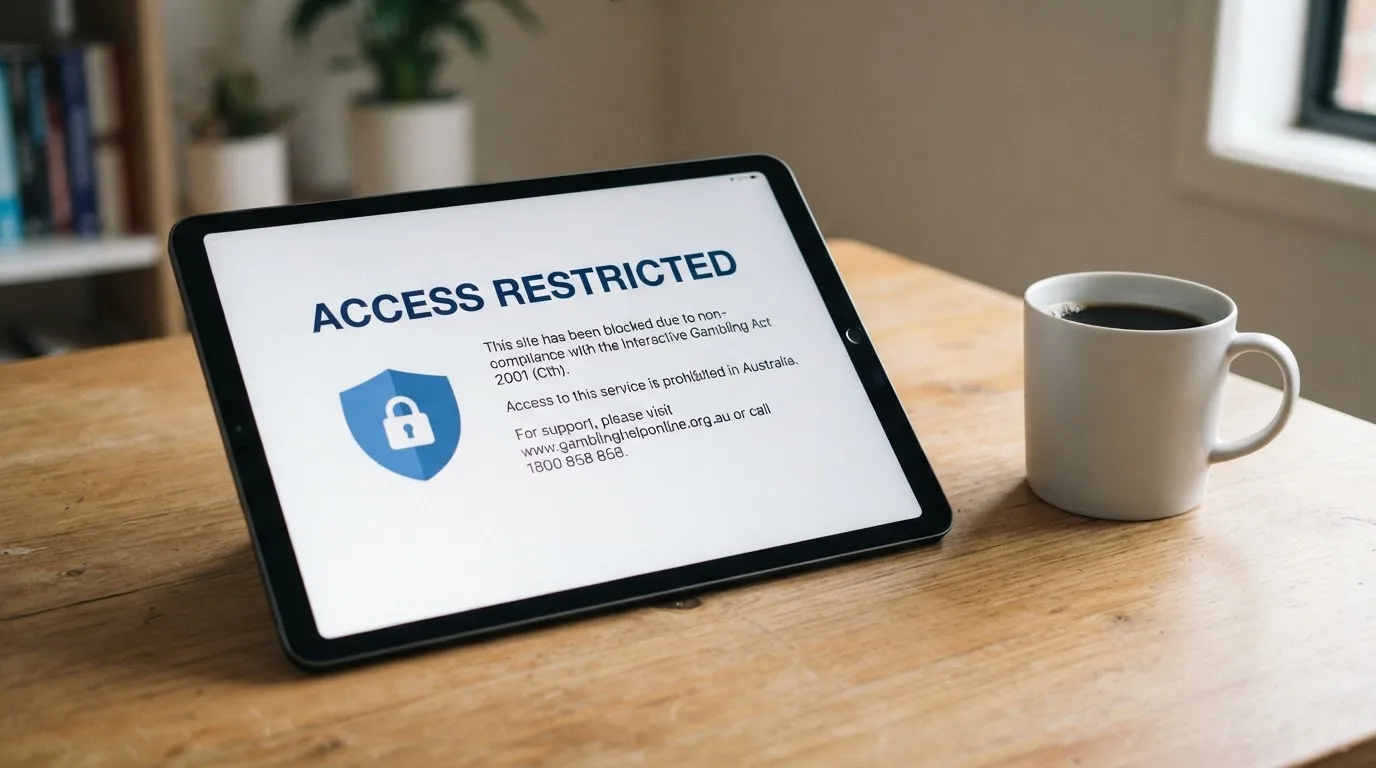
The ACMA’s enforcement menu runs from investigation through formal warning to referral to Australian internet service providers for blocking. A formal warning is the public-facing middle step — a written notice published on the ACMA’s website that names the operator and the brand, and sets out the prohibited conduct. Referral for blocking is what closes a domain at the network level in Australia. A site that has been warned and continues to operate from the same corporate address can be referred to ISPs for blocking on a subsequent round. The cumulative count of 1,751 blocked sites since November 2019 is the figure that reflects all of that activity in aggregate — warnings, referrals, and the longer tail of affiliate marketing pages that get pulled in alongside the casino they advertise.
What this means for the offshore site advertising Big Red pokies to an Australian visitor: the operator has either already received a formal warning from the ACMA, or is on a list that will eventually receive one. Either way, the site can be blocked in Australia with a balance still sitting on it. That is the consumer-protection point — there is no Australian complaints body to take a dispute to, no local recourse if a withdrawal is refused, and no guarantee the site will remain reachable long enough for the punter to clear any winnings.
What the prohibition does not cover
It is worth drawing the line clearly, because some of what offshore sites advertise is licensable and some is not. Online wagering on races and sports placed before the event is licensable in Australia and runs through the Northern Territory-licensed bookmakers. Lotteries and keno are state-licensed. Online casino games, online pokies (including Big Red and any Big Red-style theme), and in-play betting on a sporting event are the prohibited category. A site offering a mix of pre-event sports and casino games is a different situation from a casino-only site; the casino half of the offering remains prohibited. The marketing often blurs it deliberately, which is one of the reasons the ACMA’s reform attention has shifted toward inducement language for the 2027 commencement.
What the offshore site’s “Australian friendly” framing actually means
Nothing under Australian law. An offshore operator can label a payment method “Australian” or run ads during Australian sporting broadcasts and still be offering a prohibited service to a person in Australia. The relevant test under the IGA is whether the service is provided to a person physically in Australia at the time of use, not what the operator calls the service or what country its licence comes from. A Curaçao or Anjouan licence authorises the operator to run a casino; it does not authorise the operator to provide that casino to Australians.
The blocking-rate arithmetic — what the ACMA’s running total implies
The headline figure from the June 2026 reporting round is 1,751 illegal gambling and affiliate websites blocked since November 2019. From November 2019 to June 2026 is roughly 79 months. That gives a blocking rate of approximately 22 sites per month on the running-total basis — about one site every 33 hours over the period the ACMA has been referring domains to ISPs. The band is wide because enforcement comes in rounds rather than continuously: a single referral round can add a dozen sites at once, and there are quiet months between rounds. Read as a band, the rate has settled somewhere between 18 and 25 sites per month across the period, with the upper end reflecting the more aggressive recent rounds and the lower end reflecting the slower first two years of enforcement. Either reading makes the same point: a domain that survives a year without being referred for blocking has survived because the ACMA has not yet got to it, not because it has been judged compliant.
The 230-plus unlicensed services that have left the Australian market since 2017 are a separate, smaller count — operators that withdrew rather than face enforcement. The blocking list is the long tail of those who did not.
What that rate means for an operator on the warning register
Being on the formal warning register is the step that usually comes before referral for blocking. An operator that has been warned and continues to offer prohibited services to Australians is the typical candidate for the next blocking round. Eleven of the brands on the table above are precisely in that situation. The blocking-rate figure is the upper bound on how long any one of them might remain reachable in Australia from the date of its warning letter — a year, on average, before the next referral round catches up. The variance is wide: Woo Casino was warned in March 2025 and is still reachable at the time of writing; Casino Intense was warned in April 2025 and is similarly still online. But the trajectory is one-way.
Responsible gambling — what is actually available to a player in this market
Two supports are worth naming precisely, because they are the ones the offshore marketing pages do not connect to.
The first is BetStop, the National Self-Exclusion Register. BetStop went live in August 2023 and binds Australian-licensed online and phone wagering services — that is, the Northern Territory bookmakers and the state lottery operators. An offshore casino is not connected to BetStop. Self-excluding through BetStop does not stop an offshore site from accepting bets or pushing marketing to a registered person. For someone trying to control their own gambling, BetStop is the lever that works on the legal half of the market; it does not reach the offshore half.
The second is the National Gambling Helpline on 1800 858 858, free, 24/7, with web chat at Gambling Help Online. That is the line that does reach across both halves of the market, because counselling is not conditional on where the person has been playing. State-level self-exclusion schemes also exist for the licensed venues where the physical machines sit.
The credit-card ban that came into force on 11 June 2024 (with operator penalties up to $247,500) is the third piece of the responsible-gambling frame: credit cards, credit-related products and digital currency are banned as payment for licensed online wagering in Australia. Legal deposit routes for licensed wagering are debit card, bank transfer, PayID/Osko and BPAY. An offshore site asking for a credit card or a crypto deposit is not operating inside the Australian rules — that is one quick signal, in payment alone, that the service being offered is not the licensed Australian one.
What offshore sites do not offer, and what the responsible-gambling frame exists to provide: complaint resolution through an Australian body, audited payout obligations, connection to BetStop, identity-verified responsible-gambling limits in Australian dollars, and recourse if a withdrawal stalls. None of those protections survive the moment a punter logs in to a domain the ACMA has warned or blocked.
The Big Red theme itself — what the actual pokies look like
The “Big Red” name is most associated with an Aristocrat land-based theme set in the Australian outback, with kangaroos, dingoes, wombats, eagles and crocodiles on the reels and a tree-shaded creek as the backdrop. It is a five-reel mechanical-style game, not a modern video slot, and the look and feel are deliberately old-fashioned — the kind of cabinet that sits in a regional pub rather than a casino floor. The mechanics are typical of that generation of Aristocrat titles: line-based wins, a feature round built around a specific symbol, and a return-to-player and volatility profile tuned for the Australian pub market rather than for an offshore online catalogue.
Big Red the physical machine is licensed and regulated state by state. New South Wales had 87,298 gaming machines outside casinos across 2,195 venues as of June 2023, with player losses of A$8.18 billion in 2022-23. Queensland had 21,122 machines operating in 351 venues in October 2023. Victoria had 26,380 machines outside Crown Casino across 488 venues in 2021-22 under a 30,000-machine statewide limit. Western Australia is the outlier — poker machines were banned in pubs and clubs when Crown Perth opened in 1985, and Crown Perth’s own machine count has grown from about 200 in 1985 to roughly 2,500, all approved by the state’s Gaming and Wagering Commission.
The legal minimum return-to-player varies by jurisdiction: 85% in NSW, the Northern Territory, Queensland and generally Victoria (87% at Crown Melbourne); 87% in the ACT and Tasmania; 87.5% in South Australia; 90% in Western Australia. Those are the floors the licensed cabinets have to clear. The volatility profile of a Big Red-style title in a licensed venue sits inside that RTP envelope.
What does not exist, legally, is an online casino product using that exact theme that is offered to a person in Australia. The land-based machines are physical cabinets in licensed venues. The online casinos hosting any Big-Red-style version are doing so under offshore licences, which do not authorise service to Australians under the IGA.
What the volatility looks like in practice
The volatility of an old-generation Aristocrat-style five-reel game is materially higher than the volatility of a modern online video slot with elaborate features. The hit frequency is lower; the wins are spikier; the bankroll swings harder between sessions. For a player used to modern video slots with frequent small wins and animated features, a Big Red-style cabinet feels slow. For a player used to the older mechanical-style reels, the volatility is the point — the variance is part of the design.
The math that sits underneath that volatility is the same as the math underneath any other slot. The licensed cabinets are governed by the RTP floor above; the offshore versions are governed by whatever RTP and volatility the operator publishes (or does not publish). A “96%” figure attached to a Big Red-style title on an offshore site is a marketing claim, not a regulator-certified figure — there is no Australian body certifying that figure.
The H2 Gambling Capital estimate — what the illegal market is worth
H2 Gambling Capital’s 2025 estimate is that about A$3.9 billion a year flows out to illegal offshore gambling sites from Australia, and that the share of gambling going through legal Australian channels fell from 74% in 2021 to 64% by the time of the 2025 estimate. The two figures together tell a single story: the legal Australian market is shrinking as a share of total gambling activity, and the illegal offshore market is growing into the gap. The 10-percentage-point channel shift between 2021 and 2025 is large for a market this size — it is the kind of shift that draws attention from the regulator, and the ACMA’s expanding enforcement tempo (the 1,751 blocked sites, the quarterly formal warning rounds) is the response.
The Australian Bureau of Statistics’ 2020-21 figures for the land-based market give the scale of what the legal half still looks like: A$150 billion bet through gaming machines that year, A$12.18 billion lost on them, across approximately 195,000 active machines nationwide. Australia has about 3% of the world’s pub and club poker machines, with 0.3% of the global population — the highest density of EGMs per capita anywhere. That density is what the offshore sites are fishing in.
The tax position for a recreational player
Gambling winnings of a recreational player in Australia are not assessable income, under section 6-5 of the Income Tax Assessment Act 1997. Losses are not deductible. The exception is a person who carries on a business of gambling, which is a small minority of cases and turns on factual tests the ATO applies. The model for the typical recreational punter is: winnings are tax-free, losses are the punter’s own, and the only practical tax interaction is the GST treatment of some betting exchanges. None of that changes whether the offshore casino is offering a prohibited service — the tax answer and the legality answer are different questions, and both apply.
The two sides of the choice, honestly drawn
A punter searching “Big Red pokies online Australia” lands in one of two situations, and the page is more useful if it names both.
Situation one: the punter wants the physical Big Red machine on a licensed floor in Australia. That exists. It exists in NSW clubs and hotels, in Queensland venues, in Victoria outside Crown, in the ACT and Tasmania and South Australia at the RTP floors set out above, and in Western Australia only at Crown Perth. The ACMA’s enforcement work does not touch this market — these are licensed venues under state regulation, and the machines are physical cabinets. Pre-commitment cards exist in Tasmania, with implementation of the mandatory scheme delayed into late 2025. The choice is which venue, on which day, at what stake.
Situation two: the punter wants to play Big Red-style content online, for real money, from Australia. That is the prohibited service. Every offshore site offering it is offering it in breach of the IGA. Eleven of those operators have already received formal warnings from the ACMA; the rest are on the queue. The ACMA’s blocking tempo — roughly 22 sites per month over the period since November 2019 — is the rate at which the queue is being worked through. A punter who opens an account at any of these sites is exposed to all of the consumer-protection gaps that come with the offshore status: no Australian complaints body, no BetStop binding, no credit-card ban protection, no local recourse on a stalled withdrawal, and the prospect of the domain being blocked in Australia with a balance still on it.
The honest summary of those two situations is that one of them is the licensed Australian market for the product that actually exists, and the other is the unlicensed offshore market for a product the law prohibits. There is no honest middle option. The marketing pages that promise one are the marketing pages the ACMA is writing formal warnings to.
FAQ
What style of pokies theme does “Big Red” usually mean?
The Big Red name refers to a land-based Aristocrat outback theme — kangaroos, dingoes, wombats, eagles and crocodiles on the reels with a creek-side backdrop. It is a five-reel, line-based, mechanical-style cabinet rather than a modern video slot, with deliberately old-fashioned presentation. The look and feel are tuned for the Australian pub and club market rather than for an offshore online catalogue.
Can an online version of a Big Red-style pokies be legally played by someone in Australia?
No. Online casino games and online pokies are prohibited interactive gambling services under the Interactive Gambling Act 2001 as amended in 2017. No Australian state or territory issues a licence that would authorise one. The prohibition sits with the provider, not the player, but the offshore sites offering the product are operating in breach of the IGA, and the ACMA can direct Australian ISPs to block them.
Are classic Australian-themed pokies machines still found in licensed pubs and clubs?
Yes. NSW had 87,298 gaming machines outside casinos across 2,195 venues as of June 2023, Queensland had 21,122 machines in 351 venues in October 2023, and Victoria had 26,380 outside Crown Casino in 488 venues in 2021-22 under a 30,000-machine statewide limit. Western Australia is the exception — poker machines are banned in pubs and clubs there, and only Crown Perth has them, with roughly 2,500 machines. The classic Australian themes remain part of the cabinet mix on licensed floors.
Why do offshore sites keep advertising Big Red-style games to Australian visitors?
Because Australians lose an estimated A$3.9 billion a year to illegal offshore gambling sites, according to H2 Gambling Capital’s 2025 estimate, and the share of gambling going through legal channels fell from 74% in 2021 to 64% by 2025. The marketing targets a market the IGA prohibits supply to, and the ACMA’s response is the formal warning register and the blocking referrals — 1,751 sites blocked since November 2019, with new rounds adding a dozen or so domains at a time. The marketing continues because the audience is large and the enforcement tempo, while sustained, is not instantaneous.
Does the volatility of a Big Red-style machine differ from newer video slot themes?
Yes. The older mechanical-style five-reel cabinets have lower hit frequency and spikier win distribution than modern video slots with frequent small wins and feature rounds. The licensed cabinets operate inside the state-set RTP floors (85% to 90% depending on jurisdiction). The volatility profile is part of the design rather than a marketing claim — older Aristocrat-style games are built around the variance.
How can someone confirm whether a specific pokies theme is on a licensed Australian venue’s floor?
By checking the state or territory regulator’s published register of approved games and venues. Liquor & Gaming NSW, the Queensland Office of Liquor and Gaming Regulation, the Victorian Gambling and Casino Control Commission, the ACT Gambling and Racing Commission, the Tasmanian Liquor and Gaming Commission, the South Australian Consumer and Business Services, and the Western Australian Department of Local Government, Sport and Cultural Industries each maintain their own lists. The ACMA’s formal warning register is the corresponding source for the offshore side: a brand on the warning list is one a punter should not be signing up with from Australia.