
Real money online pokies with no deposit in Australia — what that claim is, who is offering it, and why every site is offshore
Updated as of 28 October 2026, against the ACMA register of blocking actions and formal warnings published by the Australian Communications and Media Authority.
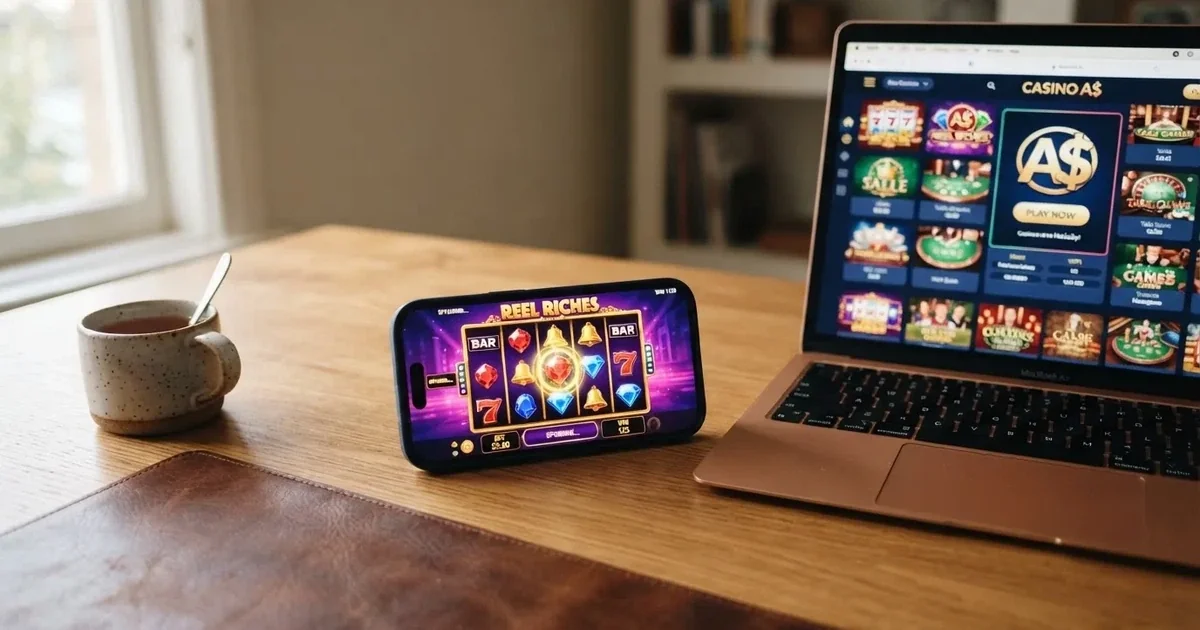
The phrase “online pokies Australia real money no deposit” is doing a lot of work in eleven words. It says the games are online, that the stakes are real money, that they run from Australia, and that the player does not put any of their own money down first. Three of those four clauses have a different answer in this country than the marketing suggests. Online pokies exist, real money exists, and no deposit offers exist — what does not exist is an Australian licence authorising them to be sold together to a person in Australia. The page below works through each part of that gap, then sets out the brands the regulator has formally warned for doing it anyway, and closes on what a reader in Australia actually has to weigh if they are weighing one of these offers.
Table of Contents
- Where “no deposit” sits in the wider pokies market
- What the Interactive Gambling Act 2001 actually prohibits, and what is left open
- How the ACMA enforces, and what it has actually done
- Why the warnings keep landing on the same operator entities
- What offshore no-deposit offers actually look like in their terms
- Responsible play when the regulated option is not on the table
- The operators the ACMA has formally warned
- How fast the blocking list moves — the page’s calculation
- Frequently asked questions
Where “no deposit” sits in the wider pokies market
Australians lost A$12.18 billion on gaming machines in 2020-21, on turnover of almost A$150 billion through the same machines in the same year. Australia holds about 3% of the world’s pub and club poker machines with 0.3% of the world’s population. The country’s 1956 introduction of legal machines, through New South Wales registered clubs, became the foundation for a state-by-state licensing regime that is one of the densest in the world: New South Wales had 87,298 machines outside casinos across 2,195 venues at June 2023 and A$8.18 billion in losses in 2022-23; Queensland ran 21,122 machines across 351 venues in October 2023; Victoria ran 26,380 outside Crown Casino across 488 venues in 2021-22 under a 30,000 statewide cap. Every state and territory sets its own minimum return-to-player — 85% in NSW, the NT, Queensland and most of Victoria; 87% at Crown Melbourne, in the ACT and Tasmania; 87.5% in South Australia; 90% in Western Australia. Western Australia has banned machines outside the one casino since Crown Perth opened in 1985, and Crown Perth’s own count has grown from about 200 then to roughly 2,500 today. Tasmania ended its half-century monopoly in November 2021 and shifted oversight to the Tasmanian Liquor and Gaming Commission; its nation-leading mandatory pre-commitment cards were pushed back to late 2025. None of that licence regime covers the online version of the same machine — the prohibition sits at the federal level, and it sits there now.

What “no deposit” refers to, in the marketing that uses it, is a promotional offer: a free bundle of spins or bonus credit handed to a player who has registered an account but not paid any money into it. The offer is the on-ramp. Real money, in the same phrasing, means the spins are paid out in a cashable balance, not in bonus credit that the player cannot withdraw. The two are sold together because one without the other is a less attractive product: free spins paid as bonus credit are a demo mode, and a deposit offer is what every welcome bonus already is.
The third clause — “in Australia” — is the one that breaks. No state or territory issues a licence for an online casino to take real-money pokies bets from a person in Australia, and the Interactive Gambling Act 2001 as strengthened in 2017 makes providing one an offence. The 2017 amendments extended the prohibition to in-play online wagering and made it explicit that online casino games, including online pokies, fall inside it. What the law does not do is prosecute the individual player — the IGA targets the provider, not the customer, and a person in Australia who opens an offshore account is not personally liable. What the law does do is leave that customer outside every consumer-protection mechanism that an Australian-licensed service is required to provide.
The brands that surface in this market are therefore all offshore. Their licence numbers come from Curaçao, Anjouan, Malta, the Kahnawake Gaming Commission and similar jurisdictions — none of which authorises the operator to take Australian customers, which is why the Australian regulator acts against them as it does. The Northern Territory Racing and Wagering Commission regulates 52 of Australia’s online bookmakers for tax reasons, including Sportsbet, Bet365 and Ladbrokes; that body covers wagering on races and sport before the event, not online casino games, and it does not license any of the brands reviewed further down this page.
What the Interactive Gambling Act 2001 actually prohibits, and what is left open
The Interactive Gambling Act 2001, as tightened by the Interactive Gambling Amendment Act 2017, makes it an offence for a provider to supply an “interactive gambling service” to a person physically in Australia. “Interactive” is the word that pulls online pokies in: a customer plays from their own device, against a remote game, in real time. The 2017 amendments extended the prohibition to in-play betting online — a wager placed after a sporting event has started — so that the gap an offshore bookmaker could once use is now closed. Online lotteries, keno and pre-event sports and race wagering remain licensable, and that is what the NT regime actually licenses.
What the Act does not do is require an Australian-licensed provider to identify Australian customers for online casino games, because no such provider exists. Identification, age-verification and the 18+ floor are obligations a licensed operator carries; an offshore operator carries whatever its own licence requires, which is generally weaker. Minimum age for any Australian-licensed wagering product is 18; the offshore product does not enforce it, because the offshore product has no standing to enforce it. A payment ban layered on top: credit cards, credit-related products and digital currency cannot be used to fund an Australian-licensed online or phone wagering account since 11 June 2024, with penalties up to A$247,500 for the operator. The legal routes for licensed wagering are debit card, bank transfer, PayID/Osko and BPAY. An offshore pokies site that takes a credit card or a crypto deposit from an Australian is doing so outside the Australian rules; the deposit is not protected by the same consumer framework that a debit-card deposit into a licensed Australian wagering account is.
The reform layer is moving. The Interactive Gambling Amendment (Gambling Reform) Bill 2026 passed Parliament on 19 August 2026; its advertising and inducement measures commence on 1 January 2027. On a 2026 page that is law with a start date, not yet in force. The way that matters for this page is upstream of the offers themselves: inducement restrictions constrain how “no deposit” bonuses can be marketed to Australians. Once they commence, the phrasing on affiliate pages will be tested against the new standard. Until then, the same offer can be advertised with the same wording, and the regulator’s enforcement tool against the provider is the blocking power and the formal warning.
How the ACMA enforces, and what it has actually done
The ACMA enforces the Interactive Gambling Act. Its three tools in this space are formal warnings to identified providers, blocking requests to internet service providers, and investigations that lead to one or the other. The cumulative record is the page’s evidence base. By June 2026 the ACMA had asked Australian ISPs to block 1,751 illegal gambling and affiliate marketing websites since the first blocking request in November 2019, and more than 230 unlicensed gambling services had left the Australian market since enforcement was strengthened in 2017. That is the rate at which the offshore market has been pushed back against.
The June 2026 round itself blocked 12 sites: 7Signs, ChromaBet, Donbet, Duospin, Freshbet, Slots Gem, Jacks Club, Lucky Start, Pointsbetz, Spinrise, Vinyl Casino and Wildsino. The list is a snapshot, not the whole catalogue — each round names a fresh batch drawn from open investigations. A reader looking at any of these names on a current affiliate page is looking at a site whose Australian-facing infrastructure has been ordered down. The blocking usually takes effect within days of the request; the affiliate pages often reappear under a fresh domain within weeks. H2 Gambling Capital’s 2025 estimate puts Australian losses to illegal gambling sites at about A$3.9 billion a year, with the share of gambling going through legal channels falling from 74% in 2021 to 64%.
The formal warnings are the slower tool. The ACMA issues one when an investigation has identified a specific provider offering a prohibited service to Australians, and it names the operator entity behind the brand. The warnings are dated and published on the ACMA register. The register is what this page draws on: each brand reviewed below has been the subject of at least one such warning.
Why the warnings keep landing on the same operator entities
The brands read like a long list of casinos and look like a fragmented market. They are not. Behind many of them sit a small number of operator companies that rebrand and re-launch quickly enough that one warning closes one front and another opens. Dama N.V. alone accounts for three of the brands reviewed further down, and the ACMA has issued separate warnings to the same entity over different brands in different months: in May 2022 over Bambet, Dazard, Level Up, Rocketplay, Wild Tornado and Cobra Casinos; in March 2025 over Woo Casino; and in May 2025 over Spirit Casino. Consolutetish S.R.L. has run two of the brands in this set — National Casino and Bizzo Casino — and both were named in the same July 2025 warning. Bizzo had already been the subject of a 2022 warning to TechSolutions (CY) Group Limited and TechSolutions Group N.V., which is the trail the operator entity leaves when the offshore holding structure shifts.
That trail matters because it changes what a “formal warning” tells a reader. It is not a one-off admonishment. It is the regulator’s last written step before blocking, addressed to an entity that has been here before under a different name. Rocketplay’s current incarnation sits under Pulsup Ltd and was warned about in March 2026; its 2022 incarnation sat under Dama N.V.. Jackbit is currently under Ryker B.V. and was warned about in April 2026. Casino Intense is under Sterplay Holding Ltd, warned about in April 2025. Sky Crown sits under Hollycorn N.V., warned about in September 2022. Instant Casino is under EOD Code SRL, warned about in February 2025. Ignition Casino is under Bamboo Media, warned about in July 2025. The brand is the front; the operator entity is the repeat player.
A reader who has seen one of these brand names on an affiliate page in 2026 has seen it because the ACMA’s blocking action has not yet reached the domain, or because the domain has been refreshed since the last blocking round. The warning is the regulator’s record that it knows the brand and the operator behind it, and that the offering of prohibited services to Australians is the basis of the action.
What offshore no-deposit offers actually look like in their terms
The bonus construction itself is the same one any no-deposit offer uses anywhere. The operator credits a small number of spins — commonly 20 to 50 — or a small bonus amount — commonly A$10 to A$25 in face value — to a newly registered account without a deposit being made. The winnings from those spins, or the bonus amount itself, are then subject to terms before they can be withdrawn. Two terms carry most of the weight.
The first is the wagering requirement. A 40x wagering multiple on a A$10 bonus means A$400 of qualifying bets before any withdrawal is permitted. A 50x multiple on the winnings from 20 free spins, where the wins come in at A$8, means A$400 of bets on the same A$8. The multiple is where most no-deposit bonuses become uneconomic to play through: the maths of expected loss over a 40x playthrough usually exceeds the bonus’s face value, so clearing the bonus costs more than the bonus is worth, in expectation.
The second is the maximum cashout cap. No-deposit offers usually cap the amount that can be withdrawn from bonus-derived winnings — commonly A$50 to A$100, regardless of how much the spins technically return. The cap is the partner of the wagering requirement. The two together mean that even a lucky outcome is paid as a capped amount after a heavy playthrough, and an unlucky one is a small loss against a slightly larger cap.
The figures above describe what a typical no-deposit pokies offer looks like; the specific terms of any specific offer sit behind an affiliate link and change frequently. None of the brands reviewed further down this page is presented with its specific bonus terms, because the only sources for those terms are the affiliate marketing pages of the brands themselves, and this page is not drawing its evidence from marketing copy. What can be said from the regulatory record is that each brand has been the subject of an ACMA formal warning for offering prohibited services to Australians — that is the page’s evidence for each operator below.
A separate settlement-time claim attaches to this market. Instant-PayID pokies claims sit inside the broader “online pokies Australia real money no deposit” cluster and are pitched as a payment-rail benefit: deposit, where a deposit is taken, and withdrawal, where a withdrawal is permitted, route through the New Payments Platform’s PayID/Osko layer rather than a card network. PayID is real-time between participating Australian banks, and it is the recommended deposit route for Australian-licensed wagering; the offshore casino that pays out to an Australian bank account via PayID is doing so without being part of the framework that makes PayID a safe rail for an Australian customer. The settlement times claimed for offshore pokies withdrawals through PayID are claims made by the same operators the ACMA has acted against; this page treats them as marketing rather than as evidence.
Responsible play when the regulated option is not on the table
A reader who has decided against playing at an offshore casino is not deciding against real-money pokies altogether. Every Australian state and territory licenses land-based poker machines, and the licensed venues are the only Australian-regulated way to play them. The same reader can also choose Australian-licensed online wagering on races and sport, where PayID, debit card, BPAY and bank transfer are the legal funding routes and BetStop binds the provider.
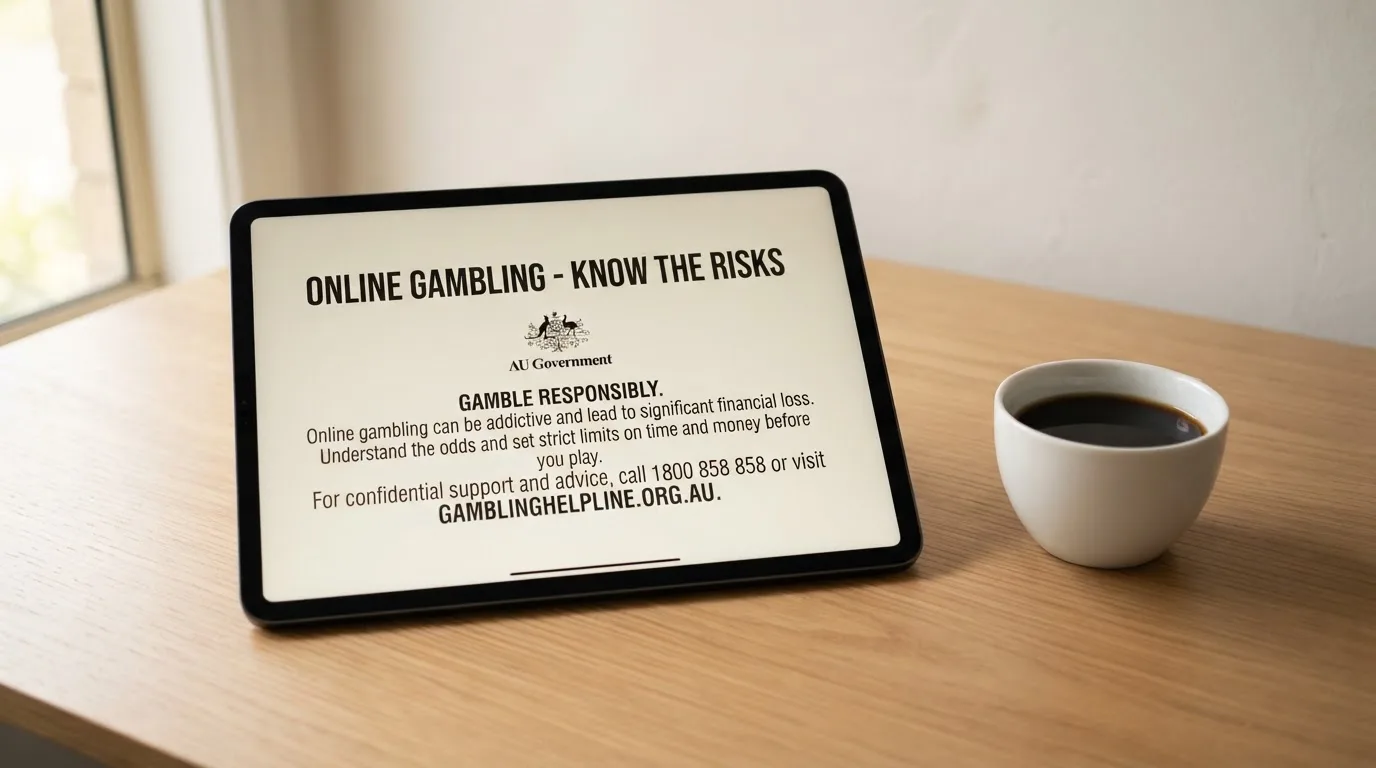
For readers who need a stop rather than a switch, BetStop — the National Self-Exclusion Register, live since August 2023 — binds Australian-licensed online and phone wagering services. An offshore casino is not connected to it; registering with BetStop will not exclude a reader from an offshore site, and an offshore operator cannot be told to honour an exclusion that BetStop records. The exclusion works the other way: it covers what is licensed, and it is the strongest tool available for licensed wagering customers. The National Gambling Helpline (1800 858 858) is free, 24/7, with chat at Gambling Help Online. Both services are Australian-government-funded and operate independently of any operator.
A reader who feels their gambling has moved past a choice they are making should call the helpline before opening the next account. A reader who has not, and is comparing offers on this page, is comparing offers whose every supplier sits outside the Australian regulatory perimeter; that is the single fact that runs through every entry below.
The operators the ACMA has formally warned
Eleven brands follow, in the order set by §6 of the research. Each entry is built from the same fields: the brand name, the operator entity the ACMA named in its formal warning, the date of that warning, and the page’s own judgement of what the warning tells a reader weighing the brand. None of the entries recommends the brand. Each closes on what the warning means for someone specifically choosing it, because the reader choosing it is the reader who most needs to know what they are choosing.
| Brand | ACMA action and date | Operator named by the ACMA | Subject support |
|---|---|---|---|
| RocketPlay | Formal warning, March 2026 | Pulsup Ltd (Rocketplay); Dama N.V. earlier in May 2022 | — |
| Level Up Casino | Formal warning, May 2022 | Dama N.V. | Game studio listings (BGaming) |
| Woo Casino | Formal warning, March 2025 | Dama N.V. | — |
| Spirit Casino | Formal warning, May 2025 | Dama N.V. | — |
| National Casino | Formal warning, July 2025 | Consolutetish S.R.L. | Listing presence (Wikipedia) |
| Bizzo Casino | Formal warning, July 2025 and 2022 | Consolutetish S.R.L. (2025); TechSolutions (CY) Group Ltd and TechSolutions Group N.V. (2022) | — |
| Ignition Casino | Formal warning, July 2025 | Bamboo Media | — |
| Instant Casino | Formal warning, February 2025 | EOD Code SRL | — |
| Jackbit | Formal warning, April 2026 | Ryker B.V. (also over CasinOK) | — |
| Casino Intense | Formal warning, April 2025 | Sterplay Holding Ltd | Listed in passing across coverage |
| Sky Crown | Formal warning, September 2022 | Hollycorn N.V. (also over Blue Leo) | — |
RocketPlay — the freshest warning in this set
The March 2026 warning to Pulsup Ltd is the most recent action on this page. RocketPlay’s offshore infrastructure has been warned about before — Dama N.V. was the named operator in May 2022 over six brands including Rocketplay — and the move from Dama N.V. to Pulsup Ltd is the rebranding pattern the ACMA’s blocking programme was designed to keep up with. A reader landing on RocketPlay today is landing on the second operator entity to be formally warned over the same brand within four years. This recency is the signal for a reader: the regulator’s latest word on this brand is the latest word on any in this list.
Level Up Casino — warned under Dama N.V. in 2022
Level Up Casino’s warning dates from May 2022, when Dama N.V. was the named operator across six brands. Dama N.V. has since been warned over Woo Casino in March 2025 and Spirit Casino in May 2025, and the operator entity has remained the same through the entity-name changes. A reader weighing Level Up today is weighing a brand whose operator has been on the ACMA’s register for four years and has accumulated three further warnings since. The supporting fact here is that Level Up is the brand in this set whose listing presence on BGaming’s studio index is documented; the brand’s own studio footprint is real, but the licence that authorises it to take Australian customers is not.
Woo Casino — a March 2025 warning, fourth against Dama N.V.
Woo Casino was the subject of a March 2025 formal warning over Dama N.V.. It is the fourth brand in this set to draw a warning under the same operator entity, after Bambet, Dazard, Level Up, Rocketplay, Wild Tornado and Cobra Casinos in May 2022. The relevant fact is what the cumulative count tells a reader: Dama N.V. has been formally warned enough times that the pattern has become the ACMA’s working hypothesis, and the reader choosing Woo is choosing a brand whose operator sits inside that hypothesis.
Spirit Casino — May 2025, also Dama N.V.
Spirit Casino’s warning dates from May 2025, the most recent of the Dama N.V. set in this review. Two months separate the Woo Casino and Spirit Casino warnings; both went to the same operator. A reader comparing Woo and Spirit is not choosing between two different operators — they are choosing between two skins of the same one, and the choice is which skin the affiliate page happens to be promoting.
National Casino — July 2025 warning, alongside Bizzo under the same operator
National Casino was named in the ACMA’s July 2025 warning to Consolutetish S.R.L., alongside Bizzo Casino. The two share the warning and the operator. The supporting fact on this page is that National Casino has a listing presence on Wikipedia, which is the closest the brand gets to a neutral third-party record; it is not a licence record, and it does not contradict the ACMA’s action. The fact that decides this entry is the shared operator: a reader comparing National and Bizzo is choosing between two skins of the same operator.
Bizzo Casino — warned twice, under two different operator entities
Bizzo Casino has been warned twice — in July 2025 under Consolutetish S.R.L. and in 2022 under TechSolutions (CY) Group Limited and TechSolutions Group N.V.. The 2022 to 2025 gap is the same rebranding pattern RocketPlay shows. A reader weighing Bizzo is weighing a brand whose operator has been warned twice over three years and has changed the corporate name between the two warnings. The fact that decides the entry is the double warning; nothing else on this page tells a reader as much about the supplier they would be dealing with.
Ignition Casino — July 2025 warning to Bamboo Media
Ignition Casino was the subject of a July 2025 formal warning to Bamboo Media. Ignition has historically been a brand more closely associated with US-facing operations, and the ACMA’s action is the regulator’s record that the brand has crossed into the Australian market. The relevant fact is the operator entity name — Bamboo Media is the only brand in this set whose operator name is a media-marketing entity rather than a Curaçao or Anjouan holding company, which is itself information about how the operation is structured.
Instant Casino — February 2025 warning to EOD Code SRL
Instant Casino was warned about in February 2025 over EOD Code SRL. The warning was the regulator’s first formal step on this brand. A reader weighing Instant is weighing a brand whose regulatory record is shorter than most in this set — one warning, fourteen months old — and is therefore the freshest ground for an operator to keep operating from. That is the fact the entry closes on: the warning exists, but the rebranding budget that follows it has not yet been spent.
Jackbit — April 2026 warning, alongside CasinOK
Jackbit was named in an April 2026 formal warning to Ryker B.V. alongside CasinOK. CasinOK does not appear in this review because the ACMA’s action over it is joint with Jackbit and the table allocates one row per brand. The relevant fact is the recency: April 2026 is the most recent warning on this page, two months after RocketPlay’s March 2026 warning, and the two together account for the ACMA’s most recent action in this market.
Casino Intense — April 2025 warning to Sterplay Holding Ltd
Casino Intense was the subject of an April 2025 formal warning to Sterplay Holding Ltd. The supporting fact on this entry is the cross-coverage: Casino Intense is referenced across Australian Broadcasting Corporation and ACMA material and in passing by Crown Melbourne’s own coverage of the broader Australian market, which makes it one of the more-documented brands in the set without changing what the licence says. The fact that decides this entry is that the licence does not authorise the service for Australians; the additional coverage does not contradict that, it just makes the record longer.
Sky Crown — September 2022 warning, the oldest in this set
Sky Crown was named in the ACMA’s September 2022 formal warning to Hollycorn N.V. over Sky Crown and Blue Leo. Sky Crown is the oldest warning in this review; Hollycorn N.V. is one of the longer-tenured operator entities in the offshore market. A reader weighing Sky Crown today is weighing a brand whose operator was warned about more than three years ago and has had time to change the corporate skin if it wished to. The fact that decides the entry is the absence of a fresh warning: the regulator has not needed to re-warn this brand in this period, and that is information, even if it is not endorsement.
How fast the blocking list moves — the page’s calculation
The cumulative blocking record is the cleanest single measure of how the offshore market is being pushed back against. By June 2026 the ACMA had asked ISPs to block 1,751 illegal gambling and affiliate marketing websites since the first blocking request in November 2019. That is 80 months of blocking action and an average rate that the page works out below.
The June 2026 round itself blocked 12 websites in one announcement, but the running total is the meaningful figure for a reader. Treating 1,751 blocks across the 80 months from November 2019 to June 2026 gives a long-run rate of roughly 22 sites blocked per month, on average. Treat the same period as approximately 6.7 years, and the rate rounds out to about 262 sites blocked per year. Both numbers describe the same average: a little over twenty sites per month, with significant month-to-month variance driven by the size of each blocking round.
The picture that emerges is not a finishing action. The ACMA’s blocking programme has accumulated 1,751 sites without exhausting the market; the same operator entities turn up across multiple rounds, and the affiliate sites that route traffic to them often reappear under new domains. The H2 Gambling Capital figure of A$3.9 billion a year lost to illegal Australian-facing gambling sites is the size of the market the blocking programme is working against; the 1,751 blocks are the lever, and the lever is being pulled at the rate above. The calculation is a description of effort, not a prediction of success.
A reader weighing this number against the marketing claim of “no deposit real money pokies in Australia” should weigh it as the operating environment, not as the marketing environment. The same brand may be visible on an affiliate page in a given week and absent from it the week after a blocking round lands; the brand’s underlying operator usually persists through that cycle.
Frequently asked questions
Can “real money” and “no deposit” really go together, or is one of those claims always doing the work?
The two claims can be combined in a single offer — a no-deposit offer that pays out in cashable balance rather than as bonus credit — but the practical answer is that the no-deposit part usually pays for the real-money part. A typical no-deposit offer pays a small face value, applies a 40x or higher wagering requirement, and caps the withdrawal at a few tens to a couple of hundred Australian dollars. The real-money part is what survives the playthrough; the no-deposit part is what gets the player through the registration page.
How does an instant-PayID no-deposit pokies claim differ from an ordinary no-deposit one?
PayID is the real-time payment rail run through the New Payments Platform, and PayID/Osko transfers between participating Australian banks settle in seconds. An instant-PayID no-deposit pokies claim routes the deposit — where one is taken — and the withdrawal through that rail rather than a card network. The settlement speed is real; the offer’s underlying licence status is unchanged, because no Australian licence authorises the operator to take the deposit or make the withdrawal in the first place.
Is playing real-money pokies for no deposit from an offshore site something Australians can legally do?
The Interactive Gambling Act 2001 makes it an offence for a provider to supply an interactive gambling service to a person in Australia; it does not prosecute the individual player. The person opening an offshore account is not personally liable, but the offshore product sits outside every Australian consumer-protection framework, and the ACMA can order the site blocked with any account balance still on it. The licensed Australian alternative for online wagering covers races and sport before the event; it does not cover online casino games or online pokies.
What withdrawal limit usually applies to winnings from a no-deposit real-money pokies offer?
Most no-deposit offers cap the amount withdrawable from bonus-derived winnings — commonly in the A$50 to A$100 range — regardless of how much the spins technically return. The cap sits alongside the wagering requirement, and the two together mean a lucky outcome is paid as a capped amount after a heavy playthrough. Specific caps vary by offer and change frequently; this page is not citing any specific cap because the only sources for current caps are the affiliate pages of the brands themselves.
Why do best-of lists for this keep mixing free pokies with genuine real-money no-deposit offers?
Free pokies — demo-play pokies paid out in non-cashable credits — are the marketing page’s way of populating a list when the actual real-money no-deposit market is narrower than the search term suggests. The two products look similar in screenshots and the affiliate programmes pay the same way, which is the practical pressure that mixes them in the same list. The two are different products: one pays nothing in real money at all, the other pays a capped amount after a heavy playthrough.
What separates “online pokies real money no deposit” from “free pokies real money no deposit” claims?
The difference is cashability. Real-money no-deposit offers pay the bonus balance as cashable funds subject to wagering and a withdrawal cap; free pokies offers pay the same balance as non-cashable credits that cannot be withdrawn at all. The phrasing of the search term is the only practical signal a reader has, and a page that promises “real money” without naming a cap is signalling one of the two. The cap, where it is named, is the diagnostic.