
Best Pokies in South Australia: Licensed Venues, Real Rules, and the Offshore Sites the ACMA Keeps Blocking
Current as of 28 October 2026 and cross-checked against the Australian Communications and Media Authority’s published register of formal warnings and blocked services.
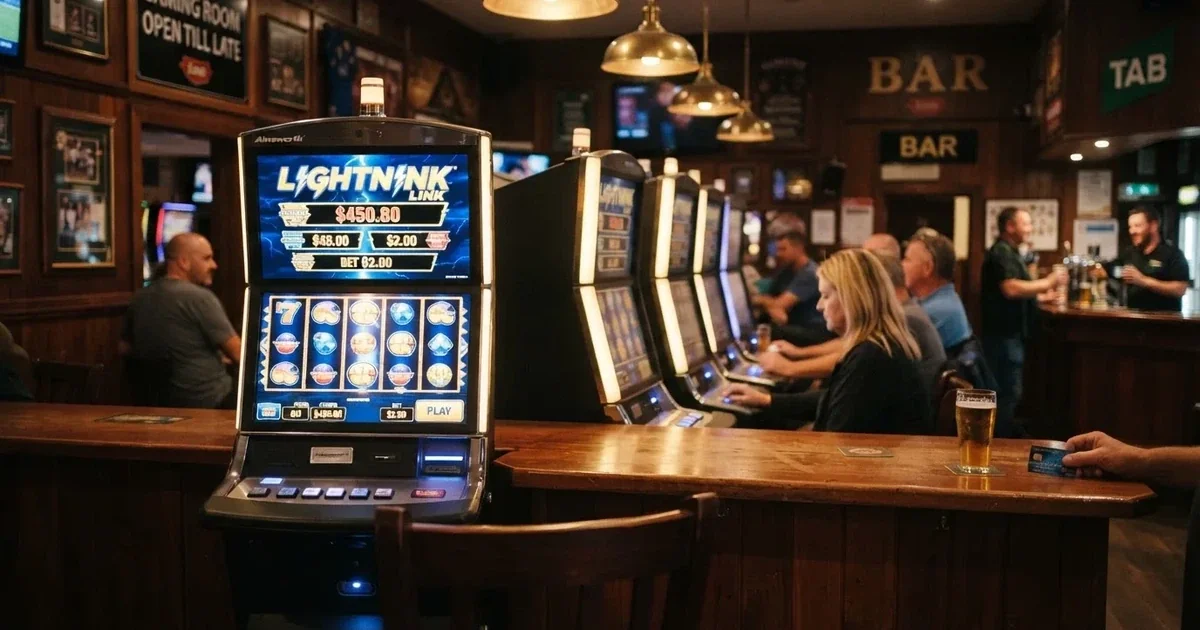
A search for “pokies in South Australia” lands somewhere unexpected most of the time. The search term is wide enough to drag in offshore casino sites marketing themselves to Australian players, affiliate pages ranking them, and copy lifted from Curaçao licence registers. None of that is what someone standing in Adelaide, or visiting for the weekend, actually wants. The thing that exists, on a licensed basis, in South Australia is a network of electronic gaming machines in pubs, clubs and a single casino — and the regulator that watches them is a state body called Consumer and Business Services. The thing that does not exist, anywhere in Australia, is a lawful online casino product. The Interactive Gambling Act 2001 prohibits it; the ACMA enforces that prohibition with blocking requests and formal warnings; and the brands that keep getting warned are the same names that keep surfacing in those “best pokies” lists.
This page is built around that gap. It names the South Australian venues that actually hold a licence, the rules they operate under, the gambling-harm supports available to someone playing them, and the offshore brands the ACMA has already named for offering the very thing the search results pretend exists. There is no ranked list of offshore casinos to play at, because no one in Australia can lawfully play at them, and naming them as if the choice were between them is the misleading move the law was written to prevent.
Table of Contents
- Responsible Gambling in South Australia
- Land-Based Venues Where Pokies Actually Run
- Payments, Payouts, and the Cashless Question
- Specific Games, Providers, and the Mechanics That Matter
- How Online Casinos Rank, and Why That Method Has No Standing in South Australia
- The Offshore Brands the ACMA Has Acted Against
- Pokies, the Interactive Gambling Act, and What “Legal” Actually Means in Australia
- Reading the Choices a South Australian Player Actually Has
- Frequently Asked Questions
Responsible Gambling in South Australia
South Australia treats gambling harm as a public-health problem with a regulator attached. The state regulator is Consumer and Business Services (CBS), part of the Attorney-General’s Department, which handles policy, licensing and compliance for betting, casinos, gaming machines and lotteries. The state’s gambling reforms, the package that introduced the pre-commitment system and tightened the harm-minimisation rules, took effect on 3 December 2020 and remain the baseline that pubs, clubs and Adelaide Casino work against. The previous state-level Independent Gambling Authority was abolished in December 2018, and the Liquor and Gambling Commissioner became the sole gambling regulator. Anyone deciding whether a venue is run lawfully is checking the rules CBS writes and CBS enforces.

For a player, the practical layer sits one rung below. The national helpline, 1800 858 858, runs free around the clock, with web chat at Gambling Help Online. BetStop, the National Self-Exclusion Register, has been live since August 2023 and binds Australian-licensed online and phone wagering services — but it does not bind offshore casino sites, which are not licensed here in the first place. The pre-commitment system that came in on 3 December 2020 sits in front of every gaming machine outside Adelaide Casino and asks a player to set a loss limit before play begins, with the venue’s host-responsibility staff trained to step in when someone breaches the limit they set themselves. Adelaide Casino itself operates under a daily CBS compliance presence that focuses on host-responsibility interactions with patrons, separate from the broader pub and club regime because it is regulated under the Casino Act 1997.
The condition every support line shares is that an offshore casino site sits outside all of it. There is no hotline number that resolves a blocked withdrawal from a Curaçao-licensed site, no pre-commitment check that fires before the offshore site loads, no CBS officer watching what a Ryker B.V.-owned brand does when an Australian account asks for a payout. A player who needs help and a player who needs a payout get very different things depending on whether they chose a venue on North Terrace, a pub in Norwood or a site the ACMA blocked last month.
Land-Based Venues Where Pokies Actually Run
South Australia’s licensed gaming footprint splits into two halves. One is Adelaide Casino — the SkyCity Adelaide operation on North Terrace, the state’s only licensed casino, with 90 gaming tables and 950 gaming machines under the Casino Act 1997. The other is the network of electronic gaming machines outside the casino: 11,672 of them across 471 venues as at September 2023, in pubs, clubs and community venues the length of the state. The combined machine count outside the casino sat at that figure; the venue count was 471; players lost about A$0.92 billion on those machines in 2022-23, equivalent to roughly A$497 per adult in the state.

Adelaide Casino is the headline operation and the only place to play table games in South Australia. The licence that runs it was extended on 11 October 2013 to 30 June 2035, with redevelopment headroom to expand to 200 gaming tables and 1,500 gaming machines. The building is the heritage-listed Adelaide railway station on North Terrace, opened as a casino on 12 December 1985 by the state-owned Lotteries Commission, sold to SkyCity Entertainment Group in June 2000, renamed SkyCity Adelaide in April 2001, then reverted to the Adelaide Casino name in 2009. The 2015-2021 Riverbank precinct redevelopment added the EOS by SkyCity tower, which opened in 2021 with 120 hotel rooms and expanded gaming space, at a project cost around A$330 million.
The pub and club side is where most South Australians actually play. Suburban Adelaide venues and country-town hotels run electronic gaming machines under CBS-issued licences, with the minimum gaming-machine return-to-player rate set at 87.5% and a general maximum bet of A$5.00 per spin — Adelaide Casino, operating under a separate regulatory regime, has no maximum-bet limit on its machines. The pub and club footprint is the one a visitor encounters in practice: a hotel in Glenelg, a club in the Adelaide Hills, a community hotel in Mount Gambier — venues that hold a gaming-machine licence from CBS and run a fixed bank of machines tied to that licence. A player standing in front of one is playing a machine the state regulates, on premises the state has approved, with the rules that apply to everyone in the building.
The choice inside the licensed footprint comes down to two patterns: the casino floor at Adelaide Casino on North Terrace, where the only table games in the state run, no maximum bet applies, and the whole operation sits under Casino Act 1997 supervision; or a pub or club, where the A$5.00 maximum bet and the 87.5% return-to-player floor are the rule, the pre-commitment system is in front of every machine, and the venue is one of 471 sites scattered across the state. Adelaide Casino is the larger and looser option. The pub and club network is the broader and tighter option. Both are lawful; both sit inside the South Australian regime; neither is the thing a “best pokies” search result usually points at.
Payments, Payouts, and the Cashless Question
The way money moves through South Australian pokies is shaped almost entirely by the fact that the venues are land-based. There is no online deposit to make, no withdrawal button to press, no PayID request to fire before a spin — the player walks into the venue, cashes a note or inserts a card at the machine, and walks out with what is left in their wallet. The A$5.00 maximum bet outside the casino means the largest single stake a player can place on a machine in a pub or club is the price of a takeaway coffee; inside Adelaide Casino, the same machine accepts whatever the player wants to put through it.
The payment question that does exist is the cashless-debit card rollout. The state has been moving gaming machines onto a cashless system that ties play to a player card and a pre-set loss limit, removing the anonymity of feeding notes into a machine and forcing every session through the pre-commitment check that has been law since 3 December 2020. The same reform package also raised the harm-minimisation standards pubs and clubs have to meet, and it is the reason a venue’s host-responsibility staff now step in when a player breaches a self-set loss limit instead of letting the session run until the wallet is empty. The cashless system is part of the broader reform intent — that gambling harm is reduced when the machine cannot be played anonymously, with a session the venue can see and the player has committed to in advance.
For a player, the practical effect is that “how fast can I get paid out” stops being the right question. The question becomes “what did I pre-commit to, and is the venue set up to enforce it.” The two questions are different in kind: one is about the speed of a transaction, the other is about the structure of a session before it starts. South Australia’s regime chose the second. A player who walks into a pub and feeds a A$50 note into a machine gets a session shaped only by their own discipline; a player who walks into the same pub and taps a player card against a cashless terminal gets a session bounded by the loss limit they agreed to at the door.
The licensed pub and club network does not offer a withdrawal time because it is not a withdrawal economy. The player takes their money home in their pocket. The offshore casino sites that advertise “pokies” to Australians do offer a withdrawal time — usually several business days, sometimes never, with no Australian complaints body to chase a refusal through. The two systems are not equivalent in any operational sense; one is cash in a wallet, the other is a balance in a foreign-domiciled account that the ACMA can order blocked at any moment.
Specific Games, Providers, and the Mechanics That Matter
Pokies in South Australia run on machines, not on a casino library. There is no Aristocrat or IGT section the way an online casino has one; the providers behind the machines in a given pub are decided by the supply deal the venue has signed, not by the player walking in. The relevant facts a player can actually see are written on the machine itself or on the venue’s published information: the return-to-player percentage, the maximum bet, the game’s volatility classification, whether a cashless terminal is in front of it.
The numbers a player reads on a machine are state-set floors and ceilings, not marketing claims. South Australia’s minimum return-to-player rate for gaming machines outside Adelaide Casino is 87.5%, which means that across the long run, every A$100 wagered on those machines returns at least A$87.50 in prizes. Adelaide Casino’s machines sit under the Casino Act 1997, which does not impose the same minimum RTP. The general maximum bet outside the casino is A$5.00 per spin, which is what a player sees as the largest stake the machine will accept on a single button press. Adelaide Casino machines have no maximum bet, which is the visible difference between a regulated casino floor and a regulated pub floor.
Mechanics worth knowing depend on the machine, not the venue. A player in a Burnside pub and a player in a Mount Gambier hotel see the same kind of bank of machines if the same supply deal runs across the chain — five-reel video slots with feature rounds, free-spin bonuses, fixed jackpot tiers and a base-game RTP sitting at or just above the 87.5% floor. A player at Adelaide Casino sees a different profile: larger-denomination machines, no bet ceiling, table games alongside the slots, and a different operating regime because the Casino Act 1997 is the licence underfoot. The mechanics are the same family — reels, paylines, bonus features, return-to-player percentages — but the bet limits, the regulatory floor and the host-responsibility setting are not.
What does not exist in South Australia is a single “best” game that a player can identify in advance. Pokies are anonymous games of chance with a regulated RTP floor; no individual session behaves like the long-run average; the maths that matters is the maths the venue operates under, not the maths the player can read off a single spin. The 87.5% floor is the only number every pub and club machine in the state shares. The rest is what the venue has on the floor.
How Online Casinos Rank, and Why That Method Has No Standing in South Australia
“Top 10 pokies in South Australia” results pages are a known genre. The format is usually a ranking of offshore casino brands — RocketPlay, Woo Casino, Instant Casino, the rest of the names that surface on Google for this kind of search — with affiliate disclosure at the bottom, a bonus offer above the fold, and a list of licences that are usually Curaçao or Anjouan, occasionally Kahnawake. The “criteria” these pages publish are the same across most of them: bonus size, number of games, payout speed, mobile compatibility, customer support availability. The ranking weights vary by site, but the criteria rarely do. And the entire genre sits on the wrong side of Australian law, because every brand it ranks is offering a service the Interactive Gambling Act 2001 makes it an offence to provide to a person in Australia.
The criteria the ranking uses to separate one offshore brand from another are real differences — a 100% match bonus is not the same as a 50% match bonus; a 24-hour payout window is not the same as a five-day one; a Curaçao licence under a familiar operator is not the same as a Curaçao licence under an operator that has changed names twice. But the criteria themselves do not answer the question a South Australian reader is actually asking. The question is not “which offshore casino has the most generous bonus this month”; it is “where can I lawfully play a pokie in South Australia tonight.” The ranking does not address that question, and ranking methods borrowed from international casino comparison sites cannot be transferred onto a market in which the underlying product is prohibited.
The right ranking method for South Australia is not a method at all — it is a regulatory filter. A venue is in or it is out. Inside the casino: a single option, Adelaide Casino on North Terrace. Inside the pub and club network: 471 options as at September 2023, each running under a CBS-issued gaming-machine licence, each bound by the A$5.00 maximum bet and the 87.5% RTP floor. That is the entire lawful supply. The rest of the names a “top 10” search turns up — every brand ranked, every bonus listed, every payout time quoted — is the ACMA’s enforcement docket.
The Offshore Brands the ACMA Has Acted Against
The list below is not a recommendation and not a ranking. It is the set of brands the ACMA itself has named, in formal warnings under the Interactive Gambling Act 2001, for offering prohibited online casino services to people in Australia. Each row names the brand, the ACMA action and date as published by the regulator, the operator entity the ACMA named, and what the public listings say about the brand’s subject support. The columns reflect what the regulator published and what independent listings have carried — they are not endorsements.
| Brand | ACMA action and date | Operator named by the ACMA | Subject support |
|---|---|---|---|
| RocketPlay | Formal warning, March 2026 (earlier Dama N.V., May 2022) | Pulsup Ltd (Rocketplay) | — |
| Level Up Casino | Formal warning, May 2022 | Dama N.V. | Listings (Wikipedia; Victorian regulator) |
| Woo Casino | Formal warning, March 2025 | Dama N.V. | Listings (Wikipedia) |
| Spirit Casino | Formal warning, May 2025 | Dama N.V. | — |
| National Casino | Formal warning, July 2025 | Consolutetish S.R.L. | Listings (ABC; federal infrastructure register) |
| Bizzo Casino | Formal warning, July 2025 (earlier TechSolutions, 2022) | Consolutetish S.R.L. | — |
| Ignition Casino | Formal warning, July 2025 | Bamboo Media | — |
| Instant Casino | Formal warning, February 2025 | EOD Code SRL | — |
| Jackbit | Formal warning, April 2026 | Ryker B.V. | — |
| Casino Intense | Formal warning, April 2025 | Sterplay Holding Ltd | Listings (ABC; AGSMedia; CBS) |
| Sky Crown | Formal warning, September 2022 | Hollycorn N.V. | Listings (Wikipedia) |
Each row on this list shares the same legal status: online casino games cannot be licensed anywhere in Australia, whatever licence the site displays. The licence the brand shows — Curaçao, Anjouan, Kahnawake — is a licence in another jurisdiction to operate in another jurisdiction. The ACMA’s action is not about whether the brand is licensed; it is about whether the service is being offered to a person in Australia, which the Interactive Gambling Act 2001 prohibits regardless of the licence the brand holds.
The brand-level data sits alongside a broader enforcement pattern. In the round reported on 26 June 2026, the ACMA asked Australian ISPs to block 12 more illegal gambling sites — 7Signs, ChromaBet, Donbet, Duospin, Freshbet, Slots Gem, Jacks Club, Lucky Start, Pointsbetz, Spinrise, Vinyl Casino and Wildsino. The total the ACMA had blocked since the first blocking request in November 2019 reached 1,751 illegal gambling and affiliate marketing websites by mid-2026, with more than 230 unlicensed gambling services having left the Australian market since enforcement was strengthened in 2017. H2 Gambling Capital’s 2025 estimate put Australian losses to illegal gambling sites at about A$3.9 billion a year, with the share of gambling going through legal channels falling from 74% in 2021 to 64%.
The arithmetic that belongs to this page is the blocking rate itself. From the first blocking request in November 2019 to the running total of 1,751 blocked sites reported in June 2026, the rate is in the band of roughly 260 to 270 websites blocked per year averaged across the period — a figure that includes both gambling sites and affiliate marketing pages that pointed at them. The number that makes this rate legible is that 230 unlicensed services left the Australian market entirely over a similar period, which is the broader measure of what the ACMA’s actions accomplish beyond a single round of blocks: a brand that gets blocked once and does not leave the market tends to get blocked again under a new name. The blocking rate is the rate at which the regulator cycles through the supply of prohibited sites; the leave rate is the rate at which the supply itself shrinks. The two together, not either alone, are the picture.
For a reader, the operational effect is straightforward. A site on this list is one the ACMA has already investigated and warned; the same site can be blocked in the next enforcement round; the same balance can sit unwithdrawable on a site the regulator has ordered offline. The “support” column on the table reflects what independent listings carry, which is the only factual data the public has on whether the brand operates as its marketing claims — none of it is an endorsement.
Pokies, the Interactive Gambling Act, and What “Legal” Actually Means in Australia
The Interactive Gambling Act 2001, strengthened by the Interactive Gambling Amendment Act 2017, makes it an offence to provide online casino games, online pokies or in-play betting to a person in Australia. No state or territory licences those services. What is licensable is wagering on races and sport placed before the event, lotteries and keno — and in practice the wagering side is licensed mainly by the Northern Territory, where the Northern Territory Racing and Wagering Commission regulates 52 of Australia’s online bookmakers — Sportsbet, Bet365 and Ladbrokes among them — for tax reasons; the commission has no full-time staff and meets once a month in Darwin. The minimum age is 18. The individual player is not prosecuted under the IGA; the law targets the provider. But the offshore site that targets Australians gives no Australian consumer protection, no complaints body and no recourse if a withdrawal is refused, and it can be blocked with a balance still on it.
The Interactive Gambling Amendment (Gambling Reform) Bill 2026 passed Parliament on 19 August 2026, with its advertising and inducement measures scheduled to commence on 1 January 2027 — law with a start date, not yet in force on this page. The reform package will tighten what inducements licensed wagering providers can offer; it does not change the prohibition on online casino games, which has been law since 2001. A reader looking at this page in 2026 sees the law as it stands; a reader looking at this page in 2027 sees the new advertising rules layered on top of the same underlying prohibition.
The payment side mirrors the prohibition. Since 11 June 2024, credit cards, credit-related products and digital currency have been banned as payment for licensed online wagering — penalties for operators accepting them reach A$247,500. The legal deposit routes for licensed wagering are debit card, bank transfer, PayID/Osko and BPAY. An Australian-licensed wagering site that asks for a credit card or a crypto deposit is operating outside the Australian rules; an offshore casino site that asks for either is operating outside every Australian rule. BetStop, the National Self-Exclusion Register, has been live since August 2023, but it binds only Australian-licensed online and phone wagering services — an offshore casino is not connected to it, because it is not licensed in Australia to begin with.
The federal picture interacts with the South Australian one in a specific way. The IGA is federal; the Casino Act 1997 and the pub and club gaming-machine regime are state. Adelaide Casino is licensed and supervised under state law; the pub and club network is licensed by CBS under state law; offshore casino sites sit outside both, because they have no state licence and no federal licence either — they have a foreign jurisdiction’s licence to operate in that jurisdiction, and nothing more.
Reading the Choices a South Australian Player Actually Has
The set of choices that the law admits narrows the question to its real shape. Inside South Australia, the choice is between Adelaide Casino on North Terrace — the single licensed casino, with table games, no maximum-bet limit, 950 machines and the Casino Act 1997 supervisory regime — and 471 pubs and clubs running 11,672 machines under the A$5.00 maximum bet and the 87.5% RTP floor. Both are lawful; both sit inside the CBS regulatory regime; both honour the pre-commitment system that took effect on 3 December 2020; both are subject to host-responsibility duties on the venue’s part and to gambling-harm supports on the state’s part.
The choice outside South Australia, if a reader is willing to step over the line the IGA draws, is the 11 brands on the ACMA’s published warning list and the 1,751 blocked services since November 2019. None of those are lawful in Australia. None of them give Australian consumer protection. None of them connect to BetStop. None of them can be reached through the National Gambling Helpline’s complaints pathway if a withdrawal is refused. The bonuses they advertise are paid out by entities the ACMA has named; the payout times they quote are quoted by entities that can be blocked mid-session. The choice is not a real one.
“best pokies in South Australia” question is a venue question, not a brand question. The brands that fill the search results for this search are the brands the regulator has already acted against. The venues that answer the question are the ones CBS has licensed to operate. The choice between Adelaide Casino and the pub and club network is a real choice — bet ceiling, regulatory regime, table games versus slots-only, the cashless-debit system being rolled out across the pub and club footprint — and it is the only choice the page should be helping a reader think through.
Frequently Asked Questions
Which venues in South Australia are licensed to operate pokies?
South Australia’s licensed pokies footprint is Adelaide Casino on North Terrace and the 471 pubs and clubs running 11,672 electronic gaming machines outside the casino as at September 2023. The casino is regulated under the Casino Act 1997; the pub and club network is licensed by Consumer and Business Services, part of the Attorney-General’s Department. There is no other lawful operator in the state.
Are pokies in South Australia available around the clock?
Pokies are not uniformly available 24 hours in South Australia. Pub and club gaming machines operate during the venue’s licensed hours, which vary by venue and are set by CBS as part of the gaming-machine licence. Adelaide Casino on North Terrace runs extended hours, but no South Australian pokies venue offers true 24-hour play in the way some international destinations do. Hours are a per-venue matter to check before travel.
What identification do venues in South Australia require before letting someone play pokies?
South Australian venues require proof that the player is 18 or older before allowing entry to the gaming floor or before allowing play on a machine. The identification check is part of the host-responsibility duties the venues operate under, and CBS sets the standard. The pre-commitment system introduced on 3 December 2020 also requires a player to set a loss limit before play begins at a pub or club machine, with the venue’s staff trained to enforce it.
Can visitors to South Australia use self-exclusion schemes at local pokies venues?
BetStop, the National Self-Exclusion Register, has been live since August 2023 and binds Australian-licensed online and phone wagering services. It does not cover physical pokies venues, which operate under state-level self-exclusion arrangements managed by CBS and the individual venue. A visitor who has self-excluded through BetStop is not automatically barred from a South Australian pub or club gaming floor; the state-level arrangements are the ones that apply on the ground.
How does the payout percentage on South Australia pokies compare with other Australian cities?
South Australia sets a minimum gaming-machine return-to-player rate of 87.5% outside Adelaide Casino, with Adelaide Casino operating under a separate Casino Act 1997 regime that does not impose the same minimum. Comparable jurisdictions set their own floors, and the rate a player sees depends on where the venue sits. The 87.5% floor is the only number every South Australian pub and club machine shares; comparisons with other Australian cities need the same jurisdiction’s floor, not just a single venue’s published RTP, to be meaningful.
Is it legal for an online casino to advertise ‘pokies’ in South Australia the same way a pub or club does?
No. The Interactive Gambling Act 2001 makes it an offence to provide online casino games, online pokies or in-play betting to a person in Australia, regardless of where the operator is licensed. Advertising the service to Australians is part of the prohibited conduct, and the ACMA has issued formal warnings under the IGA to operators doing exactly that. The Interactive Gambling Amendment (Gambling Reform) Bill 2026, passed on 19 August 2026, layers new advertising and inducement rules on top of that existing prohibition, with commencement on 1 January 2027.