
Where Australians actually play for real money — and what that word means online
Data current as of 28 October 2026; licence claims and ACMA actions cross-checked against the ACMA’s own register.

The word “online casino” does not mean the same thing in Australia as it does in most other gambling markets. The activity it names is prohibited onshore. No state or territory will issue a licence for an online casino product, and the operator at the other end of the screen is, in almost every case, an offshore company with no Australian footprint at all. That gap between the marketing and the law is the single most useful thing a shortlist can show a reader. After that, what an honest comparison looks at is which sites the ACMA has already acted against, which payments an Australian bank will or will not let the money go through, and where the only legal real-money play happens — at a licensed venue.
Table of Contents
- Responsible gambling — the supports that exist, and the ones that don’t reach offshore
- Mobile and app — how real-money play performs on a phone
- Games, providers and live tables — what an honest paytable looks like offshore
- New casinos — why “launched in 2026” is marketing, not a category
- Summary of ACMA Actions
- What “real money online casino” actually means in Australia
- The payments picture — what works, what doesn’t, and what the law says
- How to read a real-money shortlist honestly
- Frequently asked questions
Responsible gambling — the supports that exist, and the ones that don’t reach offshore
A player reading this page is either looking for somewhere to play, looking at the legal landscape, or both. The first conversation worth having is what help is available, because every other section assumes it. The Australian system is built around onshore wagering, not online casino, and the supports reflect that.

Gambling Help Online runs the National Gambling Helpline on 1800 858 858, free and open around the clock, with a chat option on the website. It is run by a network of state-level counselling services and reaches anyone in Australia regardless of the platform they were playing on. BetStop, the National Self-Exclusion Register, has been live since August 2023 and binds every Australian-licensed online and phone wagering service, which covers the bookmakers but does not cover an offshore casino. A person who registers with BetStop stops being able to log in to Sportsbet, Ladbrokes, Bet365 and the rest of that group; an offshore site never sees the register and is unaffected. That asymmetry is worth knowing before anyone treats a self-exclusion tool as a complete off-switch.
The bigger picture is that an offshore site offers no Australian consumer protection at all. No complaints body. No independent dispute resolution. No requirement to pay out a winning balance. The IGA targets the provider, not the player, so the worst case is not prosecution; it is a blocked site with money still on it. That sits awkwardly next to a “real money” headline, and it is the reason the responsible-gambling section comes first.
Westpac and ANZ both offer gambling blocks at card level that work in the opposite direction — they stop the money leaving the account rather than the user logging in to the site. ANZ’s block also catches digital wallet transactions through Apple Pay and Google Pay on the same card. Commonwealth Bank offers a comparable lock through its app. The banks themselves warn that no block catches everything: merchant category codes are imperfect, and some non-gambling transactions may be blocked by mistake. A block is a useful backstop, not a guarantee.
Two short notes before moving on. The National Gambling Helpline is the right first call for anyone who feels their play is sliding. And the responsible-gambling conversation is the same whether the platform is legal, offshore or somewhere between — the harm is in the spending, not in the licence number on the footer.
Mobile and app — how real-money play performs on a phone
Most Australians who gamble do it on a phone. The Reserve Bank’s own payments work puts Apple Pay, Google Pay and Samsung Pay at roughly 45% of all card payments by number at the end of 2025, and that share is what gambling deposits ride on top of. So the practical question for someone choosing where to play is whether a given site runs well in a mobile browser, ships a dedicated app, and accepts the payment instrument the phone already carries.
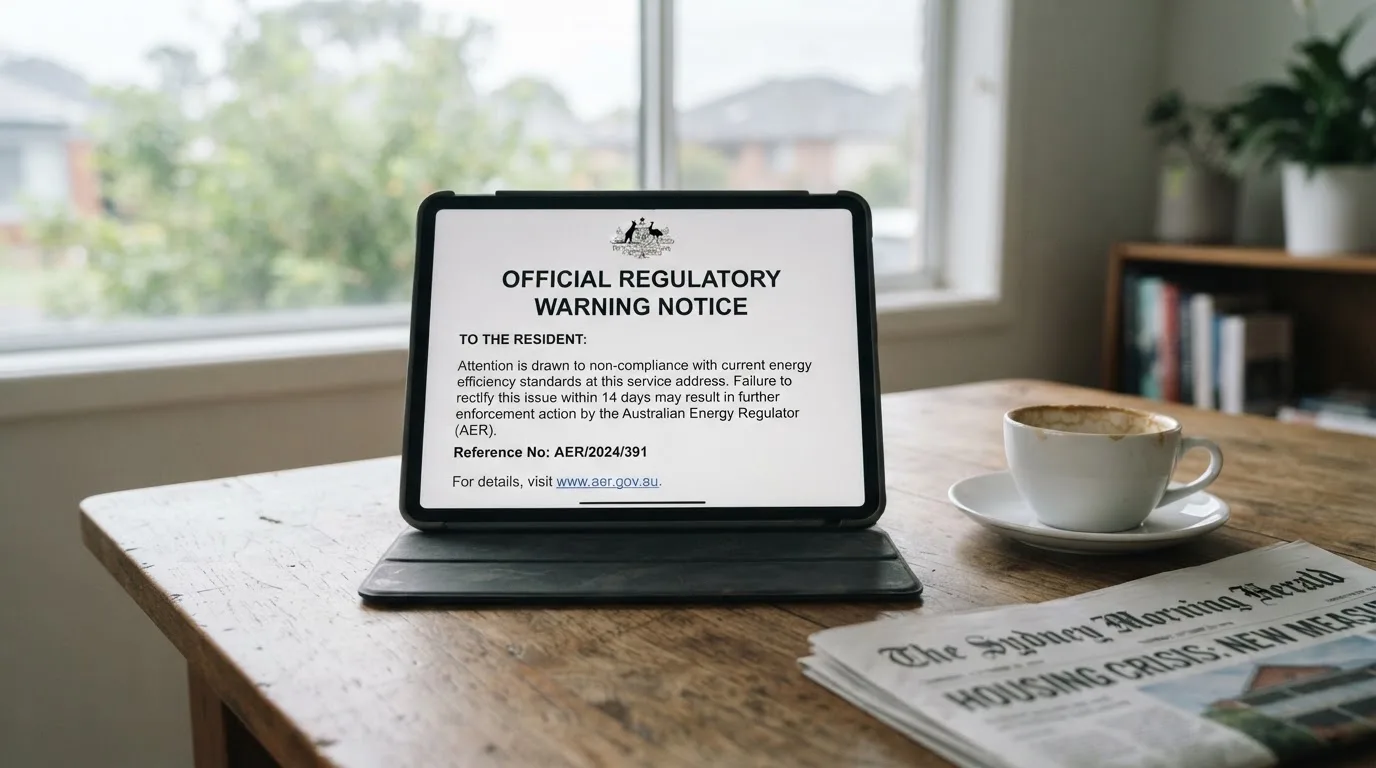
Two structural points shape the picture. First, the Interactive Gambling Act 2001 as amended in 2023 bars Australian-licensed services from accepting credit cards or any credit-related product — and that bar extends in practice to digital wallets linked to a credit line. A player who tries to top up with Apple Pay on a credit card will be refused by the merchant. Second, the major banks have layered their own gambling blocks on top of the law, with ANZ’s block explicitly catching wallet transactions on the same card, and Westpac’s block operating against the merchant category code “Betting/Casino Gambling”. A mobile experience that looks smooth at the deposit screen often stops working on the first try, and that is the bank, not the casino.
On the app question specifically: the offshore sites that target Australians mostly run as browser play, because the major app stores will not carry a real-money casino app in the Australian market. A reader who sees a downloadable “casino app” advertised is being pointed at something that lives outside the normal app-store review process. Browser play, by contrast, just works — load times are unremarkable on a recent phone and the deposit paths are the same as on desktop. The catch is that the bank-side blockers behave identically regardless of how the site is reached.
Apple Pay does not itself charge a fee to consumers in Australia; any surcharge is the merchant’s own processing cost, not Apple’s. Transaction limits and PIN requirements are set by the card issuer or the merchant. None of that makes a gambling deposit work that the law or the bank’s own block refuses — the wallet is just the rail.
PayID and Osko, the instant transfer layer on Australia’s New Payments Platform, are the other deposit route that genuinely works on a phone. A transfer to a PayID arrives in under a minute, 24/7, with the account holder’s name displayed before the money is sent. AP+, the operator, warns that being asked to send money to a PayID on an illegal gambling site is almost certainly a scam signal — the site is asking for the payment instrument the law is most likely to forbid the use of. That warning is worth taking at face value.
Games, providers and live tables — what an honest paytable looks like offshore
The shelves of slots and live tables an offshore site advertises are real games, with real RTPs, from real studios — Pragmatic Play, Evolution, NetEnt, Play’n GO, BGaming and the rest of the well-known supplier list. The paytables on the games are the paytables; the house edge is the house edge. None of that is the problem.
The problem is what surrounds the games. An Australian player on an offshore site cannot complain to anyone in this country if the site refuses to pay out. There is no AU complaints body with jurisdiction. The licence shown in the footer is in Curacao, Anjouan or Kahnawake — none of which has an office a player can write to and expect an answer from. And the site can be blocked by Australian ISPs at the ACMA’s request, taking the balance with it. Game fairness is one question; recourse is another, and only the first is settled by the provider name on the loading screen.
Live casino is the segment where the gap between the marketing and the reality is sharpest. Evolution runs the live-dealer tables most offshore sites advertise, and the streams are the same streams they run anywhere else in the world. A spin on a Pragmatic Play slot is the same spin. What changes is the wrapper: the deposit path, the withdrawal policy, the complaint mechanism, and the regulatory regime the operator sits inside. Two players at the same live blackjack table, on the same software, can have materially different experiences depending on whether the site they reached the table from is licensed somewhere with consumer protection rules or somewhere without.
A practical note for a reader who reads paytables: the RTP published by the studio is the RTP the game runs at. The volatility class is the volatility class. But the bonus terms attached to the welcome offer on top of the game are a separate layer entirely, and that is the layer an offshore site controls. The games themselves are honest; the bundle around them is the thing to read closely.
A shortlist of slots for a real-money player in Australia would include games from the same studios any other jurisdiction lists — Gates of Olympus, Sweet Bonanza, Big Bass Bonanza on the Pragmatic side; Book of Dead and Reactoonz from Play’n GO; Starburst and Gonzo’s Quest from NetEnt. The titles are not the variable. The operator wrapping them is.
New casinos — why “launched in 2026” is marketing, not a category
A “new online casino” listing is built from launch dates pulled from affiliate tracking pages. The label has no regulatory meaning in Australia, because no online casino product can be licensed here regardless of when it was set up. A site launched last month and a site launched in 2017 are equally prohibited; the freshness of the wrapper does not change the underlying status.
The marketing logic of the “new” tag is also worth seeing through. Affiliate sites earn a commission on first deposits from referred players, which means there is a financial incentive to push whatever brand has just opened and is offering the highest bounty. A reader looking at a “best new casino” list is, in practice, looking at a list of recently opened affiliate partnerships. Some of those sites will be honest operations. None of them is a category that exists under Australian law.
There is one case where “new” carries information an Australian player can use: when the launch is genuinely onshore. Clubs and pubs in Australia regularly roll out new pokies and table-game floors; those are the only real-money play that is licensed, and a venue that has just refreshed its gaming floor is doing something distinct from an offshore site that has just refreshed its domain. The term “new casino” mixes the two together, and a careful reader separates them.
A few other terms that turn up on new-casino lists, and what they are worth:
- Crypto-friendly. Offshore sites that take Bitcoin or USDT are not licensed in Australia and are not covered by the consumer protections the IGA enforces. A crypto deposit at an offshore site is, in practice, an irreversible transfer to an entity with no local footprint.
- No deposit bonus. The affiliate model uses these heavily. The terms attached usually include a wagering multiple, a max-cashout cap and a list of excluded games. The headline number rarely survives the small print.
- VIP / loyalty programme. Standard for the offshore segment. Worth knowing for what it does to withdrawal times and limits at higher tiers, less so as a feature in its own right.
The honest version of a “new casinos” shelf in 2026 is: every one of them is illegal to operate for Australians under the IGA, and the date on the about-page does not change that.
Summary of ACMA Actions
| Brand | Operator | ACMA Action Date |
|---|---|---|
| RocketPlay | Pulsup Ltd | March 2026 |
| Level Up Casino | Dama N.V. | May 2022 |
| Woo Casino | Dama N.V. | March 2025 |
| Spirit Casino | Dama N.V. | May 2025 |
| National Casino | Consolutetish S.R.L. | July 2025 |
| Bizzo Casino | Consolutetish S.R.L. | July 2025 |
| Ignition Casino | Bamboo Media | July 2025 |
| Instant Casino | EOD Code SRL | February 2025 |
| Jackbit | Ryker B.V. | April 2026 |
| Casino Intense | Sterplay Holding Ltd | April 2025 |
| Sky Crown | Hollycorn N.V. | September 2022 |
What follows is not a ranking. It is the set of brands the ACMA itself has issued a formal warning over for offering prohibited interactive gambling services to people in Australia, ordered by recency of action and grouped by operator. No bonus terms, payout times or game counts are listed — the only sources for those were affiliate marketing pages, and they are not used here. The point of naming these brands is to put the ACMA’s own register on the page next to the subject that searches them out.
RocketPlay
The ACMA issued a formal warning to Pulsup Ltd over RocketPlay in March 2026. The same brand sits on an earlier warning to Dama N.V. from May 2022. Rocketplay’s own listings describe a Curacao-licensed operation with a standard offshore welcome package and the usual crypto-friendly rail — none of which alters the warning, and the ACMA’s register is the authoritative source on the action, not the licence number on the site.
What an Australian reader takes from that is straightforward: the brand has been on the regulator’s radar for years, the most recent action is recent, and the operator behind it has changed names but not business model. The verdict: a brand a reader will run into on any “real money” shortlist, but a brand the ACMA has acted against in both the company the warning named four years ago and the one it named last quarter.
Level Up Casino
A formal warning was issued to Dama N.V. over Level Up Casino in May 2022, alongside five sister brands from the same operator. The warning is four years old at this point and there is no record of a fresh ACMA action against the brand specifically since. That is the most that can be said for it. What it does not say is that the site has come into compliance — the underlying prohibition on offering online casino games to Australians has not changed, and the licence Level Up displays is not one that authorises service to Australian residents.
For a reader comparing options: the warning is dated, but the law behind it is current. The verdict: less immediately visible on the ACMA’s recent actions list than some of the other brands here, and no safer for that reason.
Woo Casino
The ACMA issued a formal warning to Dama N.V. over Woo Casino in March 2025. Dama N.V. is the same operator behind Level Up Casino, Rocketplay, Wild Tornado and the other brands named in the May 2022 warning, which means Woo sits inside a group that has been on the ACMA’s record continuously across 2022 and 2025. The site itself continues to operate offshore under a Curacao licence and accepts Australian sign-ups through standard deposit methods.
The combination of a recent warning and a parent operator with a multi-year record is what makes this entry worth flagging separately from Level Up. The verdict: a brand under the same operator umbrella as several others on this list, with the freshest ACMA action against any of them.
Spirit Casino
The ACMA issued a further formal warning to Dama N.V. over Spirit Casino in May 2025, two months after the Woo Casino action. This is the most recent of the warnings against the Dama group and the clearest signal that the ACMA has continued to treat the operator as a current target rather than a closed file. Spirit Casino advertises a comparable product to the rest of the Dama brands and shares the offshore licence structure.
The recency matters. A 2022 warning can be read as historical; a 2025 one cannot. The verdict: the same operator family as Woo and Level Up, with a warning recent enough that any reader looking at this group should treat the whole umbrella as live.
National Casino
The ACMA issued a formal warning to Consolutetish S.R.L. over National Casino in July 2025. National Casino sits alongside Bizzo Casino under the same operator on the same warning date, and the ACMA’s record on the parent is the relevant data point. The site operates offshore and continues to accept Australian players.
Where National differs from the Dama group is in the operator structure — Consolutetish is a separate corporate entity, and the ACMA’s action against it is independent of any prior warning. That gives a reader two distinct groups of warnings to compare, and Consolutetish’s is the newer of the two.
Bizzo Casino
The ACMA issued a formal warning to Consolutetish S.R.L. over Bizzo Casino in July 2025. Bizzo was also the subject of an earlier 2022 formal warning to TechSolutions (CY) Group Limited and TechSolutions Group N.V., which means this brand has crossed operators in the ACMA’s record while keeping the same name in front of players. That kind of continuity is a signal worth naming on its own.
For a reader comparing against National Casino: the two are from the same current operator, but Bizzo has the older warning on its record through a different parent. The verdict: a brand with two ACMA warnings behind it under two different operating companies, and the most recently named operator of either.
Ignition Casino
The ACMA issued a formal warning to Bamboo Media over Ignition Casino in July 2025. Ignition has historically been positioned in the affiliate marketing space as a poker-and-casino hybrid, and its presence on the ACMA’s list confirms the casino side of that offering falls inside the prohibition. Bamboo Media is a less-frequently named operator in the ACMA’s recent actions, which makes the warning a useful data point on its own.
The verdict: a brand with one formal warning from last year, sitting under an operator that has not been the subject of the same volume of repeat actions as Dama N.V.
Instant Casino
The ACMA issued a formal warning to EOD Code SRL over Instant Casino in February 2025. Instant Casino advertises a heavily bonus-led product and was, at the time of the warning, one of the more prominent brands in the affiliate-tracked shortlists for the Australian market. The warning preceded the July 2025 round that named National, Bizzo and Ignition, and the ACMA’s 2025 enforcement cadence against offshore casino brands is the context.
The verdict: a brand the ACMA moved on early in its 2025 enforcement round, with no subsequent warning to suggest the situation has changed.
Jackbit
The ACMA issued a formal warning to Ryker B.V. over Jackbit and CasinOK in April 2026. That is the most recent action on this list and the only one that pairs two named brands under a single warning. Ryker B.V. had not appeared on the ACMA’s prior warnings, which makes this entry a new operator entry rather than a repeat.
The recency is the point. The verdict: the freshest brand on this page, named in an ACMA warning that also covers CasinOK, with no prior history on the regulator’s record.
Casino Intense
The ACMA issued a formal warning to Sterplay Holding Ltd over Casino Intense in April 2025. Casino Intense is a smaller-volume brand in the offshore segment and the warning is one of the ACMA’s mid-2025 actions. The site continues to operate offshore under the licence it carried before the warning.
The verdict: a single formal warning under a single operator, with no record of repeated action.
Sky Crown
The ACMA issued a formal warning to Hollycorn N.V. over Sky Crown and Blue Leo. The warning is dated to September 2022 in the ACMA’s publication, and there is no record of a fresh ACMA action against either brand specifically since. Hollycorn operates a stable of casino brands across multiple licences and the Sky Crown / Blue Leo warning is the operator’s only one on the ACMA’s Australian-facing record.
The verdict: the oldest warning on this page, from an operator with a single ACMA action on the Australian record and no repeat.
Where the eleven leave a reader
Read down the table the ACMA’s own register produces, and a pattern is visible. The 2025 and 2026 warnings cluster around a small number of operators running portfolios of brands — Dama N.V. with Woo, Spirit, Level Up and Rocketplay; Consolutetish with National and Bizzo; Ryker B.V. with Jackbit and CasinOK. The regulator is acting against the parent, not the wrapper, and that is the most useful thing a reader can take from the list. A brand on the page is, more often than not, a brand on a portfolio.
What “real money online casino” actually means in Australia
The simplest framing is the right one. Real-money play in Australia falls into two distinct categories, and the search terms mix them. The licensed category is on-premises gaming at pubs, clubs and casinos — pokies, table games, keno — regulated by state and territory gaming authorities, with consumer protection and complaints mechanisms that work. The unlicensed category is the offshore sites that the ACMA has been acting against since 2017. Both involve real money; they do not both involve a legal product.
What is licensable online, and what is not, comes down to the Interactive Gambling Act 2001 as amended in 2017. Wagering on races and sport placed before the event is licensable, and in practice is licensed by the Northern Territory Racing and Wagering Commission for tax reasons. Lotteries and keno are licensable in most jurisdictions. Online casino games, online pokies and in-play betting are not licensable anywhere in Australia. The NTRWC, which regulates 52 of the country’s online bookmakers, has no full-time staff and meets once a month in Darwin — a useful data point on how lightly the licensed wagering sector is overseen, but a different conversation from the offshore casino one.
The enforcement picture is the ACMA’s blocking regime. Since November 2019, the ACMA has asked Australian ISPs to block 1,751 illegal gambling and affiliate marketing websites; more than 230 unlicensed services have left the Australian market since 2017. The June 2026 round alone added twelve: 7Signs, ChromaBet, Donbet, Duospin, Freshbet, Slots Gem, Jacks Club, Lucky Start, Pointsbetz, Spinrise, Vinyl Casino and Wildsino. The blocking is a request, not a takedown — a site can reappear under a new domain — but it is a steady, observable pressure on the offshore segment.
The losses-to-offshore figure is the most quoted and the least useful as a single number. H2 Gambling Capital’s 2025 report puts it at around A$3.9 billion a year, and the share of gambling going through legal channels fell from 74% in 2021 to 64%. That is a real movement in the legal-vs-illegal split, and it is the context for every other enforcement data point on this page.
The payments picture — what works, what doesn’t, and what the law says
Credit cards and credit-related products are banned as payment for licensed online wagering since 11 June 2024, with penalties of up to A$247,500 for operators who breach the rule. The ban also extends in practice to digital wallets linked to a credit line. Legal deposit routes for licensed wagering are debit card, bank transfer, PayID/Osko and BPAY. An offshore casino asking for a credit card or a crypto deposit is operating outside the Australian rule set, and that is one of the cleanest signals a reader can use to sort sites.
The bank-side blocks add a layer. Westpac’s gambling block works at merchant category code level and refuses authorisation on the “Betting/Casino Gambling” MCC. ANZ’s block catches digital wallet transactions on the same card. Commonwealth Bank’s lock works through the CommBank app. Each bank warns that no block catches every gambling transaction and that some non-gambling transactions may be blocked by mistake. The result is a patchwork that catches most attempts and misses some.
PayID and Osko are the deposit route that genuinely works on the Australian banking rail. A PayID transfer arrives in under a minute, 24/7, and the system shows the recipient’s name before the money is sent. AP+ warns that a gambling site asking for a PayID transfer is almost certainly a scam — the legitimate licensed wagering market uses PayID, and an offshore site is not in that market. The same warning applies to BPAY, the bill-payment service that has been operating since 1997 and is owned jointly by the four major banks through Cardlink Services Limited. A Biller Code and a Customer Reference Number is a bill payment structure, not a deposit structure, and an offshore casino asking for one is asking for the wrong instrument.
The Reserve Bank’s July 2025 review proposed removing surcharges on eftpos, Mastercard and Visa transactions and explicitly left American Express outside the proposed ban. The Amex three-party scheme sits outside the four-party network Visa and Mastercard run, which is the structural reason it is treated differently. None of that affects the gambling use case — Amex is treated as a credit instrument for licensed wagering purposes and behaves accordingly at the merchant category code.
AUSTRAC’s threshold-transaction-report rule applies only to physical cash transfers of A$10,000 or more. Ordinary electronic bank transfers are not subject to that per-transaction reporting requirement regardless of amount. That is a useful thing to know for a reader who has been told a large bank transfer will trigger a reporting obligation — it will not, unless the transfer is in physical cash.
How to read a real-money shortlist honestly
Three tests sort a real-money shortlist for Australia from a list of affiliate partnerships. First, does the list name the offshore operator behind each brand, or does it treat each brand as a stand-alone business? The ACMA’s own warnings show that most of these brands sit under a small number of parent operators, and a list that hides that is hiding the only signal that matters. Second, does the list name a deposit route a bank will actually let the money go through? A credit card is barred by law and most wallets are caught by the bank-side blocks; a list that glosses over this is selling a deposit that will fail at the first attempt. Third, does the list mention what recourse a player has if a withdrawal is refused? There is no Australian recourse against an offshore site, and any list that suggests otherwise is selling a protection that does not exist.
A reader who runs those three tests against any “best real money online casino Australia 2026” list will, in almost every case, end up with the same conclusion: the page is describing an illegal product, the brands are subject to ACMA action, and the only licensed real-money play is at a venue. The honest version of the shortlist is the licensed venues and the ACMA’s own register, side by side. Anything else is marketing copy dressed as comparison.
The 2026 reform context is worth noting without overweighting. The Interactive Gambling Amendment (Gambling Reform) Bill 2026 passed Parliament on 19 August 2026, and its advertising and inducement measures commence on 1 January 2027. That is a law with a start date, not a law currently in force. A reader seeing “2026 reform” claims in marketing copy is looking at a measure that does not bind any operator yet. The blocking regime, the credit card ban, the consumer-protection absence — those are the rules in force on the page as written.
Frequently asked questions
Is any online casino legally allowed to take real-money bets from a player in Australia?
No. The Interactive Gambling Act 2001 as amended in 2017 makes it an offence to provide online casino games, online pokies or in-play betting to a person in Australia. No state or territory licenses the product. What is licensed is wagering on races and sport placed before the event, lotteries and keno. The player is not prosecuted under the IGA; the target is the provider. The practical consequence is that every online casino product marketed to Australians is offered by an offshore operator with no Australian footprint.
Why do offshore sites keep marketing “real money” casino play to Australians?
Because the prohibition targets the provider, not the player, and because the affiliate model pays a commission on first deposits from referred players. An offshore operator can keep accepting Australian sign-ups, accept a payment from an Australian player, and rely on the fact that no Australian regulator has direct enforcement reach against it. The ACMA’s response is blocking requests to ISPs and formal warnings to operators, both of which the ACMA has used extensively. The marketing does not stop because there is money in the marketing.
Is playing pokies for real money at a licensed pub or club different from doing so online?
Yes, in three ways that matter. The licensed venue is regulated by a state or territory gaming authority, with consumer protection rules and a complaints mechanism. The pub or club is in this country, with a real-world address and a real-world operator. And the pokies themselves are the Australian-licensed product, sitting inside the legal framework. An offshore site offering “online pokies” is using the same word for a different product, and the legal difference is the whole point.
What happens if an Australian tries to withdraw funds from an offshore real-money casino site?
It depends on the site, and the player has no Australian complaints body to approach if it refuses. There is no AU-licensed dispute resolution service that covers an offshore casino. The site can apply withdrawal limits, identity checks, bonus clawbacks and time delays that an onshore operator is constrained on. In the worst case the ACMA blocks the site and the balance is sitting on a domain a player cannot reach. The honest framing is that a withdrawal is at the operator’s discretion and the player has no leverage.
Does the ACMA actually take action against offshore sites offering real-money casino games to Australians?
Yes. Since 2017 more than 230 unlicensed services have left the Australian market. Since November 2019 the ACMA has asked Australian ISPs to block 1,751 illegal gambling and affiliate marketing websites. The June 2026 blocking round alone added twelve sites. The ACMA also issues formal warnings to named operators — the eleven warnings named on this page are an illustrative slice of that record. Enforcement is steady rather than dramatic, and the ACMA’s register is the authoritative source for what has been acted on.
How can someone confirm a payment method actually settles funds from a licensed venue?
The cleanest signal is the licensed venue itself. A licensed pub, club or casino in Australia will accept debit card, bank transfer, PayID/Osko and BPAY — that is the legal deposit set under the credit card ban in force since 11 June 2024. A PayID transfer shows the recipient’s name before the money is sent, which lets a player verify they are paying the venue they think they are paying. An offshore site asking for a credit card, a crypto deposit, or a wire transfer to a third party is not asking through any of those routes, and that is the diagnostic.