
best offshore casinos for australian players 2026: what the IGA actually does, and what a reader in Australia is left with
Anyone typing “offshore casino” or “best offshore casinos” into a search bar is usually one step away from handing a stranger on the internet their card details. The first sentence of this page is the honest one: no Australian licence covers online casino games or online pokies, anywhere, and the ACMA’s enforcement record against offshore brands is long, current and growing. What follows sets that gap out plainly, lays down what Australians can actually use, and walks through the eleven brands the ACMA itself has acted against in recent years — not as recommendations, but as the data the regulator has decided is worth publishing.
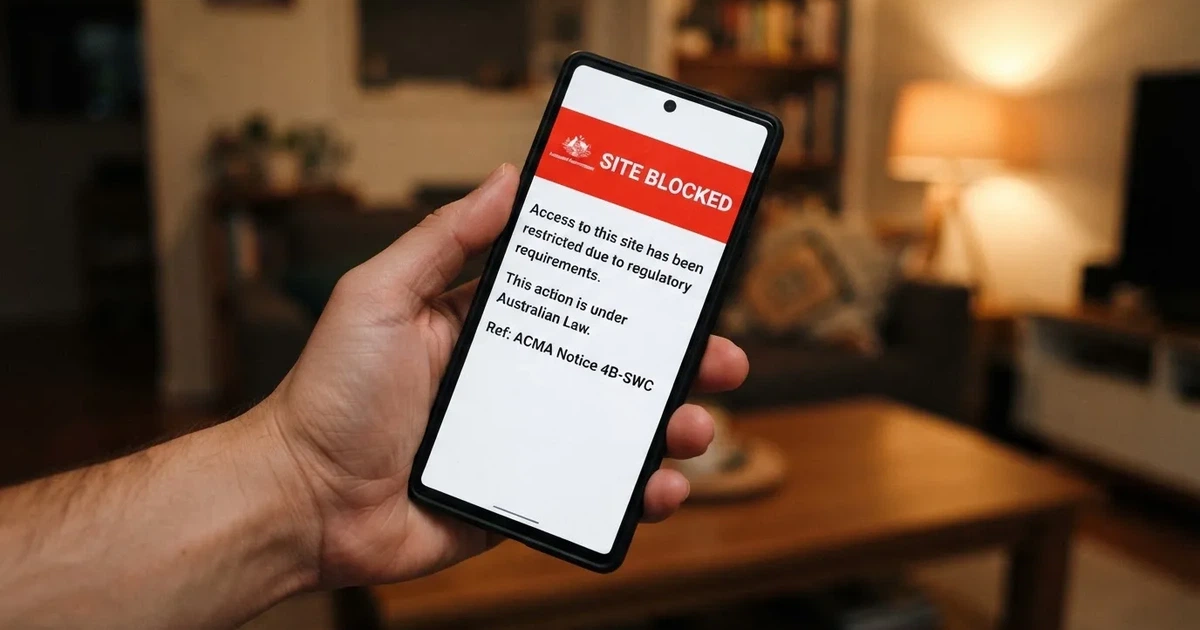
This comparison is current as of 28 October 2026, against the ACMA’s published formal-warning register and the Australian Communications and Media Authority’s blocking-list record.
Table of Contents
- The legal frame, before anything else
- What offshore really means in this market
- What the ACMA has actually done, in numbers
- The recent formal warnings, brand by brand
- What the ACMA warning actually does
- Player protection, and why BetStop does not cover the offshore market
- What an Australian is actually allowed to deposit with
- The 11 brands, one verdict at a time
- What the data says about the operator cluster
- The lawful alternatives a reader in Australia actually has
- What this page is not, and where it ends
- frequently asked questions
The legal frame, before anything else
The Interactive Gambling Act 2001, tightened by the Interactive Gambling Amendment Act 2017, makes it an offence to provide online casino games, online pokies and in-play betting to a person physically in Australia. No state or territory issues a licence for any of it. The product a reader is searching for — an offshore casino accepting Australian players — is, by definition, the product the regulator is set up to chase.

That gives the rest of this page its shape. The “best” of a prohibited product is not a ranking the way a ranking of licensed bookmakers would be; it is a list of brands the regulator itself has decided to publish notices about, set beside the lawful alternatives that do sit inside the Australian frame.
What is licensed is narrow. Wagering on races and sport before the event, lotteries, and keno — and in practice most of those licences sit in the Northern Territory, where the Northern Territory Racing and Wagering Commission oversees 52 online bookmakers including Sportsbet, Bet365 and Ladbrokes. That body, reporting in April 2026, runs without full-time staff and meets once a month in Darwin — a thin regulatory layer over a market that processes a lot of money.
Minimum age across all of it is 18.
What offshore really means in this market
A brand calling itself “offshore” is not a regulatory category the way “licensed in Malta” is. It is the marketing word for one specific situation: the operator is incorporated somewhere outside Australia, the licence it displays on its footer is from a foreign regulator (Curaçao is the commonest in this dataset, with Cyprus-registered holding companies not far behind), and the players it courts are in countries — including Australia — where the local regulator has no jurisdiction over it.

Two consequences follow, both of them durable.
First, an offshore site gives an Australian player no Australian consumer protection. No Australian complaints body will hear a dispute about a declined withdrawal, a voided bonus or a closed account. The licence shown in the footer has a regulator, but that regulator’s job is its own jurisdiction’s players — not yours. The footer line “licensed and regulated” reads as a marketing claim, because it functionally is one.
Second, the ACMA can act on the Australian-facing side of the operation — block the website, warn the operator, force an exit — and that action has, in the regulator’s own count, removed more than 230 unlicensed gambling services from the Australian market since 2017. The site stays live elsewhere. It just stops reaching an Australian customer.
That is the whole game. “Offshore” means “we are not subject to your regulator, and we are subject to a regulator that does not cover you”.
What the ACMA has actually done, in numbers
The arithmetic on this page is a blocking rate: how fast the ACMA’s block-list has grown since the first request in November 2019.
| Anchor | Number |
|---|---|
| Total blocked sites since first request (Nov 2019) | 1,751 |
| Unlicensed services removed since 2017 | 230+ |
| Sites blocked in the 26 June 2026 round | 12 |
| First blocking request | November 2019 |
| Window covered | roughly 6.5 years |
The blocking rate is roughly 270 sites per year on the ACMA’s count since November 2019, with a clear acceleration in the most recent rounds — twelve new names in the single round reported on 26 June 2026 alone (7Signs, ChromaBet, Donbet, Duospin, Freshbet, Slots Gem, Jacks Club, Lucky Start, PointsBetz, Spinrise, Vinyl Casino, Wildsino). The pace is not flat; the regulator is doing more, more recently.
The same direction shows up in the loss side of the ledger. H2 Gambling Capital’s 2025 report estimates Australians lose about A$3.9 billion a year to illegal gambling sites, and the share of gambling going through legal channels fell from 74% in 2021 to 64%. So the block-list is getting longer at the same time the legal-channel share is getting smaller. Either the legal market is being undercut, or it was never where the demand was sitting — both readings of the data point at the same conclusion: a reader searching this term is part of a market the regulator has been losing share from.
The recent formal warnings, brand by brand
The ACMA’s formal warnings are published on its own site and are the most concrete piece of evidence the regulator produces about who is targeting Australian players. Eleven brands have formal warnings dating from 2022 onwards, and the names repeat across operators more often than across brands — Dama N.V. alone has been warned over six different casino sites.
| brand | ACMA action and date | operator named by the ACMA | subject support |
|---|---|---|---|
| RocketPlay | formal warning, March 2026 (earlier May 2022, Dama N.V.) | Pulsup Ltd | listings-only (Gambling Insider) |
| Level Up Casino | formal warning, May 2022 | Dama N.V. | listings-only (Westpac) |
| Woo Casino | formal warning, March 2025 | Dama N.V. | — |
| Spirit Casino | formal warning, May 2025 | Dama N.V. | — |
| National Casino | formal warning, July 2025 | Consolutetish S.R.L. | listings-only (acma.gov.au, austrac.gov.au, betstop.gov.au) |
| Bizzo Casino | formal warning, July 2025 (earlier 2022, TechSolutions) | Consolutetish S.R.L. | listings-only (Gambling Insider) |
| Ignition Casino | formal warning, July 2025 | Bamboo Media | — |
| Instant Casino | formal warning, February 2025 | EOD Code SRL | listings-only (ecoPayz, PayID) |
| Jackbit | formal warning, April 2026 | Ryker B.V. | — |
| Casino Intense | formal warning, April 2025 | Sterplay Holding Ltd | listings-only (austrac.gov.au, betstop.gov.au, Gambling Insider) |
| Sky Crown | formal warning, September 2022 | Hollycorn N.V. | — |
A note on what the table shows and does not show. The operator column is the legal entity the ACMA named, not the brand name — Dama N.V. is the corporate parent of several brands in this list, and Consolutetish S.R.L. has been warned over two of them. The same operator showing up twice means the ACMA treated two brands as one campaign, not two. The subject-support column reports only what specific listings pages say about each brand — nothing about the operator’s own terms, which is the cell a comparison of this shape would normally carry, except the comparison being made here is the regulator’s, not a feature scorecard.
What the table does not carry, by design: any bonus terms. Research on the bonuses these brands advertise comes from affiliate marketing pages, and those pages are written to convert clicks, not to describe what an offer is worth. The page refuses the comparison rather than ship unverified numbers, and the empty cells are the point.
What the ACMA warning actually does
A formal warning is the regulator’s first real lever. It is published on the regulator’s site, it names the operator and the brand, and it gives the operator a window to remove Australian-facing material before further action follows. The next step is the one an Australian reader notices: an instruction to Australian ISPs to block the domain, which is what the 1,751 total reflects.
The block is at the network level, on the Australian ISP’s side, and it does not need the operator’s cooperation. The site is still live elsewhere — a reader outside Australia can still reach it — but the Australian customer gets a “page cannot be displayed” or the regulator’s notice. If there is a balance on the account at the moment of block, the operator is under no obligation to return it, and there is no Australian complaints body to push for one. That is what “offshore” costs the person on the Australian end of the transaction.
Player protection, and why BetStop does not cover the offshore market
The single most useful safeguard for an Australian player is BetStop, the National Self-Exclusion Register, live since August 2023. A punter registers once, and every Australian-licensed online and phone wagering service is bound to refuse their account. That is the system the regulator set up to give Australians a real off-ramp from gambling harm.
It does not bind an offshore site. BetStop is a condition of an Australian wagering licence, and an offshore casino does not have one. Registering with BetStop will exclude a reader from Sportsbet, Ladbrokes, Bet365 and the other licensed bookmakers, and it will not exclude them from any brand in the table above.
Two practical handles exist for an Australian reader trying to control gambling spend in addition to BetStop. The first is the bank-level gambling block. Westpac’s block refuses authorisation of transactions registered under the merchant category code “Betting/Casino Gambling” on eligible cards; Commonwealth Bank runs a comparable lock in the CommBank app; ANZ’s block extends to digital-wallet transactions on the underlying card, not just the card itself, and a 48-hour cooling-off applies before the block can be removed. Each of these carries the same caveat the banks state themselves: not every gambling transaction will be blocked, and some non-gambling transactions might be blocked in error. They are imperfect, but they bite on the payment rail, which is the part of the chain an Australian reader actually controls.
The second handle is the National Gambling Helpline, 1800 858 858, free and 24/7, with chat at Gambling Help Online. A reader who has just had a bad session and is looking for the next site to try is exactly the reader the helpline is set up to reach.
What an Australian is actually allowed to deposit with
The legal-wagering payment frame is narrower than the consumer frame. Since 11 June 2024, Australian-licensed online wagering services cannot accept credit cards or credit-related products, with penalties of up to A$247,500 per operator breach. Digital currency is also out for the same operators. What remains is debit card, bank transfer, PayID/Osko, and BPAY — all of which are also the routes an Australian bank can actually monitor and block.
A site asking for a credit card or a crypto deposit is, on this side of the law, a site already outside the licensed frame. That detail is not a courtesy — it is a structural test, and it does not require reading the small print.
PayID itself carries one useful safety feature. Before a transfer is sent to a PayID, the platform shows the name on the receiving account. Australian Payments Plus warns that being asked to transfer money to a PayID on an illegal gambling site almost certainly means a scam site. That is a single, sharp test, and it is the kind of test the rest of the page does not have.
The 11 brands, one verdict at a time
The block below covers the eleven brands the ACMA has acted against in formal warnings published since 2022. Each brand gets a verdict — not a recommendation, because no brand in this dataset is one a reader should be steered toward, but the page’s own judgement of which reader situation still touches it and what the regulator’s action costs a player who tries to use it.
RocketPlay — the freshest warning on the list
The ACMA’s March 2026 formal warning named Pulsup Ltd as the operator of RocketPlay, replacing an earlier May 2022 warning that named Dama N.V. over the same brand. Two formal warnings over the same brand from the regulator is unusual; it is what a regulator publishes when a brand reappears after a previous warning was apparently ignored. The Australian-facing mirror (RocketPlay’s Australian site) is exactly the kind of local-facing presence the IGA was tightened to address.
What it costs a reader: the brand has at least one Australian-specific domain the regulator is watching, which makes it an early candidate for the next block-list round, and a player who deposits through it is depositing into an account that can be closed without Australian recourse.
Level Up Casino — the older Dama brand
Dama N.V. was warned in May 2022 over six brands at once, and Level Up Casino is one of them. The same operator, the same date, the same campaign — the ACMA treated it as one matter. Dama N.V. has since shown up in the warnings list over Woo Casino (March 2025) and Spirit Casino (May 2025) under different operating-company names, which is the way offshore groups fragment their legal entities: each brand is a separate matter the regulator has to chase separately.
What it costs a reader: the same brand under the same operator four years later, with no published evidence of an Australian-facing exit between them.
Woo Casino — Dama N.V. returns
Woo Casino is the second Dama N.V. warning on this page, this one in March 2025. The pattern is the same — operator warned, brand-specific notice published, Australian-facing material flagged — and the reader-side cost is the same. The interesting fact is the repetition: a regulator does not publish a fresh warning unless the earlier one was insufficient, and “insufficient” in this context usually means the brand kept operating for Australian customers.
Spirit Casino — the May 2025 Dama warning
Spirit Casino is the third Dama N.V. warning on this page. The regulator has now published notices over Dama N.V. in 2022, 2025 (twice) — three separate matters over the same legal entity, each tied to a brand the regulator chose to name. A reader looking at the bottom of any of these sites will see a Curaçao licence number; the ACMA’s view of that licence is on its own page.
National Casino — Consolutetish S.R.L., July 2025
National Casino was named in the same July 2025 warning round as Bizzo Casino, both under Consolutetish S.R.L. The Australian-facing material was specific enough for the regulator to name both brands in one notice. The brand surfaces in the listings pages of ACMA, AUSTRAC and BetStop — three Australian agencies treating it as a live matter, not a historical one.
Bizzo Casino — the repeat offender
Bizzo Casino was first warned in 2022, then again in July 2025. The earlier warning named TechSolutions (CY) Group Limited and TechSolutions Group N.V.; the later one named Consolutetish S.R.L. Two operators, one brand, three years apart — and a regulator that publishes a fresh notice over a brand it has already warned is not a regulator that considers the matter closed.
Ignition Casino — Bamboo Media, July 2025
Ignition Casino sits under Bamboo Media, which is not a name that appears elsewhere on this page. The July 2025 warning is the regulator’s first published action over this brand for Australian-facing material. A reader looking at the brand will find very little Australian-specific data; the regulator’s warning is the most concrete piece of information available.
Instant Casino — EOD Code SRL, February 2025
The February 2025 warning named EOD Code SRL over Instant Casino. The brand appears in the listings pages of ecoPayz and PayID — payment infrastructure that, on the Australian side, is normally a sign of an Australian-facing payment flow, which is also the kind of flow the regulator acts on. The PayID system is the same one the regulator points Australians toward as a test: if the brand is asking for a PayID transfer, the name that comes back will tell the reader what they need to know before they send.
Jackbit — Ryker B.V., April 2026
Jackbit was named alongside CasinOK in the same April 2026 warning, both under Ryker B.V. The brand is a newer entrant to the regulator’s published list. A reader who finds it through a search result today is finding a brand that the regulator has just decided to name, which is the moment at which an Australian-facing block request becomes the most likely next step.
Casino Intense — Sterplay Holding Ltd, April 2025
The April 2025 warning named Sterplay Holding Ltd over Casino Intense. The brand appears in listings pages of AUSTRAC, BetStop and Gambling Insider — three separate data points that, together, put the brand inside the Australian-facing infrastructure rather than outside it.
Sky Crown — Hollycorn N.V., September 2022
The earliest warning on this list that is still active is Hollycorn N.V. over Sky Crown and Blue Leo, dated September 2022. Sky Crown has not been re-named in a more recent warning, which can mean one of two things — either the brand withdrew from the Australian market after the warning, or the regulator has not needed to escalate. Either reading puts the brand on the regulator’s radar in a way a brand with no warning at all is not.
What the data says about the operator cluster
The eleven brands in this section are not a “Top 10” or “Top 11” in any meaningful sense — they are an enforcement cluster, which is a different shape of list. The picture they paint is not “best to worst”. It is “most recently warned” and “named most often”, and the two axes point at the same conclusion: a brand on this list is a brand the regulator has decided is worth a published notice.
Three of the eleven were warned within the last twelve months. Two of them (RocketPlay, Bizzo Casino) are repeat warnings over the same brand. The Dama N.V. name appears in four of the eleven entries, under three different brands. A reader who is choosing between these sites on the basis of any of the usual comparison axes — bonus size, game count, payout speed — is choosing between brands that the regulator has already chosen to publish about, and the regulator’s choice is the only one in this dataset that is not marketing.
A useful contrast: the Northern Territory regulator oversees 52 online bookmakers with one monthly meeting and no full-time staff. The ACMA publishes eleven formal warnings about eleven offshore brands and runs an active block-list of 1,751 sites. The asymmetry is the page’s quiet point. One regulator oversees a small set of operators it can list; the other regulator chases a long tail of operators that have already decided the Australian market is worth reaching into, regardless of the licence frame.
The lawful alternatives a reader in Australia actually has
The product the page opened with — online casino games, online pokies — has no Australian-licensed version. That is the structural fact the rest of the page works around.
What is licensed, and what a reader who has been searching for an offshore casino can use instead, is three things.
Licensed wagering. Sportsbet, Bet365, Ladbrokes and the rest of the 52 NT-licensed bookmakers are accessible to an Australian reader, are subject to Australian consumer protection, are covered by BetStop, and accept only the payment methods Australian law permits. This is not a casino, and it is not the product the reader searched for — but it is the product the law actually licenses for online play.
Land-based casinos and licensed pokies venues. Every Australian state and territory licenses physical venues. Crown Melbourne, The Star Sydney, the Brisbane casino, Skycity Adelaide and the licensed clubs and pubs that hold pokies entitlements are the only places in Australia a reader can legally sit at a slot machine or a table game. The product is the same; the channel is different.
Lotteries and keno. Tatts, Tabcorp, the state lotteries and keno operations are licensed online and at retail. The product is narrower than a casino, and the structure of the games is different, but it is licensed, it is bound by BetStop, and it is on the right side of the IGA.
The honest framing of the page is that none of these three is the answer to the search that brought a reader here. They are the answer to the question the search should have been asking — “where is this product actually licensed, and where is it not”.
What this page is not, and where it ends
This page is not a recommendation. It does not score the eleven brands against each other, it does not name a “best” one, and it does not tell a reader which of the eleven to use. The product is prohibited in Australia, the regulator’s enforcement record is the most current piece of data on the table, and any ranking the page produced would have to either invent criteria the regulator has not adopted or copy criteria from affiliate marketing pages the page refuses to cite.
This page is also not a defence of the offshore market. The regulator’s block-list is the regulator’s, and the regulator’s view is the view that decides whether an Australian reader can reach a brand at all on any given day. The page’s job is to set that view down, plainly, with the dates and operator names the regulator chose to publish, and to leave a reader with the lawful alternatives the Australian frame actually licenses.
A reader who has come to this page looking for a brand to deposit with has come to the wrong page. A reader who has come to this page looking for the legal picture, the enforcement record and the difference between “offshore” and “licensed” has come to the right one.
frequently asked questions
What makes a casino offshore rather than Australian-licensed?
An offshore casino is one incorporated outside Australia and licensed by a regulator in another jurisdiction — usually Curaçao, occasionally Cyprus, Anjouan or Kahnawake. The licence it displays in its footer is a foreign licence, and the Australian regulator has no direct authority over it. An Australian-licensed operator, by contrast, holds a licence from a state or territory regulator (in practice the Northern Territory for most online wagering) and is bound by the Interactive Gambling Act 2001, the bank-blocking framework and BetStop. Online casino games cannot be Australian-licensed at all, which is why the offshore category exists in the first place for a reader in Australia.
Does the ACMA block offshore casino websites for Australian users?
Yes. The ACMA asks Australian internet service providers to block domains that offer prohibited interactive gambling services to people in Australia. The first request went out in November 2019; the running total reported in June 2026 was 1,751 blocked sites and affiliate pages, with more than 230 unlicensed gambling services having left the Australian market since 2017. The block is at the ISP level, so the site stays live for non-Australian customers; an Australian reader trying to reach a blocked site sees a regulator notice or a “page cannot be displayed” message.
Is it legal for an offshore online casino to accept Australian players?
No. Under the Interactive Gambling Act 2001, as amended in 2017, it is an offence to provide online casino games, online pokies or in-play betting to a person in Australia. The IGA targets the provider, not the individual player, which is why Australian readers are not personally prosecuted for using these sites. The enforcement consequence sits with the operator: a formal warning, then an instruction to ISPs to block the site, then the operator either withdraws Australian-facing material or does not.
What enforcement action has the ACMA taken against offshore casino operators?
The ACMA publishes formal warnings on its own site, and eleven brands have been named in formal warnings published since 2022. The most recent in this dataset are RocketPlay (Pulsup Ltd, March 2026) and Jackbit (Ryker B.V., April 2026); the oldest still listed is Sky Crown (Hollycorn N.V., September 2022). Two brands in the list — RocketPlay and Bizzo Casino — have been the subject of two formal warnings each, several years apart. The same legal entity (Dama N.V.) has been named in warnings over four brands: Bambet, Dazard, Level Up, Rocketplay, Wild Tornado and Cobra Casinos in May 2022, with Woo Casino in March 2025 and Spirit Casino in May 2025 added later.
Why doesn’t BetStop cover offshore online casino sites?
BetStop — the National Self-Exclusion Register, live since August 2023 — is a condition of an Australian wagering licence. Australian-licensed bookmakers are bound to refuse any registered BetStop account. An offshore casino does not hold an Australian wagering licence, so it is not bound by BetStop, and registering with BetStop will not stop an offshore site from accepting an Australian player’s deposits. BetStop’s coverage is real for the licensed market and absent for the offshore market, which is one of the structural reasons an offshore site carries a different player-protection profile.
What should someone do instead of chasing a new offshore casino after a bad experience?
Three concrete handles exist for an Australian reader. BetStop excludes the reader from every Australian-licensed wagering service at once, and it is the most powerful off-ramp for the licensed market. A bank-level gambling block — available at Westpac, Commonwealth Bank and ANZ — refuses authorisation of transactions registered under the gambling merchant code on eligible cards, including digital-wallet transactions in ANZ’s case, with a 48-hour cooling-off before removal. The National Gambling Helpline (1800 858 858) is free and 24/7, with chat at Gambling Help Online. None of these reach an offshore site — that is the structural gap — but each of them reduces the spend an Australian reader can make, and the helpline is the one route that does not depend on any product the reader is still using.