
Wazdan Slots and the Australian Market in 2026
Anyone who has typed “best Wazdan online casinos Australia” into a search engine already knows the kind of result that comes back: long lists of offshore sites, each promising Wazdan’s full slot catalogue, each accompanied by a deposit bonus and a “free spins” headline. What that search does not do is pause to ask whether any of those sites are actually available to someone sitting in Sydney, Perth or Hobart. The short answer is no — and the longer answer is what the rest of this page is built around.
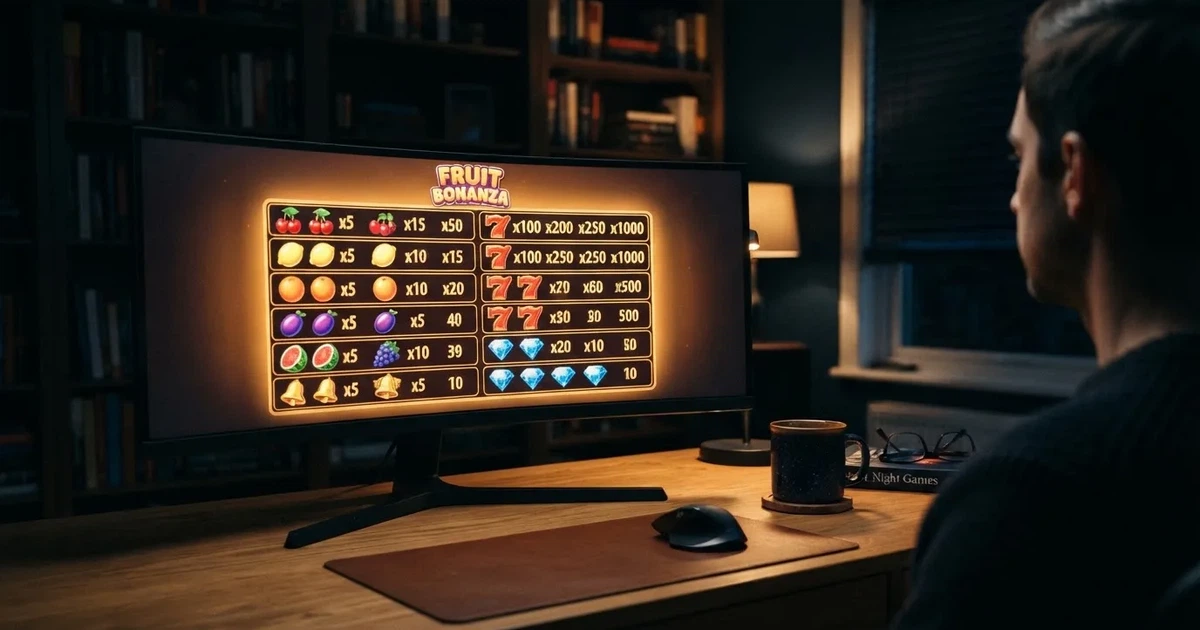
Wazdan is a real studio. The company describes a catalogue of several hundred slot titles, a presence across several dozen regulated markets, and licencing arrangements with regulators in Europe and parts of North America. The games themselves run on standard HTML5 and behave on a phone the way most modern video slots do. None of that changes the Australian frame. Under the Interactive Gambling Act 2001 and its 2017 amendments, online casino games — the category Wazdan’s slots sit inside — cannot be lawfully provided to a person physically in Australia. No state or territory issues the licence that would let a site do so. The Northern Territory Racing and Wagering Commission regulates wagering on sport and racing, not casino product. Every “best Wazdan casino” list a search engine surfaces is therefore a list of offshore operators marketing a prohibited service to an Australian audience.
The page below closes that gap honestly. It sets out what Wazdan actually makes, how the studio presents its product, what licences it does hold, and which Australian-licensed paths exist for someone who wants a comparable experience on a regulated machine. It walks through what an offshore “Wazdan casino” really offers, what the bonus terms look like, what payment routes they accept, and how the Australian Communications and Media Authority has acted against brands of that shape over the past three years. It compares the eleven brands named in ACMA enforcement actions side by side, on the same dimensions. None of that comparison is a recommendation. The product is unlawful to provide to an Australian; choosing one of these sites is the choice the page names, not the choice it steers anyone toward.
Data current as of 28 October 2026, with brand-by-brand details checked against the ACMA’s published formal-warning register.
Table of Contents
- How Australian Gambling Law Treats an Online Casino Product
- Responsible Play and Where the Protections Actually Sit
- Deposits, Withdrawals and How Money Moves on an Offshore Wazdan Site
- How Bonus and Free-Spin Offers Around Wazdan Slots Actually Work
- Mobile Play and How Wazdan Slots Behave on a Phone
- Wazdan as a Studio: Catalogue, Mechanics and Where Its Titles Actually Sit
- Eleven Brands the ACMA Has Formally Warned: A Side-by-Side
- Landscape
- Reading the Comparison: What the Table Does and Does Not Show
- The Blocking Cadence: How Fast the ACMA Closes a Site
- Regulation vs. Illegal Channels
- What an “Offshore Wazdan Casino” Actually Offers: A Closer Reading
- A Player’s Practical Path Through This Market
- What the 2026 Reform Package Changes and What It Does Not
- Closing the Loop: What This Page Set Out to Do
- Frequently Asked Questions
How Australian Gambling Law Treats an Online Casino Product
The Interactive Gambling Act 2001, strengthened by the Interactive Gambling Amendment Act 2017, makes it an offence to provide online casino games, online pokies or in-play betting to a person who is physically in Australia. The law targets the provider, not the player sitting at the other end of the connection. An individual Australian punter is not prosecuted for opening an account and depositing. What the law does is leave the offshore operator with no Australian licence to point at, no Australian complaints body to route a dispute through, and no certainty that an Australian-issued payment will reach a withdrawal window rather than a frozen balance.

The Interactive Gambling Amendment (Gambling Reform) Bill 2026 passed Parliament on 19 August 2026. Its advertising and inducement measures commence on 1 January 2027 — a law with a start date, not a regime already in force on this page. From that date, the inducement language the offshore “Wazdan casino” pages rely on sits inside a separate statutory offence. For the moment, the core prohibition remains the same one that has applied since 2017.
The licensable category in Australia is wagering — betting on a race or sporting event placed before the event begins — plus lotteries and keno. In practice, wagering on sport and racing is licensed by the Northern Territory, which regulates 52 of Australia’s online bookmakers, including Sportsbet, Bet365 and Ladbrokes. The commission has no full-time staff and meets once a month in Darwin. A wagering licence does not extend to casino product; a Northern Territory-licensed bookmaker cannot lawfully offer roulette, blackjack or Wazdan’s 9 Coins to a customer in Adelaide. The minimum age across every licensed Australian gambling product is 18.
A site that markets Wazdan slots to an Australian visitor is therefore operating outside the Australian regime, regardless of what other licences it displays. The licences Wazdan itself holds — Malta Gaming Authority MGA/B2B/206/2011, a UK Gambling Commission account, registrations in Ontario, New Jersey, Michigan, West Virginia, Sweden, Romania, Greece and Denmark — cover the studio’s business-to-business supply, not the operator’s right to take an Australian deposit. That distinction is the one the offshore marketing pages tend to blur.
Responsible Play and Where the Protections Actually Sit
The responsible-gambling supports that matter for an Australian sit on the licensed side of the line and on a different side of it offshore. BetStop, the National Self-Exclusion Register, has been live since August 2023. A player who registers with BetStop is barred from every Australian-licensed online and phone wagering service simultaneously; the bar is binding on the operator and the operator must enforce it. Offshore casino sites are not connected to BetStop. A self-exclusion request sent to an offshore site is, in practice, a request — one the site is not required by Australian law to honour and one that carries no Australian enforcement behind it.
The National Gambling Helpline is 1800 858 858, free, open around the clock, with web chat through Gambling Help Online. Both are operated by funded Australian service providers, sit outside any operator’s marketing reach, and exist for the player who decides to stop, regardless of where they have been playing. State and territory bodies run additional self-exclusion arrangements for land-based venues; the same principle applies — those arrangements are designed for, and enforceable against, Australian-licensed venues only.
The credit-card and crypto ban that took effect on 11 June 2024 applies to Australian-licensed wagering. Operators that breach it face penalties up to A$247,500. Legal deposit routes for an Australian-licensed wagering account are debit card, bank transfer, PayID/Osko and BPAY. A site asking an Australian customer for a credit card or a crypto deposit is, by that single signal, operating outside the Australian rules. The signal travels further than the rule itself — a site that ignores the Australian payment regime tends to ignore the rest of it.
The further signal is what an offshore operator does with a complaint. An Australian-licensed operator answers to a state or territory regulator and, ultimately, to a tribunal or court. An offshore operator answers to its own licensing regime and to none of the above. A refused withdrawal, a voided bonus, a closed account with a balance still on it — each of these is, on an Australian-licensed site, a matter a regulator will look at. On an offshore site it is, in practice, a matter the player has paid for and cannot pursue.
Deposits, Withdrawals and How Money Moves on an Offshore Wazdan Site
On an Australian-licensed wagering site, the deposit stack is debit card, bank transfer, PayID/Osko and BPAY. Settlements are fast because the rails are Australian. Withdrawals go back through the same rails, usually inside twenty-four to seventy-two hours, with no third-party conversion in the middle. The credit-card and crypto rules make the legitimate deposit list a short one.
An offshore “Wazdan casino” does not face those rules. Its deposit stack is whatever its payment provider will accept, which in practice means a card processor willing to handle gambling merchants, an e-wallet, and increasingly a crypto on-ramp. The withdrawal stack narrows: the same crypto on-ramp in reverse, the same e-wallet, occasionally a bank wire that carries its own conversion fee and a delay measured in working days rather than hours. The settlement times a player reads about on an offshore marketing page are best-case times for the cleanest withdrawal method, in the operator’s currency, with no bonus wagering outstanding and no verification flag on the account.
Verification is the second-order cost. The first deposit is rarely the first ask. The first withdrawal typically is. An offshore operator that accepts an Australian card without a check will, almost as a rule, run a full identity and address verification before releasing funds — a step the marketing page does not describe and the welcome bonus does not mention. A player whose first withdrawal triggers a verification queue waits while the operator’s compliance team reviews documents the player provided at sign-up and finds the same documents inadequate. The wait is measured in days. The reason is not spelled out.
The exchange cost sits on top. An Australian dollar converted to US dollars, euros or a stablecoin, then converted back, carries a spread at each end. On a small balance it is rounding error. On a balance that includes a bonus clearing cycle, it is a percentage the player did not see on the way in. None of this is unique to Wazdan slots; it is the structural cost of an offshore gambling transaction for an Australian customer. What is unique to Wazdan-branded titles is that none of these costs is offset by an Australian licence a player can lean on.
How Bonus and Free-Spin Offers Around Wazdan Slots Actually Work
An offshore “Wazdan casino” almost always greets a new account with a deposit bonus and a tranche of free spins on a named Wazdan title. The headline number is the largest number the operator can print. The number that matters is the one in the small print.
A typical offer splits into a percentage match on the first deposit — often one hundred per cent up to a cap — plus a set of free spins on a specific game, with the spin value fixed by the operator rather than by the player. The match bonus carries a wagering requirement: the bonus amount, multiplied by a factor, must be turned over on eligible games before any winnings become withdrawable. The factor varies. A multiple in the high thirties is on the gentler end of what the offshore market currently prints; a multiple in the high forties or above is on the steeper end. Wazdan-branded slots may be eligible in full, eligible at a reduced contribution rate, or excluded from bonus play entirely — an exclusion that the marketing page rarely states and the bonus terms state plainly.
The free spins carry their own terms. Spins are usually locked to a single title — a flagship like 9 Coins or one of the Hold the Jackpot series. The winnings from those spins land as bonus funds, not cash, and run through the same wagering requirement as the deposit match. A maximum cashout cap is common: the free-spin tranche pays out up to a ceiling, beyond which the excess is voided. A time limit — seventy-two hours, seven days — is also common. The clock starts when the spins are credited, not when the player reads the terms.
The arithmetic of clearing a bonus is the part the marketing page omits. Required turnover is the bonus multiplied by the wagering factor. A$200 bonus at a forty-times factor is A$8,000 of wagering. At a slot spin of A$1, that is 8,000 spins; at a five-second interval between spins, it is roughly eleven hours of continuous play on a single game. The wagering contributes to the operator’s required turnover figure but, at Wazdan’s published RTP of around 96 per cent on a flagship like 9 Coins, it also produces a house edge — the difference between what the player wagers and what the game pays back, averaged over those 8,000 spins. The expected loss on A$8,000 of turnover at a 96 per cent RTP is A$320. That is the cost of clearing the bonus, before any consideration of the maximum cashout cap or the free-spin clock.
A bonus is a marketing tool with a price. The price is the wagering requirement, the contribution rules, the time limit and the cashout ceiling. The player who reads those four lines before clicking “claim” knows what the bonus costs. The player who does not discovers the cost on the way to the first withdrawal.
Mobile Play and How Wazdan Slots Behave on a Phone
Wazdan’s slot portfolio is built in HTML5, which means the same game file runs on a desktop browser and on a mobile browser without a separate download. The studio markets the catalogue as mobile-first, and the games themselves behave that way: portrait and landscape orientation both supported, touch targets sized for a thumb, and the spin button placed where a phone grip leaves a finger.
An offshore “Wazdan mobile casino” usually offers one of two routes: a downloadable app, distributed through a link on the operator’s site rather than through the Australian App Store or Google Play (which block gambling apps for Australian customers), or a mobile browser site that loads the same game catalogue. The browser route is the more common and the more reliable. App updates lag behind the operator’s own release cycle, and apps distributed outside the official stores carry their own installation prompts and security warnings. The browser route opens with a URL, runs the same games, and closes with a tap on the home button.
Load times on a recent phone over a normal Australian 4G or 5G connection are short — a few seconds for a flagship slot to initialise, the reels settled in under ten. Older phones on older connections see longer. The games themselves are not the bottleneck; the operator’s site wrapper, with its banner ads, pop-up bonus prompts and chat widget, is. A player who closes the chat widget and ignores the banners sees the underlying game run as the studio intended.
The features that travel well on a phone are the ones that do not depend on a large screen. Wazdan’s Volatility Levels toggle — three settings the player adjusts in-game — is a single tap on mobile. The Collect to Infinity mechanic, where bonus symbols accumulate on a grid, scales to a portrait screen without losing its legibility. Hold the Jackpot, the studio’s bonus-game series, is designed around a phone-sized grid. The flagship 9 Coins concentrates all wins in that bonus round; on a phone, the round sits inside a portrait frame that is closer to the game’s intended presentation than a desktop browser window is.
The features that travel less well are the ones that assume a desktop keyboard. Detailed paytable exploration, which is easier with a mouse and a sidebar, becomes a scroll-and-tap exercise on a phone. Multi-reel autoplay with custom stop conditions is fiddlier on a touchscreen. None of this is a reason to avoid mobile play; it is a reason to know what the smaller screen does and does not do well.
Wazdan as a Studio: Catalogue, Mechanics and Where Its Titles Actually Sit
Wazdan was established in 2010 and is registered in Malta, holding Malta Gaming Authority licence MGA/B2B/206/2011 and a UK Gambling Commission account. The studio describes itself as having fifteen or more years in the business, more than four hundred games and a presence in forty or more markets. The studio’s own current count, in the page it runs about itself, is more than three hundred titles, more than forty new releases a year, more than two hundred and fifty employees, and a presence in more than two and a half thousand casinos across twenty or more markets. Those two framings — the marketing count and the operational count — disagree by a hundred titles, which is itself worth noting: the larger figure is the one a sales deck prints; the smaller figure is the one a portfolio review finds.
The studio’s signature mechanics are three. Volatility Levels, introduced in 2018, lets the player choose a low, medium or high volatility setting in-game, before each spin, on slots that carry the feature. Hold the Jackpot is the studio’s bonus-game series: a separate screen where bonus symbols lock into place, respins reset the timer, and a jackpot ladder sits to one side. Collect to Infinity and its sibling Cash Infinity are persistence mechanics — a symbol on the grid stays until a bonus round collects it, across an indefinite number of base spins. The three mechanics together are what an offshore marketing page means by “innovative features”. They are not innovations in the sense of doing something no other studio does; they are consistent design choices that show up across most of the catalogue.
The flagship title that draws most of the search traffic is 9 Coins. Its published figures, on the studio’s own game page, are a 96.06 per cent RTP, medium-high volatility, and a five-hundred-times-bet maximum win. The game pays no prizes in the base game; every win concentrates in the Hold the Jackpot bonus round. A player who treats 9 Coins as a base-game slot is treating it as a slot it is not; the slot’s structure is that of a Hold the Jackpot game with a base-game intermission between bonus rounds. The volatility setting does not change that structure; it changes how often the bonus round triggers relative to the size of the prizes it pays.
Wazdan joined TotalCasino in 2020. TotalCasino is owned by Totalizator Sportowy Sp. z o.o., Poland’s state gambling monopoly operator. The partnership is a useful data point because it confirms Wazdan’s supply relationship with a state-level operator, in a jurisdiction where state-level online casino is legal. Australia is not such a jurisdiction. The studio’s licensable reach — thirty or more jurisdictions including Ontario, New Jersey, Michigan, West Virginia, Sweden, Romania, Greece and Denmark — does not include Australia, and there is no public licence application in train.
The Australian-licensed path that sits closest to a Wazdan slot is a land-based poker machine, or pokie, in a club or casino. Australian pokie manufacturers include Aristocrat Leisure, an Australian company founded in 1953 and listed on the ASX since 1996 under the ticker ALL. Aristocrat is the largest gambling-machine manufacturer in Australia and the second-largest slot-machine manufacturer worldwide, behind International Game Technology. The 2025 reported revenue was A$6.30 billion, with normalised net profit after tax and amortisation of A$1.55 billion and 7,400 employees. Aristocrat’s online arms are Product Madness, for social casino games, and Aristocrat Interactive, the regulated online real-money-gambling business formed in April 2024 by combining the Anaxi unit with the NeoGames group acquired that same month for roughly US$1 billion. An Aristocrat Interactive game is, structurally, the closest online analogue to a Wazdan slot for an Australian player — and even that analogue sits inside a regulated product offering that the IGA does not currently licence in Australia.
Two further studios that show up on Australian-facing offshore aggregators are worth naming in their own right. 1spin4win, founded in 2021, is a Curaçao-licensed provider of more than one hundred and ninety online slots, with more than a thousand partnerships and a 46 per cent growth in total bet sum across the first half of 2025. Betsoft, founded in 2006, describes more than two hundred RNG games across slots, table games, video poker and specialty titles. Neither studio’s offering changes the legal frame. They sit inside the same offshore supply chain as Wazdan and are subject to the same Australian prohibition.
Eleven Brands the ACMA Has Formally Warned: A Side-by-Side
The brands below are not recommendations. They are the operators the Australian Communications and Media Authority itself has named in formal warnings over the past three years, for providing prohibited interactive gambling services to Australians. The comparison is between what the ACMA has published and what the brands’ own pages or studio listings claim. None of the eleven operates under an Australian licence; the offshore licences some display do not extend to providing casino product to a person in Australia.
Landscape
| Brand | ACMA action and date | Operator named by the ACMA | Subject support |
|---|---|---|---|
| RocketPlay | Formal warning, March 2026 | Pulsup Ltd | — |
| Level Up Casino | Formal warning, May 2022 | Dama N.V. | Listings report Wazdan availability |
| Woo Casino | Formal warning, March 2025 | Dama N.V. | — |
| Spirit Casino | Formal warning, May 2025 | Dama N.V. | — |
| National Casino | Formal warning, July 2025 | Consolutetish S.R.L. | Listings report studio partnerships |
| Bizzo Casino | Formal warning, July 2025 (earlier 2022 to TechSolutions) | Consolutetish S.R.L. | — |
| Ignition Casino | Formal warning, July 2025 | Bamboo Media | — |
| Instant Casino | Formal warning, February 2025 | EOD Code SRL | — |
| Jackbit | Formal warning, April 2026 | Ryker B.V. | — |
| Casino Intense | Formal warning, April 2025 | Sterplay Holding Ltd | Listings report studio partnerships |
| Sky Crown | Formal warning, September 2022 | Hollycorn N.V. | — |
The “subject support” column reflects what the Wazdan-related listings pages report. A dash means no listing data is available. A “listings” entry means a third-party directory, aggregator or studio page names the brand as carrying Wazdan titles — not that the brand itself confirms it, and not that the brand operates under any Australian authorisation. Two of the eleven — Level Up Casino and Casino Intense — sit on the listings side; the rest sit on the no-data side. Three brands share an operator: Dama N.V. was warned over Woo Casino, Spirit Casino and Level Up Casino in three separate actions across 2022 and 2025, an unusual clustering that suggests either repeated rebranding under the same corporate umbrella or the ACMA’s persistence with an operator that did not adjust its offering.
The cluster of 2025 actions is denser than the surrounding years. Across 2025 the ACMA warned Dama N.V. twice, Bamboo Media once, Consolutetish S.R.L. once, EOD Code SRL once and Sterplay Holding Ltd once — six operators across five corporate names. The 2026 cluster so far has included Ryker B.V. and Pulsup Ltd. The pace is not slowing. Each warning is a formal regulatory step that precedes a blocking request; the block itself, when the ACMA directs Australian ISPs to act, removes the site from Australian reach via the major residential internet providers.
Reading the Comparison: What the Table Does and Does Not Show
The table above does not rank the eleven brands. A ranking would imply a recommendation, and a recommendation would imply that one of the brands is a better place to take an Australian deposit than another. None of them is. They differ, however, in ways the table makes plain.
The earliest action on the list is the September 2022 warning to Hollycorn N.V. over Sky Crown — over three years before the most recent warning. Sky Crown has had the longest exposure to ACMA attention and has, by the absence of a follow-up warning, evidently continued to offer the prohibited product without further formal action. Whether that reflects a quiet adjustment or an unenforced continuation is not a question the ACMA’s published register answers.
The most recent action is the April 2026 warning to Ryker B.V. over Jackbit and CasinOK, and the March 2026 warning to Pulsup Ltd over RocketPlay. Both operators are recent additions to the ACMA’s published list, and both continue to market to Australian visitors through the channels that brought them to the ACMA’s attention in the first place. The pace of formal-warning publication, against the pace at which new offshore brands appear, suggests the ACMA’s enforcement list is the visible part of a larger cohort. The 1,751 illegal gambling and affiliate marketing websites blocked since November 2019 — reported by the ACMA in June 2026 — is the cumulative figure; the eleven named in the table are a single year’s slice.
The “listings” entries on Level Up Casino and Casino Intense are worth treating with caution. A directory that names a brand as carrying Wazdan titles is reporting what the brand or its aggregator claims; it is not confirming the claim. A player who relies on a directory listing to find Wazdan content on a Level Up Casino or Casino Intense page finds the catalogue the page presents, which may or may not include the titles the listing names. The gap between what a third party says a site offers and what the site actually delivers is the gap that offshore marketing consistently fails to close.
The “—” entries are honest. They mean the brand does not appear on a Wazdan-related listings page, not that the brand definitively does not carry Wazdan titles. A brand may carry the studio’s full catalogue without appearing on a third-party directory; a directory may be out of date. The honest reading of “—” is that the brand’s relationship with Wazdan is unconfirmed by an external source, not that the relationship is absent.
The Blocking Cadence: How Fast the ACMA Closes a Site
The ACMA’s published cadence has two parts: a formal warning first, a blocking request after if the operator does not adjust. The numbers are large. The cumulative figure is 1,751 illegal gambling and affiliate marketing websites blocked since the first blocking request in November 2019, with more than 230 unlicensed gambling services having left the Australian market since enforcement was strengthened in 2017. In June 2026, the ACMA asked Australian ISPs to block a further twelve sites in a single round: 7Signs, ChromaBet, Donbet, Duospin, Freshbet, Slots Gem, Jacks Club, Lucky Start, Pointsbetz, Spinrise, Vinyl Casino and Wildsino.
Reading the cumulative figure against the first blocking date gives a rate rather than a count. From November 2019 to June 2026 is roughly six and a half years, or about seventy-eight months. Dividing 1,751 sites into seventy-eight months gives a pace of roughly twenty-two blocking requests a month, or about two hundred and sixty-nine a year — neither smooth nor uniform, but a working baseline of how often the ACMA adds to the block list. The rate is high enough that any offshore brand a player considers today is, statistically, on the ACMA’s near-term list as often as not. The “still accepting Australians” status is a transient one, and the transition from “still accepting” to “blocked” can take a single regulatory round.
The H2 Gambling Capital 2025 estimate puts Australian losses to illegal gambling sites at roughly A$3.9 billion a year, with the share of gambling going through legal channels falling from 74 per cent in 2021 to 64 per cent in 2025. That is a ten-percentage-point fall in the legal channel’s share in four years. The illegal channel is, in other words, growing faster than the legal one — a structural shift, not a temporary spike. The driver is partly the same offshore marketing machine that surfaces Wazdan-branded titles to Australian searchers; partly the convenience of an offshore site versus the friction of an Australian-licensed one; partly the inducements the offshore sites can print in a banner that an Australian-licensed bookmaker cannot.
The rate and the loss figure together describe the shape of the market. The ACMA blocks at a pace of roughly two hundred and sixty-nine sites a year; the illegal channel grows by a ten-point share over four years. Neither number is going to zero.
Regulation vs. Illegal Channels
| Metric | Licensed Channel | Illegal Channel |
|---|---|---|
| Regulatory Oversight | State/Territory | None |
| Player Protection | BetStop & Helpline | None |
| Payment Channels | Debit/Bank/BPAY | Crypto/Offshore |
The table above sets out the structural differences between licensed and illegal Australian gambling. The licensed channel, encompassing wagering and land-based pokies, operates under state or territory oversight with mandatory BetStop and self-exclusion connections. The illegal channel operates offshore, outside Australian jurisdiction, with no requirement to honour Australian self-exclusion.
The Australian-licensed options for someone who wants to play a slot-style game are narrower than the offshore marketing suggests, and they sit outside the Wazdan catalogue entirely. A wagering account with a Northern Territory-licensed bookmaker gives access to betting on horse racing, harness racing, greyhound racing and a defined list of sports — pre-event, not in-play. The same account does not give access to Wazdan’s 9 Coins, to a Hold the Jackpot bonus round, or to any other casino product.
A land-based pokie in a club, pub or casino is the closest regulated experience to a Wazdan slot. The machines are Australian-licensed, manufactured by Australian-licensed makers including Aristocrat, and operate under each state or territory’s gaming-machine regime. New South Wales, Victoria, Queensland and Western Australia each run their own framework, with their own maximum stake, maximum prize, and player-protection rules. A player who wants a slot-style experience on a regulated machine has that option; it is a venue, not a website.
Lotteries are licensed at state and territory level, with products including draw lotteries, instant-win scratch tickets and keno. None of these are Wazdan slots. Keno is the closest structural analogue — a fixed-odds game with a defined payout table — but it is its own product, not a slot. A player looking for a slot experience on a regulated Australian platform will not find one online.
The 2026 reform package — the Interactive Gambling Amendment (Gambling Reform) Bill 2026, passed on 19 August 2026, with advertising and inducement measures commencing on 1 January 2027 — does not change this picture on the date this page runs. The reform’s principal targets are inducement language and advertising; it does not open a path to licensed online casino product.
What an “Offshore Wazdan Casino” Actually Offers: A Closer Reading
An offshore site that markets Wazdan slots to an Australian visitor is, at the structural level, doing five things. It is offering a product category — online casino — that the IGA prohibits in Australia. It is offering bonuses and free spins whose real cost is set by wagering requirements, contribution rules and cashout caps. It is accepting deposits through payment rails the Australian credit-card and crypto ban does not reach. It is offering withdrawal terms that are conditional on a verification step the marketing page does not describe. And it is doing all of this under a corporate identity the ACMA has, in most cases on this page, already named in a formal warning.
The structural cost sits below the marketing surface. The deposit bonus carries a wagering multiple — often in the high thirties or above — that the player must clear before any winnings become withdrawable. The free spins carry a single-game lock, a bonus-funds landing, a maximum cashout cap, and a time limit. The deposit rail carries an exchange spread if the player’s currency is not the operator’s. The withdrawal rail carries a verification queue the player did not anticipate. And the underlying product — a Wazdan slot like 9 Coins at 96.06 per cent RTP — carries a house edge of 3.94 per cent on every dollar turned over.
Put those five layers together and the picture is not a marketing one. A player who deposits A$200, claims a one-hundred-per-cent match, and clears a forty-times wagering requirement on a Wazdan slot at the published RTP is looking at A$8,000 of turnover, A$320 of expected loss on the turnover alone, and whatever additional loss the free-spin tranche adds. The maximum cashout cap on the free spins, if applicable, can void the cleanest part of the win. The withdrawal verification can stretch the payout across a working week. The exchange spread can shave a further percentage off the balance that does arrive.
None of these costs is unique to Wazdan-branded titles. All of them apply to the offshore online casino category in general. What is specific to Wazdan is the marketing wrapper: an offshore page that prints the studio’s licensable jurisdictions as if they applied to an Australian deposit, prints the studio’s flagship 9 Coins as if the bonus were free, and prints the studio’s volatility settings as if the player were choosing an investment profile rather than a slot setting.
A Player’s Practical Path Through This Market
The decisions the page above describes are decisions the player makes, not decisions the page makes. Three are worth naming because they cover the ground an Australian reader actually walks.
The first is the legal frame. Online casino product cannot be licensed in Australia; offshore sites marketing the product to Australians are operating outside the regime. The IGA targets the provider, not the player, but the absence of an Australian licence means there is no Australian complaints body to escalate to, no Australian regulator to refer a dispute to, and no Australian enforcement behind a self-exclusion request. The frame is the same for every brand on the table above.
The second is the offshore site’s offer. A deposit bonus with a high wagering multiple, a free-spin tranche locked to a single game with a cashout cap and a time limit, and a deposit rail that does not include PayID, BPAY or a domestic debit card is the standard shape. A player who reads the bonus terms before claiming, calculates the turnover the wagering multiple requires, and accepts the expected loss on that turnover as the cost of the bonus is making a different decision than a player who reads the marketing page and stops there.
The third is the regulated alternative. A land-based pokie in an Australian club, pub or casino is the closest regulated slot-style experience. A wagering account with a Northern Territory-licensed bookmaker gives access to racing and sport, not to casino. A lottery ticket gives access to a fixed-odds draw. None of these are Wazdan slots; none of them are marketed as if they were. Each of them sits inside a regime with a regulator, a complaints body, a self-exclusion register, and a payment stack the credit-card and crypto ban does not undermine.
The decision between those three paths is the player’s. The page’s job is to make each path legible.
What the 2026 Reform Package Changes and What It Does Not
The Interactive Gambling Amendment (Gambling Reform) Bill 2026 passed Parliament on 19 August 2026. Its principal measures are aimed at inducements and advertising — the language offshore marketing pages print and the channels it reaches Australian customers through. Those measures commence on 1 January 2027. On the date this page runs, they are not yet in force.
What the reform does, when it commences, is sharpen the line the IGA already drew. A “best Wazdan casino” banner that targets an Australian visitor is, from January 2027, the subject of a separate statutory prohibition alongside the prohibition on providing the underlying product. The reform does not, on the published text, legalise online casino product in Australia. It does not open a licensing path for Wazdan slots on an Australian-licensed platform. It does not change the player’s relationship with the ACMA’s enforcement list or the Northern Territory’s wagering-only regime.
What it does change is the inducement surface. A search result that prints “A$500 bonus + 200 free spins on 9 Coins” sits, from January 2027, inside a regime that treats the inducement as a separate offence from the underlying provision. The marketing arms of offshore operators have roughly four months from this page’s run date to adjust their Australian-facing pages; the ACMA’s enforcement arm has the same four months to prepare its expanded set of formal warnings.
A player who reads this page in the second half of 2026 and returns to it after 1 January 2027 will find the legal frame stricter, not looser. The regulated alternatives will still be the same: a wagering account, a land-based pokie, a lottery product. The offshore path will still be unlawful to provide and risky to use. The marketing language around it will be the part that has changed.
Closing the Loop: What This Page Set Out to Do
A search for “best Wazdan online casinos Australia” returns a list of offshore sites that cannot lawfully serve an Australian customer. The page above has, in order, set out the legal frame that makes those sites unlawful, the responsible-gambling supports that sit on the regulated side and not on the offshore side, the deposit and withdrawal mechanics that make an offshore transaction structurally expensive, the bonus and free-spin terms that make an offshore welcome offer structurally expensive in a different way, the mobile experience the games themselves deliver when the operator’s wrapper is set aside, the studio’s catalogue and its signature mechanics, the eleven brands the ACMA has named in formal warnings and the comparison between them, the rate at which the ACMA blocks offshore sites and the loss figure that drives the rate, and the regulated alternatives an Australian player actually has access to. The page has not recommended an operator. It has not invented a bonus code. It has not softened the legal frame into a “while it is technically prohibited, many Australians do play offshore” hedge. The frame is what it is.
Wazdan is a real studio with a real catalogue. The catalogue is real HTML5 slots with published RTPs, volatility settings and bonus mechanics. The marketing around the catalogue, as it reaches Australian searchers, is not the catalogue; it is the inducement surface that the IGA prohibits and the 2026 reform sharpens. The two are easy to confuse, because the marketing carries the catalogue’s name. They are different products, and the page above has kept them apart.
Frequently Asked Questions
Is Wazdan legally available to players in Australia?
No. Under the Interactive Gambling Act 2001 and its 2017 amendments, online casino games — the category Wazdan’s slots sit inside — cannot be lawfully provided to a person in Australia. No state or territory issues the licence that would let a site do so. Wazdan’s own licences, held in Malta and across other regulated markets, do not extend to Australian players. Offshore sites that market Wazdan slots to Australian visitors are operating outside the Australian regime regardless of what other licences they display.
What kinds of games does Wazdan make?
Wazdan produces online slot titles, with the studio’s own current portfolio count at more than three hundred games and a release rate above forty a year. The catalogue is built in HTML5 and runs on desktop and mobile browsers. Signature mechanics include Volatility Levels (three in-game volatility settings introduced in 2018), the Hold the Jackpot bonus-game series, and the Collect to Infinity and Cash Infinity persistence mechanics. The flagship 9 Coins has a published 96.06 per cent RTP, medium-high volatility, and a five-hundred-times-bet maximum win, with all prizes concentrated in its Hold the Jackpot bonus round.
Are Wazdan games offered at land-based venues in Australia?
No public source places a Wazdan-branded slot machine in an Australian club, pub or casino. The studio’s licensable reach, as published on its own site, does not include Australia. Australian-licensed pokie manufacturers include Aristocrat Leisure, an Australian company founded in 1953 that describes itself as the largest gambling-machine manufacturer in Australia. Aristocrat’s online arms — Product Madness for social casino and Aristocrat Interactive for regulated real-money gambling — sit inside a separate corporate structure and a separate product offering from Wazdan’s catalogue.
How can Australians check whether a Wazdan title is fair before ever considering play?
The studio’s published RTP and volatility figures sit on each game’s own page on Wazdan.com. Independent testing laboratory certificates are referenced on the studio’s licensing pages. The relevant Australian register, for any Australian-licensed wagering product, is the relevant state or territory regulator’s published register. For a Wazdan-branded slot played on an offshore site, no Australian register applies; the relevant checks are the studio’s own publications and the testing laboratory’s certificates, both of which describe the game’s design rather than the operator’s conduct.
Why do offshore sites keep advertising Wazdan games to Australian visitors?
The inducement language is the marketing channel offshore operators use to reach Australian searchers. Wazdan is a recognisable studio name with a recognisable catalogue, and the brand carries the search traffic the operators want. The 2026 reform package, commencing on 1 January 2027, places the inducement language inside a separate statutory offence; until that date, the inducement is the marketing surface around a product the underlying provision already prohibits. The H2 Gambling Capital 2025 estimate of A$3.9 billion a year in Australian losses to illegal gambling sites describes the demand side of the same equation.
What should an Australian do if they see a Wazdan game promoted by an unlicensed site?
The ACMA accepts reports of suspected illegal online gambling through its website. A player who wants to stop can contact the National Gambling Helpline on 1800 858 858, free and 24 hours a day, with web chat through Gambling Help Online. BetStop, the National Self-Exclusion Register, has been live since August 2023 and binds Australian-licensed wagering operators; an offshore site is not connected to it. The practical options on the regulated side are a wagering account with a Northern Territory-licensed bookmaker for racing and sport, a land-based pokie for a slot-style experience, and state or territory lottery products for fixed-odds draws.