
Quickspin casinos Australia: the legal picture an Australian player needs first
Verified against the ACMA register and the Interactive Gambling Act 2001 as of 28 October 2026.
The search query suggests there is a list to draw up. There is not, in the way the search implies. Quickspin is a real slot studio with a serious catalogue, but no operator that streams its games to Australian players holds an Australian licence to do so. The Interactive Gambling Act 2001 (the IGA) prohibits the supply of online casino games and online pokies to anyone in Australia, and it has done since 2017 amendments closed off the loophole that earlier offshore brands relied on. Anything sold under a banner of “best Quickspin casinos Australia” is, by definition, an offshore product the ACMA has been telling ISPs to block.
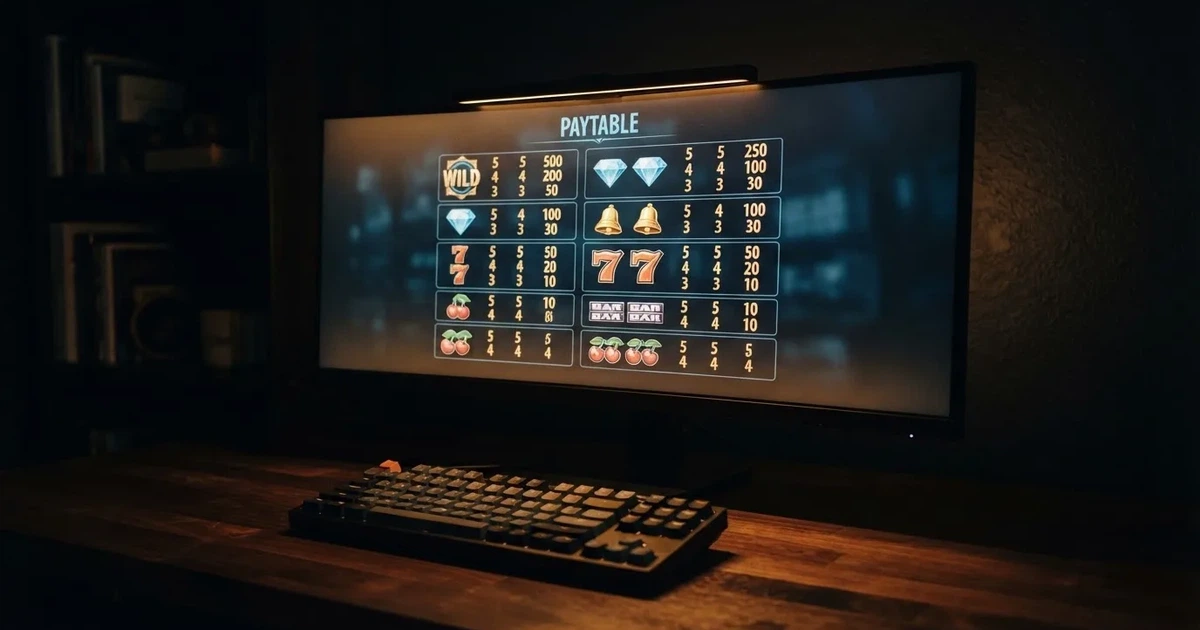
What this page is, then, is a frank look at the search itself. Which Quickspin titles exist and how they work. Which Australian licence states and territories actually regulate Quickspin-style content. Which offshore brands the ACMA has formally warned for offering prohibited games to Australians, and why the ACMA’s record is the one to read rather than a marketing shortlist. Where to get help if play has become a problem. And the wider market picture that the offshore marketing tries to keep quiet.
Table of Contents
- Why no Australian site can stream Quickspin to you legally
- What the ACMA has done about brands marketing Quickspin-style casino games
- Blocking rate: how fast the ACMA is closing the net
- The economics behind the marketing
- Bonuses, free spins and what an inducement actually costs
- How Quickspin games actually behave on a phone
- The licensed venues where similar machines exist
- Responsible play and where to get help
- What “best Quickspin casino” actually means in Australia
- FAQ
Why no Australian site can stream Quickspin to you legally
The IGA, as tightened by the Interactive Gambling Amendment Act 2017, makes it a criminal offence to provide online casino games or online pokies to a person physically in Australia. No Australian state or territory issues licences for online casinos, online slots or online table games. What gets licensed is online wagering on sport and racing placed before the event, lotteries and keno. The carve-out is narrow and deliberate, and it leaves Quickspin-branded reels on the wrong side of it.

The studio behind the games is licensed elsewhere, not in Australia. Quickspin operates from offices in Stockholm, Sliema and Kyiv with about 100 staff, and holds a Malta Gaming Authority Critical Gaming Supply Corporate licence (MGA/CRP/137/2007, issued 6 December 2018) under its parent Playtech’s UK Gambling Commission account (38516). Those licences permit it to supply games to operators licensed in those jurisdictions. They do not extend to Australian players, and no third-party licence can, because the underlying Australian prohibition sits on the supplier side, not on the player.
Enforcement rests with the ACMA. The ACMA investigates complaints, issues formal warnings, and can direct Australian internet service providers to block offending websites. According to its June 2026 reporting, 1,751 illegal gambling and affiliate-marketing websites had been blocked since the first blocking request in November 2019, and more than 230 unlicensed gambling services had left the Australian market since the 2017 strengthening of the law. In the round reported on 26 June 2026, twelve more sites were added to the block list: 7Signs, ChromaBet, Donbet, Duospin, Freshbet, Slots Gem, Jacks Club, Lucky Start, Pointsbetz, Spinrise, Vinyl Casino and Wildsino. That is the active state of the register, not a one-off purge.
A site displaying a Curaçao or Malta badge is not, on that basis, allowed to take Australian play. The badge authorises it to offer games in the jurisdiction that issued the badge. An Australian player sitting in Sydney or Perth is outside that authorisation, and the badge gives no Australian consumer protection, no local complaints body, and no recourse when a withdrawal is refused. Offshore sites can also be blocked while a real-money balance is still on the account, and the IGA targets the provider rather than the individual player, which is why the legal pressure has so far fallen on the operator side of the wire.
The Northern Territory is a wagering licence, not a casino licence
There is one piece of Australian licence territory that often confuses readers. The Northern Territory Racing and Wagering Commission (NTRWC) regulates 52 of Australia’s online bookmakers, including Sportsbet, Bet365 and Ladbrokes. It does not regulate online casino games. The commission has no full-time staff and meets once a month in Darwin. Its remit covers pre-event sports and racing bets, not slots, not table games, not Quickspin. A licence number from the NTRWC on a marketing page is a wagering licence, not an endorsement of casino play.
What changed on 11 June 2024
Since 11 June 2024, credit cards, credit-related products and digital currency have been banned as payment methods for any licensed online wagering service in Australia, with penalties of up to A$247,500 for the operator that accepts them. The legal deposit routes for an Australian-licensed wagering account are debit card, bank transfer, PayID/Osko and BPAY. A site asking an Australian for a credit card or a crypto deposit is therefore operating outside the Australian rules whether or not it holds a foreign licence. That 2024 ban is the cleanest single tell that an “Australian-friendly” casino is, in fact, none of the sort.
What the ACMA has done about brands marketing Quickspin-style casino games
The ACMA’s formal warning register is the most reliable single source on which offshore brands have been offering prohibited games to Australians. A formal warning is not a marketing line. It is the ACMA putting a named operator on notice that its conduct breaches the IGA, and it is a precondition to a blocking request to Australian ISPs. The list below is drawn from that register and ordered chronologically by the year of the most recent action.
| Brand | ACMA action and date | Operator named by the ACMA | Subject support |
|---|---|---|---|
| Sky Crown | Formal warning under the Interactive Gambling Act 2001 | Hollycorn N.V. (September 2022) | — |
| National Casino | Formal warning under the Interactive Gambling Act 2001 | Consolutetish S.R.L. (July 2025); Bizzo-listed Quickspin-equivalent slots in third-party catalogues | Listed on Betsoft and Pragmatic Play partner pages as carrying those studios’ titles |
| Bizzo Casino | Formal warning under the Interactive Gambling Act 2001 | Consolutetish S.R.L. (July 2025); earlier TechSolutions (CY) Group Limited and TechSolutions Group N.V. (2022) | — |
| Ignition Casino | Formal warning under the Interactive Gambling Act 2001 | Bamboo Media (July 2025) | — |
| Level Up Casino | Formal warning under the Interactive Gambling Act 2001 | Dama N.V. (May 2022) | Wazdan’s partner page lists the brand as a Wazdan-titled venue |
| Casino Intense | Formal warning under the Interactive Gambling Act 2001 | Sterplay Holding Ltd (April 2025) | Listed as a 1spin4win-partnered venue; the brand also surfaces on Playtech and UKGC register entries |
| Instant Casino | Formal warning under the Interactive Gambling Act 2001 | EOD Code SRL (February 2025) | — |
| Woo Casino | Formal warning under the Interactive Gambling Act 2001 | Dama N.V. (March 2025) | — |
| Spirit Casino | Formal warning under the Interactive Gambling Act 2001 | Dama N.V. (May 2025) | — |
| Jackbit | Formal warning under the Interactive Gambling Act 2001 | Ryker B.V. (April 2026) | — |
| RocketPlay | Formal warning under the Interactive Gambling Act 2001 | Pulsup Ltd (RocketPlay) (March 2026); earlier Dama N.V. (May 2022) | — |
Two threads run through that list. The first is the persistence of Dama N.V.: the same operator name surfaces over six brands in 2022 and again in 2023 and 2025. Warnings do not require an exit. The second is the breadth of the issuing entities, from Curaçao-registered holding companies to Maltese and Cypriot vehicles, which is the shape of an offshore industry that rebrands faster than the register can update it.
Where the licensing claim looks from the root
A handful of the names in the table are listed on third-party provider pages as venues carrying those providers’ games, which is what the audit would expect: an offshore casino can host Quickspin-equivalent content from other studios without holding a Quickspin direct integration, and a listing on a partner page is a marketing fact about the brand, not a permission to take Australian play. No brand on the table holds a permission to take Australian play. Several of them have changed operating company within two years, which is the reason formal warnings keep catching the same skin under a different name.
Blocking rate: how fast the ACMA is closing the net
The prescribed calculation for this page is a blocking-rate band, taking the running total of 1,751 blocked sites at June 2026 from the ACMA register and the November 2019 starting point. Divided across roughly six and a half years, that works out to a long-run average of about 270 blocked sites per year, with the most recent full year (the round reported 26 June 2026 alone adds twelve) sitting close to that band and earlier years both above and below it. The condition to state with the number: this is a cumulative total reported on a single day, and the per-year rate depends entirely on which year you pick as your starting point.
Read with the qualifier, the figure tells a reader what the offshore marketing tends to understate. The IGA is not a paper law. It is an active enforcement regime with its own blocking pipeline, and the pipeline has been adding roughly two hundred offshore brands a year since 2019. A site an affiliate page recommended eighteen months ago is, on the ACMA’s own record, more likely than not to be on the block list now or to be operating under a rebrand that the next round will catch.
What blocking means for an Australian player with money on the site
Blocking is the part the marketing never explains. Once an ISP-level block is in place, the domain stops resolving for Australian customers. Any balance still in the account is, in practice, stranded: the operator has no obligation to refund it under Australian law, and the player has no Australian complaints body to approach. The IGA does not protect the player in this scenario because the IGA targets the supplier, not the customer. The lesson the register teaches is that an Australian should treat any deposit to an offshore casino as one the operator may walk away with, because the regulator’s job is to make the operator disappear, not to chase the money back.
The economics behind the marketing
The reason offshore sites keep advertising to Australians is not altruism, and the figures behind that are sharper than the marketing would have a reader believe. H2 Gambling Capital’s 2025 report, cited by industry coverage, estimates that Australians lose about A$3.9 billion a year to illegal gambling sites, and that the share of gambling going through legal channels fell from 74% in 2021 to 64% across the same window. A ten-point swing in four years is the size of a national consumer-protection failure, and the ACMA’s blocking record is the response to it rather than the cause.
Two things follow. First, the money chasing Australian players is large enough that offshore operators will accept the cost of repeated rebrands, new domains and the loss of any individual customer balance. They have to. The marketing budget is paid for out of expected winnings, and the expected winnings assume most customers lose most of their deposits. Second, the policy answer is structural. The 2024 ban on credit cards and crypto at licensed wagering sites, the BetStop national self-exclusion register that came live in August 2023, and the Interactive Gambling Amendment (Gambling Reform) Bill 2026 (passed 19 August 2026, advertising and inducement measures commencing 1 January 2027) are each aimed at the demand side and at the marketing channel that drives it.
Bonuses, free spins and what an inducement actually costs
The “best bonus” angle is one an Australian reader will meet constantly in offshore marketing. The mechanics are uniform enough across the offshore brands in the ACMA’s register that the shape of the deal is the part worth describing, not the dollar amounts, which affiliate pages inflate.
A Quickspin-themed welcome package at an offshore site typically bundles a matched deposit bonus with a tranche of free spins on a named Quickspin title, often Sakura Fortune or a similar high-profile release. The bonus funds carry a wagering requirement, expressed as a turnover multiple of the bonus amount. Free-spin winnings usually convert to bonus funds subject to the same requirement, and a maximum cashout cap is frequently written into the small print.
Read honestly, this is what an inducement looks like in practice. The free spins look like a free sample. They are not. They are a way to convert a small promotional headline into several thousand dollars of required turnover before any withdrawal is permitted, and the maximum cashout cap exists precisely so the casino can keep the upside when a player happens to hit. A player who plays only the bonus amount, accepts the maximum stake-per-spin limit that the small print also imposes, and clears the requirement, ends up with a balance that is, statistically, smaller than the bonus headline that drew them in. The expected loss on the requirement is, in plain arithmetic, the turnover multiplied by the house edge of the game. Whether that loss is greater or smaller than the headline bonus value is the only test that matters, and most welcome packages fail it once the small print is read.
An Australian has no local route to complain about a sticky bonus. The same offshore operator that will not pay out a free-spin win in cash is the operator the ACMA has put on notice. The inducement is sold as a perk. It functions as a way to make a withdrawal more difficult, not less.
How Quickspin games actually behave on a phone
Quickspin’s catalogue is HTML5-native, which is the technical reason every affiliate page can claim its titles “work on mobile”. The claim is broadly true at the loading-and-rendering layer. What the claim papers over is the network behaviour, which is the part that matters to a punter on a phone.
A Quickspin reel loads quickly on a recent handset over a stable 4G or 5G connection. On a fringe connection, where the player is on a regional carrier or in a building with poor indoor signal, the spin animation can stall mid-reel, and a stall on an offshore site is more than a visual glitch: the server has to record the bet, and a connection drop between the spin being placed and the outcome being confirmed is a window in which the operator’s word is the only word. That is the practical reason an Australian reader should treat offshore mobile play with a degree of caution that the technical-marketing page does not invite.
There is no Quickspin-branded app in the Australian Apple App Store or Google Play Store. Any “Quickspin casino app” offered through a third-party download page or a sideload is, by definition, an APK from outside the official channel, which is itself a marker of an offshore product. Quickspin’s own distribution is to operators, not to end users, and the studio’s own site does not link to a player-facing app.
The licensed venues where similar machines exist
Australian players who want Quickspin-style content without breaking the IGA have a smaller but real set of options. The licensed venues are land-based, and they are regulated state by state. Poker machines (pokies, in Australian usage) inside pubs and clubs run under state and territory gambling regulators, with each jurisdiction setting its own stake and prize limits and its own self-exclusion arrangements.
The machines inside those venues are not Quickspin-branded. The most visible Australian slot manufacturer is Aristocrat Leisure, which has its administrative and research headquarters in North Ryde in Sydney, marketing and development offices in South Africa, Russia and the United States, and reported 2025 revenue of A$6.30 billion and 7,400 employees. Aristocrat is described as the largest gambling-machine manufacturer in Australia and the second-largest slot-machine manufacturer worldwide behind International Game Technology. Its online arms (Product Madness for social games and Aristocrat Interactive for regulated real-money online gambling, formed in April 2024 from the merger of its Anaxi unit with the acquired NeoGames group) are not Australian-licensed casino sites either: Aristocrat Interactive operates in regulated overseas markets, and its Australian footprint is in the land-based machine business.
The reason a player who has only ever played Aristocrat’s pokies in a pub might think of them as similar to Quickspin’s online reels is that both are reel-based slot products with similar volatility profiles. They are not the same product, they are not regulated by the same body, and the offshore path is not, in fact, a path to anything Australian-licensed.
Responsible play and where to get help
Australian responsible-gambling infrastructure sits alongside the IGA, and it is worth knowing where it is even for readers who never intend to use it.
BetStop — the National Self-Exclusion Register has been live since August 2023. It binds Australian-licensed online and phone wagering services to honour a self-exclusion request. It does not bind offshore casinos. Registering on BetStop is therefore a strong protection against wagering with a licensed Australian bookmaker, and it is no protection at all against opening an account at an offshore site, which is the reason an Australian who wants to self-exclude across the whole market needs to combine BetStop with discipline at the device and payment level.
Gambling Help Online is the national counselling service, with the National Gambling Helpline on 1800 858 858, free and 24/7. The service is operated by a consortium of state-based agencies under federal funding and offers web chat as well as phone. It is the single best first call for an Australian who suspects their own or someone else’s play has crossed a line, including play at an offshore venue, which the counsellors are equipped to discuss.
State and territory self-exclusion registers exist alongside BetStop for the land-based venues. Each jurisdiction runs its own scheme: barring orders in New South Wales, the Self-Exclusion Register in the Northern Territory, the Self-Exclusion Program in the ACT, and equivalents in Victoria, Queensland, South Australia, Western Australia and Tasmania. None of them extends to offshore online casino play. The right combination, for an Australian who wants to lock themselves out comprehensively, is BetStop for licensed wagering, the relevant state register for land-based venues, and a request to their bank or PayID provider to block gambling-related transactions at the payment-rail level.
The minimum legal age for any form of gambling in Australia is 18. There is no licensed path that lets a younger player into a Quickspin reel. The offshore route that pretends to do so is operating outside the age-verification rules Australia applies to its own licences.
What “best Quickspin casino” actually means in Australia
A reader arriving at the search term from an Australian IP has, in practice, three honest options, and a fourth that the marketing will not name.
The first option is the land-based pub or club. Australian-licensed gaming venues run regulated pokies with stake and prize limits set by the relevant state or territory regulator, self-exclusion arrangements accessible to anyone who walks in and asks, and a complaints path through the state regulator. The machines are not Quickspin-branded, but the reel-based gameplay is familiar enough that the experience is recognisable.
The second option is to play Quickspin’s games on its own demo platform, where Quickspin offers most of its catalogue in free-play mode for evaluation and training. The demo play does not involve real money and does not breach the IGA, because the IGA targets the supply of real-money play. A reader who wants to learn the mechanics of Sakura Fortune or Big Bot Crew before walking into a land-based venue can do so legitimately on Quickspin’s own pages.
The third option is to use a licensed Australian wagering service for the bets that are licensable: pre-event sports and racing bets, lotteries, keno. The catalogue of those services is, deliberately, not a catalogue of Quickspin slots. A punter looking for a reel-spin experience will not find one at Sportsbet, Bet365 or Ladbrokes, and that is the policy outcome the IGA is designed to produce.
The fourth option is the offshore casino, which the marketing recommends and the ACMA has been warning about since 2017. It is the option this page cannot in good conscience recommend. The marketing exists because the A$3.9 billion a year that flows offshore exists. The block list exists because the law does. The decision an Australian reader makes between the third and fourth options is the one the rest of this page has been trying to make clearer.
FAQ
Is Quickspin legally available to players in Australia?
No, not as an online casino product. The Interactive Gambling Act 2001, as amended in 2017, prohibits the supply of online casino games and online pokies to people in Australia, and no state or territory licences them. Quickspin is licensed in Malta and the UK, but those licences do not extend to Australian players, and the ACMA’s blocking record is the live state of that prohibition.
What kinds of games does Quickspin make?
Quickspin is a Stockholm-based slot studio founded in 2011 by three developers and acquired by Playtech in 2016. Its catalogue consists of online video slots such as Sakura Fortune, Big Bot Crew and the Big Bad Wolf series, with HTML5-native builds, demo play on its own site, and integration into licensed operators in jurisdictions where online casino is permitted. Land-based Australian pokies are made by other manufacturers such as Aristocrat.
Are Quickspin games offered at land-based venues in Australia?
No. Quickspin is an online slot studio and does not produce the physical poker machines that sit in Australian pubs and clubs. Those machines are made by Aristocrat, IGT and a smaller set of Australian and overseas manufacturers, and they are regulated state by state. The reel-based gameplay feels similar, but the products are not the same and the offshore route to Quickspin titles is not a route to an Australian-licensed product.
How can Australians check whether a Quickspin title is fair before considering play?
Quickspin’s games are RNG-certified under its Malta and UK licences, and the studio publishes RTPs and volatility classes for each title on its own pages and within each game’s help screen. The certification covers the game mechanics. It does not authorise supply to Australian players. Any site offering the game to an Australian IP is, by definition, an unlicensed site, and an Australian player has no Australian complaints body to approach if a withdrawal is refused.
Why do offshore sites keep advertising Quickspin games to Australian visitors?
Because Australians lose about A$3.9 billion a year to illegal gambling sites by H2 Gambling Capital’s 2025 estimate, and offshore operators continue to rebrand, redirect and relaunch faster than the ACMA’s blocking pipeline can keep up. The marketing spend is paid for out of expected winnings, which assumes most players lose most of their deposits, and the affiliate pages that recommend these brands are paid on the same basis. The IGA targets the supplier rather than the individual player, which is part of why the marketing continues.
What should an Australian do if they see a Quickspin game promoted by an unlicensed site?
The simplest answer is not to deposit. A formal ACMA complaint can be lodged through the authority’s website, which feeds the enforcement pipeline that produced the 1,751 blocked sites between November 2019 and June 2026. Anyone whose play has already become a problem can call Gambling Help Online on 1800 858 858 or use the 24/7 web chat, and BetStop is the right place to start for self-exclusion from licensed wagering. The two responses (a complaint and a self-exclusion) are independent and both worth making.