
Pokies tips and tricks in 2026: what actually changes a spin, and what doesn’t
The honest version of “pokies tips and tricks” is shorter than the marketing version, and the gap between them is what this page is about. Every tip that genuinely matters — minimum return-to-player, bet sizing, paytable reading, session length, the difference between a land-based machine and an offshore site — sits on one side of that gap. Every tip that promises a system for beating a random number generator sits on the other. Australians seeking this information want both, and the legal reality — online casino games and online pokies cannot be licensed in this country — closes the second door before the first one opens. What follows is the first door, walked through properly.
The data below is current as of 28 October 2026 and has been checked against the Australian Communications and Media Authority’s (ACMA) formal-warning register and its published blocking-round notices.
Table of Contents
- How random number generators decide every spin
- Paytables, volatility and the difference between titles
- What bet size actually does to the odds
- The legal landscape Australians actually sit inside
- ACMA formal warnings — the regulator’s public record
- What “tips and tricks” articles usually get wrong
- The responsible-gaming frame around any tips page
- How the eleven ACMA-warned brands compare
- How fast the ACMA is blocking new sites
- Where to play pokies legally in Australia
- The two payment signals that mark a site as offshore
- The 2026 reform that lands next year
- Tax, winnings and the ATO
- The minimum a 2026 punter actually needs
- Frequently asked questions
How random number generators decide every spin
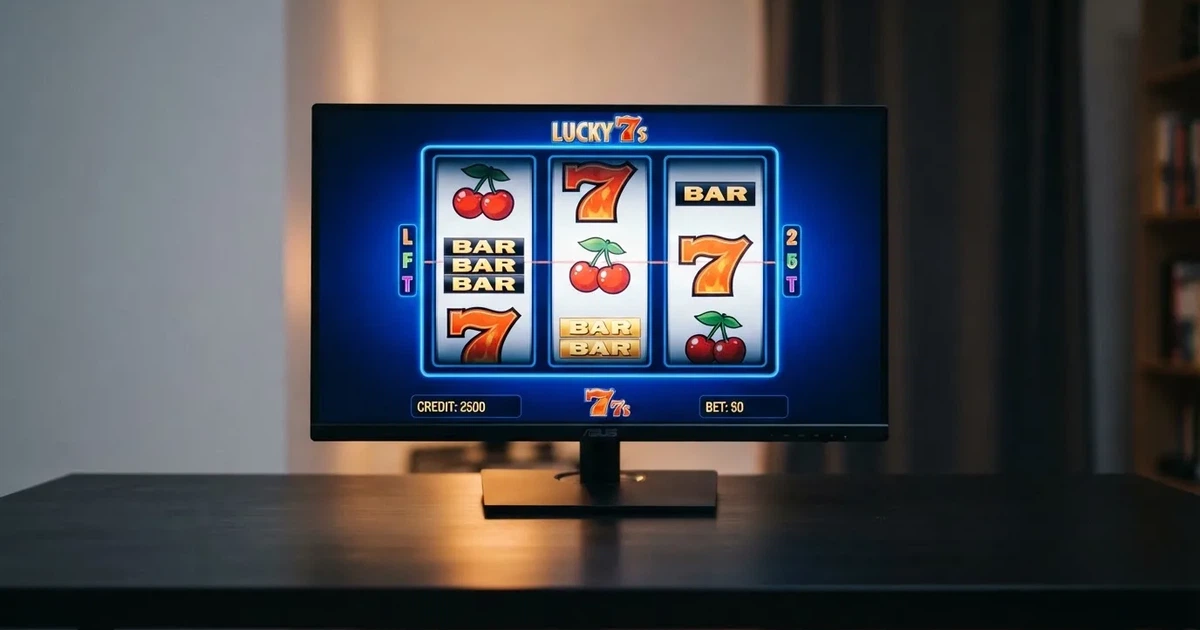
A modern pokie is a number generator with a screen bolted on. The visible reels are an animation; the underlying mechanic is a random number generator (RNG) producing thousands of outcomes per second, each one mapped to a symbol combination on the virtual reels. The instant a player presses spin, the machine freezes one of those outcomes and pays it out according to the paytable. The previous spin does not influence the next one. The size of the bet does not change the underlying probability map — though it does change which features and jackpots a stake level unlocks. The time of day, the machine’s recent history and the “hot” or “cold” streak the venue’s marketing copy keeps mentioning are not variables the RNG reads.
Two practical consequences follow. First, every strategy built on predicting the next spin from past spins — chasing losses, doubling after a near-miss, walking away after a big hit — is built on a mechanism that does not exist. The RNG is independent from spin to spin; it has no memory, and chasing its memory is chasing a ghost. Second, the only inputs a player genuinely controls are the inputs the machine actually reads: stake size, number of paylines, and which bonus features are active on the title being played. Everything else is decoration.
The arithmetic inside that decoration is fixed. Australian jurisdictions set a legal minimum return-to-player (RTP) for land-based pokies: 85% in New South Wales, the Northern Territory, Queensland and generally in Victoria (87% at Crown Melbourne), 87% in the Australian Capital Territory and Tasmania, 87.5% in South Australia, and 90% in Western Australia. A return-to-player of 85% means the machine keeps, on average across millions of spins, 15 cents of every dollar wagered. That average is the “house edge”, and the house edge is the only honest measure of what a pokie costs a player over time.
Paytables, volatility and the difference between titles
Paytab
The paytable is the document that decides what a title actually pays. Three things to read in it: the listed return-to-player, the volatility class (low, medium or high — the spread of win sizes around the average), and the bonus-feature trigger conditions. A “96% RTP, high volatility” title pays less often than a “94% RTP, low volatility” title, but it pays bigger when it does. A punter with a small bankroll generally wants lower volatility because the session survives longer; a punter chasing a feature payout generally wants higher volatility because the feature itself is rarer and larger. Both strategies work inside the same house edge — neither moves it.
Fundamenta
Two titles commonly appear in “tips and tricks” searches, and they sit at opposite ends of the design space. Dragon Link, an Aristocrat-linked series, is a high-volatility title with a hold-and-spin bonus feature built around persistent symbols and a top-end grand jackpot. The paytable typically shows the base game returning a fraction of the headline figure, with the bonus feature carrying the rest of the return. Tips aimed at Dragon Link are mostly tips about how to time the bonus buy or how to manage a session bankroll across long dry spells — both legitimate, neither altering the underlying probability. Generic “tips to win pokies” articles often recast the same advice without that framing.

Prohibiti
The other title readers run into most is one of the offshore-branded “ways to win” pages, which is where the legal picture cuts in. Online casino games and online pokies cannot be licensed anywhere in Australia. The Interactive Gambling Act 2001, strengthened by the Interactive Gambling Amendment Act 2017, makes it an offence to provide them to a person in Australia, and no state or territory issues a licence for them. The land-based machines inside clubs, pubs and Crown casinos are licensed state by state and regulated by each jurisdiction’s own gaming authority. Those are the machines an Australian can legally play on, at 18 or older.
What bet size actually does to the odds
Almost nothing — and that is the most counter-intuitive fact in the genre. A standard 25-credit bet on a 25-line machine is mathematically equivalent to a 1-credit bet on the same machine, line by line, apart from one practical difference: most titles unlock bonus features or qualify for a progressive jackpot only above a minimum stake. A punter betting a smaller denomination gets the same base-game return-to-player; the punter betting larger is buying access to features that may carry a higher prize ceiling but not a different base-game probability.
What changes when the bet rises is the size of the swing, not its direction. A A$5 spin on a high-volatility title produces a more dramatic session than a 50-cent spin on the same title — more frequent bonus rounds relative to the stake, and a larger absolute loss when the bonus round does not land. The return-to-player average over millions of spins stays where the paytable says it stays. The session length over a fixed bankroll stays roughly the same in spin count; it gets shorter in minutes when the stake is higher.
Two derived tips follow, and both are about preserving the bankroll rather than beating the house. First, pick a stake that lets the session run for a planned number of spins — typically 200 to 400, enough to clear the gap between bonus-feature triggers on a medium-volatility title. Second, lock the stake before the first spin and leave it there for the session. Raising the stake mid-session to chase losses and lowering it to preserve a depleted bankroll are both decisions made under stress, and the RNG does not reward stress.
The legal landscape Australians actually sit inside
Online pokies are prohibited in this country. State by state, land-based pokies are legal and regulated — but no state or territory licenses an online casino offering real-money pokies to Australians. The Northern Territory Racing and Wagering Commission does license online bookmakers (52 of them, including Sportsbet, Bet365 and Ladbrokes), but only for wagering on races and sport placed before the event. Lotteries and keno are licensed separately. Casino games and online pokies sit outside that licensable frame.
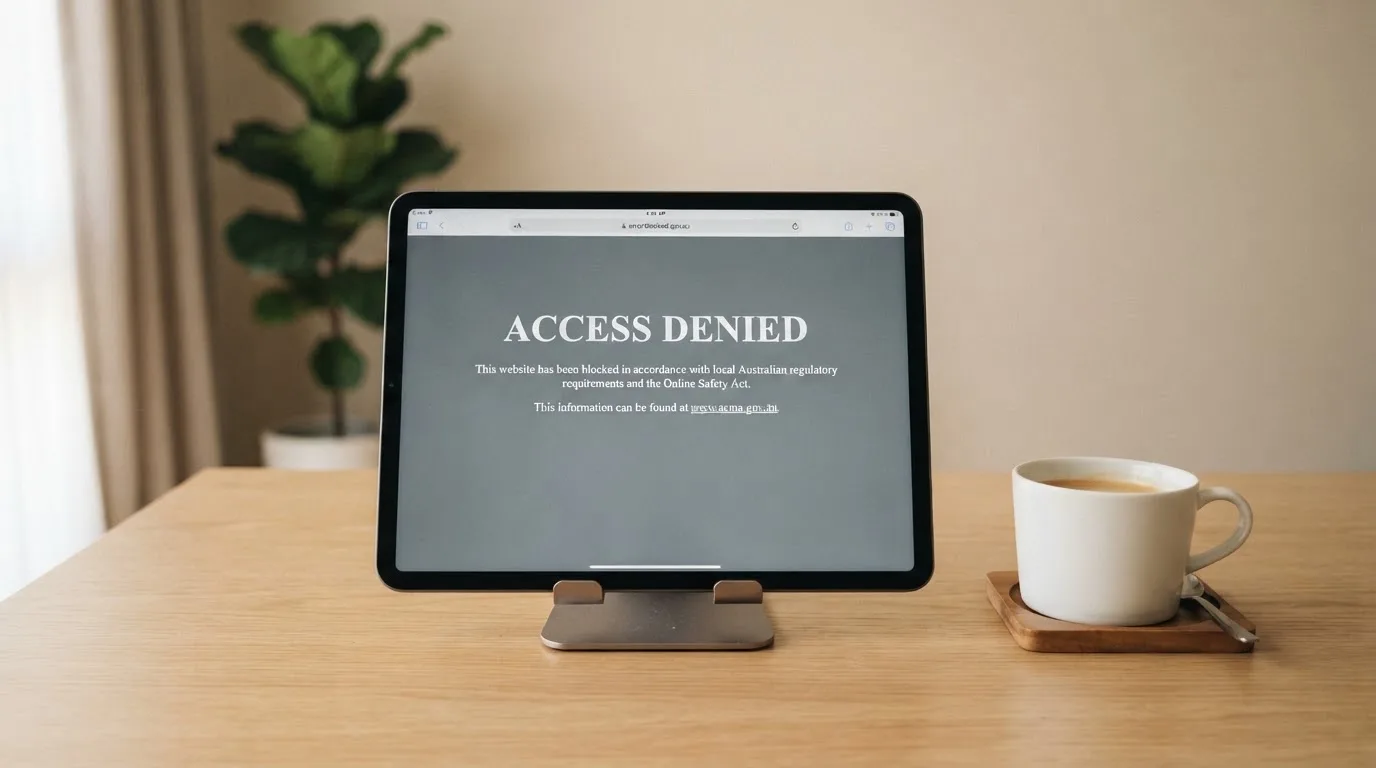
The enforcement arm is the ACMA. Since the first blocking request in November 2019, the regulator has directed Australian internet service providers to block 1,751 illegal gambling and affiliate marketing websites — a running total reported in June 2026. More than 230 unlicensed gambling services have left the Australian market since enforcement was strengthened in 2017. The June 2026 round alone added 12 sites to the blocking list: 7Signs, ChromaBet, Donbet, Duospin, Freshbet, Slots Gem, Jacks Club, Lucky Start, Pointsbetz, Spinrise, Vinyl Casino and Wildsino.
H2 Gambling Capital’s 2025 estimates put the annual flow to illegal offshore sites at about A$3.9 billion, and the share of gambling going through legal channels fell from 74% in 2021 to 64% over the four years to 2025. That is the size of the gap the offshore marketing is filling, and the legal landscape is the size of the fence around it.
ACMA formal warnings — the regulator’s public record
The ACMA’s formal-warning register is the most useful document a punter can read before following any offshore “tips and tricks” link. A formal warning is a published step on the way to a blocking request; it names the operator, the brand and the date. The register’s recent entries include:
- Pulsup Ltd over Rocketplay — March 2026 (a separate operator from the earlier Dama N.V. action against the same RocketPlay brand in May 2022).
- Ryker B.V. over Jackbit and CasinOK — April 2026.
- Bamboo Media over Ignition Casino, and Consolutetish S.R.L. over National Casino and Bizzo Casino — July 2025 (Bizzo had already been warned in 2022 to TechSolutions Group).
- EOD Code SRL over Instant Casino — February 2025.
- Sterplay Holding Ltd over Casino Intense — April 2025.
- Dama N.V. over Woo Casino — March 2025, and over Spirit Casino — May 2025.
- Hollycorn N.V. over Sky Crown and Blue Leo — September 2022.
A formal warning does not close the site, but it is the regulator saying it has assessed the operator as offering prohibited services to Australians and is putting it on the public record before escalation. The offshore operator can keep accepting Australian customers until a blocking request is filed with the relevant internet service provider — which is when the site stops resolving on Australian networks, usually with any balance still on the account.
What “tips and tricks” articles usually get wrong
The recurring error in the offshore “tips and tricks” genre is a simple one: the writers treat the RNG as if it were a deck of cards or a roulette wheel with a memory. They write about hot and cold machines, about streaks to ride and streaks to fold against, about timing a bet to a near-miss. None of those patterns exist in a properly certified random number generator. The certification itself is what makes the patterns absent — gaming regulators in Australia require independent testing of the RNG against statistical standards, and a certified RNG produces outcomes independent of every observable input a player can read from the outside.
Two further patterns recur. First, the articles routinely quote return-to-player figures without the jurisdiction context. A 96% RTP on a Curaçao-licensed online pokie and a 96% RTP on a New South Wales pub machine are not the same proposition, because the second one is enforced by an Australian gaming authority and the first one is not. Second, the articles present bonus features as tools the player controls. A free-spins feature is triggered by the RNG; the player does not “activate” it, “time” it, or “build toward” it — the trigger condition is met or it is not, on a spin that has no relationship to the spin before it.
The responsible-gaming frame around any tips page
Any page about pokies tips and tricks earns its keep only if it sends readers who need help toward the services that exist. Two services in Australia do this work, and both are free:
- The National Gambling Helpline on 1800 858 858 operates 24 hours a day, every day, with chat available through Gambling Help Online.
- BetStop, the National Self-Exclusion Register, has been live since August 2023. It binds Australian-licensed online and phone wagering services, so a punter who registers is excluded from every licensed wagering operator in the country. Offshore pokies sites are not connected to BetStop, which is one of several reasons to keep play inside the licensed frame in the first place.
A punter chasing losses, a punter playing longer than planned, and a punter whose session bankroll has evaporated twice in a week are three signals that the responsible course is a call to the helpline before the next spin, not a “system” promising recovery.
How the eleven ACMA-warned brands compare
The eleven brands below all share one feature: each has been the subject of a formal ACMA warning for offering prohibited interactive gambling services to Australians. They are not ranked, not recommended, and not described as places to play — they are presented side by side so a reader who has clicked through to one of them can see what the regulator has already said, and when.
| Brand | ACMA action and date | Operator named by the ACMA | Subject support |
|---|---|---|---|
| RocketPlay | Formal warning, March 2026 (Pulsup Ltd); earlier warning, May 2022 (Dama N.V.) | Pulsup Ltd; Dama N.V. | — |
| Level Up Casino | Formal warning, May 2022 | Dama N.V. | Bgaming listings |
| Woo Casino | Formal warning, March 2025 | Dama N.V. | — |
| Spirit Casino | Formal warning, May 2025 | Dama N.V. | — |
| National Casino | Formal warning, July 2025 | Consolutetish S.R.L. | en.wikipedia.org listings |
| Bizzo Casino | Formal warning, July 2025 (Consolutetish S.R.L.); earlier warning, 2022 (TechSolutions) | Consolutetish S.R.L.; TechSolutions Group | — |
| Ignition Casino | Formal warning, July 2025 | Bamboo Media | — |
| Instant Casino | Formal warning, February 2025 | EOD Code SRL | — |
| Jackbit | Formal warning, April 2026 | Ryker B.V. | — |
| Casino Intense | Formal warning, April 2025 | Sterplay Holding Ltd | the ABC, acma.gov.au, Crown Melbourne listings |
| Sky Crown | Formal warning, September 2022 | Hollycorn N.V. | — |
The subject-support column shows where the brand has appeared in the public listings consulted for this page, and an em dash where it has not. The columns are not endorsements and the brands are not interchangeable — the table exists so a reader can see what is known and what is not, rather than to flatter either side.
RocketPlay
Two formal warnings from the ACMA, two different operators, the same brand. Pulsup Ltd took the second warning in March 2026 over the .com.au address, and Dama N.V. took the first in May 2022 across a wider group of brands. A rebrand between operators is a familiar pattern in the offshore market; the ACMA’s register records both, and a reader searching for RocketPlay today should know that the brand has surfaced under more than one corporate owner inside four years.
Level Up Casino
One of the six Dama N.V. brands named in the May 2022 warning. Dama N.V. has been a recurring operator in the ACMA’s register across the same period, including a separate warning to the same corporate group in March 2025 over Woo Casino and another in May 2025 over Spirit Casino. Its visibility in third-party software-provider listings like Bgaming is a known detail of its background.
Woo Casino
Dama N.V. was the named operator in March 2025 — a second action against the same corporate group after the 2022 wave. A punter who saw Woo Casino advertised with “tips and tricks” content in 2026 is looking at a site the regulator had already warned once and then warned again.
Spirit Casino
The May 2025 Dama N.V. warning sits alongside the Woo Casino one — two months apart, same operator, two different brands. The pattern matters because it suggests a single operator running multiple brands in parallel, which is how offshore groups typically expand.
National Casino
Consolutetish S.R.L. was named in July 2025 alongside Bizzo Casino. The brand’s presence in broader web listings further illustrates the extent of its profile.
Bizzo Casino
Two warnings for the same brand: the 2022 warning to TechSolutions (CY) Group Limited and TechSolutions Group N.V., and the July 2025 warning to Consolutetish S.R.L. The brand name carried across a change of corporate operator; the ACMA’s register carries both entries, and a reader who recognises the brand from earlier coverage will recognise it again.
Ignition Casino
Bamboo Media was named in July 2025. The brand has not appeared in any industry listings outside the ACMA register itself.
Instant Casino
EOD Code SRL was named in February 2025. One of the earlier formal warnings in the current enforcement cycle, and a useful marker for how far back the ACMA’s action stretches within a single calendar year.
Jackbit
Ryker B.V. was named in April 2026, alongside CasinOK. The warning is recent, and the brand is absent from standard industry lists, appearing only in the ACMA register.
Casino Intense
Sterplay Holding Ltd was named in April 2025. It is one of the more frequently cited brands in the ABC and regulator coverage of Australian gambling issues.
Sky Crown
Hollycorn N.V. was named in September 2022. The brand has not appeared in the listings consulted for this page beyond the ACMA register itself. Hollycorn N.V. was also the operator for Blue Leo under the same warning.
How fast the ACMA is blocking new sites
The arithmetic that earns its place on this page is the rate at which the ACMA has been adding sites to its blocking list. The first blocking request went out in November 2019; by June 2026 the running total had reached 1,751 illegal gambling and affiliate marketing websites blocked. That is roughly 264 sites per year on average across the six-and-a-half years to the June 2026 snapshot, or about 22 per month across the same window — a band rather than a single figure, because the pace has not been even. Early enforcement was slower as the ACMA built its case law and its blocking-request templates; later rounds, with established legal footing, have moved in larger batches. The June 2026 round alone added 12 sites, which is well below the long-run average pace and well above the pace of the regulator’s first year. The honest reading is that the ACMA is closing between a handful and several dozen sites per month, depending on the round — fast enough that an offshore brand which appeared last month may be unreachable from an Australian ISP by next quarter, and slow enough that the offshore marketing has time to find new affiliates.
Where to play pokies legally in Australia
The legal answer is the same as it has been since the Interactive Gambling Amendment Act 2017 strengthened the 2001 Act: in person, at a licensed venue, at 18 or older. The number of machines is large. New South Wales had 87,298 gaming machines outside casinos across 2,195 venues as of June 2023, with player losses of A$8.18 billion in 2022–23. Queensland had 21,122 machines in 351 venues in October 2023; Victoria had 26,380 outside Crown Casino across 488 venues in 2021–22, under a 30,000-machine statewide cap; and Western Australia effectively bans poker machines in pubs and clubs while operating around 2,500 machines at Crown Perth, all approved by the state’s Gaming and Wagering Commission. Tasmania moved oversight of its machines from the long-standing Federal Group monopoly to the Tasmanian Liquor and Gaming Commission in November 2021, with mandatory pre-commitment cards for the machines delayed to late 2025.
The legal pokies floor for return-to-player is set jurisdiction by jurisdiction, as set out in the ‘Where to play pokies legally in Australia’ section.
| Jurisdiction | Minimum RTP |
|---|---|
| New South Wales | 85% |
| Northern Territory | 85% |
| Queensland | 85% |
| Victoria | 85% |
| Australian Capital Territory | 87% |
| Tasmania | 87% |
| South Australia | 87.5% |
| Western Australia | 90% |
A punter who treats that floor as the only useful number in the “tips and tricks” genre has already understood what the rest of the genre is selling.
The two payment signals that mark a site as offshore
A licensed Australian online wagering service cannot accept a credit card, a credit-related product or a digital currency as payment — that ban has been in force since 11 June 2024, with penalties of up to A$247,500 for the operator. The legal deposit routes are debit card, bank transfer, PayID/Osko and BPAY. A pokies site asking an Australian punter for a credit card or a crypto deposit is operating outside the Australian rules, and that single signal — the deposit screen — is often the fastest way to identify an offshore operator before any other red flag. BetStop, the National Self-Exclusion Register, does not bind those sites either, because they are not licensed in Australia in the first place.
The 2026 reform that lands next year
The Interactive Gambling Amendment (Gambling Reform) Bill 2026 passed Parliament on 19 August 2026. Its advertising and inducement measures commence on 1 January 2027, so the law is on the books in 2026 but its central advertising restrictions take effect in the year that follows. A 2026 reader looking for “pokies tips and tricks” content is looking at it in the period between passage and commencement — when the law is real, and when the worst of the offshore marketing is still legal under the new rules. The honest reading of the reform is that it closes one set of inducements at the start of 2027, and that it does not retroactively unblock sites the ACMA has already blocked.
Tax, winnings and the ATO
Gambling winnings of a recreational player are not assessable income in Australia (section 6-5 ITAA 1997). Losses are not deductible. The exception is a person who carries on a business of gambling, which is a much narrower category than “serious punter” — it requires the ATO’s tests for a business activity to be met. The practical advice is to keep records and to check with the ATO directly if there is any doubt.
The minimum a 2026 punter actually needs
Stripped to its core, the minimum set of useful pokies tips and tricks is short. Read the paytable for the title, including the listed return-to-player and the volatility class. Pick a stake that lets a planned session run for 200 to 400 spins. Do not raise the stake mid-session to chase losses. Do not lower it after a near-miss. Walk away when the planned number of spins is up, or when the planned session bankroll is gone, whichever comes first. Read the return-to-player as the house edge in disguise — the difference between 100% and the paytable figure is the price of the session, paid in advance. Above all, play on a licensed land-based machine in a club, pub or casino, at 18 or older, because that is the only frame the law in Australia actually recognises.
Frequently asked questions
Do any genuine tips or tricks change the odds on a pokies machine?
No. Every modern pokie is driven by an independently certified random number generator that produces a new outcome on each spin, with no memory of the spin that came before. Bet size does not change the underlying probability map; it changes which features and jackpots are unlocked, and the size of each swing, but not the long-run return-to-player printed on the paytable.
What’s different about tips for Dragon Link compared with pokies generally?
Dragon Link is a high-volatility title with a hold-and-spin bonus feature and a grand jackpot, so the practical advice is mostly about managing bankroll across the long dry spells between bonus triggers. Generic pokies tips without that framing usually quote a headline return-to-player without the volatility context, which makes the comparison less useful than it looks.
Is there a legal way for an Australian to try pokies strategies on a real machine?
Yes, on a land-based machine at a licensed pub, club or casino at 18 or older. Online pokies cannot be licensed in Australia under the Interactive Gambling Act 2001, so any “real money” offshore site accessed from Australia is operating outside the law and offers no Australian consumer protection, no complaints body and no BetStop coverage.
How does bet size actually affect the odds on a typical pokie?
It doesn’t, in the sense most readers mean. A larger stake unlocks more features and qualifies for higher jackpot tiers; it does not move the base-game return-to-player, which is fixed by the paytable and enforced by the gaming regulator. The honest effect of a bigger stake is a larger absolute loss when a session goes against the punter, not a smaller probability of doing so.
What do “tips to win pokies” articles usually get wrong about RNGs?
Most of them treat the RNG as if it had a memory. They write about hot and cold streaks, about timing a bet to a near-miss, and about patterns the player can read from recent outcomes. None of those patterns exist in a properly certified random number generator, and the gaming regulators in Australia require that certification precisely so those patterns are absent from the design.
Why do so many pokies tips pages mention Dragon Link specifically?
Because Dragon Link is one of the most widely played high-volatility titles in Australian clubs and pubs, and the same marketing pages that target Australian players with “tips and tricks” content also target them with affiliate links to offshore sites. The Dragon Link angle is the hook; the offshore link is the product, and the tips are the route between them.