
Best video slots in Australia: the legal path, the offshore reality, and what ACMA enforcement means for 2026
The phrase “best video slots” sounds like a shopping question. In Australia it isn’t one. The country has a legal market for slot-style machines — what locals call pokies — and a parallel offshore market the regulator has spent seven years trying to close. A page that pretends those two things are interchangeable does the reader a disservice, so this one starts by drawing the line and then works out where the genuine choices lie.
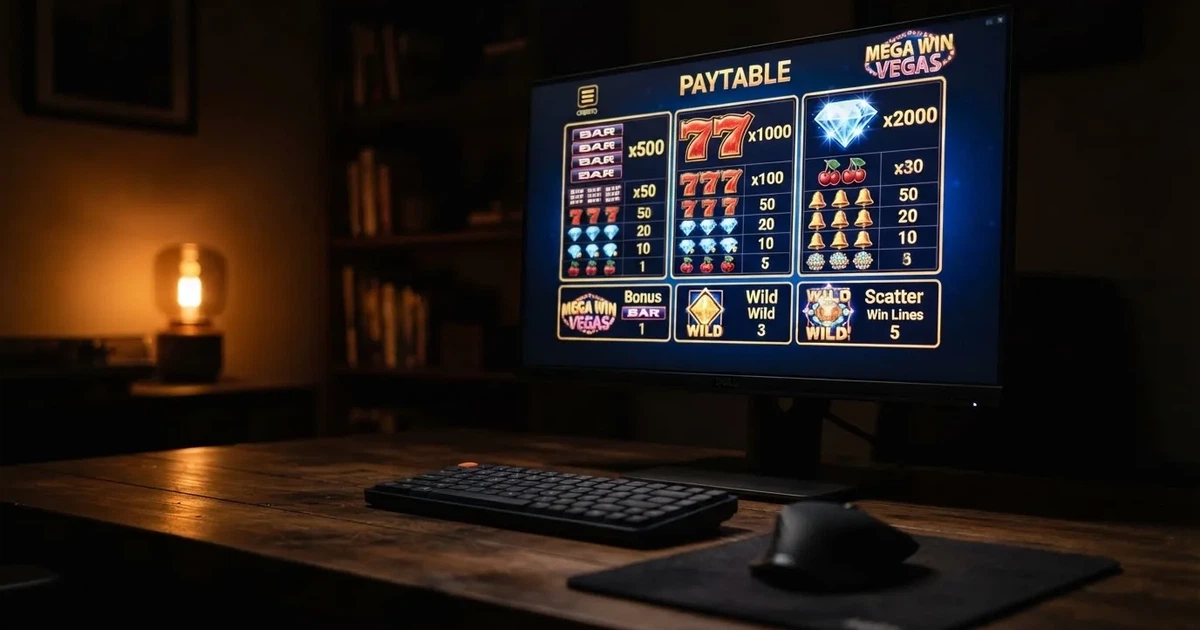
Currency and licence register checked as of 28 October 2026 against the ACMA’s published blocking list and formal-warning register.
Table of Contents
- What a video slot actually is — and why the term gets used loosely
- The legal prohibition that offshore sites ignore
- Offshore operators the ACMA has formally warned
- How bonus offers around video slots actually work
- Mobile play — what changes on a touchscreen
- Specific games, providers and what the catalogue looks like
- Comparing video slot criteria
- Responsible play around modern video slots
- Where the legal machine market sits alongside the offshore market
- Frequently asked questions about video slots in Australia
What a video slot actually is — and why the term gets used loosely
The mechanical slot started with Charles Fey’s three-reel Liberty Bell in late-nineteenth-century San Francisco, paying ten nickels for three bells across one payline. Bally’s 1963 Money Honey added a bottomless hopper that paid out up to 500 coins without an attendant. The first true video slot appeared in 1976, from Fortune Coin Co. in Kearny Mesa, California — reels driven by software and displayed on a screen rather than spun by a spring. The shift from mechanical to electronic was the shift that eventually turned a three-reel, single-payline machine into the five-or-more-reel, multi-feature product players now call a video slot.

A modern video slot can carry 50 or more symbols per reel, which on its own produces odds against a top combination on the order of 300 million to one. A classic three-reel machine, by comparison, offers roughly a thousand possible combinations. The number says less than it looks like it does: the longer-odds machine usually pays back a larger share of what it takes in, which is the only number that matters over time. The mathematics is the same in either case — a programmed return to player below 100% — but the texture is different. Video slots layer a base game on top of free-spin rounds, pick-bonus features, expanding wilds, cascading reels, gamble features and progressive jackpots. None of those mechanics change the house edge; they just change what a session feels like.
Two design choices separate the categories that get compared online:
- Reels and paylines. A classic three-reel pokies machine typically offers one, three or five paylines, read left to right across a fixed symbol strip. A video slot runs five or six reels and offers anything from 20 fixed paylines to 243, 1,024 or “ways” — any adjacent-reel combination counts, regardless of position.
- Bonus rounds and free spins. Classic machines rarely carry a feature beyond the base game. Video slots almost always do: a scatter-triggered free-spin round with multipliers, a pick-me bonus, a wheel, a hold-and-respin. The feature is what the marketing copy is built around, and it is also the part of the game with the highest variance.
This is why “video slots” and “pokies” are not interchangeable in Australian English even though they often get used that way. A pub pokie in Sydney can be a modern video slot with five reels and a free-spin feature; it can also be a heritage three-reel machine. Both are legal in their venue. Neither is legal as an online casino product to a person in Australia.
Where the licensed machines actually sit
Australia runs more slot-style machines outside casinos per capita than almost any country on earth. The Wikipedia tally — current to mid-2023 — puts the count at 87,298 in New South Wales, 26,380 in Victoria, 21,122 in Queensland, 11,672 in South Australia and 3,587 in the ACT, with the rest of the country making up the balance. The cluster is concentrated in NSW clubs and hotels, where machines date from a 1956 legalisation. By 2010 the country had an estimated 97,103 gaming machines outside casinos — roughly five times the United States per head.
Those numbers describe the legal environment. The licensed operators are the pubs, clubs and casino floors of each state. Crown Melbourne’s casino, for instance, runs three approved baccarat variants, and the Victorian Gambling and Casino Control Commission — which replaced the VCGLR as Victoria’s casino regulator on 1 July 2022 — approves every game and rule change before it goes live. The same model applies to blackjack and to the slot floor. The point is not the catalogue; the point is that every machine on a legal floor has been approved by a state regulator, on machines the regulator knows the location and identity of. That is what a licence means in practice.
The legal prohibition that offshore sites ignore
The Interactive Gambling Act 2001 — strengthened by the Interactive Gambling Amendment Act 2017 — makes it an offence to provide online casino games, online pokies or in-play betting to a person physically in Australia. No state or territory licences an online casino. Wagering on races and sporting events before the event is licensed, almost all of it through the Northern Territory, where the Racing and Wagering Commission oversees 52 online bookmakers including Sportsbet, Bet365 and Ladbrokes. The NTRWC runs without full-time staff, meets once a month in Darwin, and exists primarily because the Territory collects the licence fees. Everything else — casino, pokies, in-play — is prohibited.
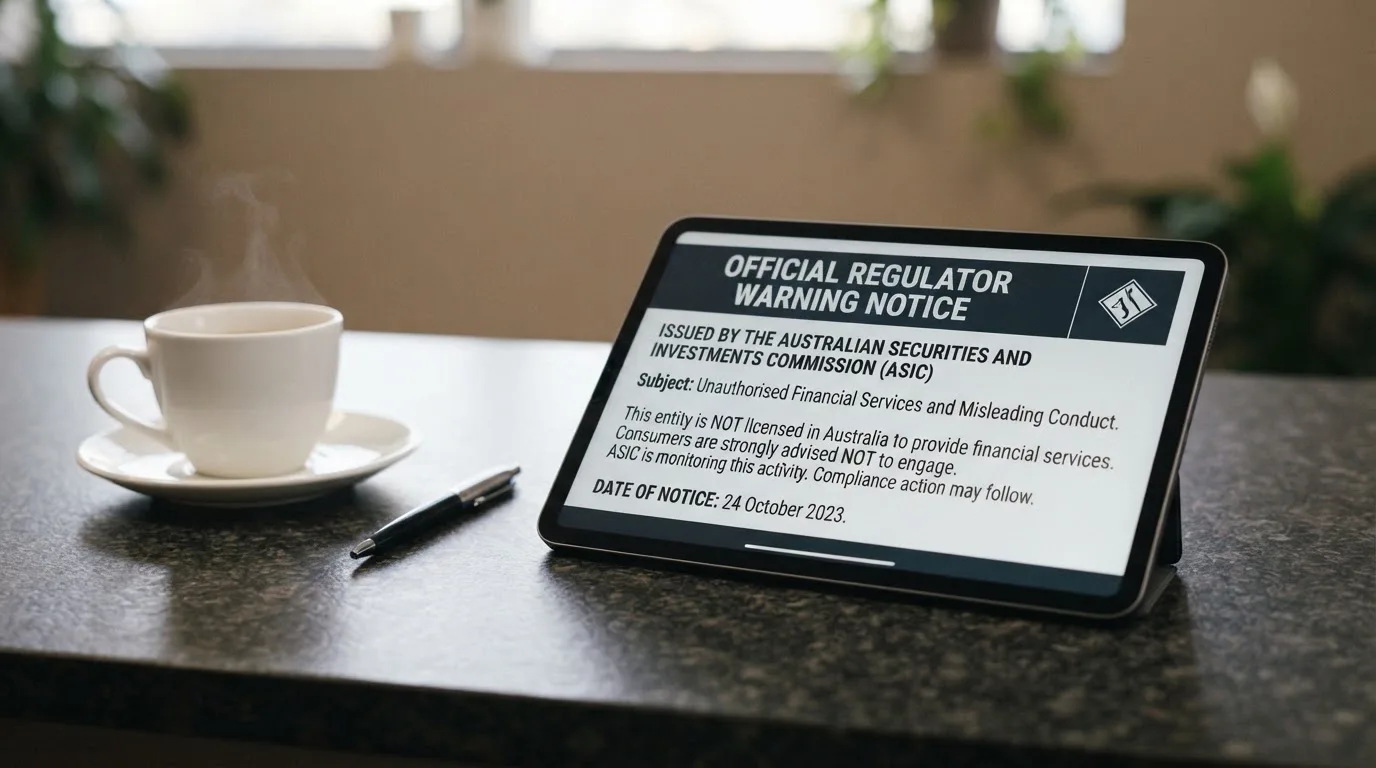
The Interactive Gambling Amendment (Gambling Reform) Bill 2026 passed Parliament on 19 August 2026. Its advertising and inducement measures commence on 1 January 2027. That is a law with a start date, not yet in force on a 2026 page, but the direction is unmistakable: the rules tighten further from the start of next year.
The minimum age for any licensed gambling product is 18.
How the ACMA enforces — and what the blocklist looks like in 2026
The Australian Communications and Media Authority investigates, issues formal warnings and directs internet service providers to block illegal sites. As of June 2026 the ACMA reported that 1,751 illegal gambling and affiliate marketing websites had been blocked since the first blocking request in November 2019, and that more than 230 unlicensed gambling services had left the Australian market since enforcement was strengthened in 2017. A single round reported on 26 June 2026 added another twelve names — 7Signs, ChromaBet, Donbet, Duospin, Freshbet, Slots Gem, Jacks Club, Lucky Start, Pointsbetz, Spinrise, Vinyl Casino and Wildsino.
A rough rate falls out of those two figures: roughly 1,751 blocked sites across roughly 79 months from November 2019 to June 2026 works out to an order of magnitude of 22 blocked sites per month, give or take the size of any individual round. The blocking rate is not constant — some months bring no new names, others bring a dozen — but the running total tells a reader two useful things. First, the regulator is acting on the list rather than letting it grow stale. Second, the underlying supply is large enough that a list of 1,751 is not a closed file.
The arithmetic is straightforward. The ACMA’s first blocking request went out in November 2019; the running total of 1,751 was reported on 26 June 2026. Dividing one by the other gives a long-run average of around 22 sites blocked per month, with that figure being a band rather than a steady rate.
| ACMA enforcement at a glance | Figure |
|---|---|
| First blocking request | November 2019 |
| Sites blocked by June 2026 | 1,751 |
| Months between first request and June 2026 report | roughly 79 |
| Approximate long-run blocking rate | around 22 sites per month |
| Services that left Australia since 2017 | more than 230 |
The rate falls short of a guarantee that any particular site is reachable from Australia this week. It does describe the shape of the action: not a single raid, but a continuous blocking programme.
A formal warning is not a court order — and what that distinction costs the reader
The ACMA’s other main lever is the formal warning letter. The agency’s published register runs from at least 2022, with names like Dama N.V., Hollycorn N.V., TechSolutions Group, Bamboo Media, Consolutetish S.R.L., Sterplay Holding Ltd, EOD Code SRL, Ryker B.V. and Pulsup Ltd among the operators it has written to over the years. A warning is the regulator telling a company that what it is doing is a contravention of the Interactive Gambling Act, and that further action will follow if it does not stop.
The practical effect on a player in Australia is uneven. Some sites ignore the letter and keep operating until the ACMA escalates to a block; some change their offering to the Australian market, dropping casino games and keeping only the parts that are legal here; some carry on regardless because the cost of enforcement is higher than the cost of compliance. A player who has deposited money with an offshore site and finds the site blocked the next morning has no Australian complaints body, no local regulator to call and no guarantee that a withdrawal already approved will be paid. That is the consumer-protection gap the warnings are aimed at closing; it is the gap a player who ignores the warnings is standing inside.
What an offshore licence is worth, and what it isn’t
An offshore casino typically displays a licence from Curaçao, Anjouan, the Kahnawake Territory or another jurisdiction outside Australia. That licence is real in the sense that it exists; it is also not an Australian licence. It does not require the operator to identify its players, segregate player funds under Australian supervision, or answer to any Australian regulator. It does not put the site inside BetStop. It does not connect to a debit-card or PayID deposit route under the rules that govern licensed Australian wagering.
This is also where payment rules bite. Since 11 June 2024 the Australian government has banned credit cards, credit-related products and digital currency as a payment method for licensed online wagering; penalties for operators run up to A$247,500. An offshore casino that accepts a credit card or a Bitcoin deposit from an Australian is therefore taking a payment the licensed Australian market cannot take. The player is not prosecuted for offering that payment — the IGA targets the provider — but the payment channel itself is a tell. A site asking for a card the local market refuses is operating outside Australian rules.
Offshore operators the ACMA has formally warned
Every brand on this list has been the subject of a formal warning letter from the ACMA for offering prohibited online casino services to Australians. The list is descriptive, not a recommendation — the regulator’s own register is the source. The same name may have appeared under more than one corporate owner as sites were re-sold or re-skinned; the dates below track what the ACMA published.
| Brand | ACMA action and date | Operator named by the ACMA | Subject support |
|---|---|---|---|
| RocketPlay | Formal warning, March 2026 (and earlier, May 2022) | Pulsup Ltd; Dama N.V. | — |
| Level Up Casino | Formal warning, May 2022 | Dama N.V. | listings report the game provider Bgaming supplies titles to the platform |
| Woo Casino | Formal warning, March 2025 | Dama N.V. | — |
| Spirit Casino | Formal warning, May 2025 | Dama N.V. | — |
| National Casino | Formal warning, July 2025 | Consolutetish S.R.L. | listings report it as a separate brand rather than a feature of a larger group |
| Bizzo Casino | Formal warning, July 2025 (and earlier, 2022) | Consolutetish S.R.L.; TechSolutions Group | — |
| Ignition Casino | Formal warning, July 2025 | Bamboo Media | — |
| Instant Casino | Formal warning, February 2025 | EOD Code SRL | — |
| Jackbit | Formal warning, April 2026 | Ryker B.V. | — |
| Casino Intense | Formal warning, April 2025 | Sterplay Holding Ltd | listings describe the brand alongside unrelated Australian references |
| Sky Crown | Formal warning, September 2022 | Hollycorn N.V. | — |
The table is descriptive, not comparative. Every brand on it has been warned by the ACMA for offering online casino games or online pokies to people in Australia. Every one of them runs on an offshore licence, not an Australian one. The “Subject support” column lists what an external listing says about each brand’s relationship to video slots or to the wider game catalogue — only Level Up, National and Casino Intense carry any such listing reference, and the entry for Casino Intense reflects incidental association in unrelated coverage rather than a confirmed game-supply relationship.
Reading the operator list as evidence
A reader who lands on this page from a search for “best video slots Australia” will most often have come from a comparison site that treats the offshore market as if it were an option. It isn’t, and the ACMA’s register is the document that says so. The pattern is the thing to read: the same corporate owner — Dama N.V. — is named across warnings for RocketPlay, Level Up, Woo and Spirit, in some cases across more than one warning and more than one brand. Sites get re-skinned, sold and re-licensed; the regulator follows the operator, not always the URL. A reader who recognises the operator name on the licence page rather than the brand on the homepage is reading the document that matters.
The Hollycorn N.V. warning covers Sky Crown and Blue Leo together; the TechSolutions Group warning covers Bizzo alongside other brands, and Bizzo is now under Consolutetish S.R.L., which suggests a sale or reorganisation between 2022 and 2025. None of that makes the brand legal in Australia. What it does is change which corporate entity is named in the ACMA register, and which one the consumer would need to chase if a withdrawal went unpaid.
How bonus offers around video slots actually work
The way online casinos market free spins and bonus rounds is the part of the subject most worth reading carefully. A “free spin” offer on an offshore site usually looks like a deposit match plus a bundle of free spins on named titles, with a stated value per spin and a wagering requirement applied to winnings from those spins. The mechanics are:
- A minimum deposit unlocks the offer. The deposit is held alongside the bonus.
- The bonus is played through at a stated multiple of the bonus amount — the “wagering requirement”. Common values sit between 30x and 50x; some markets push higher.
- Free-spin winnings are usually credited as bonus funds, not real cash, and carry the same wagering requirement.
- A maximum cashout ceiling is often attached. A “max win” of A$100 from a free-spin package is common, even when the package is marketed as worth several hundred dollars.
- Game weighting rules determine which games count fully toward the wagering requirement. Slots typically count 100%; table games often count less or not at all.
The arithmetic behind an offer is what decides whether it is worth anything. A 100% match up to A$200 at 40x wagering means a player depositing A$200 and claiming the full bonus must turn over A$200 (real money, often) plus A$200 (bonus) at 40x = A$16,000 of qualifying play before any of the bonus balance converts to withdrawable cash. At a 96% return to player — a typical industry figure for video slots — the expected cost of that turnover is A$16,000 × 4% = A$640. A bonus offering A$200 in headline value can cost a player several times that amount in expected play before it clears.
Two corollaries follow:
- A bonus with no wagering requirement is rare and valuable. Most are not no-wagering.
- A bonus with a low headline value and a low multiple is usually worth more than a large headline value paired with a steep requirement.
That second point is the one a casual reader misses. The headline is what the search result showed; the multiple is what the small print contains.
What the “best” video slot on a bonus page actually refers to
The “best” in a comparison site’s headline usually points to whichever title contributes most efficiently to the wagering requirement, or whichever title is being promoted that week. The slots themselves are not ranked by the casino; they are rotated. A player who picks a game to chase a free-spin offer is making two decisions at once: which game to play, and which offer to claim. The first decision is mostly about variance — a high-variance game pays less often, in larger amounts; a low-variance game pays more often, in smaller amounts. The second decision is about whether the offer’s terms are workable.
A useful rule of thumb: pick a game with a return to player above 96% and a volatility you can live with, then read the offer’s small print before depositing. If the small print is hard to find, that is information too.
Mobile play — what changes on a touchscreen
The vast majority of modern video slots are built in HTML5 and run on a mobile browser with no separate download. A few providers still ship older Flash-era games, and the very oldest of those will not load on a phone. For everything built in the last decade, the same game runs on desktop and mobile, with the layout adapted to portrait or landscape.
Three practical differences are worth knowing about:
- Load times. A modern slot takes a few seconds to load over 4G. A congested network will show a “loading” overlay; a desktop machine on broadband will not.
- Battery and data. A long mobile session uses more battery than a desktop session of the same length, and the game’s animations and sound add to mobile data use.
- Interface. Touch targets are larger on a phone; a complex multi-step bonus round can be harder to navigate with thumbs than with a mouse.
A dedicated casino app on iOS or Android is less common in Australia than in the UK or in some US states, because the offshore app stores do not carry an Australian-licensed casino app and the local Apple and Google policies restrict real-money gambling apps. Browser play is therefore the default.
The game itself does not change between platforms. A free-spin round that triggers on desktop will trigger the same way on mobile. The mathematics, the symbols and the bonus structure are identical. The only differences are the ones a user can see: layout, sound, screen size and battery cost.
Specific games, providers and what the catalogue looks like
A “video slot” is a format rather than a brand, and the catalogue of titles available to a given player depends on which operator the player is using. A handful of providers dominate the offshore market — Pragmatic Play, NetEnt, Microgaming, Play’n GO, Evolution (for live-dealer content), Hacksaw Gaming, Nolimit City, BGaming, ELK Studios and Push Gaming among them — and each provider’s catalogue has its own design language. Pragmatic Play leans into high-volatility bonus-buy titles. NetEnt’s catalogue includes older, lower-variance games. Hacksaw and Nolimit City have built reputations around extremely high variance.
Return to player figures and volatility ratings are published by the provider and updated when a title is revised. A 96% RTP is typical for a modern video slot; high-volatility titles may publish an RTP in the same range but pay out less often. None of this matters if the operator offering the game is not legally permitted to offer it to Australian players. The game itself is the least regulated part of the stack.
Live tables and adjacent products
Several operators bundle live-dealer tables alongside the slot catalogue. The same offshore licensing question applies: live-dealer baccarat, blackjack and roulette are online casino games under the IGA, and an Australian player using an offshore site to play them is using a prohibited service. The mathematics of the underlying games is well documented:
- Baccarat. House edge of 1.06% on the Banker bet, 1.24% on the Player bet, 14.36% on the Tie.
- Blackjack. About 0.28% house edge under liberal Las Vegas Strip rules with optimal play, around 0.43% under Atlantic City rules.
- Craps. Pass/Come 1.41%, Don’t Pass/Don’t Come 1.36%, Any Craps 11.11%.
These are the games the Australian licensed market does offer at the casino floor. Crown Melbourne, for instance, runs three approved baccarat variants — Traditional Baccarat, Crown Baccarat and 2 to 1 Baccarat — under rules approved by the Victorian Gambling and Casino Control Commission. The same regulator approves the blackjack changes that go live at Crown, including renaming the “Perfect Pairs” side bet to “Crown Pairs” on 23 December 2024 and adding the “Free Bet” option with the new “Pot of Gold” side bet on 25 March 2024.
The point of mentioning these games on a page about video slots is to put the offshore market in proportion. The mathematics and the table games exist in the licensed Australian market; the offshore market is the unregulated version of the same product, available to anyone with a payment method the local regulator has banned.
Comparing video slot criteria
A “top 11” list of video slots in Australia cannot honestly be a list of the eleven best games — that is a marketing frame, and no honest page produces it. What a comparison can honestly do is rank the criteria a reader should use to choose a game or to decide whether to play on a given site at all. Those criteria, in the order a reader usually applies them, are:
- Is the site legal where I am? If the reader is in Australia, the answer for every offshore casino is no. The reader is using a prohibited service, with no Australian regulator behind the operator and no Australian complaints body if a withdrawal goes wrong.
- Is the offer worth the small print? A bonus with a 40x wagering requirement on a deposit match is closer to a marketing expense than to a gift. A free-spin package with a maximum cashout of A$100 is the same offer framed two different ways.
- Does the game match my bankroll and my patience? A high-volatility slot will eat a small bankroll quickly. A low-volariance game will let a player play for longer at the cost of smaller wins.
- Are the payment rules compatible with Australian banking? A site asking for a credit card or a crypto deposit is signalling, deliberately or not, that it is operating outside the Australian framework.
- What does the responsible-gambling infrastructure look like? An Australian-licensed product connects to BetStop; an offshore site does not. That is the difference the regulator made when it built the national register.
The honest answer to “which video slot is best”
There is no single best video slot. The format is broad enough — five or six reels, dozens of paylines, multiple bonus mechanics, RTP figures from below 94% to above 97% — that a recommendation depends on what the reader values. A low-variance game like NetEnt’s Starburst will pay out often and feel active; a high-variance game like Nolimit City’s San Quentin will sit quietly for long stretches and then pay a large multiple of the bet when it does pay. Neither is “best”. They are different products for different preferences.
What is unambiguous is the regulatory line. A player in Australia looking for a slot-style machine has two legal options: the licensed machines in pubs, clubs and casinos, or — for the offshore market — no legal option at all. Anything else is a marketing offer rather than a lawful one.
Responsible play around modern video slots
The most important section of a page like this is the one a reader only reaches when something has already gone wrong. The tools exist; they are worth knowing about in advance.
- BetStop — the National Self-Exclusion Register. Live since August 2023, BetStop binds every Australian-licensed online and phone wagering service to honour a registered self-exclusion. A player who signs up is blocked from licensed Australian wagering for a chosen period. An offshore casino is not connected to BetStop, which is one of the reasons an offshore site is a worse environment for a player trying to step back.
- National Gambling Helpline — 1800 858 858. Free, 24/7, with chat at Gambling Help Online. The line is for any person in Australia affected by their own gambling or by someone else’s.
- State-based support. Each state runs its own counselling and support services through Gambler’s Help, Relationships Australia and similar bodies.
On a venue floor the responsible-play infrastructure is different but present. NSW operates a statewide pre-commitment system for club and hotel machines, with mandatory card-based play above a set threshold. Victoria’s YourPlay system does the same thing. The exact thresholds and the exact card rules vary by state, and they apply to the licensed venue, not to a player’s home computer.
A useful orientation: the responsible-gambling infrastructure is built around the legal market. Offshore sites are not part of it, and that is the practical reason the ACMA’s enforcement programme exists. The regulator’s job is partly to keep Australians out of the offshore market in the first place; the responsible-gambling infrastructure’s job is to help players inside the legal market if the legal market becomes a problem.
Tax and the recreational player
Gambling winnings of a recreational player are not assessable income under section 6-5 of the Income Tax Assessment Act 1997, and losses are not deductible — unless the person is carrying on a business of gambling. The tax treatment is the same whether the machine is in a Sydney pub or in an offshore site, and an offshore site’s winnings are no less taxable than a local machine’s. The distinction is bookkeeping: an Australian venue issues a winner’s cheque or pays cash; an offshore site credits an account. Neither transaction creates an automatic reporting obligation for a recreational player. The ATO’s own guidance is the right place to check a specific situation.
Where the legal machine market sits alongside the offshore market
A reader searching for “best video slots Australia” arrives with the offshore market in mind, because that is what the search results show. The honest answer is to set the two markets beside each other:
- Licensed venue machines. NSW, Victoria, Queensland, South Australia and the ACT all run tens of thousands of machines between them. The machines are state-regulated, the floor is supervised, and the responsible-gambling infrastructure (BetStop, YourPlay, venue pre-commitment) is in place. The games are slot-style, often modern video slots with five reels and bonus features.
- Offshore online casinos. Hundreds of brands, thousands of games, a marketing spend that dwarfs the legal market’s, and no Australian regulatory cover. Some carry an offshore licence; the licence does not connect the player to an Australian complaints body.
- The blocklist. As of June 2026 the ACMA has had 1,751 sites blocked since November 2019 — an average of around 22 sites per month over the running period, with the rate varying month to month. The blocklist is the regulator’s most visible tool, and it works by making the offshore market harder to reach.
That is the shape of the landscape. A reader who chooses the licensed market gets the smaller catalogue, the responsible-gambling cover and the local dispute resolution; the offshore market offers a larger catalogue, a faster onboarding and no cover at all. The choice is the reader’s, and the regulator’s published register is the document that draws the boundary.
Frequently asked questions about video slots in Australia
What makes a video slot different from a classic three-reel pokies machine?
A classic three-reel machine typically offers one to five paylines across a fixed symbol strip. A modern video slot runs five or six reels and offers 20 fixed paylines, 243 or 1,024 ways, or a “ways” structure where any adjacent-reel combination counts. Video slots also layer in bonus mechanics — free spins, pick-me rounds, expanding wilds, cascading reels — that a classic machine usually lacks.
Do video slots typically include bonus rounds that classic machines don’t have?
Yes. A modern video slot almost always carries at least one bonus mechanic beyond the base game: a scatter-triggered free-spin round with multipliers, a pick-me feature, a hold-and-respin jackpot round, or a wheel. A heritage three-reel pokies machine typically pays only on the base game. The bonus round is what the marketing copy is built around and is also the part of the game with the highest variance.
Are video slots on a mobile browser the same game as the desktop version?
For games built in HTML5 — which is the vast majority of modern titles — yes. The mathematics, symbols, paylines and bonus structure are identical. The differences a player can see are layout, screen size, sound and battery cost. A few older Flash-era games do not load on a phone; almost nothing built since around 2015 has that problem.
How many paylines does a typical modern video slot use?
A typical modern video slot uses 20 to 40 fixed paylines, with “ways” structures of 243, 1,024 or more also common. Megaways-style engines vary the number of ways on each spin, sometimes into the hundreds of thousands. A classic three-reel machine, by comparison, usually offers a single payline across the centre of the reels.
Why do video slots vary in volatility even within the same provider’s catalogue?
Volatility is a design choice, not a fixed property of a provider. A provider can release a low-variance title that pays out often in small amounts and a high-variance title that pays out rarely in larger amounts, both within the same return-to-player band. The catalogue is built to span preferences — a player who wants long, low-stakes sessions picks one set of games, and a player who wants occasional large wins picks another.
Which Australian state has the most licensed gaming machines outside casinos?
New South Wales, by a large margin. The most recent published figures put the count at 87,298 in NSW, compared with 26,380 in Victoria, 21,122 in Queensland, 11,672 in South Australia and 3,587 in the ACT. The NSW total reflects a long-standing state policy of legalising machines in clubs and hotels, a policy that dates back to 1956.