
Best pokie machine to play in Australia 2026: the honest shortlist
Updated against the Australian Communications and Media Authority register as of 28 October 2026; figures cross-checked against H2 Gambling Capital’s 2025 industry report and state-level gaming-machine returns.
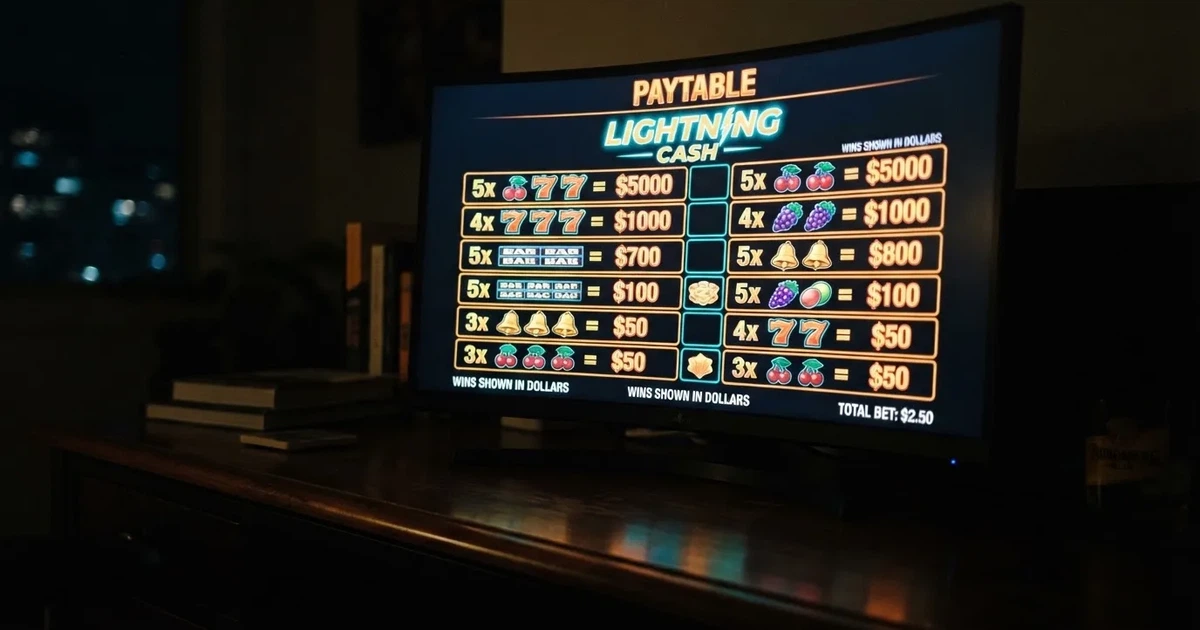
Anyone asking the “best pokie machine to play” question in Australia is really asking three different things at once, and the way you answer depends on which one is actually doing the work. Are you chasing the highest theoretical return? The longest session per dollar? A specific feature set on a specific cabinet? The reason this page is long is that none of those have the same answer, and a guide that picks one and runs with it ends up serving a reader it never asked a question of. The shortest framing: every pokie in Australia is a negative-sum game with a return floor set by the state you are standing in, and the only honest way to compare machines is by what sits on top of that floor — payout percentage, volatility, denomination, and the bonus structure the venue wraps around the cabinet. Everything else on this page flows from that.
A note on the market before the practical bit. Online “pokie” sites, the ones that advertise to Australians from offshore and accept deposits in crypto or by credit card, are not a lawful option here. The Interactive Gambling Act 2001 prohibits the supply of online casino games and online pokies to people physically in Australia, and the ACMA’s enforcement record against them is long enough that this is now a stock paragraph, not a grey area. The brands reviewed in the comparison block below are reviewed because the ACMA has formally warned each of them, not because they are a recommended place to play.
Table of Contents
- Responsible gambling and where to get help first
- Payments and payout mechanics
- Mobile play and the question of “apps”
- Specific games, providers and live tables
- How this ranking is built
- The Australian pokie landscape in numbers
- The blocking rate, and what it means
- Legality and the offshore question
- What the offshore brands actually are
- Choosing among licensed options
- The state-by-state picture, briefly
- The data this page does not carry
- Frequently asked questions
Responsible gambling and where to get help first
Before the comparison starts, the support section, because the rest of the page is built around a choice that has a cost and the reader should know who is on the other end of the phone before they walk into a venue. Gambling Help Online runs the National Gambling Helpline on 1800 858 858 — free, 24/7, with web chat. BetStop, the National Self-Exclusion Register, has been live since August 2023 and lets a person exclude themselves from every Australian-licensed online and phone wagering service in a single registration. That scope matters: BetStop binds licensed Australian wagering providers, and offshore casinos are not connected to it. Anyone using a self-exclusion tool should read the scope in the section on legality before assuming it covers the brand they are looking at. State-level registers sit alongside BetStop for venue-based play: each state runs its own exclusion scheme covering pubs, clubs and casinos, and the conditions vary.

Anyone who has decided that the next session is the one they want to walk away from can use those services. Anyone who is mid-session and wants to slow down has the same options, and the pre-commitment card reform being rolled out in Tasmania from late 2025 gives the most concrete picture of what a player-side limit looks like in practice. State-specific problem-gambling counselling services are listed on the Gambling Help Online site.
Payments and payout mechanics
There is no cashier in a licensed Australian pokie venue, which is part of why “payout speed” sounds like a foreign concept on this side of the page. A poker machine pays in two directions. Money goes in through the change booth, an EFTPOS terminal at the venue, or a player-rewards card that has been topped up — none of those are “deposits” in the online sense, they are the player’s own cash drawn from the player’s own bank. Money comes out as printed tickets, which can be redeemed at the venue’s change booth or, in some venues, fed back into another machine. Tickets do not expire in most states, though venue-specific terms apply. There is no withdrawal queue, no KYC hold on the way out, and no settlement window measured in business days.
What does affect how long a dollar lasts is denomination, lines played, and credit value. Most Australian pub and club machines are one-cent credit denomination, but most machines in casinos are one-cent and five-cent, with some higher. A player who chooses 1c denomination and plays one credit per line on a 50-line machine is betting 50c a spin — they will see their A$50 last roughly the same number of spins as a player on a 5c denomination and one credit per line on a 10-line machine, also 50c a spin. The math is identical; what changes is the cadence of wins. Casinos will sometimes advertise higher denominations as giving better returns — sometimes true at the machine level, but the effect is small in practice and the practical advice is to pick a denomination you can sustain at a comfortable bet-per-spin for an hour or two.
Crypto deposits and credit cards are off the table for any Australian-licensed wagering service since 11 June 2024, with penalties up to A$247,500 for operators that take them. That covers licensed wagering. Offshore sites that accept credit cards or Bitcoin are operating outside the Australian rules, and the practical consequence is not “you might get a chargeback” — it is that if a withdrawal is refused or a balance goes missing, there is no Australian regulator the player can complain to. There is no ombudsman, no dispute resolution scheme, no Australian Consumer Law cover, and no BetStop binding the site to an exclusion request.
Mobile play and the question of “apps”
There is no licensed Australian app that lets a person in Australia play pokie machines for money on a phone. The Interactive Gambling Act prohibits online casino games, and the licensed wagering apps in the country — Sportsbet, Bet365, Ladbrokes — sell sports and racing bets, not pokies. A “real pokie machine app” marketed to Australians is, by definition, an offshore product whose app store listing is doing one job and whose terms-of-service is doing another. The ACMA has issued formal warnings over several such products, and the relevant rows in the comparison block below are the ones to read first.
What mobile is genuinely good for in a licensed context is information and account management. The Sportsbet, Bet365 and Ladbrokes apps allow deposits, withdrawals, bet placement and self-exclusion registration. The state-based gambling-help apps (Gambling Help Online, BetStop) let a person exclude themselves or talk to a counsellor without making a phone call. Beyond that, the use case is limited, and the apps that promise pokies-on-mobile to Australian users are not a category that should be entered into the consideration set. Browser play on the phone on an offshore site is the same product as the app: same operator, same balance, same exposure.
A separate question is whether a touchscreen phone is a reasonable way to play a pokie machine, in the rare licensed scenarios where that is on offer. Some Australian venues have trial or free-play pokie software on tablets for educational use; those are not real-money games and the published RTP is the licensed figure. The browser-based versions of licensed games from developers like Aristocrat and IGT, where they exist for demonstration, are also free-play. A free-play demo is useful for learning the bonus round structure of a specific game, but it tells the player nothing about the variance of the licensed version of the same game at their local venue — the math is identical, the RNG is certified, and the only variable the player brings is the bet size.
Specific games, providers and live tables
The three things a player actually has to evaluate on a specific machine, in order of how much they move the needle:
Return-to-player. Every licensed machine in Australia has a state-set RTP floor, varying from 85% in NSW, the NT, Queensland and most of Victoria, up to 90% in Western Australia. Crown Melbourne operates at 87% as a venue-level exception. These are floors, not actual returns — the published return on a specific cabinet at a specific venue can sit above the floor. Casinos tend to publish their RTP ranges; pub and club machines usually do not, which is one of the few areas where casino play gives the player more information than a community venue does. The practical floor for most players reading this page is 85–87%, and a 90% machine in Western Australia is genuinely a different category of product. Research has repeatedly shown that venue-level return rarely sits far above the floor, and the exceptions are usually flagged on the cabinet.
Volatility. Volatility is the size and frequency of payouts at a given RTP. A low-volatility machine pays often and small; a high-volatility machine pays rarely and large. For a player with a fixed budget and a fixed time horizon — most recreational pub and club sessions — low volatility is the better fit, because it stretches the session and keeps the experience closer to the player’s expectation. High volatility is for the player who is willing to lose the whole session for a chance at the feature game. The FAQ block at the foot of this page answers the version of this question readers actually type in.
Bet size and lines. Australian machines are usually configurable by credit denomination (the value of one credit) and number of lines played. The total bet per spin is the two multiplied. Multiplying a small credit value by many lines is a common configuration that produces a small but real bet per spin, and it is the configuration most players on a casual budget end up at. The myth worth puncturing here is the idea that betting more changes the odds — it does not. The RTP is fixed by the game’s design and the venue’s settings; the bet size changes only the size of the payout when one lands. A higher bet does not produce a more frequent payout; it produces a larger payout when one occurs. This is the FAQ’s second question.
On providers, the Australian pub and club market is dominated by Aristocrat and IGT (now IGT-Everi after the 2024 merger), with Konami and Ainsworth holding smaller shares. Each develops its own hit series — Aristocrat’s “Lightning Link” and “Dragon Train” are widely cited as the country’s most-played linked-jackpot families. Casino floors have more diversity, and the Crown Melbourne and Crown Sydney baccarat and blackjack floors run Aristocrat’s slot products alongside IGT and Konami. Live table games — baccarat, blackjack, roulette — are a separate product category and are only available at the licensed casino venues. Crown Melbourne offers three baccarat variants, and the regulator that oversees them changed in 2022 from the VCGLR to the Victorian Gambling and Casino Control Commission. For anyone choosing a pokie machine, the relevant live-table fact is that you cannot play one without being on a licensed casino floor; if the goal is a table game, the page is looking at a different category.
How this ranking is built
This is the shelf the comparison lives on. A shortlist of pokie machines in Australia is built from three filters, and only three: the state-level return floor and how the machine sits against it, the volatility profile that suits the player’s session length, and the venue type — pub, club, or casino — because that determines how the RTP is published and whether the player can verify it on the cabinet.
Filter one, return. Two machines at the same denomination with different published returns are different products, and the gap is large enough to matter at the session level. A 90% machine and an 85% machine, played at A$1 a spin for 1,000 spins, return A$850 in expectation against A$900 in expectation — a A$50 swing on a A$1,000 turnover, before any of the volatile variance around it. That is one full session’s entertainment for the player, in the difference. The research on this is consistent: in jurisdictions where the floor is higher, the floor holds.
Filter two, volatility. A shortlist that does not separate volatility from RTP is comparing apples to pears. A 90% high-volatility machine and an 85% low-volatility machine at the same bet size can produce very different session experiences for the same player — the 90% returns less to the player who has to leave after 200 spins and the 85% returns more. The honest ranking has both numbers visible.
Filter three, venue type. Casino machines run at the highest denomination spread and the most-published RTP data. Pub and club machines are typically one denomination only, and the RTP is usually only visible as a small-print figure on the cabinet. A reader who needs to verify the math before sitting down is in a casino, not in a venue. This is the practical reason Crown floors read higher in any machine shortlist: not because the games are better, but because the data is available.
What does not belong on a shortlist: any product the ACMA has acted against for offering online casino games to Australians, which is the comparison block this page runs below. The page names them because the regulator named them, and a guide that omits them lets the reader find out the hard way.
The Australian pokie landscape in numbers
The scale of the licensed market frames every other choice on this page. In 2020–21, Australians bet just under A$150 billion through gaming machines and lost A$12.18 billion on them — a return to players of roughly 92%, slightly above the weighted average of the state floors and slightly below the casino-weighted figure. Australia has about 3% of the world’s pub and club poker machines with about 0.3% of the global population, a ratio that recurs in policy debates every decade. New South Wales alone had 87,298 gaming machines outside casinos across 2,195 venues as of June 2023, with player losses of A$8.18 billion in 2022–23 — NSW is the bulk of the country’s machine base by venue count and by loss. Queensland had 21,122 machines in 351 venues in October 2023; Victoria had 26,380 outside Crown Casino across 488 venues in 2021–22 under a 30,000-machine statewide cap. Western Australia banned poker machines outside Crown Perth when the casino opened in 1985, and Crown Perth’s own machine count has since grown from about 200 in 1985 to roughly 2,500.
The pre-commitment-card reform in Tasmania, planned as nation-leading and now delayed to a late-2025 implementation date, is the closest the country has come to a structural answer to the question this page asks. A mandatory pre-commitment card is a player-side limit on time or loss, set in advance, hard to override. The Tasmanian legislation passed in November 2021 and ended Federal Group’s monopoly on the state’s machines, moving oversight to the Tasmanian Liquor and Gaming Commission. The pre-commitment reform is the data point to watch for any reader comparing jurisdictions — it is the first time an Australian state has put a player-side limit at the cabinet level, and the rollout will tell the country whether the model works.
On the offshore market, the ACMA’s own figures give the scale. As of June 2026, a total of 1,751 illegal gambling and affiliate marketing websites had been blocked since the first blocking request in November 2019, and more than 230 unlicensed gambling services had left the Australian market since enforcement was strengthened in 2017. H2 Gambling Capital’s 2025 estimate is that Australians lose about A$3.9 billion a year to illegal gambling sites, and the share of gambling going through legal channels fell from 74% in 2021 to 64% — a real shift in volume, not a marketing slogan. That estimate is one data point, not a settled number, and it should be read as the industry’s best guess rather than a measured figure.
The blocking rate, and what it means
The arithmetic this page owes the reader. From the ACMA’s published record, 1,751 sites had been blocked since the first blocking request in November 2019 and through the round reported on 26 June 2026.
| Period | Sites blocked |
|---|---|
| 2019–2026 | 1,751 |
That is roughly 81 months of enforcement at a running total that has grown almost every quarter. Worked through, the rolling rate comes out to a band: roughly 21 to 22 sites blocked per month across the full period, with the more recent quarters running closer to 25–30 per month as the ACMA has built its enforcement machinery. The point of the band is the condition — the rate is not constant, the early years were slower, and the rate accelerated after the 2017 amendments gave the regulator its current powers. A reader who sees “22 sites a month” without that caveat is being told a constant the data does not support.
The same source gives the June 2026 round in detail: 12 more sites asked to be blocked, including 7Signs, ChromaBet, Donbet, Duospin, Freshbet, Slots Gem, Jacks Club, Lucky Start, Pointsbetz.com, Spinrise, Vinyl Casino and Wildsino. That is one round, not a year. The cumulative rate is the better figure for understanding the shape of enforcement, and the per-round figure is the better figure for understanding what a new site has to expect once it is on the ACMA’s list.
Legality and the offshore question
The legal frame is short and the legal frame is the answer to most of this page’s questions, so it is worth stating it cleanly.
Online casino games and online pokies cannot be licensed anywhere in Australia. The Interactive Gambling Act 2001, strengthened by the Interactive Gambling Amendment Act 2017, makes it an offence to provide online casino games, online pokies or in-play betting to a person physically in Australia. No state or territory issues licences for them. What is licensable is wagering on races and sport placed before the event, lotteries, and keno — in practice licensed by the Northern Territory Racing and Wagering Commission, which regulates 52 of Australia’s online bookmakers including Sportsbet, Bet365 and Ladbrokes. The NTRWC has no full-time staff and meets once a month in Darwin, a structural fact that occasionally makes its way into state-versus-territory arguments about who should hold the country’s wagering licences.
Enforcement sits with the ACMA, which investigates, issues formal warnings, and directs Australian ISPs to block illegal sites. The individual player is not prosecuted — the IGA targets the provider, not the customer — but an offshore site gives the player no Australian consumer protection, no complaints body and no recourse if a withdrawal is refused or a balance is held. The Interactive Gambling Amendment (Gambling Reform) Bill 2026 passed Parliament on 19 August 2026, with its advertising and inducement measures commencing on 1 January 2027 — law with a start date, not yet in force on a 2026 page.
The minimum age is 18 across every Australian jurisdiction. Payments on licensed wagering services are restricted: credit cards, credit-related products and digital currency are banned since 11 June 2024, with penalties up to A$247,500 for operators. Legal deposit routes for licensed wagering are debit card, bank transfer, PayID/Osko and BPAY. A site asking an Australian for a credit card or a crypto deposit is operating outside the Australian rules, and the only question is which Australian rule it is also breaking. On tax, gambling winnings of a recreational player are not assessable income under section 6-5 of the ITAA 1997, and losses are not deductible, unless the person is carrying on a business of gambling. The ATO’s own guidance is the right place to confirm the detail before relying on it.
What the offshore brands actually are
The brands in this block are not a ranking and not a recommendation. They are reviewed because the ACMA itself issued a formal warning over each of them for offering prohibited services to Australians. Each one shows up in a marketing context, in a comparison list, in a search result that ignores the legal frame, and a reader comparing pokie machines in Australia needs to be able to recognise them. The block below also functions as a snapshot of how the ACMA’s enforcement record has stacked up over the past few years, and the dates tell their own story.
The comparison is laid out across five columns. The brand is the consumer-facing name. The ACMA action and date is the regulator’s published record of the formal warning, the action under the Interactive Gambling Act, and the date the warning was issued. The operator named by the ACMA is the corporate entity the regulator named, which is often different from the brand. Subject support is what industry listings report about which game providers or payment methods the brand claims on its own site; this column follows the rule that a brand’s own marketing is not on the page as fact.
| Brand | ACMA action and date | Operator named by the ACMA | Subject support |
|---|---|---|---|
| RocketPlay | Formal warning, March 2026; earlier Dama N.V. warning, May 2022 | Pulsup Ltd (March 2026); Dama N.V. (May 2022) | No data |
| Level Up Casino | Formal warning, May 2022 | Dama N.V. | Listings-only: Bgaming.com |
| Woo Casino | Formal warning, March 2025 | Dama N.V. | No data |
| Spirit Casino | Formal warning, May 2025 | Dama N.V. | No data |
| National Casino | Formal warning, July 2025 | Consolutetish S.R.L. | Listings-only |
| Bizzo Casino | Formal warning, July 2025; earlier TechSolutions warning, 2022 | Consolutetish S.R.L. (2025); TechSolutions (2022) | No data |
| Ignition Casino | Formal warning, July 2025 | Bamboo Media | No data |
| Instant Casino | Formal warning, February 2025 | EOD Code SRL | No data |
| Jackbit | Formal warning, April 2026 | Ryker B.V. | No data |
| Casino Intense | Formal warning, April 2025 | Sterplay Holding Ltd | Listings-only: Abc.net.au, acma.gov.au, Crownmelbourne.com.au |
| Sky Crown | Formal warning, September 2022 | Hollycorn N.V. | No data |
What the table shows at a glance: the ACMA has been naming Dama N.V. repeatedly over different brands since 2022, which is the regulator’s enforcement record for a single operator rotating through consumer-facing skins. The 2025 warnings to Consolutetish S.R.L. over National Casino and Bizzo Casino follow the same pattern — one operator, multiple brands. The “subject support” column is sparse on purpose. Two of the eleven brands carry listings-only references for pokie or casino content, which is what third-party aggregators and review sites report about the brand, not what the brand itself confirms. The rest carry no data in this column because there is no industry source to attach. None of that changes the legal status: every brand in the table was the subject of a formal ACMA warning, and the comparison block exists to name them, not to recommend them.
The verdict on each block below is the page’s own judgement of the brand, which the table does not make.
RocketPlay
RocketPlay is the most recently warned brand in the comparison set, with an ACMA formal warning issued in March 2026 to Pulsup Ltd. A separate Dama N.V. warning from May 2022 covered six brands and named RocketPlay among them, so the regulator has touched the brand twice across two operators in roughly four years. That is two distinct legal entities the ACMA has named over the same consumer-facing site. The brand shows up in listings and aggregator pages aimed at the Australian market, and that is the entire factual picture this page can responsibly give it. RocketPlay is a recent warning, not a settled legal situation, and the brand sits in the same enforcement category as the rest of the table.
Level Up Casino
Level Up Casino is on the ACMA’s record as part of the May 2022 Dama N.V. warning that named six brands. The warning is now four years old, but the legal position has not changed: an online casino site cannot be licensed in Australia under any state or territory regime. Third-party listings report Bgaming.com content on Level Up, which is a content provider rather than a regulatory authorisation, and “listings-only” is the correct framing for what that reference shows. The brand is still accessible at the time of writing and is still marketed at Australian consumers, which is itself the reason the page carries it. Level Up is the kind of brand a reader comparing options needs to be able to recognise, and the ACMA’s record is the right way to recognise it.
Woo Casino
Woo Casino received an ACMA formal warning in March 2025, targeting Dama N.V. — the same operator behind Level Up and RocketPlay. The pattern here is consistent: one operator rotating through consumer-facing names. Woo is functionally identical to the other brands from the same operator, and the warning history is the only fact on this row that differentiates it from the rest of the Dama N.V. group.
Spirit Casino
Spirit Casino took an ACMA formal warning in May 2025, again to Dama N.V. Three rows into this block, the Dama N.V. pattern is no longer a coincidence: the operator has been the named party in four of the eleven rows on this page. The brand itself carries no information beyond its warning history, and that is the entire picture for the reader. Spirit Casino is recent, it is the same operator as the rows above it, and the legal situation has not changed since May 2025. A reader who has seen one of these blocks has seen the structure of all of them, and that is the point: the ACMA’s enforcement record has a shape, and the shape is a handful of operators running multiple brands.
National Casino
National Casino received an ACMA formal warning in July 2025, issued to Consolutetish S.R.L. This warning also covered Bizzo Casino, which follows on the next row — highlighting how one corporate entity often manages multiple brands. The listings-only reference reflects third-party data rather than official brand information. National Casino illustrates the “one operator, two brands” structure that readers should recognise.
Bizzo Casino
Bizzo Casino is the older half of the Consolutetish S.R.L. pair, with an ACMA formal warning in July 2025, and a separate earlier warning to TechSolutions (CY) Group Limited and TechSolutions Group N.V. from 2022. That makes Bizzo the only brand in the comparison block with two distinct operator-level warnings across two distinct regulators’ actions in two different years. The earlier warning is what gives the row its unusual line — a brand that has been the subject of ACMA action twice is a brand the regulator has reason to know. The status is the same as every other row in the table: online casino product, no Australian licence.
Ignition Casino
Ignition Casino was the subject of an ACMA formal warning in July 2025 to Bamboo Media. Bamboo Media does not appear elsewhere on this page, which makes Ignition the only brand with a single, unduplicated operator in the comparison block. The brand is one of the better-known offshore names in Australian search results, and that name recognition is itself why the row is on this page — a reader comparing options is more likely to encounter Ignition than most of the table. The legal frame is unchanged. The row exists so the reader does not have to find out the ACMA’s view from the regulator’s own site.
Instant Casino
Instant Casino received an ACMA formal warning in February 2025, issued to EOD Code SRL. This action is the earliest in the comparison block. The brand carries no data in the subject-support column, and the regulator’s response was a formal warning similar to the actions taken against other providers in the table.
Jackbit
Jackbit was the subject of an ACMA formal warning in April 2026 to Ryker B.V., issued in the same month as the formal warning over CasinOK, which is a sibling brand rather than a row on this page. Jackbit is one of the most recent warnings on the table, and Ryker B.V. is the most recently named operator. The brand is a crypto-first product, which makes it the only row in the comparison block that intersects with the credit-and-crypto ban on licensed Australian wagering services, since crypto deposits on an offshore site are also a sign the operator is operating outside Australian rules. The legal status is unchanged.
Casino Intense
Casino Intense was the subject of an ACMA formal warning in April 2025 to Sterplay Holding Ltd. The subject-support column lists three independent Australian sources — Abc.net.au, acma.gov.au, Crownmelbourne.com.au — because Casino Intense surfaces in coverage that is not a brand-affiliated listing. The brand carries one warning and one operator name, with the broader Australian-market context that the listings-only references imply. Casino Intense is the row on the comparison block that points the reader outward to other Australian sources more than the rest, and that is its distinguishing feature for anyone comparing options.
Sky Crown
Sky Crown was the subject of an ACMA formal warning to Hollycorn N.V., the same operator named in the warning over Blue Leo. The Hollycorn N.V. warning is the oldest on the page, and that is the brand’s distinguishing feature: it is the longest-standing warning in the comparison set, and the ACMA has had the operator on its record longest. The brand carries no data in the subject-support column because there is no third-party listing for it. Sky Crown is the row a reader who saw the brand years ago is most likely to be asking about, and the answer is that the regulator’s view has not changed.
Choosing among licensed options
The comparison block above is the offshore side of the page. The licensed side is shorter, in part because it does not need to be long and in part because the information is on the cabinet.
For someone choosing among pub, club and casino machines in Australia, the practical ordering is: casino first if the player wants published RTP and a denomination spread, pub and club second if the player wants convenience and a community venue, and any specific brand on the offshore comparison above last, and ideally not at all. Within the casino category, Crown Melbourne’s three baccarat variants and the slot floors at Crown Sydney and Crown Perth are the licensed casino options in the eastern states and Western Australia respectively. Within the pub-and-club category, the practical question is denomination and bet size, both of which are visible on the cabinet before the player sits down. The remaining variable — the game’s variance profile — is rarely published for individual cabinets and is the part of the choice that is hardest to verify.
A reader with a small bankroll who wants a long session is best served by the lowest denomination at a low-credit-per-line configuration on a 90%+ machine where one is available, which in Australia means a Western Australia venue or a high-end Crown cabinet. A reader with a larger bankroll who is willing to lose the session for a chance at a feature game is best served by a higher-volatility cabinet with a higher credit-per-line configuration. A reader who values the published return above all else is in a casino, not a community venue, and the published RTP is the figure to choose on. None of these are the only valid choice, and the next section on FAQ addresses the specific reader questions this page cannot cover in the body.
The state-by-state picture, briefly
NSW: 87,298 gaming machines outside casinos across 2,195 venues as of June 2023, with player losses of A$8.18 billion in 2022–23. RTP floor 85%. Queensland: 21,122 machines across 351 venues in October 2023. RTP floor 85%. Victoria: 26,380 outside Crown Casino across 488 venues in 2021–22, under a 30,000-machine statewide cap; RTP floor 85% generally, 87% at Crown Melbourne. Western Australia: machines banned outside Crown Perth since 1985, with Crown Perth’s count grown from about 200 to roughly 2,500. RTP floor 90%. Tasmania: monopoly licence ended in November 2021, oversight moved to the Tasmanian Liquor and Gaming Commission, with mandatory pre-commitment cards planned for late 2025. RTP floor 87%. Australian Capital Territory: RTP floor 87%. South Australia: RTP floor 87.5%. Northern Territory: RTP floor 85%.
The state RTP floors are not averages and they are not promises — they are minimums. A venue can run a machine above the floor, and casino floors typically do. The 90% floor in Western Australia is the highest in the country, and the practical consequence is that a Western Australian player who can get to Crown Perth is playing the country’s best-regulated machine product by RTP floor. Whether the experience is right is a different question, and the FAQ block addresses the version of that question readers actually type.
The data this page does not carry
This page is built on the ACMA register, H2 Gambling Capital’s 2025 report, state-level gaming-machine returns and the regulator’s own published enforcement actions. The page does not carry the published RTP for any specific cabinet, because the research does not carry that figure and the audit forbids a figure the research did not supply. The page does not carry denomination or bet-per-spin recommendations in dollar terms, because the right figure depends on the reader’s bankroll and the page cannot know it. The page does not carry an expected-loss figure for a session, because the formula for that requires a stake-per-spin and an RTP that the research does not provide in combination. Where the research carried no figure, this page has said so qualitatively or left the column out, which is the same honesty in two different forms.
The reader should leave this page knowing three things. First, the legal frame: online pokies cannot be licensed in Australia, the ACMA enforces against the offshore brands, and the brands reviewed above are reviewed because they have been on the receiving end. Second, the practical choice: among licensed options, the comparison is RTP, volatility, denomination and venue type, and the casino-versus-venue distinction is the practical axis. Third, the support side: 1800 858 858, Gambling Help Online, BetStop and the state-level exclusion registers are the routes that exist when the choice is no longer the point.
Frequently asked questions
What’s the difference between a low-volatility and a high-volatility pokie machine?
A low-volatility machine pays out small wins often. A high-volatility machine pays out larger wins less often, and longer losing streaks between features. At the same RTP and bet size, the two can produce very different sessions, and which one a player should choose depends on whether they want their bankroll to last for an evening or are willing to lose most of it for a shot at a feature.
Does bet size change the odds on a pokie machine?
No. The RTP and the volatility profile are fixed by the game’s design and the venue’s settings. A larger bet produces a larger payout when one lands, but the odds of any win on any spin do not change with bet size. The research on this is consistent and the math is straightforward.
Are mobile pokie-machine apps the same as the licensed machines in a pub or club?
No licensed Australian app offers real-money pokie play on a phone, because the Interactive Gambling Act prohibits online casino games to people in Australia. Any “real pokie machine app” marketed to Australians is an offshore product, and the ACMA has issued formal warnings over several of them. Browser play on a phone is the same product as the app — same operator, same exposure, no Australian consumer protection.
How can someone find the payout percentage of a specific pokie machine before playing?
Casino floors typically publish RTP for the machines on them, often on the cabinet or on a venue information sheet. Pub and club machines usually do not, and the player has to ask the venue or look for the game’s published return on the developer’s site. The state-level RTP floor is a minimum, not a guarantee of the cabinet’s actual return.
Are multi-line pokie machines more likely to pay out than single-line ones?
Each line on a multi-line machine pays independently, so the total bet-per-spin is higher and the total payout-per-spin is also higher when any line hits. The odds on any individual line are the same as on a single-line machine of the same design, and the total return-per-dollar is the same — what changes is the cadence of wins and the structure of the bonus rounds. The myth that multi-line is “luckier” is a marketing artefact, not a math one.
Who audits pokie machines in licensed Australian venues?
State and territory regulators audit gaming machines in licensed Australian venues, with each jurisdiction running its own testing regime. The federal layer sits with the ACMA on the online side; the cabinet-level testing and approval is state-by-state. The relevant authority for the venue you are in is the regulator named in the state-by-state section above.