
Big jackpot slots and the Australian legal landscape in 2026
A reader typing “best online casinos with big jackpot slots” into a search engine expects a shortlist. The honest answer from Australia is shorter than the search suggests. Under the Interactive Gambling Act 2001, no operator can lawfully offer online casino games — including jackpot slots — to anyone physically in Australia. No state or territory issues a licence for it. That is the page’s centre of gravity, and what follows is built on it.
Current as of 28 October 2026, checked against the ACMA’s published list of formal warnings and the registers maintained by the Northern Territory Racing and Wagering Commission.
The brands named below all carry the same regulatory status in Australia: they are offshore, none is licensed here, and each has been the subject of an ACMA formal warning for offering prohibited interactive gambling services. They are described, not endorsed. The choice that sits beneath the whole page is between those offshore sites and the lawful alternatives — licensed pokies venues, land-based casinos, sports and race wagering with an Australian-licensed bookmaker — and what each option costs the punter who picks it.
Table of Contents
- Cluster 5: the shortlist of offshore brands the ACMA has acted against
- Cluster 1: what “big jackpot slots” actually means
- Cluster 2: Australian law and how it is enforced
- Cluster 3: safeguards and self-exclusion
- Cluster 4: games, providers and what is on the catalogue
- Cluster 4: the catalogue question and the limit of what the page can compare
- Cluster 5: blocking-rate calculation
- What the page recommends, and what it does not
- Frequently asked questions
Cluster 5: the shortlist of offshore brands the ACMA has acted against
Eleven operators appear in the ACMA’s published formal-warning record in connection with online casino-style games offered to Australians. They are not ranked by quality, payout speed or game catalogue. The ordering is chronological, by the date the warning was issued or last updated on the ACMA register, and within that, the order in which the regulator named them. The only honest comparison between them is on what the regulator has said and when.

A note on what the table is and is not. Each row carries the brand name the ACMA used, the operator company the warning named, the month and year of the warning, and one column for the brand’s own coverage of the jackpot-slot subject. Several of those cells are blank. Research does not back a figure for them, and a figure invented to fill a row would be a worse guide than an empty cell. The blank is the honest answer; the reader can use the rest of the row.
| Brand | ACMA action and date | Operator named by the ACMA | Jackpot-slot subject coverage |
|---|---|---|---|
| Woo Casino | Formal warning, March 2025 | Dama N.V. | — |
| Spirit Casino | Formal warning, May 2025 | Dama N.V. | — |
| Instant Casino | Formal warning, February 2025 | EOD Code SRL | — |
| Casino Intense | Formal warning, April 2025 | Sterplay Holding Ltd | Listed by an Australian media outlet and the regulator’s own publication, not by Casino Intense itself |
| Ignition Casino | Formal warning, July 2025 | Bamboo Media | — |
| National Casino | Formal warning, July 2025 | Consolutetish S.R.L. | Listed on a general reference page, not by the operator |
| Bizzo Casino | Formal warning, July 2025 (earlier 2022 warning to TechSolutions) | Consolutetish S.R.L. | — |
| Sky Crown | Formal warning, September 2022 | Hollycorn N.V. | — |
| Level Up Casino | Formal warning, May 2022 | Dama N.V. | Listed on a single supplier’s catalogue, not on the operator’s own page |
| Jackbit | Formal warning, April 2026 | Ryker B.V. | — |
| RocketPlay | Formal warning, March 2026 (earlier May 2022 warning to Dama N.V.) | Pulsup Ltd | — |
The first row this table cannot give a reader is what each brand actually pays out. Research turned up no published payout times, no independent RTP audits, no wagering terms, and no Australian consumer-protection wrapper for any of them. The blank column on the right is not a quirk of the table; it is what the public record holds.
Two patterns are visible. The first is recurrence: Dama N.V. appears as the named operator in four of the eleven warnings, including a 2022 round that bundled six brands together and a follow-up round in 2025 that brought Woo Casino and Spirit Casino into the same corporate record. The second is that the warnings are not evenly spaced — 2022 carries a single cluster, 2025 carries most of the activity, and 2026 has so far added Jackbit and the new RocketPlay front under Pulsup Ltd. None of that says anything about how a particular brand treats a particular player. It says only that the regulator has reached a particular operator, on a particular date, for a particular reason that all eleven share.
What “ACMA formal warning” means in practice
A formal warning is the first step the regulator takes before asking Australian internet service providers to block a site. It is not an enforcement action against the individual punter. The Interactive Gambling Act 2001 targets the provider, not the customer. What it does mean is that the brand is on a public list, the operator has been told in writing that its service is prohibited, and a second infringement can lead to a blocking request. As of the regulator’s June 2026 round, 1,751 illegal gambling and affiliate marketing websites had been blocked since the first such request in November 2019, and more than 230 unlicensed services had left the Australian market since 2017.
RocketPlay
Two warnings sit against this brand. The earlier one was issued in May 2022 and named Dama N.V. across six casinos, including Rocketplay. The later one, in March 2026, named Pulsup Ltd and the RocketPlay domain. The same brand, a new operator shell, the same prohibition. The ACMA record is silent on payout speed, RTP and bonus terms; research carries nothing on the brand’s coverage of jackpot slots. A punter reaching this page from Australia has no Australian consumer-protection wrapper, no complaints body and no recourse if a withdrawal stalls. The site is offshore, the licence on its footer is not an Australian one, and the ACMA has now said twice that the service is unlawful here.
Level Up Casino
The May 2022 warning to Dama N.V. is the regulatory line through this brand. The brand does carry jackpot content — a single supplier catalogue lists it among sites that host that supplier’s progressive titles — but the operator’s own page does not, and no independent verification of the catalogue claim is in the research. A reader who goes looking for the brand’s RTP figures, its audited payout times or its complaints history will not find any of that here. The legal status is the same as every other row in the table: prohibited in Australia, offshore-licensed, no local protection.
Woo Casino
The March 2025 warning to Dama N.V. is the recent line on this brand. Research carries no figure on its jackpot coverage. What the page can say is the regulatory posture: same operator as Level Up, same prohibition, same absence of an Australian wrapper. The punter deciding whether to use the site has to weigh the offshore terms and the ACMA record against the lack of any independent check on either.
Spirit Casino
The May 2025 warning sits against the same Dama N.V. record. No figure, no catalogue listing, no audit. The page carries the same three sentences of substance as the row above — offshore, prohibited here, no Australian protection — and the reader is left to apply them.
National Casino
The July 2025 warning to Consolutetish S.R.L. is the current line. A general reference page lists the brand among operators with progressive content, but the listing is encyclopaedic rather than audited. The research carries nothing from the operator’s own page. Consolutetish S.R.L. is a relatively new name in the ACMA record; it sits alongside TechSolutions, which carried an earlier warning for the same brand back in 2022.
Bizzo Casino
Two warnings cover this brand: the July 2025 warning to Consolutetish S.R.L. and a 2022 warning to TechSolutions (CY) Group Limited and TechSolutions Group N.V. for the same brand. The recurrence matters: it is a brand the regulator has had to approach twice, under two different operator names. No figure on jackpot coverage is in the research. The page does not invent one.
Ignition Casino
Bamboo Media is the operator the ACMA named in July 2025. The brand has been around long enough to appear in older affiliate listings, but research carries nothing on its current jackpot-slot coverage from an Australian-facing source. The regulatory record is the only line the page can stand on.
Instant Casino
EOD Code SRL was named in February 2025. The brand was a target of an early 2025 blocking round. No jackpot coverage figure is in the research. The reader who reaches this row from a comparison is in the same position as the reader who reaches any other row: offshore, prohibited here, no Australian protection.
Jackbit
Ryker B.V., April 2026 — the most recent warning in the table. No catalogue listing, no operator-side figure, no audit. The brand is on the ACMA record for the same reason every other row on the table is: it offered prohibited services to people in Australia.
Casino Intense
Sterplay Holding Ltd, April 2025. Research carries one listing-side mention from an Australian media outlet and the ACMA’s own publication; the brand’s own page is silent on the subject. The mention is not a recommendation and not an audit. The row is here because the regulator named the brand; what the regulator’s record says is what the page reports.
Sky Crown
The oldest line on the table — Hollycorn N.V., September 2022. The ACMA’s published formal-warning PDF still names the brand alongside Blue Leo. No jackpot coverage figure is in the research. The reader using the table to compare dates will see this row at the bottom: it has been on the regulator’s list longest, and the brand has not been the subject of a second warning.
What the shortlist is for
This is not a buyer’s guide. Every brand on it is unlawful to use from Australia, every brand is offshore, and no brand offers a path the reader can take without the legal exposure the page opened with. The list is the regulator’s own record of who has been told to stop, in the order the regulator named them. A reader who already uses one of these brands should know what the regulator’s posture toward it is. A reader who has not yet picked a brand has no list here that gives them one.
Cluster 1: what “big jackpot slots” actually means
A jackpot slot is a slot machine whose top prize is funded differently from its ordinary paytable. Instead of paying out a fixed amount for the highest symbol combination, the top prize grows with each losing wager placed on the machine, until somebody wins it; the prize then resets to a preset minimum and starts accumulating again. The mechanic is older than the online casino industry. Progressive jackpots first appeared in large casinos in 1986, and the first Megabucks machine — International Game Technology’s — paid out its inaugural jackpot on 1 February 1987.
There are three broad shapes the top prize can take. The first is a wide-area progressive, where machines are linked across many venues or many sites and the prize pool feeds from every losing spin on the network. The Mega Moolah series, now distributed by Games Global (the business formerly known as Microgaming), is the best-known example. The record online slot jackpot — €19,430,723.60, won on 27 April 2021 by a Belgian player at Napoleon Sports & Casino on Absolootly Mad: Mega Moolah — sits on that network. Games Global has reported later wins on the same series, including £11.5 million and £13.5 million.
The second is a local or single-venue progressive, where the prize pool grows only from losing wagers on machines at one venue or, online, on one site. The top prize is smaller; the reset minimum is smaller; the contribution rate per spin is the lever the operator pulls to set how fast the pool grows.
The third is the “must-hit-by” or mystery jackpot. The random number generator sets the exact payout within a preset range — say $1,000 to $3,000 — at the moment the previous jackpot is won, and the player does not need to land a specific symbol combination to win it. The trigger is hidden; the prize is bounded.
A practical note on the mathematics. In some progressive games, including certain video poker and Caribbean Stud Poker variants, the prize can grow large enough to push the theoretical return above 100%, which produces a positive-expectation bet. The break-even point is hard to calculate for slot machines, because the reel layout is not published. The punter who treats that as a reliable edge is reading past what the math actually supports; the edge is theoretical, the variability per spin is not, and the jackpot that triggers the edge is rare by construction.
Cluster 2: Australian law and how it is enforced
The Interactive Gambling Act 2001, strengthened by the Interactive Gambling Amendment Act 2017, makes it an offence to provide online casino games — including jackpot slots, table games and online pokies — to a person physically in Australia. The Act does not prohibit the player; it prohibits the provider. What it does prohibit, on the provider side, is the offer of a prohibited interactive gambling service to anyone in Australia, whether through a website, an app or a telephone service. Wagering on races and sport placed before the event is licensable; in-play betting is not.
No state or territory licenses online casino games. The Northern Territory Racing and Wagering Commission regulates 52 of Australia’s online bookmakers — Sportsbet, Bet365 and Ladbrokes among them — and those licences are issued in the Territory for tax reasons. The commission has no full-time staff and meets once a month in Darwin. The licence a bookmaker displays is a wagering licence, not a casino licence, and what it permits under Australian law is the wagering activity the IGA carves out, not online slots or table games.
How the ACMA enforces the prohibition
The Australian Communications and Media Authority investigates complaints, issues formal warnings and directs Australian internet service providers to block offending sites. As of the regulator’s June 2026 update, 1,751 illegal gambling and affiliate marketing websites have been blocked since the first blocking request in November 2019. In the June 2026 round alone, the ACMA asked ISPs to block 12 more: 7Signs, ChromaBet, Donbet, Duospin, Freshbet, Slots Gem, Jacks Club, Lucky Start, Pointsbetz, Spinrise, Vinyl Casino and Wildsino.
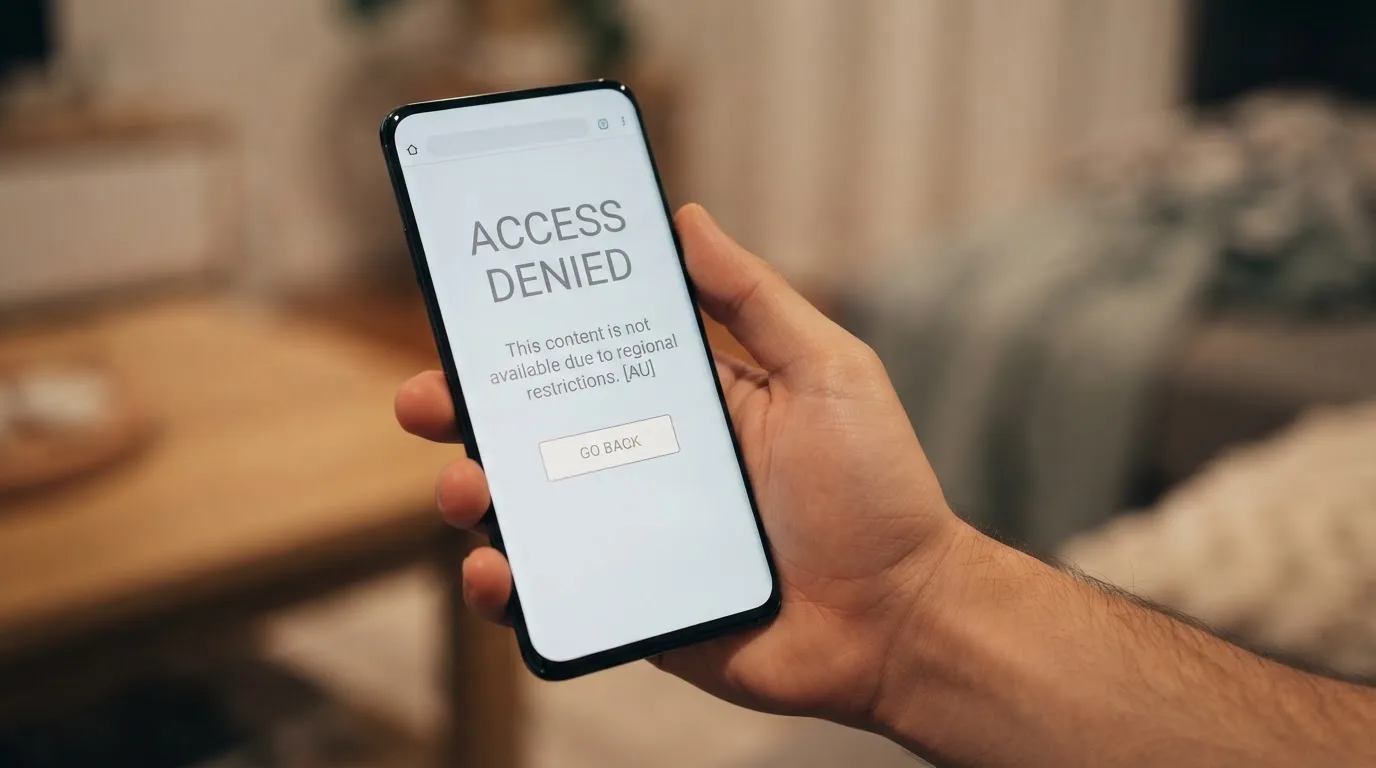
A formal warning is not a blocking order. It is a written notice that the regulator has assessed the service as prohibited and that further infringement can lead to a blocking request. A second infringement usually leads to one. The brand may continue to operate outside Australia while its Australian-facing front is blocked; the offshore site remains reachable through a network the regulator does not control.
The ACMA’s enforcement record is also a record of how concentrated the offshore side of this market is. Dama N.V. has been named in four of the eleven warnings the table above carries, across two operator shells and three years. Hollycorn N.V. has been named in one. Consolutetish S.R.L. has been named in two, on the same day. Where the same operator appears across multiple brand names, the regulator’s reach extends only as far as the operator’s next rebrand; the punter does not always see the change.
What the prohibition does not do
The IGA does not make it an offence for a person in Australia to place a wager on an offshore site. It does, however, leave the person with no Australian consumer protection if the offshore operator refuses a withdrawal, changes terms after a deposit or closes the account. There is no Australian complaints body that can compel a Curaçao or Cyprus-incorporated company to act. The site can also be blocked while a balance is still on it, and the punter cannot move that balance back through an Australian channel.
The Interactive Gambling Amendment (Gambling Reform) Bill 2026 passed Parliament on 19 August 2026. Its advertising and inducement measures commence on 1 January 2027. The Bill is law with a start date; on a 2026 page, those measures are not yet in force.
Tax and winnings
A recreational gambler’s winnings are not assessable income in Australia. Section 6-5 of the Income Tax Assessment Act 1997 treats them as windfalls, and losses are not deductible. A person who carries on a business of gambling is treated differently, and the model answer in either case is the same: check with the Australian Taxation Office.
Cluster 3: safeguards and self-exclusion
The Australian framework for player protection is built around three pieces. The first is BetStop, the National Self-Exclusion Register, which has been live since August 2023. BetStop binds every Australian-licensed online and phone wagering service; an offshore casino is not connected to it, and a punter who self-excludes through BetStop is not self-excluded from an offshore site. The punter who wants both is using a register that covers only half the problem.
The second is the National Gambling Helpline on 1800 858 858 — free, 24/7, with chat through Gambling Help Online. The helpline is the route for crisis support, financial counselling referral and connection to state-based services. It is the one number on this page that does not depend on what brand the punter uses.
The third is the payments framework. From 11 June 2024, credit cards, credit-related products and digital currencies are banned as payment methods for licensed online wagering in Australia. Operators who breach the ban face penalties up to A$247,500. The lawful deposit routes for an Australian-licensed wagering account are debit card, bank transfer, PayID/Osko and BPAY. A site that asks an Australian customer for a credit card or a crypto deposit is operating outside the Australian rules, and the customer is being asked to use a payment channel the regulator has closed for a reason.
H2 Gambling Capital’s 2025 estimate puts annual Australian losses to illegal gambling sites at about A$3.9 billion. The same report tracks the share of gambling going through legal channels as having fallen from 74% in 2021 to 64% in 2025. The figure is an estimate; the trend is the regulator’s working assumption for the policy it is enforcing.
Cluster 4: games, providers and what is on the catalogue
The brands in the shortlist carry jackpot content from a small group of large suppliers. Games Global (formerly Microgaming) distributes the Mega Moolah progressive series; NetEnt distributes Divine Fortune and the Mega Fortune series; Playtech distributes the Age of the Gods series; Pragmatic Play distributes a wide-area pool across a number of its titles. These are the suppliers whose games most often appear under the “jackpot” tab on an offshore site, and they are the suppliers the reader will see named in a comparison review.
The reader who wants to know what is actually available on a specific site has no shortcut through this page. Research does not carry a per-brand catalogue, an audited game count or a per-brand RTP for any of the eleven brands in the table. What it does carry is the mechanism: a wide-area progressive grows from every losing wager on the network; a local progressive grows from losing wagers on one site; a must-hit-by jackpot is bounded and triggered by the random number generator.
The catalogue-side coverage column in the table is honest about this. Where a row carries a listing-side mention — Level Up Casino from a single supplier’s catalogue page, Casino Intense from a media outlet — the page says so, names the source direction, and does not promote it to an operator claim. Where the row is blank, the page is reporting that the operator’s own coverage is not in the record.
A practical comparison the reader can run without a per-brand catalogue: the Mega Moolah series has paid out one of the largest jackpots in the industry — €19.43 million in April 2021, with later wins of £11.5 million and £13.5 million reported by the distributor. The top of the Mega Fortune series sits in a similar range; the Age of the Gods series has produced eight-figure wins; the local and must-hit-by formats sit well below those figures, with prize pools typically in the four- to five-figure band and reset minimums in the same neighbourhood. None of those numbers tells the reader which site to use. They tell the reader what the prize they would be playing for is shaped like.
Table games, live tables and the house edge
The page is about jackpot slots, but the offshore sites the ACMA has named carry full casino catalogues — blackjack, baccarat, craps and live-dealer tables. The house edge on those games is what the house keeps on the average dollar wagered, and it is the figure a punter who is not playing for a progressive jackpot is implicitly paying for.
In baccarat, the house edge is 1.06% on the Banker bet, 1.24% on the Player bet and 14.36% on the Tie. Punto banco, the variant most played today, was developed in Havana in the 1940s; the casino banks both hands and plays them out by fixed drawing rules, with cards 2-9 at face value, 10/J/Q/K at zero and aces at one, totals taken modulo 10, dealt from a shoe of six or eight decks. Crown Melbourne offers three baccarat variants — Traditional Baccarat, Crown Baccarat and 2 to 1 Baccarat — as approved table games under the Victorian Gambling and Casino Control Commission, which replaced the VCGLR as Victoria’s casino regulator on 1 July 2022.
In blackjack, the house edge under optimal strategy is about 0.28% under liberal Las Vegas Strip rules (dealer stands on soft 17, double on any two, double after split, resplit aces, late surrender) and about 0.43% under Atlantic City rules. The game’s immediate predecessor was the English vingt-un; a related game appears in Cervantes’ Rinconete y Cortadillo, written around 1601-1602. The name “blackjack” dates from around 1899, attached to the Klondike Gold Rush of 1896-99. In Victoria, the VGCCC approves any change to Crown Melbourne’s blackjack rules — including the December 2024 rename of “Perfect Pairs” to “Crown Pairs” and the March 2024 introduction of a “Free Bet” option with a “Pot of Gold” side bet.
In craps, the house edge is 1.41% on Pass/Come, 1.36% on Don’t Pass/Don’t Come and 11.11% on Any Craps. The come-out roll wins immediately on 7 or 11, loses on 2, 3 or 12, and any other number becomes the point, which the shooter must roll again before rolling a 7 to win the Pass Line bet.
The reason those figures sit on a jackpot-slot page is that the offshore brands the table names carry every one of those games alongside the progressive titles. A punter who opens an account for the jackpot and plays a session on the blackjack side is paying a different edge than the punter who stays on the slots. The page carries the figure so the reader can tell which game is which.
Crypto and bitcoin jackpot slots
Two of the reader’s search variants name crypto specifically — bitcoin jackpot slots, crypto jackpot slots. The Australian answer is the same as for fiat: offshore sites carrying those variants are on the ACMA list for the same reason every other offshore casino is, and the payment channel is one the regulator has closed for licensed wagering since 11 June 2024. A site asking for a crypto deposit is asking for a payment the Australian framework has banned for a reason — the channel sits outside the consumer-protection and dispute-resolution mechanisms that licensed wagering operates under. A punter who deposits in bitcoin or another cryptocurrency to an offshore site has no Australian wrapper around the deposit, the play or the withdrawal.
Cluster 4: the catalogue question and the limit of what the page can compare
The page’s deliberate limit is that it does not compare game catalogues. Research does not carry a per-brand count of jackpot titles, a per-brand RTP for any progressive, or a per-brand audit. Where a brand’s own page names its jackpot line-up, the page does not have the figures; where an Australian-facing media outlet names a brand, the page records the mention without promoting it to an operator claim. The honest comparison on this page is the regulatory one — who has been warned, when, and by which operator — and the catalogue comparison has to happen on the punter’s own time, against the operator’s own current page, with the understanding that the operator’s own page is the least audited source the punter will look at.
What the reader can take from the page is the legal shape of the choice. The eleven brands in the table are unlawful to use from Australia. The lawful alternatives are the licensed pokies venues in each state and territory, the land-based casinos in Melbourne and the other licensed jurisdictions, and the licensed wagering operators the Northern Territory Racing and Wagering Commission regulates. None of those alternatives offers an online jackpot slot; that is the gap the prohibition leaves, and the gap is what the ACMA’s enforcement record is built around.
Cluster 5: blocking-rate calculation
The regulator’s June 2026 update reports 1,751 illegal gambling and affiliate marketing websites blocked since the first blocking request in November 2019. From the first blocking request to the regulator’s June 2026 update is roughly 79 months, with the 1,751 figure sitting at the end of that period. The implied rate is therefore in the order of 22 sites blocked per month across the whole period — somewhere between 20 and 25 per month once the early years are averaged in. A more useful comparison is the recent rate. The June 2026 round alone added 12 sites in a single decision. Across the calendar year leading up to that update, blocking decisions have run at a pace that places a fresh tranche of sites on the block list several times a year.
The condition on that rate matters. The 1,751 figure counts every site the ACMA has asked ISPs to block since November 2019; it includes affiliate marketing pages, mirror domains and re-entries for the same operator. The June 2026 round’s 12 sites are a single decision, not a single month of decisions. The rate the punter sees — one blocking round every few weeks, each carrying somewhere between 5 and 25 sites — is the working pace of the regulator, not a throughput target. H2 Gambling Capital’s 2025 estimate places annual losses to illegal sites at A$3.9 billion, with the legal-channel share having fallen from 74% in 2021 to 64% in 2025. The blocking rate is the regulator’s response to a market that has grown faster than the enforcement pace, which is why the page is a record of brands the ACMA has acted against rather than a record of brands the ACMA has stopped.
What the page recommends, and what it does not
The page does not recommend a brand. Every brand in the table is unlawful to use from Australia, every brand is offshore, and the offshore terms the reader would accept by opening an account are not Australian terms. The page does describe what is lawful: licensed pokies venues, the land-based casinos the state regulators approve, and the licensed wagering operators whose Northern Territory licence covers sports and race betting but not online casino games. The gap between what the reader’s search asked for and what Australian law provides is the page’s subject, and the table is the regulator’s record of who has been told to stop filling that gap from outside the law.
The reader who reaches this page from an Australian IP address and opens an account with any of the eleven brands in the table has no Australian consumer protection, no complaints body, no Australian wrapper around their balance and a real chance their site will be blocked while the balance is still on it. The reader who wants the jackpot experience the search asked for has the licensed pokies venue in their state or territory, where the games are approved by the state regulator and the consumer protection framework applies.
The eleven brands in the table are described because the regulator has named them. None is described as a place to play.
Frequently asked questions
Which single online slot holds the record for the largest jackpot win?
The record sits on Microgaming’s Mega Moolah series — specifically on the Absolootly Mad: Mega Moolah title. A Belgian player at Napoleon Sports & Casino won €19,430,723.60 on 27 April 2021. Games Global, the distributor formerly known as Microgaming, has reported later wins of £11.5 million and £13.5 million on the same series.
Can a jackpot slot be funded with a cryptocurrency deposit?
The offshore sites that carry bitcoin and crypto jackpot slots accept the deposit. From 11 June 2024, however, digital currencies are banned as a payment method for any Australian-licensed wagering service, with operator penalties up to A$247,500. A site that asks an Australian customer for a crypto deposit is operating outside the Australian framework.
Is it legal for an online casino to offer jackpot slots to Australians?
No. The Interactive Gambling Act 2001, strengthened by the Interactive Gambling Amendment Act 2017, prohibits offering online casino games — jackpot slots, table games and online pokies — to anyone physically in Australia. No state or territory licenses online casino games. The provider is the target of the law; the individual player is not prosecuted, but the offshore site gives no Australian consumer protection.
Why do jackpot slots typically pay out less often between big wins?
The progressive pool grows with each losing wager; between big wins, the pool is large but the trigger is rare by construction. The wide-area progressive resets after each win, the local progressive resets after each win, and the must-hit-by jackpot is bounded by a preset range and a hidden trigger. The mathematics that makes the prize large is the same mathematics that makes the win rare.
What happened to the record jackpot won on Mega Moolah in 2021?
The €19,430,723.60 jackpot was won on 27 April 2021 by a Belgian player at Napoleon Sports & Casino, on the Absolootly Mad: Mega Moolah title. Games Global, the distributor, has continued to report later Mega Moolah wins of £11.5 million and £13.5 million. The 2021 figure remains the record for an online slot.
Is there a way to play jackpot-style slots for real money through a licensed Australian venue?
Yes — through the licensed pokies venues and land-based casinos each state and territory regulates. Crown Melbourne offers approved table games under the Victorian Gambling and Casino Control Commission; NSW clubs and pubs offer approved pokies under Liquor & Gaming NSW. The law does not license an online channel for jackpot slots, which is the gap the ACMA’s enforcement record is built around.