
Aussie Pokies Online in 2026: Choosing With the Law in Plain View
Data current as of 28 October 2026; verified against the ACMA’s published list of formal warnings and blocking orders.
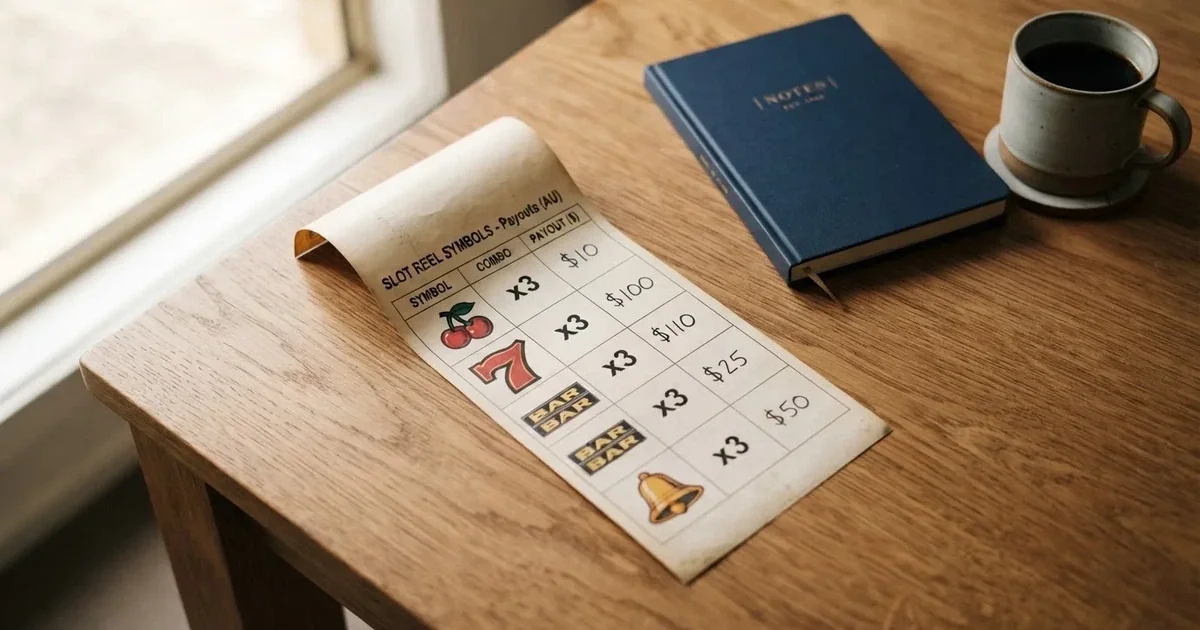
Anyone typing “best aussie pokies online australia” into a search bar is asking for a ranked list. The honest answer is that this list cannot exist in the form it is asked for. No operator anywhere in the world holds an Australian licence to offer online pokies. The Interactive Gambling Act 2001 makes that offer a criminal offence for the provider, and the only body that could change it, federal Parliament, has spent 2026 tightening the rules rather than loosening them. So the choice on this page is not “which site to join.” It is which way to go given that the obvious way is closed: the legal machines in pubs, clubs and casinos; the offshore sites the ACMA keeps warning and blocking; or the off-ramp of help services when the question starts to feel less like a choice and more like a habit. Each path costs something different, and the rest of this page is about what those costs actually look like.
Table of Contents
- Responsible Play Comes First
- How Money Actually Moves Around Online Pokies
- What a Bonus Actually Costs
- Reading a Pokies Paytable
- A Ranking Cannot Be Built on What Does Not Exist
- What Online Pokies Are and How the Catalogue Works
- The Legal Frame, in One Read
- What the Pages Ahead Actually Cost
- Where to From Here
- Frequently Asked Questions
Responsible Play Comes First
The reason a page on this subject opens with help services and not with a top ten is that gambling harm in Australia runs ahead of every other gambling statistic in the country. In 2020-21 Australians fed A$150 billion through gaming machines and lost A$12.18 billion on them; the country holds about 3% of the world’s pub and club machines with 0.3% of the global population. Whatever path a reader takes from this page, the first number worth holding is that one.

Free, confidential help is available any time. The National Gambling Helpline is 1800 858 858, twenty-four hours a day, free from any Australian phone. Chat and email counselling run through Gambling Help Online. These services work whether the question is “should I play at all” or “I started last month and I cannot stop.” BetStop, the National Self-Exclusion Register, is the next step for anyone who wants the choice taken out of their own hands; it has been live since August 2023 and binds every Australian-licensed online and phone wagering service, so an exclusion applies across Sportsbet, Bet365, Ladbrokes and the rest of the Northern Territory-licensed set at one registration. It does not reach offshore casino sites, which is its own problem and is covered in the section on legality. Tasmania planned nation-leading mandatory pre-commitment cards for its poker machines, but implementation of the reform has been delayed until late 2025; it is the kind of measure that, once it lands, makes the question on this page easier to ask in the first place.
The reason this section sits at the top, ahead of payments and bonuses, is that none of those later sections changes the underlying arithmetic. A bonus with a wagering multiple of forty times still costs what it costs. A payout processed in six hours still leaves the house its edge. And a person in financial stress or chasing losses plays a different game from the one the marketing describes, with worse odds in every sense. Help services cost nothing and they are confidential. Calling once is not a commitment to anything except a conversation.
How Money Actually Moves Around Online Pokies
The question of how deposits and withdrawals work for online pokies is, in Australia, a question with a built-in contradiction. The offshore sites that offer the games cannot legally accept payment from an Australian customer, and the licensed Australian wagering market that can accept payment is not allowed to offer pokies. The two halves do not meet.

What licensed Australian wagering does accept is well-defined. Since 11 June 2024, credit cards, credit-related products and digital currency are banned as payment for licensed online wagering, with penalties up to A$247,500 for operators that break the rule. Legal deposit routes are debit card, bank transfer, PayID and Osko, and BPAY. PayID in particular has reshaped the speed of small transfers: it uses the New Payments Platform to settle in near real time, often seconds, using a phone number, email or ABN as the identifier rather than a BSB and account number. The practical effect on the licensed side is that a deposit with a corporate bookmaker lands in seconds and a withdrawal back to a verified bank account typically clears the same day. Speed, in other words, is not the bottleneck on the licensed side.
On the offshore side, the bottleneck is everything else. An offshore site that takes an Australian deposit is breaking Australian law; the same site has no obligation to pay out under Australian consumer law and answers only to whatever regulator issued the licence it displays, usually Curaçao or Anjouan. The deposit usually clears because the site wants it to; the withdrawal is where the friction lives, and the friction is not a bug. Stalled withdrawals, reversed withdrawals, withdrawal limits that reset the clock every time a new bonus is claimed, and balances that vanish behind an offshore server are the documented pattern. None of those can be appealed to an Australian body because the ACMA’s job is to chase the operator, not to recover a player’s money. A balance on a blocked site is, in practical terms, gone.
A reader who notices the gap between these two pictures is reading the page correctly. The licensed side is fast, regulated and limited to sports and racing. The offshore side is slow, unregulated and includes the games the question asks about, and the slowness on the way out is the price of taking the deposit at all.
What a Bonus Actually Costs
The standard offer on an offshore pokies site is a deposit match plus free spins, with a wagering multiple attached to both. The marketing word for this is “bonus”; the arithmetic word is “turnover requirement.” A A$500 bonus with a 40x wagering factor requires A$20,000 in bets before the bonus and any winnings from it become withdrawable. Free-spin winnings usually carry the same multiple, sometimes higher.
The cost of clearing such an offer depends on the return-to-player of the games the bonus is played on. A typical online slot has an RTP somewhere in the 95-96.5% band; the precise figure varies by title, and the offshore site’s terms say which games count and at what weight. Using a 96% RTP as a working figure, the expected loss on A$20,000 of required turnover is A$20,000 multiplied by four percent, which is A$800. That is the bonus’s real cost: not the A$500 headline, and not the wagering multiple on its own, but the turnover multiple applied to a game with a house edge. The closer the game’s RTP sits to 100%, the cheaper the bonus is to clear; the further it sits, the more expensive. The terms say which direction each game pushes the player, and reading them is the difference between an offer that costs A$200 to clear and one that costs A$1,000.
There are three catches the marketing does not put in the headline. First, game weighting: most bonuses count slot play at 100% of turnover but table games at 10% or zero, so the only way to clear the requirement is to play the games the site wants played. Second, max bet: most bonuses cap the wager per spin or hand during the clearing period at A$5 or A$10, and exceeding the cap voids the bonus and any winnings. Third, max cashout: some offers, particularly free-spin bundles and no-deposit bonuses, cap the amount that can be withdrawn from bonus play at a fixed figure well below what the wagering would suggest is available.
These three catches are why the same nominal offer can cost very different amounts to two different players. One plays the highest-RTP slot allowed, bets the maximum the terms permit on every spin and finishes clearing the bonus with most of the bonus still in hand. The other plays the games they actually want to play, varies the bet size and loses half the bonus to voids before the requirement is met. Both were offered the same deal. Neither was told the second part.
A separate point sits beneath the bonus section and needs stating once. Australian law treats the inducement — the offer itself — as something no licensed local product may extend. The Interactive Gambling Amendment (Gambling Reform) Bill 2026 passed Parliament on 19 August 2026; its advertising and inducement measures commence on 1 January 2027. That is law with a start date, not yet in force on a 2026 page, and the change it makes is on the supply side: it does not make it legal for an Australian to claim an offshore bonus, because the offer itself was never legal to extend here in the first place. What it does is shift the regulatory frame from one that punishes the operator to one that also reaches the affiliate pages, the promotional content and the inducement language. For a reader comparing offers on this page in the meantime, the practical effect is zero: inducements to offshore play remain unregulated and unenforceable in Australia, and the bill changes the form of the prohibition rather than the substance.
Reading a Pokies Paytable
The single most useful thing a player can do before touching a real-money game is read the paytable. Every online pokie has one, usually opened from an info or question-mark icon, and it carries the same five things in roughly the same order.
The first is the symbol list. Each symbol has a payout that depends on how many appear on a payline and on the bet level. The high-paying symbols are usually themed; the low-paying ones are usually the royal cards ten, jack, queen, king and ace. The relative size of the gap between the highest and lowest symbol is one of the better tells for how volatile a game is: a tight gap means small, frequent wins; a wide gap means rarer, larger ones. The second item is the payline structure. Older games ran three reels and a single horizontal line; modern games run five reels and dozens or hundreds of ways to win, including diagonals, zig-zags and cluster patterns where symbols pay anywhere on adjacent reels. More ways to win does not mean a better game; it usually means a higher hit frequency at lower individual payouts. The third is the wild and scatter behaviour. Wilds substitute for other symbols to complete a payline; scatters usually trigger the free-spin feature regardless of position. The fourth is the free-spin feature: how many scatters trigger it, how many spins are awarded, whether the spins can retrigger and what multiplier applies to wins inside the feature. The fifth is the RTP and the volatility, when the developer publishes them. They do not always.
Volatility, where it is published, is the harder of the two to read. A high-volatility game pays out less often but in larger lumps; a low-volatility game pays more often in smaller amounts. The total return over thousands of spins converges on the RTP either way. Over a session of a few hundred spins, the two games feel like different products entirely. One punter’s idea of a good time is the other’s idea of a punishing afternoon.
The licensed Australian pub and club machines that are the legal alternative to offshore pokies carry the same mechanics but operate under state-by-state minimum RTPs. New South Wales, the Northern Territory, Queensland and most of Victoria require 85%; the ACT and Tasmania require 87%; South Australia 87.5%; Western Australia 90% at the single permitted venue, Crown Perth. The math is the same — house edge one way or the other — but the floor is set by a regulator who has read the paytable and signed off on it, which is more than can be said for the offshore version.
A Ranking Cannot Be Built on What Does Not Exist
Eleven brands appear in this section because each one of them has been the subject of an ACMA formal warning for offering prohibited online casino services to Australians. They are not ranked best to worst, because ranking them would mean recommending one over another to a reader who cannot legally play at any of them. They are listed in the order the ACMA itself acted, earliest to most recent, so the reader can see the enforcement timeline in the same sequence.
| Brand | ACMA action and date | Operator named by the ACMA | Subject support |
|---|---|---|---|
| Bambet | Formal warning, May 2022 | Dama N.V. | — |
| Dazard | Formal warning, May 2022 | Dama N.V. | — |
| Level Up Casino | Formal warning, May 2022 | Dama N.V. | Listed in a provider catalogue (Bgaming) |
| Cobra Casinos | Formal warning, May 2022 | Dama N.V. | — |
| Wild Tornado | Formal warning, May 2022 | Dama N.V. | — |
| Sky Crown | Formal warning, September 2022 | Hollycorn N.V. | — |
| Blue Leo | Formal warning, September 2022 | Hollycorn N.V. | — |
| Bizzo Casino | Formal warning, 2022 | TechSolutions; further warning July 2025 | — |
| Casino Intense | Formal warning, April 2025 | Sterplay Holding Ltd | Mentioned in reporting on legal Australian venues and the ACMA’s enforcement record |
| Woo Casino | Formal warning, March 2025 | Dama N.V. | — |
| Spirit Casino | Formal warning, May 2025 | Dama N.V. | — |
| Instant Casino | Formal warning, February 2025 | EOD Code SRL | — |
| Ignition Casino | Formal warning, July 2025 | Bamboo Media | — |
| National Casino | Formal warning, July 2025 | Consolutetish S.R.L. | Listed in a public catalogue (Wikipedia) |
| RocketPlay | Formal warning, March 2026 | Pulsup Ltd; earlier Dama N.V. May 2022 | — |
| Jackbit | Formal warning, April 2026 | Ryker B.V. | — |
| CasinOK | Formal warning, April 2026 | Ryker B.V. | — |
Three patterns sit in that table. The first is that the operators behind these brands shift more often than the brand names do. Dama N.V. accounts for six of the entries, including one from 2022 and two from 2025; Hollycorn N.V. accounts for two of the September 2022 entries; Ryker B.V. and Consolutetish S.R.L. each appear twice within twelve months of each other. A warning is sent to the operator on the licence paperwork; the operator rebrands, re-licences or opens a new URL under a related entity; the ACMA warns the new entity. This is the cycle, and it is the cycle offshore casino regulation produces.
The second pattern is that no brand in the table has an Australian-issued licence to offer online casino games. The licence they display is invariably Curaçao or Anjouan, neither of which extends consumer protection to an Australian player and neither of which answers to the ACMA. The “subject support” column is the closest this page gets to a positive note about any of these brands, and what it says is that two of the eleven appear in third-party catalogues — Level Up Casino in Bgaming’s developer-facing list of integrated operators, National Casino on a public catalogue page — while Casino Intense is named in Australian reporting on the legal venue landscape and the ACMA’s enforcement record. None of that is a recommendation. None of it changes the legal position. It is a description of where the brand name shows up outside the ACMA’s own publication.
The third pattern is what the table leaves out. There are no bonus terms, no payout speeds, no game counts, no wagering multiples, no deposit methods, no licensing seals. Those were the inputs the standard “top ten online casino” template would call for, and they are absent because their only sources were affiliate marketing pages that exist to convert clicks into sign-ups. A review built on those sources describes the marketing rather than the product, and the marketing is the thing the ACMA’s enforcement action targets.
What a Fair Comparison Would Have Weighed
A ranking of online pokies sites for Australian players would have weighed four things, in this order. First, whether the operator holds a licence that covers Australian players at all, which on this page is the disqualifying question and rules out every offshore site by definition. Second, the games catalogue: how many titles, which providers, whether the RTPs are published and whether the games are independently tested. Third, the financial terms: the wagering multiples on bonuses, the game weighting, the max bet during clearing, the max cashout where it applies, the withdrawal time once a request is made and the deposit and withdrawal methods actually available. Fourth, the regulatory and consumer-protection frame: which regulator answers complaints, what identity verification is required, whether self-exclusion works across the operator’s other brands and what happens to a balance if the site is blocked.
The honest reason no such ranking exists on this page is that the first column is empty for every operator the question brings up. Filling in the other three would be decoration; the page would still end with the same conclusion.
Reading the Enforcement Record
The ACMA’s own record is the closest thing to a consumer guide Australia has for this market. As of a round reported on 26 June 2026, the authority had asked Australian internet service providers to block 1,751 illegal gambling and affiliate marketing websites since the first blocking request in November 2019. The same June 2026 round added twelve more: 7Signs, ChromaBet, Donbet, Duospin, Freshbet, Slots Gem, Jacks Club, Lucky Start, Pointsbetz, Spinrise, Vinyl Casino and Wildsino. More than 230 unlicensed gambling services have left the Australian market since enforcement was strengthened in 2017.
That last figure is the part that matters for a reader comparing options. The ACMA does not just block URLs; it forces exits. A site that finds itself on the blocking list loses Australian customers overnight, and most operators decide that losing the market is cheaper than continuing to serve it. The pace has accelerated: where 2017-2022 saw warnings and the occasional block, 2024-2026 has seen double-digit blocking rounds multiple times a year and a steady drumbeat of formal warnings like the ones in the table above.
The Blocking Rate Over Time
From the first blocking request in November 2019 to the 26 June 2026 round, the ACMA’s published total sits at 1,751 blocked sites. Spread across the eighty-one months between those two points, that is an average of roughly twenty-two blocked sites per month across the period as a whole. The pace has not been even. The early years ran in single digits as the authority built the blocking infrastructure and the legal test cases that backed it; the 2024-2026 window has run in the dozens per round, with multiple rounds per year. The single June 2026 round added twelve, which is close to the all-period monthly average in one action. The pattern is one of acceleration, with the recent past running several times faster than the early years.
The blocking rate is the operational measure of how exposed any given offshore operator is, and it is rising. A site that was safe from blocking in 2020 is far more likely to be added to the list in 2026 than it was five years ago. The reader’s question — “which site is safest to play at” — has, as its honest answer, “none of them, and the protection offered by the ACMA is the only one that gets stronger over time.”
What Online Pokies Are and How the Catalogue Works
An online pokie is the digital version of a poker machine. The reels, the paylines, the symbols and the bonus features are the same; the cabinet is a phone or laptop screen and the spin button is a tap or a click. The catalogue at any offshore site is usually organised by category — new releases, popular titles, jackpot games, Megaways, table games, live dealer — and by provider. The provider is the studio that built the game; the operator is the site that hosts it. A single title can sit on dozens of sites at once, which is why a reader who has heard of a particular game can find it on almost any offshore brand, and why the brand matters less than the developer behind the title.
The catalogue is also where the offshore site’s regulatory position is most visible. The studios named in the lobby are the studios whose games the operator has licensed, and the studios that work with regulated markets do not work with operators that have been warned by the ACMA. That is the structural reason the offshore sites keep cycling through brand names: the studio deals are the part that does not survive a warning, so the operator rebuilds the brand and rebuilds the catalogue from scratch. The reader who notices the catalogue shrinking over a few months is reading the same enforcement cycle that produces the warnings in the table above.
What the catalogue does not show is whether the games have been independently tested. The two main testing houses, eCOGRA and GLI, certify games for fairness, but the certification is to a regulator’s standard, and the relevant regulator here is not Australian. A Curaçao-licensed site is operating under Curaçao’s testing regime, which is the lightest of the three main regimes (Curaçao, Malta, the UK) and the cheapest for an operator to obtain. The reader who weighs a catalogue by the studios on it rather than by the seal on the bottom of the page is reading it more accurately.
A Note on Specific Game Types
Two of the better-known table games that sit beside the pokies in most offshore catalogues are baccarat and blackjack, and each has a version licensed on Australian soil that is worth knowing about.
Baccarat is a comparing-card game where the player bets on which of two hands — Player or Banker — will finish closer to a total of nine. Cards two through nine count at face value, ten and the face cards count as zero, and aces count as one, with totals taken modulo ten. Punto banco, the variant played in casinos, was developed in Havana in the 1940s; the casino banks the game at all times and plays both hands by fixed rules, so the player’s only decision is the size of the bet and which side to back. The house edge on the Banker bet is 1.06%, on the Player bet 1.24% and on the Tie bet 14.36%, which is the reason no one who has read the rules bets the Tie. Crown Melbourne offers three baccarat variants — Traditional Baccarat, Crown Baccarat and 2 to 1 Baccarat — approved by the Victorian Gambling and Casino Control Commission, which replaced the VCGLR as Victoria’s casino regulator on 1 July 2022. Section 66 of the NSW Casino Control Act 1992 requires any baccarat game to be approved by the regulator and the approved rules to be made available on request, which is the regulatory shape that does not exist for an offshore pokie.
Blackjack is a comparing-card game where the player tries to reach a total of 21 or closer to it than the dealer without going over. Number cards count at their number, face cards count as ten and the ace counts as one or eleven. A two-card 21 is the strongest hand and pays the bonus unless the dealer also has one. With optimal strategy under liberal Las Vegas Strip rules the house edge is about 0.28%, which is the lowest of any game commonly offered in a casino; under Atlantic City rules it is about 0.43%. Established variants include Spanish 21 (no tens, liberal player rules), Double Exposure (both dealer cards face up), Blackjack Switch (swap cards between two hands) and Super Fun 21 (up to four splits). Blackjack’s house edge is the comparison that makes everything else on a casino floor look expensive, which is the comparison the marketing never makes.
The Legal Frame, in One Read
Online casino games and online pokies are prohibited for anyone in Australia under the Interactive Gambling Act 2001, strengthened by the Interactive Gambling Amendment Act 2017. No state or territory issues a licence for them. The individual player is not prosecuted — the IGA targets the provider — but the consequences of using an offshore site fall on the player, not the operator. There is no Australian complaints body to approach if a withdrawal stalls or a bonus term is enforced after the fact; there is no consumer protection law that reaches the operator; and the site can be blocked by the ACMA while a balance is still on it, at which point the money is, in practical terms, gone.
What is licensed in Australia is wagering on races and sport placed before the event, lotteries and keno. The Northern Territory Racing and Wagering Commission regulates fifty-two of Australia’s online bookmakers — including Sportsbet, Bet365 and Ladbrokes — which are licensed in the Territory for tax reasons; the commission has no full-time staff and meets once a month in Darwin. That is the entire Australian-licensed online wagering set, and it does not include a single online pokie.
The licensed wagering market carries its own protections. The minimum age is 18. Identity verification is required before any wager is accepted. Self-exclusion via BetStop applies across every Australian-licensed online and phone wagering service at one registration. Since 11 June 2024, credit cards and digital currency are banned as payment for licensed online wagering; the legal deposit routes are debit card, bank transfer, PayID and Osko, and BPAY. An offshore site asking for a credit card or a crypto deposit is operating outside the Australian rules, which is one more way of telling whether the operator a reader is looking at is part of the licensed market or outside it.
On the financial side, gambling winnings of a recreational Australian player are not assessable income under section 6-5 of the ITAA 1997 and losses are not deductible, unless the person carries on a business of gambling. The “check with the ATO” caveat applies in full to anyone whose gambling has crossed from recreational into something else, because the ATO’s view of what counts as a business has shifted over the years and the cleanest reading of the rule is that recreational play is, for tax purposes, treated as a hobby.
The reform the industry is watching is the Interactive Gambling Amendment (Gambling Reform) Bill 2026, which passed Parliament on 19 August 2026 and commences its advertising and inducement measures on 1 January 2027. It is law with a start date, not law in force on this page. What it does is extend the regulatory frame to inducements, affiliate content and promotional language — the supply side of the marketing, not the demand side — and shift enforcement onto the affiliates and the language of the offer rather than just the operator. The legal position of an Australian reader who clicks through an affiliate link to an offshore casino does not change under the bill; the legal position of the affiliate who wrote the page does. For a reader, the change is one degree removed.
What the Pages Ahead Actually Cost
The Australian pub or club pokie carries an RTP set by a state regulator between 85% and 90% depending on the jurisdiction, and it pays out in cash at the venue. The offshore online pokie carries an RTP set by the developer and the operator’s licensor, pays out through a withdrawal process the operator controls and exists outside Australian consumer law. The licensed casino table game at Crown Melbourne or the Star Sydney carries rules approved by a state regulator and oversight by a complaints body. The offshore table game is the same game played against a server that answers to a regulator three time zones away.
None of these are free of the house edge. The edge is roughly 10-15% on a pub pokie, 3-4% on an online pokie, 1.06-1.24% on baccarat and 0.28-0.43% on blackjack under optimal play. The licensed venue and the licensed table game are the cheaper options, and they are also the ones a regulator has read and approved.
The other cost is the one the regulator does not measure: the cost of a balance on a site that gets blocked, the cost of a withdrawal request that stalls past the terms, the cost of an excluded player who plays on because the offshore casino is not connected to BetStop, the cost of a family member who notices the change before the player does. These are the costs the ACMA’s enforcement record is built on, and they are the costs the offshore marketing never quotes. Reading this page as a comparison is fair; reading it as a marketing channel is the misreading the bill passed in August 2026 is designed to make harder.
Where to From Here
A reader who got to this section without skipping ahead has a clearer picture than the one the search result asked for. The legal licensed offer in Australia is wagering, lotteries and keno — no pokies. The offshore offer is everything else, including the pokies, with no Australian consumer protection and a steadily rising chance of the site itself being blocked. The cheapest pokie on a per-spin basis is the licensed pub or club machine; the cheapest table game is blackjack with optimal play; the cheapest path through a bonus is not to claim one, because the cost of clearing it is rarely less than the headline value.
For a reader who has decided that the legal licensed market is the right frame, the next step is registration with an Australian-licensed wagering provider, which is a process BetStop will then apply to. For a reader who has decided that the question is no longer a question of which site but of whether to play, the next step is a call to 1800 858 858 or a chat at Gambling Help Online, which are free, confidential and available at any hour. Both steps are reversible; neither locks a person into a path they did not choose.
Frequently Asked Questions
Does calling an online pokies site “Aussie” change where it is actually licensed?
No. The marketing language on the site has no effect on which regulator issued the licence. The site is licensed by the body on the bottom of its home page, which is typically Curaçao or Anjouan for an offshore pokies brand marketed to Australians. The “Aussie” label is a brand choice, not a regulatory one.
Are the bonus credits and free spins on an “Aussie pokies” site legal to advertise here?
No. The Interactive Gambling Act 2001 treats inducements to use prohibited services as part of the prohibited conduct, and the Interactive Gambling Amendment (Gambling Reform) Bill 2026 — passed on 19 August 2026 with advertising measures commencing 1 January 2027 — extends the regulatory frame to affiliate content and inducement language. The site is operating outside Australian law, and so is anyone marketing it.
Is there a dedicated app for Aussie-branded online pokies that is legal to install locally?
No. The Apple App Store and Google Play enforce their own regional restrictions on real-money gambling apps, and there is no Australian-licensed online pokie app to install. Any app offering online pokies to an Australian user is operating outside Australian law, and the store listing is not a clearance.
Do state gaming regulators recognise any “Aussie online pokies” brand as licensed?
No. State and territory regulators in Australia license wagering, lotteries, keno and land-based gaming machines; none of them license online casino games or online pokies. A licence displayed on an offshore site is issued by a foreign regulator and is not recognised by an Australian state or territory regulator as covering Australian players.
How does an Aussie-branded online pokies catalogue differ from a licensed pub’s machines?
The catalogue is broader — more titles, more providers, more themes — but the underlying math is the same: a house edge, an RTP and a volatility rating. The licensed pub machine carries a state-set minimum RTP between 85% and 90%, approved by a regulator; the offshore online pokie carries an RTP set by the developer and the licensor, with no Australian oversight.
Can an Aussie-branded online pokies site accept a PayID deposit and still be unlicensed?
Yes. The deposit method is independent of the licensing status. PayID is a payment-rail available to anyone with an Australian bank account, and an offshore site can request a PayID deposit without being licensed in Australia. The legal status of the site is set by the Interactive Gambling Act 2001, not by the deposit method. A site that takes a PayID deposit for online pokies is breaking Australian law regardless of how fast the deposit clears.