
Best Aus Pokies Online Australia 2026: The Honest Field
“Best aus pokies online australia 2026” reads like a search that should land on a ranked list of ten licensed local sites. It won’t, and that mismatch between the question and what’s actually possible is the first thing worth understanding before anything else. Australia runs the strictest online wagering regime in the world for casino-style games. Online pokies are prohibited outright, no state or territory issues a licence to offer them, and the regulator that watches the space — the Australian Communications and Media Authority — actively blocks offshore sites that try to serve Australians. What a punter can actually find behind a search like this is a different shape: a wall of offshore sites that take deposits, expose their customers to no Australian consumer protection, and rely on licensing shells in Curaçao, Anjouan and elsewhere to dress themselves up in the appearance of legitimacy.
This page is not a ranked list. Ranking a set of prohibited offshore sites against each other as though the choice between them were a normal consumer decision would mislead the reader, and the page refuses the premise. What follows is closer to a field guide: the responsible gambling shelf, the payments shelf, what bonuses at these sites actually involve, what an offshore pokie is mechanically, the shelf of operators the ACMA has named in formal warnings, an overview of why no ranked local list exists, and the legal frame around the whole thing. Each section closes on a practical reading of what the material means for someone deciding whether to play.
Current data: verified against the ACMA’s published enforcement record and state-level gaming machine statistics as of 28 October 2026.
Table of Contents
- Responsible Gaming and Help in Australia
- Payments: PayID, Cards, Crypto and the Limits That Apply
- Bonuses and Free Spins: What the Offshore Pitch Looks Like
- What an Online Pokie Is: Paytables, Symbols, RTP and the Mechanics That Do Not Change with the Jurisdiction
- Ranking the Operators: What an ACMA Warning Means and Why the Page Refuses to Rank
- Overview: What “Best Australian Online Pokies” Actually Searches
- Legality and Regulation in Australia
- Site Blocking and What It Means for Players
- What the Operator Field Looks Like in 2026
- Self-Exclusion and the Difference Between Licensed and Offshore
- FAQ
Responsible Gaming and Help in Australia
If the question of whether to play offshore pokies has started to feel like the only question in a given evening, free confidential help is available around the clock in Australia and it costs nothing. The National Gambling Helpline on 1800 858 858 runs 24 hours a day, with web chat available through Gambling Help Online for anyone who prefers to type. The service is staffed by counsellors familiar with the specific pressures of gambling in Australia — the pokies are an unusually large share of how Australians bet, and a large share of how they lose — and the call is not recorded on a player’s record.

A second tool sits further upstream: BetStop, the National Self-Exclusion Register, which went live in August 2023. Registering with BetStop bans the named person from every Australian-licensed online and phone wagering service simultaneously, for a chosen period of three months, one year, or five years. The mechanism matters for the choice this page addresses: BetStop binds only services licensed in Australia. Bookmakers licensed in the Northern Territory — Sportsbet, bet365, Ladbrokes and others, regulated by the NTRWC — are required to honour it. An offshore online casino is not connected to BetStop at all, and self-excluding from BetStop does nothing to keep a punter off an offshore site. That gap is the practical reason offshore play carries a different and heavier harm profile than licensed Australian wagering does, and it is why the responsible-gaming shelf is the first section of this page rather than the last.
For everyday limits on licensed wagering, every state runs its own pre-commitment or card-based system for land-based poker machines. Tasmania planned to roll out nation-leading mandatory pre-commitment cards for its pub and club machines, with implementation delayed to late 2025; New South Wales, Victoria, Queensland and the others each operate their own machine-level harm-minimisation settings. None of these instruments reach an offshore online pokie, because the offshore operator is not subject to the state regulator’s authority. The setting a player can actually control on an offshore site is whether to be on it at all.
Two operational notes. Self-exclusion from BetStop does not affect insurance, banking or credit checks — it is a wagering register, not a credit register. And the helpline is for anyone affected: the player, a partner, a parent, a friend. The counsellors will talk to whoever picks up the phone.
Payments: PayID, Cards, Crypto and the Limits That Apply
The payment shelf in a page about Australian online pokies is mostly informational, because there is no licensed Australian product to bank into. What is actually true of the routes an Australian might encounter — PayID, debit cards, credit cards, crypto — is, however, worth understanding clearly, because the rules differ between licensed and offshore play, and the rule that matters is sometimes the one the offshore site does not advertise.
The four legal deposit routes for licensed Australian wagering are debit card, bank transfer, PayID/Osko and BPAY. These are the routes a Sportsbet or a Ladbrokes can lawfully offer, and PayID is the fastest of them — deposits clear in seconds because PayID rides on the New Payments Platform’s addressing layer, with the cash settling through Osko. The same routes reappear at offshore casinos, but without the regulation that defines them on the licensed side, where the choice carries a specific consequence.
Credit cards, credit-related products and digital currency have been banned as payment for licensed online wagering in Australia since 11 June 2024. The prohibition targets the operator: a wagering service that knowingly accepts a credit card or a crypto deposit from an Australian customer can face penalties of up to A$247,560 per offence. The rule was made specifically because credit and crypto make harm harder to bound — both let a punter spend faster than the daily awareness of a bank account. An offshore online pokie site that offers credit-card deposit or a Bitcoin wallet to an Australian is not operating under the Australian rule, because the Australian rule does not reach it. The punter using those routes is the only party who can be asked what they think they’re doing.
For the punter, the practical consequence of the credit-card ban on the licensed side is a cleaner apples-to-apples choice at home. The punter knows where the bank will and will not flag a transaction; a debit-card block at A$1,000 a day is a number that can be checked before play begins. On the offshore side, the equivalent restraint has to be self-imposed. The withdrawal side carries the same gap. Licensed Australian bookmakers return winnings to the same Australian bank account, in Australian dollars, on timelines bound by Australian consumer law. An offshore site returns the money on its own timeline, in whatever currency it chose, and the punter is the only complaints body in the room if a withdrawal stalls or a balance is voided. The Site Blocking section below returns to that point with the regulator’s record.
Bonuses and Free Spins: What the Offshore Pitch Looks Like
The bonus pitch at an offshore online pokie is the same pitch every online casino in every market runs: a sign-up package, a free-spins bundle, a reload, a loyalty ladder. The mechanism behind the pitch is a marketing claim that the bonus amount is “free money,” and the reality is that the bonus is paid out only after the player has wagered a multiple of it — typically 30x to 50x — within a window that is usually seven to fourteen days. Wagering requirements are how a casino recoups the bonus it appears to be giving away, and the requirement is the same whether the offer looks like a generous A$1,000 credit or a small one. The page does not describe any specific offer in detail, because the inputs that licence any number here are affiliate marketing pages, which are the source a reader should already be cautious of.
Three patterns recur across offshore bonus terms, and the reader should look for each one before depositing.
The wagering multiple. 30x is the soft floor; 40x is industry standard on pokies contributions; above that, the requirement stops being something a casual player clears without grinding. Most jurisdictions do not let casinos count bets on every game at face value toward clearing a bonus — table games and live dealer usually count at a fraction — and pokies are the category the casino steers the player into specifically because they count full. This is also why the casino steers the player away from looking at the maths. A 40x multiple on A$500 is A$20,000 of turnover, and at a A$0.10 spin that is 200,000 spins.
The maximum cashout cap. Even when the bonus clears, many packages put a ceiling on what can be withdrawn from bonus-derived winnings. A “max win” of A$100 from a free-spins bundle that the marketing page described as a “A$2,000 prize pool” is the same price twice, and the second time it is more expensive than the first.
The expiry window. Free-spin bundles run for 24 to 72 hours from issue; bonus credit packages typically run for a week. A player who misses the window loses the bonus and any winnings tied to it. The timer is part of the design. Casinos that operate on a strict regulatory schedule publish a “bonus expiry” date in the terms; casinos that operate outside any consistent regulatory discipline sometimes tighten that window without warning.
A Note on Advertising: Under the Interactive Gambling Amendment (Gambling Reform) Bill 2026 passed by Parliament on 19 August 2026, advertising and inducement measures targeting unlawful offshore wagering come into force on 1 January 2027. The measures are not yet in force on a 2026 page. Once they are, they will reach the affiliate marketing pages that an Australian reader is far more likely to encounter than the casino sites themselves, which the affiliate marketers earn a referral commission from but which carry none of the compliance cost. Until then, the inducement a reader sees is, in most cases, the affiliate page rather than the operator.
What an Online Pokie Is: Paytables, Symbols, RTP and the Mechanics That Do Not Change with the Jurisdiction
The phrase “online pokies” describes the digital version of the same machine a punter finds in a NSW pub, a Queensland club or the casino floor at Crown Melbourne. The game has been running in some form since the first legal Australian poker machines came into NSW registered clubs in 1956; the online version is built on the same paytable structure, with reels, paylines and a random number generator behind them. The mechanics do not change when the jurisdiction does, but the legal status does, and that is why a reader who’s played the local version keeps meeting the offshore version when the search term is online pokies.
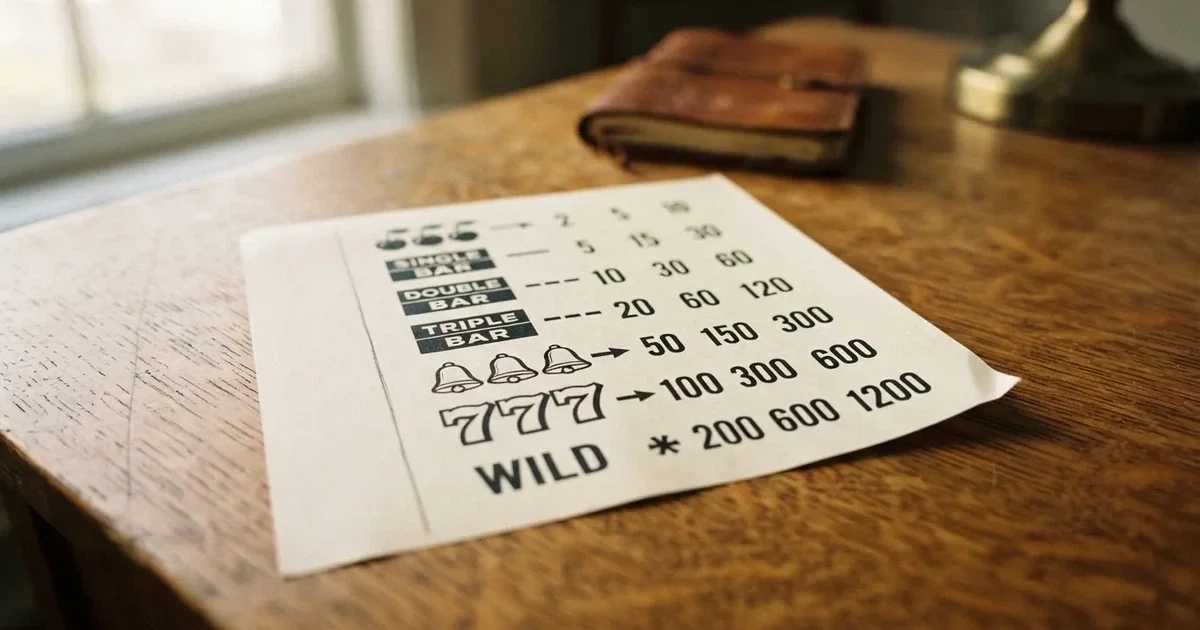
A paytable is the panel that lists each symbol’s value, the winning combinations, and the conditions under which a feature triggers. A standard five-reel pokie has symbols that pay out for matching combinations along a defined number of paylines; a 243-ways game counts combinations across adjacent reels without paylines; a Megaways title runs paylines in the hundreds of thousands per spin. The puzzle for the reader is that the volatility — how often the game pays and how large the typical payout is — varies more between games than between jurisdictions. A high-volatility pokie pays less often and wins larger; a low-volatility one pays more often in smaller amounts. Neither exists in a form where the player wins on average.
Return-to-player is the number that occupies the same role as the “house edge” in table games. The legal minimum RTP for Australian land-based poker machines varies by state: 85% in NSW, the Northern Territory, Queensland and generally Victoria (87% at Crown Melbourne), 87% in the ACT and Tasmania, 87.5% in South Australia, and 90% in Western Australia. These are floors — the actual RTP a specific machine runs at is generally published on its help screen, and varies from setting to setting within the legal band. Online pokies published RTPs cluster in a wider range, often 94% to 97%, which sounds generous and is not, because the gap from 100% is the house edge and 100% minus 94% is 6%. Sixty cents on the dollar is, on average, how a 94% pokie pays back over a long enough session for the average to mean something. The longer the session, the closer that average bites.
A player who wants the average to mean something reads the help screen, picks a game whose RTP is published, and sets a stop-loss before the first spin. A player who wants to understand whether a spin result was fair on a given offshore site reads the site’s RTP audit reports, which are typically issued by independent testing houses — and reads the licence the audit is issued under. Some offshore jurisdictions require the audit to be re-run annually and shared; some publish a single audit and call it current; some publish none. The verification shelf on this page would be longer if more research had come back.
Ranking the Operators: What an ACMA Warning Means and Why the Page Refuses to Rank
There is no ranked list of best online pokies in Australia because there is no set of operators any honest ranking could be drawn from. The premise of “best offshore pokies site for Australians, 2026” rests on a comparison the regulator has already made for the reader: every operator on the comparison has been warned, blocked, or continues to advertise to Australians in breach of the Interactive Gambling Act 2001. Ranking them is a decision the regulator has already pre-decided, and the only honest thing to do with a list of prohibited operators is to tell the reader what each one was warned for and let the reader draw their own line.
The brands that follow are the eleven operators and operator groups the ACMA has issued formal warnings over under the IGA in connection with offering prohibited online casino games to Australians. Each is named because the ACMA has named it. This is not an endorsement and not a recommendation. None of these brands holds an Australian licence for the product they offer Australians, because no such licence exists.
Landscape of Operators
| Brand | ACMA action and date | Operator named by the ACMA | Subject support |
|---|---|---|---|
| RocketPlay | Formal warning, March 2026; earlier warning, May 2022 | Pulsup Ltd; earlier Dama N.V. | — |
| Level Up Casino | Formal warning, May 2022 | Dama N.V. | — |
| Woo Casino | Formal warning, March 2025 | Dama N.V. | — |
| Spirit Casino | Formal warning, May 2025 | Dama N.V. | — |
| National Casino | Formal warning, July 2025 | Consolutetish S.R.L. | — |
| Bizzo Casino | Formal warning, July 2025; earlier warning, 2022 | Consolutetish S.R.L.; earlier TechSolutions (CY) Group Limited and TechSolutions Group N.V. | — |
| Ignition Casino | Formal warning, July 2025 | Bamboo Media | — |
| Instant Casino | Formal warning, February 2025 | EOD Code SRL | — |
| Jackbit | Formal warning, April 2026 | Ryker B.V. | — |
| Casino Intense | Formal warning, April 2025 | Sterplay Holding Ltd | — |
| Sky Crown | Formal warning, September 2022 | Hollycorn N.V. | — |
The column reading the reader most needs is the date. The ACMA’s enforcement record across 2022 to 2026 is the regulator returning to the same operator names with the same advice and the same statute, and the pattern is itself the information. A punter who is choosing between these brands is not choosing between two competing providers. They are choosing which of several providers the regulator has already addressed.
RocketPlay
RocketPlay surfaced in the ACMA’s published warnings twice: once in May 2022, when Dama N.V. was warned across a portfolio including Rocketplay, and again in March 2026, when Pulsup Ltd was specifically named. The same operator behind a site can swap the company name on its corporate ownership paper without changing the product, and the regulator’s record names both names. From the reader’s position, the only thing both warning dates confirm is that the same offering is the subject of continued ACMA attention. No bonus, payment or game terms are listed for RocketPlay on this page because the inputs that licence any number here were affiliate marketing pages, which the reader is right to be cautious of.
Level Up Casino
Level Up Casino was named in the May 2022 formal warning to Dama N.V. as part of a six-brand group, alongside Bambet, Dazard, Rocketplay, Wild Tornado and Cobra Casinos. The 2022 round was one of the earliest of the ACMA’s expanded enforcement under the IGA amendments. Three years on, the warning still names Level Up Casino; the brand pages remain findable. The page notes the warning and stops there.
Woo Casino
Woo Casino entered the ACMA record in March 2025, named in a further formal warning to Dama N.V. The 2025 warning was a continuation of the same regulator-to-operator dialogue that began in 2022 with the broader portfolio warning. No licence route is implied. The reader who searches Woo Casino finds a warning dated within a calendar year of 2026.
Spirit Casino
Spirit Casino received an ACMA formal warning in May 2025, also naming Dama N.V. The pattern across the Dama N.V. brands is informative on its own: the regulator has had to address the same Curaçao operator more than once across a multi-year span, which is itself a measure of how toothless the offshore licence framework is for stopping its licensees’ Australian-facing marketing. The page reports the warning.
National Casino
National Casino was named in the July 2025 ACMA formal warning to Consolutetish S.R.L. The same July 2025 round also named Bizzo Casino, and both brands were named again rather than warned for the first time. The July 2025 warnings followed a separate 2022 warning to TechSolutions (CY) Group Limited and TechSolutions Group N.V. for one of those brands — Bizzo Casino. The regulator has, in effect, watched the same brand portfolio migrate through company shells and continued to warn.
Bizzo Casino
Bizzo Casino carries the longest ACMA record of any brand on this page: the 2022 warning to TechSolutions (CY) Group Limited and TechSolutions Group N.V., and the July 2025 warning to Consolutetish S.R.L. Two warnings four years apart on what is, for all practical purposes to the player, the same product. The change between those dates is on the corporate side: more paperwork at the licensing entity, the same product available to the same audience.
Ignition Casino
Ignition Casino entered the ACMA record in July 2025, named in a warning to Bamboo Media. The brand had already been a notable name in some online discussion before the warning, and the ACMA’s action put the regulator’s specific view on the record. The brand is not on the page because it is a recommended choice; it is on the page because it is the regulator’s view the reader deserves to see.
Instant Casino
Instant Casino was named in the February 2025 ACMA formal warning to EOD Code SRL. Early in the calendar year, named in the regulator’s regular enforcement communications — the warning the regulator publishes is the one an Australian reader should take as the authoritative note on the brand.
Jackbit
Jackbit appeared in the ACMA record in April 2026, named in a warning to Ryker B.V. along with CasinOK. The brand is one of the more recent operator names to be specifically named by the regulator in 2026.
Casino Intense
Casino Intense was named in the April 2025 ACMA formal warning to Sterplay Holding Ltd. The brand is findable on affiliate pages that promote it as a working choice for Australian players, and the regulator’s published action is the page’s answer to that.
Sky Crown
Sky Crown was named in the ACMA’s September 2022 formal warning to Hollycorn N.V., along with Blue Leo Casino. Hollycorn N.V. has been a recurring name in the regulator’s enforcement; the September 2022 warning is the formal record the reader should know about. The page reports the warning and stops there.
The Comparison That Was Refused
Eleven brands, none of them licensable in Australia for the product they offer Australians. The comparison a “best online pokies” page is supposed to make — bonus value, payout speed, game library, customer service — assumes a market where the operator has skin in the game with the punter and where the regulator will enforce a level playing field. Neither assumption holds on the Australian side of the IGA. The marketing claims on which the offshore sites’ value propositions rest are unregulated claims about a product that is itself prohibited in the reader’s jurisdiction. The reader does not need a ranked list to make a clearer choice than ranking would let them make; the reader needs the regulator’s record and the absence of a licence, and they have both.
Overview: What “Best Australian Online Pokies” Actually Searches
The phrase behind the page is doing a job that no result set can fulfil. “Best online pokies Australia” is a query whose intent is to find a ranked list of licensed Australian sites where a punter can sign up and play pokies online for real money. The intent exists. The list does not, because online pokies for real money cannot be licensed in Australia under the Interactive Gambling Act 2001. Australia’s wagering market is structured the opposite way from a UK or a Maltese one: the licensed product is racing and sports betting, and everything else is either land-based or prohibited.
The offshore online pokie market that responds to the query exists because the Internet routes around domestic rules. It is in Curaçao, Anjouan, the Isle of Man, the Philippines and a long list of smaller regulatory homes — the licensing shells the marketing pages often advertise as proof of legitimacy. A Curaçao licence is not a guarantee: the licence framework is not equivalent to a European or Australian one, the regulator’s enforcement reach over a licensee’s Australian-facing operations is in practice limited, and the punter’s recourse if a withdrawal stalls is whatever the licence’s complaint procedure turns out to mean. Several of the brands on this page have already been warned, blocked or named by the ACMA, which is the wider picture behind the list a reader expects to find.
The H2 Gambling Capital 2025 report, cited in industry coverage, estimates that Australians lose about A$3.9 billion a year to illegal gambling sites. The same report estimates the share of gambling going through legal channels fell from 74% in 2021 to 64%. The wider context behind a search is that the legal channels are losing share, that the illegal channels are filling the gap, and that the punter searching for the best is also searching inside a market the regulator and parliament have spent four years trying to compress.
Legality and Regulation in Australia
The Interactive Gambling Act 2001 is the centre of the frame. It makes it an offence to provide certain interactive gambling services to customers physically present in Australia, and the Interactive Gambling Amendment Act 2017 strengthened the offence provisions and added civil penalty regimes to the regulator’s toolkit. What is prohibited is online casino gaming — online pokies, online baccarat, online blackjack, online roulette and similar — and in-play betting on sports, both offered to a person in Australia by an offshore provider or an onshore one without the relevant licence. What is licensable is wagering on racing and sporting events placed before the event, lotteries and keno. The licensed wagering operators, including Sportsbet, bet365 and Ladbrokes, are licensed in the Northern Territory — 52 of them — through the Northern Territory Racing and Wagering Commission. The Commission has no full-time staff and meets roughly once a month in Darwin, which is one of the regulatory frame’s more pointed details and one of the reasons reform is debated in Australia rather than assumed.
Enforcement is the ACMA’s job. The ACMA investigates complaints, issues formal warnings to operators and affiliates, and can direct Australian internet service providers to block illegal sites at the DNS level. A blocking request does not need a court order; it follows an investigation and a finding that the service is an illegal interactive gambling service for the purposes of the IGA. By 26 June 2026, the ACMA had asked ISPs to block 1,751 illegal gambling and affiliate marketing websites since the first blocking request in November 2019, and more than 230 unlicensed gambling services had left the Australian market since enforcement was strengthened in 2017. The 26 June 2026 blocking round alone named twelve more sites: 7Signs, ChromaBet, Donbet, Duospin, Freshbet, Slots Gem, Jacks Club, Lucky Start, Pointsbetz, Spinrise, Vinyl Casino and Wildsino. These are the numbers the regulator publishes, and they give the shape of the offshore market the reader is searching within.
Player protection under the licensed regime includes several instruments. BetStop, the National Self-Exclusion Register, binds every Australian-licensed wagering operator; Gamblers Anonymous, the National Gambling Helpline on 1800 858 858, and Gambling Help Online provide confidential support; state-level pre-commitment systems cover land-based poker machines. A player on an offshore online pokies site is connected to none of these instruments.
The Blocking Rate in Numerical Terms
The numbers in the ACMA’s blocking record are the central arithmetic on this page. From the first blocking request in November 2019 to the running total reported in June 2026, the regulator’s record holds 1,751 blocked sites across roughly 81 months — an average of around 21 or 22 sites blocked per month over the period, with a wide band around that mean month to month. That is one useful cut at the rate. Another way to read the same record is to set the early enforcement pace (a small handful of sites in 2019 and 2020) against the most recent reporting year (more than 200 sites added to the block list across 2024 and 2025 by the regulator’s own milestone statements) and see the rate accelerating rather than slowing. The honest statement of the rate is a band: roughly 20 to 50 sites per month in active enforcement months, with periods of formal warning activity that do not result in a fresh blocking request in the same week. The blocked-total figure of 1,751 is the regulator’s headline number, not a flow figure, and a year-on-year rolling band is what the page can stand behind.
The figure’s qualifier matters as much as the figure itself. A blocked site may carry several domains, may be redesigned and re-launched under a new domain by the same operator, and may move through several corporate shells before the ACMA can name it again. The 1,751 is a count of domains and URLs, not of operator identities, and the page does not collapse the two. The pattern across the record is the regulator doing more work over time, with formal warnings serving as a slower enforcement mechanism and blocking requests serving as the faster one.
State-Level Pokies Regulation
| Jurisdiction | Minimum RTP |
|---|---|
| New South Wales, Northern Territory, Queensland, Victoria | 85% |
| Australian Capital Territory, Tasmania | 87% |
| South Australia | 87.5% |
| Western Australia | 90% |
The licensed Australian poker machine market is regulated state by state, and the differences between the regimes are non-trivial. New South Wales had 87,298 gaming machines outside casinos across 2,195 venues as of June 2023, with player losses on those machines of A$8.18 billion in 2022-23. Queensland ran 21,122 gaming machines in 351 venues in October 2023; Victoria ran 26,380 machines outside Crown Casino across 488 venues in 2021-22 under a 30,000-machine statewide cap. Tasmania’s Federal Group monopoly, which had run since 1968, ended when legislation passed in November 2021, moving oversight to the Tasmanian Liquor and Gaming Commission. Western Australia banned poker machines in pubs and clubs when Crown Perth opened in 1985, although Crown Perth’s own floor count has since grown from about 200 to roughly 2,500 machines.
The minimal-RTP floors vary state by state. The numbers are floors, not averages, and they describe what the machines are not allowed to fall below.
Sites the ACMA Has Acted Against
The table earlier in the page is the operator-level record the ACMA has published, organised by the ACMA’s own action rather than by the marketing each brand does around itself. Three of the brands on that list were the subject of ACMA blocking rounds in 2026 alone, which is itself a measure of the regulator’s current pace. The wider blocking round — the 26 June 2026 round that asked ISPs to block twelve further sites — is on a separate list, because those names are addresses the regulator acts against rather than operators it serves with formal warnings.
Tax Treatment of Gambling Winnings
Gambling winnings of a recreational player in Australia are not assessable income, by virtue of section 6-5 of the Income Tax Assessment Act 1997, and gambling losses cannot be deducted against other income. A player whose gambling activity rises to the level of running a business of gambling is taxed on the business’s net profit, with the rules read off the ATO’s published position; this is the model-only caveat, and the ATO’s own guidance is where any specific question belongs. Professional punter and casual punter, the distinction that matters on the tax side, is not a distinction the ATO publishes a one-line rule for.
Site Blocking and What It Means for Players
The ACMA’s blocking mechanism is a legislative instrument the regulator has spent the past seven years building out. A blocking request is published after the ACMA finds that a service is providing prohibited interactive gambling to Australians; ISPs are then required to block the named domain at the DNS level. This is the path the regulator uses for sites it judges to be plainly in breach, and it is the path that produces the round numbers seen above. From the reader’s position, the consequence is simple: a blocked site is one the regulator has decided to keep Australians off. A punter who finds a workaround to access a blocked site — a VPN, an offshore DNS, a mirror — does not change the regulator’s position or the site’s licensing status; the punter uses a different network route to reach the same product.
The practical effect for a player with a balance on a blocked site is sharper. An offshore site that has had its domain blocked remains the legal custodian of a player’s balance, in the site’s own terms, and the player who has been on a blocked site and now cannot reach it through their normal internet connection has effectively lost direct access to a customer service interface they were entitled to use. The page does not name any specific brand as a victim of this; the page notes that the reader using an offshore site does not have an Australian complaints body to escalate to, and that the offshore operator’s complaint procedure is the only one that exists.
A blocked site is also a strong signal of which operators the regulator is currently pursuing. The 26 June 2026 round named 7Signs, ChromaBet, Donbet, Duospin, Freshbet, Slots Gem, Jacks Club, Lucky Start, Pointsbetz, Spinrise, Vinyl Casino and Wildsino. A reader who is choosing between affiliate-marketed brands sees a different set of names from the regulator’s record on a round-by-round basis. That signal is what an honest comparison would weigh. The page weighs it without ranking.
What the Operator Field Looks Like in 2026
The eleven brands named in the ACMA’s formal warnings since 2022 and the twelve domains named in the 26 June 2026 blocking round are not the full set of offshore sites a reader can reach with an Australian internet connection. They are the set the regulator has specifically addressed. The wider field — the several hundred brands findable through affiliate marketing pages, through VPN-targeted search, through direct sponsorship deals — is larger, and any brand an Australian reader encounters through those channels is, by the regulator’s view, in the same posture the eleven named ones are in: a prohibited product offered to a person in Australia.
Three generalisations hold across the wider field.
First, offshore licensing shells are interchangeable in practice. A licence issued by Curaçao’s gaming authority before September 2024 is not equivalent to one issued after September 2024, when the regulator restructured its framework; an Anjouan licence is not equivalent to a Curaçao one; a Philippine Offshore Gaming Operator licence is not equivalent to either. The marketing pages tend to print the licence logo without the framework number, and the reader has to look the licence up to see which framework a brand is operating under.
Second, the same operator can hold a single offshore licence and run several branded sites under it. The Dama N.V. warnings, which covered six brands in 2022 and two more in 2025, and the TechSolutions-to-Consolutetish sequences at National Casino and Bizzo Casino, are the formal record of this happening. The reader who looks at the corporate ownership may find one entity across several brands.
Third, the regulator’s enforcement reach is the variable that improves fastest. The ACMA has added more sites to its block list in the past two years than in the prior five combined, and the IGA’s 2024 credit-card prohibition and 2027 advertising reform are tightening around the same market from different sides. The reader who places weight on the regulatory posture over a horizon of twelve months is making a different assessment than the reader who treats the regulator’s January-2026 enforcement record as the complete picture.
Self-Exclusion and the Difference Between Licensed and Offshore
The reader who wants a self-exclusion from gambling should know what each of the available mechanisms does and does not cover.
BetStop is the National Self-Exclusion Register. It launched in August 2023, it is free, and registering bans the person from every Australian-licensed online and phone wagering service simultaneously, with no option for any of those operators to override it during the chosen exclusion period. The period is three months, one year, or five years, and is not reversible from the consumer side within the chosen term. BetStop covers every operator licensed in Australia that offers wagering — Sportsbet, Ladbrokes, bet365, Neds and others. A punter registered with BetStop cannot place a wager through any of those operators for the duration of the exclusion.
BetStop does not cover land-based poker machines at pubs and clubs. State-level self-exclusion schemes cover those: each state’s gaming commission runs its own land-based self-exclusion. NSW runs a venue-by-venue system; Victoria, Queensland, Western Australia, the others, each run their own arrangement. A punter who wants to be barred from a specific pub or club venue must register at that venue.
BetStop does not cover offshore online casinos. An Australian-licensed operator is bound by the register; an offshore site is not connected to the system, has no obligation to honour the exclusion, and is not required even to ask whether the punter is registered. A punter registered with BetStop who plays at an offshore online casino is technically in breach of their own exclusion but not in breach of any operator obligation, because no Australian operator obligation reaches the offshore site.
The National Gambling Helpline on 1800 858 858 covers all of it. The counsellor on the other end can talk the punter through BetStop, through a state-level scheme, and through the practical question of which pocket of the punter’s gambling life the offshore sites fit into. The helpline is the right place for the reader who wants a coordinated response rather than a piecemeal one.
FAQ
Is there any licensed, ranked list of online pokies sites for Australian players?
No. Online pokies are prohibited outright under the Interactive Gambling Act 2001, and no state or territory issues a licence to offer them. The closest legal equivalent is the licensed pub, club or casino machine in each state — NSW, Victoria, Queensland, Western Australia and the others each operate their own regime — and those are not online products. Any ranked offshore “best of” list a reader finds online is ranking brands the regulator has either warned or has never addressed, and neither ranking is a permitted one.
Does a PayID deposit route make an online pokies site any more Australian or legal?
PayID is one of four legal deposit routes for licensed Australian wagering — debit card, bank transfer, PayID and BPAY — and credit cards and crypto have been banned for that use since 11 June 2024. PayID does not legalise a product. An offshore site that offers PayID is routing an Australian-side deposit through an Australian payment system into an overseas operator, and the deposit’s arrival does not make the underlying product licensable. PayID’s speed is unchanged on either side; the legal status of the product the deposit buys is also unchanged.
What separates a licensed pub or club poker machine from an “online pokies” site?
A licensed machine is a physical cabinet in a licensed venue, regulated state by state under the relevant gaming acts, with a published RTP floor, a published help screen, a published set of harm-minimisation settings, and a state regulator that can be called by the punter. An online pokie is a digital version of the same game running on an offshore server, regulated by an offshore licence, with an RTP and an audit history published only by the operator. The game mechanics — reels, paylines, RNG — can be the same. The legal envelope around them is not.
Can an offshore online pokies site legally advertise a sign-up bonus to Australians?
No. The IGA prohibits the provision of prohibited interactive gambling services to a person in Australia, and that prohibition includes the marketing and inducement side of the offering. The Interactive Gambling Amendment (Gambling Reform) Bill 2026 passed Parliament on 19 August 2026, and its advertising and inducement measures come into force on 1 January 2027. Until then, the practical enforcement of the inducement ban falls more heavily on affiliates than on operator pages; after 1 January 2027 the framework is tightened. Neither side makes the offer legal to claim.
How would payouts on an offshore online pokies site be verified as fair?
Two layers of verification exist, neither of them Australian. The first is the site’s published RTP audit, typically issued by an independent testing house on an annual basis. The second is the offshore regulator’s right to audit and discipline the operator. Both depend on the regulator behind the licence being willing to act against its own licensee in a dispute involving an Australian punter, which is the variable an Australian punter cannot assess from outside. The honest answer is that the verification is real on paper and not enforceable from the punter’s side in practice.