
Casinos That Accept PayPal in Australia: What the ACMA’s Action List Really Means
A straight list of offshore casino sites that take PayPal is not what this page delivers. The more useful answer is the one that explains why that list exists at all, what PayPal’s own rules permit, and what an Australian punter is actually choosing between when a wallet button appears on a casino cashier. As of 28 October 2026, every operator below has been the subject of a formal ACMA warning for offering prohibited interactive gambling services to Australians, and the figures carried here were checked against the ACMA’s published enforcement record and the regulator’s own material on payments and consumer protection. The remainder of this page walks through that record, then through the eleven named brands, then through the mechanics of PayPal deposits and withdrawals at offshore sites, ending with the questions players keep asking about legality, security and disputed transactions.
Table of Contents
- Settling the basics before the brand list
- The choice that is not really a choice
- What enforcement looks like from the ACMA’s side
- Player protection that only binds the regulated half
- PayPal mechanics at an offshore casino — what actually happens
- The choice the wallet makes possible, and the limit the law sets
- What the comparison is actually comparing
- The eleven brands, in the order the regulator’s record sets
- The cross-brand shape and what the reader does with it
- The verdict, by brand
- Tax and winnings, briefly
- Frequently Asked Questions
Settling the basics before the brand list
The starting point is unflattering to the marketing version of this product. PayPal’s Acceptable Use Policy lists gambling — casino games, sports betting, racing, fantasy sports, lottery tickets — as permitted only when the operator and the customer sit exclusively in jurisdictions where the activity is legal. Online casino games are prohibited for people physically in Australia under the Interactive Gambling Act 2001, and that has not changed. The two conditions cannot be met at the same time, which is the structural reason no PayPal-accepting casino may lawfully serve an Australian resident.
What still happens in practice is that an offshore site displays a PayPal option in its cashier and accepts the deposit anyway. That arrangement sits outside PayPal’s own policy, sits outside the Interactive Gambling Act, and sits outside any Australian consumer protection. A withdrawal that stalls, a bonus term read narrowly, or a complaint no one answers is the kind of friction that follows.
The H2 Gambling Capital 2025 report estimates Australians lose roughly A$3.9 billion a year to illegal gambling services, with the share of gambling moving through legal channels falling from 74% in 2021 to 64%. The same report is the source for a number that frames the rest of this page: the gap between what Australians spend and what is regulated to receive it is the addressable market every offshore site is fishing in.
What follows is the order the legal and regulatory material is closed on this site. The eleven brand write-ups sit at the end of the page, with the comparison table directly above them. The four opening shelves run from the choice itself, to the statute behind it, to the player-protection tools available to an Australian, and finally to how a PayPal deposit and withdrawal actually behave at one of these sites.
The choice that is not really a choice
Australia’s online gambling market has a single legal shape, and the shape is narrow. Wagering on races and sporting events placed before the event can be licensed. Lotteries and keno can be licensed. Online casino games and online pokies cannot be licensed anywhere in the country. The Northern Territory Racing and Wagering Commission regulates 52 of Australia’s online bookmakers — Sportsbet, Bet365 and Ladbrokes among them — for tax reasons, but the commission is a part-time body that meets once a month in Darwin. It is the de facto wagering regulator without being a casino regulator, because no casino regulator exists for the product in question.
What an Australian is choosing, when an offshore casino presents itself, is between a regulated product they do not want and an unregulated product they are told is just like it. The IGA targets the provider, not the player, which is the legal reason individual Australians are not prosecuted for using these sites. The protection gap is what prosecution silence does not close: an offshore operator gives no Australian consumer protection, no Australian complaints body, and no Australian recourse when a withdrawal is refused. The site can be blocked while a balance sits on it, and several of the brands below have been on exactly that path.
The legitimate substitutes are land-based casinos, state-regulated clubs and pub pokies, and licensed online wagering on sport and racing. The reader who wants the casino experience in regulated form already has it in a different format.
What enforcement looks like from the ACMA’s side
The Australian Communications and Media Authority has been the active enforcement arm for over five years. As of the ACMA’s June 2026 update, 1,751 illegal gambling and affiliate marketing websites had been blocked since the first blocking request in November 2019, and more than 230 unlicensed gambling services had left the Australian market since enforcement was strengthened in 2017. In a single round reported on 26 June 2026 the ACMA asked Australian ISPs to block a further twelve sites: 7Signs, ChromaBet, Donbet, Duospin, Freshbet, Slots Gem, Jacks Club, Lucky Start, Pointsbetz, Spinrise, Vinyl Casino and Wildsino.
The blocking rate — the page’s one worked calculation — is the pace the regulator has kept. From the first blocking request in November 2019 to the June 2026 update, the running total reached 1,751 blocked sites. Spread over that window the average is roughly 263 blocked sites per year, or about 22 per month, with the real monthly figure varying widely as the ACMA’s investigative work shifts in batches. The block count is a running total, not a fresh count each year, so the band is a pace, not a flow: in a quiet quarter the figure barely moves; in a round like the 26 June 2026 update, twelve sites land at once. The honest summary is that enforcement is steady rather than dramatic, with periodic spikes when a single round groups several sites together.
The ACMA’s published record on the brands in this page is the source the operator write-ups draw from. A formal warning is the regulator’s stated first step; an operator that ignores it moves toward referral for civil penalty proceedings or a blocking request. Three rounds from 2025 and 2026 are worth carrying through: in March 2026 the ACMA warned Pulsup Ltd over RocketPlay; in March 2025 the regulator formally warned Dama N.V. over Woo Casino, then warned it again in May 2025 over Spirit Casino; in July 2025 the ACMA warned Bamboo Media over Ignition Casino and Consolutetish S.R.L. over National Casino and Bizzo Casino, with Bizzo Casino having already been the subject of a 2022 formal warning to TechSolutions. The pattern is the regulator catching up with operators that rebrand, shift entities, or simply ignore the first letter.
The 2026 reform: the Interactive Gambling Amendment (Gambling Reform) Bill 2026 passed Parliament on 19 August 2026, and its advertising and inducement measures commence on 1 January 2027. The law exists on the page’s date but the operative provisions are not yet in force, which is the right way to read a statute that has been passed and is awaiting commencement.
Player protection that only binds the regulated half
The Australian player-protection tools named on these offshore casino pages exist; they simply do not reach the products named on those same pages. BetStop, the National Self-Exclusion Register, has been live since August 2023 and binds every Australian-licensed online and phone wagering service. The offshore casino is not a participant in BetStop, because the offshore casino is not licensed in Australia. A punter who has self-excluded is still able to deposit at every brand below, and the offshore site has no obligation to honour the exclusion.
The same gap holds for the National Gambling Helpline at 1800 858 858 — a free 24/7 service with chat at Gambling Help Online. The service is real, available to anyone in Australia, and runs independently of which site a person is using. It is also outside the merchant relationship, which is the part that matters when a balance is held on a site that can be blocked.
The minimum age for any Australian gambling product, online or otherwise, is 18. The offshore sites do not enforce an Australian age floor any more carefully than they enforce an Australian licence, which is to say: not at all, in practice, beyond the document checks the marketing page describes.
PayPal mechanics at an offshore casino — what actually happens
The mechanics a casino cashier page describes and the mechanics a wallet transaction actually runs through are different objects, and an Australian punter benefits from knowing both. The deposit side runs through PayPal as a normal wallet payment, with the funds sourced from a linked bank account, card, or PayPal balance. The funds settle into the casino’s merchant account, the casino credits the player’s balance, and the player’s bank statement shows a PayPal transfer rather than a card charge. The wallet layer is what makes this attractive in the first place: no card data shared with the operator, no PayPal password entered into the casino site.
PayPal Australia is itself a regulated entity. AUSTRAC accepted an enforceable undertaking from PayPal Australia over shortcomings in its anti-money-laundering and counter-terrorism-financing systems and controls, including how it handled international funds transfer instructions. That undertaking was later finalised after PayPal completed a two-year remediation plan. PayPal is classified as a reporting entity under Australia’s anti-money-laundering and counter-terrorism-financing law, sitting in the same regulated population as banks, casinos, remittance providers and digital-currency exchanges. Any business such as PayPal that transfers funds into or out of Australia must submit an international funds transfer instruction report to AUSTRAC within ten business days of the transfer. The wallet is not a regulatory loophole on the Australian side; it is a regulated financial service with reporting duties the player never sees.
The deposit ceiling at the casino end is set by the casino, not by PayPal. A$10 minimum deposit PayPal casinos exist by operator choice; A$20 and A$30 are more common. The maximum is set by PayPal’s transaction rules and the player’s account standing. The casino does not see a bank account number or a card number; it sees a PayPal transaction reference.
| Method | Regulatory Status | Usage in AU |
|---|---|---|
| PayPal | Licensed entity (AUSTRAC) | Digital wallet |
| Debit Card | Licensed wagering | Direct deposit |
| Bank Transfer | Licensed wagering | Direct deposit |
| PayID/Osko | Licensed wagering | Instant rail |
The withdrawal side is where the timing story lives. The casino’s own review runs first. The review is the operator’s internal fraud and bonus-term check, and it sits before any wallet instruction is sent. Industry-wide the review window is most often quoted as twenty-four to forty-eight hours, with some operators faster and a small number slower. Once the review clears, PayPal receives the instruction and credits the player’s wallet — the wallet leg is usually minutes. From there the funds land in the linked Australian bank account in one to three business days for a standard transfer, or near-instantly if the player has the PayPal balance route mapped to a bank that supports the faster settlement paths. The “PayPal withdrawal takes 24 hours” line in marketing copy is usually describing the operator’s review window only, not the end-to-end bank credit.
A dispute on a PayPal payment to a casino is the harder case. PayPal’s Purchase Protection covers tangible goods and certain services, and online casino transactions fall outside that protection. A player who believes a withdrawal has been wrongly withheld can open a dispute through PayPal, but the operator’s response is to point at its own terms — bonus abuse, identity re-verification, maximum-cashout caps — and the dispute is then a contract dispute rather than a chargeback. For an Australian punter at an offshore site, that contract dispute sits in the operator’s home jurisdiction, not in an Australian court.
The choice the wallet makes possible, and the limit the law sets
There is one piece of context the marketing copy never quite gets to. Even before the offshore casino question, the wallet itself is constrained. PayPal’s Acceptable Use Policy lists gambling as permitted only when the operator and the customer sit exclusively in jurisdictions where the activity is legal. The same policy separately restricts cryptocurrency and other digital representations of value, including virtual in-game currencies. So PayPal is not a permission slip for online gambling wherever a button appears; it is a service whose own terms require a lawful operator-jurisdiction pairing, and the casino side of that pairing is what fails in Australia.
The legal credit card ban on Australian-licensed online wagering came in on 11 June 2024, with penalties for operators up to A$247,500. The ban covers credit cards and credit-related products and constrains the use of linked digital wallets like Apple Pay on those products. Legal deposit routes for licensed wagering are debit card, bank transfer, PayID/Osko and BPAY. The bank-side response has been active: Westpac’s gambling block refuses authorisation of transactions registered under the merchant category code for betting and casino gambling on eligible personal credit and debit cards. ANZ’s gambling block, activated in the ANZ app, also blocks gambling transactions made through a digital wallet such as Apple Pay on an eligible card, not just on the physical card; once the block is on, removing it requires a 48-hour waiting period, and the bank itself warns that not all gambling transactions will be blocked and that some non-gambling transactions might be blocked in error.
The wallet choice a player makes at an Australian bank is its own decision, and that decision can be sharper than the wallet choice at the casino cashier. ANZ’s gambling block, Westpac’s gambling block, and the equivalent tools at the other major banks work at card level and at linked-wallet level on eligible products. They do not stop every gambling transaction, but they do stop a meaningful share of them, and the punter who turns them on has already narrowed what the casino cashier can do.
Apple Pay’s own position is that it charges consumers no fee to use the wallet, that any surcharge comes from the merchant’s card-processing fees rather than from Apple, and that transaction limits and PIN requirements are set by the card issuer or merchant rather than by Apple. The RBA’s July 2025 review proposes removing surcharges only on eftpos, Mastercard and Visa transactions, explicitly leaving American Express outside the proposed surcharge ban. By the end of 2025, Apple Pay, Google Pay and Samsung Pay transactions collectively accounted for around 45% of all card payments in Australia by number. The wallet economy is the norm, and the gambling block at the bank is the seam where the punter regains some control.
PayID and Osko are the Australian instant-payment rails. With Osko, a bank transfer between participating Australian banks arrives in under a minute, 24/7 including weekends, whether addressed to a BSB and account number or to a PayID. Paying to a PayID shows the name of the account holder before the transfer is sent, and the operator of PayID warns that being asked to transfer money to a PayID on an illegal gambling site almost certainly means a scam site. PayID-based instant transfers are available at more than 100 Australian financial institutions. More than 25 million PayID identifiers had been registered on Australia’s New Payments Platform as of April 2025; participants in the platform must keep monthly outages to no more than two minutes; and in 2021 the ACCC authorised merging NPP Australia with BPAY and eftpos into a single company, Australian Payments Plus.
The rail is real, regulated and Australian. The illegal-gambling use of it is the part the operator of PayID itself flags.
What the comparison is actually comparing
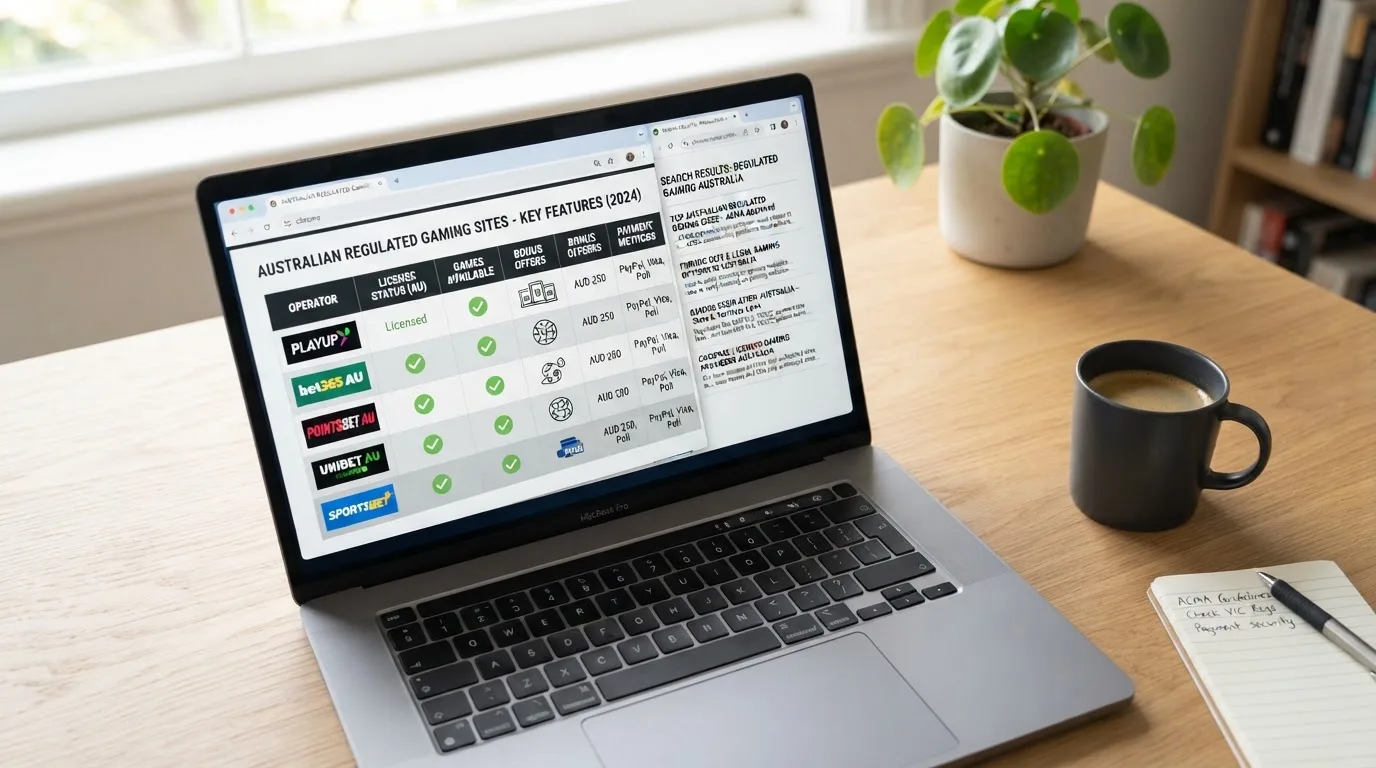
The table that follows is the comparison block the spec routes to this page. It is not a ranking. It is a regulator-side record: the ACMA action, the date, the operator the ACMA named in the warning, and the position research carries on whether the subject — the PayPal support question the reader came with — is something that brand confirms itself, something listings carry without the brand confirming it, or something the available record does not address.
A few notes on how to read it. Where a brand is marked confirmed, the ACMA or the operator’s own terms say PayPal is supported in the cashier. Where the cell says listings only, the brand is not affirming PayPal support and the page carries the listings’ claim as their claim, not as the brand’s. Where the cell is left as a dash, the available record does not put a number on it and the page neither affirms nor denies it. The reader who arrived looking for a PayPal-friendly brand is looking at a record that says most of them are not confirming it.
| Brand | ACMA action and date | Operator named by the ACMA | Subject support |
|---|---|---|---|
| RocketPlay | Formal warning, March 2026 | Pulsup Ltd | — |
| Level Up Casino | Formal warning, May 2022 | Dama N.V. | listings only |
| Woo Casino | Formal warning, March 2025 | Dama N.V. | — |
| Spirit Casino | Formal warning, May 2025 | Dama N.V. | — |
| National Casino | Formal warning, July 2025 | Consolutetish S.R.L. | listings only |
| Bizzo Casino | Formal warning, July 2025 (earlier 2022) | Consolutetish S.R.L. | — |
| Ignition Casino | Formal warning, July 2025 | Bamboo Media | — |
| Instant Casino | Formal warning, February 2025 | EOD Code SRL | listings only |
| Jackbit | Formal warning, April 2026 | Ryker B.V. | — |
| Casino Intense | Formal warning, April 2025 | Sterplay Holding Ltd | listings only |
| Sky Crown | Formal warning, 2022 | Hollycorn N.V. | — |
The honest summary is that the table is a regulator record dressed up as a comparison. Every brand carries the same Australian-jurisdiction position: online casino games cannot be licensed anywhere in Australia, whatever licence the site displays. What changes is the year of the warning, the entity behind the brand at the time of the warning, and whether the brand’s own materials or external listings give a number for PayPal support.
The operator-entity entries also tell a story about reorganisation. RocketPlay has appeared under both Dama N.V. in May 2022 and Pulsup Ltd in March 2026, which is the pattern of a brand that has moved between operator shells. Bizzo Casino has appeared under TechSolutions in 2022 and Consolutetish S.R.L. in 2025 — the same pattern with two entity names. The Dama N.V. cluster alone covers four of the brands on the list, and the entity’s record is long enough that the ACMA has gone back to it more than once.
The eleven brands, in the order the regulator’s record sets
RocketPlay
RocketPlay is one of two brands on this list where the ACMA has acted against two different operator entities. The first formal warning went to Dama N.V. in May 2022; the regulator returned to the brand in March 2026 and issued a fresh formal warning over RocketPlay to Pulsup Ltd. A brand that has cycled through two operator shells in four years is a brand that has not been hard to find.
The post-read for the punter: a balance held on RocketPlay sits on an operator the ACMA has named twice, and the most recent warning is this year. That is the relevant shape of the choice.
Level Up Casino
Level Up Casino sits inside the Dama N.V. cluster. The ACMA issued a formal warning to Dama N.V. in May 2022 covering six brands — Bambet, Dazard, Level Up, Rocketplay, Wild Tornado and Cobra Casinos. The brand has not been the subject of a separate warning since.
Listings carry a PayPal option in the cashier for Level Up Casino without the brand confirming PayPal support directly; the page treats the listings claim as the listings claim, not as the operator’s. The honest read is that the cashier may show the button and the policy ground beneath the button is unchanged.
Woo Casino
The ACMA formally warned Dama N.V. over Woo Casino in March 2025, returning to the same entity for a third time across this list. The brand had not been named in the original 2022 Dama warning. The 2025 warning is the freshest ACMA action on Woo Casino specifically.
The position on PayPal is the same no-data position that applies to most of the brands in this comparison.
Spirit Casino
Spirit Casino drew its own ACMA formal warning in May 2025, also addressed to Dama N.V. The Dama cluster now has the ACMA’s attention four times over, and the regulator’s pattern of returning to the entity is the part of the record a reader weighing the brand benefits from knowing.
The available record does not carry a confirmed PayPal position for Spirit Casino.
National Casino
The ACMA’s July 2025 warning over National Casino was issued to Consolutetish S.R.L., the same entity that drew a warning over Bizzo Casino in the same round. Two brands from the same operator, warned in the same letter. External listings carry a PayPal option in the cashier for National Casino; the brand does not confirm; the page carries the listings’ claim as their claim.
Bizzo Casino
Bizzo Casino has been on the ACMA’s list twice. The first warning went to TechSolutions in 2022; the second, in July 2025, went to Consolutetish S.R.L. The brand has been warned as part of two different operator shells, which is the same reorganisation pattern that appears at RocketPlay.
The available record does not carry a confirmed PayPal position for Bizzo Casino.
Ignition Casino
The ACMA issued its July 2025 warning over Ignition Casino to Bamboo Media, distinct from the Consolutetish S.R.L. cluster on the same round. Ignition is the bamboo-media entry on the comparison and the brand’s PayPal position is no-data.
Instant Casino
Instant Casino is one of three listings-only entries on the comparison. The ACMA issued a formal warning to EOD Code SRL in February 2025, and external listings carry PayPal as a cashier option. The page treats the listings claim as the listings claim, not as the operator’s; the brand itself does not affirm PayPal support on the material research carries.
The honest summary: a wallet button on a cashier page is not a confirmation of support, and a brand’s silence on the question is the part of the record the page leaves alone.
Jackbit
The ACMA issued a formal warning to Ryker B.V. over Jackbit and CasinOK in April 2026, the most recent ACMA action on the brand. The brand’s PayPal position is no-data on the available record.
Casino Intense
Casino Intense drew a formal warning in April 2025 to Sterplay Holding Ltd. External listings carry the brand’s name in payment-method lists; the brand itself does not confirm PayPal support on the material research carries. The position is listings-only, in the same sense as the other listings-only entries on the comparison.
Sky Crown
The ACMA issued a formal warning to Hollycorn N.V. over Sky Crown and Blue Leo in September 2022. Sky Crown is the older end of the comparison and the PayPal position on the brand is no-data.
The honest close on Sky Crown is that the ACMA action is the older part of the record and the absence of a fresher formal warning does not put the brand inside Australian licensing. The IGA applies independently of which year the warning was issued.
The cross-brand shape and what the reader does with it
The cross-brand shape is not subtle, and the page says so plainly. Eleven brands, ten operator entities between them, and one entity — Dama N.V. — appearing behind four of the eleven. The pattern is the ACMA catching up with operators that rebrand, rotate the entity name, or absorb the first warning without moving offshore. None of the eleven is licensed to offer online casino games to a person in Australia.
What an Australian punter weighing these brands is choosing between is the regulator-side record and the marketing-side promise, and the regulator-side record is the only one of the two with a public list. The choice the wallet makes possible is a real one — a PayPal button on a cashier page is a different deposit from a card charge — but the wallet layer does not change the licensing position. The brand on the other side of the deposit is the same brand the ACMA has warned.
The off-ramp from the comparison is the regulated half of the market. Licensed wagering on sport and racing is the Australian product the IGA permits, and licensed wagering services use debit card, bank transfer, PayID/Osko and BPAY rather than PayPal. The punter who wants to use PayPal at a casino and stay on the regulated side is asking for a product Australia does not offer.
The verdict, by brand
Each brand write-up above closes on the page’s own judgement, and the judgements are not the same sentence written eleven times. The shape of the close follows what the record above it actually established.
RocketPlay — a brand the ACMA has warned twice, under two operator shells in four years. The balance a player keeps on RocketPlay sits behind the regulator’s freshest name for the operation.
Level Up Casino — a Dama N.V. entry from the May 2022 round with a listings-only PayPal claim. The brand has not been re-warned since 2022, which is the one piece of freshness the record carries.
Woo Casino and Spirit Casino — Dama N.V. brands the ACMA warned in 2025. The pattern the reader notices is that the entity is the same one the regulator named in 2022; the brand is the fresh entry.
National Casino and Bizzo Casino — two brands from Consolutetish S.R.L. in a single July 2025 round, with Bizzo having already been warned in 2022 under TechSolutions. The entity-side pattern repeats.
Ignition Casino — the Bamboo Media entry on the July 2025 round, the brand the ACMA has named once.
Instant Casino — a listings-only PayPal claim on a brand the ACMA warned in February 2025; the page carries the listings claim as the listings claim.
Jackbit — an April 2026 ACMA warning to Ryker B.V., the freshest action on the comparison.
Casino Intense — a 2025 warning to Sterplay Holding Ltd with a listings-only PayPal position.
Sky Crown — the Hollycorn N.V. brand from the 2022 round and the oldest ACMA entry on the comparison.
Tax and winnings, briefly
A recreational player’s gambling winnings are not assessable income in Australia, and losses are not deductible, unless the person carries on a business of gambling. The model is the ITAA 1997 treatment at section 6-5, and the page carries it as the model rather than as advice: a player in doubt should check with the ATO. The tax position does not change at an offshore casino; it is the same tax treatment of the same winnings.
Frequently Asked Questions
Is it legal for an online casino to accept PayPal from a player in Australia?
No. The Interactive Gambling Act 2001 prohibits online casino games and online pokies for people physically in Australia, and PayPal’s own Acceptable Use Policy lists gambling as permitted only when both the operator and the customer sit exclusively in jurisdictions where the activity is legal. An offshore casino accepting PayPal from an Australian breaks the first condition by offering the product, and PayPal’s policy treats the same combination as impermissible. The player is not prosecuted under the IGA, which targets the provider, but there is no Australian consumer protection for the deposit.
Does PayPal allow its service to be used for online casino deposits at all?
Yes, in jurisdictions where the activity is licensed. PayPal’s policy permits gambling transactions when the operator and customer are located exclusively in those jurisdictions. For a person in Australia the policy does not apply to online casino games or online pokies because the product itself is prohibited. The wallet is not a permission slip for gambling wherever a cashier button appears; it is a regulated financial service whose own terms require a lawful pairing.
What is the smallest PayPal deposit a casino site usually accepts?
Research carries a A$10 minimum deposit PayPal casino as a real category, with A$20 and A$30 more common across the offshore market. The minimum is set by the casino, not by PayPal; the wallet’s own transaction limits are set by PayPal and the player’s account standing. None of the eleven brands on this page confirms a specific minimum, and the reader weighing a small first deposit should expect the cashier to name its own floor.
How long does a PayPal withdrawal usually take to clear at these sites?
The end-to-end time is two windows stacked. The casino’s own review runs first — usually twenty-four to forty-eight hours, with the operator’s fraud and bonus-term check inside it. Once the review clears, PayPal receives the instruction and credits the wallet, usually within minutes; the linked Australian bank account receives the funds in one to three business days for a standard transfer. The “PayPal withdrawal in 24 hours” line in marketing copy is most often describing only the first window, not the end-to-end bank credit.
Is a PayPal-funded casino account any more secure than one funded by card?
The wallet layer is more secure in one narrow sense: the casino does not see a card number or a bank account number, only a PayPal transaction reference, and the player does not type a PayPal password into the casino site. PayPal is also a reporting entity under Australia’s anti-money-laundering law, regulated by AUSTRAC in the same population as banks and remitters. The wallet security is real, but the security gap the page is about — no Australian licence, no Australian consumer protection, no recourse when a withdrawal is refused — is at the operator layer rather than at the wallet layer.
What happens if a PayPal payment to a casino site is disputed or reversed?
PayPal’s Purchase Protection covers tangible goods and certain services and does not cover online casino transactions. A dispute is opened through PayPal and answered by the operator pointing at its own terms — bonus abuse, identity re-verification, maximum-cashout caps — which turns the dispute into a contract argument rather than a chargeback. For an Australian punter at an offshore site, that contract argument sits in the operator’s home jurisdiction and is not reachable through an Australian complaints body or court.