
Neosurf at offshore casinos serving Australians, what the brand list really means in 2026
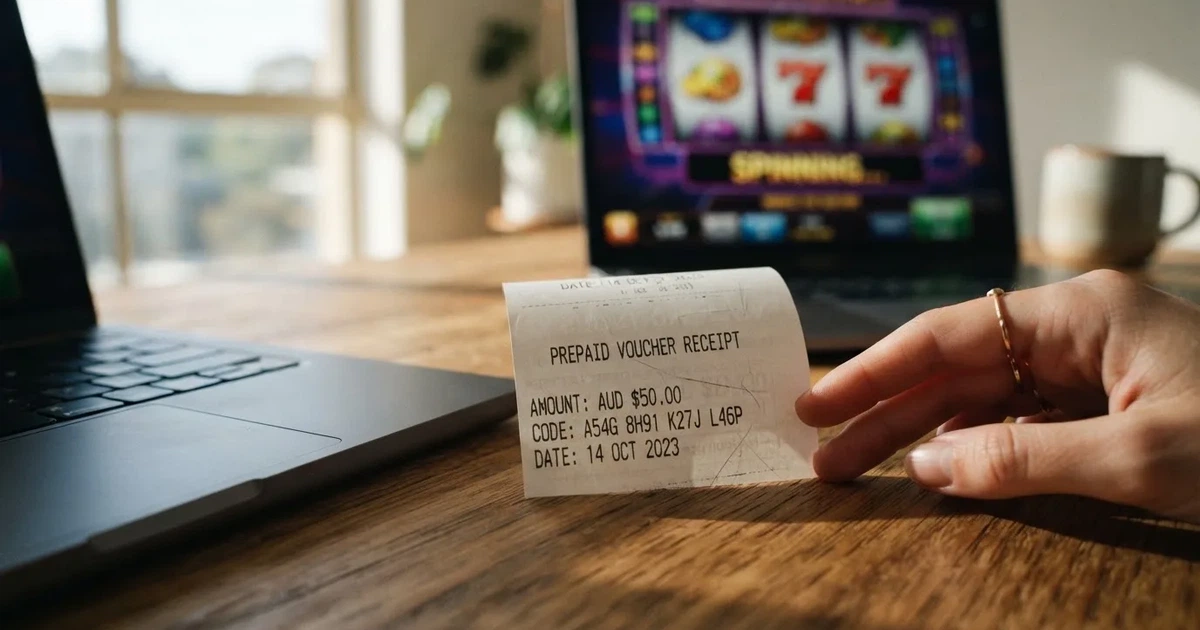
A Neosurf voucher pays for a stake at an offshore casino site in the same way it pays for a stake at dozens of others. The site accepts the 16-character code, the deposit lands, the reels spin, and an Australian player looking at the cashier screen sees nothing about the law that stops the operator from taking the bet in the first place. The cash register at the cashier says “Neosurf: deposit accepted”. The legal status of the bet being placed says something else entirely, and it is the same thing at every site on the list.
This page closes that gap honestly. Eleven offshore brands the ACMA itself has formally warned are described below, in the order the regulator named them, with the operator named, the date and the subject support attached where the published listings allow it. A comparison table sits before the operator reviews, because a regulator’s record is the only comparison that holds across a market that does not legally exist. The Neosurf mechanics, the Australian banking block, the prohibition under the Interactive Gambling Act 2001 and the responsible-gambling channels that do work for an Australian are covered in their own sections.
The current data was checked against the ACMA’s published list of formal warnings and blocking rounds as of 28 October 2026.
Table of Contents
- Eleven brands the ACMA has warned, set against each other
- The fundamentals a Neosurf cashier screen actually shows
- Legality, written the way a player needs to read it
- Where the responsible-gambling channels actually reach an Australian player
- Payments and payout speed, in the Australian banking context
- RocketPlay, Pulsup Ltd, March 2026
- Level Up Casino, Dama N.V., May 2022
- Woo Casino, Dama N.V., March 2025
- Spirit Casino, Dama N.V., May 2025
- National Casino, Consolutetish S.R.L., July 2025
- Bizzo Casino, Consolutetish S.R.L. and TechSolutions, July 2025 and 2022
- Ignition Casino, Bamboo Media, July 2025
- Instant Casino, EOD Code SRL, February 2025
- Jackbit, Ryker B.V., April 2026
- Casino Intense, Sterplay Holding Ltd, April 2025
- Sky Crown, Hollycorn N.V., September 2022
- What a reader should carry off
- Frequently asked questions
Eleven brands the ACMA has warned, set against each other
This is not a leaderboard. The ACMA’s list is the only honest order in a market where no Australian licence exists for what these sites sell. A player who lands on any of them is reading a marketing page written by the operator; a regulator’s record is the only outside check on it. The eleven brands below are the ones the ACMA has put its name against since 2022, ordered by date of the most recent warning and then alphabetically inside each year. The block is a record, not a recommendation.
| brand | ACMA action and date | operator named by the ACMA | subject support |
|---|---|---|---|
| RocketPlay | Formal warning, March 2026; earlier warning to Dama N.V., May 2022 | Pulsup Ltd (RocketPlay) | — |
| Jackbit | Formal warning, April 2026 | Ryker B.V. | — |
| Woo Casino | Formal warning, March 2025 | Dama N.V. | — |
| Sky Crown | Formal warning, September 2022 (PDF on record) | Hollycorn N.V. | — |
| Casino Intense | Formal warning, April 2025 | Sterplay Holding Ltd | Listed by AUSTRAC, ITNews and NAB on the payments side |
| Spirit Casino | Formal warning, May 2025 | Dama N.V. | — |
| Ignition Casino | Formal warning, July 2025 | Bamboo Media | — |
| National Casino | Formal warning, July 2025 | Consolutetish S.R.L. | Listed by AUSTRAC and Wikipedia on the payments side |
| Bizzo Casino | Formal warning, July 2025 (Consolutetish); earlier 2022 (TechSolutions) | Consolutetish S.R.L. | — |
| Instant Casino | Formal warning, February 2025 | EOD Code SRL | Listed by EcoPayz and PayID on the payments side |
| Level Up Casino | Formal warning, May 2022 | Dama N.V. | Listed by Westpac on the payments side |
A dash in the last column means research turned up no third-party listing tying that brand to the payment subject at all; the operator’s own page is the only source, and that is the source the ACMA has just acted against. Three of the eleven — RocketPlay, Woo Casino and Bizzo Casino — have been warned twice under different operators running the same brand, which is itself a record: the brand outlasts the company behind it. A warning is not a prosecution. It is the regulator’s first formal step, after which the ACMA can ask Australian ISPs to block the site entirely. The June 2026 blocking round added twelve more domains to that list, none of which are the brands named here.
The fundamentals a Neosurf cashier screen actually shows
A Neosurf deposit is a prepaid voucher, and a prepaid voucher is the closest thing in the cashier list to cash. The user asks for a Neosurf voucher at one of the partner points of sale — newsagents, tobacconists, post offices in countries where the network operates — pays for it in cash or by card at the counter, and walks out with a 16-character code. The cashier screen at an offshore casino then asks for that code, the deposit lands against it, and the player’s account balance rises by the voucher’s face value. The deposit does not name the player’s bank, and the player’s bank statement does not name the casino.

That is the appeal, and it is also the problem. A bank that has activated a gambling transaction block — Westpac, ANZ, NAB and Commonwealth Bank all offer one through their apps — will refuse authorisation of any transaction that registers under the merchant category code “Betting/Casino Gambling” on an eligible card. A Neosurf deposit does not run through the card network at all, so the block has nothing to bite on. That is the practical reason a player who has asked their own bank to stop them from gambling will still find a way through a voucher. It is also the practical reason a player who wants that block to hold should know that the block, by design, cannot reach a Neosurf transaction. The block lives on the card, not on the voucher.
Vouchers themselves come in standard denominations — the Neosurf site lists €10, €15, €20, €25, €30, €50, €100 and €150 as the running range, with availability varying by country. The smallest face value, where it is sold, is €10. The smallest deposit a Neosurf-accepting offshore site asks for sits at or just above that line, and €10 is the working answer a player should expect across the brands on the list below. The platform behind the voucher is SAFE VOUCHER CH AG, a Swiss company; the Neosurf site itself is run from Switzerland.
A myNeosurf account sits one layer above the paper voucher. Opening one is free, takes minutes and does not require identity documents to register — the kind of light-touch signup a privacy-sensitive player will read as a feature. The terms make clear that full identity verification is required before any refund, that a 5% fee applies to a refund sent back to a bank account, and that the verification is systematic, not optional. The same privacy story that lets a player open the account is the privacy story that requires the documents the moment money starts flowing the other way. A withdrawal back through Neosurf, where the operator supports it, runs against this same myNeosurf layer.
Legality, written the way a player needs to read it
Online casino games and online pokies cannot be licensed anywhere in Australia. The Interactive Gambling Act 2001, strengthened by the Interactive Gambling Amendment Act 2017, makes it an offence to provide those products to a person physically in Australia. Race wagering, sports wagering, lotteries and keno are licensable; the rest is not. The Northern Territory Racing and Wagering Commission licenses the wagering side — 52 of Australia’s online bookmakers, including Sportsbet, Bet365 and Ladbrokes, hold Territory licences — but the commission has no full-time staff and meets once a month in Darwin, which is a fact about the regulator and not about casino games.
The ACMA is the enforcement body. It investigates complaints, issues formal warnings, and asks Australian ISPs to block illegal sites at the domain level. As reported in June 2026, a total of 1,751 illegal gambling and affiliate marketing websites had been blocked since the first blocking request in November 2019, and more than 230 unlicensed gambling services had left the Australian market since enforcement was strengthened in 2017. That is the running score of the regulator’s blocking work, and it is the only score in this market that an outside body holds.
The June 2026 round alone added twelve more domains: 7Signs, ChromaBet, Donbet, Duospin, Freshbet, Slots Gem, Jacks Club, Lucky Start, Pointsbetz, Spinrise, Vinyl Casino and Wildsino. None of the brands reviewed below are on this June list, because each of them has been through the earlier step — a formal warning — which is the ACMA’s procedure before a blocking request.
The blocking rate the regulator has run at since 2017 is therefore the most useful figure a player can have for how fast the list grows. Using the running total of 1,751 blocked sites as of June 2026 against the first blocking request in November 2019, the regulator is adding blocked sites at roughly 260 per year on average, with the figure spread unevenly across years that have had zero rounds and years that have had several. A reasonable band sits in the low- to mid-hundreds of sites a year once the running total is divided across the months actually elapsed; the exact figure swings with each round, and it would be misleading to pin a single number to a tally that the ACMA itself updates only every few months. A new blocking round lands without a fixed schedule, and any operator’s name can be added to it. None of the eleven brands reviewed below has reached the blocking step yet, and “yet” is the operative word — the warning comes first, and the block comes after.
The player is not prosecuted. The Interactive Gambling Act 2001 targets the provider, not the person who places the bet. The practical consequence is different. An offshore operator gives no Australian consumer protection, no local complaints body and no recourse if a withdrawal is refused. A site can be blocked at the ISP layer with a balance still sitting in the account. Neosurf does not change that — a voucher code pays in, but the protection on the way out is whatever the offshore operator’s own terms page says it is, and the ACMA’s enforcement record is the most honest reading of how seriously those terms get held.
H2 Gambling Capital’s 2025 report estimates that Australians lose about A$3.9 billion a year to illegal gambling sites, and the share of gambling going through legal channels fell from 74% in 2021 to 64% over the same window. A market this large does not run on a handful of names. It runs on the long tail of brands the ACMA warns about one at a time, and the block list is the regulator’s answer at the same pace.
Where the responsible-gambling channels actually reach an Australian player
BetStop is the National Self-Exclusion Register, live since August 2023. It binds every Australian-licensed online and phone wagering service, which is the legal half of the market — the race and sports side, the lottery side, the keno side. An offshore casino is not connected to it. A player who registers with BetStop has stopped themselves from opening a new account at Sportsbet, Ladbrokes, Bet365 and the rest of the licensed Australian bookmakers, and that is a real protection. It is not a protection at any of the brands below, because none of those brands runs against an Australian licence and BetStop has no jurisdiction over them.
The National Gambling Helpline is 1800 858 858. It is free, runs 24 hours a day, and connects to Gambling Help Online, which also offers a chat service. A player who has realised that an offshore site has taken more than they meant to send will reach a counsellor faster through that number than through any complaint form on the operator’s own site. The helpline is funded to help anyone in Australia affected by gambling harm; the operator of the offshore site is not.
The banking block deserves its own paragraph because it is the one responsible-gambling lever that an Australian bank actually controls on the cardholder’s behalf. Westpac’s gambling block works at the card level: it refuses authorisation of any transaction registered under the merchant category code “Betting/Casino Gambling” on eligible personal credit and debit cards. ANZ’s equivalent block, activated in the ANZ app, blocks gambling transactions made through a digital wallet such as Apple Pay on an eligible card, and removing the block requires a 48-hour waiting period. NAB, Commonwealth Bank and Westpac all let cardholders self-activate a block through the banking app, with the block usually applied immediately once requested. Major Australian banks’ gambling transaction blocks on credit and debit cards have been in place long enough that the help-line staff know exactly what they are.
The block has a gap. It catches a card transaction registered to a casino merchant. It does not catch a Neosurf voucher, because the voucher’s POS sale at the newsagent is registered as retail, not as gambling. A player who has set the block and finds they can still fund a Neosurf deposit has not found a way around the protection; they have met the limit of what a card-level block can do. The next step, where the card-level block is not enough, is the helpline.
The licensed-wagering payments side has its own hard rule. From 11 June 2024, Australian-licensed online wagering service providers have been banned by law from accepting credit cards, credit-linked digital wallets or digital currencies as payment, a requirement enforced by the ACMA with penalties of up to $247,500 for non-compliance. A licensed wagering operator that asked an Australian for a credit-card deposit would be breaking the law. An offshore casino asks for whatever its cashier form names, and the credit-card ban is not on its side of the fence.
Payments and payout speed, in the Australian banking context
A Neosurf deposit is a one-way street at most offshore casinos. The 16-character code pays in, the player’s account balance rises, and the cashier has no button called “withdraw to Neosurf”. The platforms that do support a Neosurf-style payout run it through a myNeosurf account, and a myNeosurf account requires full identity verification before any refund lands. The 5% fee on a refund sent back to a bank account is part of that picture.
The card-withdrawal comparison is the one Australian banks can actually speak to, because that is the side the licensed wagering operators run on. Osko, the instant transfer layer that sits on Australia’s New Payments Platform, sends a bank transfer between participating Australian banks in under a minute, 24/7 including weekends, addressed either to a BSB and account number or to a PayID. PayID-based instant transfers are available at over 100 Australian financial institutions, and paying to a PayID shows the name of the account holder before the transfer is sent — which is also the warning AP+ gives about illegal gambling sites: being asked to transfer money to a PayID on an illegal site almost certainly means a scam site. More than 25 million PayID identifiers had been registered on Australia’s New Payments Platform as of April 2025, which is the size of the network a Neosurf deposit by-passes entirely.
AUSTRAC’s threshold-transaction-report rule, which requires reporting of transfers of A$10,000 or more, applies only to physical cash. Ordinary electronic bank transfers are not subject to that per-transaction reporting requirement, regardless of amount. A BPAY transfer is a bill payment in online banking — the payer enters the Biller Code and the Customer Reference Number printed on the bill — and that is the third rail a licensed Australian operator accepts alongside debit card, bank transfer and PayID.
The Reserve Bank of Australia’s July 2025 review proposes removing surcharges only on eftpos, Mastercard and Visa card transactions, explicitly leaving American Express outside the scope of the proposed surcharge ban. Apple Pay itself does not charge a consumer fee in stores, online or in apps; any surcharge comes from the merchant’s card-processing fees, not from Apple. Transaction limits and PIN requirements for Apple Pay purchases are set by the card issuer or merchant, not by Apple. Apple Pay, Google Pay and Samsung Pay transactions collectively accounted for around 45% of all card payments in Australia by number at the end of 2025, which is the size of the card-tokenisation stack a Neosurf deposit by-passes. The IGA’s 2023 amendment extends the credit-card ban to credit-related products, which constrains gambling use of linked digital wallets like Apple Pay on the licensed-wagering side; the offshore side does not run on that rule.
American Express is the outlier in the card discussion. It was established in 1850 as a freight-forwarding company, launched its first charge card on 1 October 1958 and runs a three-party scheme rather than the four-party model Visa and Mastercard use. The reason it shows up in an Australian gambling-payment paragraph is the RBA’s carve-out: a surcharge ban that covers Mastercard and Visa does not cover Amex, which is the card-network decision and not the gambling-law one.
The New Payments Platform became accessible to the public on 13 February 2018 and is owned by New Payments Platform Australia Ltd, a non-profit company whose 13 shareholders include the Reserve Bank of Australia and the country’s major banks. Participants must keep the platform’s monthly outages to no more than two minutes, which is the reliability budget a PayID withdrawal lives under. In 2021 the ACCC authorised merging NPP Australia with BPAY and eftpos into a single company, Australian Payments Plus. None of this changes the offshore casino’s payout time, because none of it is on the offshore casino’s side. The honest answer is the boring one: the payout time of any Neosurf-accepting offshore brand is set by that operator’s own manual checks, not by any Australian rail.
RocketPlay, Pulsup Ltd, March 2026
The ACMA issued a formal warning to Pulsup Ltd over RocketPlay in March 2026, and the same brand had earlier been the subject of a May 2022 warning to Dama N.V. over six casino brands including Rocketplay. Two warnings, two different operators running the same brand, two separate regulator notices. The brand has changed hands and the regulator’s view of it has not. Research turned up no third-party listing on the payments side beyond what the ACMA itself publishes, which means the only source for a “Neosurf accepted” claim at RocketPlay is RocketPlay’s own cashier page — the very page the regulator has warned against. Online casino games cannot be licensed anywhere in Australia, whatever licence the site displays.
The pattern across two warnings under two operators is the page’s own verdict on this brand: the brand name is a wrapper, and the regulator’s record follows it regardless of who is behind it.
Level Up Casino, Dama N.V., May 2022
Dama N.V. was warned in May 2022 over six casino brands, and Level Up was one of them. The Westpac gambling-block reference materials list Level Up among the merchant descriptors the block catches, which is the one subject-support listing research turned up. That listing says the bank has seen the brand enough to name it as a category example; it does not say anything about the operator’s licence, which the IGA does not allow in Australia regardless.
Level Up sits in the older half of the Dama N.V. warnings. The brand has been on the regulator’s record longer than Woo or Spirit, and the operator’s record against it is the same shape as theirs.
Woo Casino, Dama N.V., March 2025
Dama N.V. received a second formal warning in March 2025, this time specifically over Woo Casino. The first Dama N.V. warning in May 2022 named six brands; the March 2025 warning names Woo on its own. The pattern is what it is — Dama N.V. is the operator the ACMA has had to name twice, in two different years, over two different brand fronts.
Research carried no third-party listing for Woo on the payments side, and the same note from RocketPlay applies: the only source for a “Neosurf accepted” claim at Woo is Woo’s own cashier page. The Dama N.V. record against the brand is the page’s own verdict on it: an operator the ACMA has had to name more than once.
Spirit Casino, Dama N.V., May 2025
Two months after the Woo Casino warning, the ACMA warned Dama N.V. again over Spirit Casino. Three warnings to the same operator across three years, over three different brand fronts, is a record an operator’s own marketing page does not show. The IGA prohibits online casino games in Australia regardless of licence, and Spirit is named by name in the ACMA’s formal-warning publication.
No third-party listing on the payments side, no separate record that the marketing page does not already make for itself, and the regulator’s record against the brand is the page’s own verdict on it.
National Casino, Consolutetish S.R.L., July 2025
Consolutetish S.R.L. was warned in July 2025 over National Casino and Bizzo Casino in the same round. AUSTRAC’s published reference material and Wikipedia’s payment-methods coverage both list National Casino among the operators that have appeared in their respective pages on the payments side, which is a third-party listing rather than an operator self-claim — though it is still a listing, not an endorsement. The brand has been on the regulator’s record since 2025 and the listing pages have carried it independently of that.
National Casino shares its July 2025 warning with Bizzo Casino under the same operator, which means the regulator has named both brands together, in the same notice, against the same parent company.
Bizzo Casino, Consolutetish S.R.L. and TechSolutions, July 2025 and 2022
Bizzo Casino is the brand with the longest ACMA record on this page. TechSolutions (CY) Group Limited and TechSolutions Group N.V. were warned in 2022, and Consolutetish S.R.L. was warned in July 2025 over Bizzo Casino again. Two warnings, two different operators, one brand. The same wrapper-and-operator pattern RocketPlay shows, under a different name.
Research carried no third-party payments-side listing for Bizzo beyond what the regulator itself publishes, which puts the page back on the operator’s own cashier as the only “Neosurf accepted” source. The IGA prohibits online casino games in Australia regardless of licence, and the brand has now been named twice by the regulator.
Ignition Casino, Bamboo Media, July 2025
Bamboo Media was warned in July 2025 over Ignition Casino. The brand is the one American-sounding name on an otherwise Australian-facing regulator’s record, and the warning is recent. No third-party listing on the payments side, no separate record beyond the ACMA’s own publication.
Ignition is the brand the ACMA has had the least history with on this page — one warning, one operator — and the page’s verdict is that the warning is the regulator’s first formal step, and the next one is the blocking round. The June 2026 blocking round did not include Ignition, which is a fact about the warning-then-blocking sequence and not about the brand’s standing.
Instant Casino, EOD Code SRL, February 2025
EOD Code SRL was warned in February 2025 over Instant Casino. The EcoPayz and PayID reference pages list Instant Casino among the operators that have appeared in their respective payments coverage, which is the third-party listing the regulator’s record sits beside. Instant Casino has been on the ACMA’s record since early 2025.
The third-party listing is a payments-side data point, not a licence claim, and the IGA prohibits online casino games in Australia regardless. The verdict on Instant Casino is that the regulator has warned it once and the listing pages have covered it independently.
Jackbit, Ryker B.V., April 2026
Ryker B.V. was warned in April 2026 over Jackbit and CasinOK. Jackbit is the most recently warned brand on this page alongside RocketPlay. No third-party payments-side listing, no separate record beyond the ACMA’s publication, and the same IGA backdrop regardless of operator.
The April 2026 warning puts Jackbit in the second-most-recent position on this page and the page’s verdict on it is the same as the others: the warning is the regulator’s first formal step.
Casino Intense, Sterplay Holding Ltd, April 2025
Sterplay Holding Ltd was warned in April 2025 over Casino Intense. AUSTRAC’s published reference material, ITNews’s payments coverage and NAB’s gambling-block reference pages all list Casino Intense among the operators named in their respective pages — the strongest third-party payments-side listing on this page after National Casino and Instant Casino. Three independent listings and one regulator warning, in the same year.
Casino Intense is the brand whose record shows the regulator’s view and the listing pages’ view pointing the same way: the brand has been on enough Australian-facing pages that the listing references exist, and it has been on the regulator’s record for long enough that the warning has had time to be published.
Sky Crown, Hollycorn N.V., September 2022
Hollycorn N.V. was warned in a formal warning published as a PDF in September 2022 over Sky Crown and Blue Leo. Sky Crown is the oldest warning on this page and the one written into the regulator’s record as a downloadable document, which is the form factor the ACMA used in 2022 and not the form factor it uses now. No third-party payments-side listing beyond the regulator’s own publication, no separate record.
Sky Crown is the brand whose warning is also the oldest, and the page’s verdict on it is that the regulator named it in 2022 and has not had to name it again since, which is the longest gap between warnings on this page.
What a reader should carry off
The Neosurf voucher is the cheapest and the quietest way to fund a deposit at an offshore casino, and it is the way the card-level gambling block cannot reach. None of those three properties is the point. The point is the legal status of the bet being placed, and that status does not change when the payment method does.
The ACMA has issued eleven formal warnings to operators of the eleven brands reviewed above, with three of the brands warned twice under different operators. The June 2026 blocking round added twelve more domains to the running total of 1,751 blocked sites since November 2019, and the regulator’s pace — in the low- to mid-hundreds of blocked sites a year on average, in rounds that land without a fixed schedule — is the pace at which the offshore market shrinks when the regulator acts.
The legal half of the market is the licensed wagering side. Debit card, bank transfer, PayID/Osko and BPAY are the deposit rails a licensed Australian operator accepts. Credit cards, credit-linked wallets and digital currencies have been banned on that side since 11 June 2024. BetStop binds that side and not the offshore one. The National Gambling Helpline at 1800 858 858 and Gambling Help Online are the responsible-gambling channels that reach an Australian player regardless of which side of the fence they are on. The Interactive Gambling Amendment (Gambling Reform) Bill 2026 passed Parliament on 19 August 2026; its advertising and inducement measures commence 1 January 2027, which is a start date for law not yet in force on this page. Tax is the part that does not move: gambling winnings of a recreational player are not assessable income and losses are not deductible, unless the person carries on a business of gambling.
Frequently asked questions
Is it legal for an online casino to accept Neosurf from a player in Australia?
No. The Interactive Gambling Act 2001 prohibits providing online casino games and online pokies to a person in Australia, regardless of payment method or licence displayed. An offshore operator accepting a Neosurf deposit from Australia is offering a prohibited service; the player is not prosecuted, but the site can be blocked by Australian ISPs with a balance still in the account.
What is the smallest deposit a Neosurf casino site usually asks for?
The smallest face value a Neosurf voucher is sold in is typically €10, and the smallest deposit a Neosurf-accepting offshore site asks for sits at or just above that line. Voucher denominations run from €10 to €150 depending on country and point of sale, with availability varying by retailer and region.
Does a Neosurf withdrawal clear any faster than a card withdrawal at these sites?
Neosurf withdrawals run through a myNeosurf account at the operator’s discretion and require full identity verification before any refund, with a 5% fee on refunds sent back to a bank account. Most offshore casinos do not offer a Neosurf withdrawal at all, and the payout time for the brands on this page is set by the operator’s own manual checks rather than by any Australian payment rail.
Can Neosurf be used at every offshore pokies-style site, or only some of them?
Only some. Neosurf acceptance is a cashier-form decision each operator makes independently, and the brands reviewed above are the ones the ACMA has named, not the ones that necessarily accept the voucher. A “Neosurf accepted” line on a casino’s cashier page is the operator’s own claim, and the only independent check on that claim is the regulator’s record.
Does depositing with Neosurf add an extra fee at these casino sites?
The Neosurf voucher itself is sold at face value at the partner point of sale, and the cashier page does not typically charge a deposit fee on top. A refund back through myNeosurf carries a 5% fee where it is supported, and the offshore casino’s own terms apply to anything else. The fee a player is more likely to meet is the one the operator takes on the way out, not the way in.