
Real money casino table games for Australians in 2026: the games, the law, and the off-shore option that is not one
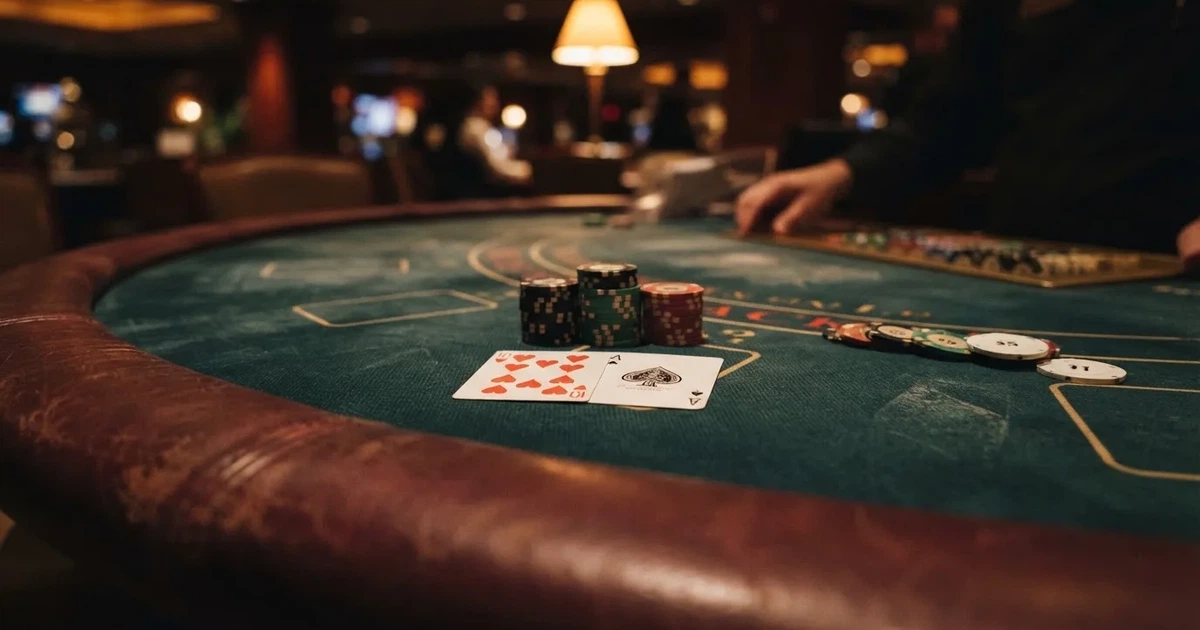
Every real-money table game a punter can sit down to in Australia lives under one of two regimes. A licensed casino floor in Melbourne, Sydney, Perth, Brisbane, Adelaide, Hobart, Darwin or Canberra runs blackjack, roulette, baccarat, craps and a roster of derivatives under state law, with a regulator signing off on the rules and the house edge printed into them. The other regime is the offshore casino website marketed at Australians from Curaçao, Cyprus or wherever else, and it is not a parallel option: the Interactive Gambling Act 2001 makes the supply of online casino games to anyone in Australia an offence, the ACMA chases providers, ISPs are ordered to block domains, and a balance left on an offshore account can be frozen behind that block. The first half of this page is about the games themselves and the odds they carry. The second half is about how that prohibition actually works, where the lawful play sits, and what the eleven offshore brands the ACMA has named in the past few years have in common — which is the warning, not a recommendation.
Figures current as of 28 October 2026, checked against the Australian Communications and Media Authority’s register of formal warnings and blocking orders.
Table of Contents
- Responsible play around real-money table games
- Where table games are legal to play in Australia
- How crypto table games fit — and why they don’t change the law
- The games Australians actually play: paytables and house edges
- The eleven offshore brands the ACMA has warned — and what they share
- What the prohibition actually does
- Payments and the Australian rules
- What changed in 2026 on the advertising side
- Tax, briefly
- What an Australian punter actually does with all of this
- Frequently asked questions
Responsible play around real-money table games
Table games are pitched as the thinking player’s option — blackjack has a basic strategy chart, baccarat has a fixed drawing rule, roulette has a wheel you can bet against — and the framing invites a player to mistake the depth of the decisions for an edge over the house. There is no edge over the house in any of them over the long run. Basic strategy on liberal-rules blackjack costs the player about 0.28% of action; double-zero roulette costs 5.26%; keno costs between 25% and 29%. The arithmetic of table play is a slow leak, and the only way to manage it is to set the budget before sitting down, not after.

Two tools sit on the Australian side of that decision. BetStop, the National Self-Exclusion Register, has been live since August 2023 and binds every Australian-licensed online and phone wagering service, so a person who registers cannot open a new account or place a bet with any operator covered by the regime. The catch is the word “licensed”: BetStop does not touch an offshore casino, because the offshore casino is not connected to the Australian register. Excluding yourself from BetStop will not stop you logging in to a Curaçao-licensed site. The second tool is the National Gambling Helpline on 1800 858 858 — free, twenty-four hours a day — with online chat through Gambling Help Online. If the table-game budget is the first thing that has to go in a bad month, the call is worth making before the session, not after it.
The Responsible Gaming section of this guide treats the offshore side the way the law does: as a product Australians are not meant to be sold, and as one that does not carry the consumer protections a Crown Melbourne or a Star Sydney table does.
Where table games are legal to play in Australia
“Casino near me with table games” is a search that returns results on both sides of the law. The legal side is short and concrete: every Australian capital city has at least one casino licensed under its state or territory’s Casino Control Act, and a roster of larger hotels and clubs run table games under restricted licences in some states — usually limited to certain games and capped stakes. The Australian Casino Association and the state regulators publish the venue list, and the major operations carry enough table games that the difference between a Melbourne weekend and a Sydney one is the rule variant, not the availability.
Crown Melbourne runs the largest casino floor in the southern hemisphere and offers three baccarat variants — Traditional Baccarat, Crown Baccarat and 2 to 1 Baccarat — approved by the Victorian Gambling and Casino Control Commission, which took over from the VCGLR on 1 July 2022. The Star Sydney and The Star Gold Coast (formerly Jupiters) carry comparable table floors under NSW and Queensland regulators. Treasury Brisbane, Adelaide Casino, the Country Club Tasmania in Launceston, Lasseters in Alice Springs and the Mindil Beach Casino Resort in Darwin round out the licensed casino network, with SkyCity Adelaide set to replace the existing Adelaide operation under a new licence. Perth’s Crown Perth was sold and rebranded as Burswood Entertainment Centre’s casino operations under the WA Department of Local Government, Sport and Cultural Industries.
The state regulators control more than the licence. In Victoria, the VGCCC must approve any casino table-game rules or changes before they are introduced, under the Casino Control Act 1991, and it has ruled on amendments to baccarat, blackjack and roulette including new side bets. In NSW, Liquor & Gaming NSW — acting under delegation from the NSW Independent Casino Commission since 5 September 2022 — approves the games and rules at the state’s two casinos. Under section 66 of the NSW Casino Control Act 1992, a casino operator must not permit a game such as baccarat to be played unless the game and its rules are approved by the regulator, and the operator must make a copy of the approved rules available to patrons on request. The same pattern runs in Queensland, Western Australia, South Australia, Tasmania, the ACT and the Northern Territory. Every rule you can sit down to in an Australian casino has a regulator’s signature on it, somewhere.
The other legal channel for some table-game play is the licensed pub and club sector, mainly in New South Wales and the ACT, where hotels and clubs operate a limited number of approved table games under separate state rules. The catalogue is narrower — usually a few blackjack variants and roulette — and the limits are tighter, but it is the only legal way to sit at a table game in a venue that is not a casino. The list of approved venues is published by Liquor & Gaming NSW in NSW and by the ACT Gambling and Racing Commission in the capital territory.
How crypto table games fit — and why they don’t change the law
“Bitcoin casino table games” and “crypto casino table games” bring up a wave of offshore sites that accept Bitcoin, Ethereum, USDT and a roster of other tokens at the cashier. The blockchain angle is real at the payment layer: a Bitcoin deposit clears in minutes where a bank transfer from an Australian account can take a working day, and crypto rails get around the credit-card ban that applies to licensed Australian wagering. None of that changes the legal status of the casino accepting the deposit. The Interactive Gambling Act 2001 makes it an offence to provide online casino games to a person in Australia, and the payment method does not feature in the offence. A Bitcoin withdrawal from an unlicensed site is still an unlicensed withdrawal, with the same lack of Australian recourse if it does not arrive.
The other thing crypto does is hide the customer from the casino. KYC on an offshore site is often lighter than the same site’s stated terms suggest, and a crypto deposit that goes through without document checks is a deposit the ACMA’s blocking orders cannot easily trace back. That is not a feature for the player; it is a feature for the operator. When the ACMA orders ISPs to block a domain, the player with a balance on the site has no Australian complaints body to call, no local regulator to escalate to, and a frozen account that the blockchain does not help unlock. The speed of crypto at the cashier becomes irrelevant when the cashier itself is on a blocked URL.
The point is not that crypto is unsafe in itself. It is that crypto at an offshore casino is not a workaround for the Australian prohibition. It is a faster rail into a product that the prohibition covers.
The games Australians actually play: paytables and house edges
“Online casino table games for real money” covers a deep catalogue — blackjack in perhaps two dozen variants, three or four roulette wheels, baccarat in Punto Banco and the rarer Chemin de fer, craps, casino poker derivatives, sic bo, and a long tail of novelty games that borrow the table format. The numbers below come from Wizard of Odds and the standard-rule references for each game; rule variants move them, and a casino running double-zero roulette is not the same game as one running single-zero.
Blackjack
Blackjack is the lowest-edge table game on a typical casino floor under liberal Las Vegas Strip rules: dealer stands on soft 17, double on any two, double after split, resplit aces, late surrender, giving a house edge of about 0.28%. Atlantic City rules land at about 0.43%. With basic strategy — the published chart of hit/stand/double/split decisions for every player hand against every dealer upcard — a player loses on average less than 1% of action over the long run. Without basic strategy, the edge can run several times higher.
The game traces back to the Spanish game veintiuno, described in Miguel de Cervantes’ Rinconete y Cortadillo around 1601-1602, and evolved into the English game vingt-un before becoming the American version around 1899. Cards two through nine count at face value, jack/queen/king count as ten, and an ace counts as one or eleven; a two-card total of 21 is a “blackjack” or “natural” and beats any other player hand. The dealer must keep drawing until reaching seventeen or higher, with some rule sets requiring the dealer to also hit on a soft seventeen.
Side bets are the trap. Liberal-rules blackjack with basic strategy is a 0.28% game; most blackjack side bets run well into double digits. Insurance is a separate bet on the dealer having blackjack and pays 2:1 — with a house edge above 7% even when taken with perfect information. The standard advice is to refuse side bets and insurance, take basic strategy as a fixed cost of playing, and treat the rest as casino decoration.
Roulette
European (single-zero) roulette carries a house edge of 2.70%. American (double-zero) roulette carries 5.26% — almost exactly double, because the extra zero is the only structural change. The odds on every individual bet are calculated against the wheel, not the layout, so an outside bet on red or black pays 1:1 on either wheel but loses more often on the American one. Some properties offer French roulette with la partage or en prison rules, which return half the stake on an even-money bet when the ball lands on zero, dropping the effective edge to 1.35%.
Roulette originated in eighteenth-century France, in close to its present form since about 1796 in Paris, with the wheel often traced to a 1720 gaming wheel combined with the Italian game Biribi. The mathematics is the same now as it was then: the layout is a marketing surface over a fixed-edge wheel, and no betting system — Martingale, Labouchère, D’Alembert — changes that. The betting systems sell because they reframe a sequence of independent spins as a story about recovering a loss; the math does not notice.
Baccarat
Punto Banco is the baccarat variant played in Australian casinos, dealt from a shoe of six or eight decks. Cards two through nine count at face value, ten and the face cards count as zero, aces count as one, and hand totals are taken modulo ten. The casino banks the game permanently and plays out both hands by fixed drawing rules, which is what makes Punto Banco a game of bet selection, not strategy. The three main bets and their house edges in an eight-deck shoe are: Banker 1.06%, Player 1.24%, Tie 14.36% at an eight-to-one payout (or 4.85% at a nine-to-one payout).
Chemin de fer — French for “railway” — is the older two-player variant from which Punto Banco developed, named for being quicker to play than the original baccarat banque. It is rare in Australian casinos and most players will see only Punto Banco. The beginner’s first decision is which of the three bets to make, and the answer the math gives is the Banker bet every time, despite the 5% commission most houses take on Banker wins. The Tie bet is the casino’s quietest earner — it pays eight or nine to one and looks generous, and it carries a house edge an order of magnitude higher than the other two.
Craps
Craps developed in the United States as a simplification of the European game Hazard, which Bernard de Marigny brought from London to New Orleans around 1805. The simplified American version had spread throughout the country by the 1910s and is now played in Australian casinos mostly as an electronic or live-dealer table. The Pass line carries a house edge of about 1.41%, which puts it in the same low-edge band as the Player bet in baccarat. The Don’t Pass line is fractionally better for the player but is socially awkward because it is a bet against the shooter.
Side bets in craps carry far higher edges than the Pass line: about 5.56% on the Field bet, 16.67% on Any Seven, and 11.11% on Hard 4 or Hard 10. The pattern repeats across craps the way it does in blackjack: the base game is reasonably priced, the prop bets are where the house makes its real margin, and the layout is engineered to draw players to the prop bets. A player who sticks to Pass, Don’t Pass, Come and Don’t Come with full odds is paying a low edge; a player who lays chips on the centre of the table is paying the house’s marketing budget.
Keno and the long tail
Keno carries a house edge of 25% to 29% in standard rules and is not usually classed with the table games proper, but it shares the format and is often run from the same electronic terminal in an Australian casino. The edge is structural and large enough that no betting pattern closes it; keno is a lottery dressed as a table game. Sic bo, casino war, and the various novelty wheels and dice games sit at similar or worse positions on the edge scale. The catalog is worth knowing exists so it is not mistaken for the base games.
Live-dealer versus RNG
Online casinos pitch live-dealer blackjack, roulette and baccarat as a step closer to the casino floor than the random-number-generator version. Under Australian law the distinction does not exist: both are online casino games, and both are prohibited interactive gambling services under the IGA. Under the math, the difference is real but smaller than the marketing suggests. A live-dealer blackjack game uses the same shoe and the same rules as a casino-floor game; an RNG game uses a certified random number generator that simulates the shoe. Both have the same published house edge under the same rule set. The live format adds the social cost of a slower game, a higher minimum bet, and a tip expectation, all of which raise the effective cost per hour without changing the edge.
The eleven offshore brands the ACMA has warned — and what they share
This is the page’s comparison section, and the comparison is not between the brands; they all offer the same product, in roughly the same way, under the same offshore licences. The comparison is between what the ACMA has formally recorded about each one and what that record means for an Australian player. The brands are listed in the order the ACMA published its actions, not as a ranking.
| Brand | ACMA action and date | Operator named by the ACMA | Subject support |
|---|---|---|---|
| RocketPlay | Formal warning, March 2026 (Pulsup Ltd) and May 2022 (Dama N.V.) | Pulsup Ltd, Dama N.V. | — |
| Level Up Casino | Formal warning, May 2022 | Dama N.V. | Listed by BGaming as a distributor |
| Woo Casino | Formal warning, March 2025 | Dama N.V. | — |
| Spirit Casino | Formal warning, May 2025 | Dama N.V. | — |
| National Casino | Formal warning, July 2025 | Consolutetish S.R.L. | Listed on Wikipedia as a Curaçao-licensed operator |
| Bizzo Casino | Formal warning, July 2025; earlier warning, 2022 | Consolutetish S.R.L., TechSolutions Group | — |
| Ignition Casino | Formal warning, July 2025 | Bamboo Media | — |
| Instant Casino | Formal warning, February 2025 | EOD Code SRL | — |
| Jackbit | Formal warning, April 2026 | Ryker B.V. | — |
| Casino Intense | Formal warning, April 2025 | Sterplay Holding Ltd | Listed in ABC News and ACMA material alongside Crown Melbourne coverage |
| Sky Crown | Formal warning, September 2022 | Hollycorn N.V. | — |
Every brand above has been the subject of a formal ACMA warning under the Interactive Gambling Act 2001 for offering prohibited interactive gambling services to Australians. The warnings name the operator entity behind the brand, not the brand itself, and several operators run multiple brands from the same licence — Dama N.V. is the named entity behind RocketPlay, Level Up, Woo, Spirit and others across the list. The “Subject support” column records where the brand appears in industry listings, and the dashes mark brands where the research did not find a verifiable listing source; that absence is information, not an endorsement.
What the table does not contain is a recommendation. The brands are not ranked by safety, payout speed, game catalogue or bonus generosity, because the comparison a reader needs to make is not between them. It is between the offshore option and the licensed casino floor, and the table’s job is to make clear that every brand above sits on the offshore side.
RocketPlay — Pulsup Ltd, March 2026 and Dama N.V., May 2022
The ACMA named RocketPlay twice, first as one of six Dama N.V. brands warned in May 2022 and again under a new operator entity, Pulsup Ltd, in March 2026. Two warnings under two operator shells, from the same product to the same Australian market, suggests a continuity the rebranding does not interrupt. There is no verifiable listing of RocketPlay as a game distributor or platform partner in the sources consulted, so the brand sits on the table as a name without a footprint beyond the warning itself.
Level Up Casino — Dama N.V., May 2022
Level Up was one of the original six Dama N.V. brands warned in May 2022. The brand appears on BGaming’s distributor listings, which gives it a paper trail beyond the ACMA notice: BGaming, an iGaming aggregator, lists partners that integrate their games, and a brand on the list is at least operating a casino platform rather than a redirect. That is the most that can be said of it without straying into the affiliate marketing material that this guide does not cite. The Dama N.V. umbrella later drew additional warnings over Woo and Spirit, which is worth keeping in mind when looking at Level Up’s longevity under that operator.
Woo Casino — Dama N.V., March 2025
Woo Casino sits under the same Dama N.V. operator that the May 2022 round covered, and the ACMA’s separate March 2025 warning suggests the operator continued marketing to Australians across the three-year gap. The pattern is more visible at the operator level than at the brand level: rebrands and domain swaps are easy under offshore licences, and the ACMA’s enforcement runs against the operator entity and the current URL, not the original brand. Woo is absent from the industry listings consulted for this guide, leaving the ACMA warning as the sole authoritative record of its activity in Australia.
Spirit Casino — Dama N.V., May 2025
Spirit was the second of two fresh Dama N.V. warnings in 2025, two months after Woo. The short gap and the shared operator suggest the ACMA was tracking the same group of brands across new launches rather than responding to a single new entrant. Spirit has no listing source in the materials consulted for this page, which is a thinness worth flagging rather than glossing: there is less public material to assess against the warning itself.
National Casino — Consolutetish S.R.L., July 2025
National Casino appears on Wikipedia as a Curaçao-licensed operator, which is a typical paper trail for an offshore brand and not a guarantee of any particular operational standard. The July 2025 ACMA warning named Consolutetish S.R.L. as the operator, and the brand shares that operator with Bizzo Casino on the next row. The same operator running two brands under two URLs is the standard offshore pattern; the ACMA’s approach is to name each URL in its own notice and let the operator connection become visible across the list.
Bizzo Casino — Consolutetish S.R.L., July 2025; TechSolutions, 2022
Bizzo is the only brand on this list with two distinct ACMA warnings under two distinct operator names — TechSolutions (CY) Group Limited and TechSolutions Group N.V. in 2022, then Consolutetish S.R.L. in July 2025. The rebranding under a different operator shell does not change the underlying product or the underlying Australian prohibition, and it does mean Bizzo has been on the ACMA’s radar across multiple operator reorganisations. No verifiable subject-support listing was found for Bizzo in the materials consulted.
Ignition Casino — Bamboo Media, July 2025
Ignition was named in the same July 2025 round as National Casino and Bizzo, with Bamboo Media as the operator rather than Consolutetish S.R.L. The ACMA’s July 2025 round was the broadest of the warnings covered on this page, covering three brands under two different operators in a single announcement. Ignition does not appear in the listings consulted, and its ACMA record is the only Australian-source material on it.
Instant Casino — EOD Code SRL, February 2025
Instant Casino was warned in February 2025 under EOD Code SRL, two months before the first of the Dama N.V. follow-on warnings. The early-in-the-year timing makes Instant Casino one of the freshest warnings on this list as of the ACMA’s June 2026 blocking round. No verifiable listing source was found for Instant Casino in the materials consulted.
Jackbit — Ryker B.V., April 2026
Jackbit was warned in April 2026 alongside CasinOK, both under Ryker B.V. The same operator running two brands in a single warning round is the pattern that recurs across the table, and the ACMA publishes the operator name to make that pattern visible. Jackbit does not appear in the verifiable listings consulted for this guide, and the warning itself is the most recent Australian record of it.
Casino Intense — Sterplay Holding Ltd, April 2025
Casino Intense appears in ABC News coverage and in ACMA material alongside references to Crown Melbourne, which gives it a slightly broader record than most of the table — but the broader record is journalistic, not promotional, and it does not translate into any consumer-protection standing in Australia. The April 2025 warning under Sterplay Holding Ltd is the formal action on the brand.
Sky Crown — Hollycorn N.V., September 2022
Sky Crown was one of two Hollycorn N.V. brands named in a September 2022 warning, the other being Blue Leo. Sky Crown’s warning is the oldest on this list by date, and the brand has not been the subject of a fresh ACMA notice in the intervening years — not because it stopped operating, but because the ACMA’s enforcement is event-driven and a brand absent from recent rounds is not the same as a brand in compliance. Sky Crown has no listing source in the materials consulted for this page.
What the prohibition actually does
The Interactive Gambling Act 2001, strengthened by the Interactive Gambling Amendment Act 2017, makes it an offence to provide online casino games, online pokies or in-play betting to a person in Australia. No state or territory licenses them. What is licensable is wagering on races and sport placed before the event, lotteries and keno — in practice licensed by the Northern Territory. The Northern Territory Racing and Wagering Commission (NTRWC) regulates 52 of Australia’s online bookmakers, including Sportsbet, Bet365 and Ladbrokes, which are licensed in the Territory for tax reasons; the commission has no full-time staff and meets once a month in Darwin, which is itself a fact about how lightly the licensed wagering regime is resourced.
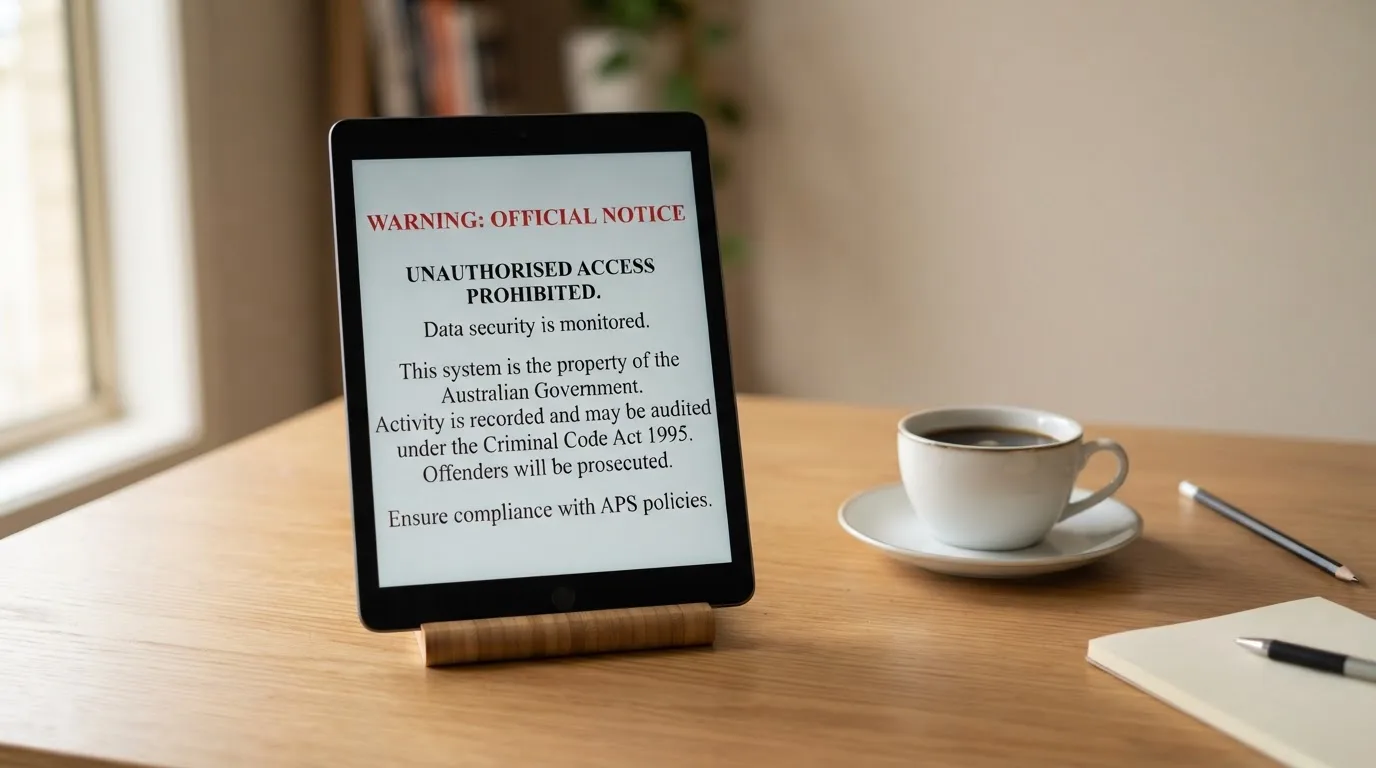
The ACMA investigates, issues formal warnings and directs internet service providers to block illegal sites. According to the ACMA as reported in June 2026, a total of 1,751 illegal gambling and affiliate marketing websites had been blocked since the first blocking request in November 2019, and more than 230 unlicensed gambling services had left the Australian market since enforcement was strengthened in 2017. In a round reported on 26 June 2026, the ACMA asked Australian ISPs to block twelve more illegal gambling websites: 7Signs, ChromaBet, Donbet, Duospin, Freshbet, Slots Gem, Jacks Club, Lucky Start, Pointsbetz.com, Spinrise, Vinyl Casino and Wildsino. H2 Gambling Capital’s 2025 report estimates that Australians lose about A$3.9 billion a year to illegal gambling sites, and that the share of gambling going through legal channels fell from 74% in 2021 to 64%.
The arithmetic the page works through from these figures: the first ACMA blocking request was issued in November 2019, and the cumulative total of 1,751 blocked sites and affiliate pages was reported in June 2026 — a span of roughly six and a half years. Over that period the ACMA’s blocking rate runs somewhere in the band of a few hundred sites per year, with the rate varying sharply between quiet months and enforcement rounds like the twelve-site block of June 2026. The useful reading is not a single average figure; it is the rate band, and the condition behind it — that the ACMA’s blocking is cumulative and event-driven, with quiet stretches punctuated by batches when the agency has the legal groundwork ready.
The individual player is not prosecuted; the IGA targets the provider. An offshore site gives no Australian consumer protection, no complaints body and no recourse if a withdrawal is refused, and it can be blocked with a balance still on it. The eleven brands above are the ACMA’s own record of that pattern.
What the player cannot do at an offshore site that they can do on a licensed floor
A licensed Australian casino offers a regulator-approved game with rules on file, a complaints body in the state regulator, a self-exclusion mechanism through BetStop, and a payment system that does not require bypassing Australian law. An offshore site offers none of these. The price of access — a Curaçao licence, a credit card deposit, a crypto wallet — is the same price that removes every Australian protection that would otherwise apply. A player who has a complaint against Crown Melbourne can take it to the VGCCC; a player who has a complaint against any brand on the table above has no equivalent Australian body to call.
Payments and the Australian rules
Credit cards, credit-related products and digital currency are banned as payment for licensed online wagering since 11 June 2024, with penalties up to A$247,500 for operators. The legal deposit routes for licensed wagering are debit card, bank transfer, PayID, Osko and BPAY. A site asking an Australian for a credit card or a crypto deposit is operating outside the Australian rules — which is most of the offshore table. The point is not that a debit card is safer than Bitcoin in the abstract; it is that a debit card deposit into a Bet365 account sits inside the Australian regime and a Bitcoin deposit into an offshore casino sits outside it. The payment method is the marker.
What changed in 2026 on the advertising side
The Interactive Gambling Amendment (Gambling Reform) Bill 2026 passed Parliament on 19 August 2026. Its advertising and inducement measures commence on 1 January 2027 — law with a start date, not yet in force on a 2026 page. The direction is toward tightening the rules around how offshore operators reach Australian customers through affiliate marketing and inducements, which is the channel through which most of the eleven brands on this page were advertised. The change matters for the next phase of enforcement, not for what is on this page.
Tax, briefly
Gambling winnings of a recreational player are not assessable income under section 6-5 ITAA 1997, and losses are not deductible, unless the person carries on a business of gambling — which is a model and a test the ATO applies case by case. A punter who plays table games on the side is, in tax terms, playing for entertainment; the ATO’s interest is in people whose gambling is a business. The model answer is to check with the ATO or a registered tax agent for any case that looks closer to the line.
What an Australian punter actually does with all of this
A punter who wants to play real-money table games has three honest paths. The first is a licensed Australian casino floor, with the regulator’s approved rules and a self-exclusion mechanism that actually works. The second is a licensed pub or club in NSW or the ACT running approved table games under tighter limits. The third is to not play, which is also a real answer and one BetStop and the National Gambling Helpline on 1800 858 858 are set up to support.
A punter who ends up at an offshore site despite all of the above has chosen a path that the law, the ACMA, the ISPs and the licensed venues are all aligned against. The site may take the deposit and pay out the wins; it may also disappear behind a blocking order with the balance inside it. The eleven brands on this page are the ACMA’s record of how often that has been tried and what it has produced. The comparison is between a regulated product with a printed edge and an unregulated product with no Australian recourse, and the maths is the same either way: the house edge is the slow leak, and the leak is faster on a site the ACMA has named.
Frequently asked questions
How does the house edge on blackjack compare with roulette or craps at a typical casino?
Blackjack under liberal Las Vegas Strip rules with basic strategy carries a house edge of about 0.28%, and around 0.43% under Atlantic City rules. Single-zero roulette is 2.70%, double-zero roulette is 5.26%, the craps Pass line is 1.41%, and the baccarat Banker bet is 1.06%. Blackjack is the lowest of the four by a clear margin, but every figure here is a long-run average — short sessions can swing in either direction.
Are live-dealer table games treated any differently under Australian law compared with RNG-based ones?
No. The Interactive Gambling Act 2001 prohibits the supply of online casino games to a person in Australia, and the prohibition does not distinguish between a live-dealer stream and a random-number-generator game. Both are online casino games; both are covered by the same offence. The live format changes the pace and the social context, not the legal status.
What’s the difference between American and European roulette in terms of odds for the player?
European (single-zero) roulette carries a house edge of 2.70%. American (double-zero) roulette adds a second zero and carries 5.26%. The layout, the payouts and the available bets are otherwise the same, and the extra zero is the only structural change. French roulette with la partage or en prison rules drops the effective edge on even-money bets to about 1.35%.
Do crypto casino table games use the same rules as a standard online table game, just with a different currency?
The game rules are typically the same — the blackjack shoe, the roulette wheel, the baccarat drawing table are unchanged. What changes is the payment rail at the cashier: a Bitcoin or USDT deposit clears in minutes where a bank transfer from Australia can take a working day. The legal status of the casino accepting the deposit does not change with the payment method. An offshore casino taking crypto is still an offshore casino under Australian law.
Where can someone actually play real-money table games legally near them in Australia?
Every Australian capital city has at least one licensed casino — Crown Melbourne, The Star Sydney, Crown Perth (now operating under Western Australian oversight), Treasury Brisbane, Adelaide Casino, the Country Club Tasmania, Lasseters in Alice Springs, the Mindil Beach Casino Resort in Darwin, and SkyCity Adelaide under its new licence. NSW and the ACT also license a limited number of pub and club table games, with tighter stakes and a narrower game catalogue. The state regulator’s venue list is the authoritative starting point, and every rule on the floor has a regulator’s signature on it.
What should a beginner know about baccarat’s banker bet before sitting down at a table?
The Banker bet carries a house edge of 1.06% in an eight-deck-shoe Punto Banco game, the Player bet 1.24%, and the Tie bet 14.36% at an eight-to-one payout. The casino takes a 5% commission on Banker wins, which is already factored into the 1.06% figure. The beginner’s only decision is which of the three bets to place, and the math points to the Banker bet every time. The Tie bet looks generous because of the eight-to-one payout, and it is the bet the math most strongly recommends against.