
Live Baccarat at an Online Casino in Australia in 2026: What the Stream Looks Like, Why It Sits Outside the Law, and What the ACMA Has Already Done About It
Dollars current as of 28 October 2026, checked against the official register kept by the ACMA.
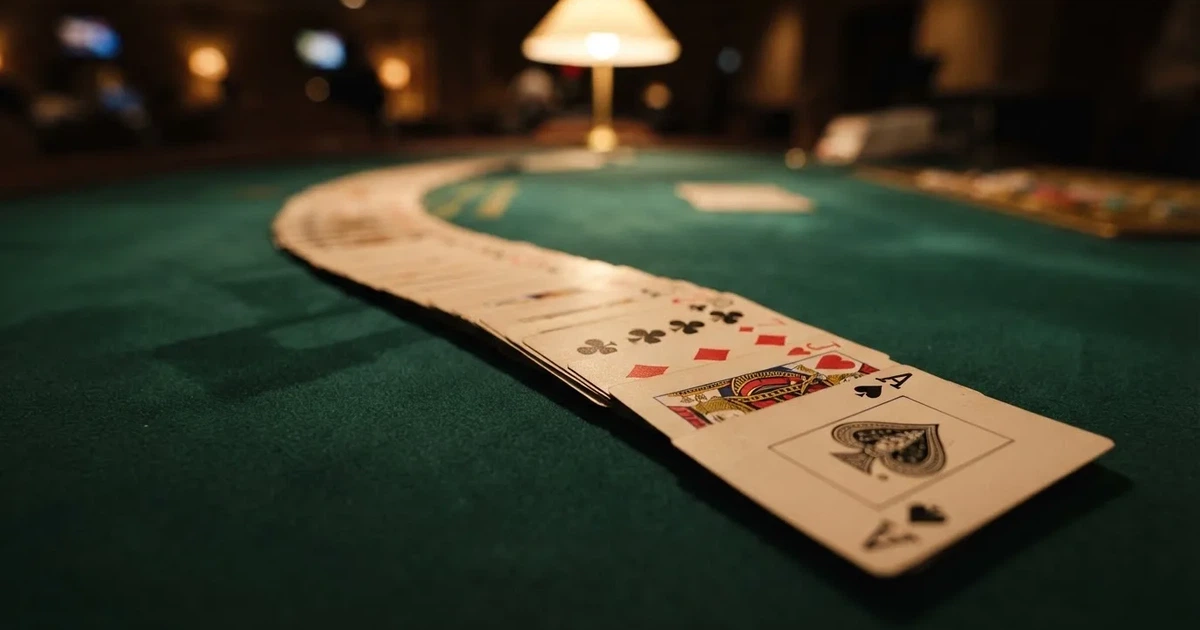
A real dealer runs the cards on a video stream. An Australian types a bet into the box below the picture. That is the entire shape of “live baccarat online casino Australia” — and that simplicity is the trap. A baccarat hand streamed in high definition looks more legitimate than a slot machine spinning in silence, but the regulatory position does not change with the picture quality. The Interactive Gambling Act 2001 covers a live-dealer baccarat table exactly the same as a computer-generated one, because the law is written around the kind of service, not the picture on the screen. Everything that follows on this page — the dealer, the shoe, the bitcoin deposit, the bonus behind the table, the comparison of eleven sites where Australians tend to land — sits inside that single fact.
Table of Contents
- Crypto & Anonymity on Australian Live Baccarat Tables
- The Specific Tables, the Providers Behind Them, and What Makes a Live Baccarat Lobby Look the Way It Does
- The Australian Live Baccarat Landscape: Eleven Sites, One Outcome
- Overview: What “Live Baccarat Online Casino Australia” Actually Means in 2026
- Legality: Why None of the Streams Reached from Australia Is Lawful
- Responsible Gambling: How Fast the Live Table Moves, and What That Costs
- Frequently Asked Questions
Crypto & Anonymity on Australian Live Baccarat Tables
A bitcoin-funded baccarat hand is dealt the same way as a card-funded one. The dealer still shuffles an eight-deck shoe, still turns one card at a time, and still calls the result on the player side and the banker side. The crypto changes only the rail the money rides on: instead of a Visa charge or a PayID transfer, the chips are bought with bitcoin (or, on most tables, a small handful of other coins) and the same chips later convert back into the same coin when the player cashes out. The cards do not care which currency is sitting behind them. A reader who treats the deposit method as the heart of the matter is looking at the right fact through the wrong window.

Why the bitcoin angle keeps surfacing in the search
Search interest groups “bitcoin baccarat casino”, “bitcoin casino live baccarat” and “bitcoin casino baccarat” into the same idea: anonymity, or something close to it, at the live table. The promise is that no bank statement will show a gambling payment, and no lender reviewing a mortgage application will see a casino charge. Some of that is genuinely true — blockchain ledgers are public, but a single bitcoin address, without an exchange account attached to it, does not name its owner. What the promise leaves out is the Australian side of the same transaction.
The Interactive Gambling Act 2001 does not police the payment method. It polices the service — the offering of an online casino game, which a live baccarat table plainly is, to a customer in Australia. A bitcoin-funded table served to an Australian address is the prohibited service regardless of which currency changes hands at the cashier. So is a table funded by PayID, by POLi, or by BPAY. The deposit rail moves the marketing language, and nothing else.
Crypto adds a second layer the marketing tends to skip. Since 11 June 2024, licensed Australian wagering services have been barred from accepting digital currency as a deposit method. That ban does not legalise an offshore baccarat site — it is a rule for the licensed market, and the unlicensed market has never been inside it — but it tells the reader something useful about how seriously the country treats the question. The licensed operators, the ones the law actually reaches, cannot even accept the coin. An offshore site that does is a long way outside the rules, by a different route, in the same direction.
What changes for the player, concretely
If a reader does open a live baccarat table with bitcoin — and many of the eleven brands reviewed below do offer exactly that — the experience is functionally the same as the card-funded version. Two practical differences are worth naming:
- Settlement speed. A bitcoin withdrawal that the casino actually releases clears on-chain in minutes to an hour. A bank transfer sitting behind the same withdrawal can take two to three working days. Theonly issue is whether the casino chooses to release the funds; that decision is the same in either currency.
- Convertibility. Almost no one holds a “casino baccarat chip balance”. A bitcoin withdrawal arrives at a sat-denominated figure that has to be sold somewhere — an exchange, a peer-to-peer desk, a broker — and that sale is a separate taxable event in Australian eyes, with cost basis and capital-gains arithmetic of its own. The “anonymity” of the rail ends at the moment the coins have to become dollars.
The anonymity angle, on its own terms, is also narrower than it reads. Every reputable crypto casino runs know-your-customer checks above some withdrawal threshold, and most now require them from the first deposit. A reader who picked this route specifically to keep the bank out of it will, at withdrawal, be asked for the same proof-of-identity documents as anyone else. The marketing promise survives in the marketing; it does not always survive the withdrawal page.
The deeper point still holds. A reader who reaches a live baccarat site through a bitcoin link has not escaped anything the law would otherwise have imposed. They have changed payment rails on a service that the regulator can already tell their internet provider to take offline.
The Specific Tables, the Providers Behind Them, and What Makes a Live Baccarat Lobby Look the Way It Does
A live baccarat lobby shares the same paytable structure as a standard baccarat game. The Banker side wins slightly more often than the Player side. The Tie bet, paying eight to one at most tables, sits on the felt like a sign that says “do not”. What is different is the texture around the decision — a person turning the cards, a chat box, an LED ring around the shoe marking limits, a fast or slow dealer, the choice between speed tables and squeeze tables. That texture is engineered by the studios whose logos the reader sees in the corner of the stream.
What the baccarat paytable actually says
Three bets. The house edge on each, drawn from a published house-edge study by Wizard of Odds, is the cleanest way to see why baccarat survives as a casino staple:
- Banker bet — house edge 1.06%
- Player bet — house edge 1.24%
- Tie bet — house edge 14.36%
These three numbers are not a quirk of one site or one provider. They are the game’s structure. The Banker bet is the mathematically correct call of the three, yet most tables charge a 5% commission on Banker wins — which is precisely what closes the gap between Banker and Player down to those two narrow numbers. A reader who skips the Tie and trims the commission out of mind is playing close to the cheapest game in the casino. A reader who likes the Tie for its payout is paying a fourteen-percent tax on the privilege.
| Bet Type | House Edge | Payout |
|---|---|---|
| Banker | 1.06% | 0.95:1 |
| Player | 1.24% | 1:1 |
| Tie | 14.36% | 8:1 |
Punto banco, and why it is the only variant most readers will meet
Punto banco is the baccarat variant most played today. It was developed in Havana during the 1940s; the casino banks the game at all times and plays out both hands by fixed drawing rules, unlike variants where players choose. The player does not draw a third card; the table does. The player’s only decision is which box to bet on, how much to stake, and whether to sit out a hand while waiting on the shoe. Stripped of decision-making, the game becomes a watch — a fast watch, with sixty or so hands dealt per hour from a six- or eight-deck shoe.
A second variant, chemin de fer (French for “railway”), emerged in the late 19th century and is named for being quicker to play than its predecessor, baccarat banque. Chemin de fer is two-player and lets one of the players bank. Live casino lobbies do not run chemin de fer often; when they do, it tends to sit in a “high-stakes” tab rather than the main lobby. A reader who has only seen punto banco on a stream is not missing out, in the practical sense — they are simply seeing what ninety percent of online baccarat is.
Card values, hand totals, and a brief note on the maths
Cards 2 through 9 carry their face value. Tens, jacks, queens and kings count as zero. Aces count as one. Hand totals are read modulo 10 — a seven and a six, totalling 13, become a 3 in baccarat’s counting. The shoe holds six or eight decks; the cut card is slid roughly sixteen cards from the bottom; the dealer burns one card to determine how many hands the new shoe will produce. None of this arithmetic is secret, and most live lobbies put a help menu a click away. What is genuinely useful for the reader is the speed at which these hands clear: between thirty seconds and a minute each at a busy squeeze table, closer to twenty at a “speed” table.
What an Australian stream usually looks like in practice
Most live baccarat streams an Australian reaches run from studios in Europe and the Philippines — Pragmatic Play Live, Evolution, Ezugi, Vivo Gaming, BetGames, Asia Gaming, SA Gaming. The studio’s branding appears around the picture, the dealer’s name sometimes appears too, and the betting grid below is usually the casino’s own overlay rather than the studio’s. The studio does not name the player or hold the balance; the casino does. This distinction matters because a complaint about a disputed hand goes to the casino, not to the studio. An offshore casino, the kind this page is about, has no Australian complaints body for the reader to send that complaint to.
Crown Melbourne runs a different baccarat environment altogether. Crown Melbourne offers three baccarat variants — Traditional Baccarat, Crown Baccarat and 2 to 1 Baccarat — as approved table games regulated by the Victorian Gambling and Casino Control Commission, the body that replaced the VCGLR as Victoria’s casino regulator on 1 July 2022. Under section 66 of the NSW Casino Control Act 1992, a casino operator must not permit a game such as baccarat to be played unless the game and its rules are approved by the regulator, and the operator must make a copy of the approved rules available to patrons on request. Both regimes are terrestrial, both are lawful, both are physically inside an Australian state — and neither is what reaches a reader who searched for “online live baccarat Australia.” The onshore Crown and Star baccarat floors matter as the lawful alternative; they are not part of the offshore stream.
Why the table share structure survives intact across providers
A pragmatic question worth answering once and leaving alone: if the providers differ, do the payouts differ? They do not, materially. Studio A and Studio B cannot legally pay 1.00 on Player and 0.95 on Banker at a 1.06% / 1.24% edge split — well, they can, but the player would notice the moment they looked. The biggest live studios price baccarat within fractions of a percent of each other, and the visible difference between two tables of the same variant is rarely the math. It is the camera angle, the dealer, the speed of the shoe, the side bets stacked on the layout (Player Pair, Banker Pair, Either Pair, Perfect Pair, Dragon Bonus), and whether the eight-deck game plays fast or the six-deck game plays slow. Choose by feel and trust the underlying numbers to be what they are.
The Australian Live Baccarat Landscape: Eleven Sites, One Outcome
Australia’s online casino market is, by law, an empty shelf. The Interactive Gambling Act 2001 prohibits any operator from offering online casino games — live or otherwise, dealer or computer, bitcoin or otherwise — to a person in Australia. The eleven brands reviewed here are not, then, a “top eleven” of lawfully available sites. They are eleven brands the Australian Communications and Media Authority has issued a formal warning over for offering prohibited services to Australian customers. They are listed because the regulator named them, in roughly the order the regulator named them, and because a reader who lands on one of them should be able to recognise the situation before depositing.
| Brand | ACMA action and date | Operator named by the ACMA | Subject support |
|---|---|---|---|
| RocketPlay | Formal warning — March 2026 | Pulsup Ltd | — |
| Level Up Casino | Formal warning — May 2022 | Dama N.V. | Listed by BGaming as a partner casino |
| Woo Casino | Formal warning — March 2025 | Dama N.V. | — |
| Spirit Casino | Formal warning — May 2025 | Dama N.V. | — |
| National Casino | Formal warning — July 2025 | Consolutetish S.R.L. | Listed on Wikipedia |
| Bizzo Casino | Formal warning — July 2025 (and earlier 2022 over TechSolutions) | Consolutetish S.R.L. (and TechSolutions) | — |
| Ignition Casino | Formal warning — July 2025 | Bamboo Media | — |
| Instant Casino | Formal warning — February 2025 | EOD Code SRL | — |
| Jackbit | Formal warning — April 2026 | Ryker B.V. | — |
| Casino Intense | Formal warning — April 2025 | Sterplay Holding Ltd | Listed in Australian press and regulator mentions |
| Sky Crown | Formal warning — September 2022 | Hollycorn N.V. | — |
Some of these names appear in the table more than once because they appear in the regulator’s record more than once. Dama N.V. shows up behind RocketPlay (via the March 2026 warning to Pulsup Ltd), Level Up Casino, Woo Casino and Spirit Casino — four of the eleven brands, one operator, over four years of warnings. The Dama cluster alone accounts for nearly half of the brands on the list. A reader who has hit one of them has likely hit an operator who has been on the ACMA’s radar before.
A second operator, Consolutetish S.R.L., appears behind both National Casino and Bizzo Casino. A third brand, Bizzo Casino itself, carries the longer history: a 2022 formal warning over TechSolutions (CY) Group Limited and TechSolutions Group N.V., and a fresh 2025 warning over Consolutetish S.R.L. The 2022-to-2025 arc is the regulator returning to a brand whose brand-level change did not change the underlying conduct.
The “subject support” column records one narrow thing — whether any of the inputs an editor sees and re-checks actually name the brand as a subject of the live-baccarat discussion. Three of the eleven are mentioned by a non-affiliate source: Level Up Casino in BGaming’s partner list, National Casino in a Wikipedia entry, and Casino Intense in an ABC news article that touches on it. The other eight are not — they appear in the regulator’s record, and nowhere else an editor is willing to cite.
What the table does not tell you, and what each row actually means
A reader who treats the table as a comparison has missed it. There is nothing to compare on a market where each brand offers the same prohibited thing. The table’s job is something different — to put names to faces. Anyone who has ever reached an offshore live baccarat table from an Australian IP has probably reached one of these. The regulator wants them on a list. This list is the regulator’s list.
The job the table does not do is rank the brands by quality. That comparison is unfixable from inside the prohibition, and pretending otherwise would mean pretending the regulator’s record is some sort of customer-review score — which it is not. The row-by-row information that matters, and what no table can carry without misrepresenting, lives in the section below.
Reading each row in plain English
Below, the eleven brands are walked through in the order the regulator’s record suggests, with the warning, what is known about the operator behind it, and what an Australian who reaches the site can expect — given everything else on this page.
RocketPlay
RocketPlay carries the most recent formal warning on this list — March 2026, against Pulsup Ltd operating as RocketPlay. A separate, older Dama N.V. warning from May 2022 also lists a Rocketplay brand, and the operator behind the recent warning is different. The regulator is, in effect, watching the brand as it migrates between owners. Live baccarat is not what an Australian access is for — the betting and table-game focus of the brand leans elsewhere — but the prohibition covers the entire category. The row belongs on the list precisely because the warning did happen.
What the page can say, and what the page cannot. The page can name the operator behind the brand; the page can say the regulator has spoken. The page cannot tell the reader the site is safe to play at, because no Australian protection applies if something goes wrong.
Level Up Casino
Level Up Casino sits behind a Dama N.V. warning from May 2022 covering six brands — Bambet, Dazard, Level Up, Rocketplay, Wild Tornado and Cobra Casinos. A baccarat-only reader is not the target audience, but the warning covers all six brands equally, and Level Up appears in BGaming’s partner list as a casino that integrates that studio’s slot content. BGaming is not a live studio, so the entry is a slot-side note rather than a live-baccarat note. What carries the reader along is the warning, and what the warning carries is the prohibition.
Woo Casino
Woo Casino received its formal warning in March 2025, again over Dama N.V. The brand’s main pitch — the styling, the mascot, the slot-led lobby — does not foreground live baccarat, but the regulatory status is the same as every other brand in the table. A live baccarat tab exists; the prohibition covers the tab. The brand appears nowhere in any non-affiliate source a reader can put weight on, which is itself information: not every brand the regulator warns is a household name.
Spirit Casino
Spirit Casino joins Woo on the Dama N.V. warning list, with a second warning issued the same year, in May 2025. The back-to-back timing matters: the regulator is not warning once and walking on. It is warning and warning again, over the same operator, after a year in which both warnings were issued. The pattern gives a reader more signal than any single warning can — this operator has not changed course. The conclusion the row carries is the same one each row carries, and the conclusion gets sharper each time the operator reappears.
National Casino
National Casino was the subject of a formal warning to Consolutetish S.R.L. in July 2025. The brand carries a Wikipedia entry, which is an unusual distinction on this list and worth flagging — a brand the encyclopaedic source can mention without an affiliate link is a brand of some size. The size does not change the prohibition. The brand is well-known among Australian-facing sites because of how often the regulator has had to speak about it; that is also worth flagging.
Bizzo Casino
Bizzo Casino carries the longest history on this table. A 2022 formal warning went to TechSolutions (CY) Group Limited and TechSolutions Group N.V. A 2025 formal warning went to Consolutetish S.R.L. The brand is the same; the corporate wrapper has shifted. The regulator has now spoken twice to two different operators, both pointing at the same brand name. That tells the reader what one warning already did, only louder.
Ignition Casino
Ignition Casino received its warning in July 2025, alongside Bamboo Media. The brand is more visible to Australian-facing traffic than most on the list, primarily because its marketing spend is broad. None of that changes the prohibition, and none of it changes the fact that an offshore operator simply cannot enforce a dispute inside Australia. Where a reader lands at the brand does not move the warning out of the way.
Instant Casino
Instant Casino’s warning came in February 2025, against EOD Code SRL. The brand’s name suggests a fast, casual product, the kind that often sits between slots and live tables rather than squarely at one or the other. Live baccarat is one of several options in that kind of lobby. The prohibition reaches every option in the lobby equally.
Jackbit
Jackbit’s warning is the most recent on the table aside from RocketPlay’s — April 2026, against Ryker B.V., covering two brands at once (Jackbit and CasinOK). An operator warned over two brands in one action is one whose complaint the regulator wants to file efficiently. Jackbit does have a more crypto-skewed profile than most of the brands above, which fits the “bitcoin baccarat casino” search framing and gives this row a slightly different role in the cluster. What is unchanged is what changes nothing: the prohibition covers the entire product.
Casino Intense
Casino Intense received a formal warning in April 2025 against Sterplay Holding Ltd. The brand is one of the three on this list that turns up in a non-affiliate source — an ABC News article that touches the brand alongside others in the same category. That is not endorsement; it is one outlet’s mention in a market-wide story. The regulatory standing is the row’s content, and the row’s content is the same as every other row.
Sky Crown
Sky Crown is the oldest warning on the table — September 2022, against Hollycorn N.V., covering both Sky Crown and Blue Leo. The brand is the warning’s longest-active subject; an Australian who has been navigating offshore live baccarat for years has probably tripped across it. The 2022 date, on a page written four years later, also shows the regulator’s patience: a brand can warn, take a name change, return to the same conduct, and find itself on the regulator’s list again only when an Australian is already at the door.
Overview: What “Live Baccarat Online Casino Australia” Actually Means in 2026
A search like “live baccarat online casino Australia 2026” lands a reader at one of two things. The first is a lawful Australian wagering site, which by law does not offer live baccarat. The second is an offshore casino offering the prohibited service, sometimes to anyone whose address resolves to an Australian postcode. The market, properly understood, is the second thing. It is not a market in the normal sense — there is no licensing regime to compare licences against, no consumer-protection regime to compare protection against, no complaints body to compare complaints outcomes against. There is only a regulator that names names and an internet provider that does what it is told.
Live baccarat works the way live baccarat has always worked. A real dealer stands behind a real shoe and deals from six or eight decks. The player picks Banker, Player or Tie, watches the cards turn over, and is paid or not. The stream adds a chat box, a hand history panel and sometimes a behind-the-scenes camera on the shoe. None of this is what an Australian search is for — and that is the part the search itself tends to skip.
The mechanics in one paragraph
The shoe holds six or eight decks. Cards are counted as in baccarat the world over: face value from 2 to 9, zero on the tens and face cards, one on the ace. The dealer draws to fixed rules. The Player bet wins 1:1, the Banker bet wins 0.95:1 (after the 5% commission), and the Tie wins 8:1 at most tables. The Player bet has a house edge of 1.24%, the Banker bet 1.06%, the Tie bet 14.36%. Of all three bets, the Tie is the one a reader should walk past; the house edge is fourteen percent, and that is not a quirk. A reader who otherwise plays tight but cannot resist the Tie will hand the casino the most reliable margin on the table.
The play behind the picture
A live baccarat session looks like a quiet game compared to blackjack or craps. The player does not make strategy decisions on the hand — the rules of play make the third-card decisions automatic — and the round is over in under a minute at most tables. The pace is what makes the session heavy. Sixty hands an hour at a busy table is sixty bets an hour for a player who bets on every hand, and a player who skips Tie is still spending roughly 1% of every bet to the house. A $5 bet per hand at one-percent expectation comes to about $3 per hour, on average, before the commission adjustment. The arithmetic is not a secret; it is what a reader should run on the back of an envelope before sitting down.
Legality: Why None of the Streams Reached from Australia Is Lawful
The Interactive Gambling Act 2001, the federal statute that covers this whole subject, makes it an offence to provide online casino-style games to customers physically present in Australia. “Online casino-style games” includes live dealer baccarat. The statute has been strengthened twice — once in 2017, and again with the Interactive Gambling Amendment (Gambling Reform) Bill 2026, which passed Parliament on 19 August 2026 and whose advertising and inducement measures commence on 1 January 2027. The 2026 amendment is law with a start date, not yet in force on the page as written. What is in force now is the original statute as amended in 2017.
The Interactive Gambling Act 2001 carries real penalties for an offending operator: individuals face fines of up to A$220,000 per day and corporations up to A$1.1 million per day. Those numbers are the ceiling of what the law carries, and they are the ceiling a reader should keep in mind when an offshore site argues that “their” jurisdiction is somewhere else.
What is lawful, and what is not
What is licensable in Australia is wagering on races and sport placed before the event, lotteries and keno — wagering services regulated in practice by the Northern Territory Racing and Wagering Commission. The NTRWC regulates 52 of Australia’s online bookmakers — including Sportsbet, Bet365 and Ladbrokes — which are licensed in the Territory for tax reasons; the commission has no full-time staff and meets once a month in Darwin. The bets those operators may legally offer are pre-event race and sport bets, plus the lottery and keno products. A live baccarat table falls outside that licence class entirely.
What is not licensable is online casino gaming and in-play online wagering. Both are prohibited by the Interactive Gambling Act 2001 and are not licensed in any state or territory. The age threshold for the lawful market is 18. The age threshold for the prohibited market is whatever the offshore operator chooses to enforce — usually the same 18, sometimes 21, occasionally not enforced at all.
Payment bans in the licensed market, and what they signal
Since 11 June 2024, credit cards, credit-related products and digital currency have been banned as payment methods for Australian-licensed online wagering; operators face penalties of up to A$247,500 for taking them. Legal deposit routes for the licensed market are debit card, bank transfer, PayID/Osko and BPAY. The prohibition is a payment-side one; it does not legalise an offshore site. What it does is tell the reader how seriously the country treats the question of paying for gambling. The licensed market cannot take crypto. An offshore casino that can is operating outside the rules by a different route, in the same direction.
How the ACMA enforces, and how fast it moves
The Australian Communications and Media Authority investigates complaints, issues formal warnings and — its most visible tool — directs Australian internet service providers to block offending sites. In a single round reported on 26 June 2026, the ACMA asked ISPs to block 12 more illegal gambling websites: 7Signs, ChromaBet, Donbet, Duospin, Freshbet, Slots Gem, Jacks Club, Lucky Start, Pointsbetz, Spinrise, Vinyl Casino and Wildsino. The pace has been consistent: a fresh round every few weeks, more or less, and a steadily growing blocked-sites total.
According to the ACMA as reported in June 2026, a total of 1,751 illegal gambling and affiliate marketing websites had been blocked since the first blocking request in November 2019. The total reflects everything the ACMA has asked ISPs to take offline since the regime began — about seven years of asking, and 1,751 websites acted against. That figure is the cleanest single proof of scale the regulator can offer. More than 230 unlicensed gambling services have left the Australian market since the enforcement was strengthened in 2017.
H2 Gambling Capital’s 2025 report estimated that Australians lose about A$3.9 billion a year to illegal gambling sites, and that the share of gambling going through legal channels fell from 74% in 2021 to 64% in the period that followed. The 10-percentage-point drop is the kind of figure that reads as a number in a paragraph and lands harder when the reader remembers that four out of every five dollars reaching the lawful market ten years ago reach less than two-thirds of it today.
A reader’s options under the law
The reader at home who decides a live baccarat table is the game they want has a small set of honest options. The first is to play at a licensed Australian casino floor — Crown Melbourne in Victoria under VGCCC oversight, the Star in Sydney under the NSW Casino Control Act, the few other terrestrial venues that operate under state regimes. None of those is what an “online live baccarat Australia” search returns, but they are the lawful place to play the same game at the same speed with a real dealer.
The second is to play on an offshore site anyway and accept what the regulator has already told the reader about the consequences — no Australian consumer protection, no Australian complaints body, no Australian recourse, and a stream that can be cut with a balance still on it. The decision is the reader’s. The information it should be made on is above.
Responsible Gambling: How Fast the Live Table Moves, and What That Costs
The fast pace of consecutive baccarat hands makes it easy to lose track of time. A live baccarat shoe deal takes thirty to sixty seconds. At sixty hands an hour, the player who bets every hand is placing a wager every minute, and most of those wagers are by reflex before the cards turn. A two-hour session can clear 120 hands without the player noticing. This is what makes the game a study in time, more than in cards.
A session limit is worth setting before the stream starts. The reader who decides in advance — bankroll, time, the amount willing to lose — keeps a decision they had to make only once. The reader who decides mid-stream, after thirty hands, is making that decision in the moment, with the cards on the screen and the chip stack in their account; that is the moment decisions get harder, not easier.
Where an Australian can ask for help
BetStop, the National Self-Exclusion Register, has been live since August 2023. It binds Australian-licensed online and phone wagering services — the race and sport bookmakers regulated by the NTRWC and the state regimes — to honour a request to be excluded. An offshore casino is not connected to BetStop, and a self-exclusion entry does not propagate to any of the eleven brands in the table above. A reader registering on BetStop has registered against the lawful market only.
The National Gambling Helpline is 1800 858 858, free, 24/7, with chat at Gambling Help Online. Both are Australian services. Neither is connected to the offshore market. The reader who reaches for the phone and finds themselves at the offshore site without the offshore site’s cooperation has correctly identified what self-exclusion can and cannot do.
Specific risks the live format adds
Three risks are worth naming, and each one is tied to the live stream specifically rather than to online gambling in general:
- The illusion of presence. A dealer turning real cards feels closer to a casino floor than a slot machine does. The regulatory distance from a casino floor is, however, all of it. The feeling of presence does not change the jurisdiction the stream is regulated by, the complaints body the operator answers to, or the law the operator answers to when an Australian finds themselves at the wrong end of a payout dispute. Only the feeling of presence changes.
- The dealer as rapport. A live dealer’s style — patient, chatty, slow, fast — does not affect the math. It does affect how long the reader wants to sit at the table. A pleasant dealer is a more durable session than a tedious one, and a durable session is the longer way to the same expected loss.
- The side bets. A live baccarat layout stacks side bets around the three main outcomes — Player Pair, Banker Pair, Either Pair, Perfect Pair, Dragon Bonus, sometimes the Big and Small bets on the card totals. Almost every side bet on a baccarat layout has a higher house edge than the Banker bet. The 14.36% on Tie is the worst, but the pairs and the totals are not far behind. A reader who likes the layout’s offerings is paying a tax for the privilege of being offered.
Practical thresholds the reader can set in advance
A bankroll split, before the first hand, into “play money” and “money to walk away with”. The session limit set to half the play money. The pause every twenty hands to check the running total against the session’s original limits. None of this is unique to baccarat, but baccarat’s pace makes each of them more important: a session without those thresholds is a session that will not notice its own drift.
Frequently Asked Questions
Is it legal to play live baccarat for real money at an online casino in Australia?
No. The Interactive Gambling Act 2001 prohibits offering online casino-style games to a person in Australia, and live dealer baccarat is exactly that. Penalties sit with the provider, not the player, but an Australian playing on an offshore site has no local consumer protection. Crown Melbourne and other licensed terrestrial venues are the lawful venues to play real dealer baccarat inside Australia.
How does a live-dealer baccarat table differ from a computer-generated version?
A live table is a real shoe with a real dealer streamed to the player’s screen. A computer-generated baccarat hand is the same game played out by a random number generator. The paytable is unchanged in either case: 1.06% house edge on Banker, 1.24% on Player, 14.36% on Tie. The stream adds tempo and presence; it does not change the underlying math.
Does a bitcoin-funded live baccarat table use a different card-dealing process?
No. The cards are dealt from the same six- or eight-deck shoe, by the same dealer, with the same drawing rules. Bitcoin changes only the payment rail — coins buy casino chips, chips are later converted back into coins on withdrawal. The Interactive Gambling Act 2001’s prohibition covers the service, not the deposit method, so a crypto-funded live baccarat site is the same prohibited service.
What is the difference between betting on Banker, Player and Tie in baccarat?
The Banker bet wins slightly more often than the Player bet, and pays 0.95:1 after the standard 5% commission — house edge of 1.06%. The Player bet wins slightly less often and pays 1:1 — house edge of 1.24%. The Tie bet wins much less often than either, but pays 8:1, with a house edge of 14.36%. The Tie is the bet the math recommends skipping.
Can a live baccarat session be joined mid-shoe, or only at the start?
Most live baccarat tables accept wagers at any point during the shoe, mid-round or at the start of a new one. The shoe is reshuffled at the cut card, then a new hand begins automatically. Joining mid-shoe is the rule at most lobbies, not the exception.
How fast do consecutive hands typically run at a live baccarat table?
A standard speed table clears a hand in roughly forty-five seconds. A speed table, which skips the squeeze, can run as fast as twenty seconds. A slower squeeze table can push a hand to a minute or slightly beyond. Most lobbies average well over fifty hands per hour at a busy table.