Best Keno Online Casino Australia 2026: What the Search Actually Means
 Available in US
Someone typing “best keno online casino australia” into a search bar is looking for a shortlist — an answer that names places, ranks them, and points them somewhere to play. The answer this market gives back is not that kind of list. The Interactive Gambling Act 2001 makes it an offence to offer online casino games to a person physically in Australia, and keno as played in a digital casino is one of those games. No Australian state or territory licenses it. The ACMA’s enforcement record, running into the thousands of blocked sites, is the practical shape of that prohibition. So the honest answer to the question is the one this page delivers: the legal landscape, the offshore names the regulator has acted against, and the licensed Australian alternatives that actually exist — pubs and clubs running keno under state regimes, and the self-exclusion tools that cover the legal side of the market.
Data current as of 23 September 2026 and checked against the Australian Communications and Media Authority’s published formal-warning register.
Table of Contents
- Crypto and Anonymous Play — Bitcoin Keno and the Offshore End of the Market
- Inside the Game — Mechanics, House Edge, and the Catalogue of Online Keno
- House Edge Comparison
- Operators the ACMA Has Formally Warned — the Landscape
- The Legal Frame — What the Interactive Gambling Act 2001 Actually Says
- Payment Rails — Where the Legal and Offshore Markets Stop Touching
- Responsible Gambling — What BetStop Covers and What It Does Not
- Lawful Keno in Australia — How the Licensed Market Actually Works
- A Working Calculation — The Blocking Rate Since the First Request in November 2019
- What the Page Recommends, Practically
- Frequently Asked Questions
Crypto and Anonymous Play — Bitcoin Keno and the Offshore End of the Market
The shortest distance between the search term and a working deposit runs through cryptocurrency. Bitcoin keno, crypto casino keno, and bitcoin casino with keno are not niche phrasings — they describe where most of the offshore market actually meets Australian players. A player with Bitcoin in a wallet and a willingness to send it offshore can reach dozens of keno rooms in a few minutes, because the offshore sites that Australia cannot license are also the sites most aggressively set up for crypto deposits.

That is also exactly where the legal frame ends for the Australian player. The Interactive Gambling Act 2001 does not treat the deposit method as the question; it treats the offer as the question. A crypto deposit to an offshore casino is still a deposit to a site the ACMA has, in many cases, already moved against. The 11 June 2024 prohibition on credit cards and digital currency as a payment method for licensed Australian wagering does not legalise the same payment to an unlicensed site — it simply confirms how far out the licensed and unlicensed retail markets sit from each other. A punter using Bitcoin to play online keno at an offshore operator has no Australian consumer protection if a withdrawal is refused, no complaints body to escalate to, and no recourse under Australian law. The site can be blocked with a balance still in it.
Bitcoin and other cryptocurrencies also pass through a different set of rails than ordinary banking. There is no chargeback right, no bank acting as intermediary, and no fraud department at the player’s end of the transaction. That is part of why offshore operators like them: chargebacks are the consumer-protection tool that most often forces a payout. The same absence is what makes a dispute with one of these rooms very hard to settle. The Australian rulebook for responsible gambling, including BetStop, does not reach an offshore casino at all — the National Self-Exclusion Register binds Australian-licensed online and phone wagering services only, which by definition is the legal half of the market. None of that alters the fact that crypto keno is the search term most likely to land an Australian player somewhere a deposit can actually be made.
The geography of the offshore keno market has its own shape. Curacao-licensed operators make up a substantial share of the brands the ACMA has formally warned, alongside operations registered in other permissive jurisdictions. The Dama N.V. group, for example, has been the subject of multiple ACMA formal warnings covering different brands over several years. So has Consolutetish S.R.L., and so have individual operators running a single brand each. The pattern — same operator behind multiple warnings, sometimes years apart, sometimes under new brand names — is the regulator’s enforcement record and the offshore operators’ business model side by side. A punter looking at a “new” keno brand offshore is well-advised to check whether the operator behind it has any ACMA history, because the most common version of new is the same group with a refreshed brand on the same licence.
The honest summary of the crypto end of the market: a Bitcoin deposit gets a player into the room, but it does not change what the room is, and what the room is, for an Australian, is unlicensed, unblocked-on-request, and outside every Australian safeguard.
Inside the Game — Mechanics, House Edge, and the Catalogue of Online Keno
Keno itself is straightforward to describe and surprisingly varied in how it pays. A player picks up to twenty numbers from a field of one to eighty. Twenty numbers are drawn — by ball machine in a live draw, by random number generator in the digital version — and the payout depends on how many of the player’s picks match. The structure has not changed substantially from its historical form, where Chinese keno tickets used the first eighty characters of the Thousand Character Classic instead of digits, and the modern eighty-number field is the direct descendant of that convention.
The variation is in the paytables, and the variation is the point. Wikipedia’s survey of online keno puts the house edge somewhere under 4% to over 35%, and Wizard of Odds’ range for the live game is 25% to 29%. That is a wide band — wider than any other common casino game’s — and it is the answer to the question why keno returns vary so widely between venues. The game itself is one thing; the paytable at a particular game is another. Two keno games with the same draw mechanics can return very different shares of wagers to players depending on how many spots the game asks the player to cover, how many hits pay what multiple, and what the catch-up tiers look like.
House Edge Comparison
| Game | Typical House Edge |
|---|---|
| Keno (Online) | 4% – 35% |
| Keno (Live) | 25% – 29% |
| Baccarat (Player) | 1.24% |
| Baccarat (Banker) | 1.06% |
| Baccarat (Tie) | 14.36% |
| Blackjack (Atlantic City) | 0.43% |
A quick comparison of house edge figures shows why keno often sits outside the standard casino strategy set. While blackjack and baccarat rely on tight margins, keno’s edge varies by paytable design. The catch-up tier that pays a player handsomely for hitting most of the numbers does not make the average return better — it makes the variance worse. Hitting all twenty numbers on a twenty-spot ticket has odds of roughly one in 3.5 quintillion, which is the kind of figure that reads as a marketing line and reads as a real odds statement in roughly equal measure.
The catalogue of online keno includes the standard RNG versions, the live dealer versions that draw at scheduled intervals from a physical ball machine, and several variants built around clusters of numbers, bonus rounds, or progressive jackpots. Major studios shipping keno content include BGaming, which lists keno titles among its catalogue and accounts for the listings-only references that some of the offshore brands carry. Live keno runs as a scheduled game rather than a continuous one, and the difference between live and automated play is operational rather than mathematical: the draw is the same, the numbers are the same, the payout structure follows the published table. The pacing is what changes — a live draw every few minutes compared with the immediate result of an RNG version.
Casino keno app and keno casino app searches point at the mobile end of the same catalogue. Mobile keno works the same way as desktop keno, the random number generator or live feed is the same, and the paytable is the same. What the app format adds is friction — a smaller interface for picking numbers, often a saved ticket history, sometimes a quick-pick option. None of that changes the math. The convenience is in the input, not in the odds.
Operators the ACMA Has Formally Warned — the Landscape
The eleven brands below are not ranked and not recommended. Each one is here because the Australian Communications and Media Authority issued a formal warning under the Interactive Gambling Act 2001 over that brand or its operator, and the formal-warning record is the cleanest published evidence of which offshore operators the regulator has identified as offering prohibited interactive gambling services to Australians. The table is the regulator’s record, not a comparison of which site is best.
The “operator named by the ACMA” column lists the legal entity behind the brand at the time of the warning, which is often different from the consumer-facing brand and frequently changes hands. Several formal warnings over different years target the same operator group under different brand names, which is itself a piece of information about how the offshore market renews itself on the same licence.
| Brand | ACMA action and date | Operator named by the ACMA | Subject support |
|---|---|---|---|
| RocketPlay | Formal warning, March 2026 (Pulsup Ltd); earlier formal warning over the same brand, May 2022 (Dama N.V.) | Pulsup Ltd; Dama N.V. (earlier) | — |
| Level Up Casino | Formal warning, May 2022 | Dama N.V. | BGaming-listed keno titles (listings only) |
| Woo Casino | Formal warning, March 2025 | Dama N.V. | — |
| Spirit Casino | Formal warning, May 2025 | Dama N.V. | — |
| National Casino | Formal warning, July 2025 | Consolutetish S.R.L. | Wikipedia listing reference (listings only) |
| Bizzo Casino | Formal warning, July 2025 (Consolutetish S.R.L.); earlier formal warning, 2022 (TechSolutions) | Consolutetish S.R.L.; TechSolutions (earlier) | — |
| Ignition Casino | Formal warning, July 2025 | Bamboo Media | — |
| Instant Casino | Formal warning, February 2025 | EOD Code SRL | — |
| Jackbit | Formal warning, April 2026 | Ryker B.V. | — |
| Casino Intense | Formal warning, April 2025 | Sterplay Holding Ltd | ABC, ACMA, Crown Melbourne listings (listings only) |
| Sky Crown | Formal warning, September 2022 | Hollycorn N.V. | — |
The repeating names tell the story. Dama N.V. has been warned over RocketPlay, Level Up, Woo and Spirit across 2022 and 2025. Consolutetish S.R.L. was warned over both National Casino and Bizzo in 2025, and Bizzo had already been warned in 2022 under a different operator. The same operator group showing up under different consumer-facing brand names is the regulator’s working pattern, not a coincidence of names.
RocketPlay
RocketPlay is on the ACMA’s register twice — once in May 2022 over operator Dama N.V., and again in March 2026 over Pulsup Ltd over Rocketplay. The same brand reappearing under a different operator entity four years apart is the pattern described in the table above. Whatever the operator’s current corporate wiring, the formal warning is current and stands. A player reaching RocketPlay from Australia is reaching an unlicensed site, and the deposit rails the site offers do not change the licensing status of what they buy into.
The subject support field is empty here because there is no authoritative listing of RocketPlay as a keno-specific operator — it is presented as a general offshore casino, and keno is one category within a wider catalogue.
Level Up Casino
Level Up Casino sits inside the Dama N.V. formal warning of May 2022 covering six brands at once: Bambet, Dazard, Level Up, Rocketplay, Wild Tornado and Cobra Casino. A player reaching Level Up from Australia is reaching a brand the ACMA has already named on a single enforcement action that bundled several consumer-facing names from the same operator group.
The keno content Level Up offers, where it offers keno at all, comes from the wider BGaming catalogue of keno titles. The listings-only qualifier matters here: what a third-party game studio says it lists and what the operator actually integrates into its lobby are two different things. The brand’s actual keno inventory is its own.
Woo Casino
Woo Casino was the subject of a Dama N.V. formal warning in March 2025. The warning comes after the bulk 2022 warning but is its own published action, which means the regulator treated Woo Casino’s continued offering of prohibited services as a fresh matter rather than a stale one from the earlier notice.
The subject support field for Woo Casino is empty. Keno availability on the Woo Casino platform is whatever the platform currently integrates; the regulator’s warning is about the platform overall, not about a specific game category within it.
Spirit Casino
Spirit Casino received a Dama N.V. formal warning in May 2025, two months after the Woo Casino action. The narrow gap between the two warnings, and the shared operator, reads as the regulator escalating within the same group rather than opening two separate files.
The subject support field is empty for Spirit Casino as well. The keno question for Spirit Casino is the same as for the other Dama N.V. brands: the operator runs an offshore casino that lists keno games based on its current platform integration.
National Casino
National Casino was the subject of a Consolutetish S.R.L. formal warning in July 2025. The same operator entity was named in the same month over Bizzo Casino, which is itself a brand the ACMA had already warned in 2022 under a different operator group.
The subject support field carries a listings-only reference to Wikipedia, which reflects encyclopaedic mention rather than a confirmed keno integration. What this means in practice is that a player looking for National Casino’s keno catalogue is relying on the brand’s own lobby rather than any third-party verification of what’s actually inside it.
Bizzo Casino
Bizzo Casino has the longest history of any brand in this set. The first formal warning over the brand was issued to TechSolutions (CY) Group Limited and TechSolutions Group N.V. in 2022. A second formal warning followed in July 2025 over Consolutetish S.R.L., which means the brand itself — or the consumer-facing URL — has passed from one operator group to another between those two warnings. The 2022 warning is not a stale record; it sits on the same ACMA register alongside the 2025 one, and both are on the file.
The subject support field is empty. Bizzo is positioned as a general offshore casino, and what it offers under keno is the brand’s own catalogue rather than anything a third party has separately listed.
Ignition Casino
Ignition Casino was the subject of a Bamboo Media formal warning in July 2025. Bamboo Media is one of the smaller operator entities on this list, in that it is not a high-volume operator running many brands at once. The warning is the ACMA’s first published action over this operator.
The subject support field for Ignition Casino is empty. The brand’s keno offering is the platform’s own catalogue, and the warning is about the platform overall.
Instant Casino
Instant Casino received its formal warning in February 2025 over operator EOD Code SRL. This is one of the earliest of the 2025 actions, and the operator group is a single-brand operator here rather than a multi-brand umbrella.
The subject support field is empty for Instant Casino. The brand’s keno inventory is whatever its lobby currently lists.
Jackbit
Jackbit was the subject of a Ryker B.V. formal warning in April 2026 over Jackbit and a sister brand, CasinOK, named in the same warning. The paired warning is the ACMA’s way of handling an operator group running two consumer-facing brands from the same corporate entity.
The subject support field for Jackbit is empty. Jackbit is positioned as a crypto-friendly general offshore casino, which is the segment of the market most likely to overlap with the bitcoin keno search terms the page opened with.
Casino Intense
Casino Intense was the subject of a Sterplay Holding Ltd formal warning in April 2025. Sterplay Holding is a smaller operator entity in this set, and Casino Intense is the single brand the warning named.
The subject support field carries a listings-only reference, with sources including the ABC, the ACMA itself, and Crown Melbourne’s site. The listings-only qualifier is the qualifier that matters: these references show that Casino Intense appears in published Australian coverage, not that any Australian regulator has endorsed or licensed the brand.
Sky Crown
Sky Crown was the subject of a Hollycorn N.V. formal warning, with the ACMA’s published warning document covering Sky Crown alongside the operator’s other brand at the time, Blue Leo. The September 2022 date makes Sky Crown one of the older entries on this list.
The subject support field for Sky Crown is empty. The brand’s keno offering is the platform’s own catalogue, and Hollycorn N.V. runs a general offshore casino operation across multiple consumer-facing names.
The Legal Frame — What the Interactive Gambling Act 2001 Actually Says
The Interactive Gambling Act 2001, strengthened by the Interactive Gambling Amendment Act 2017, makes it an offence to provide certain interactive gambling services to a person physically in Australia. The relevant category for this page is online casino games — including the digital keno played against an offshore operator. The 2017 amendments extended the prohibition to in-play online wagering and clarified the scope of what counts as an interactive gambling service. Online wagering on racing and sport, placed before the event, sits outside the prohibition. Keno, lotteries, and lottery products do not — but they sit inside a separate state-by-state licensing regime, which is the lawful half of the keno market.
No state or territory in Australia issues a licence for an online casino. The regulator structure for online wagering that does get licensed — primarily the Northern Territory Racing and Wagering Commission, which regulates 52 of Australia’s online bookmakers including the major names — is structured around wagering services rather than casino-style games. The NTRWC operates without full-time staff, meeting once a month in Darwin, which tells you something about the regulatory intensity at the licensed end of the market. The licensed wagering market is the licensed keno market’s neighbour, not its landlord.
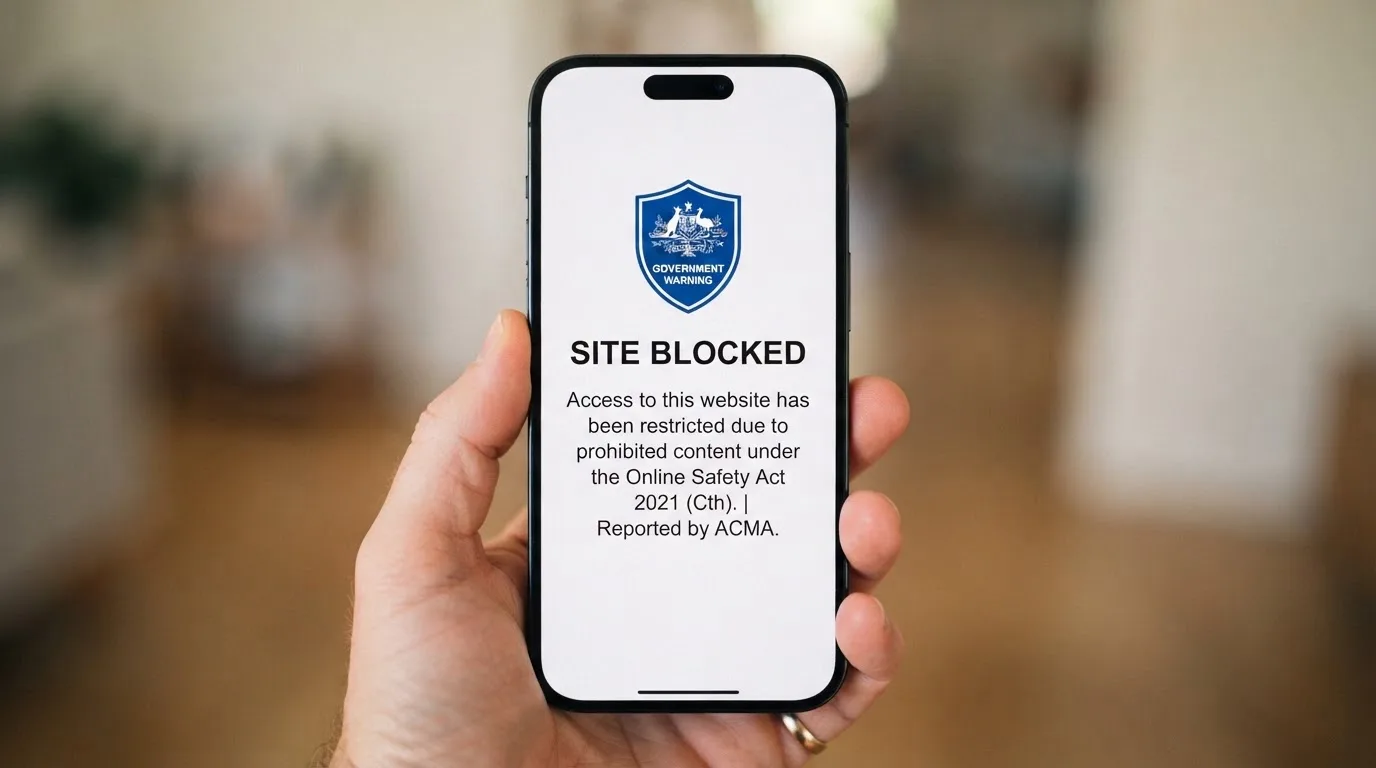
The ACMA enforces the prohibition on the provider side. The Commission’s tools are formal warnings, directions to internet service providers to block specific services, and investigations into affiliate marketing that drives Australian traffic to offshore operators. Since the first blocking request in November 2019, the running total of blocked illegal gambling and affiliate marketing websites has reached 1,751, with more than 230 unlicensed gambling services having left the Australian market since enforcement strengthened in 2017. A June 2026 blocking round alone added 12 sites to the blocked list: 7Signs, ChromaBet, Donbet, Duospin, Freshbet, Slots Gem, Jacks Club, Lucky Start, Pointsbetz, Spinrise, Vinyl Casino and Wildsino.
The individual Australian player is not the target of the IGA — the offence is the provider’s, not the player’s. That has never protected a player’s money, though. An offshore site that refuses a withdrawal does so outside any Australian consumer-protection framework, and the player has no Australian complaints body to escalate to. If a site is blocked with a balance still on it, the block is on the Australian ISP level and does not oblige the operator to refund. H2 Gambling Capital’s 2025 estimate puts annual losses to illegal gambling sites at around A$3.9 billion, with the share of gambling going through legal channels falling from 74% in 2021 to 64%.
The 2026 reform — the Interactive Gambling Amendment (Gambling Reform) Bill 2026, which passed Parliament on 19 August 2026 — extends advertising and inducement restrictions that commence on 1 January 2027. The reform is law with a start date, not law in force. A 2026 page sits on the boundary of that change.
Payment Rails — Where the Legal and Offshore Markets Stop Touching
The prohibition that took effect on 11 June 2024 on credit cards, credit-related products, and digital currency as payment methods for licensed Australian online and phone wagering services is the clearest statement of where the rulebook sits. The penalties for licensed operators accepting those payment types run up to A$247,500. The legal deposit routes that survive are debit card, bank transfer, PayID and Osko, and BPAY. These are the rails the Australian-licensed end of the market is allowed to use.
The same prohibition does not legalise the same payment to an unlicensed operator. A Bitcoin deposit to an offshore keno site is still a deposit to an unlicensed site; the payment-method rule describes what licensed wagering can accept, not what an offshore casino can offer. What the rule does in practice is harden the boundary between the two markets. The licensed end of the market cannot take the payment type the offshore end of the market runs on. A punter in Australia who wants to use Bitcoin is, by construction, looking at the offshore end.
This is also where the practical advice stops being about the law and starts being about the rails. The licensed side is small for keno: state-licensed operators run keno through pubs, clubs, and dedicated keno lounges, and the digital component of those is limited to in-venue screens and approved product extensions. The offshore side is large and accessible, but its accessibility depends on the rail that is shut for the licensed side. The two markets are not in commercial competition. They are in parallel, and the player’s chosen deposit method effectively chooses the side.
Responsible Gambling — What BetStop Covers and What It Does Not
BetStop, the National Self-Exclusion Register, has been live since August 2023 and binds Australian-licensed online and phone wagering services. A player who registers with BetStop tells every Australian-licensed operator not to accept their wager. The mechanism is opt-in for the player and mandatory on the licensed side. The National Gambling Helpline is 1800 858 858, free, available 24 hours a day, and the chat service runs through Gambling Help Online.
What BetStop does not do is cover an offshore casino. An Australian-licensed wagering operator is required by the National Self-Exclusion Register’s enabling rules to refuse a self-excluded player. An offshore casino is not licensed in Australia, is not connected to BetStop, and does not see a player’s BetStop registration. The self-exclusion that actually bites is the one the player imposes on themselves: a self-imposed ban at the wallet level, a banking block on gambling-related transactions, or a written commitment to a support service. None of these are as automatic as BetStop, and the difference matters when the practical question is whether a session can actually be cut off.
The licensed Australian keno market does reach BetStop indirectly through its licensed wagering component. State-licensed keno is a wagering product and the wagering side of the registered operator is in scope. Where the licensed and the offshore do not overlap is in the self-exclusion mechanism: a player blocked at every Australian-licensed keno outlet still has full access to the offshore keno rooms, and the offshore rooms have no obligation to honour the player’s exclusion.
Lawful Keno in Australia — How the Licensed Market Actually Works
Keno is one of the gambling products that can be offered legally in Australia through state- or territory-licensed operators. The licensing is not federal; it is state-by-state, and the structure of each state’s keno licence tells you how the legal keno market reaches players.
Queensland is the simplest of the three: Keno (QLD) Pty Ltd is the exclusive keno licensee in the state, regulated by the Office of Liquor and Gaming Regulation under the Keno Act 1996, the Keno Regulation 2007, and the Keno Rule 2010. There is one licence, one licensee, and a defined statutory framework.
New South Wales extended its keno operator and product licence for 28 years to 1 April 2050, with the joint licensees agreeing to pay the state more than A$230 million, including a A$25 million upfront fee plus annual licence duty. The 28-year extension is one of the longer keno-licence horizons in Australia, and the upfront fee is a material commitment against the licence term.
Victoria issued 20-year keno licences from 15 April 2022 under the Gambling Regulation Act 2003 to Keno (VIC) Pty Ltd and Lottoland Australia Pty Ltd, with the Victorian Gambling and Casino Control Commission as the regulator (the VGCCC replaced the VCGLR as Victoria’s casino regulator on 1 July 2022). Lottoland Australia renamed to KenoGo Pty Ltd on 9 September 2025. The 20-year term puts Victoria’s keno licences in line with the broader 2022 reform cycle.
In-person casino play is a separate keno channel, where it exists. Crown Melbourne, for example, runs baccarat in several variants on the casino floor (Traditional Baccarat, Crown Baccarat and 2-to-1 Baccarat) under VGCCC approval, but that tells the reader how licensed Australian table games look under the regulator — the same approval regime in principle applies to a keno table or keno lounge at a licensed casino. The general point about licensed Australian gambling is structural: state-licensed, regulator-approved, accountable to a state body, and in scope of BetStop.
A Working Calculation — The Blocking Rate Since the First Request in November 2019
The blocking request on November 2019 was the ACMA’s first formal request to Australian internet service providers to block illegal gambling sites. The June 2026 running total of 1,751 blocked illegal gambling and affiliate marketing websites is the figure cited against that first request.
The arithmetic: 1,751 blocked sites over the period from November 2019 to June 2026. That is roughly 81 months. 1,751 ÷ 81 ≈ 21.6 blocked sites per month on average. That is the average blocking rate across the period from the first blocking request to the June 2026 figure.
The result is a band rather than a single number. The early years of the regime, from late 2019 through 2022, showed blocking rounds more spaced out and more focused on the largest operators. The 2023–2026 period shows more frequent blocking rounds at smaller operators and a larger share of affiliate marketing sites. The 21.6-per-month average over the 81 months flattens both phases; the actual blocking rate by year fluctuates materially around that average, with some months carrying multiple blocking rounds and others none.
The plain reading: the ACMA has directed Australian ISPs to block a substantial number of sites per month on average, the rate has gathered pace since 2023, and the proportion of affiliate marketing sites — sites that funnel traffic to the unlicensed operators rather than offering gambling themselves — has grown. The blocking tool is the ACMA’s primary lever, and it is the lever the offshore operators have learned to absorb through brand substitution on the same licence.
What the rate does not show is the unblocking side. A blocked site can reappear at a new URL on the same operator’s licence within weeks, and the ACMA’s blocking request process takes long enough that a rebrand-to-reblock cycle has been a repeated pattern in the enforcement record. The 1,751 figure is the count of URLs blocked, not the count of operators blocked. The same operator group can sit underneath multiple of those URLs across different years and different brand names, which is the table above’s reading of the Dama N.V. and Consolutetish S.R.L. patterns.
What the Page Recommends, Practically
The honest recommendation on a 2026 page about online keno for an Australian reader is to separate the question into two parts: what the player is actually trying to do, and what the available lawful pathways are.
A player who wants to play keno inside Australia, in person, at a licensed venue, has several lawful paths: a pub or club keno terminal under a state keno licence, a keno lounge at a licensed casino where one operates, or a keno session at a licensed venue in Queensland, New South Wales, or Victoria under the state licensing regime described above. The paytable on a licensed venue’s keno terminal is set by the operator under state regulatory oversight, and the edge is in the same general range as the live keno figures cited earlier — but the consumer protection is Australian, the self-exclusion via BetStop applies, and the money leaves a regulated audit trail.
A player who wants to play online keno for real money from Australia is asking for something the Australian market does not license. The offshore operators named above are the regulator’s record of which sites the ACMA has already acted against. The unlicensed operators who have not yet been the subject of a formal warning are the operator pool the ACMA is yet to reach, and the patterns above (multiple brand names under one operator entity, brand substitution after a formal warning, the same operator warned under different names in different years) mean a brand new to the page’s warning list is not the same as a brand beyond the regulator’s reach.
A player who specifically wants to use Bitcoin or other cryptocurrency is selecting for the offshore end of the market by the deposit method itself, and the consumer-protection consequences of that selection are the section above’s consequences. The recommendation the page can make without overstating its brief is the negative one: an offshore Bitcoin keno room is not a substitute for an Australian-licensed keno experience, and the difference is not the game or the deposit method, it is the regulatory framework around both.
Frequently Asked Questions
What house edge does keno typically carry compared with other casino games?
Online keno returns vary widely, with house edges reported from under 4% to over 35%, and live keno typically sitting in the 25%–29% band — materially higher than baccarat’s 1.06%–1.24% on the main bets or blackjack’s roughly 0.28% under liberal rules. The range is wide because paytable design varies more for keno than for other games.
Is keno available at licensed pubs and clubs in Australia, not just casinos?
Yes. Queensland runs an exclusive keno licence through Keno (QLD) Pty Ltd, New South Wales and Victoria each have state-licensed operators running keno in pubs, clubs and other approved venues under statutes including the Keno Act 1996 in Queensland and the Gambling Regulation Act 2003 in Victoria.
Is it legal for an online casino to offer keno to players in Australia?
No. The Interactive Gambling Act 2001, as strengthened in 2017, prohibits offering online casino games to a person in Australia, and no Australian state or territory licenses online casino play; only wagering, lotteries and keno (in person and on licensed premises) fall inside the licensed framework.
How does live keno differ from an automated keno draw?
The mathematics is the same — the draw still produces twenty numbers from one to eighty and payouts still follow the paytable — but live keno draws at scheduled intervals from a physical ball machine and automated keno draws immediately from a random number generator, so the difference is pacing and presentation rather than odds.
Can keno be played with a Bitcoin deposit at an offshore site?
Yes — many offshore operators take Bitcoin deposits and offer keno among their games — but doing so places the transaction outside Australian consumer protection, outside BetStop, and within the scope of operators the ACMA has, in many cases, already directed Australian ISPs to block, with no recourse under Australian law if a withdrawal is refused.
Why do keno returns vary so widely between venues?
Because the paytable — how many hits pay what multiple across how many spots — is set per game rather than per venue, and keno paytables diverge far more than the paytables of baccarat, blackjack, or roulette do, with house-edge figures that span from the low single digits to above 35% depending on the table.
Written by the editors at Casino Safety Info.