
Bitcoin casinos in Australia: the offshore set, the warnings, and what a BTC deposit really does
Currency of payment does not change the law. The Interactive Gambling Act 2001 makes it an offence to provide online casino games and online pokies to a person physically in Australia, and the currency used at the cashier does not appear in that prohibition. A Bitcoin-accepting casino is no more lawful for an Australian resident than a card-accepting one. Every brand on this page has been the subject of a formal warning from the ACMA for offering prohibited services to Australians, so the question this page answers is not which operator is safe in the legal sense, but which path a punter actually has, what each path costs in confirmations, in traceability and in tax, and which reader each one suits.

Data current as of 28 October 2026 and checked against the Australian Communications and Media Authority’s published register of formal warnings and the regulator’s June 2026 blocking round.
Table of Contents
- What a Bitcoin casino actually is, and what it isn’t
- How a Bitcoin deposit confirms before play starts
- Blockchain, anonymity and what “anonymous” actually means
- The blockchain basics a punter should know before sending a transaction
- Bitcoin pokies: the game underneath the currency
- The offshore BTC casino landscape in Australia: the ACMA’s record
- The featured set: eleven brands and what the ACMA said about each
- What the formal warning actually does
- What changes for a player, day to day
- Tax, identity and the obligations that travel with the wallet
- The Interactive Gambling Act 2001, and what the 2026 reform changes
- How a punter reads the register
- What “trusted” means on a page about an offshore product
- The right tool for the right question
- The limits of a Bitcoin deposit a punter should know before sending
- A note on promotions
- Frequently asked questions
What a Bitcoin casino actually is, and what it isn’t
A “Bitcoin casino” is an online casino whose cashier accepts BTC, and usually also BTC Cash, Ethereum, Litecoin, Tether and a handful of other coins, alongside or instead of cards and e-wallets. The reel game on the other side of the deposit is the same RNG, the same paylines and the same house edge whether the bet was placed in bitcoin, in euros or in Australian dollars. The currency sits at the deposit step; it does not change the game.
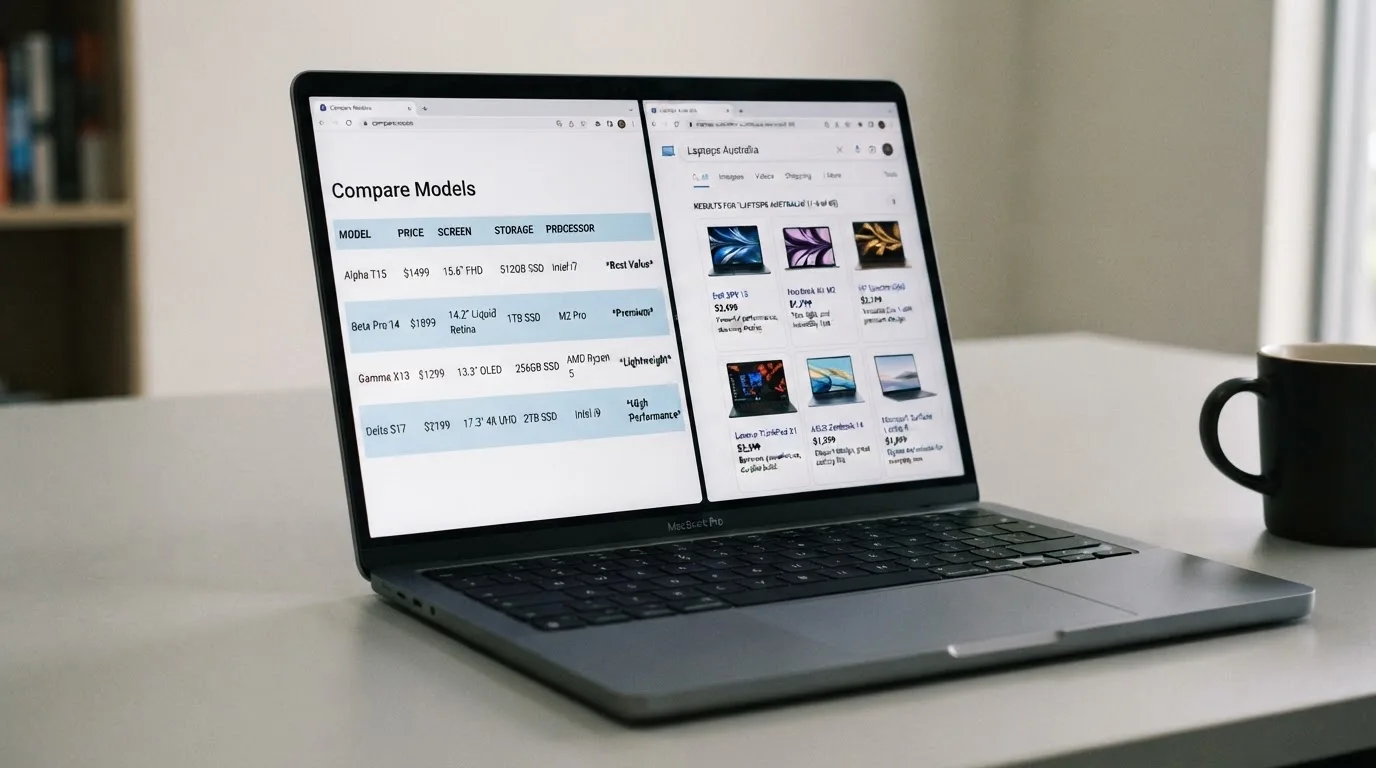
What changes is the deposit rail itself. A Bitcoin transfer moves on a public blockchain: a wallet broadcasts a transaction, miners include it in a block, and the recipient credits the casino balance after a defined number of confirmations. Bitcoin’s network targets a new block roughly every ten minutes on average, though discovery is probabilistic — a single confirmation can arrive much sooner or much later, with no fixed maximum wait. Bitcoin Cash targets the same ten-minute average and advertises fees “under a penny” for typical transactions. Ethereum’s network produces a new block roughly every twelve seconds since it moved to proof-of-stake in September 2022. The exact chain and the exact operator define the exact wait, and the casino’s own balance-credit policy defines the moment play starts.
What does not change is the legal frame. Every casino on this page has been formally warned by the ACMA for offering prohibited interactive gambling services to Australians. The ACMA’s blocking power under section 313 of the Telecommunications Act 1997, and the formal warning register under the Interactive Gambling Act 2001, apply to the operator and to the site regardless of which coin the cashier accepts.
See also Bitcoin Cash at Australian-facing casino sites.
How a Bitcoin deposit confirms before play starts
A punter who pays with Bitcoin moves through three steps the card path skips entirely.
| Cryptocurrency | Average block time | Typical confirmation wait |
|---|---|---|
| Bitcoin | 10 minutes | 1-3 confirmations |
| Bitcoin Cash | 10 minutes | 1-3 confirmations |
| Ethereum | 12 seconds | ~1-2 minutes |
First, the wallet broadcasts a transaction. Every Bitcoin transaction is a signed instruction attached to one or more unspent transaction outputs, and once broadcast it sits in a mempool — a queue of pending transactions — until a miner selects it for inclusion in a block. The transaction fee the punter sets, in satoshis per virtual byte, is the lever that decides how quickly miners take it; a low fee waits.
Second, a block is mined. The Bitcoin protocol adjusts the difficulty target every 2,016 blocks — roughly two weeks — to keep the average time between blocks near ten minutes. A single block can be found in seconds when the network’s hashrate is high, or in much longer than ten minutes when it is low. There is no guaranteed minimum or maximum delay; only an average the protocol tunes toward.
Third, the casino’s balance credits. Operators typically wait for one to three confirmations before crediting play money, and most wait for more on large deposits. A one-confirmation deposit can credit within ten to thirty minutes; a three-confirmation deposit can take thirty minutes to an hour. Bitcoin Cash, with the same ten-minute block target and lower per-transaction fees, lands inside comparable windows on the casino side. Ethereum, at a twelve-second slot, credits inside a couple of minutes for most operators. None of those waits is fixed, and none of them is the time a withdrawal takes — withdrawals re-enter the same chain and wait for confirmations on the way out.
The wallet address that receives the deposit is on the public ledger for the rest of the chain’s life. That ledger is what the next section is about.
Blockchain, anonymity and what “anonymous” actually means
Bitcoin’s marketing word on this subject is “anonymous”, and it is wrong in the precise way that matters.
A Bitcoin wallet is not tied to a name, an address or an identity document at the protocol level. Every wallet is a keypair; the address a punter sends from is a hash of a public key, and the private key is held only by whoever generated it. That is the source of the perception. It is also the only true half of the perception.
The other half is that every transaction on the Bitcoin blockchain is public, permanent and traceable. Once a deposit moves from a wallet to a casino’s address, that link is visible to anyone who can run a blockchain explorer. Chain analytics firms cluster addresses into entities, and the same wallet that received a deposit from a casino withdrawal last week is identifiable as that casino’s withdrawal wallet today. The casino’s deposit address and the punter’s source wallet sit on the same chain forever. AUSTRAC, the Australian Transaction Reports and Analysis Centre, requires any business providing crypto-to-fiat or crypto-to-crypto exchange services to Australian customers to register as a Digital Currency Exchange provider; from 31 March 2026 that registration requirement was expanded to cover stablecoin issuers and digital asset custodians as well. The Australian Taxation Office treats crypto assets as property, and most disposals — selling for AUD, swapping for another coin, spending at a casino — are capital gains tax events. “Anonymous” describes the absence of a name on the protocol; it does not describe the absence of a record, and it does not describe the absence of obligations under Australian law.
For a punter who has never bought Bitcoin, the practical entry route is a registered Australian exchange that issues identification-verified accounts, a transfer into a self-custody wallet, and a deposit from that wallet to the casino. Every step of that route is recorded and reported, which is the opposite of what “anonymous” was supposed to mean.
The same is true of Bitcoin Cash and Ethereum. Both chains are public, both confirmations are traceable, and the same AUSTRAC and ATO obligations apply.
Bitcoin casinos in Australia — More on this topic at casino safety.
The blockchain basics a punter should know before sending a transaction
Bitcoin was created on 3 January 2009 when the pseudonymous Satoshi Nakamoto mined the genesis block, eight weeks after the Bitcoin white paper was posted to a cryptography mailing list on 31 October 2008. The protocol secures its ledger with proof-of-work mining, where miners search for a hash below a difficulty target that the network retunes roughly every two weeks; issuance halves every 210,000 blocks until a total of 21 million bitcoin have been issued, an end the protocol currently expects around the year 2140.
Bitcoin Cash forked from Bitcoin on 1 August 2017 at block height 478,558. It runs the same SHA-256 proof-of-work and the same ten-minute target. Its block size limit was raised from 8 megabytes to 32 megabytes in 2018, which is the technical reason its per-transaction fees sit lower than Bitcoin’s at busy moments. Amaury Séchet, a former Facebook software engineer, led Bitcoin ABC, the first Bitcoin Cash implementation.
Ethereum launched on 30 July 2015, with Vitalik Buterin as primary creator. It moved from proof-of-work to proof-of-stake in an upgrade called The Merge on 15 September 2022, and now produces a new block roughly every twelve seconds.
For the punter, those differences show up as confirmation time, fee level and the practical limit on what fits in a block. They do not change the legal frame around the deposit or the tax treatment of the disposal.
Bitcoin pokies: the game underneath the currency
A BTC pokie is a pokies-style slot funded with Bitcoin instead of a card. The reels, the paylines, the bonus feature and the return-to-player percentage are properties of the game, not of the currency. A 96% RTP game at a $0.10 spin is a 96% RTP game at a 0.000001 BTC spin; the math does not change. What does change is the player’s interaction with the cashier: a Bitcoin deposit credits after confirmation, a Bitcoin withdrawal credits the wallet after confirmation, and the conversion between BTC and AUD happens at the rate the wallet and the exchange display at the moment of the swap. Punters who hold BTC for the long term may sit on a different AUD value than they deposited, which adds a price-movement bet on top of the slot’s house edge.
The live casino side is the same: baccarat, blackjack and roulette tables stream from a studio, accept bets denominated in the casino’s account currency, and the dealer’s shoe does not know what rail funded the chips. The promotional language around BTC live tables tends to be louder than the actual difference, and the casino’s promotional language around BTC slots tends to be louder than the actual difference.
The underlying categories — online casino games, online pokies, in-play betting — are the categories the Interactive Gambling Act 2001 prohibits from being supplied to a person in Australia. The currency a player funds them with does not change that category.
The offshore BTC casino landscape in Australia: the ACMA’s record
The Australian Communications and Media Authority has acted against more than 1,751 illegal gambling and affiliate websites since the first blocking request in November 2019, and more than 230 unlicensed gambling services have left the Australian market since enforcement was strengthened in 2017. A blocking round reported on 26 June 2026 added 12 more sites to the list: 7Signs, ChromaBet, Donbet, Duospin, Freshbet, Slots Gem, Jacks Club, Lucky Start, Pointsbetz.com, Spinrise, Vinyl Casino and Wildsino.
The blocking rate, measured from that baseline, helps clarify the scale of the enforcement. The 1,751 figure covers the period from November 2019 to June 2026 — about 80 months — and it counts distinct sites rather than rounds, so a single operator’s three domains add three to the running total. Within that envelope, the headline rate is roughly 22 sites added per month on the long average. The most recent round, in June 2026, added 12 sites in one instruction; an earlier round in May 2025 covered individual sites spaced across multiple operators. The blocking rate sits in a band rather than at a single point, because the size of a round depends on what the ACMA has identified in a given period, and a reader looking at one month’s count will not see the long-run average.
The featured brands in this guide all sit inside that record. The list that follows is the ACMA’s, not a ranking: each entry is an operator the regulator itself has formally warned.
The featured set: eleven brands and what the ACMA said about each
The brands below are listed in the order the ACMA’s published register gives them, not in any quality order. They have nothing in common except that the regulator has named each one in writing.
| Brand | ACMA action and date | Operator | Subject support |
|---|---|---|---|
| RocketPlay | March 2026; May 2022 | Pulsup Ltd; Dama N.V. | None |
| Level Up | May 2022 | Dama N.V. | None |
| Woo Casino | March 2025 | Dama N.V. | Listings-only |
| Spirit Casino | May 2025 | Dama N.V. | None |
| National Casino | July 2025 | Consolutetish S.R.L. | Listings-only |
| Bizzo Casino | July 2025; 2022 | Consolutetish S.R.L. | None |
| Ignition Casino | July 2025 | Bamboo Media | None |
| Instant Casino | Feb 2025 | EOD Code SRL | None |
| Jackbit | April 2026 | Ryker B.V. | None |
| Casino Intense | April 2025 | Sterplay Holding Ltd | None |
| Sky Crown | Sept 2022 | Hollycorn N.V. | None |
RocketPlay
RocketPlay sits at the top of the regulator’s most recent record. The ACMA issued a formal warning in March 2026 to Pulsup Ltd over Rocketplay.com.au; an earlier May 2022 warning named Dama N.V. as the operator behind RocketPlay alongside five sibling brands. Bitcoin support is listed at some Bitcoin-friendly aggregators, though research turned up no operator-published confirmation that the cashier route works for Australian accounts. The licensing claim on the site itself does not extend to online casino games for Australians under any state or territory regime. Verdict: the brand sits at the regulator’s current edge, and the two-year gap between the 2022 warning and the 2026 warning is the kind of gap a punter should treat as evidence the operator has moved through several shells in that window.
Level Up Casino
Level Up Casino was named in the same May 2022 Dama N.V. warning as RocketPlay, alongside Bambet, Dazard, Wild Tornado and Cobra Casinos. The ACMA has not issued a subsequent warning in the public register research was able to confirm. Subject support at the cashier was not confirmed for this brand. Verdict: an early entrant into the Dama cluster of warnings, and one of the brands the regulator has let lapse from active enforcement rather than escalate.
Woo Casino
Woo Casino drew its own ACMA warning in March 2025, again against Dama N.V. Woo is one of the brands that aggregator listings describe as Bitcoin-friendly, though the claim is at the level of an aggregator’s enumeration rather than an operator-published confirmation. Verdict: the same operator entity behind several earlier warnings, which suggests a pattern of brand-level rotation around a single corporate owner.
Spirit Casino
Spirit Casino received an ACMA warning in May 2025, also to Dama N.V. Subject support was not confirmed. Verdict: another Dama brand, in the same corporate pattern as Woo Casino and the earlier 2022 cluster.
National Casino
National Casino drew a July 2025 warning to Consolutetish S.R.L. The brand sits on aggregator listings for Bitcoin-friendly cashier routes, though the listings, not the operator, are the source of that claim. Verdict: a Consolutetish brand alongside Bizzo Casino, both warned in the same July 2025 round.
Bizzo Casino
Bizzo Casino received a July 2025 warning to Consolutetish S.R.L., and a separate 2022 warning to TechSolutions (CY) Group Limited and TechSolutions Group N.V. — the second formal warning for the brand in four years. Subject support was not confirmed. Verdict: the only brand in this set with two distinct formal warnings on the regulator’s record, and the warning pattern a punter who reads the register will spot before the marketing page does.
Ignition Casino
Ignition Casino received a July 2025 warning to Bamboo Media. Subject support was not confirmed. Verdict: the Bamboo Media brand entry, and one of the smaller corporate shells on the register.
Instant Casino
Instant Casino drew a February 2025 warning to EOD Code SRL. Subject support was not confirmed. Verdict: the most recent warning before the 2026 cluster, and an EOD Code brand whose other sites research did not surface.
Jackbit
Jackbit received an April 2026 warning to Ryker B.V., alongside CasinOK. Subject support was not confirmed. Verdict: a Ryker brand, warned in the same instruction as CasinOK.
Casino Intense
Casino Intense drew an April 2025 warning to Sterplay Holding Ltd. Subject support was not confirmed. Verdict: a single-brand Sterplay entry, and the smallest corporate footprint in the set.
Sky Crown
Sky Crown was named in a Hollycorn N.V. formal warning the ACMA published in September 2022, alongside Blue Leo. Subject support was not confirmed. Verdict: the oldest entry in the featured set on the regulator’s record, and the Hollycorn cluster’s most prominent Australian-facing brand.
What the formal warning actually does
A formal warning is a written notice from the ACMA to the operator’s Australian-facing entity, identifying the prohibited interactive gambling service and giving the operator a chance to comply. It is published on the regulator’s website and it forms the basis for an ISPs-level blocking request under section 313 of the Telecommunications Act 1997 if the service does not stop targeting Australian customers. The warning is not a prosecution and it is not a fine, but it is the step before both, and the cumulative weight of warnings against a corporate group is what the regulator uses when it asks ISPs to block a brand’s domains.
For a punter, the practical reading is that every brand on the featured set has been told, in writing, that its service is prohibited for Australians. A balance held at any of them sits on an offshore platform with no Australian consumer protection, no Australian complaints body and no recourse if a withdrawal is refused. The site can be blocked with funds still in the account.
What changes for a player, day to day
The picture from a punter’s seat is the picture the regulator’s record only hints at. The cashier accepts Bitcoin, and a deposit arrives after one to three confirmations — minutes for Ethereum, ten minutes to an hour for Bitcoin and Bitcoin Cash in the typical case. A withdrawal enters the same chain and waits for confirmations on the way out, plus whatever internal processing the operator runs before it broadcasts the transaction. The exchange rate between BTC and AUD is whatever the punter’s wallet and the exchange display at the moment of the swap, and the ATO treats that swap as a CGT event.
The responsible-gaming tools the punter might expect — deposit limits, time-outs, self-exclusion — sit on the operator’s own platform, not on the Australian BetStop register. BetStop, the National Self-Exclusion Register, binds Australian-licensed online and phone wagering services; offshore casinos are not connected to it. The National Gambling Helpline on 1800 858 858 is free, 24/7, and offers chat at Gambling Help Online, and a punter who is using Bitcoin at an offshore casino has access to exactly the same helpline as anyone else.
A punter who wants the Australian consumer frame — credit card and crypto banned at the cashier, deposit limits enforced by a licensed provider, BetStop taking the account offline when asked — will not find it at any of the brands above. Those protections attach to the licensed wagering market, which is what the Interactive Gambling Act 2001 permits.
Tax, identity and the obligations that travel with the wallet
The Australian Taxation Office classifies crypto assets such as bitcoin as property, not money or foreign currency. Selling for AUD, swapping for another coin or spending at a casino are CGT events, and the gain or loss is calculated against the cost base. The ATO currently allows a 50% CGT discount on crypto assets held longer than 12 months; from 1 July 2027 that flat discount is replaced by CPI indexation of the cost base plus a 30% minimum tax rate on net capital gains.
A capital gain on a crypto asset held as a personal use asset is disregarded for CGT purposes, but only if the asset cost $10,000 or less to acquire; holding a crypto asset as an investment takes it outside the exemption. The ATO disregards all capital losses on personal use crypto assets, which means such a loss cannot offset other capital gains or carry forward to a later income year. Gambling winnings of a recreational player are not assessable income and losses are not deductible, unless the person carries on a business of gambling.
AUSTRAC, the Australian Transaction Reports and Analysis Centre, requires any business providing digital currency exchange services to Australian customers to register as a Digital Currency Exchange provider, regardless of where the business is incorporated; operating unregistered is an offence. From 31 March 2026, that registration requirement was expanded beyond crypto-to-fiat exchange to cover crypto-to-crypto exchange platforms, digital asset transferors, digital asset custody providers and stablecoin issuers and distributors.
The practical effect for a punter is that the route from an Australian bank account to a Bitcoin wallet and back already sits inside AUSTRAC’s reporting perimeter, and the swap into and out of bitcoin at an exchange is recorded. The casino deposit and the casino withdrawal are recorded on a public blockchain. The CGT event is recorded on the punter’s tax return or, if there is no return, on the ATO’s view of what should have been on one.
The Interactive Gambling Act 2001, and what the 2026 reform changes
The Interactive Gambling Act 2001, as tightened by the Interactive Gambling Amendment Act 2017, makes it an offence to provide online casino games, online pokies and in-play betting to a person in Australia. What is licensable is wagering on races and sport placed before the event, lotteries and keno — in practice licensed by the Northern Territory Racing and Wagering Commission, which regulates 52 of Australia’s online bookmakers including Sportsbet, Bet365 and Ladbrokes, with no full-time staff and a once-a-month meeting in Darwin.
Since 11 June 2024, credit cards, credit-related products and digital currency are banned as payment methods for licensed online wagering; penalties for operators who accept them reach $247,500. The legal deposit routes for a licensed Australian wagering account are debit card, bank transfer, PayID/Osko and BPAY. A site asking an Australian for a credit card or for a crypto deposit is operating outside the Australian rules.
The Interactive Gambling Amendment (Gambling Reform) Bill 2026 passed Parliament on 19 August 2026; its advertising and inducement measures commence on 1 January 2027. The law has a start date, so on a 2026 page it is law passed, not law in force on the day a punter is reading.
The minimum age for any Australian-licensed wagering activity is 18.
How a punter reads the register
The ACMA publishes its formal warnings on its own website, with the operator’s name and the brand name on the same line. A punter who is weighing a brand against the regulator’s record will read the register the way the regulator writes it, in operator-and-brand pairs. Two warnings on the same operator across two years, as in Bizzo Casino’s 2022 TechSolutions warning and 2025 Consolutetish warning, point to a brand that has moved between corporate shells. A cluster of warnings on one operator across many brands, as in Dama N.V.’s 2022, 2025 and 2025 warnings, points to a corporate group that runs a portfolio of brands rather than a single site.
The blocking record is published in periodic round announcements. The 1,751 figure from June 2026 covers the period from November 2019 to June 2026. The long-run blocking rate is roughly 22 sites per month across the full period; in any given month the figure varies. A punter who wants to know what the rate looks like this month looks at the most recent round, not at the long-run average.
What “trusted” means on a page about an offshore product
The word “trusted” in the gambling-affiliate vocabulary is doing work the law will not. There is no Australian licence for any of the brands on this page, and no Australian complaints body sits behind them. A trusted Bitcoin casino in the strict sense would be one that holds a licence in a jurisdiction with enforceable player-protection rules, that submits its RNG to an independent test house, and that pays withdrawals inside a published time frame. The brands on this page have their own claims; what is verifiable from the regulator’s record is the formal warning, not the trustworthiness claim.
For a punter who wants the consumer-protection frame, the licensed Australian wagering market is the only place it is on offer. The licensed wagering market is also the only market that bans Bitcoin at the cashier. The two facts are not separable, and the choice is the punter’s.
The right tool for the right question
A punter who wants BTC at the cashier, who has read the ACMA register and accepts that the brand will be offshore and unregulated for Australian purposes, and who treats the deposit as a CGT event with the ATO’s 50% discount or the 2027 indexation rule in mind, will find what the marketing calls a Bitcoin casino. A punter who wants Australian consumer protection, BetStop enrolment and a cashier that does not accept Bitcoin, will find a licensed Australian wagering provider instead. The two are different products and the difference is not a marketing detail.
For the punter who has chosen the offshore path, the practical reading of the regulator’s record is that the formal warnings tend to cluster around the same operators across years, that a brand on the register today will probably still be on it next year, and that the balance at any of them is exposed to a blocking request that the ACMA can issue on a month’s notice.
The limits of a Bitcoin deposit a punter should know before sending
A Bitcoin transfer is final once the network confirms it. There is no chargeback, no reversal and no consumer-protection mechanism after the block is mined. A deposit sent to the wrong wallet address is unrecoverable: the punter’s only recourse is the address’s owner, who has no reason to return funds sent in error. A casino that credits the wrong player’s account by mistake holds the same risk on the operator’s side, and the punter who waits for the credit and the credit does not arrive has no Australian complaints body to contact.
The exchange-rate risk sits between the punter’s wallet and the casino’s cashier. The casino’s house currency may be Bitcoin, Bitcoin Cash, Ethereum or an internal account unit pegged to one of those; the rate the punter’s wallet displays at the moment of the deposit is the rate the casino will credit, and the rate at the moment of the withdrawal is the rate the punter takes home. The slot’s RTP is a separate calculation, and the two together — RTP and exchange-rate movement — are the punter’s actual edge.
A withdrawal that sits in a casino’s pending queue beyond the operator’s published time frame is a withdrawal the punter cannot escalate through any Australian channel. The offshore regulator whose licence the casino displays sits in whatever jurisdiction issued the licence, and the punter’s complaint runs through that jurisdiction’s process.
A note on promotions
This page does not list any bonus, promotion or voucher code. The only sources for those offers are affiliate marketing pages, and a promotion that comes with a wagering multiple, a max-cashout cap and a list of excluded games is a promotion whose real cost a punter can only see in the terms. A Bitcoin-accepting casino is no exception, and the bonus terms at any offshore brand sit in the operator’s own T&Cs rather than in any Australian consumer-law framework.
Frequently asked questions
Is it legal for a casino site to accept Bitcoin from a player in Australia?
No. The Interactive Gambling Act 2001 prohibits the supply of online casino games and online pokies to a person in Australia, and the prohibition is on the activity, not on the currency. A Bitcoin-accepting casino is unlawful for an Australian resident in the same way a card-accepting casino is, and every brand named on this page has been the subject of a formal ACMA warning for offering prohibited services.
How long does a Bitcoin deposit usually take to confirm before it can be used?
A typical deposit on Bitcoin or Bitcoin Cash confirms inside ten minutes to an hour, with most casinos waiting for one to three confirmations before crediting play. Ethereum deposits typically credit within a couple of minutes because the network produces a block every twelve seconds. The exact wait depends on the network’s congestion and on the operator’s own confirmation policy, and there is no fixed minimum or maximum — only an average the protocol tunes toward.
Does paying with Bitcoin make an online casino account harder to trace back to a person?
The wallet address is not tied to a name at the protocol level, but every transaction sits on a public blockchain that chain-analytics firms can cluster into entities. AUSTRAC requires crypto exchange services for Australian customers to register, so the route from an Australian bank account to a Bitcoin wallet is already inside the reporting perimeter. The deposit address is on the public ledger for the rest of the chain’s life, and the word “anonymous” describes the absence of a name at the wallet, not the absence of a record.
Are pokies-style slots any different when funded with Bitcoin instead of a card?
The reels, paylines and return-to-player percentage are properties of the game, not the currency. The difference is at the cashier: a Bitcoin deposit credits after confirmation, a Bitcoin withdrawal enters the same chain, and the conversion between BTC and AUD happens at the rate the wallet and the exchange display at the moment of the swap. The currency does not change the game’s house edge; it adds an exchange-rate movement on top.
What happens to a Bitcoin deposit sent to the wrong wallet address?
It is unrecoverable through the network. Bitcoin transactions are final once confirmed, and there is no chargeback or reversal mechanism at the protocol level. A punter whose deposit lands at the wrong address has no Australian consumer-protection channel to escalate through, because the casino and the wallet sit outside the Australian regulatory frame. The only practical protection is to verify the address before sending and to send a small test transaction first.
Do Bitcoin casino withdrawals need the same identity checks as a bank withdrawal?
Many offshore casinos run their own customer-due-diligence process regardless of the withdrawal rail, and the operator’s own terms define what that process is. The Australian reporting perimeter sits at the exchange where the punter converts back to AUD, not at the casino. AUSTRAC registration covers the exchange; the casino’s KYC sits in its own T&Cs.