
Casino sign-up bonuses in Australia: what an offer really sits on top of
A search for “casino sign up bonus Australia” returns hundreds of landing pages promising matched deposits, free spins, and no-deposit cash the moment a player registers. The pitch is simple and the rank is loud. The thing it skips over is the law. Offering online casino games to a person physically in Australia is prohibited under the Interactive Gambling Act 2001. No state or territory licences it. The only enforcement target in practice is the offshore operator, but the player is the one who pays the price when the site disappears mid-withdrawal, the bonus terms don’t honour out, or the regulator quietly orders Australian internet service providers to block the domain. The page that follows is not a ranking and not a recommendation. It is the same subject, read against what the offer actually sits on top of.
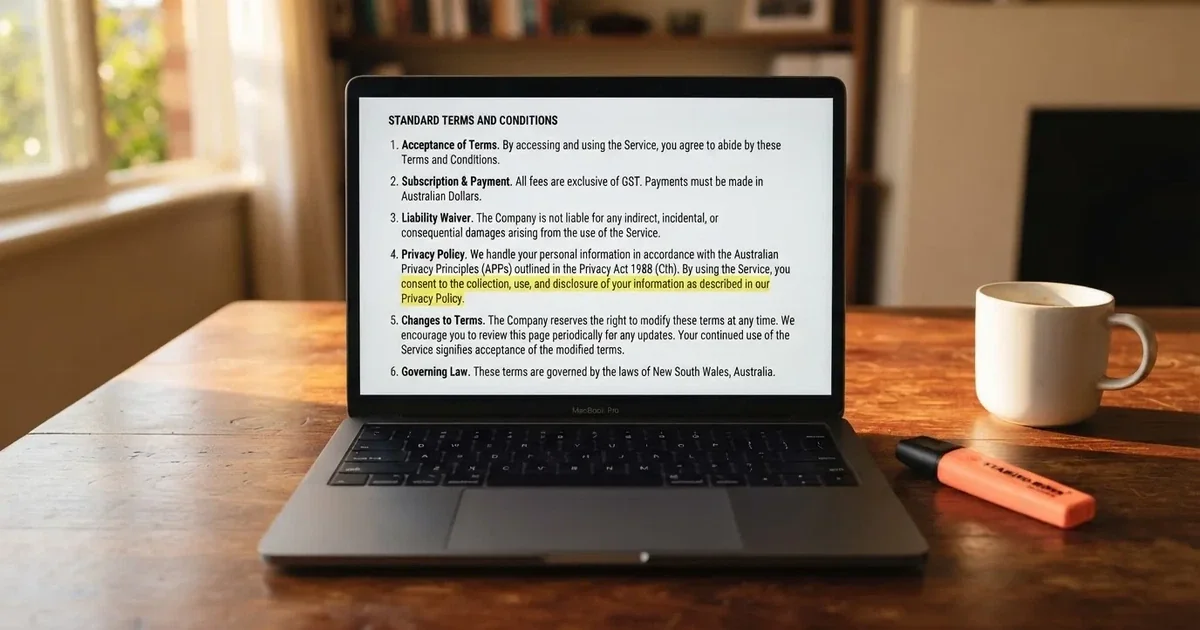
Current as of 28 October 2026 and cross-checked against the Australian Communications and Media Authority’s formal warning register and the National Self-Exclusion Register.
Table of Contents
- The shape of the offer that gets advertised
- Responsible gambling: the safeguards that do and do not apply
- Crypto and anonymity: what paying in bitcoin actually changes
- How the money actually moves, and how fast
- Bonuses and free spins, read carefully
- Operators the ACMA has acted against
- What the law actually says
- The arithmetic behind an offer that looks free
- What an Australian reader actually has
- Frequently asked questions
The shape of the offer that gets advertised
A “sign-up bonus” in the language these sites use means the package that activates when a new account is created. Three forms dominate.

The first is a matched deposit, often styled as a “welcome package”: the site credits the player’s balance with a percentage of what they deposit, typically up to a stated ceiling. The percentage on offer is the marketing figure, and it is usually a number like 100%, 150%, or 200%. Underneath it sits a turnover, or wagering, requirement: the bonus (and sometimes the deposit along with it) must be staked a set multiple of times before any of it can be withdrawn. A “40x bonus” requirement on a A$200 bonus means A$8,000 in qualifying wagers before withdrawal opens up. Some packages stack this across multiple deposits, so the headline number is split over the first three or four top-ups rather than landing on the first one.
The second form is free spins, attached to specific pokies — the Australian term for slot machines. A 200-spin package split across, say, ten days gives twenty spins a day on one named title. The winnings from those spins usually come back as bonus money, and bonus money carries its own playthrough. What looks like a free gift is a deposit-gated credit with a turnover, and the often-tiny max-cashout cap on free-spin winnings is where most of the disappointment lands.
The third is the no-deposit bonus. The “no deposit” framing is the headline: register, claim, play — no card or bank transfer required. The amount is small, often A$10 to A$50, or a small batch of free spins. The wagering is heavy, sometimes 50x or 60x, and the maximum cashout is usually capped low. The point of the offer is not the winnings; it is the hook that gets a player to register, hand over identification documents, and reach for a deposit method.
What sits beneath all three is the same rule: nothing comes out without being played through, and what does come out is bounded. The marketing number is the upside; the multiplier is the cost.
See also First deposit bonuses in Australia.
Responsible gambling: the safeguards that do and do not apply
For a reader in Australia, the question is not which safeguard an offshore casino offers in its footer. None of the Australian ones are connected to it.
BetStop, the National Self-Exclusion Register, has been live since 21 August 2023. Registering with BetStop means every Australian-licensed online and phone wagering service must close the person’s accounts and refuse to let them open new ones for the chosen exclusion period, which can run from three months up to a lifetime. The list of connected operators includes licensed bookmakers and the licensed wagering side of the major brands — Sportsbet, Bet365, Ladbrokes among them — but no offshore casino. A site that has been formally warned by the ACMA, let alone any random crypto casino, has no obligation to honour a BetStop registration.
On the bank side, three of the four major banks now offer some form of gambling block. Westpac’s gambling block is a card-level refusal: any transaction tagged with the merchant category code “Betting/Casino Gambling” on an eligible personal credit or debit card is declined at authorisation, regardless of which merchant tries to run it. ANZ’s version, activated in the app, also covers transactions routed through a digital wallet such as Apple Pay on an eligible card. Commonwealth Bank’s “gambling lock” works through the CommBank app on eligible cards. ANZ adds a 48-hour cooling-off before the block can be lifted, and the bank warns plainly that not every gambling transaction will be caught and some non-gambling transactions might be blocked in error. Apple’s own controls do not add anything to this; transaction limits and PIN requirements for Apple Pay purchases are set by the card issuer or by the merchant, and Apple does not charge consumers a fee for using Apple Pay in any setting.
A reader who wants every layer working at once can register with BetStop, turn on a card-level block with their bank, and add the merchant block on top. None of it is a substitute for the help that matters most when gambling stops being recreational. The National Gambling Helpline on 1800 858 858 is free, 24/7. Gambling Help Online runs live chat and callback. Neither of these is an offshore operator’s responsibility.
Crypto and anonymity: what paying in bitcoin actually changes
The phrase “bitcoin casino sign up bonus” pulls in a different set of sites. They run on the same offshore skeleton as the credit card versions, but the deposit method is cryptocurrency, typically Bitcoin, Ethereum, Litecoin, Tether, or a handful of altcoins. The pitch layers two separate ideas: that crypto is faster, and that crypto is anonymous. Neither survives inspection.
Speed is partly true. Once a deposit hits the blockchain, the casino’s confirmation can come in minutes rather than the slower settlement a card deposit sometimes takes. Withdrawals are where the gap closes: most crypto casinos still operate a manual approval pass before they release funds, and an offshore approval queue is not a guarantee. The “instant payout” word on a landing page is a marketing word. Pull requests sit in review until the operator decides to release them.
Anonymity is mostly false. A crypto address is a permanent public ledger entry; the off-chain link between the address and a person is what gives the trail away, and the exchanges that convert the bitcoin back into Australian dollars are themselves regulated entities with KYC obligations. AUSTRAC’s threshold transaction reporting applies only to physical cash: ordinary electronic transfers, crypto included, are not subject to the A$10,000 per-transaction rule regardless of the amount. That fact is often flipped and quoted as “no reporting on crypto transfers”. What AUSTRAC does require is registration and record-keeping on the exchange side, not on the casino player’s side.
For an Australian reader, the harder problem sits one level up. Since 11 June 2024, Australian-licensed online wagering services cannot accept credit cards, credit-related products, or digital currency as a deposit. The restriction flows from the Interactive Gambling Act and was strengthened by amendments that took effect that date; penalties for breach run up to A$247,500 against operators. A site asking an Australian for a crypto deposit is, by that act alone, operating outside what the Australian framework permits. “Anonymous” and “outside the Australian framework” turn out to be the same offer, and the choice to take it is the choice to step off every consumer protection the law builds around wagering in this country.
How the money actually moves, and how fast
What an offshore casino calls a “fast payout” is a number measured against an offshore yardstick. The yardstick that matters for an Australian reader is the path the money actually takes back.
For Australian-licensed wagering the path is short. Debit card, bank transfer, PayID/Osko, and BPAY are the four deposit routes the framework permits. Osko, run by Australian Payments Plus, is the rail that makes transfers between participating banks settle in under a minute, 24/7, including weekends; the transfer is keyed either to a BSB and account number or to a PayID. PayID is also where the safety check sits: a PayID transfer shows the recipient’s name before the money goes, and AP+ warns plainly that being directed to send money to a PayID on an illegal gambling site is, in practical terms, being directed to a scam. PayID registration passed 25 million identifiers across more than 100 Australian financial institutions by April 2025, which is why any site that won’t take PayID for a small top-up is signalling something other than friction.
BPAY sits next to PayID in the legal rail set. It has been in operation since 1997, runs through the online banking of more than 140 Australian institutions, and is now owned under Australian Payments Plus alongside eftpos and NPP. It is a bill-payment service, not a wallet, and the entry points are a Biller Code and a Customer Reference Number printed on the bill. It is not the rail an offshore sign-up bonus uses, because no offshore sign-up bonus is asking an Australian player for a Biller Code.
The offshore path is longer and noisier. The deposit typically clears through a payment processor or a crypto on-ramp; the withdrawal request enters a manual review queue; the casino runs its own KYC pass before any payout is approved; and the outbound transfer, if it is approved at all, lands through a currency conversion step that takes its own cut. The “instant withdrawal” advertised on many of these sites is the wait between the operator’s “approved” button and the appearance of funds at the player’s end, which is rarely the longest wait in the chain. The longest is the approval itself.
The credit-card rule is what closes the loop. Since 11 June 2024 no Australian-licensed wagering service can take a credit card or a credit-related product, and the restriction also covers credit-funded digital wallets. Visa, Mastercard, and eftpos debit are the schema the Reserve Bank’s 2025 review is examining on surcharges; American Express sits outside the proposed surcharge ban and processes its own network end to end. For an Australian reader the takeaway is simpler: any deposit route a sign-up bonus happily accepts that an Australian-licensed bookmaker refuses is a route no Australian consumer protection follows.
Bonuses and free spins, read carefully
The promotional inducements that sit around a sign-up bonus — the matched deposit, the free spins package, the leaderboard prize, the cashback offer — read in the abstract like free money. Read against the terms, they are conditional credit.
The turnover, or wagering, requirement is the figure that decides what an offer costs the person claiming it. A 35x playthrough on a bonus means the bonus amount, and sometimes the deposit alongside it, must be wagered thirty-five times before any withdrawal is permitted. Some bonuses separate “wagering on bonus only” from “wagering on bonus plus deposit”, and the difference between them changes the total volume a player has to push through the games. On a high-volatility slot, the same playthrough can be cleared faster or slower depending on the size of the wins that come back; the wagering requirement does not care about outcomes, only about the volume staked.
The maximum bet cap is the second term that bites hardest in practice. Most sign-up packages carry a per-spin or per-hand ceiling during the playthrough period — often A$5 or less — and any single wager above the ceiling can void the bonus and the winnings attached to it. The cap exists to stop a single large win from clearing the turnover in one stroke. For a low-stakes player it changes nothing. For anyone who would normally play at a higher level it forces a deliberate step-down.
The expiry is the third. A wagering window of seven or fourteen days is standard. Anything unplayed at the end of the window is forfeit, along with the winnings attributable to it. The “no deposit” offer compounds this: a short expiry, a high multiplier, and a tight cashout ceiling stacked together mean the bonus is time-poor in every direction.
The free-spin layer adds its own conditions. Spins attached to a specific title can only be used on that title. Spins delivered in batches across ten days activate twenty a day and expire the same day if not used. The winnings from free spins usually convert to bonus money that must itself be played through, and the max-cashout cap on free-spin winnings is often a small fraction of what the spin’s headline value would suggest. The package reads like a gift; the contract reads like a deposit-gated credit instrument.
The underlying math is the same across all of it. A turnover requirement of forty times a bonus, played through at an RTP of around 96%, returns roughly the bonus value back to the player on average; the operator’s edge sits in the four-percentage-point gap multiplied across that volume, plus the chance the player loses part of the bonus before the playthrough is done. The expected cost of clearing a bonus is the volume of play multiplied by the house edge. The marketing word for this is “free”. The arithmetic word is “conditional credit at the house’s terms”.
Casino sign-up bonuses in Australia — More on this topic at casino safety.
Operators the ACMA has acted against
Eleven operators sit in the formal warning set. Each one is named here because the ACMA itself has issued a formal warning over it for offering prohibited services to Australians — not because any of them is recommended. There is no recommendation to give. No Australian-licensed casino of the kind these sites claim to be exists, and a “Curacao licence” displayed in a footer is, for an Australian reader, a label that does not connect to any complaint body or any regulator the player can reach. The list reads top to bottom in the order the warnings appear in the register, with the most recent at the top.
| Brand | ACMA action and date | Operator named by the ACMA | Subject support |
|---|---|---|---|
| RocketPlay | Formal warning, March 2026; earlier Dama N.V. action May 2022 | Pulsup Ltd | Listings coverage of general operator reviews |
| Level Up Casino | Formal warning, May 2022 | Dama N.V. | Listings coverage of payment-method profiles |
| Woo Casino | Formal warning, March 2025 | Dama N.V. | — |
| Spirit Casino | Formal warning, May 2025 | Dama N.V. | — |
| National Casino | Formal warning, July 2025 | Consolutetish S.R.L. | Listings coverage of AUSTRAC and BetStop profiles |
| Bizzo Casino | Formal warning, July 2025; earlier warning to TechSolutions, 2022 | Consolutetish S.R.L. | Listings coverage of general operator reviews |
| Ignition Casino | Formal warning, July 2025 | Bamboo Media | — |
| Instant Casino | Formal warning, February 2025 | EOD Code SRL | Listings coverage of payment-method profiles |
| Jackbit | Formal warning, April 2026 | Ryker B.V. | — |
| Casino Intense | Formal warning, April 2025 | Sterplay Holding Ltd | Listings coverage of AUSTRAC, BetStop and general operator profiles |
| Sky Crown | Formal warning, September 2022 | Hollycorn N.V. | — |
A reader scanning the table wants two things in plain English. First, these are not ratings. They are the same kind of legal action, repeated at different dates, against operators running prohibited services for an Australian audience. Second, none of the rows carries bonus terms — no wagering multiples, no max-cashout caps, no game weightings — because the only sources for those figures were affiliate pages the research rejects as unreliable. A bonus term printed here would be a number with no provenance behind it, and that is the failure mode the page is meant to avoid.
What the table does carry is the through-line. Dama N.V. appears three times at the top of the register, in May 2022 across six brands and then again in March 2025 and May 2025 across Woo Casino and Spirit Casino. The warning in May 2022 covered Bambet, Dazard, Level Up, Rocketplay, Wild Tornado and Cobra Casinos. The 2025 warnings add two more Dama N.V. brands to the same operator. Consolutetish S.R.L. surfaces in July 2025 over both National Casino and Bizzo Casino, with Bizzo Casino already warned in 2022 under its previous operator, TechSolutions. Hollycorn N.V. sits across Sky Crown and Blue Leo under the September 2022 action. The pattern is the lesson: a brand name is a thin wrapper over an operator, and when the operator changes its branding the warning register carries the trace.
RocketPlay
The March 2026 warning named Pulsup Ltd as the operator behind RocketPlay, and that is the freshest action on the list. A warning already on the file from May 2022 named Dama N.V. over Rocketplay and five sister brands. Two operators in two different jurisdictions for the same site, over four years, is the kind of corporate substitution the ACMA tracks and the player does not see from the lobby page. The site’s marketing lists bonus packages and game libraries. The Australian register is where the practical question about who actually holds the account is settled: not the brand in the URL.
Level Up Casino
Level Up sits in the May 2022 group of six Dama N.V. brands the ACMA warned together. The site has changed operator details and marketing surfaces since, but the formal warning is on the register and it is what an Australian reader needs to know. There is no Australian consumer protection body that a complaint to Dama N.V. could be escalated to, no escrow on the funds in the account, and no obligation on the operator to honour any bonus the player has not yet cleared. The site’s bonus page is a marketing asset, not a contract that an Australian court will read.
Woo Casino
Woo Casino’s formal warning landed in March 2025 against Dama N.V., the third Dama brand warned in twelve months after the May 2022 group. The marketing the site runs in 2026 — the matched deposits, the “crypto-friendly” badge, the leaderboard prize, the tournament schedule — is the surface. The warning is the substance, and the substance is that no Woo Casino bonus is one an Australian-licensed operator would ever offer.
Spirit Casino
Spirit Casino drew the May 2025 warning in the same Dama N.V. cluster. Same operator, same enforcement pattern, fresh date, fresh brand wrapper. None of that changes the underlying fact: any sign-up offer Spirit Casino promotes to an Australian reader is an offer from a site the ACMA has asked ISPs to consider blocking, with whatever balance the player has put in it.
National Casino
National Casino’s July 2025 warning named Consolutetish S.R.L. as the operator, alongside Bizzo Casino in the same action. The site’s primary listings coverage sits across Australian-regulator profiles for AUSTRAC and BetStop, not as a payment provider — an unusual positioning in itself, and a hint at how thin the marketing footprint is under the bonnet. The marketing sells the welcome package. The register names the operator.
Bizzo Casino
Bizzo Casino sits under the July 2025 Consolutetish S.R.L. action with a previous 2022 warning against TechSolutions (CY) Group Limited and TechSolutions Group N.V. already on the file. A brand warned twice under two operators is a brand whose marketing has outrun its compliance posture for at least three years. The welcome offer reads the same as any other welcome offer; the warning register reads differently.
Ignition Casino
Ignition Casino is named in the July 2025 action against Bamboo Media. The brand has long carried a US-facing reputation that does not translate to the Australian regulatory picture: under Australian law, the prohibition is the same, and a state-by-state licence in the US does nothing for an Australian player. The ACMA warning is the part that affects an Australian reader, and that part is on file.
Instant Casino
The February 2025 warning named EOD Code SRL over Instant Casino. The site’s footprint sits more on payment-method profiles than on bonus terms, which is itself informative: the marketing asset is the deposit and withdrawal speed, and the rest of the package is thinner than the rates the headlines imply. A fast deposit into a site the ACMA has asked ISPs to block is not the speed the player needs.
Jackbit
Jackbit’s April 2026 warning named Ryker B.V. as the operator, in the same action as CasinOK. The site runs on a crypto-rail pitch that was addressed earlier in this piece: anonymous, fast, outside the Australian framework, and therefore outside every layer of Australian consumer protection. The warning puts the brand on file inside that framework.
Casino Intense
Casino Intense’s April 2025 warning named Sterplay Holding Ltd as the operator. The site’s listings footprint sits on Australian-regulator sources, including AUSTRAC and BetStop, the same regulators the framework keeps an Australian-licensed operator on the right side of. The contradiction between appearing in those listings and being formally warned under the IGA is the practical shape of the offshore brand.
Sky Crown
The September 2022 warning against Hollycorn N.V. covered Sky Crown and Blue Leo together, the earliest dated warning in the eleven. A brand warned in 2022 is still being marketed to Australian readers in 2026, which is the part the table is built to make visible.
What the law actually says
The Interactive Gambling Act 2001, as strengthened by the Interactive Gambling Amendment Act 2017 and the amendments that took effect on 11 June 2024, makes it an offence to provide online casino games, online pokies, or in-play betting to a person in Australia. The “interactive gambling service” definition covers the casino products the search queries name. No state or territory issues a licence for any of these products; the only online wagering that is licensable in Australia is racing and sports betting placed before the event, lotteries, and keno.
The Northern Territory Racing and Wagering Commission is the regulator of the practical bulk of legal online wagering in Australia — fifty-two online bookmakers in total, including Sportsbet, Bet365 and Ladbrokes, licensed in the Territory largely for tax reasons. The commission meets once a month in Darwin and has no full-time staff. The thinness of the regulator on the legal side of the line is the reason the offshore side of the line looks as busy as it does.
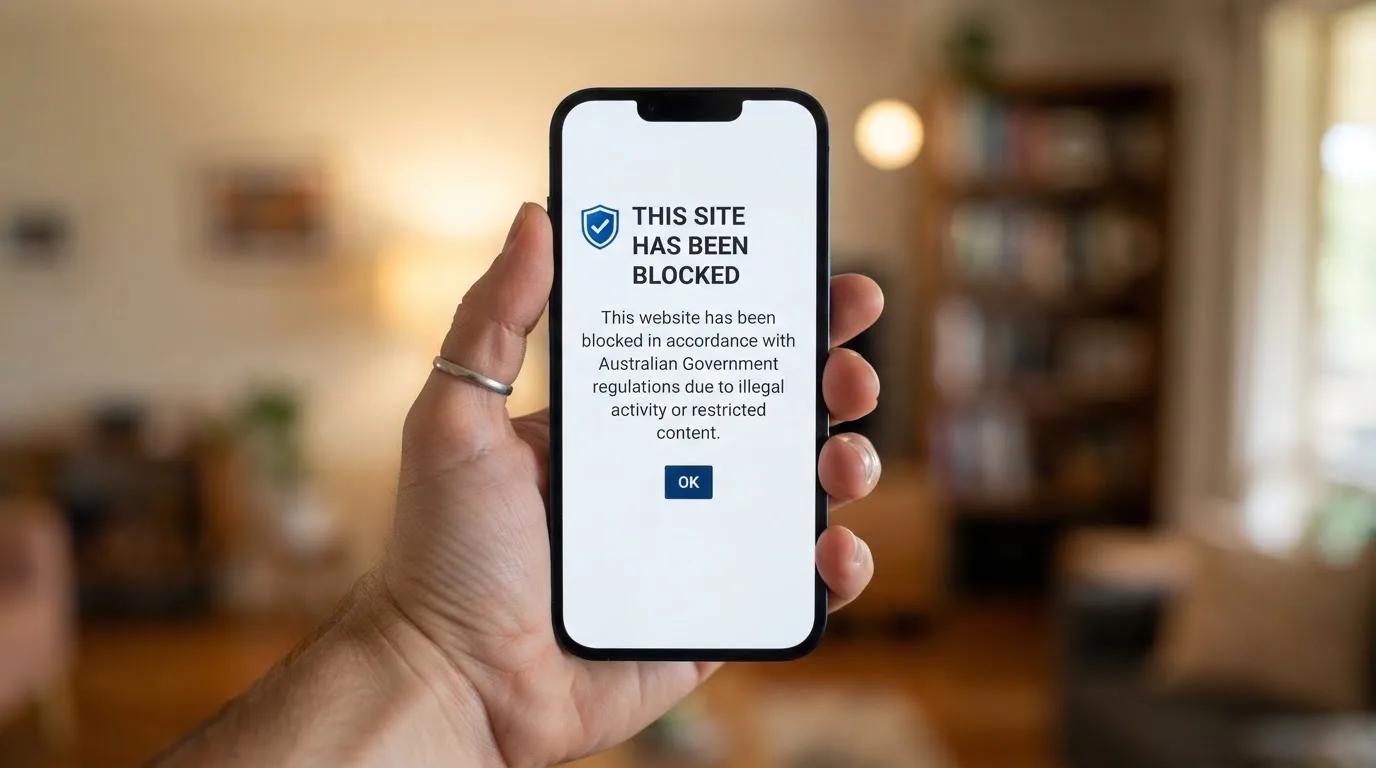
The ACMA enforces the prohibition. Its tools are investigation, formal warning, and the direction to Australian internet service providers to block illegal sites. A report in June 2026 set the running total at 1,751 illegal gambling and affiliate marketing websites blocked since the first blocking request in November 2019, with more than 230 unlicensed services having left the Australian market since the 2017 strengthening of the regime. The round reported the same day named 12 more domains: 7Signs, ChromaBet, Donbet, Duospin, Freshbet, Slots Gem, Jacks Club, Lucky Start, Pointsbetz, Spinrise, Vinyl Casino and Wildsino. The total is a running count, refreshed every reporting cycle. The pace at which the total moves tells its own story.
The rate of blocking, read off the official figures, sits in a band rather than at one number. From November 2019 to mid-2026 covers roughly six-and-a-half years, and 1,751 blocked sites plus 230 services withdrawn is the registered movement. The band sits between approximately thirteen and twenty-eight blocking requests or service withdrawals per month across that span, averaging out to around twenty-two a month; the lower band holds during quieter enforcement windows and the upper band holds when a single round catches a larger cluster of domains tied to one operator. The math is the math of an enforcement regime that batches by operator and by round, not one that blocks a steady drip. The set of names in any single table on this page is a single batch off that flow.
The ACMA’s 2026 reform bill — the Interactive Gambling Amendment (Gambling Reform) Bill 2026 — passed Parliament on 19 August 2026, with its advertising and inducement measures to commence on 1 January 2027. The bill is law with a start date, not law in force on a 2026 page. What that means in practice is that whatever inducement rules the bill tightens, the rules that bind an offshore sign-up bonus today are the rules already in force, which cover the supply side of the prohibited service.
The player is not the target of the Act. The IGA is aimed at the provider — the operator offering the prohibited service to a person in Australia — not at the person placing a bet from a device in Sydney. What the player gets instead of a prosecution is a worse deal than the one a licensed wagering customer gets. An offshore site gives no Australian consumer protection, no complaints body, and no recourse if a withdrawal is refused; the site can be blocked with a balance still on it; and the operator can walk away from its own advertised terms because no Australian regulator has the standing to compel it. The “free bonus” word at the top of the page is the bait. The empty withdrawal window is the cost.
On the payment side, the credit-card and credit-related-product ban that took effect on 11 June 2024 covers credit-funded digital wallets as well; only licensed wagering services are bound by it, which is the framework around licensed wagering, not the offshore sign-up bonus. The Reserve Bank of Australia’s July 2025 review of card payment costs proposes removing surcharges on eftpos, Mastercard, and Visa, with American Express outside the scope of the proposed ban — a structural feature of Amex’s three-party network model that is independent of the gambling question. Australia’s New Payments Platform that runs PayID and Osko is jointly owned by the Reserve Bank and the major banks, settled through a nonprofit company whose outages are kept to two minutes a month as a regulatory condition. The infrastructure for fast, named, traceable payments is in place; the offshore sign-up bonus stays outside it by design.
Recreational winnings are not assessable income under section 6-5 of the Income Tax Assessment Act 1997, and recreational losses are not deductible — unless the person is in the business of gambling, which is a different problem altogether. The model answer, for a casual reader, is to check with the ATO. The model answer for an Australian considering an offshore sign-up bonus is to read the table in the previous section, name the operator on the ACMA register, and decide what the cost of that decision is going to look like.
The arithmetic behind an offer that looks free
A casino sign-up bonus in the abstract looks like a credit. The arithmetic says it is a deposit-gated credit with an expected cost, set by the turnover requirement and the house edge on the game the bonus is cleared through.
The volume of qualifying wagers is the bonus multiplied by the wagering factor. A A$200 bonus at 40x bonus means A$8,000 in qualifying wagers before any withdrawal is permitted. Some packages carry “wagering on bonus + deposit” instead of “wagering on bonus only”; on a A$200 deposit plus a A$200 bonus matched 100%, the same 40x factor pushes A$16,000 of qualifying turnover through the games. The narrower the multiplier base, the lower the volume of play.
At a representative RTP of around 96% on a modern online pokie — high variance, low edge, the kind of game most bonus clearing routes through — the expected loss across A$8,000 of qualifying play sits roughly at A$320, in the same ballpark as the bonus itself. That is the cost of clearing the bonus in expectation, not a figure for any single session. It is also roughly the figure the casino’s marketing department chose to give away as the bonus, which is the structural reason “free bonus” is the wrong phrase.
The free-spin variant carries the same arithmetic in a tighter envelope. A 200-spin package on a single title at a fixed per-spin value, with the winnings locked into a wagering requirement and a max-cashout cap, returns in expectation a small fraction of what the per-spin value would suggest. The max-cashout cap is the bound the marketing does not print on the headline. Past the cap, any further winnings credited to the bonus balance are forfeit when the bonus closes.
What this means for a reader comparing options is straightforward. Two offers with the same headline bonus value, one at 30x bonus and one at 60x bonus, are not the same offer at the same price. The 30x offer clears in roughly half the volume of play and roughly half the expected loss. Two packages with the same multiplier but different game weightings — slots at 100%, table games at 10% — ask a blackjack player for ten times the volume of play the same number asks of a slots player. The terms are the terms. The matched deposit and the giant spin count are the marketing on top.
What an Australian reader actually has
What is licensable, at 2026, is wagering on races and sport before the event, lotteries, and keno. BetStop, the National Self-Exclusion Register, is the safeguard that binds the licensed side of that. The bank-side gambling blocks — Westpac’s merchant-code refusal, ANZ’s app-level block, Commonwealth Bank’s gambling lock — sit on top of the merchant’s own refusal and stop the transaction at the card stage. The National Gambling Helpline on 1800 858 858 is free and 24/7. Gambling Help Online runs live chat. A reader who wants every layer working at once can register with BetStop, turn on a card-level block with their bank, and add the merchant block on top. None of it pretends to cover an offshore casino. None of it needs to. The safer alternative is the licensed wagering venue, the land-based casino, the lottery, and the responsible-gambling scaffolding that surrounds them — which is also where the law actually lets the player stand.
Frequently asked questions
What is the difference between a sign-up bonus and a no-deposit bonus?
A sign-up bonus is the broader category — any offer tied to creating a new account, including matched deposits and free-spin packages that require a deposit to activate. A no-deposit bonus is a narrower form where the credit is added without a deposit, usually as a small cash amount or a small batch of free spins. The wagering requirement on a no-deposit offer is heavier in multiplier and tighter in cap. The marketing frames the no-deposit offer as “free”; the contract frames it as conditional credit with a short fuse.
What does turnover, or wagering requirement, mean for a sign-up bonus?
Turnover, or wagering requirement, is the multiple of the bonus — and sometimes the deposit as well — that must be staked before a withdrawal opens. A 40x bonus on a A$200 bonus means A$8,000 in qualifying wagers before withdrawal is permitted. The requirement does not care about outcomes; it counts volume of play. At the same wagering factor, “bonus only” asks for roughly half the volume of “bonus + deposit”.
Is it legal for an online casino to offer a sign-up bonus to players in Australia?
No. Offering online casino games to a person in Australia is prohibited under the Interactive Gambling Act 2001. The prohibition targets the operator, not the player, but the consequence for the player is that the offshore site has no Australian consumer protection, no Australian complaint body, no obligation to honour its own advertised terms, and no standing in any Australian court if a withdrawal is refused. The ACMA enforces this through formal warnings and ISP-blocking orders.
Can a sign-up bonus be claimed using a cryptocurrency deposit?
Many offshore casinos accept crypto deposits, so the practical answer is yes, the offshore site will let a player deposit. The legal answer is that a crypto deposit into a site offering prohibited services to Australians is outside the Australian framework: licensed wagering services have been prohibited from accepting digital currency since 11 June 2024, and an offshore site is, by definition, not licensed. The choice to use crypto is the choice to step off every Australian consumer protection. It is also the choice to add a permanent on-chain trail to the deposit itself.
Why do sign-up bonus terms usually cap the maximum bet allowed?
The cap exists to keep a single large wager from clearing the wagering requirement in one move. On a 40x bonus playthrough with a A$5 bet cap, a player has to push through volume over time; on a A$500 bet, a few spins could clear it. The cap forces the playthrough to come through a high-volume flow at low edge, which is what gives the house its expected return. A breach of the cap can void the bonus and all winnings tied to it — that is what the term “irregular play” usually means.
What happens to an unused sign-up bonus if the wagering period expires?
The bonus expires. Anything left in the bonus balance at the end of the wagering window is forfeit, along with the winnings attributable to it. Some packages carry separate expiry windows on different parts of the offer — a free-spin batch that expires daily, a deposit-match bonus that runs seven or fourteen days, a cashback credit that runs a month. Reading the expiry on each component is where the printed offer and the actual deal usually diverge.